Home Blog Page 1554

OHCHR Report on China’s Xinjiang: Negating the Realities

By Irfan Shahzad Takalvi

What value does a document released by the head of an international body just minutes before her retirement actually assume, especially so when the document is clearly aimed at portraying a certain country or a region in a negative way?

Nothing indeed! A lie repeated a thousand times does not become a truth, in any way. 

The recently released report of the Office of the UN High Commissioner for Human Rights (OHCHR) on China’s Xinjiang serves only one purpose: to malign and vilify China on the basis of acts that China never committed.  

It is not hard for experts of the subject and global researchers with any sound standing to ascertain the intellectual weigh of an assessment which itself admits that “… the available information at this stage does not allow OHCHR to draw firm conclusions” but in the same sentence goes on to add that “… it is clear that the highly securitized and discriminatory nature of the VETC facilities, coupled with limited access to effective remedies or oversight by the authorities, provide fertile ground for such violations to take place on a broad scale.” And VETC here stands for Vocational Education and Training Centers in Xinjiang that China has actually wound up for long, after having served their purpose.  

Further, the report itself mentions that it is based on “40 in-depth interviews with individuals with direct and first-hand knowledge of the situation” in addition to researches of think-tanks and reports of the media. Can a document of this nature and scope be expected to do justice to such a complex issue? Of course not.  

The document is hardly anything more than yet another move in the series of consistent attacks on China in the name of human rights’ violations in Xinjiang. And the propaganda, all of it, derives only from false, concocted, angled reporting on sections of international media; biased and unverifiable researches and accounts of a handful of exilees’ from Xinjiang living abroad.

The situation on the ground in Xinjiang is totally different. The autonomous region has witnessed all-round development and progress over past seven decades, much more so in recent few years, and all the ethnic groups are reaping the benefits of this turn around. China’s policy of fighting terrorism and extremism is a notable success; and it has ensured durable peace not only inside Xinjiang and rest of China, but has also contributed positively to safety and security of countries bordering Xinjiang.

I, as a researcher and media contributor, have to repeat here once again that I have been lucky to visit Xinjiang some ten times during past decade and a half; the first visit being in 2008 and the last one in 2019. I have personally met and interacted with people of almost all ethnic groups living in Xinjiang. Beyond visits, virtual contacts with friends in/from Xinjiang are a regular feature for me.

People, an overwhelming majority of them, are happy and content; living fulfilling, joyous lives. Their living standards, quality of life, livelihoods have been transformed immensely – all for the better – in recent years; thanks to the untiring efforts of China’s central and Xinjiang’s regional authorities. They are free to practice, preserve and develop their faiths, beliefs and cultures: the same is supported by the state and authorities, rather.

VETCs actually educated, trained and prepared a large number of victims of extremist agendas for better lives; equipping them with skill sets needed to thrive in a fast developing, modernizing economy.

Ironically, the contents of OHCHR’s assessment are also contrary to what the former High Commissioner herself expressed, on the conclusion of her visit to the region, in May this year.

Xinjiang today is not only developing fast internally, but playing a pivotal role in forwarding the regional and global agenda of integration and cooperation – the Belt and Road Initiative (BRI). I personally see it as precisely the reason that why the West, particularly the US, is so bent upon painting Xinjiang in a specific, negative light.

Economies of all regional countries are so closely linked with that of Xinjiang; and I have written already that attacking Xinjiang actually amounts of attacking the ‘Heart of Eurasia.’ It – Xinjiang – is exactly so, the heart of the re-emerging Eurasian continent. If Xinjiang grows, the entire region would benefit. Trade figures already prove that. Heinous efforts to arrest the development of Xinjiang may better be seen in this context. Attacking Xinjiang means attacking the core of BRI; it means attacking the long awaited Eurasian integration.

A large number of counties – actually around a half of the UN membership – have repeatedly challenged the unfounded propaganda against Xinjiang in recent months and years; and many also called upon OHCHR not to release the report which serves no constructive purpose. Yet, the OHCHR went ahead with its plans, visibly in very questionable manner.

In fact, subjecting the people of Xinjiang to sanctions, targeting their economy and development, and casting dark shadows over the future of the region’s inhabitants in the name of perceived violations is itself one of the worst forms of human rights’ violations. The people of Xinjiang are unfortunately suffering from this violation of human rights at the hands of a handful, powerful, dominant nations; without any logical, ethical and legal basis. This must end, immediately.

The author is Founding President of the Eurasian Century Institute (ECI), Islamabad-Pakistan and may be accessed at [email protected]
Army Chief meets Chinese military leadership

DNA

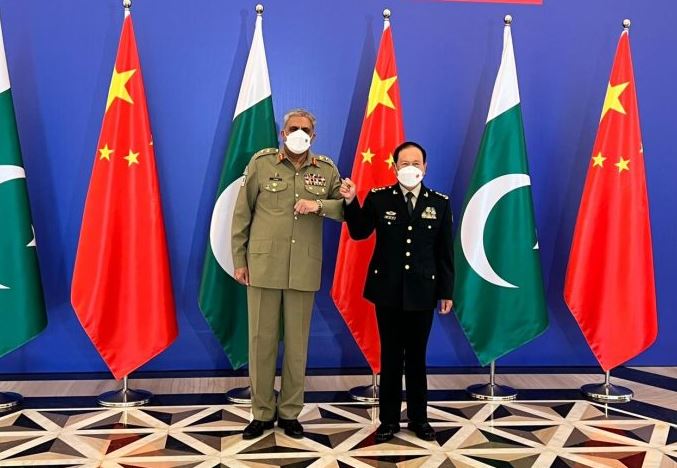
BEIJING: General Qamar Javed Bajwa, Chief of Army Staff (COAS) is on an official visit to China for two days. During the visit, COAS called on General Wei Fenghe, Chinese Defence Minister. General Wei Fenghe said that China greatly values its time-tested relations with Pakistan and its Army and looks forward to further expanding this cooperation. He also said that development of CPEC is aimed at bringing more benefits & prosperity to the people of both countries and termed Pak-China military cooperation as an important pillar of bilateral relations.

The Defence Minister thanked COAS for special measures taken for provision of safe and secure environment to CPEC projects in Pakistan and efforts towards regional stability. He expressed satisfaction over progress on CPEC and hoped for timely completion of the project. He conveyed his grief over the devastation caused by ongoing floods in Pakistan due to climate changes and offered sincere condolence to the families of the victims.

He said that China is willing to provide technical assistance for flood relief efforts in Pakistan and also appreciated Pakistan Army’s rescue and relief efforts in flood affected areas.

COAS thanked Defence Minister for his sentiments and continued Chinese support to Pakistan.

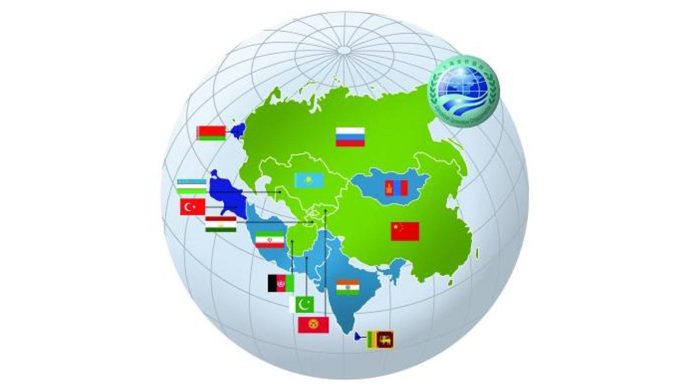
Shanghai Cooperation Organization; an opportunity to Bolster Eurasian Convergence

Hossein Amir Abdollahian

In today’s world, East and West have lost their traditional implications and, in a way, have been replaced by regionalism or even continentalism. Hegemonic control and unilateralism are waning and the international community’s transition towards a multipolar world and the redistribution of power in favor of independent countries are becoming inevitable trends.

In such a situation, maintaining peace and strengthening stability in our continent, Asia,is not only a choice, but a necessity. In fact, Shanghai Cooperation Organization could be considered as one of the most successful examples of regional alliances. This organization is formed by a group of like-minded countries that seek to maintain order and the new Asian identity without interference of extra-regional powers.

As the world’s largest regional organization, the SCO plays an outstanding role in covering more than 40 percent of the world’s population, and generating about 25percent of global GDP.

The total value of economic transactionsamong the SCO Member States is around 20 trillion dollars, which has increased 13 times compared to the periodit was firstestablished.

Since the Islamic Republic of Iran welcomes dialogue, negotiation and diplomacy and rejects unilateral approaches in its relations with other countriesin view of compliance withthe basic principles of international lawsuch as mutual respect for sovereignty, independence and territorial integrity,Tehran prioritized, as an important foreign policy objective, joining the SCO. This was realized in the first year of the presidency of Dr. Raisi when Iran became a full member of the SCO. 

In this respect, approval of Iran’s membership to the SCO during President Raisi’s visit to Dushanbe, Tajikistan, by SCO Heads of State Council in September 2021, was a diplomatic triumph which proves our dedication in pursuing a “balanced, smart, active and dynamic” foreign policy approach and the idea of ​​”Asian multilateralism”. This achievement also marks a milestone in the development of our cooperation with the SCO Member States in all bilateral, regional and international dimensions.


It is time for the SCO Member States to furnish a promising future for the region’s nations by taking advantage of the huge capacity and opportunities of multilateral cooperation. These capabilities could strengthen and fortify the organization and its members against the political, security, economic, commercial and cultural challenges.

Investment facilitation and expansion of economic cooperation and mutual tradewhich lead to sustainable development and stable security in the region, would not be feasible without providing security prerequisites. Therefore, in order to achieve this goal, security threats and challenges in the region, such as the critical situation in Afghanistan, should be quickly brought to the attention of the neighbors and Member States of SCO.

The considerable economic capacities and comparative advantage in each and every Member States of the organization grabbed the attention of the international community and provided remarkable opportunities for strategic partnership and extensive interaction among the members.

Among the valuable spheres of strategic cooperation between Iran and the SCO could be connectivityin the light of geographical advantages of Iran in proximity of two important bodies of water, i.e. the Caspian Sea and the Persian Gulf which enable Member and Observer States of the SCO to connect to the global supply chain and transfer and transit of goods and energy to other parts of the world through the territory of the Islamic Republic of Iran.

As the potential hub of the Eurasian transit and transport corridors and connectivity of the region’s infrastructure projects, the Islamic Republic of Iran can play a vital role in bolstering North-South Corridor and linking Central Asia and Russia to the subcontinent. Iran located enrouteone of the most important and efficient corridors of the “Belt and Road Initiative”, namely the China-Central Asia-West Asia Economic Corridorcan bridge East to West Eurasia. Throughout the past years, this route has been activated in the form of rail-road or combined transport.

The Islamic Republic of Iran in the character of a responsible member in the region and across the international community enjoys numerous capacities and capabilities in terms of  regional cooperation such as sustainable security and stability, rich energy resources, unique tourist attractions, the advantage of geographic coherence and national solidarity, extensive historical and cultural bonds with the SCO Member States and Observers, as well as rich cultural values that can prevent the growth of extremism throughout the region.

Among Iran’s top ten export partners, China, India, and Pakistan are respectively ranked first, fifth and eighth; China and India are placed as first and fourth among Iran’s top five import partners. In 2021, Iran’s trade with the SCO Member States surpassed 37 billion dollars, which accounts for about 30 percent of the country’s total foreign trade. During the same period, Iran’s export and import to the SCO Member States stood at 20.5 billion and 16.5 billion dollars respectively.

Enhancement of relations and cooperation with the SCO countries constitute one of the main pillars of President Raisi’s foreign policy especially with regard to boosting and facilitatingtransport and transit corridors.

Iran provides safe, stable and reliable routs on the North-South Corridor and at the same time enjoys remarkable infrastructure in its southern port especially the oceanic port of Chabahar. These are among Iran’s strategic policies for the development of regional cooperation and the expansion of dynamic trade exchanges with neighboring countries.

Iran’s full membership in theShanghai Cooperation Organization in line with the consideration of the principles of the Islamic Revolution enshrined in the Constitution, represents the manifestation of the country’s independence and serves to secure our national interests in view of dignity, wisdom and expediency.

In this respect, during the past year, the Ministry of Foreign Affairs of the Islamic Republic of Iran has employed all its specialized capabilities incoordination with other relevant domestic organizations and the Secretariat of the SCO to complete the legal and administrative process of full membership in the shortest possible time.

PresidentRaisi’strip to Uzbekistan to participate in the Council of Heads of State of Shanghai Cooperation Organization provides a pivotal opportunity to advance the Eurasian diplomacy of the Islamic Republic of Iran. Of course, the official visit to Uzbekistan and signing of 17 important documents of cooperation as well as visiting the historical city of Samarkand, the birthplace of Roudaki, the father of Persian poetry, will be considered as a memorable occasion for the Iranian delegation.

The Writer is the Minister of Foreign Affairs of the Islamic Republic of Iran

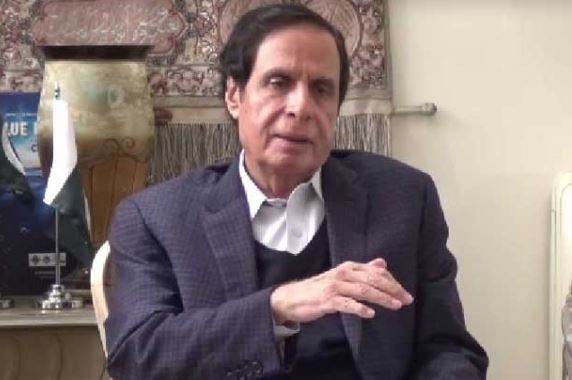
PML-N did injustice to Punjab’s people by stopping public projects: CM Elahi

LAHORE – Punjab Chief Minister Chaudhry Pervaiz Elahi on Sunday while lashing out at Pakistan Muslim League – Nawaz (PML-N) said that PML-N did injustice to the people by Punjab by stopping public projects.

The Punjab Assembly members and ticket holders from Punjab called on  CM Ealhi in which the political situation and problems of the constituencies were discussed.

Announcing the upgrading of Tala Gang hospital and increasing the number of beds to 100, the Chief Minister said that development will be seen in remote areas of Punjab, adding that backward and neglected areas will be given equal development and development projects.

“The PML-N government damaged the welfare projects of my time in Punjab in political ego, and did injustice to the people of Punjab by stopping my public projects,” Elahi took a dig on PML-N bigwigs.

New iPhones have Qualcomm satellite modem, new Apple radio chips

SAN LUIS OBISPO – Apple Inc’s (AAPL.O) iPhone 14 models contain a Qualcomm Inc (QCOM.O) chip that can talk to satellites, but have additional custom-designed Apple components used in the phone’s biggest new feature, according to an analysis of the phone by iFixit and an Apple statement.

Apple released its iPhone 14 lineup on Friday. One of the major new features is the ability to connect to satellites to send emergency messages when there is no WiFi or cellular data connection.

Apple said earlier this month that the iPhone 14 models contain new hardware that makes possible the emergency message service, which Apple plans to turn on with a software update coming in November. Apple did not give details about the satellite-specific hardware.

iFixit, a San Luis Obispo, California-based firm that disassembles iPhones and other consumer electronics to assess how easily they can be repaired, took apart an iPhone 14 Pro Max model on Friday, revealing a Qualcomm X65 modem chip.

The Qualcomm chip provides 5G connectivity for cellular networks but is also capable of using what is called band n53, the frequency band used by satellites from Globalstar (GSAT.A).

Globalstar earlier this month announced a deal in which Apple will take up to 85% of Globalstar’s satellite network capacity to enable Apple’s new emergency messaging feature.

In a statement to Reuters on Saturday, Apple said there is additional proprietary hardware and software in the iPhone 14 for the new messaging feature.

“iPhone 14 includes custom radio frequency components, and new software designed entirely by Apple, that together enable Emergency SOS via satellite on new iPhone 14 models,” Apple said in a statement.

Qualcomm did not immediately respond to a request for comment.

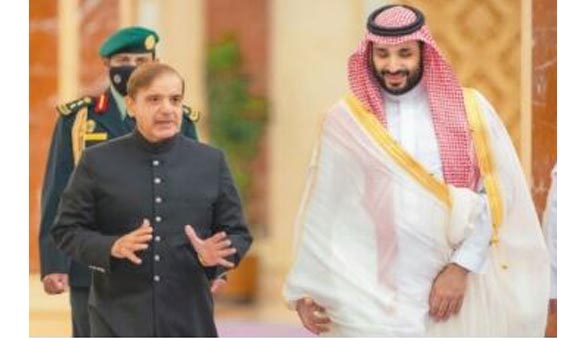
Saudi Arabia confirms rollover of $3b deposit for one year

DNA

ISLAMABAD, Sep 18: The Saudi Fund for Development (SFD) has confirmed the rollover of $3 billion deposit maturing on December 05, 2022 for one year.

The State Bank of Pakistan (SBP) said on its official twitter handle on Sunday that the deposit is placed with SBP and is part of its forex reserves. “This reflects continuing strong and special relationship between KSA and Pakistan,” the SBP added.

In November 2021, a deposit agreement between the Kingdom of Saudi Arabia, represented by the SFD and the Government of the Islamic Republic of Pakistan, represented by the State Bank of Pakistan (SBP), was signed under which SFD placed a deposit of USD 3.0 billion with SBP.

Saudi Arabia rollsover $3 billion deposits for Pakistan

RIYADH: The Saudi Fund for Development (SFD) on Sunday confirmed the rollover of an $3 billion deposit for Pakistan, which will be maturing on December 5 for a period of one year.

Taking to its official Twitter account, the State Bank of Pakistan (SBP) made the announcement and said that under the programme, the deposit is placed with the central bank, adding that the funds will now become part of the $8.6 billion forex reserves. 

“This reflects continuing strong and special relationship between KSA and Pakistan,” the SBP wrote.

The deposit agreement was made between Pakistan and the Kingdom in November 2021, in a bid to support Pakistan’s foreign currency reserves and contribute toward resolving the adverse effects of the COVID-19 pandemic.

It should be noted that last week, the country’s foreign exchange reserves held by the SBP faced a decline of 1.9% on a weekly basis. As of September 9, SBP’s foreign currency reserves were recorded at $8,624.0 million, down by $176 million compared with $8,799.9 million on September 2.

On Friday, the Pakistani rupee registered a decline for the 11th consecutive session, closing the week at 236.84 against the greenback after losing nearly Re1 or 0.41%. The dollar now stands only Rs3.1 short of the all-time high level of Rs239.94 on July 28, 2022.

The local currency has been under pressure for the last several months due to a host of reasons, including fast depleting foreign exchange reserves. With the rollover of the KSA deposit, the investors’ sentiment is expected to stabilise.

Abbas to use UN speech to rally support for Mideast peacemaking

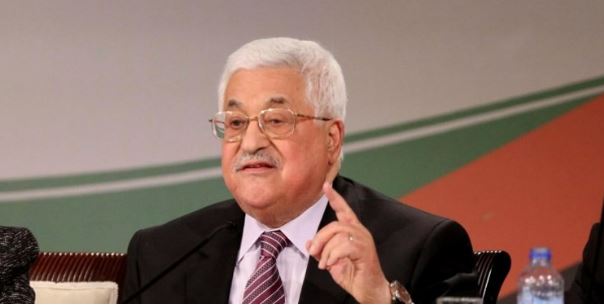
Jerusalem: Palestinian President Mahmoud Abbas is set to address the 77th session of the UN General Assembly on Friday to rally support for the Middle East peacemaking, the country’s foreign ministry said on Sunday.

“Abbas’ speech will constitute an important historic landmark on the road to thwart and topple the expansionist colonial plans of the occupying state and its denial of the just and legitimate national rights of our people,” the ministry said in a statement.

It said the Palestinian leader will urge the international community “not to miss the peace opportunity” for resolving the Palestinian-Israeli conflict.

The ministry called for compelling Israel “to engage in real peace process leading to an end of the occupation of the land” of Palestine.

In 1993, the umbrella Palestine Liberation Organization (PLO) and Israel signed the Oslo agreement, which gave Palestinians a form of civil rule, but negotiations failed to complete the agreement and lead to a Palestinian state.

Peace negotiations between the Palestinians and Israelis collapsed in April 2014 as Tel Aviv refused to stop settlement building and release Palestinian detainees imprisoned before 1993.

Imran Khan reiterates demand for early elections

LAHORE – Former Prime Minister and Pakistan Tehreek-e-Insaf (PTI) chairman Imran Khan has reiterated his party’s demand for early elections and said that people the people are with us, we have to move towards elections soon, and the early elections are not need of the PTI but the need of the country.

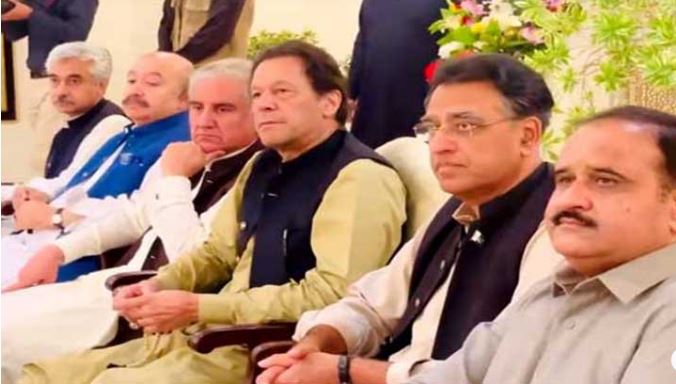
The Punjab government cabinet called on the PTI supremo to discuss administrative and political affairs of Punjab, while Imran Khan congratulated the cabinet members for their excellent success in the by-elections of Punjab and gave guidelines to the assembly members for the future course of action.

On this occasion, the former PM said that the success in the by-elections of Punjab is an expression of public confidence in PTI, adding that Punjab Chief Minister Pervaiz Elahi is a practical politician, and we have to give him full support.

“The people are with us, and we have to move towards early elections because early elections are not the need of the PTI but the need of the country, ” Imran Khan added.

PM Shehbaz, Nawaz Sharif agree to hold general elections on time

LONDON, SEP 18: Prime Minister Shehbaz Sharif and Pakistan Muslim League – Nawaz (PML-N) supremo Nawaz Sharif agreed to hold general elections on time, and not to accept any pressure.

PM Shehbaz on Sunday called on Nawaz Sharif in London, and former Finance Minister Ishaq Dar, Salman Shehbaz were also present during the meeting while Shehbaz Sharif informed Nawaz Sharif about the consultation with Asif Ali Zardari, Bilawal Bhutto and Maulana Fazlur Rehman.

The premier said in a conversation with Nawaz Sharif that at present all attention is focused on the rehabilitation of flood victims and improving the economy.

In the meeting, it was agreed that all allies are in favour of holding general elections on time, and it was also vowed that the incumbent government will not accept any pressure and will complete its constitutional term.

The former PM Nawaz Sharif urged the premier to take measures on the rising inflation in the country and said that steps should be taken to provide relief to the people, while discussions were also held regarding the complete rehabilitation of the flood victims.

“Shehbaz Sharif is making tireless efforts for the flood victims, and the government should speed up the efforts for rehabilitation,” the PML-N supremo added.

Stay Connected

64FansLike
60FollowersFollow

Latest Reviews

Exchange Rates

USD - United States Dollar
EUR
1.17
GBP
1.35
AUD
0.67
CAD
0.72