Home Blog Page 1551

Terrorists open fire from Afghanistan on Pakistani troops

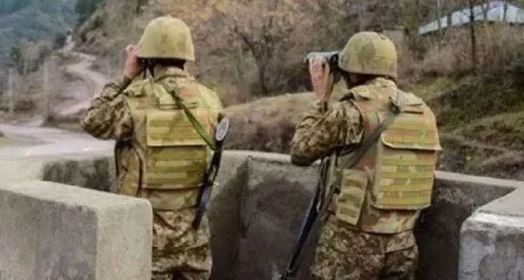
ISLAMABAD, SEP 20 /DNA/  – Terrorists from inside Afghanistan across the international border, opened fire on Pakistani troops in general area Dwatoi, North Waziristan District. Own troops responded in a befitting manner. As per credible intelligence reports, due to fire of own troops, terrorists suffered heavy casualties.

However, during the fire exchange, Sepoy Nazar Muhammad (age 34 years, resident of Jaffarabad), having fought gallantly, embraced shahadat.

Pakistan strongly condemns the use of Afghan soil by terrorists for activities against Pakistan and expects that the Interim Afghan Government will not allow conduct of such activities, in future.

Pakistan Army is determined to defend Pakistan’s borders against the menace of terrorism and such sacrifices of our brave soldiers further strengthen our resolve.

PAJCCI’s decade of success is due to team efforts: Zubair Motiwala

Karachi, SEP 20 /DNA/  – PAJCCI 9th AGM was held in Karachi today to announce new executuve body, office bearers and finalize strategic framework for upcoming tenure. During the AGM future road map, required efforts & engagement with various government and private stakeholders, goals and objectives in dynamic economic landscape, fluid geo-political situation, increasing foreign currency crunch, inflation and disturbed supply chain impact were also discussed and various solution were deliberated.

Qazi Zahid, was unanimously chosen as President of the Chamber, whereas Khalid Shahzad & Haji Abdul Ghani have been chosen as Senior Vice President and Vice President respectively.

Chairman PAJCCI, Zubair Motiwala thanked the retiring team for their service, welcomed the new team and showed confidence that under such seasoned management, PAJCCI will be better equipped to achieve further success. He iterated that the Chamber has been successful in removing  several obstacles to trade and continues with relentless zeal to move towards the actual trade potential between the two countries.

Departing President, Jawaid Bilwani, reflected upon challenges originated during his tenure due to change in Government firstly in Afghanistan and then in Pakistan, however, PAJCCI continued its momentum in context of B2B engagements and facilitate results for joint economic prosperity.

Secretary General, Faiza provided the overview of scope, activities, achievements and future challenges of PAJCCI and outlined the broader aspects of actions to achieve the objectives.

The new managing committee comprises of Muhammad Zubair Motiwala, Junaid Makda, Junaid Nawab, Khalid Shahzad, Abdul Bari, Qazi Zahid Hussain, Shahid Ismail, Zia ul Haq Sarhadi, Shahid Hussain, Niaz Muhammad and women members are Ms Mahvish Tariq Siddiqi & Mrs. Sakina Hashim.

The retiring members including Mohammad Jawaid Bilwani, Abdul Basit, Haroon Qasim, Shuja Muhammad, Nafi Jan thanked the leadership and vowed to continue the support in PAJCCI’s activities.

The newly elected President, thanked the executive body for the vote of confidence and assured that under the visionary leadership of Zubair Motiwala (Chairman, Pakistan Chapter) and Khan Jan Alokozai (Co-Chairman, Afghan Chapter) along with the support from executive committee members, Chamber will increase its efforts & engagements to strengthen the voice of business community across the border. He added that futuristic perspective of PAJCCI is to enhance regional trade ties and capacity building of business entities to tap the emerging opportunities.

PAJCCI has achieved several milestones especially during last year when Afghan government was changed and later during the government change in Pakistan by continuous engagement via various forums and inviting Afghan delegations, facilitating meetings with governments on both sides, resulting in smooth trading activities, revenue generation, employment and solidifying the historical relationship with Afghanistan.

ICCI urges government to address delay in opening LCs of importers

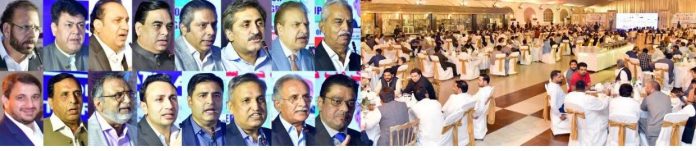
ISLAMABAD, SEP 20 /DNA/  – Muhammad Shakeel Munir, President, Islamabad Chamber of Commerce & Industry (ICCI) said that the business community was facing the problems of unnecessary delay in opening Letters of Credit (LCs) for import of raw materials and called upon the government to address this issue on urgent basis for facilitating the growth of business activities. He said this while addressing a dinner reception hosted by Muhammad Naveed Malik, former Senior Vice President, ICCI.

Muhammad Shakeel Munir said that due to delay in opening of LCs, many industries including food, pharmaceuticals, steel, automobiles, telecom, home appliances etc. were facing the shortage of raw material for their manufacturing activities and if this issue was not addressed forthwith, it would badly affect the production activities and further hurt the already struggling economy. He said that the government had announced to lift ban on imports, but the business community was still facing a delay in opening of LCs for many important items including machinery and equipment. This situation has created a lot of concerns in the SMEs and large scale manufacturing industry, therefore, he appealed to the finance minister to take urgent notice of this matter and intervene to address this issue of utmost importance for the business community.

Jamshaid Akhtar Sheikh Senior Vice President, Muhammad Faheem Khan Vice President ICCI, Khalid Iqbal Malik, Mian Akram Farid, Muhammad Ejaz Abbasi, Sheikh Amir Waheed, Nasir Qureshi, Sardar Yasir Ilyas Khan, Muhammad Naveed Malik, Ahsan Zafar Bakhtawari, Sardar Tahir Mehmood, Engr. Azhar ul Islam Zafar, Ch. Masood, Malik Najeeb, Ashfaq Chatha, Saeed Khokhar, Mustafeez Abbasi and others also spoke at the occasion and said that many industries in Pakistan relied on imported materials, but production activities were badly suffering due to delay in opening of LCs for imports. They emphasized that the Ministry of Finance and the State Bank of Pakistan should take urgent measures to address this issue of vital importance to save the production activities from further problems. 

Chinese solar company donates goods for flood affectees

DNA

BEIJING, Sept. 20: A Chinese leading solar company Zonergy Corporation, a long-standing and strong partner of Pakistan in solar power generation, donated RMB 100,000 to support the relief and rehabilitation efforts of Pakistan for the flood-hit people in Pakistan.

Zonergy Executive Voice President Changbin Qiu presented the check to Pakistani Ambassador Moin ul Haque at a ceremony held in the Pakistan Embassy Beijing, according to a report published by China Economic (CEN) on Tuesday.

Sharing his grief and condolences with the bereaved families, Changbin Qiu said his company will continue to support the people of Pakistan in this difficult time.

He informed that his company has already provided portable solar devices worth Rs 6.4 million and food supplies worth Rs 2.4 million to help the affected people in different parts of Pakistan.

He said Zonergy Corporation had previously donated Rs 5 million for the Prime Minister COVID Relief Fund.

“Our company has long been committed to Pakistan’s public welfare undertakings, fulfilling its corporate social responsibility, investing in the construction of purified drinking water stations in water-deficient areas to provide local residents with clean water, donating equipment to the Bahadin Zakriya University in Multan, Bahawalpur, and the Islamic University Training Resource Center, and offering internship opportunities for students,” he mentioned.

Speaking at the occasion, Ambassador Moin ul Haque appreciated the assistance provided by Zonergy Corporation in this difficult time.

Haque said that the company has developed a solar power project in the Qauid Azam solar park in Bahawalpur, which is an important project under China-Pakistan Economic Corridor (CPEC).

He further appreciated the support and solidarity of the Chinese government and people for Pakistan during natural disasters, emphasizing that Chinese assistance to Pakistan for flood victims has once again proven the unique nature of fraternal ties between the two countries.

He lauded the company for producing clean energy and helping mitigate the negative impact of climate change.

EU envoy praises Pak Army for relief work

Staff Report / DNA

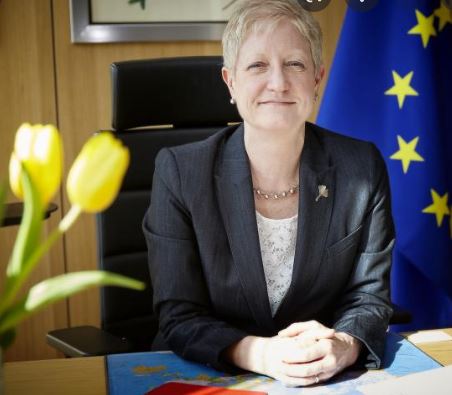
ISLAMABAD: Riina Kionka, Ambassador of European Union (EU) called on General Qamar Javed Bajwa, Chief of Army Staff (COAS) at GHQ, today.

During the meeting, matters of mutual interest, regional security situation and bilateral cooperation with European Union (EU) were discussed. COAS said that Pakistan values its relations with EU countries and we earnestly look forward to enhance mutually beneficial multi-domain relations based on common interests. COAS congratulated the Ambassador for assuming her new appointment. Both the dignitaries hoped to further enhance bilateral engagement based on common interests.

The visiting dignitary expressed her grief over the devastation caused by ongoing floods in Pakistan and offered sincere condolence to the families of the victims. She offered full support to the people of Pakistan.

She also appreciated Pakistan’s Army efforts for assisting civil administration in rescue and relief efforts in flood affected areas and pledged to play her role enhancing relations between Pakistan and EU.

COAS thanked for the EU’s support and reiterated that assistance from our global partners shall be vital in rescue/ rehabilitation of the victims.

Ambassador highlights women role in Indonesian development

Developing connectivity between Indonesian and Pakistani women entrepreneurs was also highlighted

DNA

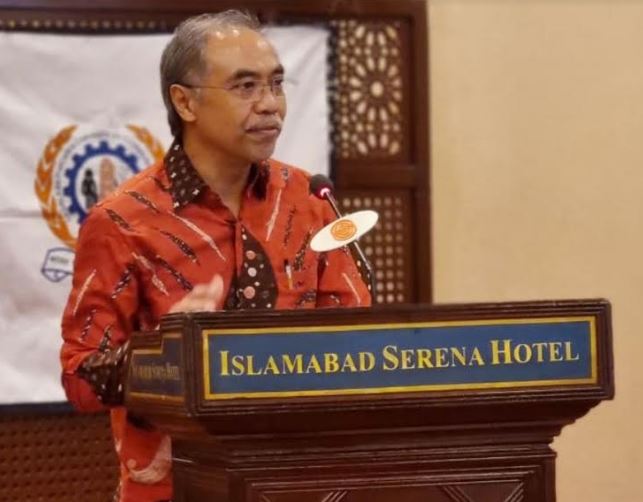
ISLAMABAD: Ambassador Adam Tugio participated in the International Conference on Pakistan Export Potentials-Women Led Business by Faisalabad Women Chamber of Commerce and Industry (FWCCI) at Islamabad Serena Hotel.

At the event, the Ambassador shared best practices on the role of women in Indonesia as the impetus of the Indonesian economy through MSMEs. They also contributed to creating jobs and improving the community’s social welfare.

The Ambassador informed the participants that the number of MSMEs units in Indonesia was 64 million units in 2021 and contributed to a gross domestic product (GDP) of about 61.97 per cent. They covered wholesale and retail trade (46.17%), accommodation and food & beverages such as restaurants, cafes and catering (16.53%), as well as the processing industry of raw materials into semi-finished or finished products (16.53%). The percentage of women entrepreneurs in Indonesia is 21% and they have performed well in MSMEs.

Furthermore, MSMEs have high resilience that can support the country’s economy during the pandemic. Lockdown policies, introduced by the government during COVID-19 have restricted the mobility of people. But there is always light in the end of tunnel. This situation has allowed MSMEs to know and embrace e-commerce and digital payment services. Ambassador Tugio underscored the important of digital literacy for women entrepreneurs and access to financial services.

Developing connectivity between Indonesian and Pakistani women entrepreneurs was also highlighted. Exchange visits, training, and capacity building were important to explore creative ideas for promoting women entrepreneurs. The Ambassador that his country was a gateway for $2.9 trillion economy of ASEAN region and Pakistan should tap it for trade and exports by developing close cooperation with Indonesia.

He said that China was enjoying a bilateral trade of around $ 600 billion with ASEAN, but Pakistan-ASEAN bilateral trade was less than 1%, which should be increased to achieve better results.

He stressed for promoting cooperation among women entrepreneurs of Pakistan, Indonesia and ASEAN region that would give boost to trade among these countries.

Ambassador Adam said that his embassy was planning to organize a dialogue on economy involving B2B and G2G meetings between the two countries besides holding an exhibition of the products of both countries to highlight their potential for bilateral trade.

Political hostilities touching its peak

Comment

Shamim Shahid 

PESHAWAR—Amidst flood havocs which has badly affected over 30 million people throughout the country and alarming situation in Swat and other parts of Khyber Pakhtunkhwa erupted with re-emergence and reactivating of banned TTP, political confrontation between PTI and PDM, especially PML(N) now is at its peak. Along with war of words, now the two sides are registering blasphemy, contempt of court and treason cases against one another.

After the Punjab government, now Khyber Pakhtunkhwa government also registered treason and blasphemy cases against two federal ministers including Mian Javed Latif and Ms Maryam Aurangzeb. The cases were registered after Khyber Pakhtunkhwa Assembly‘s resolution against the two. Though the thin opposition resisted and opposed the resolution, ruling Pakistan Tehreek-e- Insaf having overwhelming majority in the provincial assembly succeeded. The Punjab government has registered cases against the two.

Ironic to mention that Pakistan Democratic Movement (PDM) after losing the government in Punjab (Hamza Shahbaz), now very carefully and silently engaged in efforts aimed at toppling Pervez Elahi government. On Sunday, Imran Khan rushed to Lahore whereas he had chaired the PTI parliamentary party meeting. But at least 26 MPA’s were found missing. Besides the PTI, over half of 10 PML(QA) MPA’s already revolted against Pervez Elahi.  Now the PDM is asking Pervez Elahi to take a vote of confidence from the august house. And Imran Khan is doing his best to rescue Pervez Elahi.

On the other hand, the Federal and Sindh governments are faced with the serious issue of flood havoc which has badly affected over 30 million people throughout the country. At the same time, the situation is very dangerous in Khyber Pakhtunkhwa with the emergence and reactivation of militants associated with banned Tehrik Taliban Pakistan. So far contingents of military and paramilitary troops have been dispatched to Swat mountainous areas and the militants have been asked to wind off and go back ( to hideouts across the border in Afghanistan) by Wednesday morning otherwise face military action. Ironically, neither the Khyber Pakhtunkhwa government nor the Federal government owns the proposed military operation. Similarly, people from Swat are also doubtful about the sincerity of the military establishment as almost all of its top brass are always proud of what they call “Taliban militants are our assets.” Still Swat people are apprehensive of 2005-2006 situations whereas no other than military establishment through its secret Agencies strengthened the banned TTP in Swat and later helped it in crossing over and sheltering in Afghanistan.

Unlike the past, this time Tehrik-e- Taliban Afghanistan also called Emirate Islami Afghanistan is not only divided on relations/links with Pakistan but even does not trust Pakistan. Some top leaders like Interior Minister Siraj Ud Din Haqqani are silent but Defense minister Mullah Yaqoob and others are publicly criticizing Pakistan for its negative policies towards Afghanistan. The increasing trend of militancy in both Pakistan and Afghanistan is aggravating with each passing day and might be harmful to the very interests of the whole region.

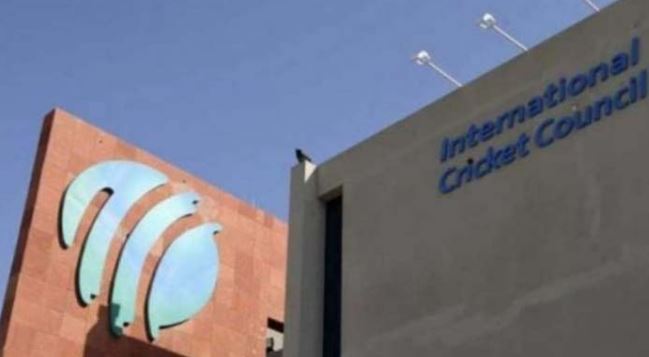
ICC introduces certain changes in saliva, pitches rules

ISLAMABAD, Sep 20 (DNA): The International Cricket Council (ICC) on Tuesday announced certain changes in its playing conditions especially relating to the hybrid pitches and saliva being used to shine the ball.

 The international cricketing body has allowed use of hybrid pitches for all Men’s and Women’s ODI and T20I matches and banned use of saliva permanently.

 The Chief Executives’ Committee (CEC) ratified recommendations from Sourav Ganguly-led Men’s Cricket Committee, which discussed MCC’s updated 3rd Edition of the 2017 Code of the Laws of Cricket and shared its conclusions with Women’s Cricket Committee,which endorsed the recommendations to CEC, said a press release.

The Playing Conditions that come into effect on October 1, allow the use of hybrid pitches for all Men’s and Women’s ODI and T20I, if agreed by both teams. Currently, hybrid pitches can only be used in Women’s T20I matches.

Meanwhile, the other changes to the Playing Conditions that come into effect include- Batters returning when caught: When a batter is out Caught, the new batter will come in at the end the striker was, regardless of whether the batters crossed prior to the catch being taken.

Use of saliva to polish the ball: This prohibition has been in place for over two years in international cricket as a COVID-related temporary measure and it is considered appropriate for the ban to be made permanent.

Incoming batter ready to face the ball: An incoming batter would now be required to be ready to take strike within two minutes in Tests and ODIs, while the current threshold of ninety seconds in T20Is remains unchanged.

Striker’s right to play the ball: This was restricted so as to require some part of their bat or person to remain within the pitch. Should they venture beyond that, the umpire will call and signal Dead ball. Any ball which would force the batter to leave the pitch will also be called No ball.

Unfair movement by the fielding side: Any unfair and deliberate movement while the bowler was running in to bowl could now result in the umpire awarding five penalty runs to the batting side, in addition to a call of Dead ball.

Running out of the non-striker: The Playing Conditions follow the Laws in moving this method of affecting a Run out from the ‘Unfair Play’ section to the ‘Run out’ section.

Bowler throwing towards striker’s end before delivery: Previously, a bowler who saw the batter advancing down the wicket before entering their delivery stride, could throw the ball to attempt to Run out the striker. This practice will now be called a Dead ball.

Other major decisions shows the in-match penalty introduced in T20Is in January 2022, (whereby the failure of a fielding team to bowl their overs by the scheduled cessation time leads to an additional fielder having to be brought inside the fielding circle for the remaining overs of the innings), would now also be adopted in ODI matches after the completion of the ICC Men’s Cricket World Cup Super League in 2023.

Nepotism and corruption seen restraining country’s progress

DNA

Islamabad, Sep 20: Pakistan is faced with a crisis of governance at all levels, lack of national consensus on critical issues, and non-adherence to national objectives in policy formulation and implementation, according to senior academics and seasoned practitioners.

The experts were speaking at the annual meeting of the National Academic Council (NAC) of Institute of Policy Studies (IPS), Islamabad. The yearly gathering is aimed at delivering intellectual input from a cross-section of veteran scholars and practitioners to IPS’ research activities.

Presided over by IPS’ Chairman Khalid Rahman, the meeting was addressed by Dr. Syed Junaid Zaidi, former rector COMSATS; Ambassador (r) Shamshad A. Khan, former secretary, Ministry of Foreign Affairs; Syed Abu Ahmad Akif, former federal cabinet secretary; Dr. Syed Tahir Hijazi, former vice-chancellor, Muslim Youth University; Dr. Waqar Masood Khan, former federal secretary, finance; Dr. Anwar-ul-Hasan Gilani, former vice chancellor, University of Haripur; Mirza Hamid Hasan, former federal secretary, water and power; Ambassador (r) Syed Abrar Hussain, vice chairman IPS; Dr. Abdul Rauf Rafiqui, director, Abdul Samad Khan Achakzai Shaheed Chair, University of Balochistan; Dr. Adnan Sarwar Khan, former dean of social sciences, University of Peshawar; Dr. Naveed Butt, senior physician at Federal Government Services Hospital; and Dr. Noreen Sahar, associate professor and chairperson, Department of Anthropology, IIUI.

The speakers highlighted matters of national significance that have negatively influenced the development potential of Pakistan and the ins and outs of which need to be unpacked at the intellectual and policy level.

The fundamental of these issues, as endorsed by almost all the speakers, was the severe deficiency of good governance. The government not only lacks the capability to channel opportunities and manage menaces like floods or politico-economic crises, but also lacks the essence of democracy in its institutional decisions and policy thoughts. Hence, the slow national progress.

As pointed out by Shamshad Khan, foreign dependency and wrong decisions are also a cause of bad governance, endangering the sovereignty of the nation in the long run. In addition to these, there is another important factor that is devouring the development perspective of Pakistan, i.e. the corrupt people present at the top-tier level of governance.

Khalid Rahman observed that there is a lot of confusion in the society and nation regarding policy. He pointed out that national efforts towards development and policy discourse are not in the same direction because of many factors. One such factor is resourceful lobbying that challenges the whole framework of policy and policymaking. In addition to this, foreign sponsorships also play a considerable role in buying national talent to fulfill ulterior agendas, which should be confronted by Pakistan through win-win collaborations.

Non-adherence to national objectives in policy formulation and implementation has resulted in the overlapping of the crisis in Pakistan, which is, at the same time, marred by corruption and nepotism, as indicated by Syed Akif.

Noreen Sahar added social networking and nepotism to the main causes that have resulted in blocking national progress. She emphasized the presence of people selected on the basis of skill and merit in top-tier governance positions.

The participants indicated the need to work on emerging challenges and developments like climate change, social issues, educational reforms, and technological innovations.

Although the issue of climate change has manifested itself in recent times in the form of disasters like floods, there is still a lack of national consensus and awareness about it, noted the speakers.

Along with that the country also needs educational reforms and a balanced approach that integrates all lines of education, stated Rauf Rafiqui.

Hamid Hassan added that the national politico-economic crisis and international factors also contribute to challenges. However, this also presents opportunities, which need to be capitalized on with timely and right decisions.

While appreciating IPS’ efforts to promote research on governance, Tahir Hijazi suggested for the institute to interact with the Planning Commission, relevant organizations, and university circles to find solutions to these issues. Adnan Sarwar also pointed out the importance of connecting research work and findings with policymakers to bring about true implementation of national objectives. 

PM Shehbaz leaves for New York to represent Pakistan at 77th session of UNGA

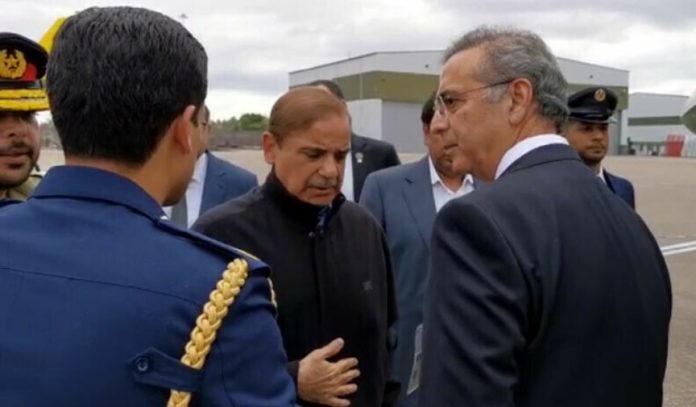
LONDON: Prime Minister Shehbaz Sharif on Monday departed for New York to represent Pakistan at the 77th session of the United National General Assembly (UNGA), which will be held from September 20 to September 26.

The premier attended the final rites of Queen Elizabeth II in London earlier in the day. He met King Charles III during a reception hosted by the latter for visiting dignitaries.

After attending the funeral, the PM left for New York and is expected to arrive later tonight. He will be received by Pakistan’s Permanent Representative to the UN Munir Akram, Pakistan’s Ambassador to Washington Masood Khan and other senior officers at the John G Kennedy International Airport.

A meeting with President of the European Union Council Charles Michel and participation in the Global Food Security Summit to be hosted by the president of Senegal and the African Union will also be on the PM’s agenda.

On September 21, he would meet Managing Director of International Monetary Fund Kristalina Georgieva, President of World Bank David Malpass, Turkish President Recep Tayyip Erdogan and Iranian President Ebrahim Raisi.

Besides meeting with the UNGA president, the prime minister would also attend a dinner reception to be hosted by US President Joe Biden.

Meetings with Microsoft founder Bill Gates, UN Secretary-General Antonio Guterres, Chinese President Premier Li Keqiang and Japanese PM Fumio Kishida will also be a part of the prime minister’s engagements.

On September 23, the prime minister would address the UNGA session, where his speech will focus on challenges faced by Pakistan in wake of the recent climate-induced catastrophic floods in the country.

Foreign Minister Bilawal Bhutto-Zardari, Minister of State for Foreign Affairs Hina Rabbani Khar, Defence Minister Khawaja Muhammad Asif and Information Minister Maryam Aurangzeb will accompany the prime minister during his trip alongside other senior officials.

This year’s General Assembly is particularly significant because this will be the first in-person summit of world leaders at the United Nations since 2019. The 2020 and 2021 sessions were converted into virtual meetings because of the Covid-19 pandemic.

Stay Connected

64FansLike
60FollowersFollow

Latest Reviews

Exchange Rates

USD - United States Dollar
EUR
1.17
GBP
1.35
AUD
0.67
CAD
0.72