Home Blog Page 1543

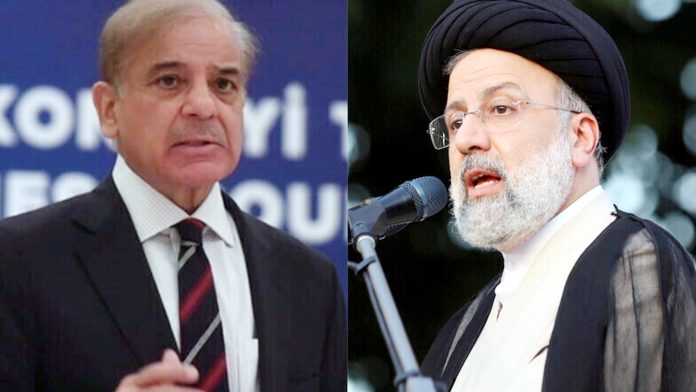
Iran’s President assures all-out support to PM for flood relief

ISLAMABAD, AUG 27 /DNA/ – Prime Minister Muhammad Shehbaz Sharif received telephone call from President of Iran Syed Ebrahim Raisi, today.The Prime Minister thanked President Raisi for his sympathy on the flood situation, stressing that Pakistan had been enduring severe monsoon weather since mid-June 2022, with many areas receiving 4-5 times and even more. This had caused widespread flooding and landslides, with extreme repercussions for human lives, livelihoods, livestock, property and infrastructure.

Prime Minister Shehbaz Sharif underlined that the humanitarian situation was being compounded by drastic impact to infrastructure including roads and bridges, which was impeding both the passage of people to safer locations and the delivery of aid.

Highlighting the government’s efforts in this regard, the Prime Minister shared that Pakistan had prepared a “UN Flash Appeal” which would be launched on 30 August 2022. He expressed the hope that the international community would contribute towards meeting the funding requirements of the Flash Appeal.

In the bilateral context, Prime Minister Shehbaz Sharif reaffirmed commitment to boost relations in all areas. He also conveyed appreciation for Iran’s steadfast support to the people of Jammu and Kashmir.

President  Ebrahim Raisi conveyed solidarity with Pakistan and assured of all out support in relief assistance in all areas.

Pakistani Mango Festival in Minsk Belarus

MINSK, /DNA/ – The Embassy of Pakistan, Minsk in collaboration with Trade Development Authority of Pakistan (TDAP) held a Pakistani Mango Festival at Dana Mall, on Aug 26 one of the largest Shopping Malls in Minsk.

The event attracted a massive response from the general public with around 4000 people visiting the mangoes stalls during the festival which continued for almost four hours.

The visitors were able to taste fresh Mango cubes, Mango Ice Cream and Mango Milk. Additionally, Mango samples were also provided to few fruit importers and grocery chain representatives.

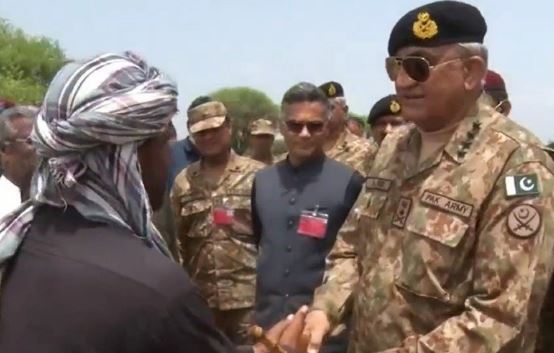
Won’t rest until each flood victim is not only reached but rehabilitated: COAS

RAWALPINDI, Aug 27 (DNA): Chief of Army Staff General Qamar Javed Bajwa
visited flood-affected areas of Balochistan on Saturday.

According to a press release issued by the Inter-Services Public
Relations (ISPR), the COAS went to flood relief and medical camps
established at Goth Sadoori, Lakhra, Lasbela and inquired about
well-being of local people affected due to floods.

The COAS also met troops busy in relief operations and lauded their
efforts in service of men, women and children in distress.

“The safety and well-being of our country men comes first and we won’t
rest until each one of flood affected is not only reached but
rehabilitated, no matter how much effort is required. The people of
Pakistan are our priority and we won’t spare any effort to assist them
in this difficult time,” said COAS Qamar Bajwa.

He directed to utilise all available resources to assist the civil
administration for rescue, relief and rehabilitation of people and
infrastructure in the flood affected areas. “We must reach out to our
brothers and sisters in need without waiting for orders and help them
overcome this natural calamity,” the COAS directed.

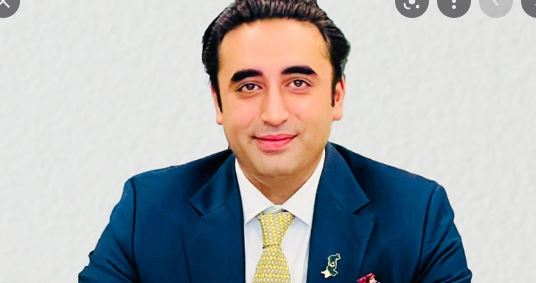
FM Bilawal briefs Turkish counterpart about damages caused by floods


ISLAMABAD, Aug 27 (DNA): Foreign Minister Bilawal Bhutto Zardari has
expressed his gratitude to his Turkish counterpart Mevlut Cavusoglu for
immediately sending volunteers for help in rehabilitation after flood.

In a telephonic conversation on Saturday, he apprised the Turkish
Foreign Minister about enormous damage caused by the unusual rains and
floods in Pakistan.

Thanking the Turkish Foreign Minister for Turkiye’stimely dispatch of
team for flood relief assistance at the outset, the Foreign Minister
highlighted that since June 2022, Pakistan had witnessed highest
rainfall on record.

This had caused widespread flooding and landslides, with extreme
repercussions for human lives, livelihoods, livestock, property and
infrastructure. The disaster would likely be compounded by riverine
floods as well.

Foreign Minister Bilawal Bhutto Zardari stressed that the extensive
damages to infrastructure was further impeding the relocation of people
to safer locations and the effective delivery of assistance.

The Foreign Minister shared with his Turkish counterpart that Pakistan
had prepared a “UN Flash Appeal” which would be launched on 30 August
2022. He expressed the hope that the international community would
contribute towards meeting the funding requirements of the Flash Appeal.
DNA

Official recognition, engagement with IEA critical for its desired transformation: IPS

DNA

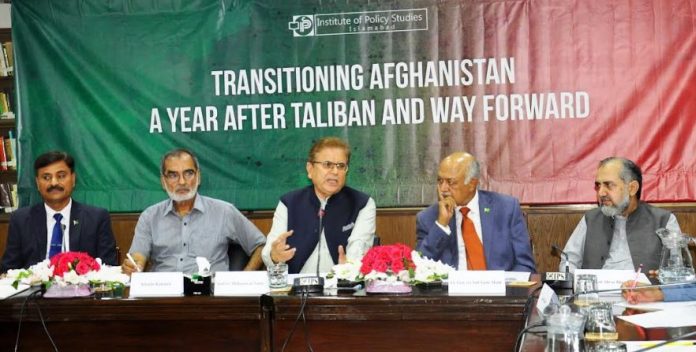
Islamabad, Aug 27: The Taliban government or the Islamic Emirates of Afghanistan (IEA), going through a political transition, from a battle-hardened resistance force to a state government, is facing several voids that cannot be filled right away or in a disconnected manner. This transition in Afghanistan presents a role for the international community, especially regional countries, towards facilitating the desired transformation through a dynamic, persistent, and symbiotic engagement at multiple levels.

These views were reflected in a heart-to-heart discussion followed by a keynote speech of Ambassador (r) Mohammad Sadiq, special assistant to the prime minister/minister of state and Pakistan’s special representative for Afghanistan in a roundtable titled “Transitioning Afghanistan” at Institute of Policy Studies (IPS).

The in-camera address by Ambassador Sadiq to a select gathering of Islamabad’s intelligentsia based on Chatham House rules, aimed at assessing the actual picture of Afghanistan and how Pakistan should carry itself in the scenario, was moderated by Brig (R) Dr. Saif-ur-Rehman Malik, IPS’s senior research fellow. Lt Gen Asif Yasin Malik (retd), former Corp Commander Peshawar, Ambassador (r) Syed Abrar Hussain, vice chairman IPS, Professor Dr Fakhar-ul-Islam, director, Pakistan Study Centre, University of Peshawar, Maj Gen Dr Shahid Ahmad Hashmat (Retd), Obaid Ullah Baheer, former faculty member (IR), American University, Kabul, Tahir Khan, senior journalist and Afghan affairs analyst, Dr Farhat Taj, associate professor, University of Tromsø, Norway, Dr Salma Malik, assistant professor, defense & strategic studies, Quaid-i-Azam, University, and Brigadier (R) Said Nazir Mohmad also took part in the discussion.

Concluding the roundtable proceedings, Khalid Rahman, IPS’ chairman, remarked that the situation in Afghanistan is still precarious after one year of an ‘exclusive’ Taliban rule as, among other things, the demand for an inclusive government for it to be recognized has created a vacuum that can’t be addressed immediately. Moreover, the failure of the US’ clueless leadership to adopt and formulate enduring policies for Afghanistan which was on its canvas for two decades presents a liability to not only Afghanistan but also to the entire world.

In this picture, Afghanistan, which has been abandoned by other stakeholders as well, is now under a resistance force that came unprepared and unplanned to govern a nation. Consequently, the transformation would be a time-taking process. However, an important factor that can largely contribute to the required transformation is the world’s engagement with Afghanistan across different domains and levels, Rahman emphasized.He propounded that Pakistan needs to persistently maintain its proactive approach and policy direction, while comprehending that the process is time-taking. At the same time, it is also important to create awareness about this at the national level. Pakistan must also address internal and external factors negatively affecting its national image in Afghanistan.

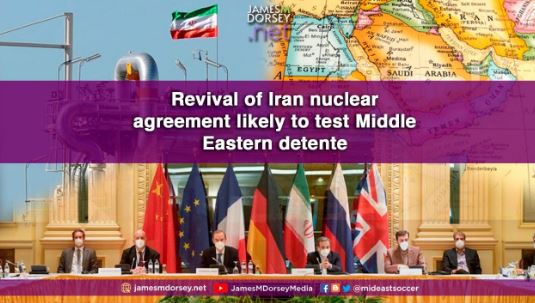
Revival of Iran nuclear agreement likely to test Middle Eastern detente

A potential revival of the Iran nuclear accord is likely to test the sustainability of Middle Eastern efforts to dial down tensions and manage differences by improving diplomatic relations and fostering economic cooperation.

In the latest fence mending, two Gulf states, Kuwait and the United Arab Emirates announced their ambassadors’ return to Tehran.

The two countries, together with Saudi Arabia, withdrew their envoys in 2016 after rioters protesting the execution of a Shiite cleric in the kingdom ransacked the Saudi embassy in the Iranian capital.

For its part, Saudi Arabia is engaged in a round of Iraqi-mediated talks with Iran focused on security issues, including an end to the war in Yemen, where Iran supports Houthi rebels.

The Gulf’s latest outreach to Iran comes on the heels of two years of regional diplomacy that produced UAE, Bahraini, Moroccan, and Sudanese recognition of Israel; greater Saudi openness towards the Jewish state; improved Saudi, Emirati, and Egyptian relations with Turkey; and most recently, restoration of diplomatic relations between Turkey and Israel.

Laudable as that may be, much of the endeavour to manage disputes is built on thin ice. It assumes that improved communication, economic interest, and a regional concern that armed conflict could prove devastating will reduce differences or even help resolve disputes in the longer term.

Moreover, the endeavour was in response to major powers-the United States, China, and Russia – making clear in recent years that they expected Middle Eastern players to take greater responsibility for managing regional conflict, reducing tensions, and their defense.

The Gulf states, alongside the United States and Europe, further hope that a dialling down of tensions will challenge Iran’s regional alliances like in Iraq, where they are betting on the campaign by populist Islamic scholar Muqtada al-Sadr, a leading Shiite powerbroker, to counter Iranian influence in Iraq.

Even so, the rivalry between various regional powers continues more subtly. For example, competition for regional influence drove the battle between Turkey and Qatar on the one hand, and the UAE, on the other, for the contract to manage Kabul’s international airport.

The rivalries are also evident in Turkey’s still fragile regional relationships and Saudi moves.

The rivalry was the subtext of a recent visit to Greece by Saudi Crown Prince Mohammed bin Salman, who earlier had visited Turkey, and Israel’s sale to Cyprus of its Iron Dome air defence system at a time when Turkish-Greek-Cypriot tensions in the Eastern Mediterranean threaten to heat up again.

There is little doubt that the system would serve as a defence against Turkey, which has had troops in the breakaway Turkish Cypriot republic since it invaded the island 38 years ago.

Similarly, Turkey will likely watch with argus eyes Saudi Arabia’s expanding ties to Greece, its longstanding archrival.  

Turkey has also insisted that relations with Israel would not dampen its support for the Palestinians, a festering problem that repeatedly erupts into violence at the expense of innocent civilians and resonates in Turkish and Arab public opinion.

Add to this that Turkey may see its hopes dashed of finding common ground in curtailing Kurdish aspirations in northern Syria with President Bashar al-Assad, whose demise Turkey has demanded for the past decade.

Finally, when it comes to Turkey, a potential rift in NATO if Turkey renews its opposition to Swedish and Finnish membership could impact the country’s regional calculations.

Turkey has demanded the extradition by the two Nordic countries of scores of ethnic Kurds and followers of exiled cleric Fethullah Gulen, some of whom are Swedish nationals.

To be sure, a revival of an admittedly problematic and flawed Iran nuclear accord is better than a failure of the negotiations involving the United States, the European Union, Britain, France, Germany, China, and Russia.

Even so, a revival of the accord is unlikely to reshape the regional environment given that in the words of analyst Trita Parsi, “the current US and Iranian political leaderships…have few domestic incentives to move beyond their shared enmity.”

Mr. Parsi added that “still, both sides can take steps to address these concerns and make the deal more durable. If they do not, even this historic breakthrough could be merely a precursor to an even more dangerous crisis.”

As a result, a revival could be as much a regional stabiliser as a regional destabiliser.

A revival of the nuclear agreement would return Iranian oil to world markets and compensate for the loss of sanctioned Russian crude. As a result, it would likely spark a drop in oil prices and weaken the Saudi-Russian grip on pricing.

In the ultimate analysis, Saudi Arabia may see this as a price it must pay for averting a regional conflagration in the absence of a nuclear deal.

Nevertheless, in talks in Washington in the last week, senior Israeli officials, including Defence Minister Benny Gantz and National Security Advisor Eyal Hulata, made their objections to the agreement clear.

Israeli officials said they had found a sympathetic hearing in Washington, including their demand that the United States develop a military option if all other efforts fail to prevent Iran producing a nuclear weapon.

The United States struck twice in recent days against Iranian-backed forces in Syria in response to attacks on a US base in the country. Analysts suggested the attacks were retaliation for Israeli strikes against Iranian targets in Syria.

Israel has insisted that it retains the right to strike Iranian nuclear facilities on its own, a move that could spark a regional war. Moreover, even if it decides not to do so, Israel’s covert war against Iranian targets in Iran itself as well as in Syria risks armed confrontation with Iranian-backed groups, including the Islamic Republic’s foremost non-state ally Hezbollah, the Lebanese Shiite militia.

Confrontation with Hezbollah could erupt not only because of Iran but also because the group is threatening to attack Israeli drilling platforms in the Mediterranean if a final agreement is not reached in US-mediated talks to draw the Israel-Lebanon maritime border.

Adding to the uncertainty is the possibility of a return to office of former Israeli prime minister Benyamin Netanyahu following elections in November. Mr. Netanyahu was a driving force behind Mr. Trump’s withdrawal from the nuclear agreement and his failed maximum pressure strategy.

Like the Gulf states, Israel argues that the agreement would allow Iran to increase its support for allied militant groups in Lebanon, Iraq, and Yemen and does nothing to curb the Islamic republic’s ballistic missiles program. Neither issue was part of the original deal.

Israel and the Gulf states are further concerned that the deal has a remaining shelf life of at best three years, at which point Iran would be free to do as it likes unless a follow-up deal can be negotiated.

Moreover, Iran will likely continue to be a nuclear threshold state with or without a revival of the nuclear agreement, raising the spectre of a nuclear arms race in the Middle East, with countries like Saudi Arabia and Turkey seeking to match Iranian capabilities. So far, albeit undeclared, Israel is the region’s only nuclear power.

The risk of an arms race was enhanced by the blocking this week by Russia of agreement on the final document of a review of the 50-year-old Nuclear Nonproliferation Treaty (NPT), to which Israel is not a signatory. The document called for the first time without apparent objection for a nuclear-free zone in the Middle East.

Russia blocked the agreement because it was critical of the takeover by invading Russian troops of Ukraine’s Zaporizhzhia nuclear plant, Europe’s largest.

Said political scientist Paul Rogers: What appears to be stable, although unjust, is more fragile when you take a closer look. As the Leonard Cohen song, ‘Anthem’, puts it: ‘There is a crack in everything. That’s how the light gets in.’

Dr. James M. Dorsey is an award-winning journalist and scholar, an Adjunct Senior Fellow at Nanyang Technological University’s S. Rajaratnam School of International Studies, and the author of the syndicated column and blog, The Turbulent World of Middle East Soccer.

Iranian delegation interested in JVs and investment in Pakistan

DNA

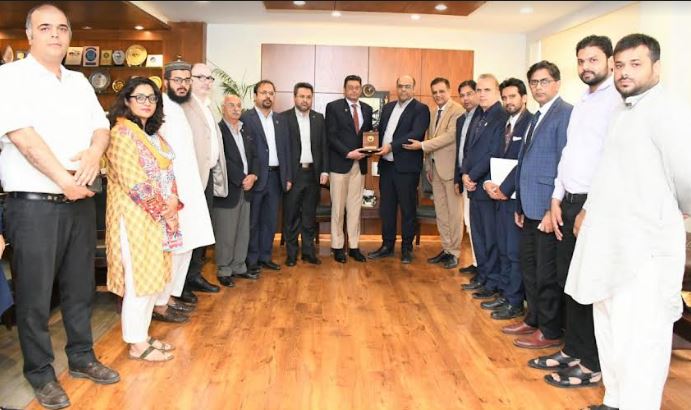
Islamabad, AUG 27: A business delegation of Iran led by Shokouhian visited Islamabad Chamber of Commerce & Industry and showed interest to make joint ventures and investments in Pakistan in various sectors including oil & gas, engineering, mining & construction machinery, fertilizers, electrical vehicles, car batteries, electronic tools, plastic products, dairy products and food & dry fruit industries. Sabir Khalifi, Kazim Kishwar Shahi, Majod Muhammad and Raza Muhammadi were in the delegation. ICCI former President Tauseef Zaman, Khursheed Barlas and others were also present at the occasion. The delegation had come to Pakistan to participate in a Pak-Iran trade exhibition.

Addressing the delegation, Muhammad Shakeel Munir, President, Islamabad Chamber of Commerce & Industry welcomed the business delegation from Iran and briefed them about the potential areas of JVs and investment in Pakistan for Iranian investors and stressed that they should capitalize on these opportunities by investing in Pakistan. He said that Pakistan and Iran are enjoying cordial relations that should be transformed into growing trade and investment relations between the two countries. He said that both countries have great potential to enhance bilateral trade in many items. He said that the existing level of two-way trade of around USD 1 billion is not matching with the actual potential of both countries and it can be increased to at least USD 5 billion per annum if the potentials of both sides are fully exploited.

ICCI President said that Pakistan and Iran should focus on removing tariff and non-tariff barriers to improve the flow of bilateral trade through air, road and railway links as none of these modes of transportation has been fully utilised economically so far. He stressed that both countries should consider slashing customs duty on each other’s goods to check the menace of smuggling. He assured that ICCI would fully cooperate in connecting Iranian investors with right partners in Pakistan.

The Iranian business delegation was of the view that Iran and Pakistan should encourage frequent exchange of trade delegations and try to organize exhibitions in each other country to explore all potential areas of promoting bilateral trade. They said that organizing Pak-Iran Trade Exhibition in Islamabad is a right step in that direction and more such exhibitions should be organized on reciprocal basis to improve trade ties between Iran and Pakistan. 

Malaysian Council General opens education fair in Karachi

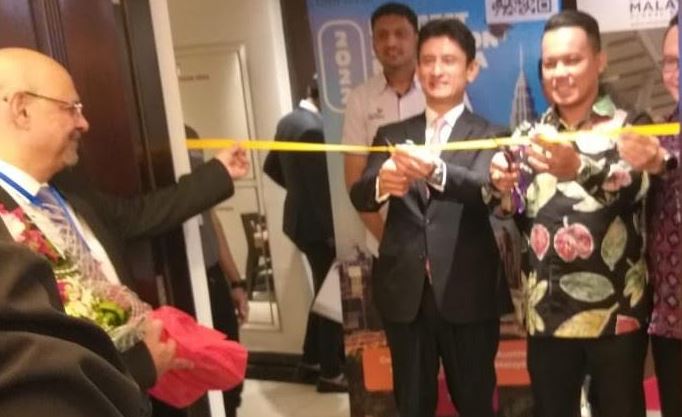
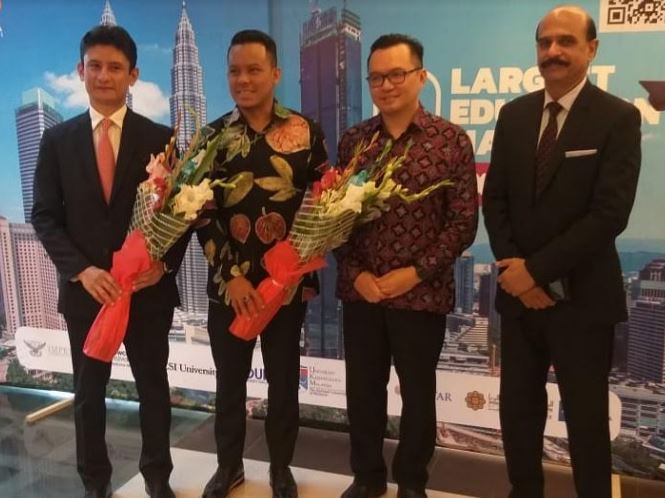
KARACHI, AUG 27 /DNA/ – The Education Malaysia Global Services (EMGS) on Saturday launched the “Study in Malaysia Education Fair” in Karachi, offering aspiring students and their parents a unique opportunity to interact and get the first-hand information about higher study options in Malaysia.


Chief Executive Officer of EMGS Mohd Radzlan bin Jalaludin and the Consul General Malaysia in Karachi Khairul Nazran Abd Rahman jointly inaugurated the Malaysian Education Fair, which is also scheduled to be held in Islamabad, Peshawar and Lahore.


“EMGS is actively preparing a variety of programs to promote the uniqueness of higher education experience in Malaysia to international students from all over the world, especially from Pakistan,” said Mr. Mohd Radzlan bin Jalaludin, adding that they were happy to see a rising trend in student applications from Pakistani students who wish to study in Malaysia.


He said that following the success of the similar events in the Middle East & North Africa, South Asia, East Asia, Southeast Asia, Oceania and Europe, EMGS was thrilled to provide institutions an equal chance to be on-the-ground, to meet students and their parents and have a face-to-face interaction with the university officials.
It is pertinent to mention that the Fair is aimed at providing complete information to the students on backgrounds, programs, fee structures, career pathways. The Discover Education Malaysia portal is also a one-stop information portal about higher education institutions in Malaysia.
Both Pakistan and Malaysia have established a long-standing exchange and cooperation in education. Malaysia has become one of the most preferable study destinations by the Pakistani students as it is house of the world’s leading institutes including International Islamic University Malaysia (IIUM), University Kebangsaan Malaysia (UKM), Asia Pacific University of Technology and Innovation (APU), Imperium International College, Newcastle University Medicine Malaysia, UNITAR International University, UCSI University, Open University Malaysia (OUM), SEGi University and Colleges to name a few.
EMGS is a company limited by guarantee (“CLBG”) under the purview of the Ministry of Higher Education Malaysia, which is responsible for promoting Malaysia as the international education hub of choice and to position Malaysia among the Top 10 education destinations. It is also the principal body that manages the movement of international students in Malaysia including facilitating visa processing.

Bragging rights on line as Indo-Pak rivalry set to resume in Asia Cup

DUBAI: India’s Virat Kohli has the chance to find form before the World Cup while Babar Azam will look to keep Pakistan’s psychological edge when the rival countries clash as the headline acts of the Asia Cup starting this weekend.

Cricket giants India and Pakistan could square up three times during the two weeks of the T20 competition in the United Arab Emirates.

The six-nation tournament was moved from Sri Lanka because of political unrest and it takes on extra significance this year because the T20 World Cup in Australia is coming up fast, in October and November.

Sri Lanka meet Afghanistan in Saturday’s opening match but all eyes will be on India and Pakistan, who clash in Dubai on Sunday.

India will be looking to avenge their 10-wicket humiliation by Pakistan at the same venue in last year’s T20 World Cup.

India head coach Rahul Dravid has Covid and India late on Wednesday appointed former batsman V.V.S. Laxman to take charge in an interim capacity.

The match will be Kohli’s 100th T20 international and a chance for the batting great to emerge from his prolonged slump before the World Cup.

The 33-year-old has not scored a century in any format since 2019 but should be refreshed after being rested for tours of the West Indies and Zimbabwe.

Kohli, who has 27 centuries in 102 Tests, was replaced by Rohit as all-format skipper earlier this year.

Pakistan’s fortunes will mainly depend on in-form skipper Babar, fresh from two big half-centuries in his team’s 3-0 ODI sweep of the Netherlands.

Babar, 27, tops the world T20 and ODI batting rankings and led his team to victory last year against India with an unbeaten 68.

Pakistan have brought in pace bowler Mohammad Hasnain in place of Shaheen Shah Afridi, India’s T20 destroyer last year, who has been forced out by a knee injury.

India vice-captain K.L. Rahul said his team was looking forward to playing Pakistan with the arch-rivals only meeting each other in multi-nation events due to political issues between them.

The neighbours have not played a Test since 2007, instead facing off only in the shorter versions of the game and at multi-team competitions on foreign soil, rather than head-to-head series at home.

“We are all very excited. As players we always look forward to this India-Pak clash as we don’t play each other anywhere else but these big tournaments,” Rahul told reporters on Friday.

“As we’ve seen there is a huge history, there has always been rivalry and the games have always been high intensity. As players we have always dreamt of playing India-Pakistan and it’s a great opportunity for all of us to challenge ourselves.”

Matches ignite great fervour but they have also defused military tensions between the two nations, which have fought four wars since independence from Britain in 1947.

Recently pictures and videos of Babar and Kohli meeting on the sidelines of a practice session in Dubai went viral.

“We can’t run away from the rivalry and emotion that comes through as a player,” Rahul said. “After the game or before, everything goes away you become normal people, learn from each other, share experiences, it’s always been friendly.”

Defending champions India, who won the last Asia Cup in 2018 when it was played over 50 overs, and Pakistan will be joined in Group ‘A’ by Hong Kong who defeated the UAE in the final qualifier on Wednesday.

Sri Lanka, Bangladesh and Afghanistan are in Group ‘B’.

The top two teams from each group progress to a Super 4 stage, which could witness another contest between India and Pakistan.

The great rivals could then meet for a third time should they both reach the September 11 final.

Sri Lanka, led by Dasun Shanaka, could be the India-Pakistan party-poopers.

They have a shown a lot of promise under new head coach Chris Silverwood and are capable of reaching the final, having enjoyed success in recent home series against a backdrop of a dire economic crisis.

Victory would bring some welcome cheer to the cricket-crazy island nation ravaged in recent months by food and fuel shortages and rolling blackouts.

Afghanistan, under the leadership of the seasoned Mohmmad Nabi, will be looking to beat the higher-ranked teams, something they were unable to in the T20 World Cup here last year.

They have the ability to upset any side, their ace being leg-spinner Rashid Khan, one of the world’s leading T20 bowlers who can exploit and turn in the subcontinent-like UAE pitches.

Bangladesh have been boosted by the return of all-rounder Shakib Al Hasan to lead the team, who said his priority was to see an improvement in performances of the struggling side with the World Cup fast approaching.

Though the conditions in the UAE will be different from what teams will be experiencing in the World Cup in Australia, all the competing sides will be looking to identify their final squad for the ICC event over the course of the next two weeks.

US donates additional nine million COVID-19 vaccine doses

Islamabad, Aug 27 /DNA/ – As part of the U.S. commitment to provide 77 million doses of U.S. COVID-19 vaccines to Pakistan, an additional nine million pediatric and adult doses from the United States—in partnership with COVAX— began arriving on August 26.

The United States is the single largest donor of COVID-19 vaccines to Pakistan.  In addition to those Pfizer and Moderna vaccines, the United States also recently donated four mobile testing laboratories, worth $4.6 million, to Pakistan’s National Institute of Health through USAID.  These labs have strengthened Pakistan’s ability to diagnose COVID-19 and other communicable diseases, especially in remote and underserved areas.

Expressing appreciation for the strong bilateral health cooperation as the United States and Pakistan commemorate 75 years of bilateral relations, Ambassador Blome said, “The vaccines, supplies, and training we have provided to Pakistan, coupled with the expertise and dedication of Pakistan’s healthcare professionals, will allow our two countries to continue working together to combat COVID-19 and safeguard the health and safety of the Pakistani people.”

An additional $20 million in USAID funding is also planned to support ongoing vaccination efforts in Pakistan.  Since the start of the pandemic, the U.S. government has provided nearly $70.4 million in direct support and $13.8 million in in-kind support to assist the Pakistani people in the fight against COVID-19.

Previously, the United States provided Pakistan with more than 1.2 million N95 masks, 96,000 surgical masks, 52,000 protective goggles, one million COVID-19 rapid diagnostic tests, 1,200 pulse oximeters, and 200 ventilators for 64 Pakistani hospitals – all of which has helped save lives and protect people across Pakistan.  The U.S. government also trained over 50,000 health workers, including 30,000 women, across Pakistan on home-based care for COVID-19 patients and established a national network of disease surveillance and response units and teams – providing an infrastructure to combat the current pandemic and building resiliency for the future.

The close coordination between the U.S. and Pakistani authorities, doctors, nurses, and logistics professionals continues to produce tangible, life-saving results.  Every additional vaccine administered boosts our ability to prevent future COVID-19 waves.  The United States will continue to work with our Pakistani friends to help strengthen local capacity and infrastructure to combat COVID-19 and other communicable diseases.

Stay Connected

64FansLike
60FollowersFollow

Latest Reviews

Exchange Rates

USD - United States Dollar
EUR
1.17
GBP
1.34
AUD
0.67
CAD
0.73