Home Blog Page 1531

Closed-room decisions have neither quality nor durability: Fawad

DNA

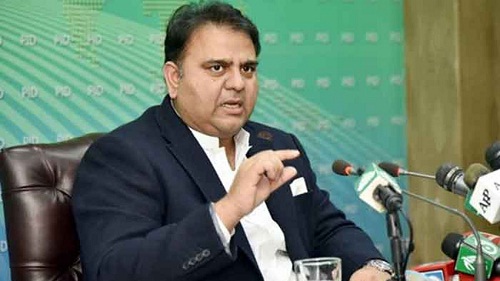
ISLAMABAD: Pakistan Tehreek-e-Insaf (PTI) Senior Vice President Fawad lashed out at the Election Commission of Pakistan (ECP) for postponing scheduled by-polls just few days ahead of the election date on lame excuse of floods, adding that the decisions were being made in closed-room, which he said have neither quality nor durability.
Addressing a press conference here on Sunday, Fawad stated that it was strange that Shahbaz Sharif was sworn in as a prime minister of Pakistan, the day he was to be charged in the Rs. 24 billion corruption case, which has not been framed for last nine months.
He said that the Ramzan Sugar Mill case has not been heard for the last two years, and now NAB pleaded that the law was amended; hence it now did not fall under its jurisdiction. However, Fawad stated that they could not comment anything because it might be contempt of court.
Fawad said that the closed-room decisions have neither quality nor durability; hence interest of the country lies in the decisions made by the people. So let the people decide, he added.
Talking about massive public participation in solidarity rallies across the country, Fawad Chaudhry said that the millions of people showed solidarity with Imran Khan, which was unprecedented.
About ECP’s decision of postponing by-polls, he said that the flood has been going on for two to three months, the situation was getting worse in front of you, you did not get the idea, and three days ago you are saying that there will be no election.
“Besides being biased, the ECP is also suffering from an administrative crisis and incompetence, be it constituencies or declaring 40 lakh voters dead or now postponing the elections by spending billions of nation’s rupees,” he added.
He made it clear that the PTI would get a landslide victory in the elections and that was why the nation saw how they run away from the elections.
Fawad Chaudhry said that the government was not ready to hold elections, because they knew that the guarantees of Ahsan Iqbal, Khurram Dastgir and Shahbaz Sharif would be forfeited; hence better to delay the scheduled polls.
“Institutions are necessary in the country without them the country cannot run, they want to have close relations with the institutions and want to be on the same page with the institutions, the institutions of Pakistan do not represent the people,” he added.
He urged that the unelected institutions should respect political leadership.
Fawad Chaudhry said that it is important to maintain institutional balance in the country, final decisions should be made by people instead of closed rooms, decisions made in closed rooms have no quality.
“Miftah Ismail has made 22 million people cry for many months and yesterday tears are also in his eyes but these tears are given by you,” Fawad told Miftah.
He said that the Prime Minister and the Finance Minister never held a single press conference till date for the interest of the people but they just kept blaming PTI for the IMF program.
Fawad Chaudhary stated that the PTI government kept the prices under control despite challenging situation; however, the imported government broke all record of inflation, besides ruining the economy, industries and all other sectors.
“Today Panadol is not available in the country, inflation has reached 45% and no real estate plan has come for 5 months, but the media is so busy that it cannot even discuss inflation,” he added.
Fawad Chaudhary further stated that today the price of petrol and edible oil has reduced in the world, but the people are facing 45% inflation in Pakistan, adding that during PTI era, petrol in the world market was $105 per barrel, today it is $83 per barrel but they increased the price of petrol by Rs 85 per liter. Edible oil was $1700 in our time and now $800 but did not give relief to the masses. He said that during PTI government, power per unit rate was Rs. 16-18, which surpassed over 36 per unit today.
“We are suffering from isolation at present, our friendly countries helped us in the past, today not a single friendly country has reached out to help Pakistan, because no one has faith in Shahbaz Sharif and his cabinet due to which no one is ready to give money at this time,” he added.
He said that today Imran Khan was going to hold a second telethon, as Rs. 3 billion out of Rs. 5 billion have been collected of which Rs. 1 billion would be used for the flood victims in Sindh, adding that this money has submitted in the banks of Punjab and Khyber Pakhtunkhwa. “Today there is a meeting in which we will decide how to spend this money,” he added.
Globally acknowledged capabilities of forest officers is great honor for Pakistan

Pakistani forest officers can bring green revolution in Middle East with professional skills, better strategy and hard work

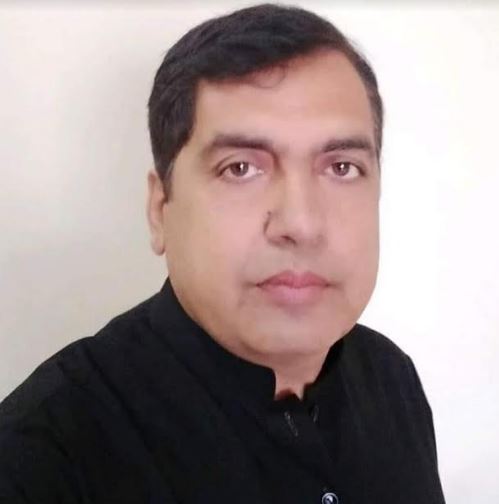
Mumtaz Ahmed Bhatti

Islamabad: Globally acknowledged capabilities of forest officers is a great honor for Pakistan. Pakistani forest officers can bring green revolution in Middle East with professional skills, better strategy and hard work. Despite insufficient staff, vehicles and shortage of funds, the forest officers achieved all the targets. Now it is right to say that the forest officers of Punjab, KP, Sindh, Balochistan, AJK and GB despite insufficient resources are performing better than the forest departments of developed countries.

When the Billion Trees Tsunami Project was launched in KP, such a big project had never been started in Pakistan before and no one had any experience of such a big forest project. KP Forest Department started BTTP as a challenge and it was completed on time. When the Ten Billion Trees Tsunami Project ( TBTTP )was launched, it was a huge challenge for the Forest Departments of Punjab, Sindh, KP, AJK and GB. Despite insufficient staff, vehicles, drone cameras, laptops, low wages for skilled labor and Nigehbaans, flat rates for nurseries land, and shortage of funds, the forest officers achieved all the targets.

At present, the excellent performance of forest officers of Punjab, KP, Sindh, Balochistan, AJK and GB is being appreciated all over the world. The world has recognized that Pakistani foresters can play an ideal role in controlling the serious situation of climate change. At this time, the whole world is on the target of climate change disasters. Many countries in the Middle East already had very high temperatures and now the temperature is increasing. Saudi Arabia, UAE, Qatar, Kuwait, Oman used to have very little rains, but now, unexpected and heavy rains are happening.

In these states, drains were designed for low rainfall, but now due to heavy rains, floods have started, causing huge loss of life and property. In the past, these states also did not focus on solid planning regarding forests. Most of the area of these states consists of land where plantation cannot be successful. The temperature and soil behavior of Saudi Arabia, UAE, Qatar, Kuwait and Oman are similar to many areas of Pakistan and AJK .Like Quetta, Khuzdar, Pashin, Nasirabad, Chaman, Nushki, Qila Saifullah, Zhob, Sibi, Jacobabad, Sukkur, Nawabshah, Larkana, Tharparkar, DI Khan, Bannu, Kohat, Karak, DG Khan, Bahawalpur, Multan, Rahim Yar Khan, Bhambhar and Mirpur. In all the four provinces and AJK, the forest officer has succeeded in planting in all those areas where it was not possible to succeed in plantation due to temperature and soil behavior. Some forest officers went to Saudi Arabia to perform Hajj or Umrah, and were also busy thinking about the green revolution in Saudi Arabia. Several forest officers did deep research in this regard. Pakistani Forest Officers in Saudi Arabia, UAE, Qatar, Kuwait and Oman can best bring about green revolution because Pakistani Forest Officers are working in similar temperature, environment and soil as Middle East states . Pakistani Forest Officers have experience of working on big forestry projects too. There are many forest officers in the forest department of Punjab, KP Sindh, Balochistan, Azad Jammu and Kashmir and GB who want to bring green revolution in all friendly countries and especially in Saudi Arabia so that in future these states will not suffer from climate change. Among the forest officers working in TBTTP, there are officers who have extensive experience in forest departments and some are serving in TBTTP after higher education from foreign countries. If we media persons criticize the forest officers for mistakes and negligence, then it is our duty to appreciate the best performing forest officers. Some senior and highly qualified and experienced and best performing forest officers must be mentioned. In Punjab Shahid Rasheed Awan has worked in various senior positions in Forest Department of Punjab including PD TBTTP now he is Chief Conservator Forest Central Zone Lahore, Muhammad Javed Gill has worked as PD TBTTP now Chief Conservator South Zone Multan, Gauhar Mushtaq Conservator Forest Bahawalpur Circle, Muhammad Nawaz Sindhila is Conservator Lahore Circle, he has also worked as Conservator Gujranwala, Saeed Tabssum is the project director of TBTTP Punjab, he has also been performing his duties as a conservator, Muhammad Azeem Bhangoo is the conservator of Gujranwala, he has also been the conservator of Sargodha and DG Khan, DFO Asim Shah, DFO Azhar Abbas, DFO Agha Hussain, DFO Junaid Mumtaz. In KP Muhmmad Tehmasip khan has been the Project Director Khyber Pakhtunkhwa in Billion Trees Tsunami Project and Ten Billion Trees Tsunami Project, now he is Chief Conservator Hazara Region, Conservator Malakund Shaukat Fayaz, Kifaiat Baloch Conservator watershed Abbottabad, DFO Sardar Farhaad, DFO Abrar Hussain, DFO Mohammad Amjad DFO Mudasir . In AJK Syed Gul Hasan Shah Chief Conservator Development, Sardar Naseer  (R) Chief Conservator Principal, Rafiq Khan Conservator Rawalkot, Conservator Muhammad Sulaiman, DFO Sardar Farooq Khan, DFO Malik Ashraf Parwana, DFO Raja Imran Shafi, DFO Latif Khan, DFO Khalid Mehmood Khan, DFO Muhammad Irshad, DFO Shehbaz Khan. In Sindh Shahzad DDP TBTTP Sindh, Tahir Latif DFO Karachi, Hosh Muhmmad Shar DFO Sukkur, Syed Asif Shah DFO Sukkur. In Balochistan PD TBTTP Syed Imran Shah , Conservator Farooq Kakar, DFO Maqbool, DFO Khalil Sabi and DFO Samudran Khan. All these forest officers, their teams and the skilled labor working with them have achieved all the plantation targets of the Ten Billion Treasunami Project and are determined to achieve all the targets in the future.these forest officers can perform best in forest projects in Middle East including the European countries.

Are we heading towards a final showdown?

Comment

Ansar M Bhatti

While devastating floods continue to take a heavy toll on the affected people in particular and the rest of the country in general, the political climate continues to turn rough with each passing day. Despite a number of court cases, including the terrorism one, PTI Chairman Imran Khan seems undeterred and hence moves on with his anti-government campaign. Albeit, the by-elections have been postponed, the PTI has decided not to stop its mass-contact drive. It has rather decided to give it further impetus by putting inflation at top of its agenda. The coalition government was desperate to get rid of Imran Khan’s public rallies and that is why it sought to get the elections postponed, however it has not happened. The movement is likely to gear up further after this elections postponement.

In his rally in Gujranwala on September 10, 2022 the PTI Chairman announced to give a final call to his workers in near future. Prima facie, Imran Khan appeared to be readying his workers for yet another long march, though many believe this call actually shall never translate into reality, because some under the table deal is already being mulled, which, analysts believe, is likely to bear some fruit. Imran Khan has been using his cards quite prudently or perhaps that is the impression his confidants or even he himself are giving to all and sundry.

During his recent public gathering when he made a mention of the appointment of the next army chief, it was not without a purpose. Previously he was holding the view that this appointment does not concern him at all. It was up to the incumbent government to deal with this issue the way it likes. But now suddenly he has come up with a different view on the subject. His live speeches on the national hook-up were barred by the PEMRA after he said that he will not accept the army chief appointment if made by the coalition government. Not only this, he had demanded this appointment to be made purely on merit, which means the army chief must be picked up from the top two senior generals. Now that is the point where actually the shoe pinches. It has seldom happened in the history of Pakistan that the army chief is picked on the basis of seniority principle. He is always picked up from a panel of five or six senior generals. Historically, candidates appearing in the last in the seniority list were most of the time picked up. The respective prime ministers appointed army chiefs with this hope that the person would serve their interests knowing the fact very well that once appointed the army chief then belongs to his institutions only.

Various plans are under consideration right now. Since Imran Khan has tried to make the army chief appointment controversial by discussing it in a public rally therefore it is likely that the incumbent government tries to avoid making this appointment and leaves it to the caretaker government. In that case a caretaker government will have to be formed either by the end of September or in October. In this scenario, the general elections may take place in January or February next year, if everything goes well. PTI seems comfortable with this arrangement and would like to have it in place sooner rather than later.

There is another scenario as well. The sitting government may appoint the army chief on merit as demanded by the PTI chairman, which means the top position will go to the second senior most general. The senior most ostensibly would become the Chairman Joint Chiefs of Staff Committee. The senior most may also be appointed as the COAS.  If this happens, then obviously it shall be a big shift from status quo to a paradigm change. Hitherto, the forces of the status quo have not allowed any paradigm change to take place in Pakistan.

The Nawaz Sharif camp, on the other hand, has its own plan ready. The PML N supremo is all set to return to Pakistan for that is the only option to keep the PML N vote intact and the party united. Maryam Nawaz has already approached the court to get her passport back. If she is able to get it back, then she departs to London and comes back with her father. There is no denying the fact that the PML N is in dire straits ever since it took over charge of the government after removal of Imran Khan.

Realistically speaking, powers-that-be have realized that PML N led by Shehbaz Sharif cannot compete with the PTI. The by-elections in various constituencies proved this fact when PML N badly lost to the PTI despite the fact it was in power both at the Center and in the Punjab province. This defeat certainly had rung alarm bells within the ranks of PML N making it incumbent upon Nawaz Sharif to earnestly think about his return and lead the party. That is the only way to stop the PTI getting two-thirds majority in the general elections.

 Regarding Imran Khan’s cases, undoubtedly a sword is still dangling over his head because he refused to tender an unconditional apology in the contempt case.   The Khan camp believes an unconditional apology would be tantamount to a confession, which means if the court would hand down punishment, Imran Khan shall have no option to challenge the verdict in the Supreme Court. People privy to this case still believe he can go scot free by tendering an apology at the time of the indictment. His legal experts nevertheless opine, an apology involved huge risks.

Summing up, September and October may be crucial months in Pakistani politics. A future course is likely to be set in these months. It all depends on Imran Khan how serious he is in his long march commitment. If he gives a call then things might get complicated. The government has a plan to impose Governor’s rule in Punjab or KP in order to avoid a long march. That move would further aggravate tensions. The saner voices, as reports suggest, are busy in finding an amicable way out.

US looks to bolster trade, security ties with Pakistan: Derek Chollet

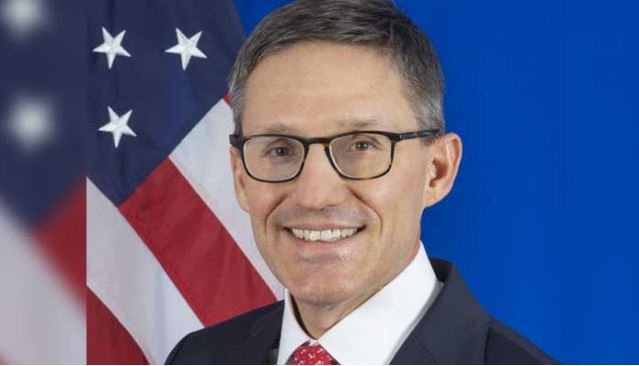
Islamabad Sep 11 – Counselor of the U.S. Department of State Derek Chollet and a delegation of senior U.S. government officials from the Department of State, Department of Defense, U.S. Agency for International Development, and the White House National Security Council visited Islamabad and Karachi September 7-9 to meet with senior government officials, civil society members, and private sector leaders to commemorate 75 years of diplomatic relations between the United States and Pakistan, highlight the importance of our bilateral partnership, and reaffirm our shared goals.  While in Pakistan, Counselor Chollet discussed a wide range of issues including strengthening trade and investment ties, cooperating to mitigate the impacts of the climate crisis, advancing the bilateral health partnership, expanding our people-to-people connections, and conveying U.S. solidarity with the Pakistani people in addressing the humanitarian crisis caused by destructive flooding throughout the country.  Counselor Chollet serves as a senior policy advisor to U.S. Secretary of State Anthony Blinken.  

“This has been a very productive visit to Pakistan, and I’m honored to help commemorate the 75th anniversary of U.S.-Pakistan bilateral relations,” said Counselor Chollet.  “The United States and Pakistan have a robust partnership based on decades of bilateral cooperation and support, and we look forward to strengthening our relationship in trade, investment, clean energy, health, security, education, and other shared priorities.”

During his meetings, Counselor Chollet offered condolences on behalf of the United States on the devastation caused by widespread flooding in Pakistan and emphasized U.S. sympathy and support for people who have lost loved ones, livelihoods, and homes.  In his meeting with Foreign Minister Bhutto-Zardari, Counselor Chollet discussed the $53.1 million dollars in humanitarian assistance provided by the United States this year to support disaster resilience and flood response, with $50.1 million for emergency flood relief in addition to $3 million in programming provided earlier to bolster disaster resilience.  This funding from the United States will provide Pakistani communities with urgent humanitarian supplies for those most affected, while also building resilience against future natural disasters and helping to mitigate the impacts of the climate crisis. 

In Islamabad, Counselor Chollet met with Prime Minister Sharif to discuss strengthening the U.S.-Pakistan bilateral relationship, including increased cooperation on trade and investment, climate, and health.  The Counselor highlighted the strong bilateral health partnership between the United States and Pakistan, particularly the U.S. commitment to donate more than 77 million COVID-19 vaccine doses to Pakistan.  In a meeting with Minister of Finance Ismail, Counselor Chollet discussed the importance of entrepreneurship and Pakistan’s economic potential, emphasizing the promise offered by Pakistan’s youth.  At a roundtable with civil society representatives, the Counselor heard about their activism in upholding democracy, defending marginalized populations, and empowering women. 

Meeting with Army Chief General Bajwa, Counselor Chollet discussed opportunities for the United States to support Pakistan’s flood response and U.S.-Pakistan security cooperation.  As an example of that cooperation, the Counselor informed Pakistani leadership that the Department of State had formally notified Congress of a $450 million Foreign Military Sales case for sustaining Pakistan’s F-16 fleet.  The investment would retain interoperability with U.S. and partner forces in ongoing counterterrorism efforts and in preparation for future contingency operations and signifies enduring U.S.-Pakistani partnership.

While in Karachi, Counselor Chollet met with the Chief Minister of Sindh to discuss opportunities to expand U.S.-Pakistan commercial partnerships and other shared priorities.  They also discussed current conditions in Sindh province, including the extensive damage caused by ongoing flooding and how U.S. and assistance is reaching the people in need.

The Counselor also visited the Jamia Islamia Clifton madrasa in Karachi, which is operating a distribution center for humanitarian relief.  He was joined by the Karachi Administrator and a diverse group of local religious leaders with whom he discussed how assistance packages will directly aid the people of the province and the need for unity in this difficult time.  The Counselor later met with a group of NGOs and individual volunteers to gauge firsthand the enormity of the crisis and learn about ongoing relief efforts.  One of these NGOs was co-founded by a U.S. exchange alumnus, who is working with partners to administer several IDP camps in and around Karachi.  The United States is proud of the leadership skills and compassion displayed by these and countless other USG exchange alumni in Pakistan who have been working to help their communities and country throughout this natural disaster.

To promote U.S.-Pakistan trade and commercial linkages and international maritime sector cooperation, the Counselor met with General Manager of Karachi Port Trust Rear Admiral Zubair Shafique and toured Karachi Port.  Counselor Chollet emphasized the depth of our existing commercial ties, noting that our bilateral trade reached nearly $9 billion in 2021, and that the United States is Pakistan’s largest single export market and one of its largest sources of foreign investment, with U.S. direct investment growing by 50 percent in the past year.  In his engagements with Karachi women entrepreneurs and business leaders, he underscored that the United States remains committed to bolstering our economic partnership, increasing bilateral trade, and promoting additional U.S. business and investment in Pakistan through a wide range of cutting-edge services, partnerships, and programs.

The U.S. government is dedicated to expanding the full range of trade, security, education, people-to-people, and clean energy and health-related cooperation and ties between the Pakistani and American people to promote a more stable, secure, and prosperous future for both our nations. 

FEBR for mustering up resources to bolster flood relief work

KARACHI: The Friends of Economic and Business Reforms (FEBR) on Sunday called for working with the government to muster up maximum resources for immediate response to support the flood relief work, asking the authorities to identify priority needs of food security, health, water, shelter, agriculture and livestock to help the affectees in the country.

FEBR President and the upcoming president of LCCI Kashif Anwar said that the whole business community is standing with the people of Pakistan during these difficult times, as we are committed to work with the government and other development partners to help the country overcome the devastating impact of this natural disaster and provide immediate relief to affected families.

We need to work continuously with federal and provincial authorities to identify how we can help financing the growing needs as the extent of the disaster evolves, and mobilize further finding for the large relief, rehabilitation and reconstruction efforts that are to come in the recovery phase.

He said it might take five years to rebuild and rehabilitate the South Asian nation of 200 million people, which will be facing an acute challenge of food shortage.

Presently, country needs billions grant to support the government’s emergency relief efforts amid widespread floods across the country. We require teams to also help assess the damage caused by floods to draw up plans to support longer term rehabilitation efforts and strengthen communities’ climate resilience, he said.

The FEBR Chief said that the initial economic losses from floods in Pakistan could surpass $18 billion, as unprecedented flash floods caused by abnormal monsoon rains have washed away crops, infrastructure and bridges, killing thousands and affecting more than 30 millions.

The country’s agricultural sector, especially in Sindh and Balochistan, has been hit the hardest with the finance ministry also recently warning that production of major crops would be affected due to the floods. He said 100% of the cotton crop in Sindh, which accounts for30% of the crop in Pakistan, has been destroyed, which amounts to losses of at least $1 billion, which will cascade through the economy, he said.

Heavy rains across Pakistan have triggered flash floods, landslides, and glacial lake outbursts. In July, the country received more than 60 percent of average annual monsoon rainfall in just three weeks. Over 30 million people are estimated to have been affected by the floods with more than 1100 deaths reported while almost half a million people are currently in relief camps. Pakistan has been ravaged by torrential rains resulting in flash floods from north to south, causing large-scale infrastructure damage, as 20% of the sugarcane crop in Sindh has been damaged, which makes up 10% of the entire country’s sugarcane production, he said. More than half of Sindh’s onion and tomato crop has been destroyed and 80% of the rice crop has also been destroyed, which will adversely affect farmers in the province. He said that over 800,000 livestock perished due to floods, mostly in Balochistan.

Zarbat Khan says lot of problems of clean drinking water in Dubkot village

BY SHAHZADIN WAZIR

WANA: /DNA/ – The village Dubkot, located at a distance of three kilometers near FC and DC compound, has disappeared from the eyes of the civil and military leadership.  ,

A government middle school for boys and another higher secondary school for girls have been built in the village of Dubkot, but despite this, the lack of quality education in the school continues.  At the same time, there is no clean drinking water in the school, no electricity,  and other class four employees.

The building of Government Middle School Dubkot for Boy is in dilapidated condition and lacks all facilities. About 300 children are studying in the school for which no water is provided and no class force employees are performing their duties. Faqir Muhammad and Zainullah.  Khojal Khel told the media that protests have been recorded many times to make the said educational institution active, but the education department and the civil administration are not missing a beat.

Zarbat Khan Wazir stated that there is a lot of problems of clean drinking water in the village of Dubkot.  There are some who say that the people of Armi have given me as a caste and some say that Naseer has given me for the sake of friendship.  In this regard, the residents of the area demand an investigation regarding these dugwells.

On the other hand, the building of the Dubkot dispensary is in a dilapidated condition, in which no medicines are available and no doctors are attending. The people belonging to the Khojal Khel tribe demanded the government to find an immediate solution keeping in mind the above mentioned problems.

Pakistan strains to tackle climate challenges

BEIJING, Sept. 11 (DNA): “Pakistan’s contribution to climate change is less than one percent, but it is among the top ten countries most affected by climate change,” said Naseem ur Rehman, secretary at Pakistan’s Environment Commission, in an interview with China Economic Net (CEN).

Regarding how climate changes affect Pakistan, he told CEN that there was a set pattern of fog four or five years ago. It used to happen from Dec. 21 and last a period of time until Jan. 10. However, due to climate changes, the same fog came in the first week of Nov., and its arrival caused smog.

“Where it used to be very cold, the weather has changed and it has started to get hot; where it was hot, the weather has become more severe,” he said, adding that “recently, there are heavy floods.”

Official figures released on Sept 6 showed that the death toll in Pakistan from this season’s monsoon rains and floods that started in mid-June has risen to 1,325 with 12,703 injuries.

Multiple factors have been affecting the environment. Pakistan is a forest poor country. “The international standard is that 25% of the area should be covered by forests, but our forest (coverage) are less than 5%,” he said, adding that “old-technology power plants are running in the power sector, and stubble burning comes in winter.”

However, “be it transport sector or any other industrial sector, efforts are being made everywhere to bring about green revolution by introducing environment-friendly technologies,” he noted.

In the past, two-stroke engines used to drive rickshaws and there were no emission control systems. Brick kilns used to emit black smoke, he said.

“Two-stroke engine rickshaw is now replaced by four-stroke engine rickshaw. Similarly, in the transport sector, no vehicle, from bus to car, imported or manufactured in Pakistan, is not of Euro standard,” he added.

Currently, control systems and treatment plants are being installed in industries, and zigzag technology has been introduced for brick kiln as its combustion system has improved, he told CEN.

Apart from improvement in industrial sectors, there are some soft solutions as well, such as trees. “For many years, all the departments and all the industries have been told to plant trees,” he said, adding that “our main issue right now regarding the environment is that our particulate matter level is rising, exceeding the international quality standards. 

So, the only way to control it is that we control industrial emissions or kiln emissions or vehicle emissions, and the infrastructure we have should be state-of-the-art, and good sanitation system should be in place.”

Fossil fuels, such as coal, oil and gas, are by far the largest contributors to climate change. Regarding this, he mentioned something different about coal. “If engine technologies are good, emissions will be lower even with fuel like diesel, as I said the emission of Euro 2 standard diesel engine bus is the same as CNG bus emission, though fuel is different,” he said, adding that “it is our wish that we move towards e-vehicles. If there are electric vehicles, they will be more environment-friendly.” 

On collaboration between China and Pakistan in improving the environment, he referred to the state-of-the-art Orange Line project. “There cannot be a better and more ideal transportation system. Due to this, thousands of old and diesel vehicles, wagons and buses will be replaced. 

Those who used to travel in a motorcycle rickshaw now travel in an air-conditioned electric train, which has no negative impact on the environment,” he said.

As it is highly vulnerable to climate change impacts, stemming from its dependency on climate-sensitive sectors, such as agriculture and water, Pakistan has officially begun the process of creating a National Adaptation Plan for building resilience to climate change. “The trend now is for improvement,” he said.

PIDE Research Brief on Gas Crises in Pakistan

·        Gas exploration and production have declined in the country.

·        OGDCL predicts that Pakistan’s indigenous oil reserves will be exhausted by 2025.

·        78% of households have no access to natural gas in Pakistan.

·        The circular debt in the gas sector has crossed Rs 1.5 trillion.

·        Politically influenced allocations and monopolistic business operations are all bottlenecks.

Islamabad, SEP 11 /DNA/ – Gas is the third-largest energy source consumed around the world. However, Pakistan has less than a 1 percent share in world gas consumption. It meets its energy demand through imported and indigenous resources in the ratio of 44:56. Natural gas and imported LNG contribute more than 40 percent to the country’s current energy mix, including gas resources used in electricity generation. In recent years, the demand for gas has increased rapidly in Pakistan. However, gas exploration and production have declined, and the LNG operational and regulatory framework is weak, leading to a nationwide shortage and increased supply costs. The latest research brief on “Gas Crises in Pakistan” was revealed by the Pakistan Institute of Development Economics (PIDE).

According to a Press Release issued from the PIDE, a national think tank of the country, it stated that in upstream, 15 gas explorations and production companies work in 55 gas ­fields spread throughout the country. The gas distribution and transmission are mainly owned and operated by two state-owned companies Sui Northern Gas Pipeline Limited (SNGPL) and Sui Southern Gas Company Limited (SSGCL). The gas exploration/production industry and gas distribution/transmission industry lack competition in Pakistan.

It was said in the study that OGDCL predicts that Pakistan’s indigenous oil reserves will be exhausted by 2025. However, current reserves will last a maximum of 15 years if demand is capped at present-day gas levels by 2030.

PIDE research showed that 78% of households have no access to natural gas in Pakistan. Natural gas consumption in the domestic sector has grown by about 11% over the years. Supplying gas to households requires signifi­cant investments. The cost of gas supply to households is much higher than the cost of supply to the industry or power sector. Gas allocation policy has remained based on political priorities rather than on the objective of maximizing value addition. Low gas prices and inefficient gas allocations have encouraged higher demands.

With 30.6 billion cubic meters of natural gas, Pakistan shares 0.8 % of global production. There is a sharp increase in gas demand in Pakistan, but due to the inefficient distribution of natural gas resources, Pakistan has been facing a colossal gas shortfall, the brief revealed.

National Think Tank briefly described that large areas in the country remain unexplored due to security concerns and the law-and-order situation. For instance, Baluchistan’s Pishin basin is considered a valuable block. However, no exploration activity in this basin because of the law-and-order problem.

According to the PIDE research, all the activities in the gas sector in Pakistan, directly or indirectly, are under government control. An independent regulator was established in 2002 to regulate mid and downstream activities. Still, it remained hostage to government decisions because of the extensive state presence in all activities in the supply chain. The OGRA law allows too much mandatory government involvement in the current oil and gas regulatory system. That has made the regulator powerless. Government interference in service providers’ affairs has led to cross-subsidy and an overall deficit in the gas sector. The circular debt in the gas sector has crossed Rs 1.5 trillion, contributed by both the utilities SNGPL and SSGCL. Government irregularities in regulatory frameworks and poor policy formulation are hindering sectoral growth and creating inefficiencies in the supply chain. Politically influenced allocations and monopolistic business operations are all bottlenecks.

The research brief recommends that ensuring reliable and high-quality uninterrupted natural gas supply and efficient services is one of the critical aspects of the regulatory process. The gas distribution companies must maintain adequate pressure in the transmission pipelines and distribution networks and upgrade the system where necessary to ensure supply of contractual volume and pressure to its consumers. Gas resources are depleting, but these monopolies are expanding their transmission and distribution networks to maximize their ­financial returns. As a result, these companies, especially SNGPL, have earned enormous profi­ts over the years.

The research further state that in both utilities, mismanagement and irregularities have affected their operational performance. Though private entities own 40% or more of their shares, these companies have no business model. There is no regulatory mechanism to link their ­financial returns to their operational efficiency. Underground pipeline leakage, poor maintenance, measurement errors, wrong billing, law & order, and theft have contributed signifi­cantly to Pakistan’s unaccounted-for gas. The two integrated companies, SNGPL and SSGC, are over-regulated monopolies with no incentive to improve their inefficiencies and service delivery. Against the OGRA allowance of UFG at 4.5 %, the gas losses in these companies remained relatively high. After 2017, this allowance increased to 7% and 8.5% for SNGPL and SSGCL to compensate for declining profi­ts.

PIDE research brief suggested the way forward in the following key recommendations:

  • Prioritize exploration activities to rely on LNG imports, correct well-head prices, and minimize government interference.
  • A progressive and market-based exploration policy is needed.
  • Pakistan should de-regulate the natural gas sector and liberalize the pricing structure. Market-based pricing systems will also curtail the misuse of gas. For LNG imports, incentivize third-party access increased involvement of the private sector in the LNG supply chain happening in mature LNG markets like Japan, South Korea, and even India. Higher private sector participation in these countries facilitates cheaper fuel availability, smooth procurement processes and allows market-based price discovery (SBP, 2021).
  • To maximize returns from private sector involvement and guarantee the sustainability of the natural gas sector, it is essential to fi­rst solve the profound structural and operational challenges.
  • Without rationalizing the subsidy structure, the ­financial viability of the natural gas sector is difficult to achieve. The tariff must be set on a cost-of-service basis for a reliable and sustainable gas sector.
  • Gas allocation to industries should be from a growth perspective and not based on political decisions. Energy efficiency legislation and strict implementation in all sectors are compulsory.
  • Restructuring of gas utilities is required to improve their operational and managerial efficiency. Unbundling these monopolies between ‘pipeline’ and ‘retail’ is inevitable before allowing for other private participants in the ‘pipeline’ and ‘retail’ business.
  • To improve management and administration in SNGPL and SSGC, slicing them into smaller units may also help.
  • It’s high time to get rid of guaranteed returns based on network expansion. Companies must have a business model to earn pro­fits from operational efficiency.
  • All gas companies should operate commercially without any political interference by any government.
  • Government should limit its role to policy making and effective legislation for market liberalization.
  • There should be a single autonomous regulatory authority for upstream, midstream, and downstream activities. But the regulator must have the powers and capacity to monitor the sector effectively and ensure market development.

CPACT holds fund raiser in Canada for flood victims

DNA

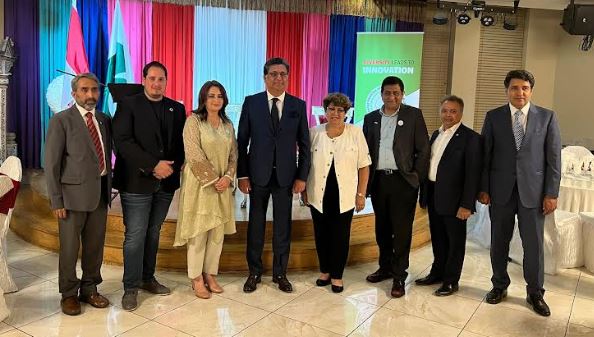
OTTAWA: CPACT held an urgent fundraiser in Montréal at Dera Restuarant to assist with Flood Relief efforts in Pakistan. It was a somber evening attended by the High Commissioner of Pakistan to Canada Zaheer Aslam Janjua, Councillor General Montréal Ishtiak Ahmed Akil, Red Cross Quebec Lead Ramzi SFEIR, Mary Deros City councilor, Journalist- City News Montréal Fariha Naqvi-Mohamed.

The pleas by the speakers relayed the message of compassion and the reality that Pakistan is bearing the brunt of climate change crises. One-third of Pakistan is underwater and the Damage is set to hit $10 billion. This is just the first step….funds will be needed for relief, recovery and resilience activities.

The event was attended by the Pakistani business and professional diaspora of Montréal who were determined to make a difference and over $45,000 was raised towards flood relief efforts at the event with more donations still being received.

War and its impact on the environment

Muhammad Omar Iftikhar 

Wars and conflicts always end up destroying infrastructure. It eats up flora and fauna while hurting the environment. Russia’s invasion on Ukraine in February 2022 was nothing short of an ultimatum to Ukraine and the world. It was a direct message to the European Union. According to a report, nearly 3,000 civilians have been killed in Ukraine with an equal amount or more to be injured. Russia’s onslaught has been polluting Ukraine’s environment.

Residues from weapons and ammunition have been contaminating the water supply.  The risk of illnesses and ailments is likely to emerge when people are exposed to toxic gases. Yevhenia Zasyadko, Head of the Climate Department of the NGO Ecoaction said, “This war can cause many deaths in the future due to polluted water. We record soil pollution and mining of our fields. Food security and our fertile soils are in great danger caused by the actions of the occupiers.”


The Russia-Ukraine conflict is not the first time when the adverse impact of war is seen on the environment. The US covered nearly 4.5 million acres of rainforest in Vietnam with herbicides as a part of their tactical plan to fight against the Vietnamese soldiers. Similarly, almost 90% of the wild elephant population at Mozambique’s Gorongosa National Park was destroyed during the civil war from 1977 to 1992. While wars adversely affect natural resources, the post-war times compel the citizens to fight with each other to get their hands on the resources that remain.

This creates class differences and builds animosity among the citizens. Food shortages are also a result of the same when fields and crops are burned and the land is not suitable for agricultural purposes. Ukraine’s 42 million hectares of land are used for agriculture. Time will tell how much of this land will be available for growing crops.

Stay Connected

64FansLike
60FollowersFollow

Latest Reviews

Exchange Rates

USD - United States Dollar
EUR
1.17
GBP
1.34
AUD
0.67
CAD
0.73