Home Blog Page 149

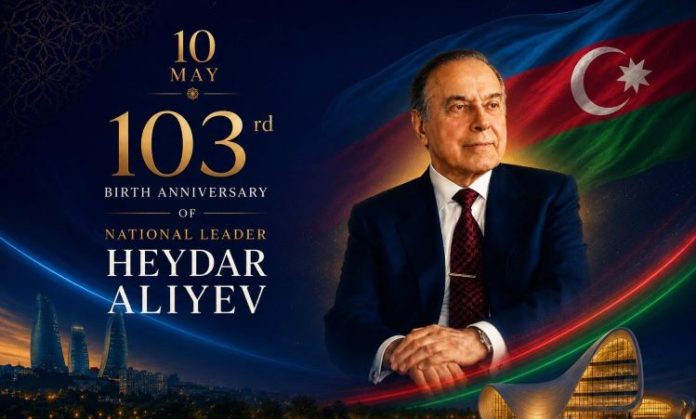
Heydar Aliyev — The Founder of a Strong and Independent Azerbaijan

Heydar Aliyev — The Founder of a Strong and Independent Azerbaijan

Among the distinguished leaders whose legacies are etched into the chronicles of global history, Heydar Aliyev stands out for his pivotal role in shaping the contemporary history of Azerbaijan.

National Leader Heydar Aliyev’s extraordinary vision played a pivotal role in guiding Azerbaijan to independence and setting the course for its national development. His exceptional leadership, as well as during the late 20th century, was vital as the country faced major geopolitical changes after the dissolution of the Soviet Union.

During Heydar Aliyev’s first period of leadership in Azerbaijan, the country witnessed remarkable progress in socio-economic, scientific, technical, and cultural spheres within a short span of time. This advancement was driven by his exceptional talent in state governance, strong political will, deep patriotism, and visionary, goal-oriented decisions.

Thanks to the unparalleled contributions of the Great Leader between 1969 and 1982, Azerbaijan entered a new era of large-scale construction, creative development, and rapid progress across all areas of life. Crucial decisions were made and concrete actions were taken to develop national human resources, appoint qualified individuals to key positions, strengthen public administration institutions, and foster growth in science, education, industry, healthcare, culture, and other vital sectors. Thousands of young Azerbaijanis were sent to top public administration schools and educational institutions across the former Soviet Union, where they received training in advanced industrial fields.

During this period, Azerbaijan’s national income and overall production in industry and agriculture increased significantly. More capital investment was directed toward economic development than in previous decades, resulting in the construction and commissioning of hundreds of large industrial plants and factories.

In recognition of his leadership he was appointed First Deputy Chairman of the USSR Council of Ministers in 1982. In this high-ranking position, he oversaw some of the most critical areas of the Soviet Union’s economic, social, and cultural affairs.

It should be underlined that Heydar Aliyev’s exceptional state management abilities, strong political will, and unwavering determination were once again clearly demonstrated during his tenure as one of the top leaders of the USSR, where he successfully led major initiatives and large-scale projects. Throughout this period, he consistently prioritized the interests of the Azerbaijani people, leveraging every opportunity to support the republic’s development.

In October 1987, as a protest against the policies pursued by the Political Bureau of the Central Committee of the Communist Party of the Soviet Union and specifically by Secretary General Mikhail Gorbachev, Heydar Aliyev resigned from his position.

Upon his return to Azerbaijan in July 1990, Heydar Aliyev first lived in Nakhchivan, where he was elected to the Supreme Soviet of Azerbaijan the same year. In 1991-1993, he served as the Chairman of the Supreme Majlis (the legislative body) of Nakhchivan Autonomous Republic and the Deputy Chairman of the Azerbaijan Supreme Majlis.

In May-June 1993, when, as a result of a crisis in the government, the people of Azerbaijan demanded to bring their genius son, Heydar Aliyev to power, and the authorities of the day had no other choice but to invite Heydar Aliyev back to Baku.

Responding to the will of the people during a time of great turmoil, Heydar Aliyev returned to power and led the country out of political chaos and disunity. He prevented the severe decline affecting all sectors, restored stability, and laid the foundation for the state’s long-term, sustainable development.

The Contract of the Century, the Baku-Tbilisi-Ceyhan pipeline, and other internationally important projects are connected with the name of Heydar Aliyev. As a result of the great leader’s wise policy, high-speed socio-economic development was ensured in Azerbaijan, and it became a country with a strong position in international relations. The years under the leadership of Heydar Aliyev in Azerbaijan were the fateful stage when the nation took advantage of a rare historical opportunity and made its independence eternal and irreversible at the cost of great suffering.

In short, the National Leader of the Republic of Azerbaijan is a personality who created history and today he is being remembered by the people of Azerbaijan for his shining and great services to his nation.

Today, the political course defined by the National Leader is being successfully continued by the President of the Republic of Azerbaijan, Ilham Aliyev. Under his leadership, the country won the 44-day Patriotic War. The territories liberated from almost 30 year long Armenia’s occupation in 2020. President Ilham Aliyev fulfilled the dream of his father and the National Leader by liberating the lands of Azerbaijan from occupation and now the three-color national flag of Azerbaijan is waving in the liberated lands.
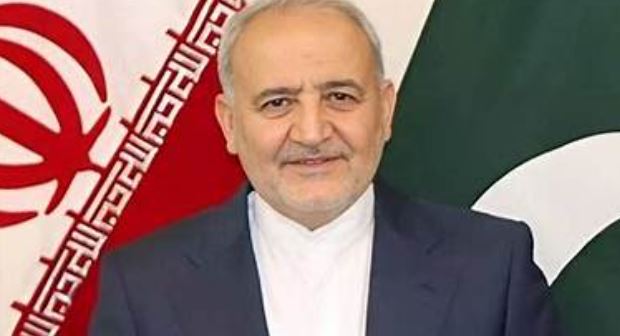

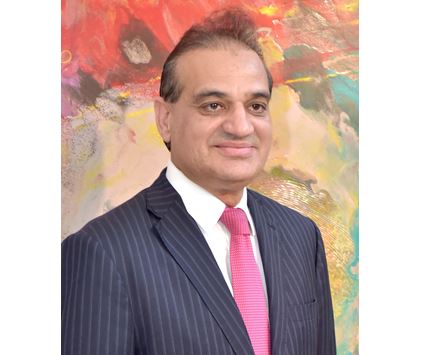
Reza Amiri Moghadam condemns Bannu Terror Attack

Reza Amiri Moghadam condemns Bannu Terror Attack

Saifullah Ansar

ISLAMABAD: Reza Amiri Moghadam has strongly condemned the terrorist attack on the Fateh Khel police post in Bannu, which resulted in the martyrdom of 15 police personnel and injuries to several others.

In a statement issued on social media, the Iranian envoy expressed deep sorrow over the tragic incident and conveyed solidarity with the government and people of Pakistan. He termed the attack “hideous and awkward,” emphasizing that terrorism remains a common threat to regional peace and stability.

“On behalf of the Government and the people of the Islamic Republic of Iran, I strongly condemn the terrorist attack on the Fateh Khel police post in Khyber Pakhtunkhwa’s Bannu district,” the ambassador stated.

He extended heartfelt condolences to the Government of Pakistan, the police force, and especially the bereaved families who lost their loved ones in the attack.

“Our thoughts and prayers are with the families who have lost their loved ones. We pray for the safe and speedy recovery of the injured,” he said.

The ambassador also prayed for eternal peace for the martyrs, saying, “May Allah Almighty grant His blessings to the martyrs and bless them with eternal peace in Jannat-ul-Firdous.”

The attack on the police post has drawn widespread condemnation from across Pakistan and the international community, with leaders and diplomats expressing solidarity with the victims and appreciation for the sacrifices made by Pakistan’s security forces in the fight against terrorism.

South Korea welcomes rare baby bump

South Korea welcomes rare baby bump

SEOUL: Kim Su-jin and her husband have set aside their doubts and embraced parenthood, joining a small but notable wave of South Korean couples having children despite the country’s steep demographic decline.

South Korea has one of the world’s lowest birth rates, and the government has spent billions of dollars trying to encourage citizens to have more babies and cushion the worst impacts of a shrinking population.

The Asian nation is still nowhere near reversing the trend, but a modest baby bump has come after years of consistently low statistics — even as experts disagree on the underlying causes.

Kim, 32, a freelance music industry worker, gave birth to her daughter in January last year despite earlier financial concerns during her four-year marriage.

She shook off worries over housing, schooling and work “because we believed that having (a baby) would bring us happiness,” she told AFP.

South Korea’s fertility rate hit a record low in 2023 but has picked up since then, with the number of monthly births consistently rising compared to the previous year.

Nearly 23,000 babies were born in February, the most for that month in seven years, according to the statistics ministry.

The on-year growth of 13.6 percent was the highest for any February since records began in 1981.

Pro-natalist policies

The uptick in births has tracked a similar, though less even, rise in marriages going back to mid-2022, official figures show.

Experts said the trend may reflect more positive attitudes toward family among younger South Koreans.

But they differed on what was driving the shift and how important it was compared with factors such as pro-natalist policies.

Hong Sok-chul, an economics professor at Seoul National University (SNU), said the programs had been “quite effective.”

“Rather than trying to force marriage or childbirth … the government focused on lowering the direct and indirect costs to make these choices more rational,” he said.

Kim Woo-jin, 33, said vouchers she received from the government had “played a significant role in alleviating the financial burden” of pregnancy, childbirth and child-rearing.

She cited a payment of two million won ($1,400) when her daughter was born last year, a one-million-won voucher to cover maternity fees, and subsidies for transport and post-natal care.

“I believe that the significant improvements (in state support) … played a role in the recent rebound” in births, the office worker said.

Money isn’t everything

South Korea also pays parents a one-million-won monthly allowance during the baby’s first year, while other policies include low-interest loans for young families buying homes, expanded parental leave and subsidized fertility treatment.

Some companies also hand large bonuses to staff who have children.

For some couples, though, the incentives have made little difference.

Kim Su-jin, the freelancer, said government support “in reality … provides little substantial assistance.”

Why Pakistan must rethink its national priorities

A diplomatic convergence: a positive signal for ME peace

Opinion

Ansar Mahmood Bhatti

Interestingly, Pakistan has consistently found itself at a critical crossroads, regardless of which government is in power. The country continues to grapple with political uncertainty, economic instability, institutional weaknesses, rising poverty, and growing public frustration. Yet amid all these crises, very few people are addressing the real causes behind Pakistan’s decline. Public debate revolves around roads, motorways, underpasses, transport systems, and infrastructure projects. No doubt such developments are important for a modern state, but nations are not built merely with highways and concrete structures. Nations are built on justice, rule of law, constitutional supremacy, honesty, and equal opportunities for all citizens.

Unfortunately, these foundational principles have long been neglected in Pakistan. The Constitution, which should serve as the guiding document for governance and national direction, is often interpreted according to political convenience. Institutions that should protect justice and accountability remain under pressure, while ordinary citizens continue to suffer without relief. The absence of rule of law has created a dangerous environment where influence and wealth often matter more than merit and fairness.

Pakistan’s economic condition reflects the same structural weaknesses. The country survives largely on loans, aid packages, and financial assistance from friendly nations. Every new IMF agreement is celebrated as a diplomatic or economic victory, when in reality it should be a matter of national concern and introspection. A self-respecting nation cannot continue surviving indefinitely on borrowed money. Loans may temporarily stabilize the economy, but they cannot create sustainable growth without reforms, productivity, and transparent governance.

The comparison with India is uncomfortable but necessary. Pakistan recently demonstrated courage and capability in defending itself against a much larger adversary. Militarily and strategically, Pakistan proved that size alone does not determine strength. However, economic realities present a different picture altogether. India, despite its own challenges, has transformed itself into a global economic force. It no longer seeks bailouts from international financial institutions; rather, it contributes financially to them. This contrast raises an important question: when will Pakistan shift from dependency to self-reliance?

The answer lies not in slogans but in reforms. Pakistan’s foreign exchange reserves are often sustained through deposits and support from friendly countries rather than through strong exports and industrial growth. Exports remain stagnant, industries struggle, and investors hesitate because of inconsistent policies and political uncertainty. Pakistan received the European Union’s GSP Plus trade status, which offered enormous opportunities to expand exports and strengthen the economy. Yet the stakeholders were not able to fully capitalize on this facility. Now even the continuation of this status faces uncertainty, though it may still survive due to geopolitical considerations rather than merit-based performance.

This is another harsh reality Pakistan must understand. Whether it is IMF assistance or international trade concessions, many such decisions are influenced by global politics and strategic interests. They are not always rewards for good governance or economic excellence. Relying on political considerations instead of strengthening internal capacity is a dangerous strategy for the future.

Among all the challenges facing Pakistan, corruption remains perhaps the biggest and most destructive. Yet strangely, corruption is no longer discussed with seriousness or urgency. It has become normalized within society. From small offices to major institutions, the system often rewards connections and money instead of honesty and competence. In Pakistan, it increasingly appears that money can make almost anything possible. This culture destroys merit, discourages hardworking citizens, and weakens national institutions.

As a result, whatever Pakistan earns or receives through loans fails to benefit the common people. Resources are consumed by inefficiency, misuse, corruption, and elite capture. The burden eventually falls on ordinary citizens through inflation, unemployment, higher taxes, and declining public services and these days inflated fuel bills.

The social consequences are alarming. A significant portion of the population now lives below the poverty line. Millions struggle daily to secure food, shelter, and basic necessities. Education, which should be the backbone of national progress, remains inaccessible for many children. Countless young Pakistanis are deprived of quality schooling, limiting their ability to compete in the modern world. Healthcare has become another privilege reserved largely for the wealthy, while the poor are left helpless in overcrowded hospitals with limited facilities.

Those who hold power whether political leaders, policymakers, or influential stakeholders must remember one fundamental truth: power without moral authority has little meaning. Authority imposed without justice, transparency, and public trust cannot provide lasting stability. History repeatedly shows that nations survive not merely through force or political control, but through legitimacy, fairness, and the confidence of their people.

Pakistan still possesses enormous potential. It has talented youth, strategic importance, natural resources, and resilient citizens who continue to endure hardship with remarkable patience. But patience alone cannot guarantee a better future. The country urgently needs institutional reforms, economic discipline, accountability, and a renewed commitment to constitutional governance.

Pakistan cannot continue moving from one crisis to another while ignoring the root causes of its problems. Cosmetic development projects and temporary financial arrangements cannot substitute for structural reform. If corruption continues unchecked, if justice remains weak, if education and healthcare stay neglected, and if economic dependency deepens further, then the future will become increasingly uncertain.

Pakistan must decide what kind of nation it wants to become. A country permanently dependent on loans and political compromises, or a confident and self-reliant state built on merit, justice, and the rule of law. The choices made today will determine whether future generations inherit stability and hope or more crises and disappointment.

If the country continues on its current path without meaningful change, Pakistan risks losing not only economic opportunities but also the trust and aspirations of its own people.

The writer is the newspaper editor.

Israel, US focused strikes on nuclear weaponization over enrichment during Iran war – report

Israel, US focused strikes on nuclear weaponization over enrichment during Iran war - report

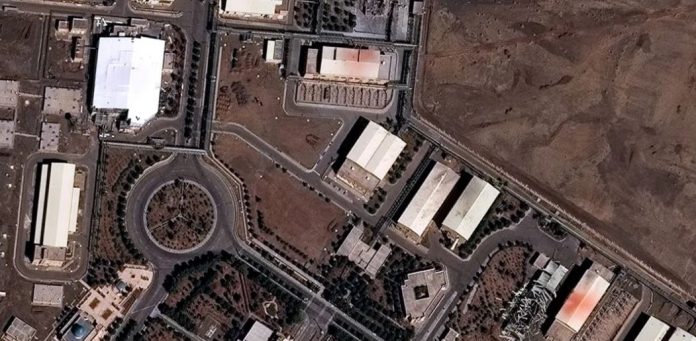
WASHINGTON: Israel and the US prioritized the degradation of Iran’s nuclear weaponization abilities during Operation Roaring Lion and Operation Epic Fury over the targeting of nuclear enrichment sites, an Institute for Science and International Security (ISIS) analysis of satellite imagery revealed on Thursday.

According to the analysis, little new damage was dealt to Iranian nuclear enrichment facilities already destroyed in strikes carried out during the 12-day war in June of 2025.

Instead, facilities and infrastructure related to the weaponization of enriched uranium, such as development sites, were targeted.

Advertisement

One such target analyzed by the institute was the Min Zadai site, which is suspected to have played a key role in Iran’s attempts to recover nuclear weapons capabilities after the June 2025 strikes.

On March 3, the IDF announced strikes on the complex, describing the site as a partially underground “nuclear headquarters” where nuclear scientists were developing key components for nuclear weapons systems.

A symbolic mockup of an Iranian missile is displayed, amid a ceasefire between U.S. and Iran, in Tehran, Iran, April 27, 2026.
A symbolic mockup of an Iranian missile is displayed, amid a ceasefire between U.S. and Iran, in Tehran, Iran, April 27, 2026. (credit: MAJID ASGARIPOUR/REUTERS)
Reporting by the French newspaper Le Monde suggested that the Min Zadai complex was involved in the metallurgy of nuclear weapons cores.

Another such site is Taleghan 2, a highly fortified facility within Iran’s Parchin military complex that has been used in Iran’s nuclear weapons testing and development of advanced explosives.

Weaponization-tied Tehran universities targeted
Universities with connections to Iran’s development of nuclear weapons were also targeted.

Tehran’s Malek Ashtar University, which the IDF directly tied to nuclear weaponization, and an adjacent laboratory-type building connected to the university by a footbridge, were heavily damaged in strikes.

The university-adjacent laboratory was built right next to the Mojdeh site, a nuclear site destroyed by Israeli strikes in June 2025.

Imam Hussein University, a key Islamic Revolutionary Guard Corps (IRGC) university, was struck on March 10 for hosting an underground weapons research and development complex used by the IRGC for experimentation and testing related to ballistic missiles.

In addition to at least four sites specifically tied to nuclear weaponization by the IDF, the ISIS analysis identified three other targeted sites likely to have also been used in the development of nuclear weapons.

The destruction of key weaponization sites, according to the institute, likely significantly increased the time it would take for Iran to complete the production of nuclear weapons.

Putin says army fighting ‘aggressive’ Nato-backed force in Victory Parade address

Putin says army fighting 'aggressive' Nato-backed force in Victory Parade address

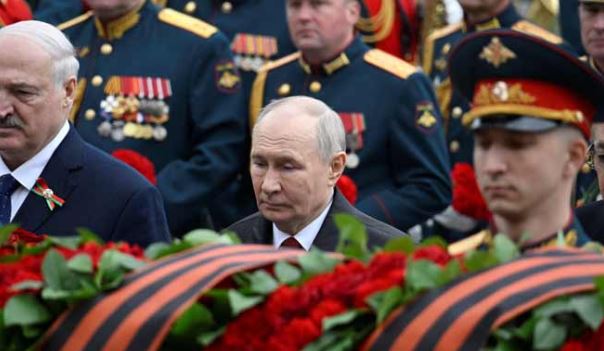
MOSCOW: Russian President Vladimir Putin said on Saturday that his soldiers in Ukraine were fighting an “aggressive force” backed by all of Nato and described his war goals as “just”, in a combative address to the annual Victory Day parade on Red Square.

Putin has made the memory of the Soviet victory over Nazi Germany in World War II a central narrative of his 25-year rule, and authorities typically mark the parade with pomp and grandeur.

But a spate of Ukrainian long-range attacks in recent weeks prompted the Kremlin to ramp up security measures and downsize this year’s celebrations.

The parade was vastly scaled back compared to previous years, with no military hardware on display for the first time in nearly two decades and only a handful of foreign dignitaries in attendance — most of them leaders of Russia’s close allies.

Both Moscow and Kyiv agreed to observe a three-day ceasefire over the event, following a last-minute appeal from US President Donald Trump. Moscow had threatened a “massive” strike on central Kyiv if Ukraine disrupted the proceedings.

In an address to the parade, attended by Russian military units as well as soldiers from North Korea, Putin invoked the Soviet victory to rally support for his army in Ukraine.

“The great feat of the generation of victors inspires the soldiers carrying out the goals of the special military operation today,” Putin said.

“They are confronting an aggressive force armed and supported by the entire Nato bloc. And despite this, our heroes move forward,” he said.

“I firmly believe that our cause is just,” he added later.

Three-day ceasefire
After two failed attempts at truces this week by both Russia and Ukraine, Trump announced on Friday a three-day ceasefire between both sides would come into effect from May 9.

“Hopefully, it is the beginning of the end of a very long, deadly, and hard-fought War,” Trump posted on his Truth Social network, adding the ceasefire would be accompanied by a prisoner exchange.

Ukrainian President Volodymyr Zelensky issued a decree on Friday ordering the Ukrainian military not to attack the parade and in a separate statement confirmed his government would adhere to the ceasefire to enable the swap of 1,000 detainees from each warring side.

“Red Square is less important to us than the lives of Ukrainian prisoners who can be returned home,” Zelensky said, referring to the historic site in the Russian capital where the annual event is held.

Both the Ukrainian air force and Russian defence ministry reported fewer drone attacks overnight.

Now in its fifth year, the war has killed hundreds of thousands of people and spiralled into Europe’s deadliest since World War II.

US-mediated talks on ending the fighting have shown little progress since February, when Washington shifted focus to its war against Iran.

Before Trump’s announcement on Friday, Zelensky had balked at the idea of a truce over the parade and warned Moscow’s allies against attending.

Russia had threatened a massive strike on the heart of Kyiv if Ukraine disrupted the commemoration and urged foreign diplomats to leave the Ukrainian capital ahead of the event.

Security was tight in the capital before the parade, with AFP reporters seeing empty streets.

Mobile internet was also disrupted.

Only the leaders of Belarus, Malaysia and Laos, as well as Slovak Prime Minister Robert Fico, were set to attend, in contrast to high-profile visitors including China’s Xi Jinping during last year’s event.

Zelensky expressed hope on Friday that US envoys would visit Ukraine in the coming weeks to reboot talks on ending the war.

Riphah Varsity starts PhD, M.Phil classes

Riphah Varsity starts PhD, M.Phil classes

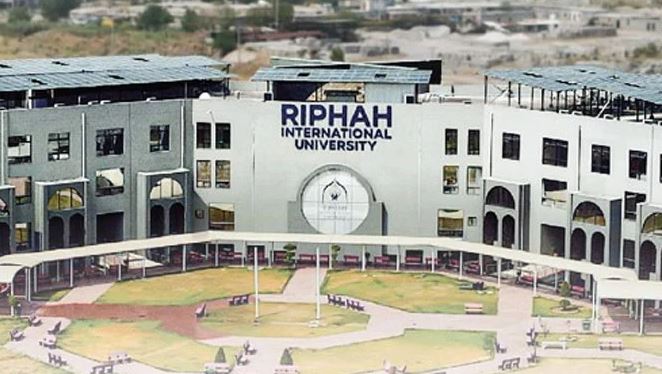
PESHAWAR, May 09: Riphah International University (RIU) Peshawar Campus has formally started postgraduate (PhD, M.Phil ) classes at the Department of Islamic Studies.

Addressing the inaugural ceremony as a chief guest here Saturday, former Chairman Council of Islamic Ideology, Prof. Dr. Qibla Ayaz highlighted the University’s significant role in the dissemination of quality knowledge. He emphasized the necessity of an indigenous education system to develop scholars capable of tackling modern social complexities.

He urged the inaugural batch of students to look beyond simple coursework and strive for in depth knowledge and rigorous research to address contemporary challenges particularly issues within the family system.

CDF Munir to address Marka-e-Haq victory ceremony at GHQ tomorrow

CDF Munir to address Marka-e-Haq victory ceremony at GHQ tomorrow

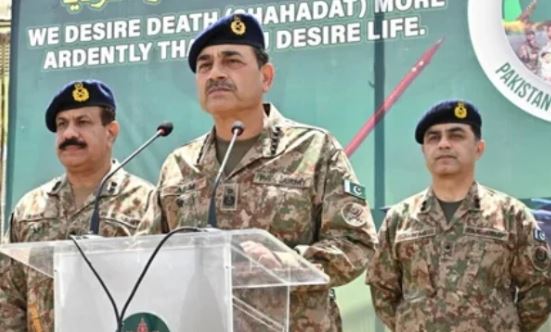
RAWALPINDI, MAY 9: Chief of Army Staff (COAS) and Chief of Defence Forces (CDF) Field Marshal Asim Munir will address a ceremony marking one year of Marka-e-Haq victory at GHQ, Rawalpindi, tomorrow (Sunday).

The ceremony, scheduled to begin at 8:40am, will feature top military leadership, with Field Marshal Munir participating as chief guest.

Air Chief Marshal Zaheer Ahmad Babar Sidhu and Chief of Naval Staff Admiral Naveed Ashraf will also attend the event, which includes wreath laying at the martyrs’ monument and a tri-services salute.

Marka-e-Haq (battle of truth) refers to the 19-day military conflict with India, spanning from April 22 to May 10, 2025.

On May 6-7 last year, India launched an unprovoked attack on Pakistan, following an attack on tourists in the Indian Illegally Occupied Jammu and Kashmir.

Pakistan, during the 87-hour conflict, downed eight Indian fighter jets, including French-made Rafale, and dozens of drones. The war between the two nuclear-armed nations ended on May 10 with a ceasefire agreement brokered by the US.

Earlier this week on Thursday, Inter-Services Public Relations (ISPR) Director General Lt Gen Ahmed Sharif Chaudhry said that Pakistan was “preparing for the future war,” while asserting that the country had not underestimated New Delhi but “placed them [India] where they are.”

ISPR DG made the remarks while addressing a press conference along with Rear Admiral Shifaat Ali Khan and Air Vice Marshal Tariq Ghazi to mark the first anniversary of Marka-e-Haq.

He noted that Pakistan’s military had defeated an enemy “five times larger than itself,” and further described India as a “terrorist state”.

Separately, the Islamabad Traffic Police have issued an advisory ahead of a scheduled event set to be held to mark the first anniversary of Marka-e-Haq on May 10, 2026.

According to the advisory posted on X by the Islamabad deputy commissioner, temporary traffic diversions will remain in place across several key routes in the capital city from 6pm to 12 midnight on May 10.

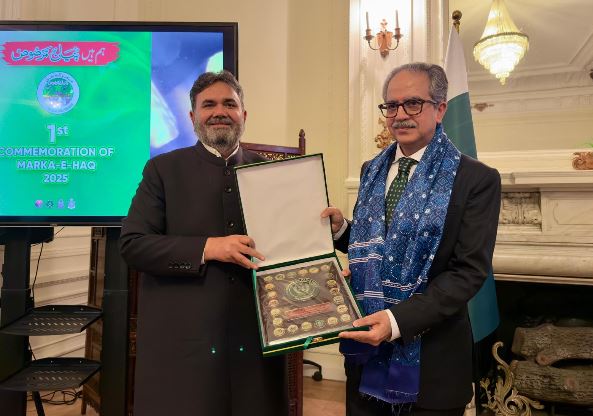
First anniversary of Marka-e-Haq commemorated in New York

First anniversary of Marka-e-Haq commemorated in New York

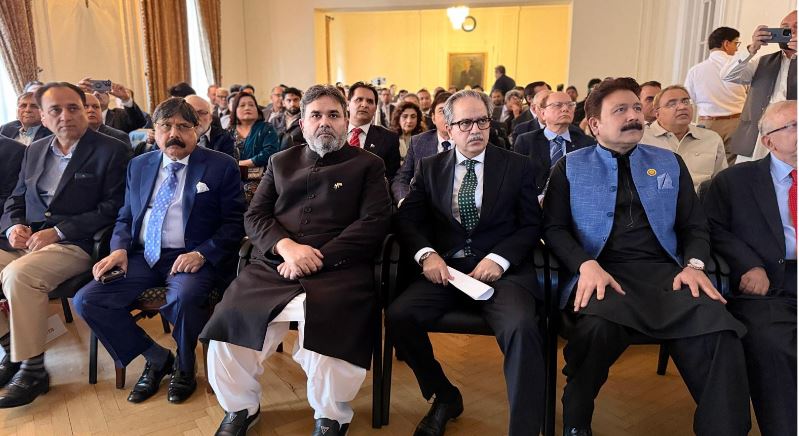
NEW YORK, MAY 9 /DNA/ – The Permanent Mission of Pakistan to the United Nations and the Consulate General of Pakistan in New York jointly organized a community event in New York to commemorate the first anniversary of Marka-e-Haq under the theme “Commemorating Pakistan’s Victory, Resilience, Resolve and Pursuit of Peace.” The event was attended by a large number of members of the Pakistani and Kashmiri diaspora, community leaders, academics, and representatives of civil society.

The event commenced with the national anthem of Pakistan, followed by a documentary highlighting the historic success of Marka-e-Haq and the bravery, professionalism, and sacrifices of the Armed Forces of Pakistan.

In his opening remarks, the Consul General of Pakistan in New York, Mr. Aamer Ahmed Atozai, stated that Marka-e-Haq represented a defining moment in Pakistan’s history which demonstrated the nation’s unity, resilience, and unwavering commitment to safeguarding its sovereignty and territorial integrity. He paid tribute to the martyrs and ghazis of Pakistan and commended the professionalism and courage of the Armed Forces of Pakistan. He underscored that Pakistan remains committed to peace, dialogue, and regional stability, while fully capable of defending its national interests against any aggression.

Senator Rana Mahmood-ul-Hassan, Dr. Gholam Mujtaba, Chairman Pakistan Policy Institute, Dr. Ghulam Nabi Fai, Secretary General, World Kashmir Awareness Forum, Mr. Ali Rashid, community leader, and Mr. Taj Khan, Kashmiri activist, highlighted that the success of Marka-e-Haq reflected the unity, resilience, and collective resolve of the Pakistani nation. They also paid tribute to the sacrifices rendered for the defence and security of the homeland.

The speakers further reiterated Pakistan’s principled position on Jammu and Kashmir and stressed that lasting peace and stability in South Asia remained linked to the peaceful resolution of the Jammu and Kashmir dispute in accordance with the relevant United Nations Security Council resolutions and the aspirations of the Kashmiri people.

In his concluding remarks, Ambassador Asim Iftikhar Ahmad, Permanent Representative of Pakistan to the United Nations, stated that Marka-e-Haq demonstrated Pakistan’s maturity, restraint, and firm commitment to safeguarding peace with dignity. He underscored Pakistan’s commitment to regional peace, multilateralism, and international law, while emphasizing that the country remained fully capable of defending its sovereignty and territorial integrity against any aggression. He also appreciated the strong support and engagement of the Pakistani-American and Kashmiri diaspora in promoting Pakistan’s perspective and strengthening the country’s image abroad.

The event concluded with prayers for the progress, prosperity, and security of Pakistan.

Saudi Arabia expresses support for Bahrain over security measures

Saudi Arabia expresses support for Bahrain over security measures

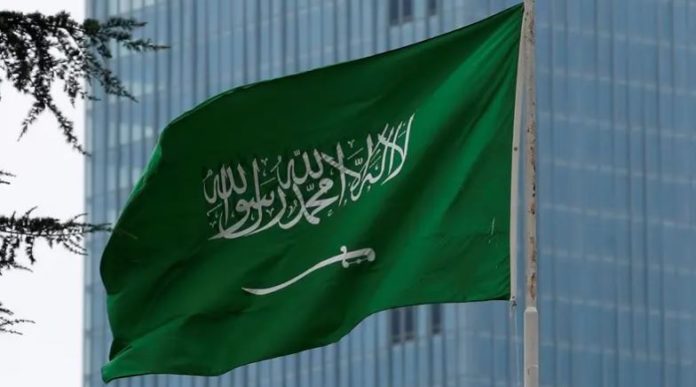
RIYADH, MAY 9: Saudi Arabia on Saturday expressed its support for measures taken by Bahrain to safeguard its security and stability, the Kingdom’s foreign ministry said on Saturday.

“The foreign ministry expresses the full support of the Kingdom of Saudi Arabia for the measures that the brotherly Kingdom of Bahrain has taken in the face of activities observed that aim at destabilizing the security and stability of the brotherly Kingdom of Bahrain,” the Saudi foreign ministry said in a statement.

For all the latest headlines, follow our Google News channel online or via the app.

The statement further praised the “efficiency of the security institutions” of Bahrain, its “vigilance” at uncovering and pursuing activities that it said pose a threat to the national security of Bahrain.

Earlier that day, Bahrain’s interior ministry stated that it had arrested 41 people with connections to Iran’s Islamic Revolutionary Guards Corps (IRGC).

Since the Israeli-US war on Iran starting on February 28, civilian infrastructure in Gulf States has repeatedly become the target of indiscriminate Iranian missile and drone attacks. In addition, Gulf states have dismantled local networks with connections to the IRGC aiming at destabilizing the country they are operating in.

Neighboring Qatar on March 4 announced it had dismantled two spy cells with connections to the IRGC.

Stay Connected

64FansLike
60FollowersFollow

Latest Reviews

Exchange Rates

USD - United States Dollar
EUR
1.14
GBP
1.34
AUD
0.70
CAD
0.71