Home Blog Page 1488

PSL holds its annual corporate briefing session

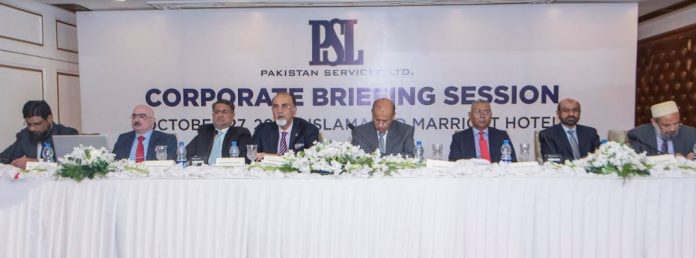
ISLAMABAD, OCT 28 /DNA/ – Pakistan Services Limited (PSL) conducted its third Corporate Briefing session at the Islamabad Marriott Hotel in compliance with the directives of the Pakistan Stock Exchange on Thursday, 27th October 2022.

Senior Management of the Company, including Mr. M. A.Bawany, Vice Chairman – Hashoo Group and Director of the Company, Syed Haseeb Amjad Gardezi, Chief Operating Officer – Hashoo Group and Director of the Company, Mr. Tahir Mahmood, Chief Financial Officer, Mr. Muhammad Amir, Company Secretary, and Board Members, Mr. Shakir Abu Bakar, Mr. M. Ahmed Ghazali Marghoob, Mr. Shahid Hussain and Mr. Rohail Ajmal were present at the event. The event was also attended by Chartered Accountants, Corporate Law Professionals, Lawyersand Company members.

Mr. Amir opened the programme by presenting PSL’s brief profile and success story, followed by Mr. Tahir Mahmood, who shared the company’s financial highlights to brief the investors and analysts about the company’s current financial performance and outlook.

On the occasion, Mr. Syed Haseeb Ajmal Gardezi shared details on all the recent management agreements and introduced two upcoming five-star hotels, Pearl-Continental Hotel Multan and Pearl-Continental Hotel Mirpur. The event concluded with a comprehensive question-and-answer session.

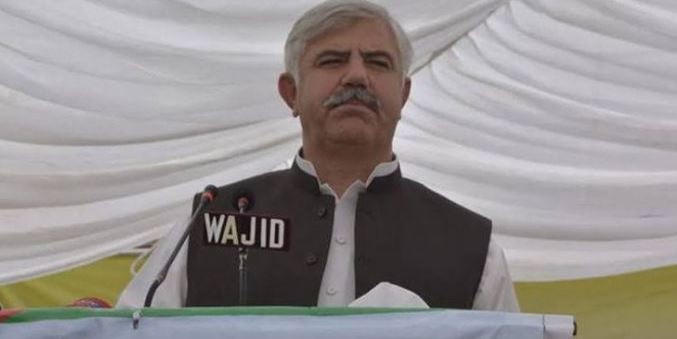
Provincial govt taking pragmatic steps for public welfare: CM Mahmood Khan

PESHAWAR, OCT 28 /DNA/ – Chief Minister Khyber Pakhtunkhwa Mahmood Khan has said that the incumbent provincial government of Pakistan Tehreek-e-Insaf has taken pragmatic steps for public welfare as per Chairman Imran Khan’s vision for the establishment of a social welfare state, adding that the ultimate goal of the efforts and struggle over the years is to contribute to the national economy and provide people of Khyber Pakhtunkhwa with easy access to basic services.

In a statement issued here from Chief Minister’s Secretariat regarding the reforms and transformation strategy of his government, the chief minister said that PTI has emerged as the only political party that is representative of Pakistanis and stands for their rights. The provincial government has proved this by taking practical steps over the last four years which have resulted in significant improvement in the overall service delivery system in the province.

Mahmood Khan said that the major public welfare steps of the government include Sehat Card Plus, uniform academic curriculum, revamping and rehabilitation of healthcare centres, establishment of service delivery centres, provision of honorarium to Aaima Masajid and religious leaders of minorities, launching of Insaf Food Card, reforms introduced in Patwar system, solarization of Masajid, improvement in the communication network all over the province and many other initiatives under the good governance strategy of the provincial government. He added that the incumbent provincial government has worked beyond its capacity for the welfare of the public and never compromised on its manifesto regarding investment in human development despite multiple challenges. Mahmood Khan said that public confidence in the governance strategy of the provincial government has increased significantly.

It is pertinent to mention here that under the Sehat Card Plus scheme, free treatment facilities for various diseases are available to 9.6 million families of the province, which is a milestone achievement towards Imran Khan’s vision for the establishment of a welfare state. Since the roll out of the Sehat Card initiative, over 1.4 million people have availed free treatment facilities whereas expensive treatments like liver and kidney transplants have also been covered under the Sehat Card scheme to reduce the burden on families of patients. Moreover, free cochlear implants have also been introduced under which 127 children from different districts of the province will receive treatment. Rs. 1.8 million will be spent on each patient suffering from the said disease. In order to ensure provision of civic facilities to citizens at their doorstep, service delivery centres and citizen facilitation centres have been established where multiple services including issuance of Fard and domicile have been made online. Additionally, the incumbent provincial government is working on the rehabilitation and upgradation of existing schools alongside the establishment of new schools to provide uniform educational opportunities to people across the province. In addition to this, the government is also establishing model schools where students will be imparted both traditional and religious education.

The provincial government, for the first time in the history of the province, has started an honorarium for religious scholars and solarization of masajid. So far, 6500 masajids have been solarized while conversion of 9000 masajids to solar energy is in the pipeline.

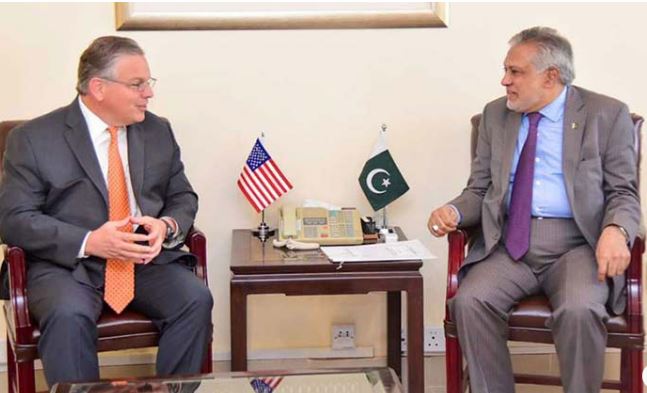
US envoy meets Dar, vows to enhance bilateral relations

ISLAMABAD, OCT 28 – US Ambassador to Pakistan Donald Blome on Friday called on Finance Minister Ishaq Dar. During the meeting, the matters of bilateral relations between Pakistan and the US were discussed.

On this occasion, the US envoy vowed to enhance bilateral relations between both countries.

Czech embassy, Serena Hotels host Fusion Cello Concert

The cello concert was dedicated to raise funds for the rehabilitation of the displaced flood affectees

DNA

ISLAMABAD: Serena Hotels and the Embassy of the Czech Republic organised an evening of classical collaboration where world renowned violoncellist duo Jiri Barta and his son Josef Barta along with students from the Musicology department of National College of Arts performed extraordinary fusion pieces along with classics such as Bach.

While celebrating the National Day of the Czech Republic, the cello concert was dedicated to raise funds for the rehabilitation of the displaced flood affectees.

The event was well attended by people from all walks of life, including the members of diplomatic missions, corporate sector, and business community, where an ensemble of musicians from the Musicology department of the National College of Arts joined the Barta duo to create an eclectic blend of unique Pakistani and Western fusion playing traditional local melodies and rhythms, that enthralled the audience.

Aziz Boolani, CEO Serena Hotels, appreciated the generous support of the Ambassador of the Czech Republic to Pakistan, H.E. Tomas Smetanka in joining hands with Serena Hotels in raising funds for the relief and rehabilitation of the flood affectees. He also thanked the audience for their support and generosity in raising funds for this noble cause.

Serena Hotels as a responsible Corporate citizen has been active in supporting the flood affectees. The Company is matching the funds donated by the Hotel Guests and Associates, in addition to various fundraising events organised in collaboration with other diplomatic missions.. The relief goods, i.e., food supplies, and tents, are being distributed directly as well as through international NGOs under the banner of “Jazba-e-Khidmat – In the Spirit of Compassion” initiative.

It was an evening dedicated to building close cultural ties while creating an opportunity to generate funds for the relief efforts.

PTA issues clarification on ‘No import taxes on personal mobile phones from overseas’

Islamabad, OCT 28 /DNA/ – With reference to a news item titled ‘PTA recommends extension of mobile phone tax relief for overseas Pakistanis’ that appeared at some news sites, it is stated that certain aspects in the story have been reported out of context. 

It is clarified that Pakistan Telecommunication Authority (PTA) has been working in consultation with FBR and FIA to develop a mechanism for overseas Pakistanis & Foreign nationals etc. whereby they can apply for temporary registration. The proposed maximum allowed time under this system for such applicants shall be up to 120 days on each visit to Pakistan.

Once this mechanism is operational, Overseas Pakistanis & Foreign Nationals may avail of this facility of temporarily registering their one mobile device on each visit to Pakistan without incurring any custom duties for 120 days. However, if said device is intended for permanent use in Pakistan then it shall be subject to applicable FBR custom duties/taxes.

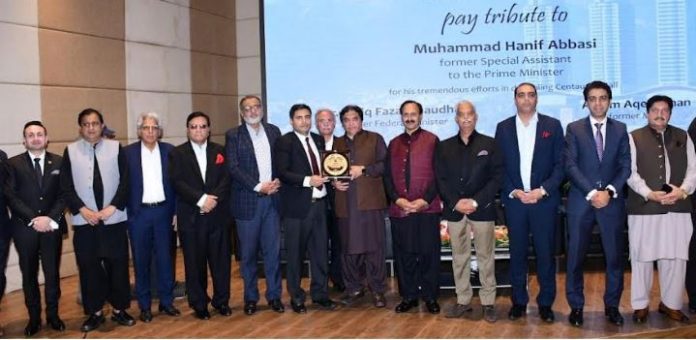
PM to address key issues of business community – Hanif Abbasi

Islamabad, OCT 28 /DNA/ – Former SAPM Hanif Abbasi said that he would arrange a meeting of ICCI delegation with the Prime Minister Mian Shahbaz Sharif to resolve the key issues of the business community including the establishment of a new industrial estate in the region and the representation of ICCI in the CDA board. He said this while addressing as Chief Guest a dinner reception hosted by the Islamabad Chamber of Commerce & Industry to pay tribute to his role in de-sealing of the Centaurus Mall, which was attended by a large number of business community of the twin cities.

Hanif Abbasi thanked the Prime Minister of Pakistan Mian Shahbaz Sharif and Interior Minister Rana Sanaullah for solving this issue. He said that Saudi Arabia has shown interest to invest US$ 30 billion in Pakistan, which would boost our economy. He said that the government is working to reduce energy cost to facilitate the growth of business activities. He said that he will take up the issue of gas shortage for commercial consumers with the government. He emphasized that the business community should maintain unity in its ranks and assured that he will continue to raise his voice to protect the interests of traders in future as well.

Speaking at the occasion, Ahsan Zafar Bakhtawari, President, Islamabad Chamber of Commerce and Industry paid tribute to former SAPM Hanif Abbasi for his great efforts in resolving the issue of Centaurus Mall and said that the business community of the region is grateful to him for this favour. He said that Hanif Abbasi has always raised his voice for the rights of traders, which is laudable. He said that the trend of constructing high rise buildings in the Capital is on the rise and stressed that the CDA should arrange fire tenders for them to deal with any emergency situation. He said that SNGPL has issued notices to suspend natural gas supply to commercial consumers for three months in winter and they are being asked to switch to LNG gas which is very expensive. He said LNG will increase manifold the cost of doing business and badly hit many businesses including the hotels and restaurants. He urged that the government should review its decision and address this issue in consultation with the stakeholders.

Group leader Khalid Iqbal Malik said that Hanif Abbasi has done a great job by solving an important issue, which has created positive feelings about the government in the business community of the twin cities. He lauded the efforts of the government for providing quality transport to the citizens of Islamabad as it will solve an old issue of the citizens and greatly facilitate their travelling.

Former MNA Anjum Aqeel Khan, Rawalpindi Chamber of Commerce and Industry President Saqib Rafique, ICCI former Presidents Khalid Javed, Muhammad Ejaz Abbasi and Sardar Yasir Ilyas Khan, Rawalpindi Chamber of Small Traders President Tariq Jadoon, All Pakistan Anjuman-e-Tajiran President Ajmal Baloch, Markazi Tanzeem-eTajiran President Kashif Chaudhry, Rawalpindi Chamber of Small Traders Group Leader Malik Shahid Ghafoor Paracha and Islamabad Goods Transport Association Group Leader Chaudhry Wajid Ayub and Faad Waheed Senior Vice President ICCI also spoke at the occasion and lauded the services of Hanif Abbasi for the traders.

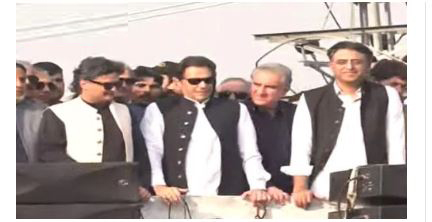
Imran Khan set to move towards Islamabad

  • LAHORE, OCT 28: PTI Chairman Imran Khan arrives at Liberty Chowk to lead the long march on Islamabad from today (Friday) to “free the nation in a true sense”.
  •  The long march will start from Lahore’s Liberty Chowk and after passing through the Ferozepur Road, Icchra, Azadi Chowk, Mozang, Data Darbar side, it will move towards Muridke.
  •  The march is expected to enter Islamabad on November 4 after passing through Kamonki, Gujranwala, Daska, Sumbrial, Lala Musa, Khariyan, Gujjar Khan and Rawalpindi.
  •  Imran along with his supporters is expected to stage a sit-in in the federal capital against the Shehbaz-led coalition government after the end of the long march.
  •  This will be the PTI chief’s second march towards Islamabad after he was ousted via a no-confidence motion earlier this year.

Mian Anjum for revisiting trade, immigration policies to control dollar smuggling

ISLAMABAD, OCT 28: /DNA/ – Raising questions on the poor mechanisms to ensure dollars availability, the Federation of Pakistan Chambers of Commerce & Industry’s Businessmen Panel (BMP) on Friday asked the central bank to become more vigilant and take stringent action as the open market is immensely short of the greenback at a time when the rupee is largely stable in the inter-bank market.

The FPCCI former president and BMP Chairman Mian Anjum Nisar pointed out that the currency market is facing severe shortage of US dollars despite the fact that the rupee has remained largely stable in the inter-bank. He said that the declining trend of the dollar has proved to be meaningless as the majority of exchange companies and dealers have no dollars and this shortage has persisted for almost a week.

The BMP Chairman stressed the need for taking bold steps, as the rupee, after remaining stable for almost two weeks, once again started to witness volatile trend, posting a decline for the seventh consecutive session last week.

He pointed out that presently very limited transactions are being held against the daily regular transactions of up to $60 million dollars in the open market, as it is feared that the dollars are being smuggled to Afghanistan. Despite central bank’s measures, smuggling remains rampant as it seems that government institutions are not on the same page, he said and asked the government to revisit its trade and immigration policies with Afghanistan and Iran.

He observed that the weakness in the local currency is driven by dwindling reserves and uncertainty regarding inflow commitments despite the fact that Finance Minister Ishaq Dar has constantly been saying that the rupee was undervalued and it could soon recover to Rs200 per dollar mark, which is its real value.

He said that in another key development, the current account deficit (CAD) declined for the third straight month in a row in September. It fell to $0.3 billion, less than half the level in August. In Q1FY23, the CAD has fallen to $2.2 billion from $3.5 billion in Q1FY22, mainly due to a decline in imports. The decline in CAD is a good sign for the South Asian economy already facing dwindling foreign exchange reserves.

The BMP Chairman observed that having a clear policy to curb the volatility in exchange market, the central bank should be fully geared to act and monitor the movements more vigilantly and should be ahead of the curve as they have more information than an average market player. And being back in the IMF program amid the falling global commodity prices and full coverage of external financing needs, there is no basis for continuation of the high volatility in exchange rate, he added.

He added that the government needs to relax rules for exchange companies, as stringent procedural requirements are making customers reluctant to approach the open-market.

Amid declining foreign exchange reserves, Pakistan has faced an exchange rate crisis multiple times this year with authorities vowing a crackdown on speculators. The promised action comes in tandem with wild swings seen by the rupee that hit record lows in the inter-bank market, and witnessed its worst monthly performance in July in over 50 years.

The arrival of Ishaq Dar at the helm of the finance ministry did trigger a bullish trend in the currency market, with the rupee appreciating nearly 10% in less than three weeks, but it also led authorities to suspect manipulation by banks and exchange companies.

In response, the State Bank of Pakistan (SBP) said at the start of October it will soon complete the investigation into alleged manipulation by commercial banks of foreign exchange operations in the country.

Since early September disbursement of the IMF tranche, after the success of the seventh/eighth reviews, there has been no foreign inflows from friendly countries raising concerns about the capacity to meet external debt servicing costs though World Bank announced reallocation of existing pledges for flood relief and this week past Asian Development Bank approved a 1.5 billion-dollar loan for Pakistan; (ii) fiscal tightening, higher interest rates and measures to limit energy consumption and imports – policies supported under the IMF program though not being fully implemented at present – would narrow the current account deficit despite the reduced exports and the higher import needs in the aftermath of the floods.

Mian Anjum observed that besides increasing exports and controlling imports the government will have to take administrative measures, as a large demand of cash dollars are seen in the market. He said that there was a complete breakdown of economic policymaking, as the country’s fiscal policy had become subservient to monetary and exchange rate policies.

HEC invites applications under prime minister’s national innovation award programme

HEC

Islamabad, OCT 28 /DNA/ – The Higher Education Commission (HEC), Pakistan has invited applications from the Pakistani young innovators and entrepreneurs for funding under the Prime Minister’s National Innovation Award to turn their ideas into businesses. The youth aged between 15 to 30 may submit their proposals through www.pmyp.gov.pk by November 15, 2022.

The Prime Minister’s National Innovation Award is a flagship programme of the Prime Minister’s Youth Programme being executed by HEC. The objective of the innovation award is to improve Pakistan’s ranking in the Global Innovation Index, foster entrepreneurial culture among youth, and transform ideas into businesses. It is an open opportunity for all Pakistani youth to propose innovative ideas and get funding and technical support from industry experts along with a six-month incubation opportunity to convert their ideas into a flourishing business.

A total of 250 innovators will get the chance of ‘Idea Pitching Training’ for their innovative ideas. However, 50 ideas will be finalised for the award. The maximum funding provided to a single startup is up to Rs. 2 million to be divided into two phases. Initially, an amount of Rs. 1 million will be provided to the top 10 selected ideas each, while the rest of the 40 ideas will get up to Rs. 0.5 million each in funding.

In the corresponding phase, all 50 winners may also request supplementary funds up to Rs. 1 million in addition to the award money as per their requirements to scale up their innovative ideas through Business Incubation Centres (BICs) as a follow-up programme. The additional funding will be given through respective BICs and will be tied to startup deliverables and approved budget.

The Prime Minister’ National Innovation Award will help motivate youth to use their innovative skills and thus contribute to the society and the country’s economy. This will also help resolve the local challenges.

The award is open to all kinds of innovative ideas including but not limited to Food Security, Water Management and Sustainability, Sustainable Energy, Urban Planning, Climate Change and Environment, Information Technology and Telecom, Innovative Governance and Reforms, Sociology and Philosophy, Medical and Health Sciences, and others. The selection of awards will be made through an open, rigorous, transparent, competitive, and merit-based process.

The Prime Minister’s Youth Programme hosts five different youth-centric projects being executed by HEC. The initiatives include National Innovation Award, Talent Hunt Youth Sports League, Establishment of Sports Academies, Green Youth Movement, and Digital Youth Development Programme. The projects aim at shaping youth through financial empowerment, engagement in healthy activities, and skill development.

Global power shift as regionalism spurs the rise of Asia

Ishtaq Ahmed

With Europe and the US facing a mounting economic crisis caused by the Ukraine war, China and Russia have geared up the process of economic and security integration across Asia. Not only are the current regional networks in Eurasia and Southeast Asia being consolidated, but their mutual nexus is also being reinforced and expanded with the inclusion of new member states from the Middle East.

The latest expression of Asian regionalism is the Conference on Interaction and Confidence Building Measures in Asia, which held its sixth summit on Oct. 12-13 in Astana, Kazakhstan, and decided to gradually transform itself into a full-fledged organization for economic and security cooperation in Asia. Its 27 member states account for 90 percent of Asia and generate two-thirds of the global gross domestic product. Russia has proposed its new name as the Eurasian Organization for Cooperation.

This year marks the 30th anniversary of the CICA, whose founding idea was proposed by Kazakhstan in 1992. Over time, China and Russia have steered its evolution and expansion to include countries from Southeast Asia and the Middle East. Israel, Egypt, Jordan, the UAE, Qatar, Bahrain, Iran and Palestine are already members. Kuwait is the latest entrant. This informal intergovernmental forum seeks to implement confidence-building measures in the economic, human, new challenges and threats, environmental and military-political domains.

Besides kickstarting the process to become Asia’s largest international organization at the recent summit, the CICA also concluded a partnership agreement with the Eurasian Economic Union, which Russia created in 2015 in response to the EU’s Eastern Partnership Policy of 2009. The EAEU has helped its smaller members, including Belarus, Kazakhstan, Kyrgyzstan and Armenia, to benefit from Russia’s political support, security guarantees, and economic incentives, such as cheap energy.   

The EAEU provides for free movement of goods, services, capital and labor among the member states, which consist of nearly 200 million people and have $5 trillion in combined GDP. Though the EAEU is far from achieving the intended goals of EU-like customs union and common market, it has helped a great deal in labor mobility from Kyrgyzstan, and enabled Russia to bypass current Western sanctions and import restricted goods from Kazakhstan.

The EAEU seeks an economic pivot to Asia as opposed to the West, a goal that is manifested in Russian President Vladimir Putin’s 2016 declaration to transform the organization into a “Greater European Partnership” to include China, India, Pakistan and other countries from Southeast Asia. This is compatible with the global Belt and Road Initiative of China, which also has a trade relationship with the EAEU. Uzbekistan and Azerbaijan are among the aspirants of its membership.

Contrary to the US-led initiatives, the countries participating in regional integration processes led by China, or inclusive of it, tend to accrue tangible economic gains

Ishtiaq Ahmad

As compared to the CICA and EAEU, the Shanghai Cooperation Organization has established its niche as the most integrated intergovernmental body in Eurasia during the last two decades. Its 22nd summit last month consolidated economic, security, political and cultural cooperation among the eight member states: China, Russia, Kazakhstan, Uzbekistan, Kyrgyzstan, Tajikistan, India and Pakistan.

Covering over 40 percent of the world’s population and nearly 30 percent of its GDP, the SCO is also joined by six Middle Eastern states as dialogue partners, including Saudi Arabia, Egypt, Turkey, the UAE, Qatar, Kuwait and Bahrain. Iran will gain full membership in a year. China leads the SCO and is engaged in massive infrastructure development projects in the member-states, while Russia prioritizes the corresponding expansion of energy corridors.  

Beyond Eurasia, China has emerged as an important player in the Regional Comprehensive Economic Partnership, the largest trading bloc in Asia-Pacific that accounts for a third of the global GDP and almost half the world’s population. The RECP entered into force in January this year. Its other members include Japan, South Korea, Australia, New Zealand and six of the 10 member states of the Association of Southeast Asian Nations. The RECP will ultimately enable China to write trade rules for the region, at the expense the “rules-based” free trade regime being propounded by the US.     

The Asia-Pacific Economic Cooperation is the only regional organization that includes both China and the US as members. Its 19 member states are home to more than 2.9 billion people and make up over 60 percent of global GDP. Established in 1989, the APEC aims to promote sustainable economic growth, trade and investment, and prosperity in the Asia-Pacific region. The Biden administration has made containment of China an integral part of the US National Security Strategy, which was announced on Oct. 12. This is surely bad news for APEC ahead of its summit next month.

China is also seeking membership of the Comprehensive and Progressive Agreement for Trans-Pacific Partnership trade pact. It is the renegotiated version of the Trans-Pacific Partnership Agreement that the US signed in 2016 but exited a year after it entered into force in 2018. The CPTPP has 11 members: Japan, Australia, Singapore, Canada, Mexico, Peru, Chile, Brunei, Malaysia, Vietnam and New Zealand. China’s entry into the trade pact, which is supported by Singapore as a founding member, will be a major setback for the US.

The Biden administration’s response to China’s growing economic regionalism in the Asia-Pacific region is the establishment in May of the Indo-Pacific Economic Framework, a broad alliance of 14 countries, including India (mostly from South and Southeast Asia) working on four nonmilitary pillars of economic and strategic cooperation. However, the IPEF lacks core incentives such as market access and better trade opportunities for the member states. It is no surprise that India has refused to join the trade pillar, while arguing that it is structured in favor of the affluent members.

In response to China’s BRI and the Global Development Initiative, launched by President Xi Jinping at the UN General Assembly last year, the US also relaunched the G7 Partnership for Global Infrastructure and Investment in June.  In this case as well, it is highly uncertain that the US will be able to mobilize $200 billion in the next five years, given the growing economic constraints faced by all the G7 nations of the US, Canada, France, Germany, Italy and Japan due to the current global energy crisis.

Moreover, the US attempt to create potentially anti-China informal groupings such as the QUAD (group of four, with the US, Australia, Japan and India) and AUKUS (a military alliance between the US, UK and Australia) are either security-centric or too small to rival China’s expanding regional networks across Eurasia and Asia-Pacific. They also pale in comparison to the BRI’s extensive economic footprint in Asia, Africa, South America and even parts of Europe. Contrary to the US-led initiatives, the countries participating in regional integration processes led by China, or inclusive of it, tend to accrue tangible economic gains.

The US and Europe also seem to be losing out against China in the Middle East, especially as the Gulf nations increasingly diversify their economies in Eurasia by partnering with the SCO and CICA.

Spurred by a fresh wave of economic regionalism, Asia is, indeed, rising. This is a historic transition in world power, from the long-drawn era of European domination and the relatively recent push for the American century.

Ishtiaq Ahmad is a member of the Planning Commission of Pakistan. A former journalist, he previously served as the vice chancellor at Sargodha University, Pakistan, and the Jinnah Chair at Oxford University in the UK

Stay Connected

64FansLike
60FollowersFollow

Latest Reviews

Exchange Rates

USD - United States Dollar
EUR
1.17
GBP
1.35
AUD
0.67
CAD
0.72