Home Blog Page 1487

Imran claims only ‘lies and half-truths’ spoken in ‘foolish’ press conference of ISI, ISPR chiefs

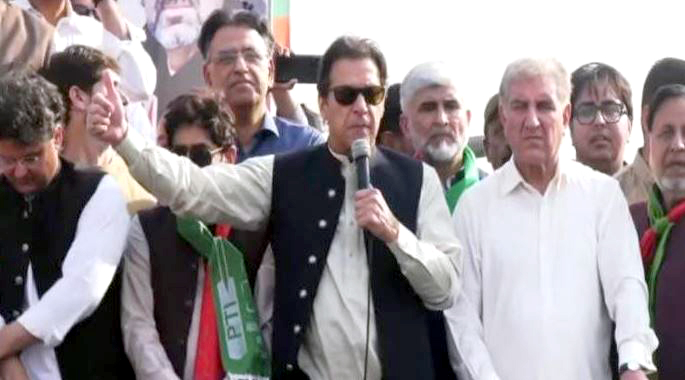
LAHORE, OCT 29: PTI chief Imran Khan has dubbed the recent joint press conference by the chiefs of the country’s premier spy agency and military’s media affairs wing “foolish”, claiming that only “lies and half-truths” were told in it.

He made these remarks an interview with BBC Urdu on Friday night after the start of his protest march in Lahore.

When asked if he had made the army chief the offer to extend his tenure indefinitely, Imran said he was quoted out of context.

The former prime minister, who is currently leading his party’s anti-government long march towards Islamabad, has been increasingly critical of the army since his ouster as the country’s chief executive through a no-confidence vote in April.

On Thursday, Inter-Services Intelligence (ISI) chief Lt Gen Nadeem Ahmed Anjum joined Inter-Services Public Relations (ISPR) DG Lt Gen Babar Iftikhar spoke to the media and addressed Imran’s confrontational narrative against the military, among other issues.

During the explosive press conference, Lt Gen Anjum claimed that Chief of Army Staff Qamar Javed Bajwa was given a “lucrative offer” in March for an extension in his tenure, but it was rejected.

While the ISI chief did not elaborate any further on this subject, it is being perceived that the said offer was made by then-prime minister Imran to seek the army chief’s intervention and survive the opposition’s no-confidence vote.

When BBC Urdu asked Imran about it, he said: “Things have been taken out of context that we made an offer for an extension. Did they tell which side made the offer? In what context the discussion took place? If they tell the whole story, it would be very embarrassing for them.”

The former prime minister went on to describe the press conference as “very sad” as the ISI chief had never before held a press conference in such a manner. “I can respond to it point by point, which could be very embarrassing for the army.”

He continued, “But we don’t want any harm to our institution of the army as our enemies want the army to weaken and in turn, Pakistan weakens.”

Imran was also asked about the DG ISI highlighting contradictions in his statements about the army chief.

Without naming anyone, LT Gen Anjum had said: “If you see him as a traitor, then why do you meet him through the back door? […] Don’t do this where you meet quietly at night through the back door and express your unconstitutional wishes but call [the army chief] a traitor in broad daylight.”

In reply, the PTI chief said, “We will praise when they will do good.

“It is childish to [think] that if we praise you, you will always be good. You also appreciate your children but also criticise them when they do something bad. It was actually a very foolish press conference.”

The ISI chief’s press conference was the first instance in Pakistan’s history of the head of the country’s spy agency directly addressing the media. During it, the ISPR chief had also announced that the military establishment had decided that it would restrict itself to its constitutional role.

But Imran has raised questions on the press, saying that if institutions were apolitical what was the purpose of holding a “political presser”.

In the interview with BBC Urdu, Imran also clarified that he “does not want to come to power because of the establishment’s approval”.

Answering a question about his ties with the establishment, he insisted that his party’s win in 2018 elections was not engineered by the military.

The PTI chief said that the purpose of his protest march was free and fair elections and that was why his party wanted to introduce electronic voting machines. But the “two big parties and the [chief] election commissioner, who takes orders from elsewhere, did not let it happen,” he regretted. “As a result, our election will always be controversial and chances of interference will remain.”

He elaborated that while the long march was aimed at free and fair elections, the broader purpose of the PTI’s struggle for “Haqiqi Azadi” (true freedom) was that “Pakistan’s decisions be taken inside Pakistan.

“That nobody dictates us from outside … I want an independent foreign policy.”

Moreover, the PTI chief continued, “I want the supremacy of law”.

“Here, there is the law of jungle,” he lamented, decrying people being picked up, them being subjected to torture, restrictions on the media and the treatment of journalists in the country.

Imran also called on Gen Bajwa to take action against the alleged custodial torture of PTI Senator Azam Swati.

“If he wants to protect the image of the institution of the army, Gen Bajwa should take action,” the PTI chief urged.

Regarding his long march, he said, “The way people will gather in Islamabad will be unprecedented in Pakistan’s history. This is my prediction. I am aware of people’s pulse.”
Long march day 2: Marriyum rules out negotiations with Imran Khan

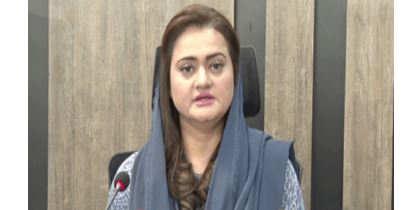
Long march day 2: Marriyum rules out negotiations with Imran Khan

Soldiers embraced Shahadat during exchange of fire with terrorists

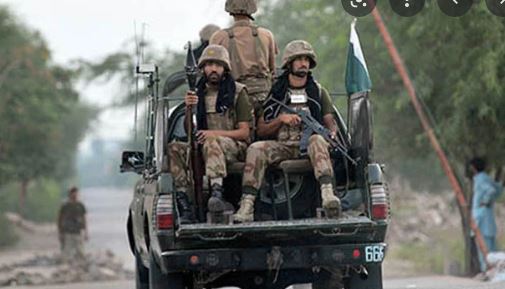
ISLAMABAD, OCT 29 /DNA/ – Fire exchange took place between own troops and terrorists, in general area Darazinda, District Dera Ismail Khan.

Own troops effectively engaged the terrorist’s location. During intense exchange of fire, Naik Sajid Hussain (age 33 years, resident of Khushab) & Sepoy Muhammad Israr (age 26 years, resident of Attock) having fought gallantly, embraced Shahadat.

Sanitization of the area is being carried out to eliminate any terrorists found in the area.

‘We are humans, not sheep’: Imran kickstarts day 2 of long march with fiery speech

LAHORE, OCT 29: ‘We are humans, not sheep’: Imran kickstarts day 2 of long march with fiery speech. Long march remains peaceful so far; minister warns against entering Red Zone; convoy expected to reach capital by Nov 4.

On day two of his party’s long march, PTI chair Imran Khan while addressing his supporters said that he is there to tell them what freedom is.

“Free men rule the world,” he told his supporters at Lahore’s Shahdara.

The PTI leader reiterated the alleged torture inflicted upon party leaders Shahbaz Gill and Azam Swati. “First they tortured Shahbaz Gill and then the 75-year-old senator,” he said.

“I want to convey a message that we are humans and not sheep,” said Khan.

ICCI demands withdrawal of notices for gas suspension to commercial consumers

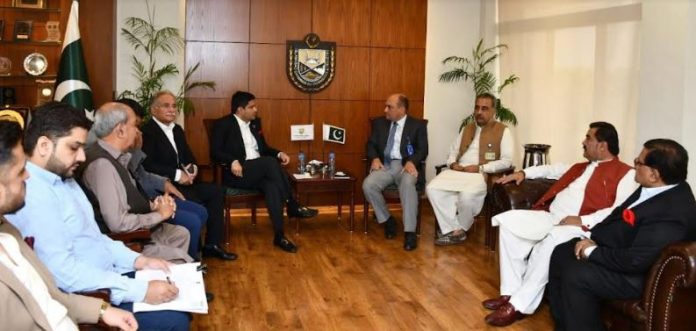
Islamabad, OCT 29 /DNA/ – Ahsan Zafar Bakhtawari, President, Islamabad Chamber of Commerce & Industry said that the SNGPL has issued notices to commercial consumers in Islamabad for suspension of their natural gas connection from 1st November 2022 creating great concerns in the business community and urged that the decision should withdraw its decision to save businesses from further losses. He said that the business activities of hotel and restaurants had suffered badly during Covid-19 pandemic and now they were on the recovery path. However, the suspension of natural gas to these businesses for 3 months in winter will cause them big losses. He said this while talking to Khurram Ayub Khan, General Manager Distribution, Sui Northern Gas Pipeline Limited North during his visit to ICCI along with Malik Nawaz Deputy Chief Business Development and Rana Mudassar Admin Officer.

Ahsan Bakhtawari said that already the business community is badly suffering due to high electricity tariff and shifting commercial consumers forcefully to LNG would further increase the cost of doing business. He urged that the government should reconsider its decision and delay the suspension of natural gas to commercial consumers for one month and try to find an amicable solution of this issue in consultation with stakeholders. He said that soon a delegation of ICCI led by Hanif Abbasi will meet with State Minister for Petroleum Musadak Malik to inform him about the concerns of commercial consumers. He said that despite the payment of an urgent fee, the gas connections are not being provided to commercial and domestic consumers and urged that the government should lift the ban on new gas connections to facilitate people.

addressing the business community, Khurram Ayub Khan, GM, SNGPL North said that the government has issued instructions to suspend the supply of natural gas to commercial consumers for 3 months in winter due to its shortage and said that the commercial users should sign a new agreement with SNGPL for switching over to the LNG, which is a better option for them though it would incur them 3 times more cost. He said that the indigenous gas reserves are declining due to which the government has to import around 1200 million cubic feet of LNG per day to meet the shortage. He said that natural gas of around 400 million cubic feet has been discovered in North Waziristan, but its supply to consumers will take time. He said that the government is providing subsidies on LNG to domestic consumers, but no subsidy is being provided to commercial consumers. He assured that he would convey the concerns of ICCI members to the relevant authorities for consideration.   

Habibullah Zahid, President, Islamabad Restaurants Association said that their sector was providing employment to over 10 million people across the country and suspension of natural gas to them in Punjab and Federal Area would cause closures of many hotels & restaurants rendering millions of people jobless. He said that shifting to LNG would increase cost of doing business that would badly affect the business activities and stressed that the government should give some breathing space to this sector for arranging substitutes.

Azhar ul Islam Zafar Vice President ICCI, Zafar Bakhtawari, Muhammad Ejaz Abbasi, Mian Shaukat Masud, Khurram Khan, Khalid Chaudhry and others were also present at the occasion.  

“Café Tourism” kicks off in Gwadar

GWADAR, Oct. 29 (DNA): Café Tourism has finally kicked off in Gwadar corresponding to the guidelines of Gwadar’s first tourism strategy under its Smart Port City Master Plan, Gwadar Pro reported on Saturday.

Evoking awe and thrill among Gwadar’s people and tourists, Café Tourism has made headway after two residents of Gwadar, Fahad Ishaq and Qadeer, transformed their family boat into café, the first of its kind in the vicinity of Gwadar city.  

The Boat was abandoned and laying unused for many years after its engine broke down. Now it has been refurbished and replaced into an exotic “Café Boat” officially named “Padizar Café” that is witnessing a rush of tourists from different parts of Pakistan.

“It is another feather in the cap of Gwadar youth who proved their mettle in giving impetus to Café Tourism in the private sector,” Rahim Baloch, a social activist told Gwadar Pro. 

Café Boat that catalyzed Café Tourism in Gwadar is located in the Padizar area along the marine drive in the surrounding traditional shipyard where still boats are being repaired conventionally.

In an exclusive interview with Gwadar Pro, Padizar Café manager Shay Mukhtar said that the Café has the capacity to host 150 tourists initially with tea, snacks, fish, and local cuisine.

Most people prefer “Padizar Café” for holding galas, special events, birthday parties, and hi-tea parties, he added. Transformation of the boat with renovation cost around Rs. 1.5 million, he said.

With its three roofs on three stories Café, he said, it welcomes routine customers as well as foreign tourists. A local customer, Zafar Elahi said that Padizar Café is fast becoming the best hangout spot in Gwadar. It is like a breath of fresh air in a situation when we have meager opportunity to enjoy recreational activities, especially eateries, he added. 

Gwadar enjoys the bounty of seasons, different local languages, diverse ethnic groups, clear waters, exotic beaches, huge muddy plateaus, precious minerals, the most beautiful Arabian Sea, and loving locals.

Gwadar is situated on a natural hammerhead-shaped headland in the promising land of Balochistan. The city is situated on a tapered and sandy 12 kilometers long strip that links Pakistan to a rocky outcropping in the Arabian Sea known as Koh-e-Batil or Gwadar Peninsula.

Under the newly proposed Gwadar Tourism Strategy, Gwadar is going to be festooned with Hangout Tourism, Resort Tourism, Cultural Tourism, Festival Tourism, Ecotourism, and many more.

Already, the Balochistan government inaugurated the “Special Police” where around 20 cops are planned to be deployed at picnic spots to facilitate the tourists in the district.

The Special Tourist Police has been established under the Gwadar Safe City project. Gwadar Tourist police will guide and help the local and foreign tourists. The government has provided vehicles and equipment for the tourist police to ensure better enforcement and facilitation the visitors.

Survey revealed Pakistan’s Identity is a multi-layered phenomenon: Dr. Nayab

Islamabad, OCT 29 /DNA/ – How do Pakistanis feel towards each other, towards people who are like them, and towards people who are unlike them? Do Pakistanis trust their various institutions? What are their values, beliefs and attitudes? Are they able to achieve their ambitions? Do they feel safe on the streets? What are their views about the governance and political system in the country? What are community life and informal sociability like in Pakistan? What is the state of volunteerism and civic involvement? And most importantly, what do Pakistanis consider as their identity? The PIDE-BASICS survey covers these twelve areas to understand the basics of Pakistanis.

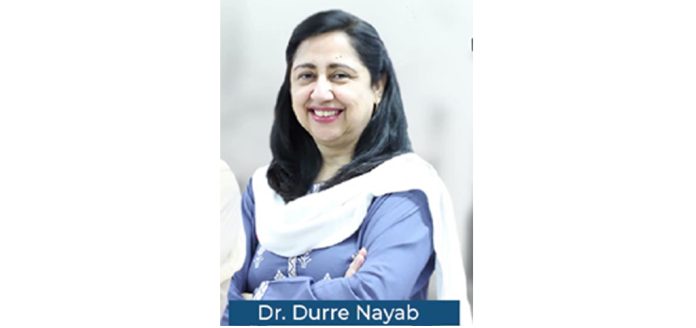
According to the Press Release issued from Pakistan Institute of Development Economics (PIDE), in the supervision of PIDE’s Pro-Vice Chancellor Dr. Durre Nayab, PIDE-BASICS nationwide survey was carried out. The research results shows, In spite of the fact, seemingly straightforward questions elicit very complex responses. Usually, we perceive the identity in singularity i.e. we are Pakistanis. We are Muslims. However, the study uncovers that in context of Pakistan Identity is a multi-layered phenomenon with the majority not perceiving it in singularity. Identities are linked to: i.e. religion; ii. Nationality; iii. ethnic background; iv. caste, for instance, Rajput, Kakar, Achakzai or Gujjar; v. being a human; vi. biological, that is the sex of the person; vii. relationship, with reference to someone like being a mother, father, son or daughter; and viii. One’s profession.

Additionally, at national level 61.5% reveled multi-layer identity. And, its prominent among the inhabitants of ICT (Islamabad Capital Territory) followed by GB (Gilgit Baltistan). On the other hand, single identity (religion) was dominant among the people of Punjab. Up to par, both at national and regional level religious identity is most prevailing. Subsequently, being a Pakistani as single identity is not strong one at any level (national, regional and provincial). Thus, the finding compels me to cerebrate, why some regions are deemed as patriotic and some are blamed for the lack of loyalty? It’s a wonder, among the four provinces, the largest proportion is in Balochistan which considers being a Pakistani as part of their identity, followed by Sindh and KP.

Furthermore, the population of Punjab has the smallest proportion including nationality as a layer of their identity. Anyway, being a human is an identity kept by some, but many more give importance to caste as their single identity. It is a rather thought-provoking finding that more than ethnicity it is caste, a narrower ascribed characteristic, which is contemplated as indispensable by Pakistanis.

The study revealed that a lot of confusion exists about the language of the people of Pakistan as most surveys ask this question in a very imprecise way, and then use it as a proxy for ethnicity in the country. This is totally misleading. To have a better understanding of the issue, PIDE-BASICS Survey asks three questions in this regard: the mother tongue of the father, the mother tongue of the mother and the language commonly used for informal day-to-day communication. We examine in the study that Urdu is used much more often by people in ICT, AJK and Punjab than what the mother tongues would suggest. Among the four major provincial languages, Punjabi is most frequently switched to Urdu.

To sum up, in the context of Pakistan Identity is a multi-layered phenomenon with the majority not perceiving it in singularity. The finding rejects our assumptions of Pakistanis identity either Pakistani (National) or being Muslim (religious). And, rejects the perceptions we have developed regarding different regions of the state (for instance Balochistan is blamed for being non-patriotic). Moreover, the dynamics vary with regions and many other demographic characteristics. All in all, majority of the population are neither calling themselves Pakistanis, nor Muslims.

U.S. announces additional $30M in aid for flood victims in Pakistan

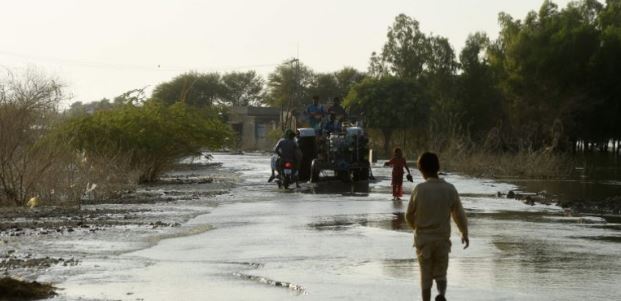
WASHINGTON: The U.S. has announced an additional $30 million in aid for the victims of recent floods that displaced hundreds of thousands of people across the country.

The aid was announced by U.S. Ambassador to Pakistan Donald Blome during his visit to flood-hit areas in southern Sindh province, the hardest-hit region, the Prime Minister’s Office said on Friday.

Washington’s total assistance to Pakistan for flood response, food security, disaster preparedness, and capacity-building efforts now stands at $97 million.

The new funding will expand efforts to address immediate needs, scaling up assistance to the most affected communities and enabling the United States Agency for International Development to reach more than 4 million people, said a U.S. Embassy statement.

“The United States is deeply saddened by the devastating loss of life and livelihoods throughout Pakistan. We stand with the people of Pakistan during this difficult time,” the statement added.

Meanwhile, Prime Minister Shehbaz Sharif thanked Washington for the latest “humanitarian assistance,” noting that the challenges of food, health, and shelter remain as winter approaches.

In a tweet, he urged the international community to “promptly” contribute to a UN aid appeal for $816 million to help mitigate the devastation caused by massive floods.

Ravaging floods, following torrential downpours inundated a third of Pakistan, aside from killing over 1,700 people since mid-June.

They have also caused over $30 billion in losses to the country’s already struggling economy, mainly in housing, infrastructure, and agriculture.

Technological climate of modern-day office work

Global Misperceptions

By: Zahra Ali

To date, workplaces are nowhere near the ubiquitous, natural, and seamless technological environment created by the visionaries. Increased concerns about reduced productivity, adverse health consequences, and rising costs that result from stress in the workplace are reflected manifold in the studies of occupational stress that have been reported in the psychological and medical literature. Employees evaluate their occupational environment in terms of perceived severity and amount of explicit job demands and pressures and the level of social support provided by supervisors, coworkers, and workplace’s policies and procedures.

In organizational research, social support is defined as the availability and quality of an employees’ relationship with supervisors, coworkers, family, friends, and the amount of positive consideration and task assistance received from them. Social support has a beneficial effect on workers performance and well-being both physical and psychological. Social support mitigates the influence of perceived work stressors, or reduces levels of psychological and physiological strain.

Furthermore, it is nearly impossible to reflect on occupational health and well-being without considering the implications of technology in the workplace. Before considering the computer boom’s impact on workplace health and wellness, it is extremely essential to be aware of the technological climate in which contemporary workplaces function. Modern-day workers have been likened to nomads who relentlessly carry their work between office, home, hotel, car, so on and so forth.

 Conventional electronic tools operate under ‘direct manipulation’ human-computer interaction metaphor, requiring users to explicitly initiate all tasks and monitor all events, at all times. 

The technological evolution of the office environment may have propagated many perks and benefits but is also has brought with it some concomitant negative outcomes. In many instances, technology adversely affects health of office workers’ both physical and psychological health, leading to a host of drawbacks including but not limited to Musculoskeletal Disorders.

The effects of Musculoskeletal Disorders are costly and long term. Musculoskeletal Disorders cause a number of debilitating conditions including pain, numbness, stiff joints, muscle loss, difficulty in moving, tingling, and sometimes paralysis. In a nutshell, technology related pains and syndromes can be serious and are often linked to office settings.

Many people are informally expected to check their professional voice-mails/ emails after working hours, thereby blurring the distinction between work and leisure time; this amalgamation of work and family roles is also often a cause of increased stress and anxiety which requires careful attention to prevent psychological stress among employees.

The writer is a regular contributor towards SDGs and at present an M.phil Scholar.

Email: [email protected]

Pak rejects India’s baseless propaganda at UN Counter-Terrorism Committee Meeting

DNA

ISLAMABAD, OCT 28: Pakistan rejected India’s baseless propaganda directed against Pakistan at the meeting of UN Counter-Terrorism Committee (CTC), hosted in Mumbai today.

It is regrettable that India chose to misuse an important Committee of the United Nations Security Council (UNSC) to mislead the international community about Pakistan’s role in countering global terrorism. India’s shenanigans undermine the purposes and mandate of the Committee and are reprehensible.

Contrary to Indian claims, it is India that has remained non-cooperative with Pakistan and has deliberately held back judicial proceedings of the Mumbai attack case. The Indian government should be held accountable for attempting to unjustifiably prolong the legal proceedings of the Mumbai case by employing a range of dilatory tactics. India’s malfeasant intervention in today’s CTC meeting in Mumbai yet again corroborates Pakistan’s long-standing concerns that India is only interested in politicizing international counter terrorism forums to malign Pakistan. India must remember that Mumbai attacks case is in the court of law and rather than relying on anyone’s whims or wishes, it would require irrefutable and legally tenable evidence for efficient disposal.

Pakistan’s role in the global fight against terrorism is acknowledged by the international community despite India’s utmost efforts to cast aspersions on Pakistan’s intent and efforts. India, conversely, has been involved in supporting terrorism against Pakistan using its own soil and territories of other countries. Indian spy Kulbhushan Jadhav, caught red-handed in Pakistan is a living proof of Indian state involvement in sabotage and terror activities inside Pakistan. Indian collaboration with TTP and other international terrorist organizations are also well known.

India’s hypocrisy is also evident from its state-sponsored terrorism in Indian Illegally Occupied Jammu & Kashmir (IIOJK), where 900,000 Indian security personnel continue to terrorize, torture and torment innocent Kashmiris with impunity. At the same time, the world is well aware of the “saffron terror” orchestrated and unleashed by the BJP-RSS zealots against Muslims and other minorities in India.

Pakistan’s recent delisting by FATF is a clear recognition of its credible, robust and irreversible counter financing of terrorism actions. Quite predictably, having failed in its attempts to thwart Pakistan’s success at FATF, India is now attempting to use other international forums to achieve its vile designs against Pakistan, and misleading international community. The politicization of FATF by India and its irresponsible behaviour at the forum are widely known at international level.

Pakistan calls upon the international community to hold India accountable for its patronage of terrorist entities and for supporting, financing and abetting terrorism in neighbouring countries. More importantly, rather than leveling baseless allegations  against Pakistan, India would be well advised to abjure its policy of state terrorism in IIOJK, and against Muslims and other minorities in India,  and allow the subjugated Kashmiri people to exercise their right to self-determination as enshrined in the relevant UN Security Council resolutions.

Pakistan also urges the United Nations and members of the Security Council to remain wary of India’s propensity to engage in baseless and misleading propaganda and its blatant attempts to hijack serious international platforms in order to fulfill its own nefarious agenda. The international community also has an abiding responsibility to ensure justice for over 90,000 victims of state terrorism in IIOJK.

Stay Connected

64FansLike
60FollowersFollow

Latest Reviews

Exchange Rates

USD - United States Dollar
EUR
1.17
GBP
1.35
AUD
0.67
CAD
0.72