Home Blog Page 1460

Authorities seemed scared even of Arshad’s dead body: Fawad

DNA

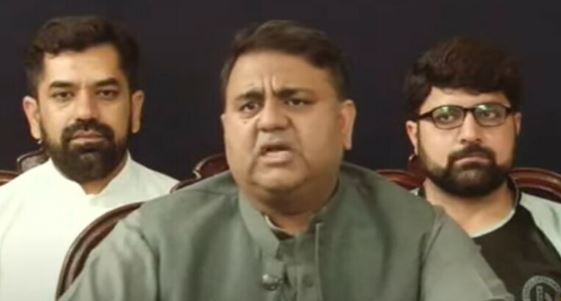
ISLAMABAD: Pakistan Tehreek-e-Insaf (PTI) Senior Vice President Fawad Chaudhary lashed out at the imported government and said that the authorities seemed so terrified of the dead body of Arshad Sharif because they were constantly changing location of the ambulance as if he would stand up.

In a statement on Wednesday, Fawad Chaudhary said that late at night, he was waiting for the dead body of Arshad Sharif at the airport but the authorities were constantly changing location of the ambulance so as the people could not gather there.

He said that it seemed that the authorities were so scared of the corpse of Arshad Sharif, as they were not only making films but also repeatedly changing location of the ambulance so that people did not gather there.

Fawad Chaudhary went on to say that the fear was reflected on their faces.

The Qatar World Cup: Footballing for soft power

Former Qatari emir Hamad bin Khalifa Al Thani, the father of the Gulf state’s current ruler, Tamim bin Hamad Al Thani, learnt a lesson from the 1990 Iraqi invasion of Kuwait.

A US-led military coalition liberated Kuwait while many conservative Kuwaitis fled to Saudi Arabia. Less conservative Kuwaiti nationals sat the war out in the casino of the Cairo Hilton hotel.

Mr. Al Thani recognized that, like Kuwait, his country with a citizenry of 300,000, sandwiched between two regional behemoths, Iran and Saudi Arabia, would never be able to fend off a conventional military attack on its territory, no matter how much and how sophisticated the weaponry is that it acquires.

To ensure that Qatar was relevant to the international community and had the necessary public empathy to support intervention on the Gulf state’s behalf in a time of need, Mr. Al Thani concluded that Qatar’s defence strategy would have to focus on soft rather than hard power.

In more than 30 years since, Qatar, one of the world’s top gas producers, has developed a highly sophisticated, multi-pronged soft power policy.

It involves ensuring a diversified customer base for its gas; a fast-paced, mediation-driven foreign policy; and the Al Jazeera television network that competes with the likes of the BBC and CNN.

Qatar’s creation of an air transport hub with an award-winning airline and airport, the opening of world-class museums, and high-profile investments in real estate in world capitals and blue-chip companies were also part of the strategy.

But none of these building blocks attracted more attention and more controversy than the sports leg of the Qatari strategy, with next month’s World Cup at the top of the list.

The positioning of sports as part of defense strategy shines a different light on controversies over the integrity of the Qatari bid, conditions of predominantly Asian migrant labour that built World Cup-related infrastructure, and potential risks for members of the LGBT community visiting a country where same-sex relationships and pre-marital sex constitute criminal violations of the law.

As a result, the stakes for Qatar, against the odds, in endearing itself to soccer fans, are high. It hopes to do so by being lenient towards violators of Qatari law, including activists wanting to make a point during the World Cup.

This week, in an indication of what that could mean, Qatari police stopped British activist Peter Tatchell from protesting the country’s anti-LGBT laws but did not detain him.

Mr. Tatchell said in a video clip on Twitter that he had been interrogated for 49 minutes.

The activist stood outside Qatar’s national museum for at least 35 minutes wearing a T-shirt emblazoned with “#Qatarantigay” and holding a placard that read “Qatar arrests and subjects LGBTs to conversion” before uniformed and plainclothes policemen arrived.

The police folded up Mr. Tatchell’s placard, took photos of his passport, questioned him, shook his hand, and left him standing on the sidewalk.

The handling of Mr. Tatchell contrasts starkly with the treatment of LGBT Qataris as described in a Human Rights Watch report, denied by Qatari officials.

The report asserted that at least six LGBT Qataris had been arrested and abused since 2019 and as recently as last month, two months before the World Cup. The six Qataris interviewed by the human rights group included four transgender women, one bisexual woman, and one gay man.

The group said they were held in an underground prison in Doha and forced to sign pledges indicating that they would ‘cease immoral activity.’

The transgender women detainees were ordered to attend conversion therapy sessions at a government-sponsored clinic. A Qatari official insisted that the Gulf state does not “license or operate ‘conversion centres.’”

From a Qatari and Kuwaiti perspective, the stark reality is that little has changed in their hard power defence capabilities in the more than 30 years since the Iraqi invasion of Kuwait.

“Unfortunately, as Gulf countries, we do not have options. Our capabilities do not deter Iran, do not deter other powers… We do not have other practical solutions,” Kuwaiti international relations scholar Abdullah al-Shaji told a recent conference in Doha.

Speaking against the backdrop of the worst crisis in US-Saudi and potentially US-UAE relations since the 1973 Arab oil boycott, Mr. Al-Shaji noted, “Russia is not going to be here, neither China. They do not have the intention or the capability. The US knows that the US is the only kid in town. Take it or leave it.”

This is where Qatar’s image among soccer fans takes on national security and geopolitical significance.

How Qatar handles issues such as activists seeking to capitalize on the opportunity to make a point, potential fan rowdiness, and culturally sensitive issues such as intoxication, public expressions of affection, and sexual diversity will shape how fans perceive and remember the 2022 World Cup, the most controversial in the history of world soccer body FIFA.

In a world of rising nationalism and popularism, in which Americans are war-weary after two decades of fighting in the greater Middle East, fan attitudes could make or break public support if Qatar ever needed the international community to come to its aid.

An analysis by social media and mis-and disinformation expert Marc Owen Jones illustrated the centrality of the World Cup in reporting on Qatar in British media in the 12 years between Qatar’s winning of its hosting rights in 2010 and the tournament itself in 2022.

Forty per cent of 1,735 Qatar-related headlines in newspapers such as The Guardian, The Times, Daily Express, The Sun, Daily Mail, The Telegraph, and Metro UK referred to the World Cup.

Of the approximately 685 World Cup-related articles, 454, or 66 per cent, were critical, 201, or 29 per cent, were neutral, and 33, or five per cent, were positive. Most of the negative articles focused on human rights.

By contrast, at most three per cent of articles about Russia in the period between Russia’s winning of its hosting rights alongside Qatar in 2010 and the Russian World Cup in 2018 focused on the tournament. In Russia’s case, the country’s 2014 intervention in Ukraine and its annexation of Crimea dominated media coverage.

If public opinion surveys are anything to go by, Qatar is losing the battle for the hearts and minds of fans in the United States and Europe, despite having enacted far-reaching reforms of its erstwhile labor system that put workers at the mercy of their employers and seeking to assure fans and activists that all irrespective of sexual orientation or marital status would be welcome.

Qatar may also have a mixed reputation in labour-supplying nations, although there is a dearth of data available from those countries. Equally, there is a lack of data on fan attitudes toward Qatar in much of Africa and a large swath of Asia.

However, a recent US survey suggested that 41 percent of Americans, 51 percent of American sports fans, and 61 percent of avid fans said Qatari human rights violations reduced their interest in the World Cup.

In addition, a YouGov poll commissioned by Amnesty International found that 67 per cent of the 17,477 participants in the survey in Europe, Central and Latin America, the United States, and Kenya wanted their national soccer associations to speak out publicly about human rights issues associated with the Qatar World Cup.

To counter negative perceptions, Qatar has invested heavily in making its World Cup an unforgettable experience.

However, New York Times soccer correspondent Rory Smith cautioned that the Qatari investment might miss the plank.

“It is not the soccer that makes the World Cup, not really… The World Cup, at heart, is a feeling… What made Russia 2018…was Nikolskaya, the street in central Moscow that became a hub for fans from all over the world, full of flags and bunting and song. It was the sight of thousands upon thousands of Peruvians on the streets of Saransk, a red sash across their hearts. It was the sense that, even in a vast land of steppe and mountain and forest, you were never more than six feet from a Colombian,” Mr. Smith said.

That feeling that touches not only those who travel to the World Cup but also those who follow it on screens at home “cannot be forced. It cannot be commanded into an existence. It has to gestate, develop, ferment.”

That is where Qatar’s apparent targeting of a high-end audience with its emphasis on pricy, luxury accommodation during the tournament could backfire and undermine its goal of engendering empathy for the Gulf state.

Many of those sitting at home, particularly in Europe, Africa, and Asia, may feel that cost and regulated access prevented them from attending.

“It is hard not to worry that many of those fans will have been priced out of Qatar or excluded by virtue of not being allowed into the country without a ticket for a game and that with them, the feeling will change, turning the tournament into an ersatz version of itself, a tribute to all the things money can buy…and all of the things that it cannot,” Mr. Smith warned.

In the final analysis, the litmus test of Qatar’s sports strategy will be whether the World Cup helps Qatar reproduce its geopolitical success, achieved as much on its own steam as with the unintended help of its erstwhile detractors, the United Arab Emirates, and Saudi Arabia when it defeated a 3.5-year-long economic and diplomatic boycott. The UAE and Saudi Arabia lifted the embargo in early 2021.

Ultimately, to fully benefit from the tournament’s reputational value, Qatar will, post-World Cup, have to push forward with social, economic, and political reform, even if activist attention moves on and focuses on countries such as Saudi Arabia and Egypt that are likely to bid for forthcoming sports megaevents such as the 2027 Asian Cup and the 2030 World Cup.

Qatar’s ability and willingness to move ahead with reforms may make the difference in how the tournament is remembered, particularly in the United States and Europe, which are likely to be crucial to the Gulf state’s military defence when the chips are down.

The problem is that human rights, labour, and LGBT groups may lose leverage. Qatar may not remain as receptive to criticism as it was in the run-up to the World Cup.

In a speech this week, Qatar’s emir, Sheikh Tamim, lamented  that since winning hosting rights, Qatar had been “subjected to an unprecedented campaign that no host country has faced.”

The emir went on to say that “we initially dealt with the matter in good faith, and even considered some of criticism as positive and useful… (But) it soon became clear that the campaign tends to continue and expand to include fabrications and double standards that were so ferocious that it has unfortunately prompted many people to question real reasons and motives behind this campaign.”

An earlier version of this story appeared as a RSIS Commentary

Dr. James M. Dorsey is an award-winning journalist and scholar, an Adjunct Senior Fellow at Nanyang Technological University’s S. Rajaratnam School of International Studies, and the author of the syndicated column and blog, The Turbulent World of Middle East Soccer.

Thank you to all who have demonstrated their appreciation for my column by becoming paid subscribers. This allows me to ensure that it continues to have maximum impact. Maintaining free distributions means that news website, blogs, and newsletters across the globe can republish it. I launched my column, The Turbulent World of Middle East Soccer, 12 years ago. To borrow a phrase from an early proprietor of The Observer, it offers readers, listeners, and viewers ‘the scoop of interpretation.’ If you are able and willing to support the column, please become a paid subscriber by clicking on Substack on the subscription button and choosing one of the subscription options.

Biden, Sunak reaffirm ‘special relationship,’ agreed Ukraine support

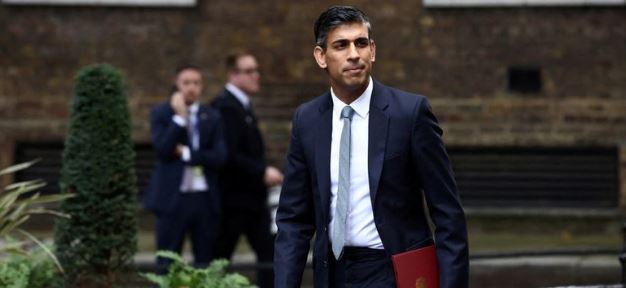
LONDON, OCT 26: U.S. President Joe Biden and new British Prime Minister Rishi Sunak, in a phone call on Tuesday, reaffirmed their two countries’ “special relationship” and agreed on the importance of supporting Ukraine, the White House said in a statement.

Biden and Sunak also agreed on the importance of working together to address the challenges posed by China and to secure sustainable and affordable energy resources, the statement said.

They also discussed their commitment to the Belfast/Good Friday Agreement, it said.

Saudi crown prince orders release of Pak pilgrims arrested for sloganeering at Masjid-i-Nabwi “P.B.U.H”

RIYADH, OCT 26: Prime Minister Shehbaz Sharif announced on Wednesday that Saudi Crown Prince Mohammad Bin Salman had ordered the release of Pakistani pilgrims who were arrested and detained for sloganeering and hounding a PM-led delegation at Masjid-i-Nabwi in Madina this April.

PM Shehbaz, who will be concluding a two-day trip to Saudi capital Riyadh today, thanked the crown prince in a tweet for ordering the release.

“I am deeply grateful to the crown prince of Saudi Arabia, Mr Muhammad bin Salman, who, on my request, ordered the release of the Pakistanis arrested in Saudi Arabia for the April 2022 incident.

We pray to Allah Almighty to make us better Muslims who forgive each other’s mistakes,“ he said.

In April, PM Shehbaz, along with a delegation comprising federal ministers and others, had gone on a three-day trip to Saudi Arabia. On their visit to Masjid-i-Nabwi during the trip, some Pakistani pilgrims had hounded them, shouted slogans against them and even physically attacked some members of the delegation.

Videos of the incident had gone viral on social media, prompting swift action from Saudi authorities and leading to the arrest of some of the pilgrims.

PMs agree to take fraternal bonds to ‘new heights’

Earlier, PM Shehbaz and Crown Prince Salman, who was named the kingdom’s prime minister last month, agreed to upgrade and enhance bilateral ties and fraternal bonds between the two countries to “new heights”.

The two held a bilateral meeting in Riyadh during which they reviewed the entire gamut of bilateral relations.

Taking to Twitter, PM Shehbaz described the meeting as “excellent”.

“We agreed to upgrade and enhance bilateral ties and fraternal bonds between Pakistan and Saudi Arabia to new heights in line with the requirements of [the] changing world. I told [the crown prince] people of Pakistan are eagerly looking forward to his visit,” he said.

The premier thanked the Saudi leadership for extending assistance to Pakistan during the recent devastating floods, particularly for establishing the air bridge between Riyadh and Islamabad to provide relief goods in flood-affected areas, the report said.

For his part, the Saudi crown prince termed the fraternal ties between Pakistan and Saudi Arabia very important for the two countries as well as for the region and the world, the report added.

Later, the premier and his accompanying delegation performed Umrah at Makkah’s Grand Mosque. PM Shehbaz “prayed for the peace and prosperity of Pakistan as well as Muslim ummah,”.

PM Shehbaz landed in Riyadh on Monday where he was received by Riyadh Governor Prince Faisal Bin Bandar Bin Abdul Aziz Al Saud at the airport. The premier is accompanied by Finance Minister Ishaq Dar, Defence Minister Khawaja Asif, Information Minister Marriyum Aurangzeb and other officials.

He also addressed the Future Investment Initiative Summit in Riyadh on Monday, saying that Pakistan was “ripe for market innovation” and the country was ready to reach out to potential investors for the future of its upcoming generations.

Khan dubs Islamabad march as Pakistan’s ‘biggest freedom movement’

SIALKOT: PTI Chairman Imran Khan Wednesday dubbed his “Azadi March” as the “biggest freedom movement” in the country’s history after getting a boost from the top court’s decision.

“My heart believes it will be the biggest freedom movement in the history of Pakistan. We will continue our struggle till the nation gets its rights via elections,” Khan told a party event in Sialkot.

The Supreme Court earlier rejected the federal government’s request to immediately stop the long march to Islamabad, with Chief Justice of Pakistan (CJP) Umar Ata Bandial advising the government to hold talks with the former prime minister.

The long march to Islamabad will kick off on October 28 (Friday) from Lahore’s Liberty Chowk in the morning despite the government’s repeated warnings to Khan.

Before it approached the top court, the government issued repeated warnings to the PTI chief, with a top official saying that the authorities would multiply their May 25 policy by 10 if Khan announces another long march.

If the PTI holds another long march, then it would be the second time they would be coming to Islamabad. The last march was held on May 25 and ended with Khan abruptly calling off the march after reaching Islamabad.

“The old and the new workers should start mobilising. This is not a war for power or politics, but a war against a foreign conspiracy, which resulted in the installation of thieves on us,” Khan told his supporters.

The ex-prime minister said his long march aimed at securing “real” independence for the nation by defeating the ruling “dacoits”.

“All the sacrifices [for Pakistan] will be in vain if the gang of thieves keeps ruling us. I will depart from Lahore on Friday. This will be Pakistan’s biggest freedom movement.”

Khan said his struggle would continue until the day the nation is allowed to elect its representatives as against the “American slaves who are imposed on us repeatedly”.

Issuing a warning of his own to the federal government, the ex-premier told Interior Minister Rana Sanaullah to gear up as he and his “handlers” would witness a sea of people in the capital.

Lashing out at authorities, Khan said he would hold those accountable who had “mistreated” PTI leader and ex-interior minister Azam Swati.

The PTI leader was taken into custody by the FIA’s Cybercrime Wing (CCW) in Islamabad on October 13 after a case was registered against him over tweets against the army chief. However, he was granted post-arrest bail almost eight days later in return for surety bonds worth Rs1 million.

“They are picking up our social media workers,” Khan said, expressing his anger towards the authorities. “But it won’t just be Imran Khan [in Islamabad], it will be entire Pakistan.”

In response to Khan’s call, PML-N supremo Nawaz Sharif said that the PTI chief would not bring a revolution in the country, rather his long march was just for “appointing an army chief of his choice”.

“The nation has seen his revolution in the last four years of his tenure.”

“Imran Khan, who terms others as thieves, has proven himself to be the biggest thief in history with indisputable evidence of foreign funding, Tosha Khana, and a robbery of 50 billion.”

SC rejects govt’s request to immediately stop PTI’s long march

Islamabad, OCT 26: The Supreme Court on Wednesday rejected the federal government’s request to immediately stop PTI chief Imran Khan’s long march to Islamabad, with Chief Justice of Pakistan (CJP) Umar Ata Bandial advising the government to hold talks with the former prime minister. 

The federal government filed a contempt of court plea against the PTI chairman in the Supreme Court over his long march to the federal capital. 

In its petition, the government said, “Imran Khan is making announcements to attack Islamabad”, which it claimed was a violation of a court order. It urged the apex court to direct the PTI chief to ensure the implementation of its orders related to protests and sit-ins.

A five-member bench, headed by CJP Bandial, comprising Justice Ijaz ul Ahsan, Justice Munib Akhtar, Justice Yahya Afridi and Justice Sayyed Mazhar Ali Akbar Naqvi heard the plea today. 

A day earlier, Khan said PTI will kick off its long march on October 28 (Friday) from Lahore.

The former prime minister said that all party workers, supporters and leaders will gather at Lahore’s Liberty Chowk at 11am from where they will march towards Islamabad.

Today’s hearing

In his arguments during the hearing, Additional Attorney General Aamir Rahman said that the reports of police and intelligence institutions have been reviewed.

The additional attorney general said that the court had first asked when did the PTI chief give a call for the long march.

He said that the court order came on May 25 at 6pm, while the announcement was made by Khan at 6:50pm and he made the second announcement at 9:54pm.

“The PTI had requested to stage a sit-in at the Srinagar Highway,” he said. “Khan had also announced to go to D-Chowk even before the court order.”

Rahman said that later PTI leaders Shireen Mazari, Fawad Chaudhary, Sadaqat Ali Abbasi, Usman Dar, Shahbaz Gill, and Saifullah Niazi also gave a call to party workers to arrive at D chowk.

Meanwhile, the court sought a response from Khan over the plea seeking contempt proceedings against him.

“From Khan’s statement, it seems like he was informed about the court’s orders as he said that the SC ordered removing barricades,” the CJP remarked as he summoned the PTI chairman to clarify before the court who said what.

Rehman contended that Khan’s latest call to reach D-chowk is a contempt of court, he said, while referring to the end of PTI’s long march at Jinnah Avenue on May 26.

“Khan crossed the restricted area H9 and reached Blue Area where he ended the rally,” he said.

The additional attorney general further stated that PTI lawyers Babar Awan and Faisal Chaudhry assured the court that they would not cross the restricted area.

At this, CJP Bandial said that Rehman’s argument has some weight therefore it would be better to seek a response from those who assured.

Zaheer Janjua lauds Canadian charity for raising CAD 500,000 for flood victims

DNA

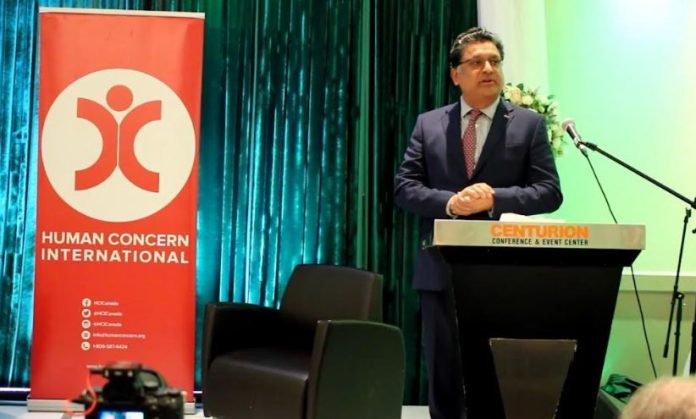
OTTAWA, OCT 26: Pakistan High Commissioner to Canada Zaheer A. Janjua has lauded Human Concern International (HCI), a charitable non-governmental Canadian organization, for raising CAD 500,000 through donations for the rehabilitation of people affected by floods in Pakistan.

He said he had travelled to various parts of Canada and had attended various fundraising events arranged by the Pakistani diaspora in Canada and he had been thoroughly impressed with the sincerity and enthusiasm with which the vibrant Pakistani diaspora in Canada had answered the call for help to their brothers and sisters in Pakistan and contributed millions of dollars to the flood relief and rehabilitation efforts in Pakistan.

He was speaking to a large gathering of Pakistani Canadians, members of the Canadian civil society, politicians, members of Canadian Parliament and Senate gathered in Ottawa under the banner of Human Concern International for raising funds for construction of houses for the flood victims in Pakistan.

Besides High Commissioner Zaheer Janjua, Greg Fergus, Parliamentary Secretary to the Canandian Prime Minister and to the President of the Treasury Board of Canada, Paul Thoppil, Assistant Deputy Minister, Asia-Pacific at Global Affairs Canada, Member Senate of Canada Ms Salma Ataullahjan, Member Parliament Shafqat Ali, Member Parliament Sameer Zuberi, Member Parliament Chandra Arya, Member Parliament Marie-France Lalonde also attended the dinner which resulted in an on-the-spot collection and contributions of CAD 102,000 funds for the flood victims in Pakistan.

It was announced that Human Concern International, run and staffed mostly by members of Pakistani diaspora had collected CAD 400,000 through two fundraising dinners held in Toronto and London Ontario in the past week. The organisation plans to use the donations for construction of houses for the people rendered homeless by recent floods in Pakistan.

Addressing the event, High Commissioner Zaheer Janjua highlighted the grave consequences climate induced calamities had caused for countries like Pakistan which had little to do with global emissions. He said that Pakistan had become a victim of climate induced catastrophic floods even though it contributed less than 1 per cent to global emissions but in the vulnerability index it was already amongst the top 5 countries.

He called for an urgent global action to deal with what he called a clear and present danger staring us in the form of climate change. He warned that Pakistan had witnessed the manifestation of climate change but tomorrow it could be some other country. He noted that while it was great to have lovely agreements such as Paris Accord to address the climate change issue, it was also necessary to pay attention to what was happening on the ground.

Pakistan, Kyrgyzstan vow to strengthen cooperation

DNA

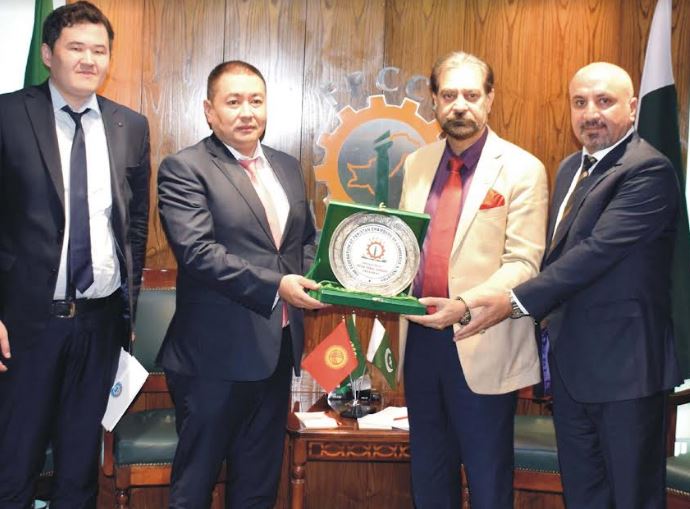
Islamabad, OCT 26 – The Ambassador Kyrgyz Republic to Pakistan Mr. Ulanbek Totuiaev, called on Mr. Irfan Iqbal Sheikh, President, the Federation of Pakistan Chambers of Commerce and Industry at Capital House Islamabad. Mr. Amin Ullah Baig, Vice President FPCCI / Incharge Capital Office & Mr. Umar Masood ur Rehman Vice President FPCCI were also present on the occasion. During the meeting underscored the need for closer cooperation in trade, investments, and energy and people-to-people contacts.  They accorded particular focus to further strengthening of exchanges Business Delegation, holding of business forms to increase the bilateral trade between both the countries and other affairs.

The Ambassador of Kyrgyzstan further said that the volume of trade between the two brotherly countries is very low, major exports of Pakistan to Kyrgyzstan are fruits, vegetables, juices, surgical instruments, textile products, pharmaceuticals, furniture, sports goods and leather etc. Similarly, Kyrgyzstan’s export items are meat, dairy products, raw cow and sheep hides, mechanical and electrical equipment, aluminium, oil products, jet fuel etc.

Both countries are producing several products, which could be of great value in each other’s market and compete with products of other countries in terms of affordability and quality. He further said that he was of the view that his country can act as a connectivity hub for Pakistan’s exports that can reach the Central Asian and European markets by road. He also stressed that there is a great potential for tourism and investments in the Kyrgyz Republic as both nations have EU GSP+ and leveraging the free trade zones. Our nations can boost their economic activity, especially with their exports to the European markets he said. We have to take advantage of our geographical contiguity and QTTA can play a significant role in this regard.

Mr. Irfan Iqbal Sheikh, President of FPCCI said that the geo-strategic position of Pakistan and Kyrgyzstan also highlights their geo-economic importance, which could play a significant role in promoting trade connectivity amongst different regions and potential markets of the world. Promoting bilateral trade and economic relations between Pakistan and Kyrgyzstan could be a milestone in regional and global trade integration and connectivity. Due to its geostrategic importance, Pakistan is currently a major player in global and regional trade, bordering the Middle East and South Asian states on the one hand and the global economic power China on the other. He said that the geographical location of Kyrgyzstan offers many opportunities for trade with Pakistan as it is the shortest entry point of Pakistani products to the ‘Eurasian Economic Markets’ of 182 million people comprising Russia, Kyrgyzstan, Kazakhstan, Belarus and Armenia. The trade turnover of the Kyrgyz Republic with Pakistan amounted to $5.9 million in 2021 with Pakistan’s exports amounting to $5.3 million and imports of $600,000, he said.

Mr Amin Ullah Baig & Mr Umar Masood ur Rehman Vice Presidents of FPCCI Said that Pakistan and Kyrgyzstan have a shared perception and stance towards many global and regional issues and are currently cooperating in the economy, energy, education, tourism and several other domains. The Kyrgyz Republic and Pakistan are endowed with huge reservoirs of natural resources and highly skilled human resources and there are many areas where both can collaborate. In addition, Pakistan could export its surplus fresh fruits and vegetables, especially during the winter season when there is an acute shortage of fresh fruits and vegetables in Kyrgyzstan, he said.

Pakistan Navy shooter wins bronze medal in maiden ISSF 2022 championship

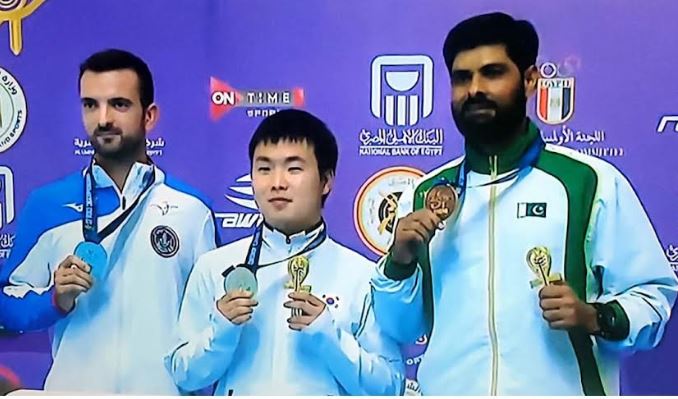
Islamabad, OCT 26 /DNA/ – Pakistan Navy Ghulam Mustafa Bashir MCPO bagged Bronze Medal at 1st International Sports Shooting Federation (ISSF) Rifle/ Pistol shooting Championship held at Cairo, Egypt. This championship served as qualification event for Summer Olympics scheduled at Paris, France in 2024.

Ghulam Mustafa Bashir and RasamGul from Pakistan Navy participated in 25m Rapid Fire Pistol event and represented National Flag during said championship. Both shooters performed well and Ghulam Mustafa Bashir secured 3rd position. By securing Bronze Medal, Ghulam Mustafa Bashir not only qualified for participation in Paris Olympics 2024 but has reached to No. 07 at world ranking.

A total of 77 shooters from 37 countries participated in the championship. Upon return to Pakistan, both shooters were warmly received at Jinnah International Airport, Karachi. The medal winning performance of PN shooter is a testimony of Pakistan Navy efforts to promote shooting as a sports in Pakistan.

Chief of the Naval Staff being President of National Rifle Association of Pakistan (NRAP) has applauded efforts put in by Pakistani shooters and expressed hope to bring more laurels for the Nation in future.

Value the Biotic

Dr M Ali Hamza

The planet Earth is a beautiful place to live in. Thanks to our magnanimous Sun and vast oceans of water that helped lifetoflourish on the planet. No matter where we go on planet earth, the stunning life is surviving through plants, and animals that catch our attention. They are two very important aspects of any ecosystem or what we call nature.In this technological era, humans interact more with gadgets than ever, and it’s almost impossible to find time to interact with nature. When the vacation time knocks, we plan traveling to exotic locations to trek through natural trails or just drive to see herd of fearless animals. This is enabled by flora and fauna that are spread across different parts of the world.

Flora refers to the population of plant life whereas Fauna is the population of animal life in a certain location or time. Flora is also known as ‘Goddess of flower’ and Fauna ‘Goddess of Fertility’. They both regulate the amount of oxygen and carbon dioxide in the air and also provide us with a wide range of food, drink, fabrics and medicines.Flora and Fauna are the most fascinating of all biotic elements. As we appreciate the Abiotic: non-living substances, that are necessary for life to survive and enjoy, such as soil, water, minerals, diverse sights and climate, we need to equally take pride of biotic elements of one’s country.

Promoting biotic elements of one’s country, opens door to another captivating dimension of tourism called eco-tourism. Let’s take an example of Indonesia. They have promoted their Komodo Dragon: Indonesia’s endemic ancient species (that is also the world’s biggest lizard), by establishing Komodo National Park and people just visit one of the islands to only see these dragons. Raja Ampat; world-famous diving paradise, attracts the lovers of marine biodiversity and pristine nature. West Bali National Park is a treat for naturalists. The park has a popular birdwatching spot from where tourists are presented with a real chance to see the endangered Bali Starling. Moreover, places like Bunaken National Park, Sumba Island, Flora Island, Bangka Belitung Islands etc., in Indonesia invite every year a huge number of domestic and international tourists to satisfy their sense of Love for nature and desire of discovery. Other countries like Brazil, Mexico, Costa Rica, Peru, China, Australia, Thailand, Tanzania, Spain, USA, Ecuador, Italy, France, and even Kenya have seriously branded their Flora & Fauna and listed among the best tourists’ spots for ecotourism. There are many other countries blessed with natural treasury of Biotic & Abiotic elements but are poor in showcasing it, unable to offer variety of tourism and resultantly don’t in-cash the potentials. Pakistan is among those unfortunate ones.

Whenever we think of tourism and Pakistan together, generally we start visualizing the gigantic mountains, splendid valleys, and sparkling water streams. But we tend to completely ignorethe very existence of unique Flora & Fauna. Pakistan has lot to offer in this dimension. Beside the long list, lets focus on one of the least highlighted animals that is long-haired, short-legged oxlike domesticated mammal; the YAK – Beast of high altitudes. This specie of ox is only found in the Himalayan region of the Ladakh, the Tibetan Plateau, Northern Myanmar, Nepal, Mongolia,Siberia and Gilgit-Baltistan Pakistan. Few geographical locations that are lucky enough to have YAK, trying to make it worth selling through their eco and livestock tourism. Even some countries like Nepal have introduced Goth Stay, where tourist trailing on high altitudes can stay with families that are breeding YAK, offer friendly engagement with the small community, provide the interesting orientation, andmake the stay memorable through YAK ride, YAK polo, YAK wool, YAK stake etc. Are we in Pakistan taking any inventive steps? The answer is ‘Not Really’. The very next logical question is ‘why not’? and the simplest answer is that we are not valuing our biotic elements to an extent we should, and if we deceptively believe that we are, then at least we are not branding it.

Strangely, if you visit Gilgit-Baltistan in Pakistan, you won’t find any Statue of YAK. Check out the post cards, you won’t find a YAK post card. There are no YAK ornaments. Kids cannot find YAK t-shirts or YAK toys. There are no decorative YAK crowns or models. YAK mugs and cups are not in imagination. There is no YAK festivity or engagement of YAK in popular events like Sarfaranga Jeep Rally or Shandoor Polo Competition.

It is commendable that Virtual university of Pakistan took an initiative and held first and second international conference on Yak in Lahore and Baltistan respectively. The collaborative role of newly emerged University of Baltistan, Skardu deserves appreciation. This effort brought researchers together. The establishment of first ever Yak Association in Pakistan is the outcome of this conference.Speakers from Germany, China and Mongolia shared their work. Most of the talks in the conference were focused on area of research to improve YAK productivity. A talk on branding YAK, argued on the negligence of not promoting a unique breed and explained basic corrective measure to be taken.  It was an effort to create a ripple in the thought but we need to keep oaring to sustain the ripple to reach the goal.

Stay Connected

64FansLike
60FollowersFollow

Latest Reviews

Exchange Rates

USD - United States Dollar
EUR
1.17
GBP
1.34
AUD
0.67
CAD
0.73