Home Blog Page 1455

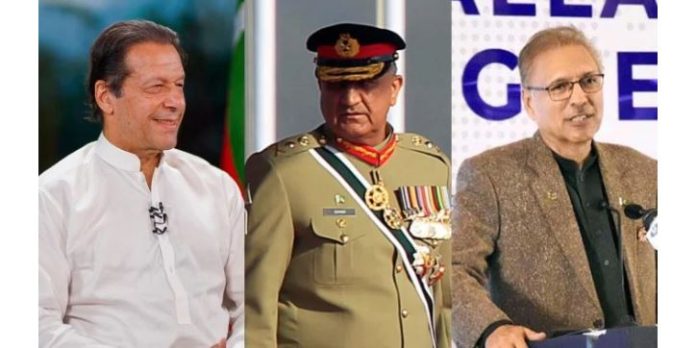
Imran Khan claims COAS, President Alvi discussed ‘early elections’

  • Khan claims President met army chief and spoke about elections.
  • Says army chief appointment should be done like that of SC’s CJ.
  • Amendment to Army Act will be challenged in SC.

LAHORE: PTI Chairman Imran Khan Friday claimed that President Arif Alvi has met Chief of Army Staff General Qamar Javed Bajwa to discuss immediate and transparent elections.

Earlier today, President Alvi said that he will follow through on Prime Minister Shehbaz Sharif’s advice regarding the high-level appointment and he could not create hurdles in the much-anticipated process.

Sources told that Khan made the claim during an informal discussion with senior journalists in Lahore, where he also spoke on the matter regarding the army chief’s appointment.

“Appointment of the chief of the armed forces should be done like that of the Supreme Court’s chief justice,” Khan said, according to the sources.

The PTI chairman also added that the incumbent government is making proposed amendments to the Army Act for its own benefit.

“The proposed amendment to the Army Act will be challenged in the Supreme Court,” the former prime minister said and informed journalists that he hasn’t met General Bajwa in Lahore.

Speaking about hitting the road during his party’s long march as it moves ahead in Punjab’s Gujar Khan, Khan said that his doctors will examine him tomorrow and give their opinion accordingly.

“I will lead the long march myself from Rawalpindi,” the PTI chief said, according to sources.

Commenting on his attacker being presented in the court a day earlier, as per sources, the PTI chairman said: “Prime suspect of the Wazirabad attack was produced in the court after 14 days. I’m afraid that the evidence will be lost in these 14 days.”

Khan, when commenting about his party’s relations with the PML-Q, said that the “Q league is our ally. We have an excellent alliance with [Chief Minister Punjab] Pervaiz Elahi.”

Khan said that the biggest hurdle in the registration of the first information report (FIR) in relation to his attempted assassination was the former Inspector-General of Police in Punjab Faisal Shahkar.

The former prime minister, as informed by sources, also spoke about the use of electronic voting machines in general elections.

“I tried hard to stop rigging through EVMs in the elections. Nawaz [Sharif], [Asif Ali] Zardari, Election Commission [of Pakistan], and the handlers were on the same page on the matter of EVM,” the PTI chairman said, as told by sources.

Responding to a question about the possibility of becoming the next prime minister, Khan said that he will only become the premier if he gets complete powers.

“It cannot be that one person has authority and someone else has the responsibility,” the former premier said, sources informed.

Strategic Location of Pakistan: Challenges and Opportunities

Pakistan about 75 years ago came into being at the transit route of three ancient great civilizations i.e. Indus, Persian, and Chinese civilizations. It lies between 30.3753° N and 69.3451° E as far as latitude and longitude extents are concerned. It is surrounded by four countries and a sea; China in the North, Afghanistan, and Iran in the West, India in the East, and the Arabian Sea in the South.

China is emerging as a superpower and believes in the multi-polarity of the world. India recently becomes the fifth largest economy in the world. Iran is under sanctions imposed by the western world but it has an immense treasure of oil and gas. Our neighbor Afghanistan is full of precious minerals and other untapped natural resources. Gwadar Port in Balochistan can contribute protecting our vital interests. The strategic location of Pakistan is a challenge and an opportunity for it at the same time.

Pakistan has to face challenges with respect to its strategic location. As it is present at the epicenter of the international political arena, so it was bound to play certain roles in various political and military related episodes for example SEATO, CENTO, the erstwhile USSR invasion in Afghanistan, and the 9/11 incident.

On its eastern front, there exists India, its eternal enemy. Pakistan remains in a state of constant risk from the said front but our nuclear capability i.e. deterrence is working day and night silently, according to DG ISI. Pakistan enjoys friendly relations with China in the north. China always has helped Pakistan. Pak-China friendship is deep-rooted and eternal.

Afghanistan has suffered immensely over four decades of wars and conflicts Millions of Afghans from the last three generations were displaced from their homes and forced to live in exile, some with formal refugee status and many with illegal status in a number of neighboring countries, including Pakistan. There exists always a troublesome on our western border.

In the Middle Eastern region, Pakistan has to maintain a balanced posture between the Kingdom of Saudi Arabia and Iran.

Major Powers have their own interests in this region. The United States of America wants to exercise its own hegemony in South Asia. It always pushes India to contain the progress of China. By 2025, the trade volume between India and Russia will be 30 billion USD. International powers are trying to sabotage the CPEC. Gwadar is a priceless gift bestowed upon us by nature.

It can serve our vital interests but this is not acceptable to such powers. So the strategic location of Pakistan becomes a curse.  

But challenges always come up with opportunities. They are closely interrelated with each other. Challenges can be converted into opportunities. It can be seen over the period of our own history. In 1974, when India tested its nuclear devices, apparently it was a challenge for Pakistan to survive with a nuclear capable neighbor but later it became an opportunity to develop our own nuclear program to deter our eternal adversary. Eventually, we came up with an unshakeable defense.

Today, Pakistan must have to convert the aforesaid challenges into opportunities. According to estimates, there exists a potential of about 20 billion USD in trade between India, Pakistan, and Afghanistan where Pakistan will serve as a transit corridor. Pakistan can enhance its bilateral trade relations with Central Asian countries by utilizing Wakhan Corridor. It can boost the pace of CPEC Projects under BRI. Paperwork for foreign investment in SEZs can be minimized by digitalization. Maximum benefits can be gained from regional connectivity.

Gwadar Port is situated near the Strait of Hormuz (International Oil Highway), witnessing roundabout seventy percent (70%) of world oil transportation and 100,000 shipments of annual trade transportation.

This port has the ability to accommodate approximately 200,000 tons of supertankers. Pakistan can actually influence its neighbors through economic linkages. Ultimately, regional connectivity will turn Pakistan into an economic hub.

For the effective utilization of such a vibrant strategic location requires honest, sincere, rational, and wise leadership that can formulate a unified, stable, specific foreign policy in accordance with “popular will” to protect the national interest across borders.

The policy shift from geo-politics to geo-economics by Niazi’s regime will be fruitful for Pakistan. We must avoid such intentions as placing Pakistan nearby Iceland as intended by a high ranked official. Foreign policy will serve as means and economic prosperity and progress will be the ends.

The author is a student of Strategic Studies at National Defence University, Islamabad. He tweets at @afnanwasif

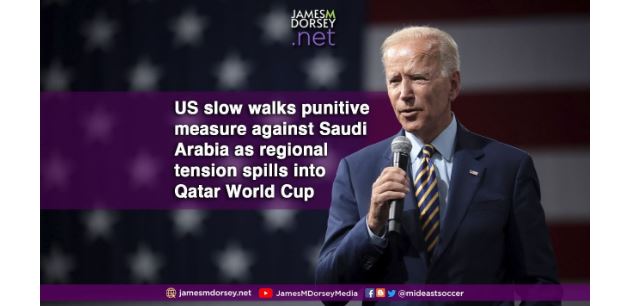
US slow walks punitive measure against Saudi Arabia as regional tension spills into Qatar World Cup

Recent Saudi efforts to appease the Biden administration in the wake of the kingdom’s backing of last month’s OPEC+ oil production cut take on added significance in the wake of this week’s US midterm elections that have strengthened Joe Biden and weakened former President Donald J. Trump.

Saudi insistence on a two million barrel a day cut in the wake of Mr. Biden’s failed effort to persuade Saudi Crown Prince Mohammed bin Salman to delay the cut, if not increase production, in advance of the elections, was widely seen in Washington as an effort to bolster Mr. Trump’s Republican Party.

If that was the Saudi strategy, it backfired. Mr. Biden’s Democratic Party fared far better in the elections by holding onto control of the Senate and losing the House of Representatives to the Republicans by a much smaller margin than expected.

Saudi Arabia has consistently denied the allegation, insisting the cut was economically prudent and constituted neither an attempt to sway US voters nor support Russia despite its invasion of Ukraine.

In the six weeks since the cut, Saudi Arabia has made several conciliatory gestures, including a vote in the United Nations General Assembly in favor of a resolution declaring Russia’s annexation of swaths of eastern Ukraine illegal, and significantly increased humanitarian aid for Ukraine.

The gestures failed to persuade Mr. Biden, buoyed by his Democratic Party’s dashing Republican hopes, to take time out from this week’s Group of 20 summit to meet with Mr. Bin Salman on the sidelines.

However, that didn’t stop the Biden administration from simultaneously seeking to bolster fledgling confidence in its commitment to the kingdom’s defense by flying two B-52 bombers over the Middle East in a show-of-force message to Iran.

The demonstrative act was intended to deter Iran from acting on alleged plans to attack Saudi Arabia to distract attention from two months of anti-government protests that Iran claims were instigated by the kingdom, the United States, and Israel.

The overflight also followed reports that Saudi Arabia had broken off Iraqi-sponsored talks with Iran designed to prevent differences between the two regional rivals from spinning out of control.

It remains unclear whether the US demonstration has deterred Iran.

Moreover, it has not stopped tensions between Saudi Arabia, Iran, and Israel and Iran’s domestic strife from potentially spilling into the Qatar World Cup.

Israel this week advised the up to 20,000 Israelis expected to attend the World Cup in a country that generally refuses to grant them entry to exercise caution, in part because of Iranian participation in the tournament.

The expected presence has also sparked the ire of some Qataris because of Israel’s policy towards the Palestinians.

Former Qatari race driver Hamad Al-Suwaidi sparked outrage on social media by declaring that Israeli fans would be welcome as “brothers” in Qatar, which is “also their country.” The outrage raised questions about what kind of reception Israelis can expect.

Mr. Al-Suwaidi made his remarks shortly after becoming a media sensation in Qatar because he had installed a gigantic stone replica of the World Cup soccer trophy outside his home in Doha.

In response, Ahmed Al Binali, a Qatari national, tweeted that “recently, there have been some lone voices calling for normalisation with the Zionist entity and welcoming settlers to visit Doha! Since when was Qatar their country? Since when were they our brothers and friends? We neither welcome nor will be friends with those who kill the people and children of Palestine.”

For his part, Carlos Queiroz, the Iranian football squad’s manager, insisted that players would be allowed to protest.

Some Iranian footballers, including the squad’s star player Sardar Azmoun, have supported the anti-government protests in Iran. More than 300 protesters are believed to have been killed in tge past two months in brutal efforts by security forces to squash the unrest.

Breaking with FIFA’s fictional separation of politics and sports, Mr. Quieroz said that “players are free to protest as they would if they were from any other country as long as it conforms with the World Cup regulations and is in the spirit of the game.”

Meanwhile, in a bid to prevent tensions from spinning out of control and appease Iran, Qatar has refused to accredit the London-based, Saudi-backed satellite television broadcaster, Iran international, for the World Cup.

Iran has accused the broadcaster of inciting the protests. The Islamic republic warned in September that Iran International would “pay the price” for carrying footage of the demonstrations.

“I warn the Saudi regime to control your media, or the smoke will go in your eyes,” said Maj. Gen. Hossein Salami, commander of Iran’s Islamic Revolutionary Guard Corps.

The commander added, “this is our last warning because you are interfering in our internal affairs through these media. You are involved in this matter and know that you are vulnerable.”

Last week, Iran International asserted that British police had warned two of its British-Iranian journalists about a “credible” Iranian plot to kill them.

Ironically, the crackdowns in Iran and Saudi Arabia share similar goals.

They aim to avoid risks inherent in what political scientist Barbara F. Walter describes as anocracy, a regime that is neither fully autocratic nor fully democratic.

Ms. Walter noted that “civil wars almost never happen in full, healthy, strong democracies. They also seldom happen in full autocracies. Violence almost always breaks out in countries in the middle.”

The political scientist was discussing domestic tensions in the United States, but her insights are equally valid for Iran and Saudi Arabia.

The recent harsh sentencing of Saudi and US nationals to decades in prison for their tweets was widely seen as a way for Mr. Bin Salamn to poke a finger in Mr. Biden’s eye after he warned that the oil production cut would have consequences for the already strained US-Saudi relationship.

In recent months, Mr. Bin Salman’s escalating crackdown on dissent has sent two women to respectively 34 and 45 years in prison and a 72-year-old American who was returning to his native Saudi for a vacation to 16 years behind bars for tweeting critically about the regime.

Additionally, Saudi authorities recently detained a 34-year-old American woman, Carly Morris,  after she posted on Twitter that she and her young daughter had been lured to the kingdom and trapped there since 2019.

If Ms. Walter is correct, the repressive legal moves may have more to do with Mr. Bin Salman’s sense of regime survival than with a shadow boxing match with Mr. Biden.

Even so, Mr. Biden may feel he is winning the match on points.

A senior US official asserted that “our displeasure has already been clearly stated and has already had an impact. We’ve seen the Saudis react in ways that are constructive.”

As a result, the administration is slow-walking efforts to make Saudi Arabia pay the price for the oil production cut.

This week, the administration has told a US court that Mr. Bin Salman should be granted sovereign immunity in a civil case involving the 2018 murder of journalist Jamal Khashoggi.

The advice effectively ended a last-ditch attempt to hold the crown prince legally accountable for the killing in the kingdom’s consulate in Istanbul.

We don’t need to be in a hurry,” said US National Security Council spokesman John Kirby.

Thank you to all who have demonstrated their appreciation for my column by becoming paid subscribers. This allows me to ensure that it continues to have maximum impact. Maintaining free distributions means that news website, blogs, and newsletters across the globe can republish it. I launched my column, The Turbulent World of Middle East Soccer, 12 years ago. To borrow a phrase from an early proprietor of The Observer, it offers readers, listeners, and viewers ‘the scoop of interpretation.’ If you are able and willing to support the column, please become a paid subscriber by clicking on Substack on the subscription button and choosing one of the subscription options.

Dr. James M. Dorsey is an award-winning journalist and scholar, an Adjunct Senior Fellow at Nanyang Technological University’s S. Rajaratnam School of International Studies, and the author of the syndicated column and blog, The Turbulent World of Middle East Soccer.

Repeating blunders of previous regime will have consequences: Mian Zahid Hussain

DNA

ISLAMABAD:  More than 40 years had passed since the Revolution, and Iran had experienced protests through the years over a series of issues. However, this recent chaos had been the most longstanding agitation staged since the Revolution, said Ambassador Riffat Masood.  She was addressing a Roundtable Discussion, titled, “Contemporary Socio-Political Dynamics in Iran”, arranged by the Institute of Regional Studies (IRS), here on Friday.

She said that considering a plethora of linguistic and cultural communities, Iran’s cultural fabric had always been more overpowering than religious supremacy and that relatedly, several concerns surrounding the recent agitation revolved around the cultural and religious identity of the deceased Mahsa Amini. The protests which had ensued following Amini’s demise had triggered deep hatred against the conventional ruling elite in Iran. 

While the reasons were apparently different, Amini’s death had brought to the fore deep-rooted economic and political grievances that were so far concealed, she said. Ambassador Masood said that it was noteworthy that the recent agitations had turned into a major internal stressor pressurizing the regime survival, especially considering that 40 years of sanctions and a sustained campaign of repression by the IRGC and Basij had already made the regime unpopular, particularly among the 60 percent of youth and also, women.

 She stressed the expanding influence of the IRGC and the Basij, and said that the Iranians were done with the morality police and this was the main reason behind the longstanding persistence of the protests. Additionally, she said, social media regulations and controls had further exacerbated the situation leading to a state of suffocation among the public.

Most importantly, theocratic influences within education systems through a coordinated effort also added to the agitation as Iran was a country that had always cherished cultural heritage. Ambassador Riffat added that it was important to note that in order to address rampant poverty, unemployment, corruption and poor economic progress generally, alongside the inherent nationalism rooted in the Iranians, multi-dimensional major reforms were required.

The only way that the Iranian government could come out of the current agitation was via providing some sort of concessions to the Iranian people either economically or politically.

Syed Fraz Hussain Naqvi, Research Lead Iran Program at IRS commented on the longevity of the current protests and said that there were several reasons as to why the protests will not succeed and might fizzle out in time. Firstly, the movement was by and large a leaderless protest steering into convenient directions with altering momentums during different times.

He said, that other reasons to believe that short life of the ongoing protests were factors such as fake news, western involvement, lack of support from within Iran, and Islamophobic element attached to the movement.

RCCI fears 30,000 poultry farms to be closed, due to lack of timely clearance

DNA

Rawalpindi, NOV 18: The Rawalpindi Chamber of Commerce and Industry (RCCI) has cautioned the Government that due to non-availability of soybean meal, there is fear of scarcity of chicken, meat and food security across the country.

RCCI President Saqib Rafiq said in a statement that 130,000 tonnes of soybeans worth 22 billion rupees are lying in the open sky at the port.

Due to the lack of timely clearance, there is a fear that 30,000 poultry farms will be closed, more than 300 feed mills will be directly affected and the investment of about 1200 billion will be stopped in this sector.

He said that the poultry industry accounts for 50% of the meat demand in the country, and more than 1.5 million people are employed in the poultry industry.

Non availability of soybean meal across the country has started to have an impact, increasing the price of chicken, and making it unaffordable for the common man, he said.

He informed that Soybean meal is the main ingredient of any feed without which the production of feed is not possible due to which the entire feed industry will shut down. Your poultry farmer, fish farmer and dairy farmer will be ruined due to unavailability of feed, he cautioned.

Saqib Rafiq further added that in the next two weeks, not only chickens, eggs will not be available in the country, but there will also be a shortage of milk and meat in the entire country. This should be considered as an SOS call, he said.

He demanded that the authorities should realize the seriousness of the issue and immediately release the soybean seed at the port so that there is no food security in the country.

Samina Alvi calls for maximum awareness on breast cancer

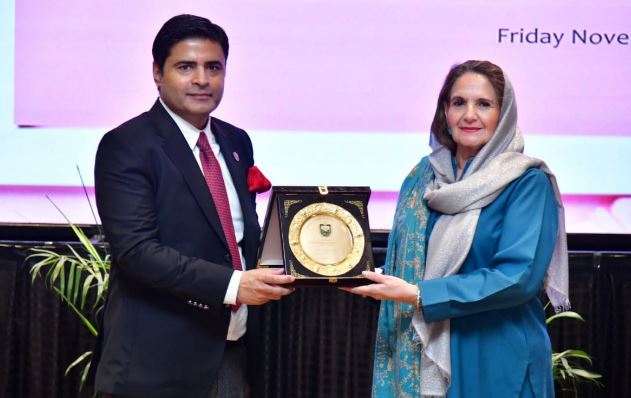
Islamabad, NOV 18 /DNA/ – First Lady Begum Samina Alvi said that one out of nine women in Pakistan is diagnosed with breast cancer and fifty percent of patients of this disease die due to late diagnosis and stressed for creating maximum awareness in women about this issue to reduce its death rate in the country. She said that many countries have achieved 99 percent recovery rate and 80 percent survival rate of breast cancer patients by creating better awareness in society and we have to work on similar lines to cope with this issue. She said that awareness sessions on breast cancer should be organized throughout the year instead of just in October so that maximum women can be sensitized about the causes and treatment of this disease. She said this while addressing as Chief Guest at an awareness session on breast cancer organized by Islamabad Chamber of Commerce and Industry, which was attended by a large number of women from various walks of life.

Begum Samina Alvi said that every woman should spare 5 minutes for health and self-examination. She said that she has been patronizing this campaign for the last 4 years due to which an increasing number of breast cancer patients are now coming forward for check-ups during the first and the second stage of this disease. She said that society should support breast cancer patients, which is very important for recovery. She said that 13 hospitals in Karachi, 8 in Punjab, 5 in KPK are providing free treatment to breast patients and more are needed to make its treatment affordable for low income patients. She thanked the private sector, medical universities, media and others for supporting the awareness campaign on breast cancer. Samina Alvi appreciated ICCI for arranging health awareness sessions besides dealing with day-to-day business issues. She said this huge gathering of ladies in the awareness session indicates the important role of ICCI in eradicating cancer and other diseases.    

In his welcome address, Ahsan Zafar Bakhtawari, President, Islamabad Chamber of Commerce and Industry, said that breast cancer is spreading rapidly in Pakistan due to which 40,000 women die of this disease every year. He urged the government to set up a national cancer registry to collect data at the national level for better prevention of the disease. He said the basic health units in rural areas lack staff and facilities for this disease and demanded that the government should provide women medical staff and other facilities in rural health units for screening of breast cancer. He further said that the government in collaboration with private hospitals should launch a national screening campaign for the eradication of the disease across the country. He assured that ICCI would continue to conduct such awareness programs in future to create awareness among more women.

Dr. Faryal Razzaq highlighted the importance of emotional stability, family support and avoiding suppression of emotions to cope with breast cancer issues as emotional trauma is one of the major causes of breast cancer. Amna Salman Butt, a breast cancer survivor shared her experience how to cope with breast cancer disease.

Afghan faculty members meet Chairman HEC

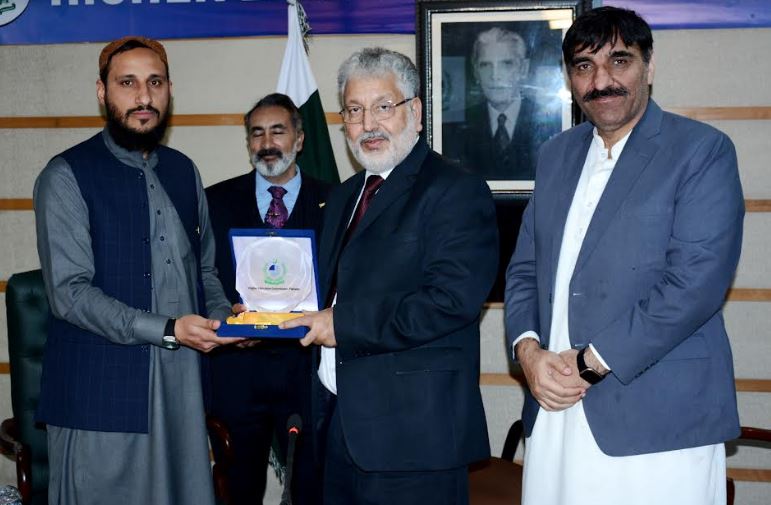
Islamabad, JUL 18: /DNA/ – Chairman HEC Mukhtar Ahmad held an interactive session with 30 Afghan faculty members who are attending a three-week capacity building programme at the National University of Sciences and Technology (NUST) under HEC Afghan Project.

The Chairman urged the Afghan faculty members to act as master trainers and further delegate their key learnings gained through capacity building programme to their colleagues at universities and other academics to continue the learning process.

The faculty members appreciated HEC’s initiative for capacity building of Afghan teaching staff and showed interest in future collaborative research and projects. While appreciating e-library facilities in Pakistan, Afghan faculty was interested in learning how to improve digital access of their libraries in Afghanistan, for which Chairman encouraged and assured support and facilitation.

Acknowledging commitment and resilience of the Afghan nation, Dr. Mukhtar encouraged Afghan faculty to establish people-to-people contact for enhanced research collaboration, policy input through South Asian Forum and spread positive message among Afghan youth to strengthen Pak-Afghan bilateral relations through higher education.

Biden administration says Saudi prince has immunity in Khashoggi killing lawsuit

DNA

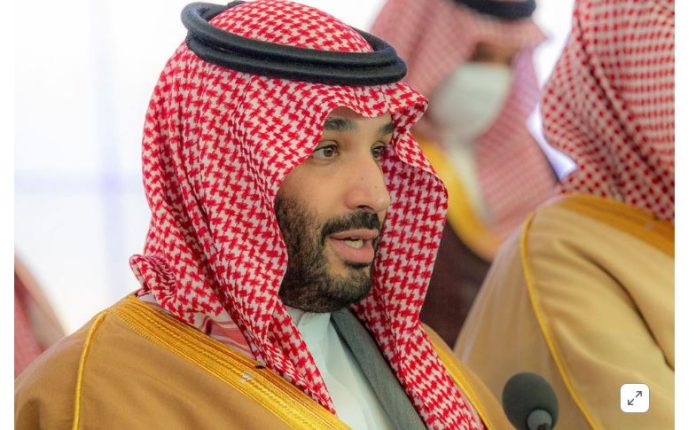
WASHINGTON: The Biden administration ruled on Thursday that Saudi Arabian Crown Prince Mohammed bin Salman has immunity from a lawsuit over the murder of Jamal Khashoggi, drawing immediate condemnation from the slain journalist’s former fiancee.

Khashoggi was killed and dismembered in October 2018 at the Saudi consulate in Istanbul, an operation which US intelligence believed was ordered by Prince Mohammed, who has been the kingdom’s de facto ruler for several years.

“Jamal died again today,” Khashoggi’s ex-fiancée, Hatice Cengiz, said on Twitter minutes after the news became public. She added later: “We thought maybe there would be a light to justice from #USA But again, money came first. This is a world that Jamal doesn’t know about and me..!”

A spokesperson for the Saudi consulate in Washington could not be reached for comment on Thursday evening, after business hours.

“This is a legal determination made by the State Department under longstanding and well-established principles of customary international law,” a spokesperson for the White House National Security Council said in a written statement. “It has nothing to do with the merits of the case.”

The spokesperson referred further questions to the State and Justice Departments.

In a document filed in US District Court for the District of Columbia, Justice Department attorneys wrote that “the doctrine of head of state immunity is well established in customary international law.”

Justice Department lawyers said that the executive branch of US government, referring to the Biden Administration, had “determined that defendant bin Salman, as the sitting head of a foreign government, enjoys head of state immunity from the jurisdiction of US courts as a result of that office.”

In late September, Saudi King Salman named Prince Mohammed prime minister in a royal decree which a Saudi official said was in line with responsibilities that the crown prince was already exercising.

“The Royal Order leaves no doubt that the Crown Prince is entitled to status-based immunity,” lawyers for the prince said in an Oct. 3 petition requesting a federal district court in Washington dismiss the case, citing other cases where the United States has recognised immunity for a foreign head of state.

Biden was criticized for fist-bumping the crown prince on a visit to Saudi Arabia in July to discuss energy and security issues. The White House said Biden had told Prince Mohammed that he considered him responsible for Khashoggi’s killing.

The prince, known by his initials MbS, has denied ordering Khashoggi’s killing but acknowledged later that it took place “under my watch.”

Khashoggi had criticised the crown prince’s policies in Washington Post columns. He had travelled to the Saudi consulate in Istanbul to obtain papers he needed to marry Cengiz, a Turkish citizen.

“It’s beyond ironic that President Biden has single-handedly assured MBS can escape accountability when it was President Biden who promised the American people he would do everything to hold him accountable. Not even the Trump administration did this,” Sarah Lee Whitson, a spokeswoman for Democracy for the Arab World Now, said in a written statement.

Pakistan’s fruits & vegetable export to China over $54 million 

ISLAMABAD, Nov 18 (DNA): Pakistan’s fruits & vegetable export to China topped $54.34 million, witnessing a massive increase in the month of January-September year-on-year, China Economic Net (CEN) reported on Friday quoting data from General Administration of Customs of the People’s Republic of China (GACC).

According to GACC, imports of dried leguminous vegetables (commodity code 07139090), amounted to $6.17 million, with imports totaling more than 4,040 tons in the January-September period, compared with $3.97 million in the same period last year.

Ahmed Raza, a Pakistani fruits & vegetable exporter, told China Economic Net that in wake of the high demand for fruits and vegetables in the Chinese market, Pakistani traders have an imperial opportunity to increase their exports and grow as a food basket for China.

“Chinese people like Pakistani fruits & vegetables because of their good taste and high quality. If we enhance the techniques used by China to offer high-end products, the export value will increase,” he added.

He further said that the flood badly affected many sectors of Pakistan including agriculture. Many crops including rice, sugarcane, fruits & vegetables vanished by the flood but these crops should be replanted as soon as possible to cover the losses and increase experts, he said.

“Due to climate changes, when our farmers harvest fresh fruits and vegetables, they encounter difficulties in storage, transportation, and preservation. 

Pakistani farmers are very helpless watching the fresh fruits and vegetables gradually deteriorate with the passage of time. 

To solve this problem China and Pakistan should further enhance cooperation in the fields of vegetable & fruit planting, storage, processing and make it high-end products,” he mentioned.

It is to be noted that despite the pandemic of COVID-19 and the flood in Pakistan, bilateral trade between Pakistan and China has increased significantly. 

Pakistan’s exports stood at $ 2.57 billion in the first nine months (January- September) of FY22, up 2 percent from $ 2.51 billion in the same period of the previous year, which grew for three consecutive years.

Korea keen to enhance relations with Pakistan

Korean embassy organizes seminar on solar power in Pakistan

DNA

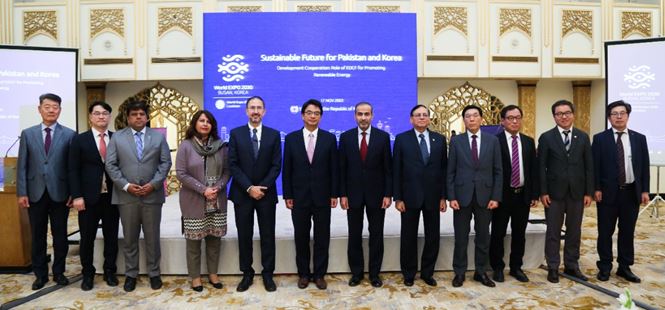
ISLAMABAD: The Embassy of the Republic of Korea in Islamabad organized an interactive seminar on the theme of Energy Infrastructure Enhancement in Pakistan through the Economic Development Cooperation Fund (EDCF). The seminar was attended by senior level representatives from Ministry of Foreign Affairs, Economic Affairs Division, EXIM Bank of Korea, Korean Companies, Pakistani Business Community Members, and the UN.

The seminar’s propose was to discuss ways to promote renewable energy especially solar power in Pakistan in a collaborative and synergetic manner where Korean companies showcased their experiences of undertaking renewable energy projects in Korea, Pakistan, and around the world, and to highlight the receptiveness of the Pakistani Government towards utilizing the Economic Development Cooperation Fund (EDCF), worth USD 1 billion for the years 2022 to 2026, which was signed in June 2022 between the Economic Affairs Division (EAD) of Pakistan and the Korean Embassy towards enhancing Pakistan’s renewable energy output and making the country more climate resilient.

The Ambassador while speaking at the seminar said that Korea and Pakistan have always enjoyed cordial ties and Korea aims to further enhance these bilateral relations between the two countries to new heights through renewable energy projects. Country Director of KOICA, and CEOs of Korean Companies also expressed their complete willingness to assist Pakistan in this process.

Stay Connected

64FansLike
60FollowersFollow

Latest Reviews

Exchange Rates

USD - United States Dollar
EUR
1.17
GBP
1.35
AUD
0.67
CAD
0.72