Home Blog Page 1450

Hindu Nationalist Government

Dr. Muhammad Akram Zaheer

The Hindu nationalist project, as conceived by its founders in the 1920s, aims to create a Hindu state in which there is congruence between the main cultural force in Indian society and political power. Since the 1980s, this goal has been sublimated into policies to build a Ram temple in place of the Babri Masjid in Ayodhya, repealing article 370 of the constitution, which grants special status to Jammu and Kashmir, and creating a uniform civilian body code that would abrogate Muslim personal law.

While previous BJP-led NDA governments have preferred to put these policies on the back burner, rather than promote cultural nationalism, the valorization of Hindu majority religion, language and history in everyday practices, under Modi there has been a clear shift in the valorization of Hindu majority religion, language and history in everyday practices, a redefinition of the sphere public, the secular space between state and society, in the language of Hindu nationalism.

In contrast to Nehru secularism, the post-independence India ideology associated with Jawaharlal Nehru, and the socialist outlook of the Congress, the icon of the contemporary BJP is Sardar Vallabhbhai Patel, whose Unity Charter was inaugurated by Modi in October 2018. These norms have been taken further by the Modi government in trying to control dissent. Feminists, radicals, writers, intellectuals, social activists and human rights defenders who have opposed government policies have been marginalized or physically attacked. Directly or indirectly, the government has used its influence in the media, particularly the burgeoning digital media, to unleash a tidal wave of sectarian Hindu nationalism as the official state ideology in which opponents are regularly labeled as anti-national. Sedition laws have been used against women, students, and political activists. Sangh parivar street activists: the family of Hindutva organizations that includes the Rashtriya Swayamsevak Sangh (RSS), Vishva Hindu Parshad (VHP), Bajrang Dal (BD), Akhil Bharatiya Vidyarthi Parishad (ABVP) and Bharatiya Mazdoor Sangh (BMS). ), and a wide variety of vigilante groups, have been regularly employed to discipline opponents, often resulting in physical confrontations or death.

There have also been intensive efforts to redefine citizenship by restricting the right of Indian citizenship to immigrants from Pakistan, Afghanistan and Bangladesh to non-Muslims only. A bill proposing this change failed only because the BJP was unable to secure a majority in the Upper House State institutions have also been used to foster crude jingoism. In 2014, RSS chief Mohan Bhagwat’s annual speech was broadcast live on the national television network, Doordarshan; and in October 2016, the College Scholarship Committee, in an official circular, called on affiliated universities and colleges to make a security pledge on Patel’s birth anniversary to commit to “preserving the unity, integrity, and security of the nation” in the presence of a freedom fighter who would speak of nationalism. This initiative came simultaneously with the government’s attempt to make it compulsory to play the national anthem in all cinemas before a film screening; and although this decision was overturned by the Supreme Court, it created an atmosphere of collective vigilantism against movie-goers who did not follow up the ruling with a reported case in Tamil Nadu. In seeking to redefine the public sphere as a non-secular space of majoritarian nationalism, the BJP and its ideologues argue that they are acting within the spirit of the constitution. So far, the initiatives taken by the government to water down Article 370, Muslim Personal Law, and to build a Ram temple on the site of the Babri Masjid, within the framework of the constitution, but the political results are sought out in line of the Hindutva agenda. Even the most key feature of the constitution, its state secularism, in the logic of Hindu nationalism, is being redefined from being “pseudo-secular” to “genuine secularism”. Gradually but inevitably, a new Hindutva republic is emerging in which there are no profound constitutional changes but where the “political processes” have already “begin to change”. The main antagonistic “other” of Hindu nationalism has been the religious minorities Christians, Muslims, Buddhists, Jains, Sikhs and Zoroastrians against whom the ideology of an ethnicized nation has been built. Traditionally, by making a distinction between religious minorities for whom India is a ‘holy land’ and ‘homeland’, and others, Hindu nationalists have tried to ‘assimilate the former within the broader pantheon of Hinduism and politically and socially exclude the latter as alien to India. This strategy has been applied vigorously in the BJP government’s policies towards minorities since 2014. Funding for minority development programs has been significantly reduced; policy initiatives undertaken by the previous United Progressive Alliance (UPA) government to improve equality and equity, especially for Muslims, in service delivery have been abandoned; Socioeconomically disadvantaged Christian and Muslim communities have been deliberately excluded from affirmative action, while that provision has been expanded to include the “poor” upper castes; and steps have been taken to restore legislative protections for scheduled castes and tribes against violence, in contrast to the denial of any equivalent protection to religious minorities, especially Muslims. These policies have also been carried out in an atmosphere of hostility, often emanating from the government itself. The Minister for Minority Affairs openly stated that “Muslims are not a minority and that the community’s concerns about security stemmed largely from a “psychosis of fear” that had taken hold of the Muslims of India. Similarly, the BJP’s Scheduled Caste Cell Secretary has urged poor Christians and Muslims to “convert back to Hinduism” if they wanted the benefits of the reserves. The campaigns orchestrated by the BJP mass organizations have had a far more debilitating impact on India’s religious minorities, particularly Muslims. Love Jihad was launched in Uttar Pradesh ahead of the and captured the national imagination as a fight against sexually rapacious Muslim youth who convert Hindu women to Islam through false declarations of love. Orchestrated by Yogi Adityanath, who later became the state’s Chief Minister in 2017 in a sweeping victory in the state’s elections, the campaign demonized interfaith marriages, framing it as an affront to traditional notions of patriarchy, family and community. Ghar wapsi emerged shortly after the election of the BJP government to convert Christians and Muslims to Hinduism, often with incentives such as ration cards to access state assets. It quickly turned into a debate about the need for national anti-conversion legislation to reinforce the highly restrictive freedom of religion legislation passed by many BJP state governments. Now it is time for the countries of the region to raise the issues arising from the Hindutva-driven policy in international and regional forums. The world community should not turn a blind eye to the continuing violations of human rights in India and Jammu and Kashmir.
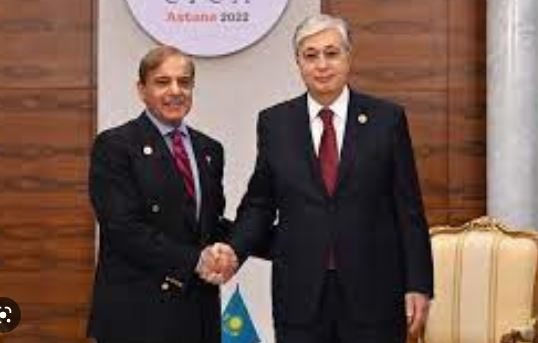
Kassym-Jomart Tokayev Elected President

DNA

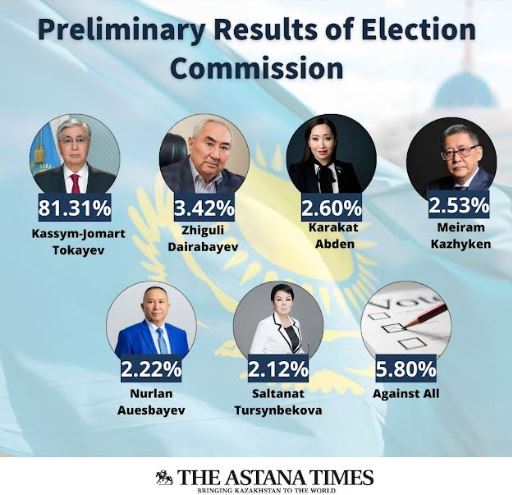
Astana, Nov 21 – Kassym-Jomart Tokayev has won the presidential election in Kazakhstan after receiving 81,31 % of the vote. This was announced by the Central Election Commission (CEC)today after the votes were counted. According to the preliminary results, other candidates received votes as follows: ZhiguliDairabayev – 3,42 %,KarakatAbden–2,60 %, MeiramKazhyken–2,53 %, NurlanAuesbayev–2,22 %, SaltanatTursynbekova–2,12 %, against all –5,8 %.

According to the CEC, 8 300 046citizenscast their ballot, a turnout of69.44%.Voting took place at 10,101 polling stations across the country, including 68 polling stations at 53 diplomatic missions of Kazakhstan around the world.

The election was monitored by 641 observers from international organisations and foreign states. Commenting on the election process, foreign observers noted the high organisational level of the election. No violations in the conduct of the election were reported by the observers. The election was also covered by 254 foreign journalists who received accreditation.

Speaking yesterday after casting his ballot, Kassym-Jomart Tokayev said that if elected, “the government will remain in office, but point-by-point changes in the composition of the government and other agencies will of course take place.” He also noted that he would announce the date of parliamentary elections at the end of the year.

In line with recent constitutional changes, President Tokayev will serve a 7-year term without the right to re-election. Answering a question yesterday from a journalist on whether seven years would be enough to fulfil all the promises to the people, Tokayev said: “I believe that seven years will be enough, because this is a long time in the life of any person. The most important thing is that there will be no monopoly on powerin our country.”

This was the seventh presidential election in Kazakhstan since the country’s independence in 1991.

PM Shehbaz greets Kazakh President on his election win

ISLAMABAD, NOV 21: /DNA/ – This evening, Prime Minister Muhammad Shehbaz Sharif conveyed his warm congratulations to Mr. Kassym-Jomart Tokayev, on his reelection as President with overwhelming majority in the elections held on 20th November, 2022.

During their conversation, the Prime Minister reiterated that the President’s victory was a manifestation of the confidence that the people of Kazakhstan had exhibited in him on account of  his visionary and astute leadership. He hoped that Kazakhstan will scale new heights of prosperity & development.

The Prime Minister further expressed his satisfaction on the mutual cooperation and cordial relations between both countries. The Prime Minister also reiterated his desire to work together with the Kazakhstan’s President on continued endeavors to strengthen cooperation between Pakistan and Kazakhstan to forge a strong economic partnership. 

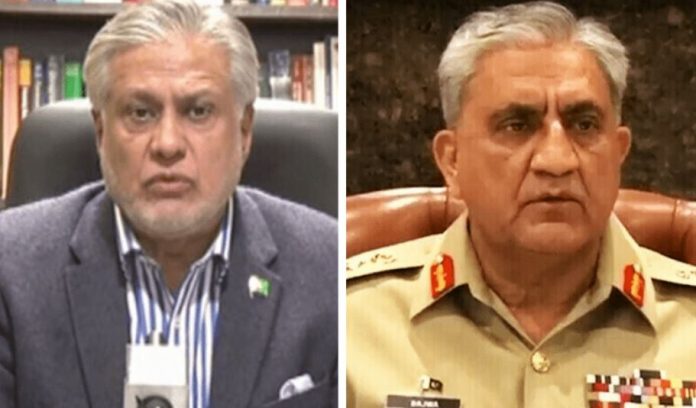
Dar ‘Takes Serious Notice’ Of COAS Bajwa’s Assets Leak

ISLAMABAD, NOV 21 /DNA/ – Finance Minister Ishaq Dar on Monday took “serious notice” of the “illegal and unwarranted” tax leak of Chief of Army Staff (COAS) General Qamar Javed Bajwa and his kin.

The leak, the finance ministry said in a tweet, constituted a flagrant violation of complete tax confidentiality guaranteed by law. Tariq Mehmood Pasha, the ministry, had been directed to submit a report on the lapse in 24 hours.

“Federal Minister for Finance and Revenue Senator Mohammad Ishaq Dar has taken serious notice of the illegal and unwarranted leakage of tax information of the family members of General Qamar Javed Bajwa, Chief of Army Staff (COAS).This is clearly violative of the complete confidentiality of tax information that the Law provides. In view of this serious lapse on the part of to-date unknown functionaries the Finance minister has directed the SAPM on Revenue. Mr. Tariq Mehmood Pasha to personally lead an immediate investigation into the violation of tax law and breach of FBR data, affix responsibility and submit a report within twenty four hours.”

Investigative journalism site Fact Focus earlier revealed eye-watering details of assets owned by the COAS and his family. The portal is unavailable in Pakistan. Micro-blogging site Twitter, however, where nuggets were shared was readily available.

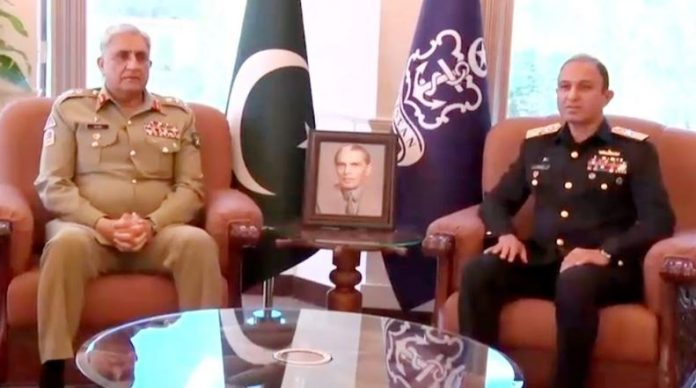
COAS meets Naval Chief Admiral Amjad Khan Niazi

RAWALPINDI, NOV 21: /DNA/ – As part of his farewell visits, General Qamar Javed Bajwa, Chief Of Army Staff (COAS) visited Naval and Air Headquarters at Islamabad today. 

On arrival at Naval Headquarters, COAS was presented Guard of Honor by smartly turned out contingent of Pakistan Navy. 

COAS met with Principle staff officers at Naval Headquarters. 

During his meeting with Admiral Muhammad Amjad Khan Niazi, Chief Of Naval Staff, COAS admired the role of Pakistan Navy in safeguarding the maritime frontiers of Pakistan. 

On arrival at Air Headquarters, COAS was presented with Guard of Honour by a contigent of PAF followed by interaction with Principal Staff Officers of Air Headquarters.

Later COAS met Air Chief Marshal Zaheer Ahmed Baber Sidhu, Chief of the Air Staff, and appreciated the thorough professionalism of PAF defending the aerial frontiers of Pakistan and highlighted the critical role played by PAF during war against terrorism .

COAS also visited Headquarters Rawalpindi Corps and laid floral wreath at Martyrs’ Monument. While addressing the officers and troops COAS applauded  Rawalpindi Corps in befittingly defending the country’s borders including Siachen and Line Of Control. 

COAS also interacted with troops. 

Earlier on arrival COAS was received by Lieutenant General Sahir Shamshad Mirza, Commander Rawalpindi Corps.

Motiwala appointment as TDAP CEO termed good omen for promotion of country’s export

From Our Correspondent / DNA

PESHAWAR: Prominent businessman and Director Pak-Afghan Joint Chamber of Commerce and Industry (PAJCCI), Zia-ul-Haq Sarhadi has welcomed appointment of Zubair Motiwala as Chief Executive Office (CEO) Trade Development Authority of Pakistan (TDAP).

In a press statement issued here on Monday, Zia-ul-Haq Sarhadi who is also Chairman Frontier Custom Clearing Agents termed appointment of Zubair Motiwala as good omen for promotion of country’s export.

It merits a mention here that, Federal cabinet has approved appointment of renowned businessman, Zubair Motiwala as CEO TDAP.

Zia said Zubair Motiwala services as Chairman PAJCCI are also very effective and have helped a lot in promotion of trade between Pakistan and Afghanistan.

“After the take over of Taliban in Afghanistan, there were a lot of problems in continuation of business, but due to dynamic leadership and dedicated efforts of Motiwala, majority of hurdles were removed and commerce continued in the region benefiting thousands of people on both sides of the border,” Zia added. 

He appreciated federal government’s decision and expressed the hope that soon the benefits will be observed in shape of promotion of export of Pakistan in international market.

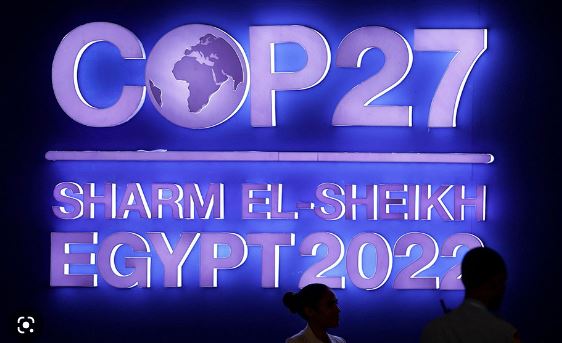
Landmark “loss and damage” fund approved at COP27:A win for Pakistan

BEIJING, NOV 21 /DNA/ – A long-awaited “loss and damage” fund to help those countries vulnerable to climate change was approved on Sunday at the end of the 27th session of the Conference of the Parties (COP27) to the United Nations Framework Convention on Climate Change (UNFCCC).

The consensus decision made to this effect by COP27 in Sharm-El-Sheikh (Egypt) is a momentous achievement, especially for the developing countries as they have been demanding such a fund for the past 30 years.

A report published by China Economic Net (CEN) on Monday stated, the establishment of the fund is also seen as major diplomatic achievement of Pakistan as the country galvanised international support for not only placing the issue on the agenda of the talks in in Egypt, but also pushed for a consensus agreement.

Foreign Minister Bilawal Bhutto Zardari, commenting on the “loss and damage” agreement, said it is a “win for climate justice, a win for the developing world in honor of 33 million victims of Pakistan floods and millions around the world who suffer from a climate catastrophe they did not create and do not have resources to address”.

In addition to agreeing to set up a dedicated fund, countries attending COP27 also committed to establishing a transitional committee to make recommendations for countries to adopt at COP28 next year, according to a UN news release.

While emphasizing that a fund for loss and damage is essential, UN Secretary-General Antonio Guterres said that much more needs to be done to prevent the worsening of climate change, such as accelerating the phasing out of coal and the development of renewable energy.

The UN chief also stressed the need for developed countries to honor their long-delayed promise of providing $100 billion a year in climate change mitigation financing for the developing countries.

Urdu drama based on Manto’s works staged at Tokyo University

ISLAMABAD, NOV 21 (DNA) — Tokyo University of Foreign Studies staged an Urdu drama, titled “Ghari Aur Tash” at the University campus.

The play, staged on Sunday, was based on different works of the renowned Pakistani writer, Saadat Hassan Manto, a press release issued by Pakistan Embassy in Tokyo on Monday said.

Ambassador-designate of Pakistan Raza Bashir Tarar, who was the guest of honour, praised the hard work put in by the faculty and students. He underscored that such cultural endeavours dovetailed with the excellent bilateral ties between Pakistan and Japan. =DNA

ICCI, ICSTSI call for promoting ease of doing business

Islamabad, NOV 21: /DNA/ – Ahsan Zafar Bakhtawari, President, Islamabad Chamber of Commerce & Industry (ICCI) leading a delegation visited Islamabad Chamber of Small Traders and Small Industries to congratulate President Sajjad Sarwar and his team. Both Chambers discussed matters of mutual interest and called upon the government to focus on promoting ease of doing business in order to revive the economy.

Speaking on the occasion, Ahsan Zafar Bakhtawari, President, Islamabad Chamber of Commerce & Industry said that the small businesses are playing important role in promoting the economic activities and stressed that the government should allot plots to Chambers of Small Traders and Small Industries so that these institutions can play more effective role in promoting small businesses that will facilitate the growth of new start-ups, enhance exports, generate jobs and help revive the economy. He said that due to the high transaction costs and tough collateral requirements, small businesses are facing great problems in getting loans from banks and emphasized that the government should address this issue to increase their share in the total private sector credit so that these businesses can play an enhanced role in the economic development of the country. He assured that ICCI would cooperate with ICSTSI in resolving the key issues of small traders and small industries to facilitate their better growth.

Sajjad Sarwar, President, Islamabad Chamber of Small Traders and Small Industries said that close liaison and cooperation between ICCI and ICSTSI will be very helpful in serving the cause of the business community. He said that the economy of Pakistan is passing through a difficult time and stressed that promoting the ease of doing business should be the top priority of the government to improve the economy. He emphasized that CDA should construct parking plazas in markets to address the long standing issues of traders and focus on better development of markets. He said that small traders and small industries are making useful contributions towards the economy and urged that the government should focus on resolving their key issues to facilitate their better growth.

Khalid Iqbal Malik Group Leader, Zafar Bakhtawari, Zubair Ahmed Malik, Muhammad Ejaz Abbasi, Ajmal Baloch, Khalid Chaudhry and others were in the delegation. 

USAID farmers support

From Our Correspondent

PESHAWAR, NOV 21: /DNA/ – The United States Agency for International Development USAID with support of ERDA and Agriculture department to provide Wheat Seed and Fertilizer to the flood-affected 14,850 farmers

USAID’s Economic Recovery and Development Activity (USAID-ERDA) and Agriculture, Livestock, and Cooperative Department Government of Khyber Pakhtunkhwa will provide 743 tons of certified wheat seed and 1485 tons of fertilizer to 14850 flood affected farmers from Peshawar, Dera Ismail Khan, and Khyber Districts to ensure food security for current cropping season.

USAID-ERDA provided 1,900 bags (50 Kg each bag) of certified wheat seed and 3,800 bags (50 Kg each bag) of fertilizer to flood-affected farmers of Mathra, Shah Alam, and Chamkani, in Peshawar. The USAID-ERDA assistance enables 19,00 flood affected farmers’ families to cultivate wheat crops on their 1,900 acres of land during this Rabi season which will ultimately ensure food security through availability of sufficient wheat in the next harvesting season. USAID-ERDA will provide certified wheat seed and fertilizer to 12100 farmers from District Dera Ismail Khan and 850 farmers from District Khyber Districts during the month of November 2022.

This year intense rainfall in monsoon spells and flash-flood caused severe flooding across Pakistan. It has impacted the whole fabric of life, involving remarkable human losses, and tremendous damage to agriculture, livestock, shelters, and infrastructure. It forced the government to announce a flood emergency and call an appeal for humanitarian assistance.

At the request of the Government of Khyber Pakhtunkhwa, the USAID-ERDA decided to extend critical support to ensure food security in flood-affected Dera Ismail Khan, Peshawar, and Khyber districts of Khyber Pakhtunkhwa province.

We are thankful to USAID for their support and assistance in a time of need. The flood devastations are beyond government’s approach.

“The farmers are the most affected segment and they need our assistance to cover their losses and get back on track. USAID has been very kind in providing their assistance and we expect them that they will continue their support in rehabilitation of our farmers”, said Mohammad Israr Khan, Secretary of Agriculture.

USAID-ERDA in coordination with the Agriculture and Livestock Department earlier conducted a quick assessment of 1,900 affected farmers’ from three areas namely Mathra, Shah Alam, and Chamkani of District Peshawar, which were provided with Certified wheat seed and fertilizer. This support will ensure food security for affected population of Peshawar.

Stay Connected

64FansLike
60FollowersFollow

Latest Reviews

Exchange Rates

USD - United States Dollar
EUR
1.17
GBP
1.35
AUD
0.67
CAD
0.72