On the hunt for China’s most famous green tea
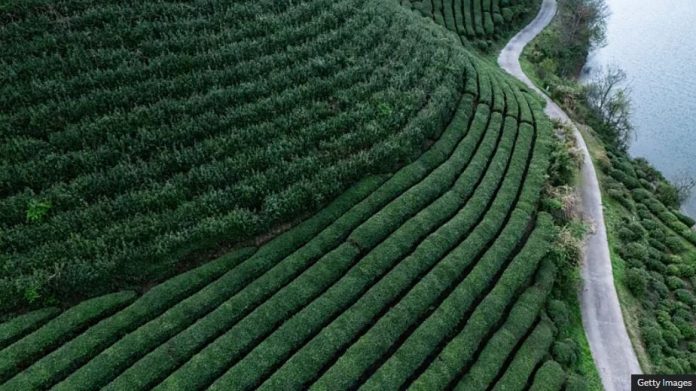
Longjing is one of China’s most revered green teas. But as its traditional production has dwindled, one of the best ways to taste the real thing is to head to the hills where it’s harvested.
On a lush hillside on the fringes of Hangzhou, Ge Xiaopeng stands between rows of tea bushes and examines a tiny leaf. He grips it between his thumb and forefinger and carefully lifts it upward, effortlessly detaching it from its stem. He drops the bud into his basket, which is already full of tender leaves, each one smooth and slender, green as jade.
Xiaopeng, like other farmers who grow Longjing tea, has been waiting for this moment all year. Literally meaning “Dragon Well”, Longjing is one of China’s most revered green teas, famous for flourishing in the rolling hills around West Lake in Hangzhou, a former imperial capital in eastern China’s Zhejiang Province. On this breezy day in March, right around the spring equinox, Xiaopeng says the leaves have finally reached the standard of 2.5cm in length, which means the annual spring harvest is underway.
Longjing has been a recognisable name among tea lovers for centuries, ever since the Qianlong Emperor visited Hangzhou in the 18th Century. According to legend, he was so taken with the tea that he ordered 18 bushes to be bestowed with imperial status and reserved their yields for the court.

In recent years, Longjing’s reputation has only deepened, driven by a tightened geographic designation, renewed domestic appetite for traditional goods, and rising global awareness of regional Chinese teas. At the same time, the case for visiting these hillside farms has never felt more pressing. A persistent counterfeit market has made genuine Longjing trickier to identify, while the labour-intensive hand-firing work that shapes the tea’s character is increasingly being replaced by machines.
You must spend time sitting with [Longjing] before it reveals its personality
Today, traditionally made Longjing is both more coveted and harder to come by. As a result, visiting Hangzhou’s tea villages is one of the surest ways to see the tea made at its source.
Harvesting Longjing
For Xiaopeng, a fourth-generation tea grower, the year has always been organised around the springtime harvest.
“Timing is highly important when it comes to Longjing,” he explains.
The earliest flushes, which bud in mid- to late-March, are the most prized, renowned for their restrained chestnut aroma and delicate, understated flavour. So treasured are these buds that Longjing is graded according to when it was plucked in the Chinese calendar, which divides the year into 24 micro-seasons based on the Earth’s position relative to the Sun.

The mingqian tier refers to the early batches plucked before Qingming, the solar term that begins on 4 or 5 April; while later harvests are called yuqian (meaning “before Guyu”, the following solar term). Even a few days’ difference when harvesting can significantly influence the value of the leaves: from Xiaopeng’s family farm, just 500g of the earliest mingqian batches can now fetch upwards of 30,000 yuan (roughly £3,250 or $4,400). Xiaopeng says this figure would have been unimaginable a generation ago – the result of rising labour costs and a widening gap between supply and demand.
I came to Xiaopeng’s family farm in Longwu Tea Village at the recommendation of my friend and Hangzhou native Meng Keqi, who previously owned a tea shop in Chicago before returning to his hometown. As I follow Xiaopeng through his field as part of a tour, the sky is overcast, the air balmy. “These conditions are ideal for the leaves,” he says, explaining that light, misty drizzles and gentle sunshine allow the shoots to grow slowly, lending the early harvests their signature clean, delicate flavour, free of astringency or grassiness.
Yet, this approximately two-week mingqian harvest window is as anticipated as it is narrow – not to mention increasingly hard to predict as climate change alters seasonal weather patterns. Once the calendar approaches Guyu, around 19 or 20 April, warmer temperatures and heavier rainfall hasten growth, drawing out more of the tea’s bitter notes. Not only do early-budding leaves have a sweeter, more subtle flavour, their delicateness also requires an especially careful and precise touch when wok-firing – a critical step in the craft of Longjing.
Pan-firing the tea leaves
After the leaves are plucked, artisans perform the laborious work of pan-firing them by hand, tossing the leaves in enormous woks heated up to 200C. I watch as Xiaopeng’s father, Ge Zhenghua, sweeps leaves across the wok, scoops them up, then releases them back down in precise, practiced strokes – all without wearing gloves.

Because my mother is from near Hangzhou, I grew up drinking Longjing, but this is my first time watching the wok-firing process up close, and I marvel at the fact that there are nothing but tea leaves protecting his palms from the searing hot pan.
The firing process is arguably what makes Longjing what it is, says Zhenghua. It halts oxidation, preserving the leaves’ green hue; and presses them into their distinctive spear shape, a Longjing hallmark. Importantly, it also evaporates moisture.
“Drying thoroughly is what helps release their fragrance, and it allows the leaves to be stored without spoiling,” says Zhenghua. “I don’t wear gloves because I need to feel the level of heat, the moisture.”
Nowadays, more farmers are relying on machines to handle the task of wok-firing, saving a great deal of time and exertion during the busy harvest season. “When we were young, we hardly slept during this stretch,” recalls Zhenghua, explaining how the family would fire leaves around the clock.

While machine-firing produces consistent-enough results that most drinkers likely wouldn’t perceive a difference, Zhenghua says he can still taste what is lost – a fuller-bodied fragrance and a more lingering sweetness. “Hands can decipher what machines cannot,” he says. “Machines are dead. These hands are alive.”
Where and how to experience Longjing
Mid-to-late March to early April is the best time to visit Hangzhou to see the Longjing harvest. To best access the tea villages, book a hotel in the West Lake scenic area and consider chartering a car for the day through the Chinese ride-share app Didi, or you can join a tour organised by a farm or tea centre.
• China National Tea Museum – A Hangzhou museum dedicated to Chinese and global tea cultures, where visitors can wander through Longjing tea plantations, watch tea demonstrations, trace the history of Longjing, sample brews and browse teaware and tea leaves to take home.
• Suye Tea Institute – A tea school in Hangzhou that organises Longjing farm tours, wok-firing demonstrations and tastings.
• Luzhenghao – A long-established tea brand with shops and tea houses across Hangzhou.
• Yige Tea House – A cafe in Longwu Tea Village owned by the Ge family, who run farm tours, pan-firing demonstrations, and tastings.
When the firing is complete, Zhenghua weighs the leaves and packages them, pressing a sticker certifying their authenticity onto each bundle. He explains that the government has limited the designated growing area for genuine West Lake Longjing to within a 168-sq-km region. In certain production zones elsewhere in Zhejiang Province, the tea can be called Longjing, without the West Lake designation. Anything grown outside of that can only legally be sold as green tea. To curb counterfeiting, authorities now issue a limited number of authentication stickers for verified growers to affix to their products; each sticker carries a QR code linking to a traceability system.
Tasting Longjing
Demand for real Longjing has surged in recent years, propelled in part by the guochao movement, a trend drawing younger Chinese consumers back towards traditional Chinese heritage products. But enthusiasm for Longjing – especially mingqian leaves – far surpasses what the hills can yield during the brief and variable harvest window. The supply gap has made Longjing a target for fraudulent buds grown elsewhere in China but still bearing the name.
For many customers, the most reliable guarantee is to know the hands that produced the leaves. It’s why, come spring, Zhenghua says that many of his regulars visit his farm, where they watch him fire the leaves with their own eyes. It’s also why the family opened Yige Tea House nearby, where the Longjing-curious can participate in farm tours, pan-firing demonstrations and tastings.

Tea education centres, too, can offer a more intimate look at Longjing, including guided farm visits, wok-firing workshops and expert-led tasting experiences. After leaving the tea fields, I head to one such school, Suye Tea Institute, to meet tea instructor Chen Yifang, who had just sourced a batch of the season’s mingqian leaves.
All the effort that goes into producing a batch of Longjing ultimately expresses itself in the cup – a flavour so delicate and subtle that I always find it hard to describe. Chen likens its clean, fresh quality to the gentle aroma of spring pea flowers or fava bean blossoms – softly floral, mildly nutty, the faintest bit sweet.
More like this:
• A Chinese spice so hot it cools
• The sweet Chinese dumpling that honours the dead
• Europe’s undisputed tea capital
“Part of the beauty is its understatedness,” says Chen, as she pours me a cup brewed from leaves harvested nearby just a few days earlier. Longjing, she explains, is a ritual that rewards patience and attention. She draws a comparison to bolder beverages, like black tea and coffee: “They will tell you very directly, ‘This is what I am,’ whereas with Longjing, you must spend time sitting with it before it reveals its personality.”
For years, Zhenghua worried that his craft might fade out with his generation. Many children of Longjing growers left the villages, pursuing university education and higher-paying jobs in the cities. Now, more people are returning to the fields to learn their parents’ skills, including his son, as the tea’s market value makes it a more sustainable livelihood than it once was. There is another pull, too: a recognition that if they do not inherit the knowledge, it could well die with their parents.

“Young people who grew up on these tea farms, they smell this every spring” says Zhenghua. “This is the aroma of their hometown.”
Over many visits to my mum’s home region throughout my life, I’ve come to understand that what draws people to Hangzhou every spring isn’t only the tea. It’s also the chance to experience a precious, fleeting seasonal window, one when timing and terroir align to summon the year’s first buds from those misty hillsides. Nowadays, perhaps it is also an opportunity to bear witness to a time-honoured trade that may not endure in its present form forever.
Shining Military & Diplomatic Skies, Clouded Economic Horizons
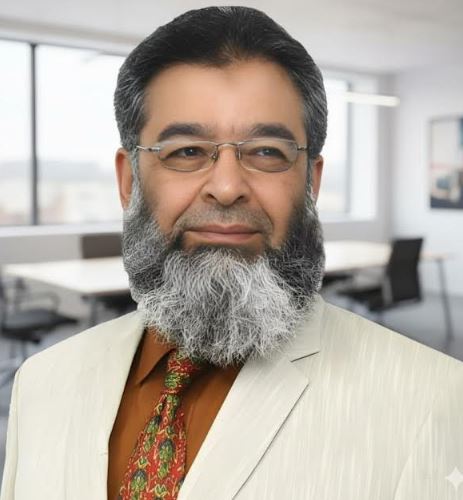
by Muhammad Mohsin Iqbal
As the moon rises in the velvet expanse of the night, its silver light touches every shore and every mountain, reminding us of a universal harmony visible to all. In the same manner, Pakistan’s military and diplomatic moon has ascended with full brilliance, casting a glow of respect and strength far beyond our borders. Our armed forces stand as a bulwark of honour, while our diplomatic sagacity have navigated complex global currents with wisdom and resolve. Yet, in this journey of lights, our economic moon lingers hidden behind thick clouds of uncertainty. Its dimmed radiance fails to illuminate the path forward, leaving a shadow that stretches from the modest homes of labourers and farmers to the stately chambers of governance. This hereditary weakness has become a heavy chain around the neck of the state, preventing it from extending the hand of genuine welfare to its people.
Burdened by colossal debts, the government finds its hands tied. Resources that should nourish development, build infrastructure, and uplift the masses are instead consumed by interest payments and obligatory repayments. Unwillingly, leaders are compelled to take decisions that sting the common citizen—decisions that do not spring from the heart’s desire for progress but from the harsh demands of survival. Inflation, that ferocious demon, has broken loose and now devours the purchasing power of ordinary families. The price of flour, medicine, fuel, and daily necessities climbs relentlessly, turning dreams of modest comfort into distant memories. Global shifts have compounded the ordeal; fluctuating commodity markets, geopolitical tensions, and the sharp rise in petroleum products have poured fuel upon the fire of our economic imbalance. What was once a manageable strain has become a crisis threatening to engulf hard-won achievements in other domains.
Shall Pakistan, adorned with laurels in security and statesmanship, now sink into the quagmire of economic instability and perpetual indebtedness? Must we remain forever tethered to the conditional prescriptions of the International Monetary Fund, adjusting our policies not according to the aspirations of our own people but to external benchmarks? These piercing questions call for deep reflection by the nation, its leadership, and every conscientious citizen. The future of our development, the dignity of our people, and the true meaning of sovereignty hang in the balance.
It is encouraging that a national austerity campaign has been initiated. Cutting unnecessary expenses, promoting simplicity in official conduct, and urging restraint in public spending reflect a welcome awareness of the crisis. Yet such measures, though virtuous, offer only partial relief. They cannot by themselves mend structural fractures or generate the momentum required for lasting recovery. What the hour demands is an emergency approach, waged with the same unity, discipline, and determination that have brought victory on military and diplomatic fronts. Pakistan has shown the world the power of coordinated effort; the time has come to harness that same spirit for economic deliverance.
At both national and provincial levels, all stakeholders must rise above partisan, personal, or regional interests. A living covenant of cooperation must be forged—one rooted in mutual trust and shared sacrifice. Provinces, instead of competing for scarce resources, should collaborate on projects of mutual benefit such as agriculture, water management, and industrial corridors. Political parties, civil society, business leaders, and the youth must join hands, placing the collective good above all else. On the external plane, civil and military leadership bear a joint responsibility. Economic strength is no longer separate from national security; without it, even the finest strategic gains may prove fragile and short-lived.
To translate this vision into reality, a bold and multi-pronged way forward is essential. First, the nation must pursue self-reliance with missionary zeal. Broadening the tax net, eliminating evasion through transparent mechanisms, and rewarding compliant taxpayers would strengthen public finances without overburdening the poor. Second, agriculture—the backbone of our economy—requires urgent modernisation. Provision of quality seeds, efficient irrigation systems, fair credit facilities, and support for value-added processing can transform rural areas into hubs of productivity and employment. Third, a vigorous export drive must be launched. Small and medium enterprises, often the unsung heroes of growth, deserve easier access to finance, skill development, and global market linkages. Diversifying exports beyond traditional items and exploring new destinations in Asia, Africa, and beyond will help earn precious foreign exchange.
Loss-making public enterprises must be restructured or privatised with care and transparency, protecting workers while relieving the exchequer of endless subsidies. Strict control over non-development expenditure, elimination of ghost employees, and plugging leakages in public procurement are non-negotiable. Investment in human capital remains paramount: quality education, technical and vocational training, and accessible healthcare will equip our young population to become assets rather than liabilities. Restoring investor confidence is equally critical. Policy continuity, sanctity of contracts, speedy justice, and a business-friendly environment will encourage both local and foreign capital to flow into productive ventures.
Regional cooperation offers another promising avenue. Peaceful trade in energy and goods with neighbours can open new arteries of prosperity. At the same time, a culture of saving and prudent financial management must be cultivated at every level—from government to households. Borrowing should be directed solely towards self-sustaining projects, never for consumption or showpiece ventures.
The road ahead is steep, yet Pakistan has repeatedly demonstrated its resilience in the face of adversity. The same national character that has lit up our military and diplomatic skies can surely disperse the clouds over our economy. What we require is not despair but determined action; not division but unbreakable unity of purpose. If government, institutions, and citizens march together with wisdom, sacrifice, and unwavering focus on the national interest, the economic moon will surely rise in its full splendour, spreading light, hope, and prosperity across the beloved homeland.
Indonesian Envoy calls on Pakistan Navy Chief
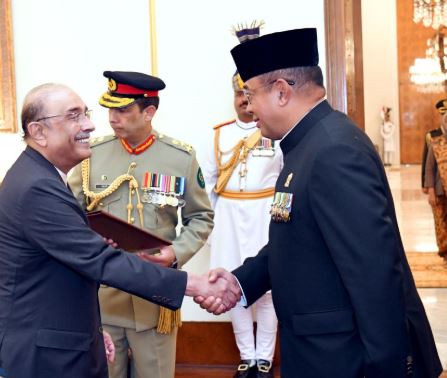
ISLAMABAD, 11 MAY (DNA) — Lt Gen (R) Chandra Warsenanto Sukotjo, Ambassador of Indonesia to Pakistan, paid a courtesy call on Admiral Naveed Ashraf, Chief of the Naval Staff (CNS) of the Pakistan Navy, at the Naval Headquarters in Islamabad.
The meeting highlighted the strong and growing bilateral relations between Indonesia and Pakistan, particularly in the defence and maritime domains. Both sides discussed matters of mutual interest, including naval cooperation, maritime security, and opportunities to further strengthen defence ties between the two Muslim-majority nations.
This high-level engagement underscores Pakistan’s continued focus on enhancing strategic partnerships with key Indo-Pacific nations like Indonesia, which shares deep cultural, religious, and economic linkages with Pakistan. Pakistan and Indonesia have been exploring greater collaboration in areas such as joint military exercises, defence production, and maritime domain awareness in recent years.— DNA
Lebanon asks US to pressure Israel to halt attacks and operations
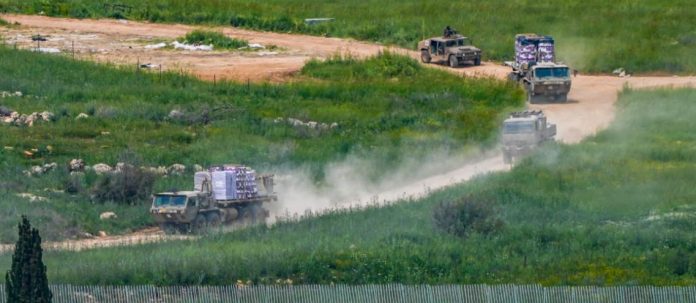
BEIRUT, MAY 11: Lebanon’s president has urged the United States to put pressure on Israel to cease fire and stop home demolitions in south Lebanon, the presidency said on Monday, as the death toll from Israeli attacks rose.
Lebanon’s health ministry said 74 people had been killed by Israeli strikes in the last three days despite a truce announced last month in fighting between Iran-backed Lebanese group Hezbollah and the Israeli military, a spokesperson said.
Tehran said it had demanded security for Lebanon as part of a proposal for ending the wider war with the US and reopening the Strait of Hormuz. US President Donald Trump has rejected Iran’s proposal.
The Hezbollah-Israel conflict reignited on March 2 when the group opened fire at Israel in support of Tehran.
Hostilities have continued since Trump declared a ceasefire on April 16, mostly in south Lebanon, where Israel is occupying a self-declared security zone, saying it aims to guard against Hezbollah attacks.
Smoke rises from southern Lebanon during an Israeli military operation, May 7, 2026.
Smoke rises from southern Lebanon during an Israeli military operation, May 7, 2026. (credit: Ayal Margolin/Flash90)
Pressure on Israel to halt fire and military operations
The Lebanese health ministry spokesperson said the victims since Saturday had been killed in various Israeli strikes, including one that killed at least seven people in the southern town of Saksakiyeh.
It said 2,869 people had been killed since March 2, including 584 medics, women, and minors. Its toll does not say how many combatants are among the dead.
Lebanese President Joseph Aoun, in a meeting with US Ambassador to Lebanon Michel Issa, “stressed … the necessity of pressure on Israel to halt fire and military operations and the destruction and bulldozing of homes,” the presidency said.
Israel has been demolishing villages in the south, saying it is acting against Hezbollah militants embedded in civilian areas.
Aoun and Issa also reviewed “developments related” to a third round of talks due in Washington between Lebanese and Israeli government representatives, the presidency said.
Washington last month hosted two rounds of talks between the Israeli and Lebanese ambassadors to Washington, the highest-level contacts between Israel and Lebanon in decades. The US will facilitate the third round on May 14 and 15, the State Department said.
Lebanon’s delegation will be headed by former ambassador to Washington Simon Karam. Aoun, who nominated Karam for the role, gave him his directives during a meeting on Saturday, the presidency said.
Beirut’s decision to hold face-to-face contacts with Israel reflects a deep divide in Lebanon over Hezbollah’s arsenal and the group’s decision to attack Israel. Critics accuse the group of unilaterally dragging Lebanon into war.
Hezbollah has demanded that the government cancel the talks. Israel last week carried out its first strike on Beirut’s Hezbollah-controlled southern suburbs since the ceasefire was declared. Israel says the strike killed the commander of Hezbollah’s elite Radwan force. Hezbollah has not confirmed his death.
Israel says Hezbollah has launched hundreds of rockets and drones at Israel since March 2.
Some 1.2 million people have been driven from their homes in Lebanon, many of them fleeing from the south.
Israel says 17 of its soldiers have been killed in southern Lebanon, along with two civilians in northern Israel.
Pakistan extends austerity measures till June 13 amid US-Iran deadlock
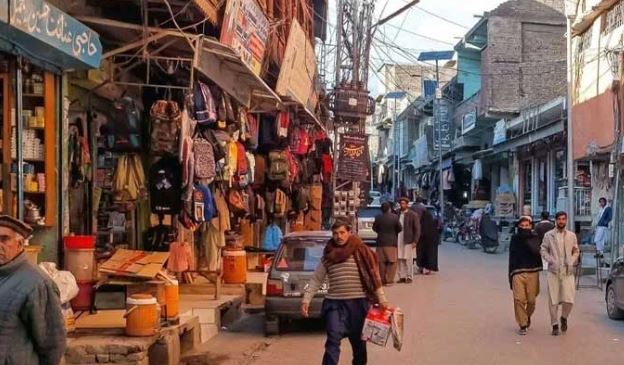
ISLAMABAD, MAY 11: The federal government on Monday extended its austerity drive and fuel conservation measures until June 13 amid uncertainty over the Middle East conflict, as diplomatic talks between the United States and Iran remain deadlocked.
The Cabinet Division issued a formal notification after Prime Minister Shehbaz Sharif approved the extension on the recommendations of the implementation committee.
According to the notification, a 50% reduction in fuel supply for official vehicles will remain in place during the extended period.
The government has also decided to keep 60% of official vehicles off the roads as part of the ongoing austerity measures.
PM Shehbaz first introduced the austerity plan on March 9 in a televised address, days after the government hiked the prices of petrol and diesel by 20%.
Fuel prices recorded a sharp increase in the country following oil supply disruption from the closing of the Strait of Hormuz, a key route for oil and gas shipping.
Iran closed the strait in response to joint attacks by the US and Israel, which began on February 28 and ended on April 8 following a Pakistan-mediated ceasefire.
Despite the extension in the ceasefire, the two sides remain at odds over proposals for a permanent end to the war, particularly over their respective blockades of Hormuz.
In the March 9 televised address, PM Shehbaz said that the entire region was gripped by Middle East conflict and stressed that Pakistan was pursuing diplomatic efforts to help defuse the crisis.
He then announced the austerity plan applicable across federal government institutions, including ministries, departments, autonomous bodies, state-owned enterprises, the legislature, defence organisations and the judiciary.
Apart from the fuel cut, the plan reduced government offices’ operations to a four-day workweek, though the banking sector and essential services were exempt.
Federal and provincial government departments were required to reduce non-essential expenditure by 20% during the final quarter of the current fiscal year.
The plan imposed a ban on official foreign visits by ministers, parliamentarians, and government officials, except for obligatory trips.
Up to 50% of government employees were to work from home on alternate days, except those in essential services.
The measures also included mandatory economy-class travel for officials, and a shift from physical to virtual meetings to cut costs, among others.
Oil market to lose around 100 mln barrels each week, if Hormuz remains closed,: Aramco
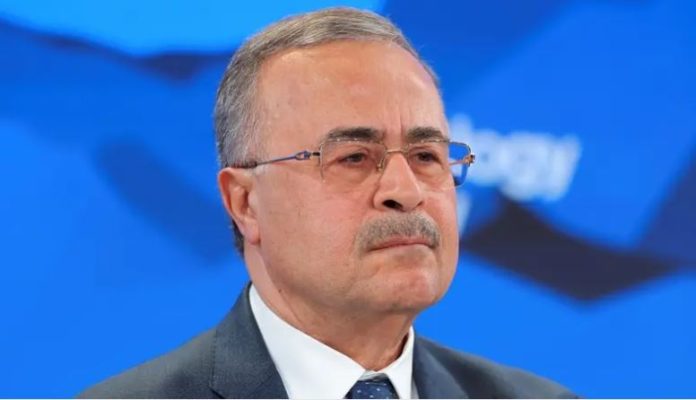
RIYADH, MAY 11: The oil market will lose around 100 million barrels every week, if the disruptions in the Strait of Hormuz continue at the current rate and it remains closed, the CEO of Saudi oil giant Aramco, Amin Nasser, said on Monday.
“We expect demand rationing to continue as long as supply remains disrupted through the Strait of Hormuz. If normal trade and shipping resume, we anticipate a very robust return to demand growth,” he added.
Saudi foreign minister discusses Pakistan mediation, US-Iran talks with Iran, Pakistan FMs
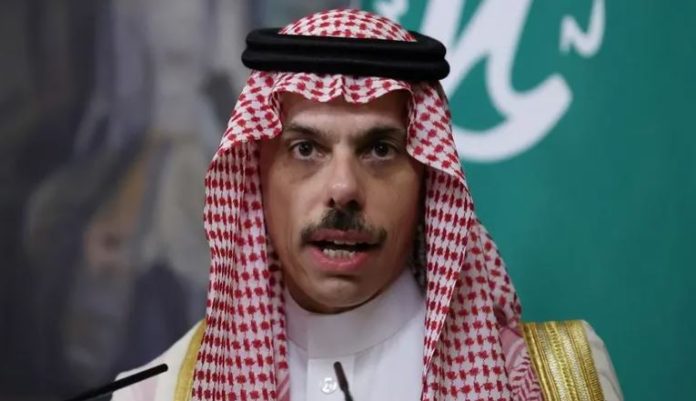
RIYADH, MAY 11: Saudi Arabia’s Foreign Minister Prince Faisal bin Farhan discussed the latest regional developments with his Iranian and Pakistani counterparts in separate calls, the Saudi Foreign Ministry said Monday.
Prince Faisal received a call from Iran’s Abbas Araghchi, during which they discussed “the latest developments related to Pakistani mediation efforts and the ongoing diplomatic talks between Iran and US,” the ministry said adding that the officials exchanged views regarding the matter.
The top Saudi diplomat, meanwhile, called his Pakistani counterpart, Ishaq Dar.
The officials discussed “Pakistan’s mediation efforts between Iran and the US. Both sides stressed the importance of [reaching] diplomatic solutions and voiced their support for all efforts aimed at restoring stability to the region,” the ministry said.
Days after the US floated an offer in the hopes of re-opening negotiations, Iran on Sunday released a response, but within hours, US President Trump dismissed Iran’s proposal with a post on social media.
Trump slammed the proposal as “TOTALLY UNACCEPTABLE!”
HEC launches fully online, paperless degree attestation system
ISLAMABAD, MAY 11 /DNA/ – The Higher Education Commission (HEC) Pakistan has shifted to a completely online and paperless Degree Attestation System, replacing the existing degree verification process.
Under the new system, applicants can apply round the clock for online attestation through www.eservices.hec.gov.pk. HEC will issue e-Attestation Certificate which can be downloaded by applicant from dashboard and verified at www.hec.gov.pk/site/verification along with the document(s) attested thereunder. HEC will attest the original degrees and no photocopy of any educational document will be processed for attestation in new system.
The new system is secure, efficient, and user friendly wherein applicants are no longer required to physically visit HEC or to send original documents.
The applications of those applicants who have already applied and paid fee of attestation will be processed as per previous method of attestation up to 30th June, 2026. All such applicants are informed to get completed the attestation process by the said date. The applicants who have not paid attestation fee in the previous attestation system are advised to apply through the new system.
The attestations made by HEC before the launch of e-Attestation Certificate will remain valid and can also be verified from www.hec.gov.pk/site/verification.
Digital ecosystem essential for ease of doing business: ICCI President
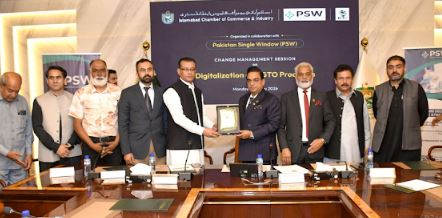
ISLAMABAD, MAY 11 /DNA/ – President Islamabad Chamber of Commerce and Industry Sardar Tahir Mehmood has said that the digitalization of Directorate General of Trade Organizations (DGTO) processes will play a vital role in improving transparency, efficiency, and ease of doing business in Pakistan. He expressed these views while delivering the closing address at the “Change Management Session on Digitalization of DGTO Processes” organized by Directorate General of Trade Organizations in collaboration with Pakistan Single Window.
Sardar Tahir Mehmood appreciated DGTO and PSW for taking a timely initiative towards institutional modernization and stakeholder facilitation. He particularly acknowledged the contributions of Adnan Khan, Director DGTO; Pir Shah Gul, Deputy Director DGTO; Rizwan Samad, Deputy Manager PSW; Muhammad Ahmad, Domain Officer PSW; Shah Zeb, Staff Business Analyst; and Noman Khan, Business Analyst PSW for conducting an informative and productive session.
The ICCI President said that the world economy was rapidly moving towards digitization, automation, and data-driven governance, adding that Pakistan must accelerate reforms to establish a modern and efficient business ecosystem. He observed that the digitalization of DGTO processes would help simplify regulatory procedures, reduce paperwork, improve communication, and enhance operational efficiency for trade organizations.
He appreciated the consultative approach adopted by Pakistan Single Window by involving Chambers of Commerce and Trade Associations during the development phase of the automated system. He remarked that reforms become more effective and sustainable when stakeholders and end users are actively engaged in the process.
Highlighting the importance of change management, Sardar Tahir Mehmood said that digitalization was not only about introducing technology but also about building confidence, enhancing technical capacity, and ensuring adaptability among stakeholders. He stressed the need for continuous awareness sessions, training workshops, and technical support mechanisms for smooth implementation.
The ICCI President emphasized the importance of developing a secure, integrated, and user-friendly digital platform capable of effectively addressing the practical needs of trade organizations across different regions of the country. He assured DGTO and PSW of ICCI’s full cooperation in making the reform initiative successful through strong public-private partnership and institutional collaboration.
Distinguished representatives of Chambers of Commerce, Trade Associations, and business organizations from different regions participated in the session physically and virtually through Zoom. Those present on the occasion included ICCI Senior Vice President Tahir Ayub, Vice President Muhammad Irfan Chaudhry, President Islamabad Women Chamber of Commerce and Industry, Ms. Samina Fazal, Executive Members Waseem Chaudhry, Raja Naveed Satti, Aftab Gujjar, former Senior Vice President Khalid Chaudhry, Chairman ICCI ASEAN Committee Chaudhry Mohammad Ali and others.
Earlier, Secretary General Islamabad Chamber of Commerce and Industry Ghulam Murtaza, in his welcome address, highlighted the Chamber’s continuous efforts for promoting ease of doing business through effective advocacy and strong liaison between the government and the private sector. He also efficiently moderated the session and facilitated productive interaction among the participants.=DNA
==============