Home Blog Page 1441

President for prevention, better management of diabetes

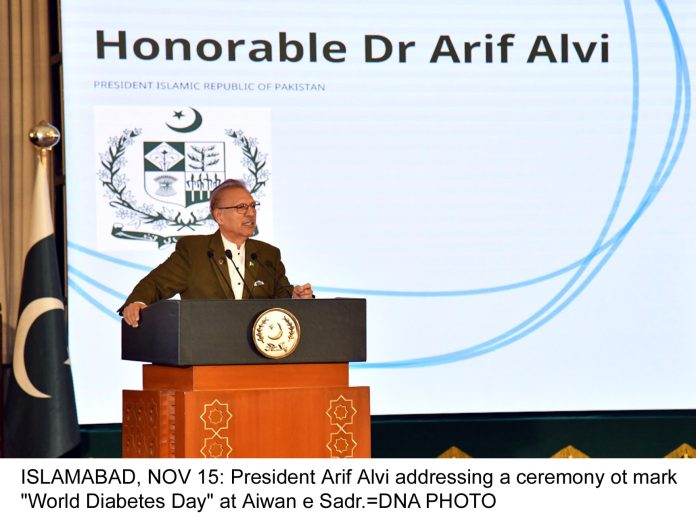
ISLAMABAD, NOV 15: President Arif Alvi addressing a ceremony ot mark "World Diabetes Day" at Aiwan e Sadr.=DNA PHOTO

ISLAMABAD, NOV 15 (DNA) — President Dr Arif Alvi on Tuesday urged the need to prevent and better manage diabetes, which was a silent killer, by focusing on promoting a healthy lifestyle.

The healthy lifestyle may include regular exercise, diet spread, weight control, avoiding overeating and early diagnoses and proper management of this disease to reduce the disease burden which was third largest in the world after China and India, he added.

The President made these remarks while addressing a ceremony held here to commemorate World Diabetes Day. The ceremony was attended by Ambassador of Demark to Pakistan, Jakob Linulf, Vice Chancellor of Health Services Academy, Dr Shahzad Ali Khan, health professionals and others.

Addressing the ceremony, the President expressed his concern over the high prevalence of diabetes in the country. He noted that Pakistan was the third largest country in terms of diabetes prevalence, over 33 million were diabetic and 400,000 people died every year due to diabetes and other complications of this silent-killer disease.

The President also called for launching effective, meaningful and persistent awareness campaigns through conventional and social media coupled with organizing symposiums, workshops and conferences and public meetings and by making IT interventions which may include WhatsApp chatbots, web-based and cell phone-based applications, and call and text messages.

He said that the progress and prosperity of the nation hinged upon the quality of its human resources which was only possible when the nation was educated and healthy.

The President said that prevention and optimal management of diabetes could lower the risk of other diseases as well, and in the worst-case scenario diabetes could cause blindness, amputations of affected parts, kidney failure, heart attack, depression and in some cases suicide.

He said the government should think of introducing creative and meaningful incentives for pursuing a healthy lifestyle and reducing non-healthy habits such as smoking, artificial drinks, junk and highly processed foods and beverages, and having high sugar and salt content.

“People should adopt a healthy lifestyle and a healthy diet for the effective management of their blood sugar and for overall better health to save our tomorrow”, he added.

The President said that being a nation with limited financial and economic resources, we could not afford the curative treatment which was very expensive and secondly, we did not have enough health facilities and trained human resources to provide curative treatments to all the patients.

He further stated that our national focus should be on the preventive cure which could be catalysed by creating awareness as although over 33 million Pakistanis had diabetes but only 10% of them were aware that they were suffering from this deadly disease.

The President called upon relevant stakeholders to make use of the experience gained by our healthcare providers during polio vaccination campaigns and COVID-19 campaigns where Pakistan adopted out-of-the-box solutions and managed to save the lives and livelihoods of our people. He further said that this experience could help us in the prevention of diabetes and its proper and cost-effective management.

Earlier, VC Health Services Academy, Dr Shahzad Ali Khan, elaborated on the existing situation of diabetes in Pakistan. He said that non-communicable diseases were also on the rise in Pakistan. He said that Pakistan was number three in the world with the highest number of diabetes cases and approximately 33 million people were diabetic.

He said that affluent people should avoid consuming excessive food to avoid weight gain and obesity which eventually became the prime reason to contract diabetes and allocate the food saved to the unprivileged segment of society to prevent hunger, stunting and malnutrition.

He highlighted that various interventions had been introduced in the country with the collaboration of national and international partners and stakeholders to launch preventive awareness campaigns about diabetes in general masses and strengthen the curative infrastructure in the country to provide cost-effective treatments to the patients.

Ambassador of Denmark, Jakob Linulf, said that diabetes was a very critical health challenge and we needed to change our lifestyle to tackle it. He said that Denmark would always support and share its experience with Pakistan with regard to the disease. =DNA
Army chief pays farewell visit to Pakistan Military Academy

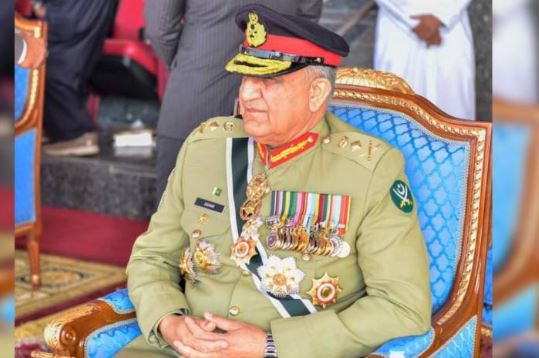
RAWALPINDI, NOV 15 /DNA/ – As part of his farewell visits, General Qamar Javed Bajwa, Chief of Army Staff (COAS) visited Pakistan Military Academy (PMA) Kakul and Baloch Regimental Centre Abbottabad.

Upon his arrival at PMA COAS was received by Lieutenant General Sahir Shamshad Mirza, Commander Rawalpindi Corps. COAS laid floral wreath at Martyrs’ Monument and offered fateha.

COAS also interacted with the cadets and officers of PMA. While addressing COAS appreciated exceptionally high standards of Pakistan Army’s premier training institution and its efforts towards grooming the future leaders. COAS also advised cadets to focus their energies in pursuit of professional excellence.

Later on COAS visited Baloch Regimental Centre. After laying floral wreath at the Shuhada monument he interacted with serving and retired Officers and troops of the illustrious Baloch Regiment. COAS paid rich tribute to their supreme sacrifices.

Earlier on arrival at Baloch Regimental Centre, COAS was received by Lieutenant General Azhar Abbas , Chief of General Staff.

AI to revolutionize defence strategies; dynamics of national security

Karachi, NOV 15 /DNA/ – Future warfare would see Artificial Intelligence as the third revolution in warfare being utilized with minimal adverse impact. This augments the implications of AI on national security, military tactics, and defence strategies as almost 70-75% of global defence leaders believe that AI will be very or extremely important to organizational strategies and in bearing outcomes.

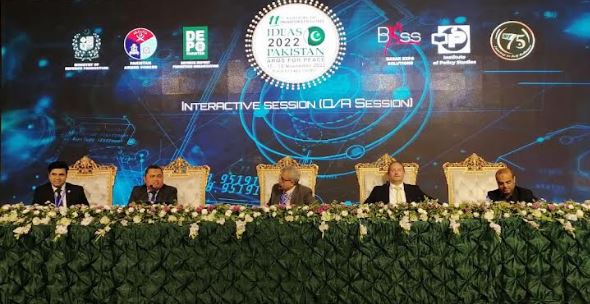
This was highlighted during the first day of a seminar titled ‘Artificial Intelligence (AI) in Defence Market; A Paradigm Shift in Military Strategy and National Security’, which was organized at Expo Centre, Karachi, on November 15, 2022, as part of IDEAS 2022 in joint-collaboration of Institute of Policy Studies (IPS), Islamabad, and Defence Export Promotion Organization (DEPO).

The seminar, which was moderated by Prof. Dr. Syed Irfan Hyder, vice chancellor, Ziauddin University, was graced as Chief Guest by Lt Gen (Retd) Humayun Aziz, HI (M), secretary, Ministry of Defence Production, and addressed by Major General Muhammad Arif Malik, HI (M), DG DEPO, Lars G. A. Hilse, a German scholar and global thought leader in the field of digital strategy and cyber security, Dr. Sigit Jarot, CEO Cloudtech and Head of Infrastructure, MASTEL, Indonesia, Dr. Yasar Ayaz, CPD/Chairman, National Center of Artificial Intelligence (NCAI), and Dr. Jawwad Shamsi, dean, FAST NUCES Faculty of Computer.

The event was attended by various foreign dignitaries, high-rank government officials, ministries, academics, think tanks, representatives from public and private industries, and law experts.

With Artificial Intelligence having different dimensions of application, Lt Gen (Retd) Humayun Aziz termed it as an aspirational goal, a game changer, and a transformative national security technology that is opening up several prospects of military success as well as threats to defense and security. Hence, demanding a holistic approach to better cater to prospects and curtail emerging menaces.

He stated that three major areas of national security which would see a significant impact from the increasing developments in AI are military superiority, information superiority, and economic superiority through data, data-driven technologies, machine learning technology, network technologies, and cyber defense technology, etc.

Regarding the future dynamics of the international security environment and strategic shifts in defense, he noted that these are dependent on AI and AI-driven applications, which have now become key pillars of states. However, these developments would not curtail the significance and reliance on conventional capabilities in mitigating and combating threats.

He further maintained that the transformation of warfare through AI, along with biotech, strategic weaponry, and computers, would increase armed forces’ readiness and bring a paradigm shift in modern warfare and the security apparatus of states.
Highlighting the globalization of weapon systems and advancements in AI, Maj Gen Arif emphasized that new technologies have ushered increased opportunities, demands, and investments in the development of AI-integrated systems in the defense and security domain.

He advocated for building awareness for the use of AI and AI research in the fields of intelligence collection and analysis, logistics, robotics, cyber missions, information operations, C2, and autonomous weaponry for better incorporation of AI into real-world military operations globally.

Emphasizing the importance of investing in AI, he underlined that AI is changing not only the living styles, employment performances, people-to-people interaction, learning, and decision-making of people as well as the operational and business environment of organizations but also military tactics and warfare.

In this regard, significant capitalization of AI has been seen in hybrid, cyber, and network-centric warfare. As put by Lars Hilse, the current AI applications in hybrid warfare through fake news, misinformation, disinformation, cyber-physical attacks on civilian infrastructure, opinion manipulation, and adversarial reconnaissance and intelligence gathering triggers civil unrest and have serious security and economic implications.

Similar is the case with the use of AI in cyber security which demands a defense approach and practical steps towards a robust security framework based on identification and prioritization of critical infrastructure, efficient legislature, regular stress and penetration tests, continuous vulnerability testing (CVT), and multi-layered neural networks, he outlined.

5G Network Centric Warfare (NCW), as underlined by Sigit Jarot, is increasingly becoming relevant as information and AI-driven technologies are employed to gain information advantage to convert it to a competitive advantage.

He further noted that future battles would entail the weaponization of 5G; therefore, it calls for an approach to study and develop 5G for future military endeavors including 5G military decision-making, 5G smart warehousing, 5G distributed C2, 5G AR/VR, 5G for tactical millimeter wave networks, 5G non-terrestrial networks, proximity services (ProSe), and 5G geo-intelligence.

Apart from these applications, 5G is also going to make a mark in the defense market so much so that it is expected to reach $76, 014.64 million by 2030 with a compound annual growth rate of 67.7% (2021-2030).

Nepra hikes electricity tariff by another Rs2 per unit

ISLAMABAD, NOV 15 (DNA) — The National Electric Power Regulatory Authority (Nepra) has approved another increase of Rs2 per unit in the price of electricity tariff. The Nepra announced the decision after concluding a hearing in this regard on Tuesday.

The fresh rise in power tariff will enable the authorities to collect an additional Rs43 billion from consumers. The latest increase in electricity tariff was sought in connection with the quarterly adjustment for the ongoing financial year. The increase will not be applicable to the consumers of Karachi Elektric. =DNA

Humanity hits eight billion mark

A baby born somewhere on Tuesday will be the world’s eight billionth person, according to a projection by the United Nations.

“The milestone is an occasion to celebrate diversity and advancements while considering humanity’s shared responsibility for the planet,” UN Secretary General Antonio Guterres said in a statement.

The UN attributes the growth to human development, with people living longer thanks to improvements in public health, nutrition, personal hygiene and medicine.

It is also the result of higher fertility rates, particularly in the world’s poorest countries — most of which are in sub-Saharan Africa — putting their development goals at risk.

How many is too many?

Population growth has also magnified the environmental impacts of economic development.

But while some worry that eight billion humans is too many for planet Earth, most experts say the bigger problem is the overconsumption of resources by the wealthiest people.

“Some express concerns that our world is overpopulated,” said United Nations Population Fund chief Natalia Kanem.

“I am here to say clearly that the sheer number of human lives is not a cause for fear.”

Joel Cohen of Rockefeller University’s Laboratory of Populations told AFP the question of how many people Earth can support has two sides: natural limits and human choices.

Our choices result in humans consuming far more biological resources, such as forests and land, than the planet can regenerate each year.

The overconsumption of fossil fuels, for example, leads to more carbon dioxide emissions, responsible for global warming.

“We are stupid. We lacked foresight. We are greedy. We don’t use the information we have. That’s where the choices and the problems lie,” said Cohen.

However, he rejects the idea that humans are a curse on the planet, saying people should be given better choices.

Slowing growth

The current population is more than three times higher than the 2.5 billion global headcount in 1950.

However, after a peak in the early 1960s, the world’s population growth rate has decelerated dramatically, Rachel Snow of the UN Population Fund told AFP.

Annual growth has fallen from a high of 2.1 per cent between 1962 and 1965 to below 1pc in 2020.

That could potentially fall further to around 0.5pc by 2050 due to a continued decline in fertility rates, the United Nations projects.

The UN projects the population to continue growing to about 8.5 billion in 2030, 9.7 billion in 2050, and peaking around 10.4 billion in the 2080s.

Other groups have, however, calculated different figures.

The US-based Institute for Health Metrics and Evaluation (IHME) estimated in a 2020 study that the global population would max out by 2064, without ever reaching 10 billion, and decline to 8.8 billion by 2100.

Black Death

Since the emergence of the first humans in Africa over two million years ago the world’s population has ballooned, with only fleeting pauses to the increasing number of people sharing Earth.

Our ancestors were hunter-gatherers, who had few children compared to later settled populations in order to maintain their nomadic lifestyle.

The introduction of agriculture in the Neolithic era, around 10,000 BC, brought the first known major population leap.

With agriculture came sedentarisation and the ability to store food, which caused birth rates to soar.

From around six million in 10,000 BC, the global population leapt to 100 million in 2,000 BC and then to 250 million in the first century AD, according to the French Institute for Demographic Studies.

As a result of the Black Death, the human population dropped between 1300 and 1400, from 429 to 374 million.

Other events, like the Plague of Justinian, which hit the Mediterranean over two centuries from 541-767, and the wars of the early Middle Ages in western Europe, also caused temporary dips in the number of humans on Earth.

From the 19th century on, the population began to explode, due largely to the development of modern medicine and the industrialisation of agriculture, which boosted global food supplies.

Since 1800, the world’s population has jumped eight-fold, from an estimated one billion to eight billion.

The development of vaccines was key, with the smallpox jab particularly helping zap one of history’s biggest killers.

Political Crisis in Pakistan

Dr. Muhammad Akram Zaheer

Imran Khan was the first prime minister of Pakistan who was ousted by a no-confidence vote. He joined the office of Prime minister for five years but Pakistan’s major opposition parties established Pakistan Democratic Movementin 2020 to gain power of the country. Superficially, the opposition blamed governance and economic failures under Khan’s leadership. But the main reason was that Khan had lost the support of the Pakistan Army, which helped him come to power.

There were several factors responsible for the rift between the Khan and the army. The biggest deadlock was over the transfer of the Director General of the Inter-Services Intelligence (ISI) in October 2021. Khan refused to sign off on the transfer of the director general, which had already been approved by the army. It was said that ISI chief is loyal to Khan, and there was also speculations that Khan wanted the next election (or perhaps even to appoint him as the next army chief).Thus, when Khan lost the support of the army and the army said it had become neutral the two smaller parties in the ruling coalition abandoned their alliance with Khan and turned Khan into the opposition.

Khan established a conspiracy theory to blame the fall of his government and alleged a US conspiracy to pursue an “independent foreign policy” and claiming that “local auxiliaries” were facilitators forthe process of Imam Khan’s ejection from the power. Although it is denied by the establishment but Khan and his allies have also hinted that the military is also responsible of his exit. Sometimes indirect language and sometimes pointing the finger at the “neutral,” as they now refer to the military. In doing so, PTI has reached near the limits of political confrontation with the military.

Day after day, in huge meetings, seminars and rallies across the country they call the new government an “imported government” and the new prime minister is a “crime minister”. Khan has used his rallies and interviews to gain media attention, arguing that the fall of his government returned to power the corrupt politicians who are responsible for Pakistan’s problems. His supporters, many of them middle-class, young and urban, and angry at Khan’s informal, systematic ouster, echoed his words on social media. With this narrative of grievance, Khan aims to undermine the legitimacy of the new regime. His party has resigned from parliament and is calling for fresh elections. Now he is leading a “freedom march” to Islamabad.

In contrast, supporters of the ruling parties see Khan’s ouster as democratic and dangerous to his politics. Pakistan today is echoing the post-January moments(January 1, 1863 – The Emancipation Proclamation by President Abraham Lincoln freed the slaves in the states rebelling against the Union) in America, a polarization so deep that each faction sees no validity in the other’s arguments. Khan’s supporters are especially distrustful of anything and action of the new government or the military says. In recent weeks, politicians on each side have also resorted to using religion to attack other is so dangerous in the country where weaponizing religion can be punishable by death.

The new government under the leadership of Muslim League (N) Shehbaz Sharif is facing huge challenges not only from Khan. Shahbaz’s brother, three-time former Prime Minister Nawaz Sharif, who was ousted on corruption charges in 2017, still is controlling the party and indeedthe government of Pakistan. A three-time former Chief Minister of Punjab, Pakistan’s largest province, Shehbaz has a more charismatic personality throughout his political career now going to be unsuccessful. Last month, the prime minister and key members of his cabinet made a surprise visit to London to consult with NawazShrif to get new instructions to mitigate the challenges government. He is living abroad and Pakistan’s economy is ongoing to decline. The rupee has continued to fluctuate sharply against the dollar. The stock market also lost value. What worries the government is the limited time before the next election and the fact that it commands a loose coalition of rival parties, which will compete against each other in the next election. But part of the indecision has to do with the fact that the PDM’s main objective was to oust Khan. PDM did not formulate any alternative governance plan or economic strategy before coming to power. This lack of planning is now showing in the face of Pakistan’s economic crisis.

A major question causing political uncertainty in Pakistan is the timing of the next elections, which should be held by the summer of 2023. Khan has made it clear that he wants to carry his current momentum to snap elections. In the days before his fall, his aim was to deprive the then-opposition from the runway of government by dissolving the extra-constitutional parliament but the decision was overturned by Pakistan’s Supreme Court. The current government, for its part, used its time in power to turn things in its favor, including resolving outstanding corruption cases.۔

The question is whether Nawaz Sharif can return to Pakistan before the next election or not. If he does, it could strengthen the PML-N, but if he doesn’t face legal action on their return, it will strengthen Khan’s arguments that the Sharif family nurtured the culture of corruption in Pakistan. And The Muslim League (N) has politically manipulated in their cases of corruption and generated considerable obstacles to make decision against them, including an economic crisis that is partly exogenous, a power struggle in Punjab province, and a president who belongs to and is loyal to Khan’s party. The coalition government has said that it would not go to early elections. Former President Asif Ali Zardari has insisted that elections should not be held before Parliament can make electoral reforms.

Whenever the next elections are held, it is not clear what the outcome will be. What matters in Pakistan’s parliamentary system is which party can attract the most “electables” powerful politicians in local constituencies. Large civic rallies validate Khan’s personal popularity, but not necessarily how his party performs in parliamentary elections. The second factor, which has historically determined which party politicians align with and which side the military leans toward, and this system, is the hurdlein the way ofgrowing democracy in Pakistan.

The foundations of this system in Pakistan remain the same since the creation of Pakistan. What matters for political success is whether you have the support of the Pakistan Army. Political parties now directly refer to military intervention in politics, but only when they are in opposition. When they are in government and enjoy this support and do not challenge it. This was true of Khan’s party when it was in power, and it is true of Sharif’s government now.

Pakistan’s growing political tensions and the race for power have turned the country into a political flashpoint. And it does not address the problems of common Pakistanis, who are continuously paying the price for the country’s political instability.

Celebrations mark 30 years of DAFI scholarship programme in Pakistan

Some 2,800 refugee lives transformed in Pakistan since 1992 thanks to German-funded scholarship programme and support of the Commissionerate of Afghan Refugee Affairs 

Shamim Shahid 
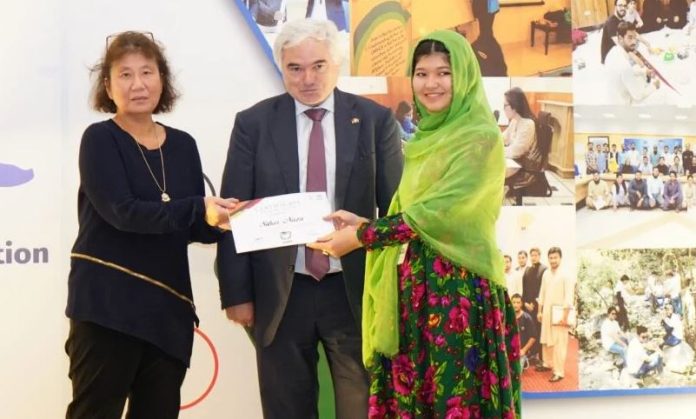
ISLAMABAD, NOV 15 /DNA/ – UNHCR, the UN Refugee Agency, and Inspire Pakistan, celebrated in Islamabad today 30 years of the DAFI scholarship programme for refugees. The Albert Einstein German Academic Refugee Initiative (DAFI) scholarship programme has transformed the lives of over 2,800 refugee students across Pakistan since 1992, and over 21,500 learners around the world. 
The German-backed programme provides scholarship opportunities for third level undergraduate students, majoring in fields including medicine, engineering, social and behaviour sciences, business administration, mathematics and computer sciences.
The DAFI scholarship programme contributes to the promotion of self-reliance of refugees by equipping them with the necessary skills, knowledge and professional qualifications for future employment. The programme is aimed at the development of highly qualified and skilled human resources that can play a vital role not only in Pakistan but also for the reconstruction of their country of origin.
“By investing in education, students will contribute to the economy of their host country and support their communities once they return to rebuild their lives,” underscored UNHCR Representative to Pakistan, Noriko Yoshida. “By enabling refugees to fulfil their potential, the scholarship programme has a transformative effect and changes their lives forever.”
The scholarships are awarded on a competitive basis with regard to merit, excellence and financial need. The programme grants scholarships to deserving young refugees enrolled in recognised universities, colleges and polytechnics in Pakistan. 
In 2022, half of the 175 scholarships were awarded to women, compared to a quarter previously. This increase followed intensive outreach efforts to refugee communities and awareness raising on women’s higher-level education opportunities and support available. In addition, a new two-year DAFI Bridge programme for science and technology aimed at women studying at higher secondary level was launched.
“Education does more than teach academic skills – it provides students with a safe place to grow and learn life skills, such as cooperation, responsibility, and respect,” noted Qaiser M. Siddiqui, CEO of Inspire Pakistan, which is implementing the DAFI programme. 
Joining the celebrations was Ambassador of Germany to Pakistan, H.E. Alfred Grannas, Chief Commissioner, Saleem Khan, Commissionerate of Afghan refugees (CCAR), as well as members of the international community. 
Noting that the funding for the scholarship programme illustrates the commitment of Germany to supporting refugees and host communities, scholars were eager to convey their appreciation to Ambassador Grannas as well as to the Government of Pakistan and third level institutions across the country for the opportunity to continue their studies to third level.
“DAFI has opened so many doors to me and many others,” concluded Marwah Sadat, a DAFI scholar and host for the event. “Thanks to the financial support of the scholarship programme, I could focus on my studies and achieve my dreams,” noted the bachelor’s graduate in Media Studies from Iqra National University, Peshawar.

MOFA working without foreign secretary

Jauhar Saleem serves as acting secretary since the retirement of Sohail Mahmood

Staff Report

ISLAMABAD: The Ministry of Foreign Affairs of Pakistan is being run without a full time foreign secretary ever since the retirement of Sohail Mahmood. The senior most Additional Secretary Jauhar Saleem is taking care of the Ministry since then.

Muhammad Syrus Qazi who was Pakistan’s ambassador to Turkiye has been tipped as the new foreign secretary however the government is waiting for his promotion to the Grade 22. Daily Islamabad POST had broken the news of Syrus Qazi elevation to the post of foreign secretary on 21 July 2022 when he was still serving in Turkiye as ambassador.

According to the Establishment division the promotion board shall take place soon in which among others Syrus Qazi is also likely to be promoted to the Grade 22. 

Trustworthiness Index

Dr. AbdusSattar Abbasi

While looking through the Global Trustworthiness Index 2022 I recalled two instances of early 1990s related to my friends. One of those friends was doing house job after completing MBBS, once he said that being a doctor entails a great deal of responsibility because people share such a personal detail with doctors which I sometimes wonder that probably it may not be possible to share such information even with your spouse. Then he stressed that besides professional competence there should be significant emphasis on moral development of doctors to cope with exposure to sensitivities of medical treatments. One day when we met to our other friend, in a hospital where he was pursuing a course of medical technician, we found him quite furious; upon enquiry he named a doctor and said I simply can’t tolerate the doctor here because today when the doctor was examining a young lady he was extending his access where it wasn’t required.

In the report 59% respondents rated doctors as trustworthy, which mean doctors survived the test of credibility over times and proved to be the guardian of personal information of their patients/ clients. Report further suggests, “While 57% say the same about scientists, with teachers in third place at 52%. As in previous years, politicians are considered the least trustworthy with just twelve per cent considering them trusted. They are followed by government ministers (16%) and advertising executives (18%).” Clergy as a profession stands at number eleven earning trustworthiness of 26% respondents and remained forth for untrustworthiness by 40% of respondents.

A few weeks back in a meeting in my office I commented on a picture of two renowned religious scholars of Pakistan, one of those pursued careers in judiciary & education and has recently been ranked among top ten most influential Muslims globally while other is in politics. My guest a family member of the former responded to my skepticism of both being together and said actually in politics it is always about negotiating positions, exerting pressures, manipulations, slogans and exaggerated projections which attract attention of potential constituencies; therefore, people find space to malign a religious political leader. But this report equally undermines religious leaders if not exactly Muslim religious leaders; however, trustworthiness of religious leadership remained under scrutiny in numerous countries and certainly needs attention to restore their respect.

Demonstrating trustworthiness is critical to our success. When people know they can count on you to do what you say you will do, it builds trust, leading to better outcomes. It is more important than ever to demonstrate trustworthiness in today’s environment. Why? Because flood of information and dominating social media led overarching cynicism in human society.  However, an absence of trust can turn partners into opponents, making it hard to get things done.

Trust is one of the most critical things in human relations. When we trust someone, we are willing to put our confidence in them, allowing us to cooperate and collaborate. When we trust someone, we are also more likely to share information with them for effective and efficient procedures.

Conversely, lack of trust impedes progress, eliminates confidence on institutions and peoples both leading to unrest and chaos in a society. It is because of this reason that some institutions such as judiciary and police are required to earn maximum trust of the public to maintain peace and harmony. But surprisingly both of these institutions have failed to record sufficient trust of public even in countries such as United States, Italy and Japan.

According to the website of Merrimack College, “In many professions, it’s easy to overstate the importance of the job. But in the case of our educators, it’s more likely that people will underestimate the importance of teachers in our society. For those who have dedicated their lives to teaching others, it’s good to reflect on the vital importance well-educated, quality teachers play in shaping the world around us. Taking on the task of shaping young minds is a big responsibility. To say that teachers can change lives is not an exaggeration. The truth is, outside of their own home, one of the biggest role models in a young person’s life is standing at the front of the classroom. Teachers are people to look up to and emulate. Nearly everyone has a teacher (in many cases, quite a few teachers) who they admired and who provided them with an example of how to conduct themselves.” It was indeed pleasant to see teachers at number three in the index. Together with doctors and scientists top three slots clearly indicate where societies are successful in delivering the promise. It is all about dedication and commitment which earns trust of the society.

There is no space for manipulations, exaggerations and complacence to earn respect and trust of masses as it is evident that advertising executives, business leaders and civil servants are at the bottom in terms of trustworthiness and also occupy top upper slotsfor untrustworthiness. It emphasizes the need for relevant educational and training programs for these professions to inculcate conscientiousness among those who aspire to pursue their careers in these areas.Armed forces are among top five professions to secure maximum trustworthiness of their people little more than ordinary men/women. It means discipline facilitates people to deliver duties responsibly according to common expectations.

However, interesting observation is to note trustworthiness for ordinary men/women. All these professions emerge from respective communities;people from the society chose these professions and perform given duties. Then what happens when we join these occupations and start losing trust of others. Is it the environment of that particular profession? Is it about surrounding forces which compel nonconformities? Or is it the self-interest which deviate innate tendencies? Whatever is the reason but results suggest it is not the usual environment which is to blame but the specific settings of these professions which need attention to earn trustworthiness of relevant societies.

Dr. AbdusSattarAbbasi

Associate Professor Management Sciences

Head, Center of Islamic Finance

COMSATS University (CUI) Lahore Campus

[email protected]

Tweets @drabdussattar

G20 summit opens in Bali with a plea for unity as Ukraine war tops agenda

  • Zelenskiy says war should end under “UN Charter, int’l law”.
  • Biden, Xi Jinping hold three-hour long bilateral meeting.
  • Biden will be “unapologetic” in his defence of Ukraine: US officials. 

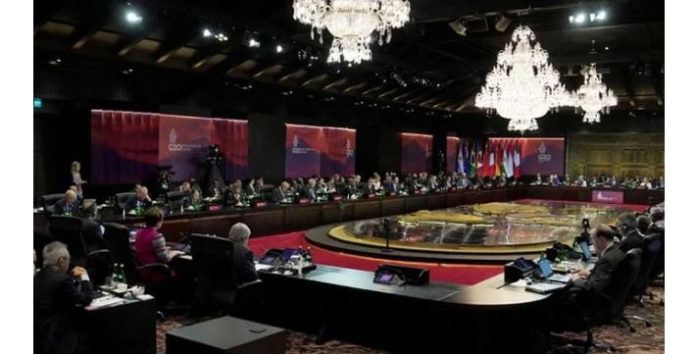
NUSA DUA, INDONESIA: Ukrainian President Volodymyr Zelenskiy told leaders of the world’s wealthiest nations on Tuesday that now was the time to stop Russia’s war in his country under a peace plan he has proposed.

He spoke by video link to leaders of the Group of 20 (G20) nations who have gathered for a summit on the Indonesian island of Bali that is overshadowed by the war in Ukraine and worries over global inflation, food and energy security.

Zelenskiy said the war should be ended “justly and on the basis of the UN Charter and international law”.

He called for restoring “radiation safety” with regard to the Zaporizhzhia nuclear power plant, introducing price restrictions on Russian energy resources, and expanding a grain export initiative. He also called for all Ukrainian prisoners to be released.

“Please choose your path for leadership – and together we will surely implement the peace formula,” he said.

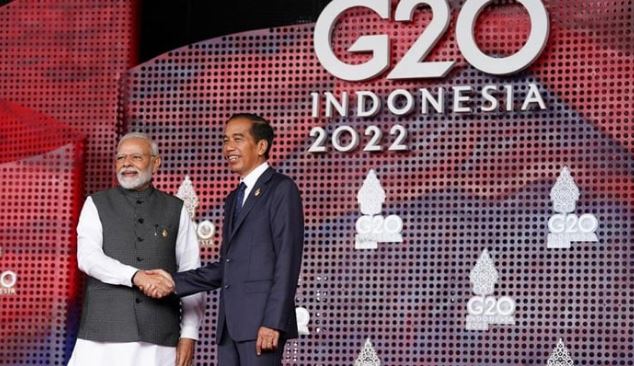
The summit opened earlier in the day with a plea by Indonesian President Joko Widodo for unity and concrete action to mend the global economy despite deep rifts over the war.

“We have no other option, collaboration is needed to save the world,” he said. “G20 must be the catalyst for inclusive economic recovery. We should not divide the world into parts. We must not allow the world to fall into another cold war.”

The G20, which includes countries ranging from Brazil to India, Saudi Arabia and Germany, accounts for more than 80% of the world’s gross domestic product, 75% of international trade and 60% of its population.

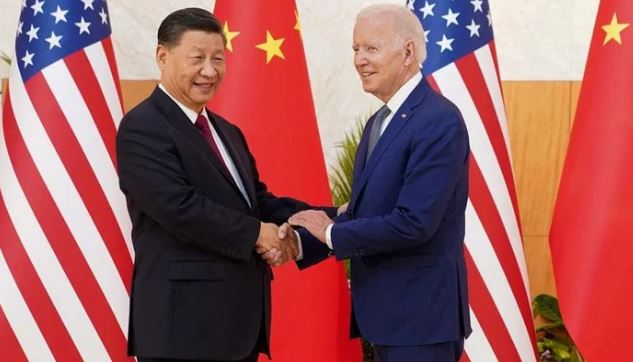
A positive sign on the eve of the summit was a three-hour bilateral meeting between US President Joe Biden and Chinese leader Xi Jinping in which the two leaders pledged more frequent communications despite many differences.

Monday’s meeting was the first time the two had met in person since Biden became president and the talks appeared to signal an improvement in relations between the superpowers after a downward spiral in recent months.

The G20 summit is being held for the first time since Russia’s February invasion of Ukraine, which Moscow has described as a “special military operation”.

The war has triggered calls by some Western leaders for a boycott of the summit and for the withdrawal of Russian President Vladimir Putin’s invitation.

Indonesia resisted, refusing to withdraw Putin’s invitation, and also rejecting what Indonesian sources say has been pressure from G7 nations to condemn Russia at the summit this week.

Russia has said Putin was too busy to attend the summit with Foreign Minister Sergei Lavrov taking his place. Lavrov dismissed a news agency report on Monday that he had been taken to hospital in Bali with a heart condition and was present at the meeting.

However it was not clear if he remained in the room while Zelenskiy made his address.

Joint statement in the works 

A joint G20 communique, which would need to be agreed by all parties, appears unlikely, with Indonesia instead pushing for a leaders’ declaration, diplomatic sources say.

However, European Council President Charles Michel said there was an agreement among officials on a text communique on Monday evening, which he described as “positive”.

G20 leaders will denounce the use of, or any threat to use, nuclear weapons, according to an early draft seen by Reuters.

However, such a communique would need to be confirmed by the leaders.

The G20 ministers’ gatherings have failed to produce joint communiques due to disagreement between Russia and other members on language, including on how to describe the war in Ukraine.

Biden will be “unapologetic” in his defence of Ukraine, US officials have said.

“I won’t get ahead of the final negotiations but the G20 will make clear that Russia’s war is wreaking havoc for people everywhere and for the global economy as a whole,” said one official, who spoke about the US view on the summit on condition of anonymity.

But Xi and Putin have grown increasingly close in recent years, and reaffirmed their partnership just days before Russia invaded Ukraine. Nevertheless China has been careful not to provide any direct material support that could trigger Western sanctions against it.

On Tuesday, Xi told French President Emmanuel Macron during a bilateral meeting that China advocated a ceasefire in Ukraine and peace talks, Chinese state media reported.

Biden and Xi “underscored their opposition to the use or threat of use of nuclear weapons in Ukraine” during their meeting, according to a White House statement. A statement from the Chinese foreign minister said Xi told Biden nuclear weapons cannot be used and nuclear wars cannot be fought.The West has accused Russia of making irresponsible statements on the possible use of nuclear weapons since its February invasion of Ukraine. Russia has in turn accused the West of “provocative” nuclear rhetoric.

On the sidelines of the summit, many of the leaders will hold bilateral talks, including several of them meeting Xi, who is making only his second visit overseas since the start of the pandemic.

After the meeting with Macron, Xi is scheduled to hold talks with Australian Prime Minister Anthony Albanese, South Korean President Yoon Suk-yeol and later with Japanese Prime Minister Fumio Kishida as China tries to reduce frictions with the United States and its allies.

“It is not decisive but an important step towards trying to reduce disagreements,” said Shi Yinhong, a professor of international relations at Beijing’s Renmin University.

Stay Connected

64FansLike
60FollowersFollow

Latest Reviews

Exchange Rates

USD - United States Dollar
EUR
1.17
GBP
1.35
AUD
0.67
CAD
0.73