Home Blog Page 144

28th constitutional amendment on the cards?

28th constitutional amendment on the cards?

Simultaneously, discussions about creating more provinces have also resurfaced. Advocates argue that Pakistan’s governance crisis cannot be resolved without increasing the number of federating units

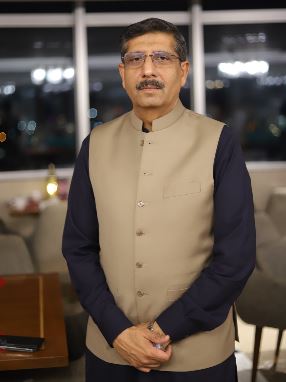
Ansar Mahmood Bhatti

ISLAMABAD: Pakistan may once again be heading toward a major constitutional restructuring as discussions surrounding a possible 28th Constitutional Amendment gain momentum in political and policy circles. Though nothing official has yet been announced, informed sources suggest that powerful quarters are seriously considering a rollback of certain provisions of the landmark 18th Amendment, arguing that the federation has become too weak while provinces have accumulated excessive administrative and financial authority.

The 18th Amendment, passed in 2010 through broad political consensus, was widely hailed as a historic step toward provincial autonomy. It transferred several ministries and subjects  including health, education, culture, labor, and social welfare  from the federal government to the provinces. The amendment also strengthened parliamentary democracy and reduced the powers of the presidency. At the time, it was celebrated as a victory for smaller provinces, particularly by the Pakistan Peoples Party (PPP), which considered it one of its greatest constitutional achievements.

However, over the years, concerns have emerged within federal institutions that the center has gradually lost both administrative effectiveness and financial strength. Many federal officials privately argue that after the 18th Amendment and the NFC Award, Islamabad was left with limited resources while provinces became financially dominant. The federal government, they say, now struggles to manage debt servicing, defense spending, and national development projects.

Sources indicate that the proposed 28th Amendment may seek to bring certain ministries back under federal control, especially health and education, on the grounds that national standards and coordinated policymaking have weakened under provincial management. The COVID-19 pandemic also exposed gaps in coordination between the federation and provinces, strengthening the argument of those who support a stronger center.

Another important aspect reportedly under discussion is the review of the National Finance Commission (NFC) Award. Critics within federal circles believe the current distribution formula disproportionately favors provinces while leaving the center financially overstretched. Any attempt to revisit the NFC formula, however, is expected to trigger intense political resistance.

The biggest obstacle to any such constitutional move remains the PPP, which has consistently declared the 18th Amendment untouchable. Yet political observers believe that compromises are possible behind closed doors. Some sources claim the PPP may eventually show flexibility if broader political arrangements are reached. One frequently discussed possibility is the party’s desire to see Bilawal Bhutto Zardari elevated to the office of prime minister as part of a future power-sharing formula. However, according to insiders, influential quarters remain reluctant to accept such an arrangement at this stage.

Simultaneously, discussions about creating more provinces have also resurfaced. Advocates argue that Pakistan’s governance crisis cannot be resolved without increasing the number of federating units. Punjab, with its overwhelming population and political weight, continues to dominate national politics. The common perception remains that whoever wins Punjab effectively wins Islamabad and secures the prime minister’s office. Supporters of administrative restructuring believe smaller provinces would create a more balanced federation and improve governance delivery.

Political parties, especially the PPP, have traditionally opposed the division of provinces, fearing ethnic and political complications. Yet governance experts argue that a country of Pakistan’s size and population can no longer function effectively with its current administrative structure.

Whether the proposed 28th Amendment materializes or not, one thing is certain: the debate over the balance of power between the federation and provinces is far from over. Pakistan once again appears to be entering a sensitive constitutional and political phase where competing visions of federalism, governance, and power sharing will shape the country’s future direction.
Eid ul Adha: Zil Hajj moon sighting expected on evening of May 17

Eid ul Adha: Zil Hajj moon sighting expected on evening of May 17

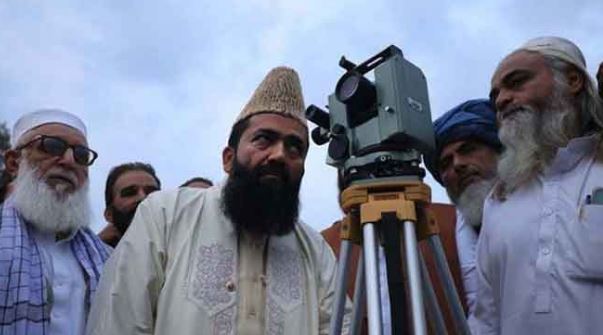
ISLAMABAD, MAY 12: The sighting of the new moon marking the beginning of the Islamic month of Zil Hajj, 1447 Hijri, is expected to take place on May 17, SUPARCO said on Tuesday, issuing preliminary astronomical projections regarding the lunar calendar.

A spokesperson for the country’s space agency said that the age of the new moon at the time of sunset on May 17 will be approximately 18 hours and 30 minutes, indicating conditions that are generally considered suitable for visibility in several regions of the country.

He further noted that the new moon is expected to be born at 1:01am on the same day, providing a basis for the expected lunar progression.

According to the details shared by the SUPARCO official, atmospheric and astronomical conditions appear to be favourable for the crescent moon to be sighted on the evening of May 17.

The spokesperson added that in coastal areas in particular, there is likely to be a gap of around 60 minutes between sunset and moonset, which significantly improves the probability of the moon being visible.

On the basis of these projections, the first day of Zil Hajj 1447 Hijri is expected to fall on Monday, May 18, while Eid ul Adha is likely to be observed on May 27, subject to final confirmation.

However, the agency clarified that the official and final decision regarding the sighting of the Zil Hajj moon will be taken by the Central Ruet-e-Hilal Committee, which is responsible for the formal announcement of the Islamic lunar calendar in the country.

’Israel sent Iron Dome batteries l to UAE  to defend country’

’Israel sent Iron Dome batteries l to UAE  to defend country’

DNA

TEL AVIV: Israel sent Iron Dome anti-missile batteries and personnel to operate them to the United Arab Emirates to defend the country during the Iran war, the U.S. ambassador to the country said Tuesday.

The comments by Mike Huckabee underline the growing defense relationship between Israel and the UAE, countries long suspicious of Iran, as a shaky ceasefire still holds in the Iran war. However, the narrow Strait of Hormuz remains in Tehran’s chokehold and negotiations between the U.S. and Iran appear at a standstill for the moment — raising the risk of the conflict breaking out again.

Huckabee made the comment on stage at an event in Tel Aviv, Israel.

“I’d like to say a word of appreciation for United Arab Emirates, the first Abraham accord member,” Huckabee said at the Tel Aviv Conference. “Just look at the benefits. Israel just sent them Iron Dome batteries and personnel to help operate them.”

The UAE did not immediately respond to a request for comment over the acknowledgment by Huckabee.

Huckabee added that he was “very optimistic” that additional countries in the region will soon join the Abraham Accords, the 2020 diplomatic recognition deal that also included the Gulf Arab kingdom of Bahrain, for formal relations with Israel.

However, many Arab states remain incensed by Israel’s wide-ranging military campaigns after Hamas’ 2023 attack on the country, which has seen the Gaza Strip leveled and Iran’s allies

attacked across the wider Mideast. Israel now controls territory in Lebanon and Syria as well.

“The Gulf states now understood they will have to make a choice — is it more likely they will be attacked by Iran or Israel?” Huckabee asked. “They see that Israel helped us and Iran attacked us. Israel is not trying to take over your land, and is not sending missiles to you.”

EU to invite Taliban to Brussels for talks

EU to invite Taliban to Brussels for talks

Western countries have declined to recognize the Taliban since the Islamist fighters swept back to power in Afghanistan five years ago, overthrowing a government that had been backed by US and NATO troops ‌for two decades

DNA

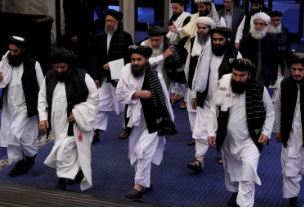
BRUSSELS: The European ‌Union is planning to invite officials from Afghanistan’s Taliban government to Brussels for their first known official visit, to discuss ways to deport some Afghan migrants back to Afghanistan.

Western countries have declined to recognize the Taliban since the Islamist fighters swept back to power in Afghanistan five years ago, overthrowing a government that had been backed by US and NATO troops ‌for two decades.

An ‌EU spokesperson said the planned ‌Brussels ⁠meeting was being set ⁠up in response to a request from several EU member states. No date had been set yet, and the meeting did not mean the EU had recognized the Taliban.

The meeting appeared to be the first publicly ⁠announced visit by Taliban officials to ‌Brussels, although the spokesperson said ‌he was not able to confirm this.

EU officials ‌had already traveled to Kabul for ‌a meeting in January, the spokesperson said, and the EU was now working “on a potential follow-up meeting at technical level in Brussels with the de-facto authorities ‌in Afghanistan to pursue these discussions.”

Hundreds of thousands of Afghans have sought ⁠asylum in Europe ⁠since the Taliban takeover of the country. European law allows some migrants who commit crimes or are considered a security threat to be deported, but this has been difficult to carry out with Afghanistan because of the lack of diplomatic relations.

The EU spokesperson said Sweden was helping to coordinate the planned Brussels meeting. The Swedish government did not immediately reply to a request for comment.

Hezbollah leader vows to never surrender, calls for Lebanon to withdraw from negotiations

Hezbollah leader vows to never surrender, calls for Lebanon to withdraw from negotiations

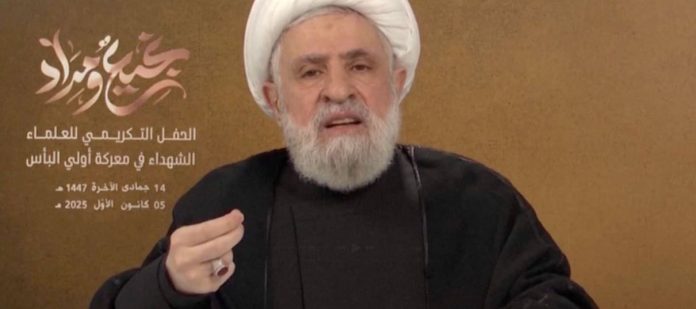
BEIRUT, MAY 12: Hezbollah leader Naim Qassem announced that the terrorist group would not surrender and called for an end to the direct negotiations between Israel and Lebanon, in a written message to Hezbollah terrorists on Tuesday.

Qassem asserted the terror group’s commitment to remaining on the battlefield, saying Lebanon would not return to the state of affairs that existed before March 2.

Claiming that Israel and the US seek to annex Lebanon as part of “Greater Israel,” Qassem added that “no matter how great the sacrifices, they are less than the cost of surrender.”

A person riding a scooter carries a flag with an image depicting Hezbollah leader Naim Qassem, as displaced people make their way to return to their homes after a 10-day ceasefire between Lebanon and Israel went into effect, at the southern suburbs of Beirut, Lebanon.
A person riding a scooter carries a flag with an image depicting Hezbollah leader Naim Qassem, as displaced people make their way to return to their homes after a 10-day ceasefire between Lebanon and Israel went into effect, at the southern suburbs of Beirut, Lebanon. (credit: MOHAMED AZAKIR/REUTERS)
Qassem calls for end to direct negotiations
Qassem also claimed that the current direct negotiations that led to the ceasefire beginning on April 16 and which are scheduled to continue this week “only benefit Israel and involve free concessions from the Lebanese government.” He called for indirect negotiations “where the power is in the hands of the Lebanese negotiator” instead.

Expressing gratitude to Iran, Qassem stated that the US-Iran agreement, which included a ceasefire in Lebanon, was one of the strongest cards Hezbollah had in stopping the Israeli aggression.

Qassem specified that Lebanon’s authorities hold responsibility for negotiating Lebanon’s sovereign aims, and Hezbollah was willing to cooperate to reach their five goals: stopping Israeli attacks, removal of all IDF presence in Lebanon and deployment of the Lebanese Army in the southern Litani River area, freeing prisoners, returning all displaced people to their homes, and reconstruction.

Lebanon asks US to pressure Israel to halt attacks and operations
Lebanon’s president has urged the United States to put pressure on Israel to cease fire and stop home demolitions in south Lebanon, the presidency said on Monday, as the death toll from Israeli attacks rose.

Lebanese President Joseph Aoun, in a meeting with US Ambassador to Lebanon Michel Issa, “stressed … the necessity of pressure on Israel to halt fire and military operations and the destruction and bulldozing of homes,” the presidency said.

Aoun and Issa also reviewed “developments related” to a third round of talks due in Washington between Lebanese and Israeli government representatives, the presidency said.

Beyond Duty – The Silent Strength Of NURSES

Beyond Duty – The Silent Strength Of NURSES

By Mr. Ali Raza CEO-Advanced International Hospital

At 2:17 AM in a quiet ICU, a patient recovering from sepsis lay stable on a ventilator. No alarms sounded and everything appeared under control.

However, the nurse on duty noticed a slight drop in oxygen levels, rising heart rate, and an uneven chest movement. It wasn’t dramatic, but it wasn’t normal either.

Instead of waiting for the modern machines to alert, she rested on her clinical instinct.

Within minutes, the patient’s condition deteriorated and started to decline rapidly- oxygen falling, blood pressure crashing resulted in a gasping state. She suspected a life threatening complication i.e. tension pneumothorax. Acting quickly, the quick response team was alerted, initiated emergency support, and guided immediate intervention.

A release of trapped air, then, just as quickly, the patient stabilized and a precious life was saved.

This wasn’t luck or a miracle moment- it was a show of skill, vigilance, and courage under pressure and a true essence of nursing staff on duty. They do more than just follow the orders- their mind, eyes and every move in nursing care detects the unseen and act when seconds matter.

International Nurses Day is not just about appreciation but it is about recognizing the quiet and crucial moments where lives are saved even before dangerous moments come into reality. It is about honoring those who stay alert when others sleep and notice what machines cannot. Their presence at the bedside is not passive- it is decisive and intelligent. This day is for those who bravely yet with immense composure stand between stability and crisis every single day.

This reminds us that a strong healthcare system depends on empowered and skilled nurses, as they are the true backbone of continuous patient care and the first in the line of defense to detecting early signs of deterioration and preventing complications.

In my view, the most critical priorities are ensuring safe and realistic nurse-to-patient ratios, investing in advanced training and clinical development, and providing support systems that reduce burnout and retain experienced staff. Technology alone cannot deliver outcomes without skilled nurses to interpret and act on it.

Nurses not only reduce medical errors and improve patient safety, but also enhance overall efficiency and help build a trusted healthcare system. Investing in nurses, therefore, is not optional but it is the foundation upon which quality healthcare is built.

Seven killed, over 18 injured in Lakki Marwat blast

Seven killed, over 18 injured in Lakki Marwat blast

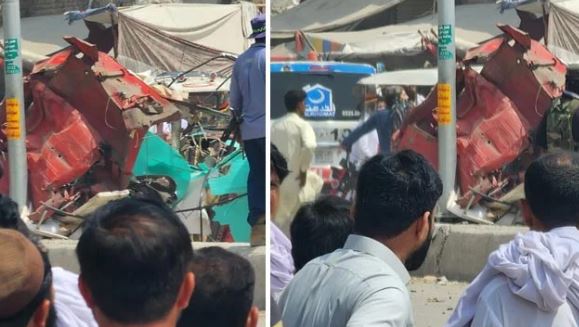
LAKKI MARWAT: At least seven people were killed and more than 18 others injured in an explosion near Naurang police station in Khyber Pakhtunkhwa’s Lakki Marwat district on Tuesday, police and hospital authorities said.

According to police, the blast occurred near a rickshaw in Naurang Bazaar in the Sarai Naurang area.

Hospital administration said the bodies of seven victims killed in the explosion were shifted to Naurang Hospital.

Officials added that two traffic police personnel were also among those martyred in the blast.

According to hospital authorities, the injured brought to the hospital included women and children.

Following the incident, an emergency was imposed at Sarai Naurang Hospital, the hospital administration confirmed.

Meanwhile, District Police Officer Nazir Khan said a vehicle was used in the blast and more than one maund of explosive material had been planted in it.

He said terrorists had started targeting innocent people, adding that investigations were underway to determine whether the explosion was a suicide attack or remotely controlled.

Separately, Khyber Pakhtunkhwa Chief Minister Sohail Afridi sought a report on the incident from the Inspector General of Police.

The chief minister termed the incident deeply tragic and said the provincial government would provide every possible support.

Meanwhile, Prime Minister Shehbaz Sharif has expressed grief and sorrow over the martyrdom of seven people including two traffic police personnel in an explosion in Lakki Marwat.

In a statement, he said the terrorists will not be allowed to obstruct the peace and development of the country. He said all relevant departments and the government are working with unwavering determination to eradicate the menace of terrorism.

The premier highlighted that all law enforcement agencies and the public have made invaluable sacrifices in the fight against terrorism.

PM Shehbaz directed that a swift inquiry be conducted to identify those responsible and bring the culprits to justice.

Pakistan has seen a sharp increase in cross-border terrorist incidents, particularly in the bordering provinces of KP and Balochistan, since the Afghan Taliban grabbed power in Afghanistan in 2021.

Islamabad has repeatedly urged Kabul to prevent its soil from being used by terrorist organisations to carry out attacks inside its territory.

However, the Afghan Taliban regime refused to act against terror groups involved in countless attacks on Pakistani security forces and civilians.

Pakistan launched Operation Ghazab lil-Haq in February this year, months after the two countries agreed to a ceasefire in October 2025, following clashes triggered by unprovoked gunfire by the Afghan Taliban regime at multiple border points.

Despite many rounds of talks, both countries have so far failed to reach an agreement due to the Afghan Taliban regime’s reluctance to take action against terrorist outfits operating from its soil.

SC asks IHC to decide Imaan case in two weeks

SC asks IHC to decide Imaan case in two weeks

Until the IHC decides upon the petitions, the matter will remain pending before the apex court, a three-judge SC bench, consisting of Justice Shahid Waheed, Justice Naeem Akhtar Afghan and Justice Shafi Siddiqui, ordered

Court Reporter

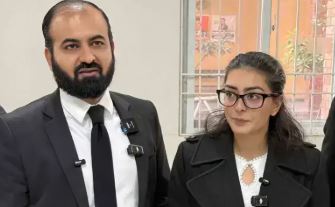
ISLAMABAD: The Supreme Court on Tuesday asked the Islamabad High Court (IHC) to decide within two weeks the pleas of human rights lawyer Imaan Zainab Mazari-Hazir and her husband, Hadi Ali Chattha, seeking the suspension of their sentence in the controversial social media posts case.

Until the IHC decides upon the petitions, the matter will remain pending before the apex court, a three-judge SC bench, consisting of Justice Shahid Waheed, Justice Naeem Akhtar Afghan and Justice Shafi Siddiqui, ordered.

During the hearing, the couple’s lawyer, Faisal Siddiqi H, argued that the legal requirements were not met in the trial against his clients. He asserted that they did not get the opportunity to be cross-examined and statements under Section 342 of the Criminal Procedure Code were also not recorded.

He presented his arguments as the SC took up the couple’s plea seeking to set aside an IHC order denying interim relief to them in the case.

The lawyer said that the IHC had kept his clients’ pleas for the suspension of their sentences pending despite the passage of two months.

“Which court should the accused go to if the high court denies relief or if the SC chooses not to go into the merits of the case,” the counsel argued.

At this, Justice Siddiqui wondered how the SC could interfere in a matter which fell under the jurisdiction of the high court.

The lawyer contended that the SC could hear applications seeking the suspension of a sentence without the high court’s final decision. He said that if the court asked him to, he could explain the circumstances his clients were facing.

Justice Waheed, however, observed that the SC was aware of the circumstances the appellants were facing, since they had mentioned the details in their applications.

“Now there are two options: one is to direct the high court to decide the matter and the second is to give instructions to the high court and keep this application pending in the SC,” Justice Waheed suggested.

The lawyer suggested keeping the matter pending before the SC while issuing instructions to the IHC. In this way, the shadow of the SC will remain upon the high court, the counsel argued.

“Not only the shadow of the Supreme Court, but also of the Federal Constitutional Court (FCC),” Justice Naeem Akhtar Afghan observed. The judge also reminded that the IHC did not dismiss the request for the suspension of the sentences.

Justice Afghan explained that if a high court rejected the request for suspension of sentence, then the SC could go into the merits of the case.

“To me, the SC is the only superior court in the country,” the couple’s lawyer responded.

“Don’t say this. The FCC has been established under the Constitution and all lawyers appear before it regularly,” Justice Afghan responded, adding that bringing amendments to the Constitution was Parliament’s prerogative.

The counsel, however, contended that the SC was the highest court to decide appeals in criminal matters. He contended that Imaan was like a sister to him and, above all, a daughter of this country.

Let the rivers flow

Let the rivers flow

Ghazala Anbreen

Pakistan is paying the price for climate change impacts, although it is not the major polluter. There must be consistent ownership all over the world; mainly, there must be accountability for the activities of major emitters, as they are causing a massive disruption.

Every year, a flood comes, and we are faced with a huge crisis. Dislocation is not the only problem. Afterwards, Pakistan has to face outbreaks of diseases and severe food shortages. Experts say that rainfall in the coming years will be more intense. It is a serious matter, and flooding has, in a way, become a routine now. The monsoon floods have become a recurring experience in Pakistan. There are unexpected events like floods, torrential rains, and excessive water in the rivers. Food insecurity often worsens during monsoon spells, compounding the suffering. The impact of floods is devastating, leaving lasting consequences. Pakistan is never the same after major flood events.

After the floods in 2022, 33 million people were badly affected. In 2022, the Pakistan floods claimed the lives of 1700 people. It caused a 30-billion-dollar economic impact on our economy. In 2022, around 2 million homes were affected and damaged across Pakistan. In 2025, thousands of businesses were destroyed. People who built houses with much effort, a lot of their possessions were washed away with the floods, along with the crops and livestock. During the 2022 Pakistan floods, the evacuation warning times for many residents left little time for preparation.

There are abnormal rainfall patterns and a great shift in the weather patterns and water systems. Due to variations in the climate, the forecast or prediction becomes difficult, and it cannot be as reliable as it used to be. For instance, extreme heat accelerates glacial melting and increases the risk of glacial lake outburst floods.  If it continues for 8 or more years, the drought-like situation is likely to prevail.  Since global warming is now an accepted reality, we must prepare for the worst situations, keeping in view the climate change that is all over the world. Snowfall patterns have also changed. The amount of snow is getting thinner now.

Now, the increasing torrential rains cause us many problems, especially when seen with the current state of infrastructure. Even moderate rain can have the potential to put considerable pressure on the drainage systems. This emphasizes the need for improvement, upgradation, and modifications. This calls for the need to strengthen the water governance system in light of new realities and state-of-the-art technologies.

Why is Pakistan so susceptible to climate change effects? We should look into the details to find ways to mitigate droughts and floods and develop resilience. Climate change should be the foremost priority for us to deal with. It requires comprehensive long-term projects that distribute the responsibility to broader areas.

It is also noteworthy that a little more rain in Karachi makes the civic infrastructure difficult to cope with.  And we have very little time to react in such cases. Especially during monsoon rains, the riverine floods and torrential floods become very intense, and high risks are involved in such cases. A flow with more than 800,000 cusecs is classified as a super flood.

We must realize that closing and blocking natural waterways will only create problems. When in the way of the river, we build homes and sow crops; then, in case of excessive rain, the river will reclaim its course. Hence, human activities have altered the natural flood path. Moreover, it is also a fact that not all places are suitable for sowing. We must make our farmers learn about the variety of crops and impart to them a knowledge of the suitable time for growing different crops. The farmers should also be informed about drought-resistant and water-resistant crops. Efforts to develop an agroecological system can produce much better yields. In addition to integrating ecological principles for soil health restoration, there are ways in which Pakistan can gradually transition economically, using energy efficiently and with less dependency on chemicals for soil fertility.

Human activities, such as deforestation and encroachments, have worsened flood risks. Cutting down the forests and going into conflict with nature are creating multiple problems. It is vital to control construction in flood-prone areas to thwart future catastrophes. Our rivers have shrunken because of encroachments. The flowing area has shriveled. We must let the rivers flow.

On a global level, temperatures are rising. We are watching its impacts very clearly now. We should have a check on riverbed encroachment and deforestation.

Preparation to counter the monsoon flooding should start early. The visits of the officers and officials should be before the rainy season to see that the pumping units are working properly. Also, the drainage pipes must be monitored regularly to ensure they are not blocked by plastic bags. There must be a plan for climate change to battle the floods and manage the drainage system. We should prepare ourselves for the challenges in terms of infrastructure. We have to restrict the burning of fossil fuels also, and should look for alternative green energy substitutes. Historical accounts suggest that wider drainage passages were once maintained earlier. Therefore, we should keep the opening channel on main highways broad and wide for a steady and proper flow of water. For this, there must be a repositioning of roads and drains in light of new realities on an emergency basis.

Hill torrents affect a large portion of the country, particularly in hilly and dry regions. The rapidly changing climate patterns, combined with urban expansion and illegal housing schemes, put these areas at an extreme risk of submerging, often compounded by food insecurity during monsoon spells. During such events, the marginalized communities are always the hardest hit. They must be protected, as during the floods, they are harder to reach. There must be enforcement of environmental laws. Most importantly, the continuity of policies is essential; strict monitoring of illegal housing societies near hill torrents, and restricting deforestation, all these measures will help fight the emergency.

Medium and long-term plans should be in such a way that we get prepared for the worst, whether there is a heat wave, drought, floods, or earthquakes. We cannot control the weather. We have to develop resilience and adaptation to the new realities. Community-based projects should be devised targeting the problems that local areas face. Forecasting how climate patterns change and equipping with better global knowledge on the grassroots level will also help a lot. Preparedness for flood fighting demands the making of proper evacuation plans and securing the transport facilities.

Trump says US-Iran ceasefire on ‘life support’ after rejecting Tehran’s ‘stupid’ response

Trump says US-Iran ceasefire on ‘life support’ after rejecting Tehran’s ‘stupid’ response

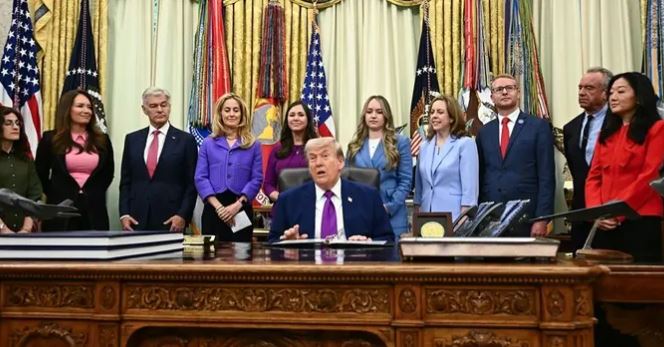
WASHINGTON: President Donald Trump said on Monday that the ceasefire with Iran was “on life support,” after dismissing Tehran’s response to a US peace proposal as “stupid.”

Trump’s swift rejection of Iran’s response on Sunday has fueled concerns that the 10-week-old conflict will drag on and continue to paralyze shipping through the Strait of Hormuz.

For all the latest headlines, follow our Google News channel online or via the app.

“I would call it the weakest right now, after reading that piece of garbage they sent us, I didn’t even finish reading it,” Trump said of the ceasefire. “It’s on life support.”

Days after Washington floated a proposal aimed at reopening negotiations, Iran on Sunday released a response focused on ending the war on all fronts, including Lebanon, where US ally Israel is fighting Iran-backed Hezbollah militants.

Tehran also demanded compensation for war damage, emphasized its sovereignty over the Strait of Hormuz, and called on the United States to end its naval blockade, guarantee no further attacks, lift sanctions and remove a ban on Iranian oil sales.

On Monday, Trump also claimed Iran is willing to give the United States “the nuclear dust,” referring to Iran’s enriched uranium stockpile, and said only China and the US have the capability to retrieve it.

Stay Connected

64FansLike
60FollowersFollow

Latest Reviews

Exchange Rates

USD - United States Dollar
EUR
1.14
GBP
1.34
AUD
0.70
CAD
0.71