Home Blog Page 1436

‘I apologise unconditionally’: SC revokes Faisal Vawda’s lifetime disqualification

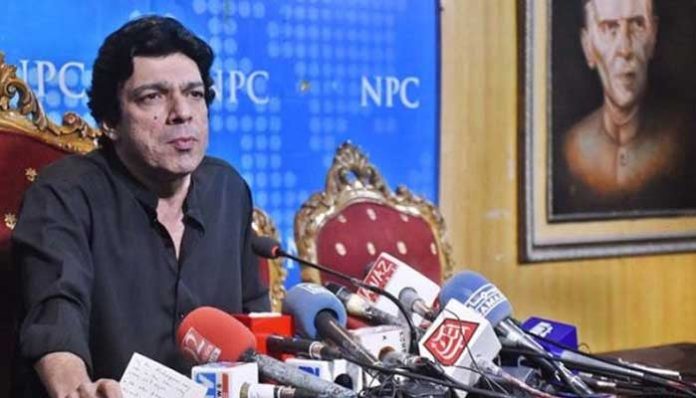
ISLAMABAD: The Supreme Court of Pakistan Friday revoked the lifetime ban that barred former PTI leader Faisal Vawda from contesting elections after he tendered an unconditional apology before the court.

A three-member apex court bench — headed by Chief Justice of Pakistan Umar Ata Bandial and comprising Justice Syed Mansoor Ali Shah and Justice Ayesha Malik — heard the plea against Vawda’s lifelong disqualification ruling of the Election Commission of Pakistan (ECP).

The election commission had on February 9 imposed a lifetime ban on Vawda as he had concealed his dual nationality at the time of contesting the National Assembly election in the 2018 general polls.

The chief justice had summoned Vawda to court today for giving him a chance to apologise and accept his mistake as he had been lying to the courts for three-long years.

As he appeared before the court today, the former federal minister told the court that he apologises unconditionally and would accept any punishment that is awarded to him.

Accepting his apology, the apex court ruled that Vawda was disqualified under Article 63(1)(c) and not Article 62(1)(f) — the same law that was used to impose a lifetime ban on former prime minister Nawaz Sharif from contesting elections. 

Following the ruling, the former federal minister can contest in the next general elections, but he will not be allowed to run in any polls that take place before it.

In his apology letter after the hearing, the ex-federal minister admitted that he was not eligible for running the elections — as he had submitted a fake affidavit. 

Today’s hearing

When today’s hearing began, the CJP asked Vawda to accept that under the law, he was ineligible to become a member of the National Assembly in 2018. “You submitted an application in June 2018 for revoking your US citizenship, but it was never accepted.”

In case you accept your mistake, then you will only be disqualified for the current parliament’s term.

Justice Shah asked what is the date on his citizenship revocation certificate and when did he resign from the assembly. In response, Vawda said the certificate is dated June 25, 2018, and he resigned from the Na on March 30, 2021.

“In any case, Faisal Vawda remained a member of the National Assembly for a period of three years. However, the court did not summon you here just to embarrass you,” CJP said.

The chief justice told Vawda that he had been misleading everyone for the last three years. He asked the former lawmaker to apologise before the court and resign from the Senate seat.

“If you apologise before the court with good intentions, then your disqualification will be limited to five years. In case you do not resign, then the court will proceed under Article 62(1)(f).”

At this, the former PTI leader said that he apologises unconditionally and that he “did not” intend on submitting a false affidavit. Vawda also said that he would accept any punishment that the court decides.

The CJP then told Vawda that he should also resign from his Senate seat, but also noted that the court did not want parliamentarians to become “worthless”.

“We will revoke your lifetime ban as the court has repeatedly given relief to senators,” the CJP noted.

As Vawda agreed to the unconditional apology and tendering his resignation, the court revoked the lifetime ban and allowed him to contest in the next elections.

The Qatar World Cup: Soccer upsets, politics, and sensitive situations

Barely out of the starting blocks, the Qatar World Cup has already produced a fair share of upsets as well as politically and personally sensitive situations and incidents.

Qatar’s 2:0 loss to Ecuador in the tournament’s opening match will have reinforced critics’ conviction that the Gulf state should never have been awarded World Cup hosting rights, among other things, because of its alleged lack of a soccer legacy.

Leaving aside the merits of the allegation and Qatari disappointment, the jury remains out on what Qatar’s return on its massive investment in organising the World Cup will be regarding reputational capital.

For Qatar, the ultimate evaluation of the return will largely depend on how it manages the tournament and potential flare- and hick-ups as dissidents try to turn Iranian matches into venues of protest, activists seek to capitalise on the opportunity to campaign for their cause, and fans refuse to play to Qatari soft power objectives, let alone possible incidents of intoxication, rowdiness, and LGBT-related issues.

So far, the picture constitutes a mixed bag.

Addressing Iranian concerns, Qatar refused to accredit for the World Cup, Iran International, a Saudi-backed, London-based satellite television broadcaster, that the Islamic republic accuses of fomenting months-long anti-government protests that security forces have been unable to squash.

Similarly, to prevent matches from turning into platforms for protest, Qatar stopped Iranian fans from bringing Iran’s pre-revolutionary flag into the country’s first World Cup match against England.

The flag, dating from the time of the shah, toppled in the 1979 Islamic revolution, is viewed as a symbol of protest against Iran’s theocratic government.

That didn’t halt fans holding up signs in the stadium demanding freedom in Iran and pictures of demonstrators killed by security forces.

However, there was little Qatar could do when the Iranian national team refused to sing the country’s national anthem at the beginning of the game.

“I would like to express my condolences to all bereaved families in Iran. They should know that we are with them. And we support them. And we sympathize with them regarding the conditions,” the team’s captain, Ehsan Hajsafi, told journalists hours before the match.

While Qatar’s state-run domestic broadcaster avoided showing female supporters with their hair uncovered in the stadium, Iranian state television interrupted its live broadcast as the Iranian and Ecuadorian anthems were played.

For weeks, footballers have signalled support for the protesters by not celebrating Iranian League goals, wearing black wristbands, and expressing support for the Iranian people without mentioning the protests to evade government retaliation.

Nevertheless, current and former players have been questioned by authorities, detained, or charged with “acting against national security.”

The refusal to sing the national anthem and the team’s embarrassing 6:2 loss to England fed the Iranian government’s worst fear that the World Cup would turn out to be a global platform for dissent rather than a moment of unifying national celebration.

The national team was emboldened by their manager, Carlos Queiroz, who, breaking with FIFA’s fictional separation of politics and sport, insisted that “players are free to protest as they would if they were from any other country as long as it conforms with the World Cup regulations and is in the spirit of the game.”

Overall, Iran has lost in more ways than just on the pitch.

At the start of the year Iran, which sits across the Gulf, had hoped to attract World Cup tourists like the UAE, Saudi Arabia and Oman, and proposed the crafting of a joint tourism plan with Qatar. Tehran even agreed to forgo the visa requirement for World Cup visitors.

That hope was dashed by the anti-government protests, the failure to revive the 2015 international agreement that curbed Iran’s nuclear program, and Iran’s inability to complete necessary infrastructure on its Kish Island.

The match against England could prove to have been a cakewalk compared to potential friction when Iran meets the United States on the Qatari pitch on November 29 in what is likely to be one of, if not the most politically charged match of the World Cup.

Similarly, Arab fans, reflecting sentiments among some Qataris, made clear that the World Cup would not be a bridge-building event, at least not when it came to relations with Israel and Israelis.

Arabs largely refused to be interviewed by Israeli media. Footage circulating online showed two Saudi fans, a Qatari shopper, and three Lebanese fans walking away from Israeli reporters in a demonstration of the limitations of soccer as a vehicle to build bridges. In another incident, Palestinians chanted “go home” when approached by Israeli reporters.

Qatari media published some videos of sharp encounters between Arab fans, Qatari nationals, and visiting Israelis with the caption: “No to normalization.”

“Sure, most countries in the Arab world are heading towards normalisation – but that’s because most of them don’t have rulers who listen to their people,” said Saudi football fan and oil worker Khaled al-Omri, who travelled to Qatar to support the kingdom’s national team.

The fans’ refusal to engage with Israeli reporters dashed hopes that ten Israeli charter flights ferrying up to 20,000 fans from the Jewish state to the World Cup, the first ever between Tel Aviv and Doha, would herald a new milestone in the normalisation of Arab-Israeli relations following the 2020 establishment of diplomatic relations between Israel and the United Arab Emirates, Bahrain, Morocco, and Sudan.

Qatar, like Saudi Arabia, has made the conversion of informal ties into formal relations conditional on a resolution of the Israeli-Palestinian conflict. Under FIFA rules, Qatar was obliged to grant entry to fans irrespective of whether the Gulf state recognizes the country issuing a supporter’s passport.

In line with the rules, authorities allowed Israeli channels to broadcast from Doha, but unlike other major foreign networks did not provide them with a formal studio.

Protest was not the preserve of Iranians and pro-Palestinian Arabs. Prominent Qataris made statement of their own by wearing a pro-Palestinian armband at the Germany-Japan match after being told that German Interior Minister Nancy Faeser would sport a One Love pro-LGBGT band.

Ironically, Ms. Faeser was sitting in the stadium’s VIP section next to FIFA president Gianni Infantino, who had just banned players from wearing the One Love band on the pitch in support of LGBT rights.

In response, Germany’s players covered their mouths for the team photo before their opener against Japan.

Mr. Infantino, unmoved by Ms. Faeser’s gesture, apparently saw no contradiction between his ban and FIFA’s opening days later of disciplinary proceedings against Ecuador over homophobic chanting by their fans in the match against Qatar.

Meanwhile, the Qataris had likely forgotten their loss in the euphoria sparked by Saudi Arabia’s 2:1 defeat of favourite Argentina 2:1 the first of two initial World Cup upsets.

“Looking forward to the Japan-Saudi final,” quipped Israeli journalist Anshel Pfeffer after Japan, in a second soccer upset, beat Germany 2:1.

The New York Times noted in a tweet that the Saudi upset put Argentinian player Lionel Messi, widely viewed as one of soccer history’s best players, in “a strange position” given his agreement to promote Saudi tourism and potentially the kingdom’s joint bid together with Egypt and Greece for the hosting of the 2030 World Cup.

Mr. Messi would potentially be campaigning against his home country, with Argentina planning a rival joint bid with Uruguay, Paraguay, and Chile. So far, Spain, Portugal, and Ukraine are the only ones to announce their joint interest officially.

The tweet and a headline in The Athletic, a sports publication that was recently acquired by the Times that accused Mr. Messi of selling himself to the devil, sparked a furious tweet by Mohammed Alyahya, former editor-in-chief of Al Arabiya English.

Staggering racism. It implies Arabs are incompetent & can’t win. It accuses a Latino world hero of corruption. Messi is the greatest footballer today, wealthy & only concerned about legacy. But according to the NYT, he’s a venal traitor in a shady deal with rich Arabs. Shameful,” Mr. Alyahya said.

Contrasting the Saudi victory with the Iranian defeat, author Lee Smith opined:

“The people of the Middle East recognize a strong horse when they see one: That horse is clearly not Iran. By attempting to reenter the Iran deal, fill the regime’s war chests with billions of dollars, and legitimize its nuclear weapons program, the Biden administration is doing something even worse than backing sectarian tyrants who spread death and destruction. It’s backing losers.”

Thank you to all who have demonstrated their appreciation for my column by becoming paid subscribers. This allows me to ensure that it continues to have maximum impact. Maintaining free distributions means that news website, blogs, and newsletters across the globe can republish it. I launched my column, The Turbulent World of Middle East Soccer, 12 years ago. To borrow a phrase from an early proprietor of The Observer, it offers readers, listeners, and viewers ‘the scoop of interpretation.’ If you are able and willing to support the column, please become a paid subscriber by clicking on Substack on the subscription button and choosing one of the subscription options.

Dr. James M. Dorsey is an award-winning journalist and scholar, an Adjunct Senior Fellow at Nanyang Technological University’s S. Rajaratnam School of International Studies, and the author of the syndicated column and blog, The Turbulent World of Middle East Soccer.

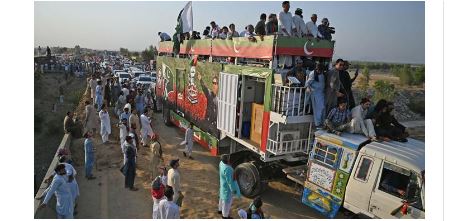
Govt ready to thwart any ‘unconstitutional move’ as PTI gears up for Rawalpindi jalsa

Rana Sanaullah directs all provinces to back Centre; PTI heads to Faizabad; administration doesn’t agree on landing Imran Khan’s chopper at Parade Ground

PM arrives in Turkiye on two-day official visit

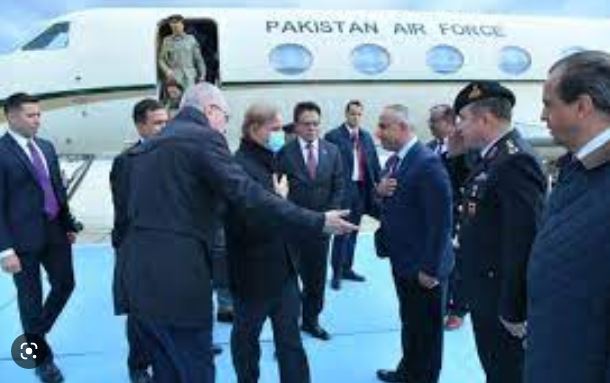
ISTANBUL, NOV 25: /DNA/ – Prime Minister Shehbaz Sharif arrived here Friday on a two-day official visit at the invitation of Turkish President Recep Tayyip Erdogan.

The prime minister and his delegation were received by the Deputy Governor of Istanbul and senior officials of the government of Turkiye.

During the visit, PM Shehbaz Sharif alongside President Erdogan will jointly inaugurate the third of the four MILGEM Corvette Ships for the Pakistan Navy’s PNS Khaibar at the Istanbul Shipyard.

The two leaders will also hold wide-ranging discussions encompassing bilateral relations, regional situation and other issues of common interest.

The prime minister will also interact with leaders of the Turkish business community.

The president of the ECO Trade and Development Bank (ETDB) will also call on the prime minister during his stay in Istanbul.

Pakistan and Turkiye enjoy fraternal ties deeply embedded in commonalities of faith, culture and history and underpinned by exceptional cordiality and mutual trust.

The MILGEM project, based on joint collaboration between the two countries, represents a significant milestone in the Pakistan-Turkiye strategic partnership that continues to progress on an upward trajectory.

The launching ceremony for the first Corvette for the Pakistan Navy, PNS Babur, was performed in Istanbul in August 2021 while the groundbreaking for the Second Ship, PNS Badr, was held at Karachi in May 2022.

Frequent leadership level exchanges are a defining feature of the eternal bonds of Pakistan-Turkiye friendship.

Prime Minister Shehbaz Sharif had earlier visited Turkiye in May-June 2022.

Key appointments: All’s well that ends well


Key appointments: All’s well that ends well

The PTI long march is likely to end up in a public meeting and that is it

Comment

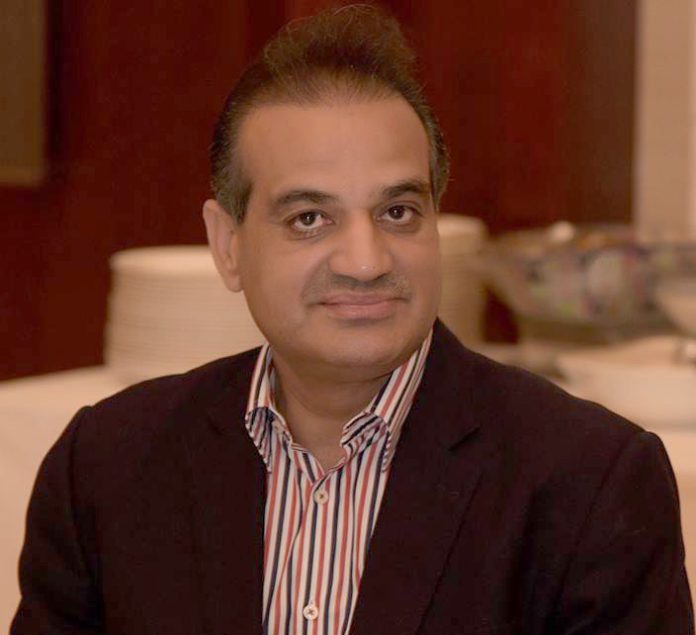
Ansar M Bhatti

Let me begin this piece by borrowing the last paragraph of my article published in this newspaper on Tuesday November 22, 2022 which reads,” Pakistan has literally become a laughing stock in the eyes of many, especially our adversaries. The situation therefore demands better sense to prevail. The leading political parties’ i.e PTI and PML N need to rise to the occasion. They have to shelve their personal liking and disliking for the greater interest of Pakistan. They must keep in mind that they would not get anything if things go out of control and non-political forces are left with no option but to make an immediate intervention”.

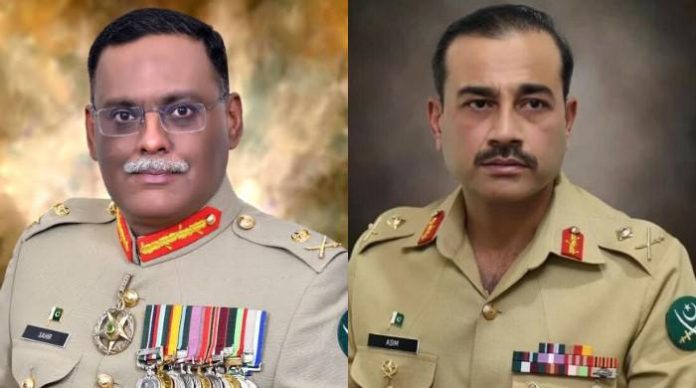
On Thursday, November 24 the Prime Minister appointed the senior most Lt. General Syed Asim Munir Shah as the Army Chief and second in the seniority list Lt. General Sahir Shamshad Mirza as the Chairman Joint Chiefs of Staff Committee. Both of them now have become the four star generals and will have another three years to service the force. The better sense finally prevailed and the PTI leadership instead of creating any hurdles decided to accept this decision or maybe they did not have any other choice. Whatever may have been the consideration behind the decision to approve these appointments, one thing is for sure that their move will help achieve some sort of political stability albeit the economic stability will continue to pose some serious challenges.

The PTI perhaps played smart by immediately acceding to the Prime Minister proposal regarding these two key appointments. The PML N and allied parties wanted the PTI leadership to sit on this decision. In that case bad blood would have been created between the PTI leadership and the newly-appointed military leadership. But to the disappointment of the government ranks, Imran Khan rather acted in a wise manner and thus avoided any possible face-off with the new military leadership, at least for the time being.

As mentioned in my earlier article, the PTI chairman in the beginning told his confidantes that he would accept anybody as the army chief but not Asim Munir. However afterwards he changed his tone and tenor by publicly pronouncing that he won’t mind whosoever is elevated to these highest offices. Now when the dust has settled, it is time for some musings. The incumbent army chief will have a great onus on his shoulders. Since Imran Khan had built a narrative as if General Asim Munir had any soft corner for the PML N therefore he may try to corner the PTI. Independent sources strongly believe that there was never a connection between the newly-appointed army chief and PML N leadership. A senior PML N leader, on the condition of not being named, said that since Imran Khan when he as prime minister had removed Asim Munir from the post of DG ISI only after months of his appointment as the spy master, therefore PML N leadership presumed as if after becoming the army chief he might try to settle scores.

The only technical problem with the appointment of Asim Munir as the army chief was his retirement date, but the Cabinet during its meeting on Thursday had frozen his retirement date, which means even if the President would have delayed the approval, Asim Munir would still continue with his job. Anyhow thanks to some saner elements those things were not driven to that extreme.

Now the question is how would the PTI react in public? One thing is for sure that the party has decided not to stage any sit-in Islamabad. The senior party leaders said that the PTI leadership will now try to have some political dialogue in order to pave the way for the elections. The senior leaders also told me that the Saturday’s long march gathering may not turn into a dharna, as earlier announced by the party leadership. It will be just a procession where Imran Khan would deliver his speech and announce his future course of action. My understanding is that Imran Khan will move cautiously on this issue and may not take a hard line regarding these appointments. However he may express his and party’s wish that they would like to see the new military leadership acting in an absolutely impartial manner. And for the military it should not be a problem because General Qamar Javed Bajwa in his last address had made it clear that the army, as an institution, had decided to keep away from politics.

Another challenge the new military leadership will have to tackle is to manage cordial relations with especially friendly countries such as Saudi Arabia, UAE and China for Pakistan’s economic well-being is directly linked to smooth relations with these countries. One should hope that these friendly countries would also welcome these appointments and move forward for a shared and prosperous future for the people of these countries.

All said and done, unfortunately there are certain elements, even in the media, that are trying to pitch PTI and the new military leadership against each other. They are making all our efforts to prove that General Asim Munir managed to become the army chief despite stiff resistance and opposition from the PTI leadership. Even if that may be the case, it does not look prudent to add fuel to fire when things are already settling down. These hawks, no matter which party they belong to, need to be discouraged. The country is already at the verge of default. Any further confrontation would only prove a recipe for disaster.

The PTI under the given circumstances would need a face saving, which is possible only if the government agrees to announce elections. After latest developments, it seems difficult for the PTI to get its demands fulfilled through any coercive means. After Imran Khan’s bids to mend fences with the USA, he probably would like have tension-free ties with the military establishment as well, which for many analysts, appears to be a judicious move.

DGISPR denounces Indian Army’s unfounded allegations of so-called launchpads in AJK

                ISLAMABAD, Nov 24 (dna):Director General Inter-Services Public Relations (ISPR DG) Major General Babar Iftikhar on Thursday denounced the unfounded allegations of so-called launchpads in Azad Jammu and Kashmir by a senior official of the Indian Army. 

In an ISPR news release here received, the ISPR DG said the unwarranted statement of a high-ranking Indian Army Officer concerning Azad Jammu and Kashmir was an apt manifestation of Indian Armed Forces’ delusional mindset and showcases the vivid imprint of domestic political showboating on Indian military thought.

Maj General Babar said the fallacious remarks and unfounded allegations of so called “launch-pads” and “terrorists” were an attempt to divert attention from Indian Army’s repressive use of force and gross human rights violations against innocent, unarmed Kashmiris striving for their right to self-determination, upheld by International Law and enshrined in UN Security Council Resolutions.

“The Indian General Officer’s lofty claims and surreal ambition is intellectually insulting. Pakistan military is a force for good and a proponent of regional peace and stability. This desire for peace, however, is matched with our capability and preparation to thwart any misadventure or aggression against our territory, an assertion comprehensively validated on numerous occasions, including recently in the Balakot episode,” he added.

In the interest of peace for the region, he said the Indian military would do well to abstain from irresponsible rhetoric and vitriolic communication to shore up electoral support for their political masters’ regressive ideology.

Lt Gen Asim Munir to become Pakistan’s new army chief, govt announces

DNA

ISLAMABAD: PM Shehbaz also picks Lt Gen Mirza as Chairman Joint Chiefs of Staff Committee; sends summary to president. The summary has been sent to the President.

President Arif Alvi cannot consult anyone before approving a summary for the army chief’s appointment as it would be contrary to the Constitution and its spirit, given that he has no authority to reject any advice from the prime minister, experts of Constitutional law said.

PTI Chairman Imran Khan said a day earlier that President Alvi was in contact with him and would consult him on the appointment of the top two slots — COAS and chairman joint chiefs of staff committee — in the military.

But the Aiwan-e-Sadr did respond to PTI Chairman Imran Khan’s claim of maintaining contact with the president on the matter.

Former president of Supreme Court Bar Association Senator Kamran Murtaza told The News that on all the issues where the president is bound by PM’s advice, he has no option to consult any person.

The senator said that the president could take advice given by the PM, but could not reject it in any way. He cited the constitutional provisions and Army Act’s Section 8 which regulates the appointment.

Meanwhile, sources said if President Alvi opted to consult the PTI chief and tried to block the advice for even one day, it could land him serious trouble, as already warned by PPP Chairman and Foreign Minister Bilawal Bhutto Zardari.

Alvi ventured to dissolve the National Assembly in April this year contrary to provisions of the Constitution and his action was viewed by the superior judiciary as defiance of the Constitution.

The orders in this regard were set aside by the apex court. The government, sources said, took no legal action against the president for violation of constitutional provisions.

“But this time, it would not be allowed to happen,” the sources said. The president is supposed to stay above the political divide and cannot seek guidance from his party head.

President and I have decided to ‘play according to law, Constitution’ on COAS appointment: Imran

PTI chief says he is in touch with the president over the matter.

SC bans displaying politicians’ images on public offices, documents

ISLAMABAD: The Supreme Court (SC) Wednesday imposed a ban on the display of images of politicians and public office holders on government buildings, projects, and documents.

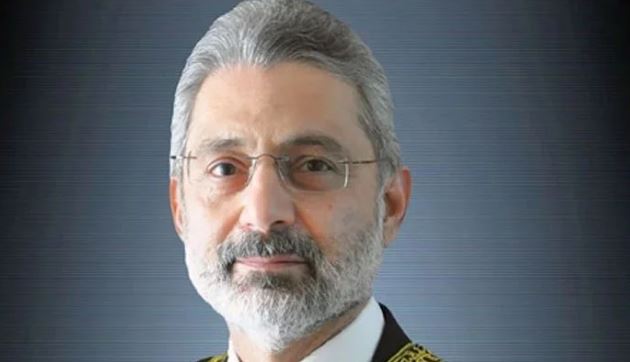
The court issued these orders in a five-page judgment authored by Justice Qazi Faez Isa in the Rawalpindi slums case. 

The verdict questioned why the photographs of then Chief Minister Chaudhary Pervez Elahi were printed on the certificates of properties located in a Rawalpindi slum.

The apex court held that personal advertisement could not be allowed at the expense of official resources, while this is also in contravention of one’s oath of office.

Affixing photographs for personal publicity on government property offends moral values, the court said in the order.

“Pakistan is not anyone’s domain where the people bow before the rulers,” the SC judge said adding, ”In order to uphold the country’s democratic reputation, we have to be vigilant”.

The Supreme Court, in the verdict, ordered all chief secretaries and federal administration should ensure the implementation of the court decision.

FIFA World Cup 2022: Japan stun Germany in second upset in as many days

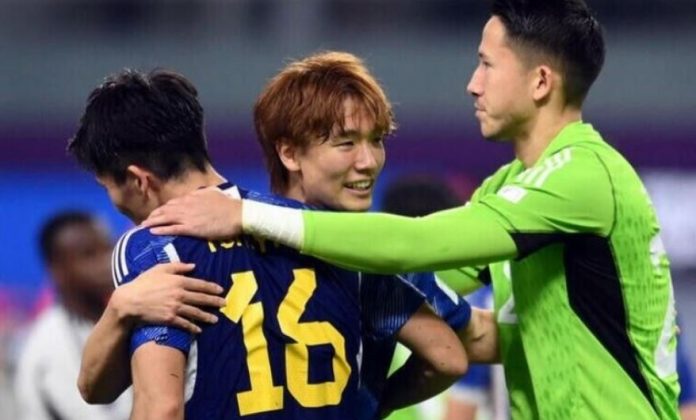
Just over 24 hours after Saudi Arabia set the FIFA World Cup alight with a stunning upset of Argentina, Japan did the same, holding off Germany’s furious attempts to salvage a point from the Group ‘E’ opener for both teams on Wednesday.

Upon receiving the ball wide out on the right from a free-kick in his own box, Takuma Asano took Nico Schlotterbeck out of the equation with a first touch for the ages. With the goal in his sights, Asano kept running but the angle for a shot kept getting tighter. Asano needed a ripper of a shot to beat Manuel Neuer.

Asano, on as a substitute just before the hour mark, did exactly that. The connection was pure, the ball crashed into the roof of the net and brought down the roof at the Khalifa Stadium.

Japan were seven minutes away from sealing a stunning victory against Germany and the hordes of their fans behind that goal, beating their drums, were now willing them on to complete a famous victory.

This, just like on Tuesday, saw the Asian side come from a goal behind in the second half to win. Japan had levelled matters just eight minutes before Asano’s winner. It was another substitute who did that. Japan had been knocking and the chance came when Neuer parried away a cross from Takumi Minamino and Ritsu Doan, who had been on the pitch for less than four minutes, was the quickest to react to plant a shot into the back of the net.

Following Japan’s equaliser, Germany coach Hansi Flick threw on striker Niclas Fuellkrug and attacker Mario Goetze, the man who scored the stunning extra-time winner for Die Mannschaft in the 2014 final in Brazil, to provide a moment of inspiration and stem the Japanese flow.

But when Asano scored, the Germans had been well and truly floored. They heaped pressure on the Japanese goal but the defence and goalkeeper Shuichi Gonda held on.

“I believe it’s a historical moment, a historical victory to say the least,” said Japan coach Hajime Moriyasu, when asked about the influence of Germany on Japanese football. “We have seven players who feature in the Bundesliga and that has contributed to this.”

Time was supposed to have healed Germany. Refreshed, reinvigorated and under a new coaching setup, they seemed to have done away with the staleness that had settled in. The infusion of new blood with some older heads reinstated under Hansi Flick had been revitalising and they arrived for the World Cup in Qatar having lost just once in their last 16 games.

But the demons of Russia don’t seem to be going away. Then, as holders, they’d limped out of the World Cup at the group stage; the imagery of Neuer scrambling to get back into his box as Son Heung-Min raced away to score and seal a famous win for South Korea and hammer the final nail in the holders’ coffin is still fresh.

Facing another East Asian side at the 45,000-capacity venue in the heart of the Qatari capital, Germany had started brightly but got a scare when Japan had the ball in the back of the net in the eighth minute, only to see that being ruled off-side.

Gonda was keeping Japan in the game, repelling shots one after the other but it was his error that saw Germany take the lead. Just past the half-hour mark, Gonda tried to collect a ball in the box but in doing so, he brought down David Raum.

“He fell without much contact,” said Gonda, who was named player of the match, although he did not have any complaints about the referee’s decision.

Ilkay Gündoğan stepped up from the spot and once they had the lead, Germany came in waves and waves at the Japanese goal but had nothing to show.

“We had good opportunities to score after we got the opening goal but I think that Japan were very efficient,” said a despondent Flick. “We have to avoid those mistakes, we have to do better. We have an important game coming up against Spain and we have to bounce back from this.”

Germany’s campaign in Russia unravelled after they fell to Mexico in their opening game. Flick brushed off suggestions that this defeat in any way resonated with that game four years ago. What reverberated through the Khalifa Stadium, though, was Japan’s boundless energy — one that Flick wished his side had shown.

Stay Connected

64FansLike
60FollowersFollow

Latest Reviews

Exchange Rates

USD - United States Dollar
EUR
1.17
GBP
1.35
AUD
0.67
CAD
0.73