Home Blog Page 1429

Afghanistan: Parks become latest no-go areas for women in Kabul

Squeals of delight from young children fill the air as they enjoy the thrills of the Ferris wheel, bumper cars and a small rollercoaster at an amusement park in central Kabul.

Their fathers sit on the rides with them, or look on, taking photos – rare moments of joy in Afghanistan where the news is often so bleak.

But mothers are now denied the right to share in the memories the children here are making. Women are banned from visiting parks in Kabul by the hardline ruling Taliban.

When we visit, dozens of members of the group are enjoying the rides.

But the closest women, including us, can get to the park is a restaurant overlooking it. Women were also recently barred from swimming pools and gyms in the capital.

It’s expected the rules will be extended across the country.

As the Taliban further limit what they can do, Afghan women and girls fear what could come next.

Some say these moves don’t affect most of the country, because for a majority of the people right now, an evening out is a luxury they cannot afford.

For many Afghan girls, though, it’s not about the scale of the impact, but the symbolism of the move – and what it reveals about the intent of the Taliban since they seized power in August 2021.

“Every day, as girls in Afghanistan, we wake up to new restrictions. It’s like we are just sitting and waiting for the next one,” one female student says. She’s not being named to protect her.

“I was lucky I finished secondary school before the Taliban came. But I’m scared now that universities might also be closed for women. My dreams will be over.”

She recently took the university entrance exam and was disappointed to find that the subject she wanted to study – journalism – was no longer available for women, part of another set of restrictions the Taliban recently imposed.

“I can’t describe how hard it is. Sometimes you feel like screaming loudly,” the student says, frustration evident in her voice. “I feel hopeless.”

With spaces for women shrinking in Afghanistan, some are trying to find ways to counter the Taliban’s clampdown.

Activist Laila Basim has co-founded a library for women. It has thousands of books in different languages on diverse subjects.

“With this we want to show the Taliban that Afghan women won’t stay silent and our second goal is to expand the culture of reading books among women, particularly those girls who are deprived of education,” she says.

She’s determined to raise her voice against the men running her country, and has participated in multiple protests since last year.

“We are not afraid of death or that the Taliban will threaten our families. What we are terrified of, is being omitted from society,” she says.

She sees the increasing restrictions on women as worrying and sad.

“It makes me so upset to think of all the freedoms we have lost. The people of other countries are exploring Mars, and here we are still fighting for such basic rights,” she says.

Their words and actions suggest a hardening of the Taliban’s stance on women, and anyone critical of their policies. It challenges the more moderate image they have attempted to portray since they seized power last year.

“One day we might be told that women can’t go out of their homes any more,” the young female student said. “Everything is possible in Afghanistan.”

Disappointment with the international community is also evident among Afghan women.

“The world has turned its back on us,” Laila Basim says. “Powerful people all over the world are supporting the women of Iran, but not those of Afghanistan.

“What happens to us doesn’t even make front page news. We feel broken and forgotten.”
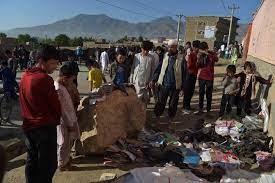
Students killed as bomb blast hits Afghan school

At least 10 people have been killed after a bomb blast hit a religious school in northern Afghanistan, the ruling Taliban regime has said.

The blast took place in Aybak in the Samangan province and left many more injured, a spokesperson for the interior ministry told the BBC.

But the death toll remains uncertain, and hospital officials told the AFP news agency that 16 died in the blast.

No group has claimed responsibility for the attack.

The blast is said to have occurred as people were leaving congregational prayers, and a doctor at the local hospital said most of the victims were students at the school.

“All of them are children and ordinary people,” one doctor was quoted by AFP as saying.

Interior ministry spokesperson Abdul Nafee Takkur said the Taliban’s security forces were investigating the attack, and vowed to “identify the perpetrators and punish them for their actions”.

Afghanistan has been rocked by dozens of blasts since the Taliban seized power last year, mostly claimed by the local offshoot of the Islamic State group.

Oath Keepers: ‘How I escaped my father’s militia’

The son of militia leader Stewart Rhodes spent years plotting to help his family escape from his father’s control. Now that the elder Rhodes faces decades in prison, the rest of the family is rebuilding their lives.

The time had come. It was a dreary February day in 2018. Dakota had it all planned out.

His mother and five younger siblings were in the truck – some of them crouched out of sight on the floor.

They’d bundled into it as much as they could and made up an excuse – ostensibly they were heading to the trash dump just off the main highway, slick with black ice and crusted snow.

But just as they started to pull away, Dakota’s father burst out the door of their remote cabin in the mountains of northwest Montana.

Dakota and his mother Tasha stiffened. The leader of the Oath Keepers militia had dominated their lives until that moment. Tasha and Stewart had been married for nearly 25 years, and she was familiar with his manic periods. He’d been up all night on a tear – working out, listening to music, practising Filipino stick fighting, pacing the floor.

It was a pattern of manic activity, Dakota said, that was familiar throughout years of emotional abuse and heightened paranoia.

Would he now stop them from fleeing? Had he noticed his favourite gun was missing? Would he question why John-Boy, the family dog, was along for the ride to the dump? Dakota gripped the wheel while Tasha looked down at her daughters, hidden under the windows, their eyes opened wide.

“Hey,” Rhodes growled. “Pick up some steak on your way back.”

Dakota and Tasha murmured assent, and drove off towards the highway without a backwards glance.

Jiang Zemin: Former Chinese leader dies aged 96

China’s former leader Jiang Zemin, who came to power after the Tiananmen Square protests, has died at 96.

State media said he had died just after 12:00 local time (04:00 GMT), in Shanghai, on Wednesday.

Jiang presided over a time when China opened up on a vast scale and saw high-speed growth.

His death comes as China sees some of its most serious protests since Tiananmen, with many demonstrating against Covid restrictions.

A Chinese Communist Party statement said he died of leukaemia and multiple organ failure.

It added that he was recognised “as an outstanding leader with high prestige” and “a long-tested Communist fighter”.

State media outlets, including the Global Times and the Xinhua news agency, turned their websites black and white in tribute.

Jiang rose to power after the bloody 1989 crackdown on protesters in and around Beijing’s Tiananmen Square, which led to China being ostracised internationally.

The event sparked a bitter power struggle at the top of the Communist Party between hard-line reactionaries and reformers.

It led to Jiang, who had originally been seen as a plodding bureaucrat, being elevated to high office. He was chosen as a compromise leader, in the hope he would unify hardliners and more liberal elements.

Under his stewardship, a formidable economy was forged, the Communists tightened their grip on power, and China took its place at the top table of world powers.

He oversaw the peaceful handover of Hong Kong in 1997, and China’s entry into the World Trade Organization in 2001 which intertwined the country with the global economy.

But political reforms were also put to one side and he crushed internal dissent while pursuing a hardline stance on Taiwan. He was criticised for the heavy-handed crackdown on the religious sect Falun Gong in 1999, which was seen as a threat to the Communist Party.

He was also keen to ensure that his position within the Communist Party was secure, and came up with his own political ideology – the Three Represents theory – in an attempt to modernise the party.

During his time in power, Jiang sought to strengthen ties with the US, visiting the country several times and offering then-president George W Bush co-operation in Washington’s “war on terror” following the 9/11 attacks.

In a country not known for its flamboyant leaders, he was seen as having a more colourful personality than his successors. He memorably crooned Elvis Presley at a global summit, and went for a swim off the Hawaiian coast.

In his later years he withdrew from government and was rarely seen in public. But even as he became less conspicuous, online he became an unlikely subject of viral internet memes.

Many Chinese affectionately caricaturised his signature large spectacles, and likened his appearance to a toad. Young fans called themselves “toad worshippers”.

Jiang’s successors as president, Hu Jintao – who was conspicuously removed from the CCP conference last month – and Xi Jinping, are scheduled to attend his funeral, according to a letter released by the state backed Global Times.

But the letter added that foreign leaders and governments will not be invited to the event. The funeral committee said the decision was in keeping with what it called “China’s practice”.

Cold and dry weather to prevail in most KP

DNA

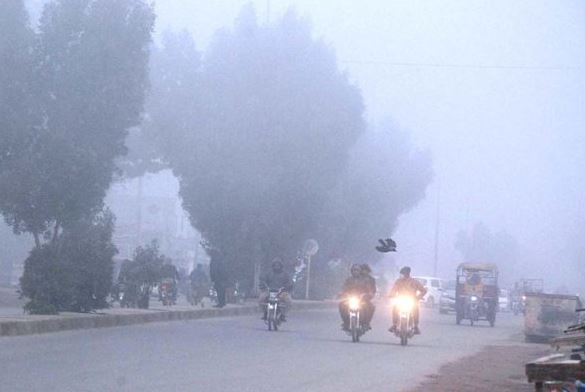
PESHAWAR, Nov 30 (APP): The Regional Meteorological Center Peshawar on Wednesday predicted that mainly cold and dry weather is expected in most districts of the Khyber Pakhtunkhwa, while very cold in hilly areas and upper parts of the province.

It said that moderate to dense fog is likely to occur over Swabi, Mardan, Nowshera, Charsadda, Peshawar and D.I. Khan districts, as well as over Peshawar to Swabi motorway during late night and morning hours. Hence, travelers on the motorway and national highways are advised to avoid unnecessary travelling and adopt precautionary measures.

During the last 24 hours, cold and dry weather occurred in the province, while very cold in hilly areas.

The maximum and minimum temperatures recorded at different stations of the Khyber Pakhtunkhwa were as Peshawar City 24/05, Chitral 19/00, Timergara 23/04, Dir 21/01,  Mirkhani 20/01, Kalam 17/-3, Drosh 19/04, Saidu Sharif 23/02, Pattan 24/13, Malam Jabba 14/04, Takht Bhai 23/06, Kakul 21/04, Balakot 23/04, Parachinar 21/03, Bannu 27/06, Cherat 19/07 and D.I. Khan 27/10.

The lowest temperature recorded in the province was -03°C in Kalam.

Pakistan-EU political dialogue in Brussels covers broad-based areas

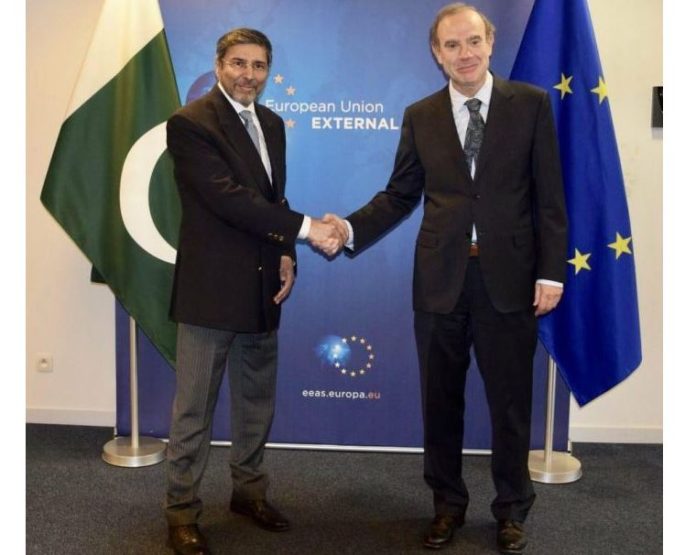
ISLAMABAD, Nov 30 (APP): The 8th round of Pakistan-European Union Political Dialogue was held in Brussels covering a broad range of bilateral subjects as well as regional and global developments.

Acting Foreign Secretary Jauhar Saleem and Enrique Mora, Deputy Secretary General of European External Action Service (EEAS) led their respective sides on Tuesday. Both sides noted the special significance of this round of Political Dialogue, marking the 60th anniversary of Pakistan-EU relations. Both sides underlined the importance they attached to their multifaceted partnership.

Expressing satisfaction on the positive trajectory of the relations, they agreed to continue working together to further deepen and broaden bilateral cooperation.

Acting Foreign Secretary appreciated the timely and invaluable humanitarian assistance and support provided by the European Union for the victims of the massive climate induced floods in Pakistan.

He underscored that as a key trade and development partner, EU’s continued support would be pivotal in helping Pakistan effectively carry out rehabilitation and reconstruction efforts, and to build back the damaged infrastructure in a climate resilient manner. The two sides acknowledged that EU’s GSP Plus scheme has been a successful template of trade for development and mutually beneficial trade cooperation.

Sharing Pakistan’s position on the proposal for the new GSP Plus scheme, the Acting Foreign Secretary expressed the hope that mutual objectives, including sustainable development, poverty alleviation and employment generation will be appropriately prioritized in the new Scheme.

He also conveyed Pakistan’s keenness to diversify the scope of trade, investment and development cooperation between Pakistan and the EU.

Both sides agreed to explore opportunities of cooperation under EU’s flagship programmes like Global Gateway and Horizon Europe. The two sides also welcomed the recent launch of a comprehensive dialogue on migration and mobility.

The dialogue will provide an institutionalised platform for legal pathways for migration to Europe, seek talent partnerships, and enable effective implementation of the Pakistan–EU readmission agreement.

The Acting Foreign Secretary apprised the Deputy Secretary General of the dire human rights situation in Indian Illegally Occupied Jammu and Kashmir (IIOJK). He called upon the international community to use its influence to urge India to honour its commitment to the UNSC Resolutions.

He also highlighted that Indian illegal and unilateral actions of August 5, 2019, were aimed at undermining the internationally recognized disputes, and altering the demographic structure of the IIOJK were a blatant violation of the UNSC resolutions, 4th Geneva Convention, and international law.

The Acting Foreign Secretary reiterated Pakistan’s principled stance for universal and consistent application of UN Charter Principles – including non-use or threat of use of force, respect for sovereignty and territorial integrity of states, pacific settlement of disputes, and equal security for all states in order to ensure lasting peace and security.

He added that Pakistan continued to call for an immediate cessation of hostilities and stressed the need for diplomacy and dialogue for an early, negotiated end to the Ukraine conflict.

Taking note of the multiple, complex challenges confronting Afghanistan, the Acting Foreign Secretary reiterated the importance of sustained engagement of the international community with the Interim Afghan Government in order to ensure the wellbeing of the Afghan people. Both sides agreed to hold the next round of the Political Dialogue in Islamabad in 2023.

NEPRA cuts KE tariff by Rs2.15/unit under October FCA

ISLAMABAD: The power tariff for K-Electric (KE) consumers has eased by 2.15/unit for October under the fuel cost adjustment (FCA); however, it will not apply to lifeline consumers, users of under 300 units, and vehicle charging stations.

The National Electric Power Regulatory Authority (NEPRA) notified the change in FCA Wednesday after a public hearing to study KE’s proposed reduction. 

The hearing was chaired by Chairman NEPRA Engineer Tauseef H Farooqi and was attended by NEPRA Members Engineer Maqsood Anwar Khan and Engineer Rafiq Ahmed Shaikh.

According to NEPRA notification, in its plea submitted to the regulator, K-Electric sought a reduction of Rs7.83/unit under the FCA for the first quarter of the fiscal year 2022-23 (July-September). In addition to this, K-Electric had also requested a slash of Rs1.88/unit under the FCA.

However, after crunching all the available data, the regulator calculated that the reduction under FCA was actually Rs2.15.

It has been estimated that due to this FCA, the consumers will get relief of Rs3.59 billion.

The K-Electric generated electricity at a cost of Rs32.96/unit from its own resources, while the cost of electricity purchased from CPPA was Rs12.1/unit, NEPRA officials said.

During the hearing, Chairman NEPRA questioned why electricity was generated from diesel in October and was the authority notified in advance of generating electricity from diesel. 

Labuschagne hits 154 as Australia take control against West Indies

                Perth, Australia, Nov 30 (AFP/APP):Marnus Labuschagne cracked a masterful unbeaten 154 while Usman Khawaja and Steve Smith hit 50s as a dominant Australia took control of the opening Test against the West Indies at Perth Stadium on Wednesday.

                  The hosts reached an ominous 293-2 at stumps on day one following captain Pat Cummins’ decision to bat in hot and dry conditions.

                  The total was built off the back of a 142-run stand between Labuschagne and Khawaja, who came together after David Warner was out for five, then an unbeaten 142 with Smith.

                  A focused Labuschagne, who survived chances on 75 and 137, brought up his eighth century in his 29th Test and with the in-form Smith unbeaten on 59 the omens are not good for the visitors, who have failed to win a Test in Australia for 25 years.

                  “When you finish the day at around 300 for 2, you feel good. It was nice to build partnerships throughout the day,” said Labuschagne.

                  “Scoring a Test hundred any time is amazing, so to be able to do it in the first Test of the summer can hopefully set you up for this game, and also the summer.

                  “It was all about the process, build your whole game around it and don’t worry about anything else,” he added.

                  The West Indies bowled with plenty of discipline in front of just 10,929 spectators, but the chances were few and far between.

                  After getting the early wicket of Warner for five, they had to toil for hours in the heat to bag another, with Khawaja compiling 65 before edging Kyle Mayers to wicketkeeper Joshua Da Silva just before lunch.

                  “We bowled well in spurts, but we didn’t get the breaks,” said West Indies coach Phil Simmons.

                  “We’ll look to get a couple of wickets early tomorrow and try and peg them back that way. Even if they get 450 we’re still in it because I think the wicket looks like it can get better.”

                  Labuschagne and Khawaja came together after Warner fell to young paceman Jayden Seales, and hardly put a foot wrong.

                  They had to work hard in the opening session of the first Test between the sides for nearly seven years, reaching 72-1 at lunch.

                  But they accelerated after the break with Labuschagne bringing up his 50 with a three off Jason Holder.

                  A faultless Khawaja, who has been a rock at the top of the order this year, soon followed, cracking spinner Roston Chase for four and then a single to reach his 18th half-century in his 52nd Test.

                  Khawaja had scored four Test centuries and reached the 90s twice in the last 12 months, with more glory beckoning.

                  But he was undone by a beautiful delivery from Mayers, which trimmed the outside edge of his bat and was an easy take for Da Silva.

                  Undeterred, Labuschagne powered to three figures from 192 balls, hitting the milestone with his 13th boundary.

                  Smith has reverted to a more orthodox batting style which saw him score 94 and an unbeaten 80 in Australia’s recent one-day series against England, and he again looked in good nick.

                  The 33-year-old was untroubled as he swept to a 37th Test 50, eyeing another century to draw level with the great Donald Bradman on 29.

                  Wearing black armbands to mourn former West Indies wicketkeeper David Murray, who died last week, the visitors kept Warner and Khawaja in check in the opening overs.

                  Warner’s first attacking shot saw Seales pulled for a boundary in the fourth over.

                  But the left-hander’s aggression cost him next ball as tried to drive a wider delivery only to drag it back onto his stumps.

                  The West Indies suffered a blow before the match with allrounder Raymon Reifer ruled out after picking up a groin injury.

                  They handed a debut to batsman Tagenarine Chanderpaul, the son of retired great Shivnarine.

                  Top-ranked Australia made just one change from their last Test against Sri Lanka in July, with speedster Josh Hazlewood in for spinner Mitchell Swepson.

PCB, ECB in discussions about commencement of Rawalpindi Test

                RAWALPINDI, Nov 30 (APP):A sickness bug in the England cricket squad on Wednesday compelled Pakistan Cricket Board (PCB) and England and Wales Cricket Board (ECB) to hold discussions about the commencement of the first Test match at Pindi Cricket Stadium Rawalpindi.

The first Test of the three-match series is scheduled to commence on Thursday.

Several England players and officials, including captain Ben Stokes caught a viral infection.

The unwell players have been advised to rest, and do not participate in the final practice session on the eve of the match.

“The PCB and ECB are in discussions regarding the commencement of the 1st #PAKvENG Test as some England players are down with viral infection. The PCB continues to monitor the situation, is in contact with the ECB and will provide further updates in due course,” the PCB said on its twitter account.

“We are in discussions with the PCB regarding the start of the first Test due to a viral infection within our camp,” the ECB said on its official twitter handle.

England top-order batsman Joe Root, who took questions in the pre-match press conference instead of captain Stokes also spoke on the situation in the English camp.

“There’s going to have to be Marcus Trescothick, Rob Key and Brendon McCullum – there’s going to have to be a new top three for tomorrow,” he responded jokingly when asked for an update on the England squad.

“As far as I am aware, there’s a few guys not feeling 100 per cent. I didn’t feel great yesterday and I woke up a lot better today. So hopefully it’s just 24 hours of virus; don’t think food poisoning or Covid or anything like that.

“It’s just one of those things that we have unfortunately picked up as a group. We are trying to do absolutely everything right to make sure that we prepared really well for this game and sometimes life throws these kinds of things at you as a squad, and we just got to see how we pull up tomorrow and do be right and ready to go.”

England had already named their playing XI for the game, with Liam Livingstone in line for his Test debut and Ben Duckett back in the side after six years.

Root said that England would still look to field the named XI, but admitted changes could be made if anyone fails to recover in time.

“It’s hard to say,” said Root when quizzed if everyone will be fit for tomorrow. “I have not seen anyone this morning. Literally got straight on the bus. Guys will do everything they can. Work really hard in that respect. Time will tell I guess.

“There isn’t much you can do, apart from doing everything you can to fuel and hydrate. Do all the things away from the game that is going to serve you really well tonight in preparation for tomorrow. That’s all we can do now. It’s where we are at as a team.

“Sometimes you just pick up a bug and virus. When you are all tied together in one hotel, it can spread around. We have done everything we can to try and mitigate that. We have to see how things go today and tomorrow.”

The series is crucial for Pakistan as they hunt for a place in the ICC World Test Championship 2021/23 Final. They are currently fifth in the table with a point percentage of 51.85 and will need to win as many of their remaining five Tests to remain in contention.

England’s chances of making the Final remain mathematically possible, but they’re realistically out of the race after a poor start to their campaign.

They are placed seventh in the standings with a points percentage of 38.6.

More than 50 million people in Pakistan are zinc deficient

DNA

Islamabad, Pakistan is facing serious challenges of malnutrition and food insecurity. Climate change and recent flooding have created further threats to deteriorate the situation. Malnutrition cost Pakistan 7.6 billion USD every year due to the lost labor, health care expenses, and lower productivity of human capital. This was said by the experts addressing to the media workshop “addressing zinc deficiency through biofortification of wheat” at a local hotel in Islamabad. The workshop was organized by HarvestPlus and AGAHE, a civil society organization. The workshop was attended by a large number of agriculture scientists, health professionals, UN agencies, civil society representatives, and representatives of print and electronic media.

Dr. Imtiaz Hussain, Member Plant Science Division at Pakistan Agriculture Research Council said that wheat constitutes over 70% of the diet of common Pakistanis. Biofortification of Wheat is the most suitable, cost effective, and sustainable strategy foraddressing Zinc deficiency. The governmentof Pakistan has included biofortification as a part of its strategies to address malnutrition in the country. He said that with the support of HarvestPlus, federal and provincial wheat programs have developed three wheat varieties which are Zincol 2016, Akbar 2019, and Nawab 2021. Millions of farmers are cultivating these varieties due to their characteristics of better yield, resistance against diseases, and high zinc nutrition. There are more wheat varieties in the pipeline, which may help in addressing the widespread zinc deficiency in Pakistan.

Mr. Munawar Hussain, Advisor at HarvestPlus Pakistan said that a warming climate is a direct nutritional threat to the billions of smallholder farmers who rely on staple food crops for much of their diet. He said that as per the world bank report, the rising temperature may cause 3-17% depletion of protein and nutrient content of cropsespeciallyiron and zinc. The crops may lose 8-10% yield with the rising temperature. He added that Biofortification increases the level of micronutrients in many crops that are likely to lose nutritional value due to rising CO2 and temperature levels. He said it is encouraging that zinc biofortified wheat varieties are now becoming popular in Pakistan. The zinc wheat grain harvested in 2022 reached to more than 7 million people and it is further growing. 

Mr. Mubarak Ali Sarwar, CEO AGAHE said earlier while sharing the objectives of the workshop that the role of the media is important in raising awareness among the population about issues like Zinc deficiency. He requested the media to play their due role in raising awareness among farmers and other value chain actors about the significance of the biofortification of wheat in addressing zinc deficiency.

Dr. Muhammad Imtiaz, HarvestPlus scaling and commercialization lead said that Harvestplus is a part of the global CGIAR system and helping the Research Institutions of Pakistan for the last fifteen years to develop test and release high zinc wheat varieties with objective is to eliminate “hidden hunger” among the most malnourished populations in the country. He emphasized that Government should continue mainstreaming biofortification in the food system and continue developing climate resilient nutrient dense crop varieties. He added that increasing production, awareness, and supply of biofortified zinc wheat and other nutrient dense crops can help to address the challenges of malnutrition. He further stressed the need of building the capacity of wheat value chain actors in the production, processing, and marketing of biofortified seeds, grains, and food products.

Dr. Baseer Khan Achakzai, Director Programs and Regulations at the Ministry of National Health Services, Regulation and Coordination, expressed his support for mainstreaming biofortification in public policies. He added that we are raising awareness among farmers and wheat value chain actors about significance of biofortified zinc wheat varieties to increase availability of biofortified zinc grain and foods.

Mr. Badur Uzaman, Program Policy Officer, SUN secretriate at the Ministry of Planning, Development and Special Initiatives said that federal and provincial governments have developed multisectoral nutrition strategies. The biofortification of crops is an important strategy recognized by federal and provincial governments to address malnutrition.

Stay Connected

64FansLike
60FollowersFollow

Latest Reviews

Exchange Rates

USD - United States Dollar
EUR
1.16
GBP
1.34
AUD
0.67
CAD
0.72