Home Blog Page 1429

Korean govt donates USD 1.5 million for Afghan refugees

Korean govt donates USD 1.5 million for Afghan refugees

Mahnoor Ansar

ISLAMABAD” The Government of the Republic of Korea in its commitment to alleviate the suffering of the Afghan Refugees in Pakistan donated $1.5 million USD for the year 2023 to three United Nations Agencies on 17th November, 2022.

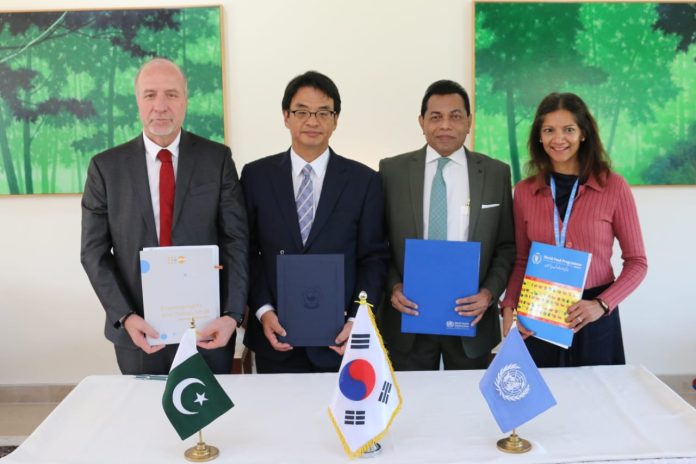
          A ceremony was held in this regards at the Embassy of the Republic of Korea in Islamabad, where the Korean Ambassador, H.E. Mr. Suh Sangpyo signed Memorandums of Understanding (MoUs) with the Representative of the United Nations Population Fund (UNFPA) Dr. Luay Shabaneh, the Representative of the World Health Organization (WHO) Dr. Palitha Mahipala, and the Deputy Representative of the United Nations World Food Program (WFP) Ms. Rathi Palakrishnan. Each of the United Nations Agencies received half a million USD aimed at providing lifesaving food assistance, continued healthcare to Afghan Refugees along with assisting specific Mother and Child, and Gender Based Violence (GBV) projects.

          Speaking at the ceremony, the representatives of the UN agencies expressed their gratitude to the Ambassador, Government of Korea and the Korean people for their steadfast support and humanitarian assistance to the plight of the Afghan Refugees.

Time to welcome Romania, Bulgaria in Schengen

Time to welcome

Romania, Bulgaria

in Schengen system

DNA

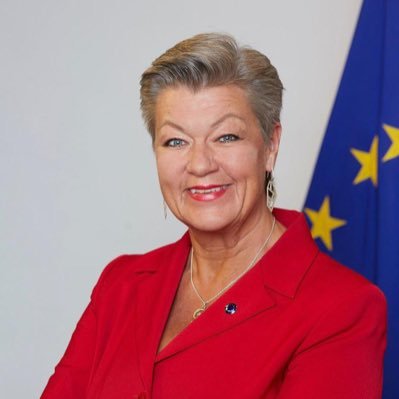
BRUSSELS: EU Commissioner Ylva Johansson has said it was time to welcome Romania, Bulgaria and Croatia in the Schengen system. She said, Schengen is the largest area of free movement in the world. 3,5 million people crossing borders every day – for work, studies, pleasure. One third of the EU population lives in border regions. Every year there are 24 million business trips, and travellers make 1.25 billion journeys in the area yearly.

420 millions across the continent are connected in the area of free movement.Schengen is one of the biggest achievements of the EU. Those connections grow the internal market, they grow economies. Schengen grows people’s standard of living – pure and simple.

22 MS and 4 associated countries are in Schengen. Now it is time to include three more. So today I present a Communication on a stronger Schengen with full participation of Bulgaria, Romania, and Croatia.

It is high time to say welcome!
It is high time to say

Schengen is Europe.
These three Member States deserve to feel fully European. To have the privilege of being a member you are bound by the Concil acquis. Which includes conditions,, Uniform Schengen visas, Cooperation with law enforcement in other countries, Connection to information systems, such as Schengen Information System

All this in order to maintain security within the area and in line with fundamental rights. Bulgaria, Romania and Croatia had strongly proven that they have met all these conditions.

They have the tools, structures, and procedures in place to manage external borders, including possible security threats.
They have highly trained and dedicated staff, state of the art infrastructure and knowhow.

Bulgaria and Romania invited a fact-finding mission last month with 17 experts from MS together with experts from the Commission, and from our agencies Frontex, Europol and Fundamental Rights Agency. They assessed the developments of the legal framework, governance, and tools to manage effectively the Schengen area.  

This was an answer to some remaining questions from some Member States. This mission, not only reported very positively, but also reaffirmed the two countries readiness to join Schengen. They have reinforced the application of the acquis.

For Croatia I would like to emphasize that, already last year, it was the first Member State to set up an Independent Monitoring Mechanism to guarantee the protection of fundamental rights at external borders.

Only two weeks ago the Croatian Government signed an agreement to renew and reinforce this mechanism.

The wait has been long, I should say too long. Expectations are high, rightly so – from authorities and at least from citizens.
The European Parliament has adopted several resolutions to support enlargement. Overwhelmingly voting to support.

Now, the Czech Presidency plan to have it on the agenda on the Home Affairs Council on 8 December. This will be a truly European decision. Schengen has survived the turbulence of recent years.These challenges have been surmounted because of a shared European spirit.
And this spirit must continue – in our modern world.

Because today Schengen is something very different from when it was created. We will soon introduce interconnected large scale IT systems, VISA information System, Schengen information system, we have Europol, we have Frontex.

And this is needed: we must have smart, strong, and interconnected control at our external borders. And intensive cooperation between law enforcement agencies and authorities. Bulgaria, Romania, and Croatia are ready join, and I should say the European Union is ready to welcome.

I expect MS to take this important, historical, positive decision. A moment of great pride, for the citizens of these countries.  And most importantly a decision in all our interests, she added.

SC dismisses petition against PTI’s long march

            ISLAMABAD, ):The Supreme Court on Thursday dismissed a petition against former prime minister and chairman Pakistan Tehreek-e-Insaf (PTI) Imran Khan’s long march towards Islamabad.

A three-member SC bench headed by Chief Justice Umar Ata Bandial and comprising Justice Ayesha A Malik and Justice Athar Minallah heard the petition of former president of the Supreme Court Bar Association Kamran Murtaza against PTI’s long march.

During the course of proceedings, Kamran Murtaza argued that according to Fawad Chaudhry, the long march would reach Islamabad on Friday or Saturday and this could affect normal life in the federal capital. Long march was the right of PTI but the rights of common man should not be affected, he added.

Justice Ayesha Malik inquired whether the government had made any mechanism to regulate the protests.

Justice Athar Minallah remarked that it was a matter for the executive and advised the petitioner to approach them. He said that the judiciary could intervene only in exceptional circumstances.

He asked why should the court interfere when the administration could control the situation?

Senator Kamran Murtaza said that the matter had gone too far as one person was killed in PTI’s long march.

Justice Ayesha Malik inquired that PTI’s long march has been going on for a long time, had he approached the administration?

She asked what was haste in the case of long march and what was the negligence of the administration?

Senator Kamran Murtaza said that an entire province had been paralyzed due to the long march.

Justice Athar Minallah said that if someone violated the laws, the executive had wide powers.

He asked would not the administration and parliament be weakened by the intervention of the judiciary?

Justice Ayesha Malik asked the petitioner to mobilize the administration to play its role. Every day there were protests in many places including Parliament in Islamabad, she said and asked had he ever approached the courts against other protests?

She asked why the intervention of the court was required only in the long march of a particular political party.

Chief Justice Umar Ata Bandial said that the petitioner had mentioned past violations in the application. The Long March was a political issue that could be solved politically, he added.

He said that interference in such issues created a strange situation for the court.

Addressing the petitioner, the Chief Justice said that he (Kamran) had mentioned an audio in his application which mentioned bringing weapons. Audio was true or false but it could disturb the law and order situation, he added.

He asked did the people in the long march of May 25 had weapons? The right to protest was not unlimited but subject to constitutional limits, he added.

The Chief Justice said that the request for H-9 ground was given for PTI’s May 25 long march. When the administration refused to give H-9 ground, the Supreme Court intervened, he added.

He observed that despite the allocation of the H-9 ground, the crowd went to D-Chowk.

Addressing the petitioner, the Chief Justice said that he wanted the Supreme Court to play the role of Deputy Commissioner. Apparently, the court’s intervention in the case of Long March would be premature, he added.

Senator Kamran Murtaza said that it seemed that the administration could not control the situation. Justice Athar Minallah while talking to Kamran Murtaza said that he was a senator and he should strengthen the parliament but he had approached the court on the basis of assumption.

Kamran Murtaza said that he had approached the court in a personal capacity, on this Justice Athar Minallah said that how could he believe that he was also a part of the government and had come in a personal capacity.

The court asked Additional Attorney General Aamir Rehman whether the administration had taken any decision regarding the venue for PTI’s long march.

The Additional Attorney General said that a request has been received from PTI and pleaded the court to grant half an hour time as he would inform the court after receiving information from the relevant forum. He said that a similar case was also pending in the Islamabad High Court.

The Additional Attorney General informed the court that the administration had asked the PTI to hold a rally in Rawat. The administration sought an affidavit from the PTI, which had not yet been filed, he added.

Chief Justice Umar Ata Bandial said that if there was a clear threat of constitutional violation, the judiciary would intervene. The other party could have its own position on the violations, he added.

He said that the matter became complicated for the court on violation of Supreme Court orders as court orders were for implementation.

When the hearing resumed after a break, Justice Athar Minallah said that petition had become ineffective.

Kamran Murtaza said that he wanted judicial intervention to maintain law and order in the country.

Justice Athar Minallah inquired if he was saying that the situation had gone beyond the control of the administration.

Justice Ayesha Malik asked whether the federal government did not know how to fulfill its responsibility. She questioned what could the Supreme Court do in administrative matters?

Justice Athar Minallah remarked that the state was powerful and empowered. The bench could understand that he was worried about the current situation. The government could stop the protest anywhere and every citizen was affected by such a situation, he added.

He said that today’s headline was about the attack in Bajaur and Lakki Marwat which affected the entire nation.

The Advocate General said that the Federation had also written a letter to Punjab under Article 149 on November 5. The administration had asked PTI about the date, time and place, which was not answered, he added.

He alleged that PTI talked about bloodshed before the Wazirabad incident and after the Wazirabad incident, the administration refused to allow PTI to enter Islamabad. The case on the permission of the rally in Islamabad was pending in the Islamabad High Court, he added.

Justice Athar Minallah remarked that the court wanted peace in the country, not chaos. The court did not want to give an order that was premature, he added.

He said that the letter of the Federation to the provinces under Article 149 was a very serious matter.

The bench remarked that there was no reason for the court to issue the order after the arguments of Advocate General Islamabad.Later, the court dismissed Senator Kamran Murtaza’s petition to stop the PTI

Pakistan’s annual growth can fall 18-20% by 2050: WB

Pakistan’s annual GDP can

fall 18-20% by 2050: WB

                ISLAMABAD, Nov 17 (dna):Pakistan’s annual Gross Domestic Product (GDP) is at risk of falling by 18 to 20 percent by 2050 due to the combined risks from the intensification of climate change and environmental degradation in the country if the climate change issues are left unaddressed.

“The combined risks from the intensification of climate change and environmental degradation, unless addressed, will further aggravate Pakistan’s economic fragility; and could ultimately reduce annual GDP by 18 to 20 percent per year by 2050, based on the optimistic and pessimistic scenarios”, a report recently published by the World Bank said.

Between 6.5 and 9.0 percent of GDP will likely be lost due to climate change (in the optimistic and pessimistic scenarios, respectively) as increased floods and heatwaves reduce agriculture and livestock yields, destroy infrastructure, sap labour productivity, and undermine health, the report further said.

Additionally, water shortages in agriculture could reduce GDP by more than 4.6 percent, and air pollution could impose a loss of 6.5 percent of GDP per year.

The use of water for non-agricultural purposes is likely to increase significantly with climate change. Under a high-growth (4.9 percent per year) and high-warming (3°C by 2047) scenario, water demand is projected to increase by almost 60 percent, with the highest rates of the increase coming from the domestic and industrial sectors, the report said.

It added that climate warming will account for up to 15 percent of this increase in demand. This heightened demand will result in unintended consequences that deprive downstream areas of water rights. The competition among sectors will necessitate inter-sectoral tradeoffs that will likely be made at the expense of water for agriculture.

It is projected that in the next three decades, about 10 percent of all irrigation water will need to be repurposed to meet non-agricultural demand. Freeing up 10 percent of irrigation water without compromising food security will be a complex challenge that will require substantial policy reforms to incentivize water conservation and increase water use efficiency in the agricultural sector and a shift away from water-thirsty crops as well as better environmental management.

The projected costs of a forced reallocation of water out of agriculture, to meet non-agriculture demands, without such steps, could reduce GDP in 2047 by 4.6 percent. The losses projected here are thus the costs of forced reallocation of water to serve other urgent needs, including allocations for water, sanitation, and hygiene (WASH) and urgent environmental flows to sustain critical ecosystem services.

Damage induced by climate-related extreme events will likely have economy-wide impacts on growth, fiscal space, employment, and poverty. Global warming and extreme events affect economic activity through multiple transmission channels: impacts on lives, on infrastructure and assets, and on livelihoods, which can result in lost economic growth, worsening poverty and longer-term threats to human capital and productivity. Existing macro models can help assess the expected scale of such events.

The report added that household poverty is expected to decline over time, but even a 9 percent decline in GDP by 2050 is enough to stall poverty reduction, with disproportionate impacts on rural households. By 2030, the urban poverty rate is expected to be half that of rural areas. By 2050, urban poverty is projected to decline further, to 10 percent, while rural poverty remains in the 25–28 percent ra

Pakistan slams Indian media’s ‘disingenuous’ reporting on DG IAEA’s comments

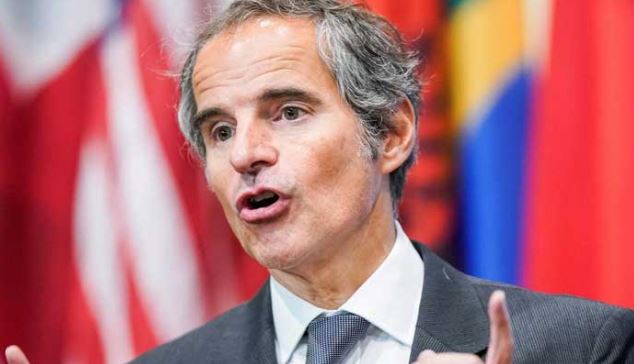
ISLAMABAD, NOV 16: Pakistan Wednesday deemed Indian media’s report a “disingenuous attempt” for misreporting Director General International Atomic Energy Agency (IAEA) Rafael Mariano Grossi’s response to a query about the firing of India’s missile being fired into Pakistan on March 9 this year.

The Indian media reported that the BrahMos nuclear capable missile fired into Pakistan’s territory from India was not a cause for any specific concern for the international nuclear watchdog.

The Foreign Office, in its statement, said that the report is a disingenuous attempt by the Indian state-sponsored media to absolve their country of its “irresponsible nuclear behaviour” by directing the question DG IAEA.

“The available transcripts show that DG IAEA responded in negative when asked whether the IAEA had sought information from the Indian government on the incident. It should have been qualified by stating that IAEA has no mandate on such matters,” the statement read.

Pakistan stated that the DG’s response cannot be “purposely misinterpreted” to “trivialise” the incident of a nuclear-capable BrahMos missile fire with grave implications for regional and global security.

It added that the incident has raised several questions about India’s conduct as a nuclear state including, whether it was actually an accident.

“India also needs to answer questions about the underlying intentions, technical features and reliability of the missile system, safety, security and nuclear command and control protocols, and the presence of rogue elements in the Indian military,” the Foreign Office said in its statement.

Pakistan also demanded India to explain several repeated incidents of nuclear and radioactive material theft and illicit trafficking, which are more relevant to the IAEA mandate.

“It was expected to report these nuclear security related incidents under the IAEA Incidents and Trafficking Database,” the statement read.

Pakistan said that the critical questions, which remain unanswered, should continue to be of concern to the international community.

India misreporting DG IAEA

Indian media outlet, The Indian Express, had claimed that the IAEA did not see the misfire of the missile as a cause of specific concern and that the matter did not raise questions on safety of nuclear material and weapon in India.

“Rafael Mariano Grossi, the director general of International Atomic Energy Agency, told The Indian Express in an interview at COP27 climate change meet that the incident was not viewed as a risk and there had been no consultation with the Indian government on this issue,” The Indian Express wrote in its news story on November 14.

According to the publication, Grossi said “no, we didn’t” when asked if the IAEA sought information about the incident from the Indian government.

It added that the DG responded in negative to a question about doubts being raised on the safety of India’s nuclear assets.

FM reassures Pakistan’s firm support to Turkiye in fight against terrorism

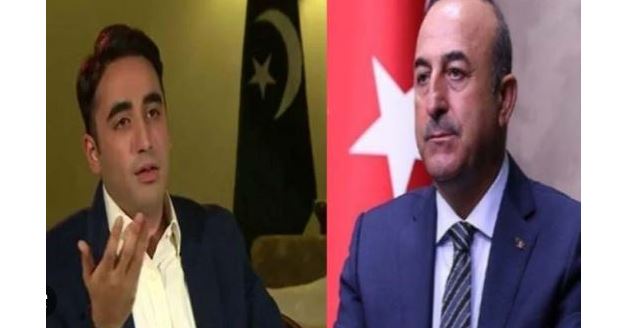
ISLAMABAD, NOV 16 (DNA) — Foreign Minister Bilawal Bhutto Zardari on Wednesday reassured Pakistan’s firm support to Turkiye in its fight against terrorism.

The foreign minister spoke with his Turkish counterpart Mevlut Cavusoglu to express condolences on Istanbul terrorist attack, Foreign Office Spokesperson posted on his Twitter handle.

On Sunday last, at least six people were killed and 81 others wounded in an explosion, in a busy shopping street of Taksim Square area of central Istanbul. =DNA

PTI waiting for next army chief

Tehtreek-e-Insaf wants to negotiate with the new military establishment

Special Correspondent

ISLAMABAD: The Pakistan Tehreek-e-Insaf is waiting for the arrival of the new army chief then it will decided as to when its march shall enter Rawalpindi or Islamabad.

According to well informed sources the PTI Chairman Imran Khan has told his party leaders that they have to wait for the new appointment no matter who steps into the shoes of the outgoing army chief. The party believes there was no point in talking to the outgoing establishment because it cannot help them anymore.

The sources say the government has made up its mind to announce the new army chief more likely on November 20. If it so happens then the PTI long march is expected to enter Rawalpindi on November 21.

Sources claim the government has also decided the name of the new army chief and final announcement shall be made after the military forwards a summary to the government in this regard.

According to sources the government also plans to amend the Pakistan Army Act in order to do away with the clause that gives government right to reappoint army chief and the chairman Joint Chiefs of Staff committee. If the amendment is approved then the word reappointment shall be replaced with retention, and the retention may be for one week, one month and so on and so forth. The reappointment means a full three years term.

According to this amendment the government can also extend tenure of any officer whose retirement draws near but the government wants to retain him. As the army has announced time and again that it will no longer be part of any political activity, therefore if the incoming army chief remains neutral then the question is how these two forces i.e PTI and the incumbent alliance would settle their issues.

If Lt General Asim Munir becomes the army chief then it will be difficult for the PTI to ask him for any role since the PTI Chairman had publicly announced he may not like this appointment, though later he changed his stance by saying his party had nothing to do with this appointment and it would welcome whosoever assumes this responsibility.

In the given circumstances it appears as if the PTI had to do a lot of toil in order to get its demands met including holding of the early elections. Analysts believe, when a general is elevated to the rank of army chief then he only belongs of his institution.

Centre not to accept further PTI MNAs’ resignations

ISLAMABAD – The Federal government on Wednesday decided not to accept further resignations of Pakistan Tehreek-e-Insaf (PTI) MNAs.

Sources privy to the matter said that the centre took a U-turn over PTI’s resignations issue, and decided not to accept further resignations.

It is pertinent to mention that on July 28, the National Assembly speaker Raja Pervaiz Ashraf accepted the resignations of 11 Pakistan Tehreek-e-Insaf (PTI) MNAs.

The PTI lawmakers had resigned en masse on April 11, two days after former Prime Minister Imran Khan was ousted from the top office after the no-confidence motion moved by the joint opposition in the parliament against him succeeded.

The Speaker accepted the resignation by exercising the powers conferred under Clause (1) of Article 64 of the Constitution of Pakistan.

The National Assembly Secretariat has also issued a notification to this effect.

According to a spokesperson of the National Assembly, notifications regarding the acceptance of resignations have been forwarded to the Election Commission of Pakistan for further action.

Those whose resignations were accepted include Shireen Mazari, Ali Muhammad Khan, Fazl Muhammad Khan, Shaukat Khan, Fakhar Zaman Khan, Farrukh Habib, Ijaz Shah, Akram Cheema, Jamil Ahmad Khan, Shandana Gulzar and Abdul Shakoor Shaad.

Gen Bajwa visits IDEAS-2022 at Karachi Expo Centre

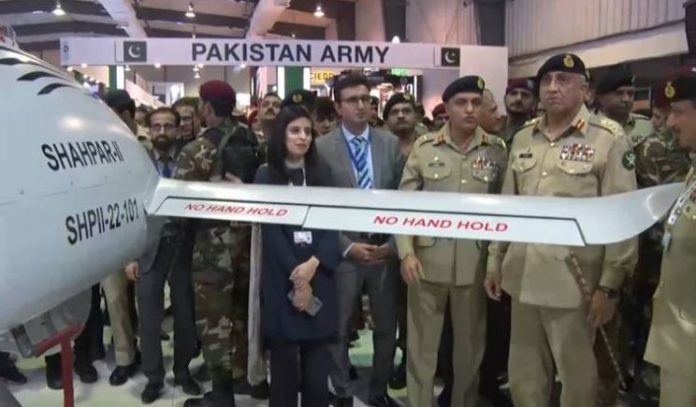
KARACHI, NOV 16 /DNA/ – General Qamar Javed Bajwa, Chief of Army Staff (COAS) visited Karachi today. COAS witnessed various stalls at IDEAS-2022 at Karachi Expo Centre.

COAS also interacted with cross section of visitors and delegates and held separate meetings with various visiting delegates including Bahrain, Italy, Srilanka, Libya, Zimbabwe and UAE.

Later, COAS visited Malir garrison where he laid floral wreath at Martyr’s Monument. During his farewell address to officers and troops COAS lauded their professionalism and devotion to duty.

He also praised the troops for their untiring rescue and relief efforts to assist the people during recent heavy floods.

Earlier on arrival, COAS was received by Corps Commander Lieutenant General Muhammad Saeed.

FO rejects Indian remarks over BrahMos missile misfire into Pakistan

ISLAMABAD, NOV 16 /DNA/ – In response to a query regarding Indian media reports quoting Director General International Atomic Energy Agency (IAEA) that the firing of BrahMos nuclear capable missile into Pakistan’s territory from India on 9 March 2022 was not a cause for any specific concern for the IAEA, the Spokesperson stated the following:

The report is a disingenuous attempt by the Indian state-sponsored media to absolve India of its irresponsible nuclear behaviour by directing this question at the Director General IAEA. 

The available transcripts show that DG IAEA responded in negative when asked whether the IAEA had sought information from the Indian government on the incident. It should have been qualified by stating that IAEA has no mandate on such matters.

The Director General’s response cannot be purposely misinterpreted to trivialize the incident of a nuclear-capable BrahMos missile fire with grave implications for regional and global security.

The incident has raised several questions about India’s conduct as a nuclear State including, whether it was actually an accident. India also needs to answer questions about the underlying intentions, technical features and reliability of the missile system, safety, security  and nuclear command and control protocols, and the presence of rogue elements in the Indian military. 

India needs to explain several repeated incidents of nuclear and radioactive material theft and illicit trafficking that are more relevant to the IAEA mandate. It was expected to report these nuclear security related incidents under the IAEA Incidents and Trafficking Database.    

These critical questions, which remain unanswered, should continue to be of concern to the international community.

Stay Connected

64FansLike
60FollowersFollow

Latest Reviews

Exchange Rates

USD - United States Dollar
EUR
1.17
GBP
1.34
AUD
0.67
CAD
0.73