Home Blog Page 1422

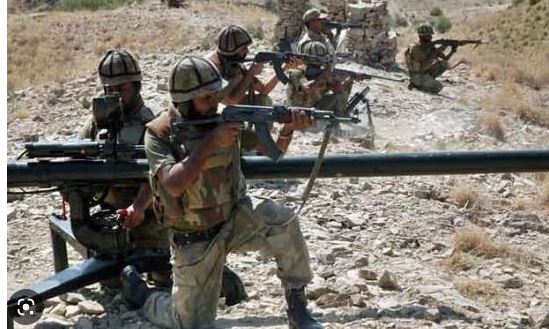
Pak soldier martyred in exchange of fire with terrorists

RAWALPINDI, DEC 5 /DNA/ – Security Forces conducted an Intelligence Based Operation( IBO) in Jhallar Algad, North Waziristan District.

During the conduct of the operation, intense fire exchange took place between security forces and terrorists. Troops effectively engaged the terrorists’ location. Resultantly, 5 x terrorists got killed. Weapon and ammunition was also recovered from the killed terrorists.

 The killed terrorists remained actively involved in terrorist activities against security forces and killing of innocent citizens.

However, during intense exchange of fire, Sepoy Nasir Khan (age 25 years, resident of South Waziristan District) having fought gallantly, embraced shahadat.

Sanitization of the area is being carried out to eliminate any other terrorists found in the area.

The SCO and the Strategic Perspective of Central Asia

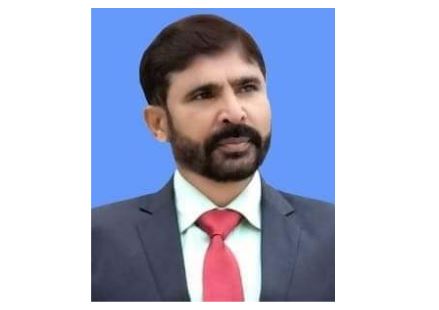
Dr. Muhammad Akram Zaheer

The Shanghai Cooperation Organization is a leading organization for political, economic, and security concerns. Security challenges of the post-Cold War era necessitate new thinking of cooperation and security at the state level. In 1990, China decided to undertake a more active role in developing a new forum to address security problems, especially on its periphery. The converging policies of China and Russia founded the forum of the Shanghai Cooperation Organization. China and Russia are two major members of the organization. As the primary leader of the organization, China offers economic cooperation to Central Asian states whereas Russia offers political-military cooperation. The SCO brought together China, Russia, and the Central Asian states with six dialogue partners and

four observers. The membership was extended further outwards with India and Pakistan as full members of the organization. Turkmenistan is the only Central Asian state which is not a member of the SCO and sends her representative as a guest due to endless neutrality.

The initial mandate of the organization was to promote regional security and protect member states from non-state security threats. The SCO’s policymakers always argue that the organization is not an alliance and not a balancing tool against the West or any other state. In the region, China is a key player of the Central Asian states’ economies, especially after the development of the One Belt One Road, and Russia is still acting as an elder in Eurasian politics and security. By contrast, the United States started disengaging from the region under the Obama Administration, but under the administration of Trump, there are signs that US forces may stay in Afghanistan. The geographic reach of the organization significantly expanded to India and Pakistan. Security problems and conflicts, especially the issue of Kashmir, became the extensive agenda of the organization. China was worried about the dilution of her role in the SCO after the inclusion of India while Russia understands that the inclusion of India as a full member of the organization would be a check on Chinese influence within the group, unlike India Russia relations which have been cool since the last decade. India understands that Chinese economic diplomacy in South Asia, particularly CPEC, may be a plan against Delhi to contain her regional strategic interests. India is the only country in the SCO which does not endorse the Chinese project BRI (Belt and Road Initiative).

In this context, India has launched the project of developing the Iranian seaport of Chabahar to counter Chinese influence in the Indian Ocean. India and Pakistan have issues relating to the current border situation and Kashmir. That’s why during the Astana Summit, the Prime Ministers of India and Pakistan could not go beyond customary greetings. However, there are differences of interests among the SCO countries, but they are facing some common threats regarding terrorism, extremism, separatism, and drug trafficking. Some typical threats originate from the vicinity Afghanistan. Kazakhstan is facing these threats and has balanced her foreign and security policy towards major powers of the region along with Beijing and Moscow. It can do business with the Russian Federation through the CSTO and with China through the SCO. Within the framework of SCO mechanisms, cooperation is expanding in the law enforcement and security realm, oil and gas pipeline security, counterterrorism, and counter-drug trafficking. Kazakhstan has played active role in several issues within the SCO. The Foreign Minister of Kazakhstan called on NATO to establish dialogue with the SCO in February 2013. It was a message that the SCO was not an anti-NATO bloc. During the SCO Dushanbe Summit in 2014, the Presidents of Kazakhstan and Tajikistan stressed that the SCO member states should solve existing border issues and ensure food supply security. In addition, they noted the issue of water shortage that might affect the stability of the region. In December 16, 2017, Bishkek-Moscow signed prominent documents for cooperation. This document is a vital document for Kyrgyzstan’s survival because it is a weak state without energy resources. For the same reason, Kyrgyzstan joined the SCO, as well as the CSTO military alliance led by Russia. The concept of Kyrgyz foreign policy is focuses on cooperation with neighbors and the SCO. Kyrgyzstanjoined the Shanghai Cooperation Organization after the security assurance of the primary member of the forum.

Russia wanted cooperation between the SCO and CSTO in 2003, but Uzbekistan threatened to leave the SCO due to its aversion of the CSTO. Uzbekistan left the CSTO in 1999. Uzbekistan does not participate in SCO military exercises, which Tashkent suggested lessen the security of Shanghai Cooperation Organization members. The Uzbek President again demonstrated an ambivalent and independent nature of his country in regional and international politics because its needs a safe transit route for foreign trade. The SCO forum is a vital source to pursue this objective as Uzbekistan does not like to be a part of any military alliance and organization such as the CSTO. It wants to be neutral. Although Uzbekistan and Russia have a difficult relationship, both are larger foreign trade partners. Karimov had previously broken Uzbek policy regarding the resolution of the Ukraine Crisis and had criticized Mosow, but then stated that Russian interests should be taken in to account. However, Uzbekistan fears that the SCO might develop in the wrong direction and suggested that the SCO should remain outside any bloc and militarypolitical alliance.

The Shanghai Cooperation Organization has developed as a border arm control organization via its regional counterterrorism body. Cooperation among the members and observers is at a great level but lacks common targets. The wideranging agenda of the SCO and diverse membership weaken its capabilities and potential. The member states and observers of the organization have their own agenda and national interests. For instance, Russia is keen to reestablish its previous status in Central Asia as well as its superpower one at the international level. All the while, China is seeking markets in Central Asia for expanding its economy and energy resources to keep her industries going. Some regional states consider the organization as a guarantee for survival, especially with the protection of China and Russia. The mixture of divergent objectives of each member and observer of the organization is not common. There is no limit of divergent objectives to aforesaid China-Russia relations but they are found within the SCO. For instance, China-Kazakhstan relations were also disturbed during the Peace Mission drills in 2007. However, Kazakhstan was a member and participant of the exercises, but could not conduct them due to internal problems of legislation and thus did not allow Chinese troops to go through her territory. A year later, Kazakhstan offered to host SCO war games. Another issue is the rivalry of Kazakhstan and Uzbekistan. During Peace Mission 2012, Uzbekistan didn’t participate in exercises and refused the request of Kazakhstan for passing through her soil. The Uzbek troops made a detour through Kyrgyzstan to reach Tajikistan. These issues are a question mark on the unity of SCO members. It looks that the organization is still unable to resolve some basic issues such as military transit via member state territories. Such differences and divergence of national interests and present cooperation among the states might change into disputes when considering the tense relations between Pakistan and India.

The Shanghai Cooperation Organization is a significant forum for the member states. The Central Asian countries are expecting that the SCO forum is not a single country-dominated organization and that they would play a significant role within the forum. Furthermore, SCO partners feel endangered by the China-Russia tandem. Both China and Russia have their own independent interests. In fact, the organization is dominated by the two great powers of the region. They also justifiably have an effect on the Central Asian states. Both countries can challenge each other if one undertakes an action which causes instability in the region. Such an environment is beneficial for the member states of Central Asia as well as South Asia. Hence, the Shanghai Cooperation Organization is an advantageous organization towards its members and observer states. There are opportunities for the member states to explore business and economic cooperation with one another. The Central Asian states pursue their own national interests within the Shanghai Cooperation Organization. China-Russia are the leading powers that contest each other and therefore are incapable of unilaterally ruling the other members of the organization. The SCO is the best forum for the regional states; moreover the SCO demands lesser rule than the CSTO. The CSTO is under the control of Russia and without China as a counter-balance. Moscow has superiority in the CSTO and limits the liberty of the member states. The SCO is providing a platform for bilateral arrangement and lot of liberty for its member states. Kyrgyzstan and Tajikistan are depending on Russia to fulfill their security and energy needs. On the other hand, Kazakhstan and Uzbekistan do not depend on Moscow for security but have intentions of friendly and pragmatic relations. Beijing and Moscow are eager to share the burden of security of the region at the expense of their own strategic interests without demanding any domestic transformations from the regional states. Consequently, the SCO has emerged as a convenient place for the member states, particularly the Central Asian ones, to preserve the domestic status quo by accommodating the ambitions of China and Russia within a single framework.

Islamabad Citizen Club should be restored immediately – Waqar Bakhtawari

Residents of F-7 F-8, F-10 and G-9 near Fatima Jinnah Park can make better use of this facility.

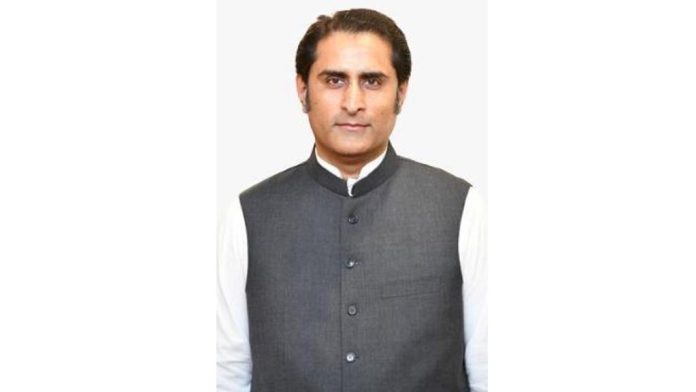
ISLAMABAD, DEC 5 /DNA/ – Waqar Zafar Bakhtawari, prominent entrepreneur of Islamabad and president of Chakwal Chamber of Commerce and Industry, has demanded the Chairman CDA to immediately restore the Islamabad Citizen Club built inside F-9 Park . Citizens should be provided the facility to use it.

He further said that the building and all its infrastructure and equipments built over many years are slowly decaying .  With the establishment of Islamabad Citizen Club, the residents of F-8,f-7 F-9 and G9  will be able to have club facilities in their nearest Jinnah Park. He said that the Islamabad Citizen Club was built with the taxes of the citizens of Islamabad and it should be used for the purposes for which it was built.

Pak vs Eng: England beat Pakistan by 74 runs in Rawalpindi Test

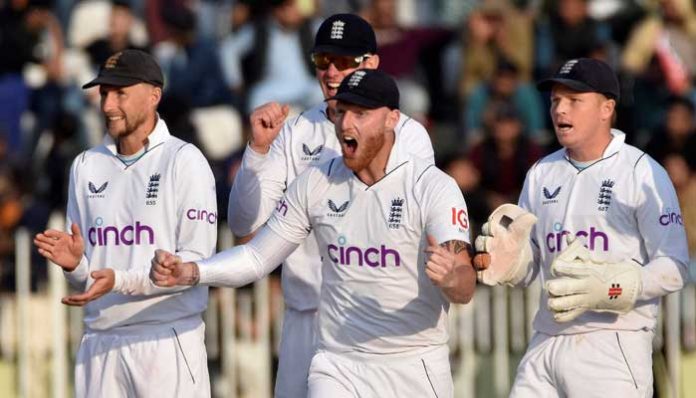
RAWALPINDI: England beat Pakistan by 74 runs in the opening test in Rawalpindi in fading light on Monday, to take a 1-0 lead in the three-match series.

England amassed 657 in their first innings and declared their second on 264-7, setting Pakistan an improbable victory target of 343 on a docile track.

Pakistan fought gamely and put on 268 before being all out in the absorbing final session, with Saud Shakeel topscoring for them with 76.

James Anderson (4-36) and Ollie Robinson (4-50) were England’s most successful bowlers, while Jack Leach claimed the winning wicket.

US funded hydropower project brings light to Pakistani Homes

ISLAMABAD, DEC 5 /DNA/ – U.S. Ambassador Donald Blome joined Prime Minister Shahbaz Sharif at Mangla Hydro Power Station today to celebrate completion of a $150 Million U.S.-funded project to refurbish and improve the station’s power generation capacity. The project adds 300 megawatts of additional power to the station’s capacity, enough to provide power to 100,000 households and 2 million Pakistanis. The U.S.-funded project in collaboration with private firms and the Pakistan Water and Power Development Authority (WAPDA) is the latest project in a long history of U.S. assistance to help Pakistan develop clean, renewable energy.

“This project builds upon the foundational partnership of the original construction. We are proud of our enduring efforts to help extend Mangla Dam’s useful service as a reliable source of clean energy and irrigation water,” said Ambassador Blome. “When Mangla Dam was built in the 1960s by U.S. engineering firms, it was one of the largest earth-filled dams in the world. Not only is it an impressive achievement in engineering, it is also an excellent example of the Green Alliance between the United States and Pakistan.”

The United States invested in Pakistan’s electrification more than 50 years ago, constructing dams and hydropower plants that continue to provide reliable, efficient, and clean energy today. These projects dramatically increased Pakistan’s electricity capacity – today powering the homes of more than 50 million people. The dams also help to prevent catastrophic water shortages, mitigate the effects of flooding and expand agricultural productivity. The Mangla and Tarbela Dams alone can store about 10 percent of the water passing through Pakistan. Gomal Zam Dam irrigation doubled agricultural output in the surrounding area, providing food and economic opportunities to thousands of people, and helped save lives and livelihoods during the recent flooding.

Senior journalist’s son prime suspect in wife’s alleged murder

Senior journalist Ayaz Amir’s daughter-in-law, Sara Bibi, was allegedly murdered in Islamabad’s Chak Shehzad suburb, police said on Friday.

The 37-year-old was living at a farmhouse in the area where she was found dead this morning. Reportedly, she was murdered with a dumbbell and her husband, Shah Nawaz, is the prime suspect in the case.

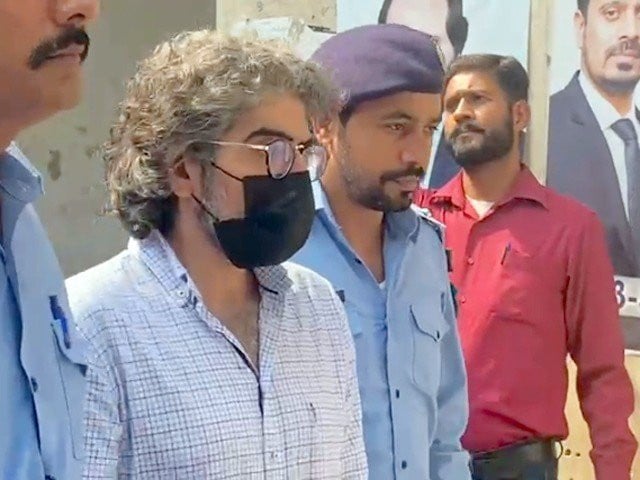
Police and investigation teams reached the crime scene and the journalist’s son was arrested after earlier fleeing from the crime scene.

However, the police have said that the FIR will be registered after an investigation has been conducted.

“The incident is being investigated,” a police spokesperson said while reserving further comments.

Ayaz Amir, talking to the media, expressed his shock and pain over the news.

“I would wish this upon no one,” he said “When I got the news…what can I say?” he added finding himself at a complete loss of words.

“It is something that shakes you to the bones,” he confessed. However, Amir declined to reveal further details about the incident, saying they were “legal matters”.

Violence against women in Punjab is on the rise for the past few years, according to a report compiled by Punjab Police earlier.

A report titled ‘Tracking Crimes against People – A Numeric Tale of Human (In)Security’ prepared by Sustainable Social Development Organisation, a rights group, stated that a 200 per cent increase in cases of violence against women across Pakistan was reported in the three months between January 2020 to March 2020.

The statistics showed that in a number of cases where crimes were committed against women, close relatives of the victims were often the perpetrators.

China Honors Prof. Dr. M. Iqbal Choudhary with China Friendship Award

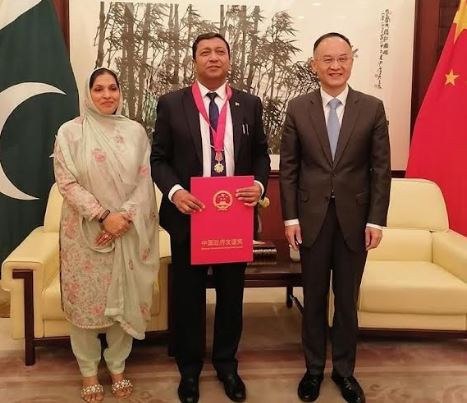
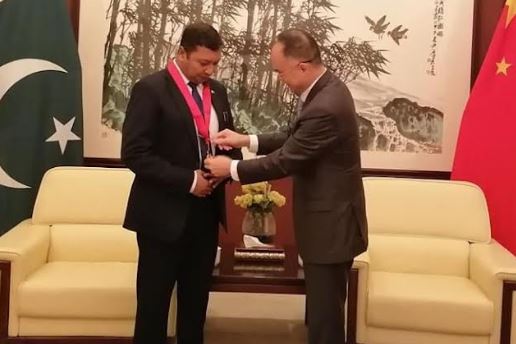
ISLAMABAD, DEC 5 /DNA/ – Prof. Dr. M. Iqbal Choudhary, Coordinator General COMSTECH/ Director ICCBS honored by the government of China with the Chinese Government’s Friendship Award. The award was presented by His Excellency Mr. Nong Rong, Ambassador of the People’s Republic of China in Pakistan in a special ceremony held at the Chinese Embassy in Islamabad.

Chinese Government’s Friendship Award is the People’s Republic of China’s highest award for “foreign experts who have made outstanding contributions to the country’s economic and social progress”. The winners of this award have been selected by the State Administration of Foreign Experts Affairs (SAFEA) under the State Council. The award is conferred as part of the celebrations for the National Day of the People’s Republic of China on October 1 and it consists upon a medal and an award certificate.

Prof. Choudhary has played a key China-Pakistan cooperation in the field of science and technology, including establishment of Sino-Pakistan centers in various fields. This includes the national institute of virology at the PCMD, in collaboration of Wuhan Institute of Virology China.

Prof. Dr. Muhammad Iqbal Choudhary is a world renowned medicinal chemist. He has published 1,175 research papers in the fields of organic and bioorganic chemistry in international journals, 76 books and 40 chapters in books published by major US and European press. He has secured 40 US patents so far.

Prof. Choudhary’s work has been cited by the researchers from around the world over 30,000 times and his h-index is 80. By now 94 national and international scholars have completed their PhD degrees under his supervision.

Prof. Choudhary is D.Sc., Ph.D., and C. Chem. He has been awarded by different governments of Pakistan with Hilal-e-Imtiaz, Sitara-e-Imtiaz, and Tamgha-e-Imtiaz.

He has been elected fellow by world renowned science academies named Academy of Sciences for the Developing World, Islamic World academy of Sciences, Pakistan Academy of Sciences, Royal Society of Chemistry, and Chemical Society of Pakistan.

Prof. Choudhary has been honored by the President of Iran with Khwarizmi International Award, President of Azerbaijan, with ECO Award in Education and the Prime Minister of Pakistan with COMSTECH Award in Chemistry. He is Mustafa (PBUH) Prize Laureate. He has been given the prestigious title of “Distinguished National Professor” by the Higher Education Commission in 2004 and Meritorious Professor by the University of Karachi in 2013.

Prof. Dr. M. Iqbal Choudhary is currently serving as Coordinator General, COMSTECH and Director, International Center for Chemical and Biological Sciences, University of Karachi.

Main suspect ‘confesses’ to killing Sara Inam

ISLAMABAD:

Shahnawaz Amir, the prime suspect in the Sara Inam murder case, has confessed to killing his Pakistani-Canadian national wife, according to a charge sheet (challan) submitted by Islamabad police to the sessions court hearing the case.

According to the challan, the main accused told the police during the investigation that when Sara Inam did not send him money (sometime before her murder) she had a heated telephonic conversation with him and he divorced her on the phone.

The suspect told the police that after the divorce, Sara Inam reached Islamabad from Abu Dhabi on September 22.

The suspect told the police that she started arguing with him in the bedroom that night and demanded to return the money she had sent to him. On which, according to the police challan, the suspect first hit Sara Inam with a showpiece and injured her. When Sara Inam started making noise, the accused picked up a dumbbell and hit her several times on the head.

According to the challan, on the crime scene, Samina Shah, the mother of the main accused, told the police that her son had a fight with his wife Sara Inam and he killed her by hitting her on the head with a dumbbell. After the arrest, the main accused confessed that he killed his wife during a fight.

According to the challan, the main accused told the police that, he hid his wife’s body in a bathroom tub before it was recovered by the police on his identification.

According to the challan, the police also recovered the dumbbell with which the accused killed his wife. There were blood stains on the accused’s shirt, hands, and dumbbell. Five passports, five mobile phones and a copy of the marriage certificate were also seized from the accused, according to the police challan.

Shahnawaz was arrested by the police on September 23, on charges of murdering his wife, Judge Atta Rabbani will indict the main accused and his mother on Monday (today) and the trial will formally begin.

CDA assures to remove encroachments from markets

ISLAMABAD, DEC 5 /DNA/ – Faad Waheed, Senior Vice President, the Islamabad Chamber of Commerce & Industry said that the business community is facing great problems due to rising encroachments in markets and stressed that CDA should take urgent measures to address this major issue. He said that before launching operation against encroachments in any market, CDA should take the concerned Trade Association on board to resolve this issue amicably. He said that CDA should make one market as a model example for removal of encroachments. He said that Trade Associations of all markets are ready to cooperate with CDA in this campaign as it is in the interest of traders. He said this while talking to Shahjan Khan, Deputy Director General (Enforcement), CDA during his visit to Islamabad Chamber of Commerce and Industry (ICCI).

Engr. Muhammad Azhar ul Islam Zafar Vice President ICCI, Muhammad Ejaz Abbasi former President, Shehzad Shabbir Abbasi President F-6 Super Market, Abdul Rehman Siddiqui General Secretary F-7 Jinnah Super, Zahid Qureshi Secretary General I-8 Markaz, Abid Abbasi President G-10 Markaz, Raja Imtiaz from G-9 Markaz, Aftab Gujjar President G-11 Markaz, Zafar Iqbal President G-10/4, Ch. Irfan President Steel Fabricators I-10 Market, Khurram Khan President, Islamabad Restaurants Association and representatives of various other markets also highlighted the encroachment issue of their respective markets and assured that they would fully cooperate with CDA in their removal.

Speaking at the occasion, Shahjahan Khan, Deputy Director General (Enforcement), CDA assured that he would take Trade Associations of concerned markets on board to remove the encroachments as their removal would be beneficial for the traders and revive the beauty of the federal capital. He said that the Capital city is the face of Pakistan, but rising encroachments are creating problems for the business community and affecting the beauty of the city. He said that CDA has already done the survey of many markets to identify the violations as the civic body has adopted a zero-tolerance policy against encroachments and added that representatives of Market Associations should share their contact numbers with Enforcement Directorate so that they could be taken on board to address this major issue in markets. He said that three types of encroachments including pushcarts by outsiders in markets, violations by shopkeepers and constructions would be addressed by taking stakeholders on board. He said that efforts are being made to remove the pushcarts set up under Ahsaas Program from markets to a separate location. He said that CDA is working on a plan to remove all showrooms from markets to move them to suitable locations as these are creating nuance in the markets. He said that CDA has adopted the policy of publishing advertisements in print media and a campaign on electronic media would also be run on various issues including removal of encroachments. 

China Honors Prof. Dr. M. Iqbal Choudhary with China Friendship Award

Islamabad, December 5 (COMSTECH): H.E. Prof. Dr. M. Iqbal Choudhary, Coordinator General COMSTECH/ Director ICCBS honored by the government of China with the Chinese Government’s Friendship Award. The award was presented by His Excellency Mr. Nong Rong, Ambassador of the People’s Republic of China in Pakistan in a special ceremony held at the Chinese Embassy in Islamabad.

Chinese Government’s Friendship Award is the People’s Republic of China’s highest award for “foreign experts who have made outstanding contributions to the country’s economic and social progress”. The winners of this award have been selected by the State Administration of Foreign Experts Affairs (SAFEA) under the State Council. The award is conferred as part of the celebrations for the National Day of the People’s Republic of China on October 1 and it consists upon a medal and an award certificate.

Prof. Choudhary has played a key China-Pakistan cooperation in the field of science and technology, including establishment of Sino-Pakistan centers in various fields. This includes the national institute of virology at the PCMD, in collaboration of Wuhan Institute of Virology China.

Prof. Dr. Muhammad Iqbal Choudhary is a world renowned medicinal chemist. He has published 1,175 research papers in the fields of organic and bioorganic chemistry in international journals, 76 books and 40 chapters in books published by major US and European press. He has secured 40 US patents so far.

Prof. Choudhary’s work has been cited by the researchers from around the world over 30,000 times and his h-index is 80. By now 94 national and international scholars have completed their PhD degrees under his supervision.

Prof. Choudhary is D.Sc., Ph.D., and C. Chem. He has been awarded by different governments of Pakistan with Hilal-e-Imtiaz, Sitara-e-Imtiaz, and Tamgha-e-Imtiaz.

He has been elected fellow by world renowned science academies named Academy of Sciences for the Developing World, Islamic World academy of Sciences, Pakistan Academy of Sciences, Royal Society of Chemistry, and Chemical Society of Pakistan.

Prof. Choudhary has been honored by the President of Iran with Khwarizmi International Award, President of Azerbaijan, with ECO Award in Education and the Prime Minister of Pakistan with COMSTECH Award in Chemistry. He is Mustafa (PBUH) Prize Laureate. He has been given the prestigious title of “Distinguished National Professor” by the Higher Education Commission in 2004 and Meritorious Professor by the University of Karachi in 2013.

Prof. Dr. M. Iqbal Choudhary is currently serving as Coordinator General, COMSTECH and Director, International Center for Chemical and Biological Sciences, University of Karachi.

Stay Connected

64FansLike
60FollowersFollow

Latest Reviews

Exchange Rates

USD - United States Dollar
EUR
1.17
GBP
1.35
AUD
0.67
CAD
0.72