Home Blog Page 142

Economists architects of national policy building: Ahsan Iqbal

Economists architects of national policy building: Ahsan Iqbal

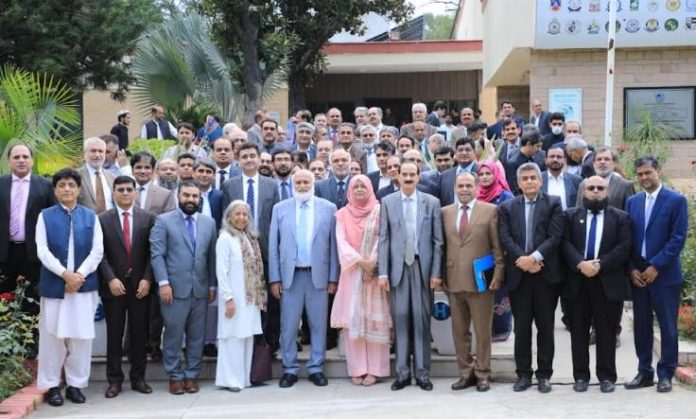
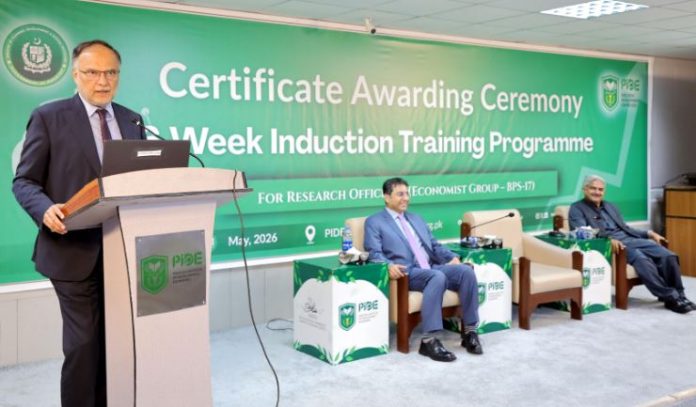
ISLAMABAD, MAY 13 /DNA/ – The Pakistan Institute of Development Economics (PIDE) hosted a Certificate Awarding Ceremony today to mark the completion of the “6-Week Induction Training Programme for Research Officers (Economist Group)” of the Ministry of Planning, Development & Special Initiatives.

Honorable Prof. Ahsan Iqbal, Federal Minister for Planning, Development & Special Initiatives, graced the occasion as the Chief Guest and distributed certificates to the newly inducted officers at PIDE’s Junior Combination Room, Islamabad.

In his keynote address, Prof. Ahsan Iqbal described the Ministry of Planning as the “development brain” of the government and urged the new cohort to see themselves as architects of nation-building, not just routine functionaries. He encouraged them to make a difference in policy making, he mentioned that Pakistan was once considered champion of reforms but due to frequent policy reversals and political regime changes allowed its neighbors to surpass it economically. He highlighted that Pakistan’s policy culture needs professionals who can implement practical policy solutions.

Declaring that humanity has entered a “techno-economy era” driven by artificial intelligence, he warned that changes now occur within months, not decades. Economists who remain anchored in industrial-era frameworks, he cautioned, will be left behind. The Federal Minister called on the officers to master technology economics, digital economics, environmental economics, and behavioral economics, in addition to traditional economic tools. He urged the officers not to manipulate data under political pressure, describing it as the “fuel of future development.” He reminded them that every economic indicator has a human cost: inflation is not just a percentage on a chart, but families struggling to afford food; a growth slowdown is not just a statistic, but unemployment and hopelessness for youth.

Dr. Nadeem Javaid, Vice Chancellor of PIDE, reiterated that economists are crucial for economic policy making because each number and statistic has a story behind it, knowing the people of the country is important for every economist. He further emphasized that the newly inducted research officers should be aware of the invisible “status quo forces” embedded in institutions that systematically resist change. He argued that competence without courage is insufficient: officers must be willing to voice dissenting analysis in policy meetings and respectfully challenge ineffective practices, even before senior colleagues. Warning against the professional drift, by which talented officers gradually become captured by routine and bureaucratic inertia, he urged the cohort to remain intellectually restless. In the new global competition, he noted, nations win through the quality of their ideas and institutions.

Dr. Imtiaz Ahmed, Chief Economist at the Ministry of Planning, told the officers that throughout a career, a person is recognized by the quality and sincerity of their work. He urged each participant to leave every position better than they found it, a standard that he said is the true measure of public service.

Dr. Nadeem Khan, Director of the Executive Development Center, PIDE, who designed the programme, described its scale: 150 sessions over six weeks, structured around four pillars; knowledge, skills, behavior, and institutional exposure. Using inclusive pedagogy, the curriculum incorporated policy simulations, psychometric assessments, and practitioner-led sessions by economists, civil servants, and behavioral experts. Participants undertook field visits to the Ministry of Finance, the Ministry of Planning, and the Pakistan Bureau of Statistics, and each officer produced a supervised policy review paper with formal mentor feedback – an element rarely seen in public-sector induction programmes in Pakistan.

The Pakistan Institute of Development Economics (PIDE) is an autonomous research institution under the Ministry of Planning, Development & Special Initiatives, dedicated to evidence-based policymaking, economic research, and public-sector capacity-building in Pakistan.

Anita Khawaja of Sialkot awarded with German Federal Order of Merit

Anita Khawaja of Sialkot awarded with German Federal Order of Merit

ISLAMABAD, MAY 13 /DNA/ – Anita Khawaja, German citizen and resident of Sialkot, has been awarded the Cross of Merit (1st Class) of the Order of Merit of the Federal Republic of Germany by Federal President Frank-Walter Steinmeier.

Mrs. Khawaja, widow of the late Muhammad Anwar Khawaja, the Founder of Anwar Khawaja Industries, is decorated in recognition of her life-long commitment to improving the healthcare and education of football stitchers and other residents of Sialkot.

During a reception in Mrs. Khawaja’s honour, the medal of the Cross of Merit (1st Class) was handed over to her by Germany’s Ambassador to Pakistan, H. E. Ina Lepel. The event was attended by Mrs. Khawaja’s family and friends, other bearers of the Order of Merit of the Federal Republic of Germany living in Pakistan and by representatives of the national press.

 Born in Germany’s capital Berlin in 1941, Mrs. Anita Khawaja (nÈe Bade) first came to Pakistan through the “Dienste in Übersee” programme (“Service Abroad”) as a young nurse in 1971 to train midwives at the Christian Memorial Hospital and later also traditional birth attendants, thereby helping to substantially reduce infant and maternal mortality in the Sialkot District.

After a brief stay in Europe, she married the late Muhammad Anwar Khawaja in 1975 and continued her work for disadvantaged citizens. In 1982, Mrs. Khawaja set up an Under-Five Healthcare Clinic at the Bethania Hospital for the prevention of malnutrition, critical for the healthy development of children. She worked there until 1986. Simultaneously, Mrs. Khawaja was appointed as a social worker for the women of the District Jail. In 1996, Anwar Khawaja Industries requested Mrs. Anita Khawaja to develop their corporate social responsibility programme.

Thanks to the Select Anwar Khawaja Industries Health and Education Programme (SAHEP), tens of thousands of workers (mostly women) and their families have gained access to free healthcare and education (including adult literacy).

Targeting education to each child’s individual needs has significantly contributed to reducing child labour. Mrs. Anita Khawaja continues to preside SAHEP to this day. Her tireless efforts to improve the lives of the workers and of the people of Sialkot continue.

Saudi Arabia reaffirms support for Gulf States

Saudi Arabia reaffirms support for Gulf States

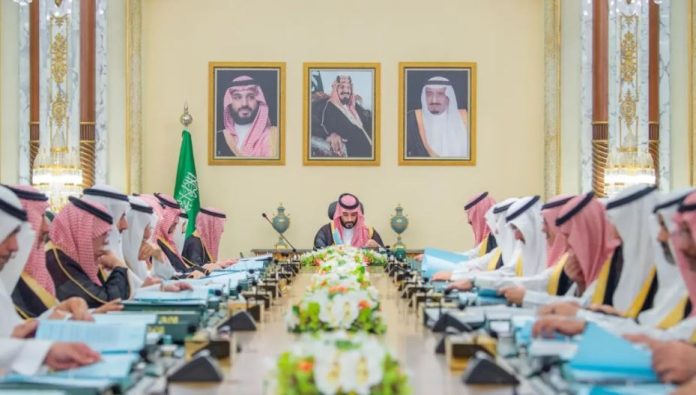
JEDDAH, MAY 12: Saudi Prince Mohammed bin Salman bin Abdulaziz Al Saud, Crown Prince and Prime Minister, chaired the Cabinet session held Tuesday in Jeddah.

The Crown Prince briefed the Cabinet on the contents of the two messages he received from President Mohamed Cheikh El Ghazouani of the Islamic Republic of Mauritania and Prime Minister Sanae Takaichi of Japan.

Addressing regional developments, the Cabinet emphasized its condemnation of the treacherous attacks on the territories and territorial waters of the United Arab Emirates, the State of Qatar, and the State of Kuwait, and reaffirmed the Kingdom of Saudi Arabia’s support for the Gulf states and the measures they are taking to protect their security and stability.

In a statement to the SPA following the session, Minister of Media Salman Al-Dossary said that the Cabinet discussed the latest developments in strengthening cooperation between the Kingdom of Saudi Arabia and various countries and international organizations.

It commended the outcomes of the third meeting of the Saudi-Turkish Coordination Council, noting that it reflected a shared interest in consolidating bilateral relations and propelling them toward broader horizons in all fields to serve the interests of both countries and their peoples.

The Cabinet considered the selection of Riyadh to host a United Nations digital government center as confirmation of the Kingdom’s leadership and its regional and global role in supporting multilateral international action, enabling innovation, and adopting artificial intelligence technologies to build a more inclusive and sustainable digital future.

It also reviewed the quarterly report on the state’s general budget performance for fiscal year 2026, noting indicators that reflect a firm commitment to enhancing spending on national priorities, including health, education, social development, and infrastructure projects in water and energy, as part of ongoing efforts to develop and improve services provided to citizens.

The Cabinet praised the growing developmental momentum in the industrial and mining sectors throughout 2025, highlighting achievements in consolidating local capabilities, attracting quality investments, and enhancing self-sufficiency in targeted sectors to diversify the production base and boost the global competitiveness of national exports.

Pakistan and China discuss Iran-US tensions ahead of Trump’s China visit

Pakistan and China discuss Iran-US tensions ahead of Trump’s China visit

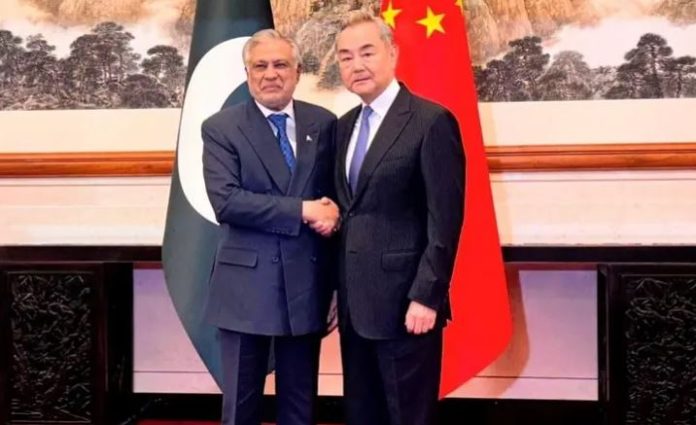
ISLAMABAD, MAY 12: Pakistan’s Foreign Minister Ishaq Dar and his Chinese counterpart Wang Yi discussed regional developments and Islamabad’s ongoing efforts to mediate an end to the Iran conflict on Tuesday.

“Both sides underscored the importance of continuing a durable ceasefire and ensuring normal passage through the Strait of Hormuz,” the Pakistani foreign ministry said in a statement.

The phone call came ahead of planned talks in Beijing later this week between US President Donald Trump and Chinese leader Xi Jinping.

‘100% confident’ Iran will stop enriching uranium, will hand over remaining stockpiles: Trump

'100% confident' Iran will stop enriching uranium, will hand over remaining stockpiles: Trump

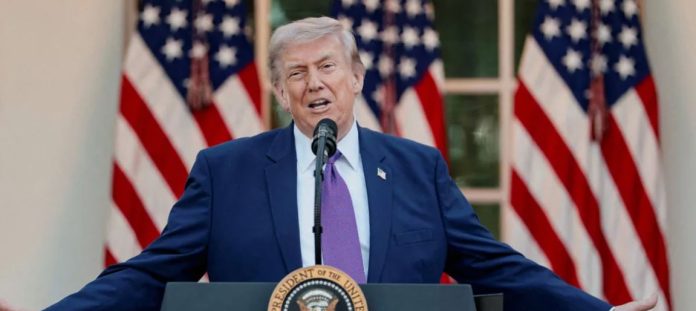
WASHINGTON, MAY 12: US President Donald Trump said that he is “100% confident” that Iran will stop enriching uranium and will hand over the enriched material that it possesses to the US during a radio interview broadcast on Tuesday morning.

Trump also emphasized that Washington will not allow Iran to obtain nuclear weapons, and claimed that his relationship with Prime Minister Benjamin Netanyahu is “excellent.”

Advertisement

“We don’t have to rush anything. We have a blockade which allows them no money. It’s a very simple thing: we cannot let them have a nuclear weapon, because they’d use it,” Trump said.

“If [the nuclear weapon] explodes, it would be an unimaginable disaster,” Trump continued.

Trump claims Iran could have achieved nuclear weapons four years ago
The US president also claimed that Iran would already have achieved nuclear weapons if his previous administration had not withdrawn from the Joint Comprehensive Plan of Action (JCPOA) nuclear deal, initially signed by then-president Barack Obama.

“If I had not canceled the agreement, they would have had nuclear weapons four years ago,” Trump said. “It was a sure path to nuclear weapons, and there was nothing you could have done to stop it,” he added.

Trump also said that the Iranians had pledged to stop enriching uranium. “They’re going to stop, and they told me they’re going to give us the dust.”

“Dust” is a term that Trump has repeatedly used to refer to enriched nuclear material, including uranium.

Trump also said that he “gets along great with Bibi [Netanyahu]. We were partners in the truest sense of the word.”

“You wouldn’t have Israel without me,” he said.

Meanwhile, Defense Secretary Pete Hegseth addressed a congressional committee, saying that “Iran has effectively tried to use the North Korea strategy, with such overwhelming capabilities, conventionally, that no one would dare prevent them from pursuing a nuclear weapon.”

“It took President Trump to have the courage to make that historic decision, and hopefully we can get that across the finish line with negotiations, which are ongoing right now,” Hegseth added.

Tarar says, govt lifts ad ban on Suno News after agreement

Tarar says, govt lifts ad ban on Suno News after agreement

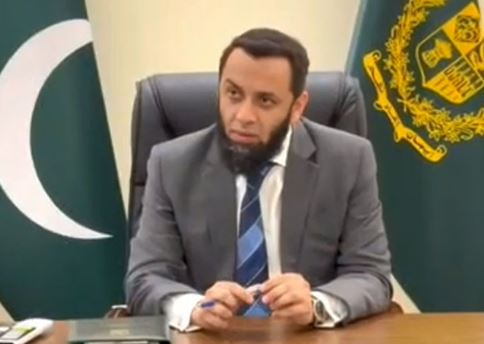
ISLAMABAD, 12 MAY (DNA) —    Federal Minister for Information and Broadcasting Attaullah Tarar on Tuesday said the restriction on advertisements for Suno News had been lifted after the channel started implementing agreed measures regarding payment of dues to terminated employees, reinstatement of lower-level staff and protection of workers’ rights.

The minister expressed these views during a meeting with the Chief Executive Officer of Suno News, in which matters relating to the rights of media workers, issues being faced by television channels and the termination of employees were discussed in detail. Prime Minister’s Media Coordinator Badar Shahbaz Warraich and Principal Information Officer Mubashir Hassan were also present during the meeting.

During the meeting, detailed discussions were held regarding the termination of 114 employees. It was agreed that the dues of the terminated employees would be paid immediately. The meeting also decided that no further reduction would be made in employees’ salaries and no additional workers would be laid off.

It was further decided that lower-level employees, including drivers and technical staff, would be reinstated to their jobs. Attaullah Tarar said every possible effort would be made to arrange alternative employment opportunities for other terminated employees. He said journalists’ and media workers’ rights protection was the government’s top priority.

The minister said the government would work together with media organisations facing financial or administrative issues to resolve their matters. Attaullah Tarar said the rights of workers would be protected at all costs. Meanwhile, the management of Aaj News also contacted the Ministry of Information and Broadcasting, and both sides agreed to hold a meeting on Wednesday. — DNA

HEC, varsity heads renew pledge to strengthen higher education sector for national uplift 

HEC, varsity heads renew pledge to strengthen higher education sector for national uplift 

ISLAMABAD, MAY 12 /DNA/ – The Higher Education Commission (HEC) Pakistan brought together heads of universities from across the country to discuss key reforms, challenges facing the higher education sector, and the future priorities aimed at its strengthening the for an enhanced role of academia in the socio-economic development of the country.   

The meeting was attended by Prof. Dr. Zahoor Ahmed Bazai, Chair, Vice Chancellors’ Committee, Prof. Dr. Niaz Ahmad Akhtar, Chairman HEC, and Prof. Dr. Zia Ul Haq, Executive Director HEC with participation of over 200 Vice Chancellors and Rectors of public and private sector universities joining both physically and virtually.

The meeting marked the formal launch of HEC’s online and paperless degree attestation system thus enabling the applicants to get their educational documents attested without visiting HEC or submitting any original degrees/transcripts.

In addition, HEC also announced the Best Researcher Awards 2025 and National Research Programme for Universities Awards 2025-2026 (Federal Zone) in recognition of the outstanding research contributions of the faculty members in promoting a culture of research and innovation in the country.

In his address, Dr. Niaz Ahmad Akhtar extended his felicitation to the academia and the entire nation on the first anniversary of the Marka-e-Haq, paying rich tribute to the gallant military, the political leadership, and the nation. “The soldiers of our motherland proved their utmost professionalism and vigilance while the nation stood united with the brave armed forces,” he said. He also highlighted Pakistan’s indigenous technological and strategic capabilities and lauded the contribution of academia towards the national security, innovation, and self-reliance. Referring to his recent visits to universities in various regions, he shared his contentment that the universities are performing “extremely well”. He reiterated HEC’s resolve in facilitating and enabling the higher education institutions, in line with its mandate. Highlighting the significance of youth development, he urged the universities to stay focused on building the future of nation by equipping the youth with employability-focused education, skills, and ethical values.

The Chairman underlined HEC’s recent initiatives and reforms, including the launch of a paperless degree attestation system, the approval of policy on Dual, Double and Joint Degree Programmes, internationalisation efforts through policies like Transnational Education Policy, digitalisation of university operations, and the requirement of HEC’s NoC to set up any new campuses. He also apprised the forum of the HEC’s National Skill Competency Test (NSCT) for IT graduates to align academic outcomes with the rapidly evolving demands of the global technology sector.

Dr. Akhtar appreciated the provincial HECs for their cooperation with the HEC Pakistan particularly in execution of its policies. He urged the universities to develop curricula in line with their specific needs while ensuring adherence to the HEC guidelines on curriculum development. Sharing updates on Pakistani universities progress in various international rankings, he dilated on various committees constituted by HEC to recommend reforms in key academic areas, and improvement of their global standing. Acknowledging that the higher education sector is confronted with severe financial hardships, he said that efforts are afoot to work with the government to ensure resolution of the issue. He noted that administrative and academic expenditures of the HEIs have   risen sharply, as the students’ enrolment has significantly risen to approx.3.9 million.

Earlier in his welcome address, Executive Director HEC Dr. Zia Ul Haq shared comprehensive presentations on HEC’s new interventions in the form of policies and initiatives. Describing the HEC Policy on Dual, Double and Joint Degree Programmes, he said the framework is aimed at providing greater academic flexibility to students and institutions. He maintained that the policy is applicable to both public and private sector universities and allows the higher education institutions to develop local-local and local-foreign collaborations.

Dr. Haq briefed the participants on HEC’s fully online and paperless degree attestation system, stating that the revamped mechanism significantly reduces processing time, enabling swift verification while eliminating long queues of applicants.

The Executive Director also briefed the university leadership on updates about the HEC’s policy on engagement of visiting faculty in higher education institutions. He underlined that HEC is revising the Criteria for establishment of a new University and Institution in line with the current academic and institutional requirements.

The HEC’s Executive Director also shared a detailed presentation on the financial constraints facing the sector. He said that the recurring funding to HEC has been stagnant since 2018 against the ever-increasing expenses, rise in the student enrolment ratio and the number of recruited faculty and staff. He stressed the need for uninterrupted allocation and release of funds to the sector for the real impact of academic endeavours.

 Prof. Dr. Zahoor Ahmad Bazai, Chair of the Vice Chancellors’ Committee Meeting & Vice Chancellor of University of Balochistan,  Dr. Attaullah Shah, Vice Chancellor- Karakorum International University, Gilgit, Dr. Muhammad Zahid Latif, Rector- National University of Sciences & Technology, Islamabad, Dr. Najma Najam, Pro-Vice Chancellor- Institute for Art & Culture, Lahore,  Dr. Jahanzeb Khan, Vice Chancellor University of Science and Technology Bannu, Dr. Tehmina Nangraj, Vice Chancellor- Begum Nusrat Bhutto Women University Sukkur, Sindh, Dr. Usman Ghani, Director, Institute of Management Sciences, Peshawar and others also expressed their views and identified different areas needing interventions for improvement. Other Vice Chancellors also engaged in detailed discussions through a Question & Answer Session.

On this occasion, the Best Publication Awards were conferred upon Dr. Ilhan Niaz of Quaid-i-Azam University in Social Sciences, Dr. Hafiz Muhammad Rizwan of University of Veterinary and Animal Sciences in Life Sciences, and Prof. Dr. Muhammad Aslam of Bahauddin Zakariya University, Multan in Physical Sciences. Meanwhile, the Best Researcher Awards were awarded to Prof. Dr. Ghulam Ali Arain of University of Lahore in Social Sciences, Dr. Muhammad Usman Rashid of Shaukat Khanum Memorial Cancer Hospital and Research Centre in Life Sciences, and Prof. Dr. Muhammad Sharif of University of the Punjab in Physical Sciences. The Best Young Researcher Awards were presented to Dr. Faheem Gul Gilal of Sukkur IBA University in Social Sciences, Dr. Khalid Mehmood of The Islamia University of Bahawalpur in Life Sciences, and Dr. Haider Ali of NED University of Engineering and Technology in Physical Sciences.

HEC also bestowed NRPU Awards upon 47 researchers from universities of Federal Zone under NPU Call 2025-26. The NRPU Call 2025-26 placed special emphasis on strategic and emerging sectors including artificial intelligence, climate change, agriculture and food security, energy sustainability, oil and gas, mining and geology, medical and health sciences, engineering technologies, social development, and industrial innovation. As many as 169 detailed proposals were received by HEC for the awards. Out of 169 proposals, 142 have been awarded across the country.

The meeting concluded with a renewed commitment from HEC and the participating Vice Chancellors to work collaboratively for the promotion of quality higher education, research, innovation, and academic excellence in Pakistan, strengthening academia’s role in the national development.

ISSI, IoBM launch Ambassador G. R. Baluch’s Book on Global Politics

ISSI, IoBM launch Ambassador G. R. Baluch’s Book on Global Politics

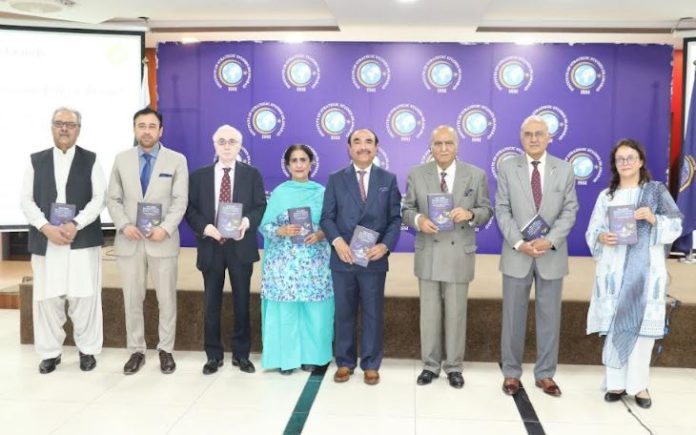
KARACHI, MAY 12 /DNA/ – Institute of Strategic Studies Islamabad (ISSI), in collaboration with the Institute of Business Management (IoBM), hosted the launch of The Third Dimension Policy Prism, authored by Ambassador G. R. Baluch. The panel of discussants included General Khalid Naeem Lodhi, former Defence Secretary of Pakistan; Ambassador Masood Khalid, former diplomat; Dr. Munawar Hussain and Dr. Shazia Khalid Cheema from Quaid-i-Azam University; and columnist and anchor Farukh Pitafi. The event was attended by diplomats, academics, scholars, students, and media representatives.

In her introductory remarks, Dr. Neelum Nigar, Director of the Centre for Strategic Perspectives (CSP) at ISSI, thanked Ambassador Baluch for choosing ISSI as the venue for the launch and appreciated his contribution to strategic and policy discourse.

Delivering the welcome remarks, Ambassador Khalid Mahmood described the book as a timely and important scholarly contribution at a period of major transformation in international politics. He observed that the current global environment is increasingly shaped by geopolitical competition, technological disruption, economic realignments, and evolving security paradigms. He further noted that Ambassador Baluch’s work successfully combines academic reflection with diplomatic insight, presenting foreign policy through political, economic, technological, and social dimensions.

Introducing his book, Ambassador G. R. Baluch remarked that the world is witnessing a “battle of narratives,” where influence is increasingly shaped through ideas and discourse. Describing the book as “more of a conversation than a conventional text,” he said that ideas eventually shape policies and global debates. He also thanked ISSI for encouraging meaningful discussions on foreign policy and international affairs.

The discussants collectively described the book as a timely and multidimensional contribution to contemporary strategic thought. General Khalid Naeem Lodhi highlighted the book’s focus on ethics and humanity alongside national interests in foreign policy. Ambassador Masood Khalid appreciated its analysis of Pakistan’s foreign policy challenges, South Asia, and developments in the Middle East, including Gaza.

Dr. Munawar Hussain noted that the book examines international politics not only through power and economics but also through ethical and value-based dimensions. Dr. Shazia Khalid Cheema observed that the work explores the symbolic, psychological, and cultural dimensions of politics and identity formation. Farukh Pitafi praised the book for combining policy relevance with conceptual depth while engaging both diplomats and academics through its broad thematic coverage and reflective style.

KP CM Afridi joins Imran’s sisters

KP CM Afridi joins Imran's sisters

Staff Report

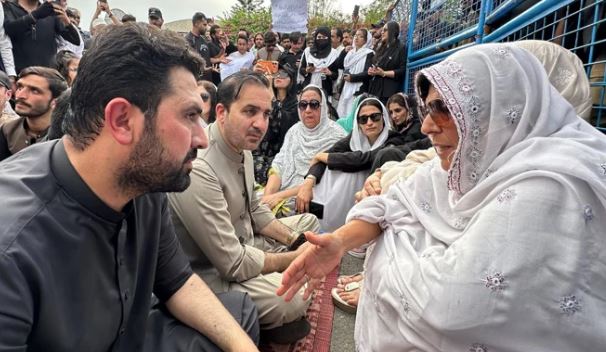
RAWALPINDI: Khyber Pakhtunkhwa Chief Minister Sohail Afridi on Tuesday joined a sit-in alongside Pakistan Tehreek-e-Insaf founder Imran Khan’s sisters near Adiala jail in Rawalpindi, amid heightened security measures and the enforcement of Section 144 in the twin cities.

Khan completed 1,000 days in custody earlier this week, having been jailed in August 2023. Jail authorities have repeatedly denied permission for his family members and PTI leaders to meet him despite multiple requests.

The former ruling party has expressed concerns over the health condition of ex-PM Khan and his wife Bushra Bibi after both recently underwent eye procedures.

It has long been demanding their immediate transfer to a hospital for proper medical care and diagnostic testing under the supervision of their doctors and family members.

Today’s sit-in coincided with the scheduled meeting day for the jailed PTI founder at the Adiala jail, where authorities had already imposed restrictions, banning all forms of public gatherings in Rawalpindi and Islamabad.

CM Afridi arrived at the Factory check post on Adiala Road with official protocol, where the former prime minister’s sisters, including Aleema Khan, have staged the sit-in.

Several PTI leaders, including Salman Akram Raja, Shahid Khattak, Naeem Haider Panjutha and Niazullah Niazi, along with party workers, were also present at the sit-in.

Meanwhile, police completely sealed Adiala Road by placing barriers along the route, while heavy contingents were deployed at multiple locations surrounding the jail and adjoining areas to maintain security.

TAPI project ‘uncertain’ future discussed

TAPI project ‘uncertain’ future discussed

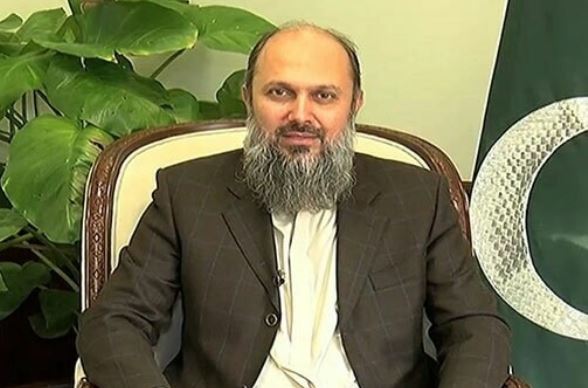
ISLAMABAD, 12 MAY (DNA) — Federal Minister for Commerce Jam Kamal Khan held a detailed meeting with Ambassador of Turkmenistan to Pakistan to discuss bilateral trade enhancement, regional connectivity, energy cooperation, and strengthening institutional engagement between the two brotherly countries.

During the meeting, both sides exchanged views on the growing importance of regional trade corridors, logistics cooperation, and improving commercial connectivity between Pakistan and Central Asian states, said a release issued here on Tuesday. Sources said that the Ambassador took up TAPI project with the minister also, which has been delayed for multiple reasons.

Discussions focused on expanding trade routes, facilitating smoother movement of goods, and enhancing direct interaction between the business communities of both countries. Federal Minister Jam Kamal Khan highlighted Pakistan’s strategic geographic position as a natural gateway connecting Central Asia with regional and international markets through Pakistan’s seaports.

He observed that evolving regional dynamics and changing global supply chain patterns have further increased the importance of Pakistan’s connectivity and logistics potential. The Minister emphasized that stronger economic integration, efficient transportation linkages, and enhanced business-to-business engagement can unlock significant trade opportunities for both countries.

He also underlined the importance of organizing business forums, exhibitions, and institutional interactions between chambers of commerce to promote direct engagement between private sectors. Both sides also discussed prospects for cooperation in the energy sector, including regional energy connectivity and future infrastructure collaboration aimed at promoting long-term regional economic integration and stability.

The meeting further reviewed various areas of mutual economic interest and emphasized the importance of continued diplomatic engagement, institutional coordination, and high-level exchanges to strengthen Pakistan-Turkmenistan relations further. Both sides expressed confidence that enhanced cooperation in trade, energy, logistics, and private-sector engagement would open new avenues for economic partnership between the two countries.— DNA

Stay Connected

64FansLike
60FollowersFollow

Latest Reviews

Exchange Rates

USD - United States Dollar
EUR
1.14
GBP
1.34
AUD
0.70
CAD
0.71