Home Blog Page 1409

India involved in all sort of terror activities in Pakistan: Sanaullah

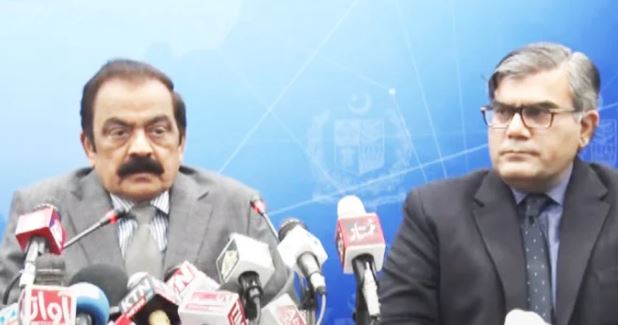
Interior Minister Rana Sanaullah said Tuesday that India’s footprints are seen in all terror activities carried out in Pakistan and New Delhi’s activities have gone “beyond that of an enemy state” just to hide its atrocities in occupied Jammu and Kashmir (IIOJK).

“India, through some way or the other, woos the international community and then engages in terrorist activities in Pakistan and we have clear evidence of it,” the minister said during a press conference alongside Additional Inspector-General Counter-Terrorism Department Punjab Imran Mehmood.

Today, the senior police officer will brief you on a terrorism incident that Pakistan has decided to present before the international community and expose India’s “nefarious” agenda.

“This incident took place some time back and we have caught all the culprits related to this. India has to some extent accepted the responsibility for it,” he said.

Johar Town blast

In his briefing, AIG CTD Mehmood said the incident took place in Lahore’s Johar Town at 11:09am on June 23, 2021.

As much as 200 kilogrammes of explosive materials were used in the blast and a car was used in it. The explosion resulted in the death of three people and injured 22 — including two police officers.

“To date, no terrorist organisation has claimed the responsibility for this attack. Since this was a residential area, cars and homes were severely damaged,” the senior police official said.

As soon as this blast took place, the CTD registered a first information report (FIR) and within 16 hours, the department “traced” the case. Also, in the initial 24 hours, the CTD arrested three terrorists, Mehmood said.

The first character was Peter Paul David, Mehmood said, who was traced through the vehicle, he said, noting that the terrorist supervised the operation.

“He was affiliated directly with two RAW agents — Ali Budaish and Bablu Srivastava. These agents would terror finance him,” the CTD official said.

Sajjad Hussain was David’s assistant and assisted him in the Johar Town blast, Mehmood said, adding that Hussain also destroyed the phones used to communicate for the explosion.

The CTD official said David then directed the agencies towards another terrorist — Zia Ullah. “This guy was the main culprit’s (Sami ul Haq) brother. He would also facilitate others in Pakistan and this was the main lead that helped us move forward.”

He said that four to five days after, CTD officials tracked down two more culprits — Eid Gul and his wife, Ayesha Gul. Mehmood added that David gave the car to Gul for preparing it for the blast. Gul installed the explosive in the vehicle, he said.

“The video [shown earlier in the briefing] shows Gul coming out of the vehicle. Also, another person made videos of Gul preparing the bomb,” the police official said.

Following Gul’s pointation, the CTD was finally able to arrest Sami ul Haq — the main handler of RAW-sponsored terror activities in Pakistan — Mehmood said.

The CTD official said when Sami was identified, the law enforcement agencies were still unable to catch him, adding that he was also involved with RAW for at least 12 years.

“We then issued his red warrants through Interpol. Then, through intelligence reports, we arrested him when he was trying to enter Pakistan via Balochistan on April 24, 2022, along with his brother-in-law.”

Mehmood added that his brother-in-law, Uzair Akbar, assisted Sami in terror activities and his red warrants were issued as well. Then, the CTD also got information about Naveed Akhtar — who did the surveillance and selected the target.

“Naveed was a labourer in the Middle East and was in jail because he could not pay his fine. A RAW agent approached him and told him that he would pay his fine, but then, Naveed would have to engage in terror activities against Pakistan.”

Mehmood said as Naveed was arrested, several terror activities were thwarted. “When we arrested Sami ul Haq, Naveed was unaware of his arrest. Samiul Haq told us that he was about to meet Naveed on May 10. We were then able to apprehend Naveed as well.”

“We have also tracked down three other RAW agents and issued their red warrants through Interpol,” he added.

Hafiz Saeed suspected target

Responding to a question, the interior minister said that the government would further tighten scrutiny of the deported Pakistanis in light of the case.

AIG CTD Punjab Imran Mehmood revealed that the terrorists wanted to target a house located in the nearby residential area. “The basic motive of the terrorists is creating panic among the citizens.”

The federal minister, however, clarified that the incident took place near the residence of Hafiz Saeed, chief of the banned Jama’at-ud-Da’wah. “It is considered that Saeed’s house was their target.”

Saeed was not at home, the minister said, adding that his family could be the terrorists’ target.

Due to the presence of police officials in the area, the vehicle could not reach its alleged target, Sanaullah further said.

The police officer added that they have obtained red warrants for four of the suspects so far, apart from the three who had been taken into custody.

He said that they have “undeniable evidence” that could establish India and its premier spy agency RAW were involved in the incident.

The minister further suggested that there should be a coordination system between the CTDs in all the provinces.

Taliban’s Presence in Afghanistan not Temporary

ISLAMABAD: The Taliban were here to stay, and their absence could potentially lead to another war spanning many years said Obaidullah Baheer, lecturer at the American University of Afghanistan. He was speaking at a webinar organized by the Institute of Regional Studies (IRS) titled ‘Afghanistan: Year in Review’ here on Tuesday. 

Mr Baheer was of the view that the human rights abuses by the Taliban made it difficult for the West to engage with them.He added that though the Taliban had been trying to act as per the norms acceptable to the global liberal order, their actions such as media bans, public floggings, separate parks for women, and ban on women education in schools had put them in a difficult spot.

He said that crime rates in Afghanistan were alarmingly high and while they were not reported, they were still being dealt with extra-judicially. The internal security was also turning worse but was still far from when the Taliban had taken over.  He was of the view that this was not the old Afghanistan nor the Taliban of the old times. The people back then were exhausted and willing to accept their rule. However, this time the Taliban had returned to power after 20 years and had taken over a well-built inclusive society. The Taliban had also gotten more exposure as they had travelled abroad and their families lived abroad, he added.

Mr Baheer said that the Taliban acted like they do not value recognition but some of them had stressed the importance of engaging with the world. Taliban had no mechanism for changing the Emir and the position of the Emir was for life. Hence, as the Taliban did not have any central ideology or literature, any change in leadership could completely alter their perception, he said.

Taliban were making a lot more enemies than friends. He stressed the need for an inclusive Afghan government. On Pak-Afghan relations, Dr Baheer said that the conventional channels for diplomacy could not work between India and Pakistan, hence iterating the need for new channels.  He said that this time around the Taliban did not have any financial dependence on Pakistan like before, however, their views about Pakistan were rooted mainly in the trust deficit that prevailed following their rule in 2001.  Lastly, he emphasized that viable developmental ventures in Afghani the international community. 

Ambassador Nadeem Riyaz, President IRS said that the Taliban had not been able to gain political recognition that they had been hoping for. He iterated that there was an ensuing struggle between the Taliban themselves considering the divergences among the people regarding adherence to traditional mindsets.

CM Mahmood Khan gives away media awards

From Our Correspondent

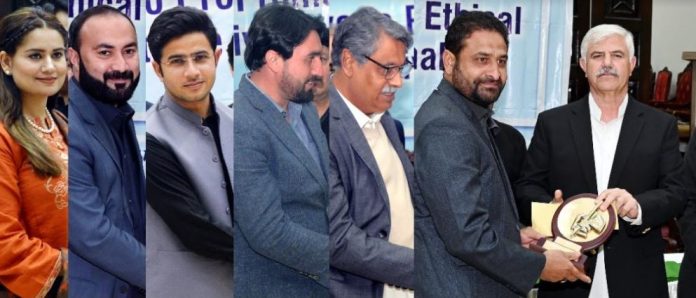
PESHAWAR, DEC 13 / DNA/ – The Amir Ahmad Siddiqui Media Awards ceremony was held here at the Chief Minister House, Peshawar in which Chief Minister Mahmood Khan distributed Awards and cash prizes among the journalists for their outstanding performance in various categories in the field of journalism. He also gave life time achievement award to internationally acclaimed Journalist Rahim Ullah Yousafzai late, acknowledging his unprecedented services in journalism, which was received by his son Arshad Yousafzai.

The ceremony was attended by Special Assistant to Chief Minister for Information and Public Relations Barrister Muhammad Ali Saif, Secretary Information Arshad Khan, Chairman Judges Committee of the Awards and Senior Journalist Ismail Khan, Chairman Department of Journalism and Mass Communication UoP Dr. Faiz Ullah Jan, President Peshawar Press Club M.Riaz and other senior journalists.

Addressing the ceremony, the Chief Minister termed the Ameer Ahmed Siddiqui Media Awards as an encouraging initiative which is playing an important role in the promotion of ethical and competitive journalism in the province.

The Chief Minister paid rich tribute to the services of late Amir Ahmed Siddiqui, Rahimullah Yousafzai and other senior journalists adding that Rahimullah Yousafzai not only had a key role in promoting positive journalism but was also considered an authority on Afghan Affairs.

“I consider late Rahimullah Yousafzai as my teacher and I used to consult him on various issues as a Chief Minister”, Mahmood Khan. The Chief Minister urged upon younger journalists to follow the footsteps of legendary journalists like Rahimullah Yousafzai.

The Chief Minister on the occasion announced cash prize worth Rs 50 thousand for each award winner besides announcing the attribution of a Government hospital in the native village of late Rahimullah Yousafzai in his name.

Touching upon the importance of journalism and freedom of speech, the chief minister said that an independent media and positive journalism are indispensable for democracy and media has always played an exemplary role in strengthening democratic norms.

He said that Media acts as an interface between common citizens and the Government adding that the media and provincial government have enjoyed cordial relations during the last four years which will be maintained in the future.

China shares green power experience with Pakistan

Islamabad, Dec 13 /DNA/ – As Pakistan’s energy import bill exorbitantly touched $27 billion, prime minister Shehbaz Sharif underlined the need for exploiting indigenous resources including hydel, solar, air and coal to produce cheap electricity. 

According to Gwadar Pro, he stated that a 1,320MW project was initiated by Shanghai Electric at Thar to use indigenous coal for electricity production. 

“The plants have been connected to the national grid and it was the fruit of the CPEC initiative,” added Khurram Dastgir Khan, Federal Minister for Power.

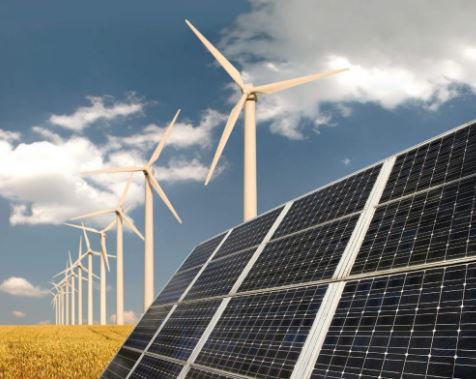
Pakistan is suffering the impacts of the greenhouse effect, so green power generation is the trend. PM also reveals that the incumbent government has prepared a plan to generate 10,000 megawatts of electricity through solar energy.

“We know that Pakistan is rich in solar and wind resources,” said Wang Haowei from Shanghai Electric, who is the business manager of Zhang Jiakou Green Power Project.

Shanghai Electric Group has a global presence in new energy and efficient clean energy industries. Its Zhang Jiakou Green Power Project is a part of the multi-energy integration and optimization demonstration project. It covers achieved 100% green power supply for all venues of the Beijing Winter Olympics.

“The installed capacity of the project is 150 MW wind power, 30 MW photovoltaic power and 10 MW energy storage.” Wang Haowei told us that the project is characterized by the complementarity of various new energy generation systems. 

“The feature of wind power generation systems is that their output at night is more than that during the day, while photovoltaic power generation systems have output during the day only. The energy storage system can adjust the volatility in the power generation process of the other two systems.”

“Compared with traditional thermal power generation, the project can save 1.48 million tons of standard coal and reduce carbon dioxide emissions by 3.69 million tons per year, ” he added.

Shanghai Electric is also actively cooperating with other Belt and Road countries in power generation system construction, bringing its advanced technology and equipment to more countries. Dubai 700 CSP and 250 MW PV project in Dubai can be a good example.

“This is the largest single-site concentrated solar power plant in the world, the CSP part is 700 MW in total, consisting of 100 MW CT unit and three 200 MW PT units; Photovoltaic 250 MW, which maximizes the site application,” introduced Zhao Hui, project manager of Dubai 700 CSP and 250 MW PV project.

Concentrated solar power generation works by using mirrors and heat exchangers to collect the Sun’s thermal energy and provide steam, and then generate power from steam with traditional turbo-generators. “ 

This power generation method not only can be as clean and renewable as photovoltaic power generation, but also has the safety and stability of thermal power generation.” Zhao Hui added.

Pakistan-Russia Expands Strategic Cooperation

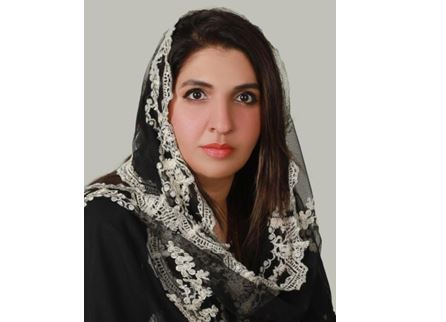
Gul.i.Ayesha Bhatti

PhD scholar International Relations

Henry John Temple Palmerstone stated during the House of Commons session on March 1, 1848, “we have no eternal allies, and we have no perpetual enemies. Our interests are eternal and perpetual, and it is our duty to follow such interests”.

Current global circumstances and imperatives have driven Russia to turn to the East and engage in regional connectivity with the Asian States, alongside, reestablishing ties with its former adversary Pakistan. Simultaneously, out of the US sphere, Pakistan is also looking for reliable friends in the neighborhood to work on regional connectivity and stability. Now the million-dollar question is whether both states are going to ignore the shadows of the past and are eager to start a new journey.

Since Pakistan’s independence in 1947, bilateral ties between Pakistan and the USSR have remained strained. As Pakistan opted to join the Western bloc by signing its first defense agreement with the US on May 9, 1954, ties between the two countries began to deteriorate in the early 1950s. After Pakistan joined the South East Asia Treaty Organization (SEATO) in January 1955, the situation deteriorated further. SEATO was founded largely to combat communism, which meant combating the Soviet Union since it served as the global symbol of the communist movement. The Soviet Union strongly disapproved of Pakistan’s choice of foreign policy. Pakistan had established its place in the Cold War by joining SEATO, and this marked the start of a lengthy competition between the two countries.

In later years, Pakistan’s role in the 1960s U-2 spy plane incident, the 1970s China-US rapprochement, and 1980s afghan war against soviet increased this rift between the two. Later on, Due to Pakistan’s recognition of the Taliban administration in Afghanistan and its US-centric foreign policy, ties between Pakistan and Russia throughout the 1990s remained largely cold.

In the first decade of the twenty-first century, Pakistan and Russia’s bilateral ties began to improve. Pakistan chose to break its ties with the Taliban regime and join the global alliance fighting terrorism, these efforts, however, couldn’t guarantee a faithful alliance from the US. Pakistan was upset with Obama’s Drone policies and neglecting Pakistan’s efforts for the War on Terror at the cost of its own national security. Further the increasing rift due to Obama’s Pivot to Asia policy which brought the US close to India to counter China in the region. While keenly observing the shift in alliances in the region, Pakistan chose to revive its relations with the neighboring states. Regional cooperation was the mantra that bought Russia and Pakistan to forget old conflicts and revive new ties. Therefore, high-level state visits began to occur, the two nations’ relations continued to show positive indicators.

In April 2001, Russian Deputy Foreign Minister Alexander Losyukov travelled to Pakistan as part of a state visit. In 2002, Pakistan’s President, General (Retd) Pervez Musharraf, visited Moscow in return. The goal of these high-level visits and meetings was to strengthen bilateral cooperation between the two states in the economic, cultural, development, and technology sectors as well as to launch joint efforts to improve regional peace and stability. This was the first visit by a head of state or government from Pakistan in thirty years.

As its ties with the United States deteriorated, Pakistan started to regard the Shanghai Cooperation Organization (SCO), which is governed by China, as a chance to forge stronger ties with both Russia and China on common ground. In 2004, The Tashkent Summit established a regional organization to combat terrorism, separatism, and extremism while also fostering greater economic growth. Later, the SCO expanded its geographical reach to encompass India, Pakistan, and Afghanistan. Russia being the senior member of the SCO always tried to avoid indulging in Pakistan-India rivalry. After the Pulwama attack, India tried to raise the issue at the SCO but Russia refused to address the issue at the SCO summit and Pakistan took a positive step toward bilateral relations between Russia and China.

Similarly, when we look into the strategic interest Russia has started observing in Pakistan is directly linked to Pakistan’s geostrategic position and its vital role in the regional strategic environment. In the sake of maintaining the balance of power during this, Russia now most likely recognizes Pakistan’s justifiable need for defense. In the beginning, the Russian position used to be that India was the best source of hegemonic stability in South Asia. This pragmatic shift likely resulted from the knowledge that Pakistan, which is nuclear-armed, would steadfastly reject India’s hegemony and that China would continue to guarantee Pakistan’s security by maintaining an adequate conventional and nuclear deterrent to counterbalance India. In this scenario, India and Pakistan are supposed to indulge themselves in an arms race, and Russia doesn’t want to fall behind. However, Pakistan is looking for State-of-the-art military weapons to buy from Russia but on affordable prices.

Moving further towards regional connectivity, Putin suggested a “Greater Eurasia Partnership” in 2016, including the EAEU members, China, India, Pakistan, Iran, and the Commonwealth nations. Since 2015, Moscow and Beijing have signed agreements signaling cooperation and regional integration because the BRI and the EAEU have the same objective of uniting Eurasia through overland trade and infrastructure. In order to achieve the Russian geo-economic vision of a “Greater Eurasia,” Pakistan has been designated by analyst Andrew Korybko as the “zipper of Pan Eurasian Integration” through South, Central, and West Asia.

In 2016, Alexey Devoc, then-ambassador Russia to Pakistan, is said to have said that Russia “strongly supported” the CPEC and that Moscow and Islamabad had discussed merging the EAEU with the CPEC.  Additionally, Pakistani authorities have agreed to allow Russia access to the Gwadar Port. Russia and Central Asia now have access to the Indian Ocean, Arabian Sea, and Persian Gulf. In addition, the port acts as a backup trade route in the event of a blockage.

The crisis in Ukraine has widened rifts between the US and its allies and Russia and its supporters. Pakistan, though, managed to preserve a precarious equilibrium in the developing conflict. Islamabad voiced its worry for the humanitarian situation in Ukraine but refrained from criticizing Russia. In this regard, Pakistan abstained from voting on the U.N. General Assembly’s resolution condemning Russia’s invasion of its neighbor and maintaining its “Neutrality”.

Pakistan has been struggling with rising energy needs, mostly for gas and oil, as well as an expanding current account imbalance brought on by oil payments.  A Pakistani delegation led by State Minister for Petroleum Musadik Malik traveled to Moscow the previous month in November to conduct negotiations with Russian authorities. Pakistan would pay discounted prices to Russia for its crude oil, gasoline, and diesel.  Moreover, Russia is also extended an invitation to Islamabad to start discussions on long-term liquefied natural gas contracts for the years 2025 and 2026.

Pakistan’s expanding residential and industrial energy needs have prompted Russia to agree to supply Pakistan with oil at a reduced price. In this regard, Pakistan has adopted a wise approach by developing better relations with Russia for the fulfillment of its energy demand. Although, Building stronger bilateral connections with Russia was formerly difficult for Pakistan, however, in the age of strategic and economic cooperation and intricate interconnectedness, Pakistan must not avoid rapprochement with Russia.

Chinese Flag Fluttered in Riyadh

Dr. Muhammad Akram Zaheer

President Xi’s visit to Saudi Arabia is aimed at deepening China’s decades-old relationship with the Gulf region particularly Saudi Arabia. The tour is an effort to secure oil, and arms sales, technology transfers. A complex relationship has involving infrastructure projects as well. According to Gedaliah Afterman, director of the Asia Policy Program at the Abba Eban Institute for Diplomacy and International Relations at Reichman University in Israel “When Gulf countries think about their future, they see China as their partner,”. The common economic interests of China and Saudi Arabia are clear: both the countries are largest trading partner. Saudi Arabia is one of China’s largest oil suppliers while Chinese companies have deep ties with the KSA to building mega projects, setting up 5G infrastructure and developing military drones.

Regardless President Joe Biden’s visit in mid-July to Saudi Arabia to strengthen their mutual relations, President Xi’s visit to Saudi Arabia is intended to advance the interests of both Riyadh and Beijing. First, the Chinese leader’s expected visit to Saudi Arabia on the occasion of Biden’s visit will boost Saudi Arabia’s image as an emerging and important player in regional and global political affairs, as well as a beneficiary of global alignment. It will help to stabilize and strengthen its ties with the Saudis and it will also help enhancement its “strategic policy” in the Gulf region.

China is exploring new land routes that can reduce reliance on access to sea lanes by road and rail through the Belt and Road Initiative. On the economic front, bilateral trade between China and Saudi Arabia has been expanding rapidly in recent years, currently running at an annual rate of about $70 billion. Beyond its traditional exports of telecommunications and other electronics, the Chinese are looking for growth opportunities in other fields, particularly in defense, which has traditionally been dominated by the United States and its allies. On the other hand, Saudi exports are based almost entirely on oil and oil products. But those volumes for China have declined in recent months as the Chinese have taken advantage of heavy discounts on Russian petroleum, which have made Moscow the biggest supplier to Beijing. The Saudis will certainly want to explore opportunities to regain Chinese market share, especially in the face of increasingly gloomy and unfavorable forecasts of the coming global economic downturn. would like Cash-rich Chinese investors are eyeing Saudi Arabia for investment, and Saudi Chinese industrialists are seen as future partners for the Gulf states’ aggressive economic diversification program. The mega city project is the largest project of the Vision 2030 strategy in the north-west of the country

The approximately 26,500 square kilometer city, once completed in 2025, is expected to become the largest city fully managed by artificial intelligence. All transportation will be autonomous, and electricity will come from renewable energies. The plan, unveiled in October 2017, reflects Mohammed bin Salman’s ambitions to transform his country and diversify the Saudi economy by promoting new activities. The city will become an important hub for the entire Middle East. Under this project, there is also a plan to build a bridge between Egypt and Neom. In March 2018, Egypt and Saudi Arabia launched a $10 billion joint fund to finance the Egyptian border region of Neom. The project will also benefit Jordan. Mohammed bin Salman has visited China to try to attract Chinese investors to his modern city project and entice Chinese high-tech leaders to develop projects in Neom. . The project is estimated at 500 billion dollars and it can only be achieved if the international community, including China, supports the project. The participation of Chinese companies is very important for the development of Neom so that the new city can attract goods, capital and people. Be fully integrated with the flow.

As a result, Neom could be an integral part of the BRI. IMF experts have also pointed out that the new city of Neom could be a laboratory for cutting-edge innovations for high-tech companies, especially Chinese companies can work.

Despite its economic ties to Saudi Arabia, Chinese officials appear relatively uninterested to adopt such kind of strategic defense role that the United States has played in the region. It would be “reasonable” to think that Saudi Arabia could replace the U.S. with China today. China’s role is still growing in Persian Gulf. It is disappointing for Saudi Arabia when it sees America’s strategic power diminishing for political reasons. The policy makers have to think about America’s threats to withdraw from the region or realign relations with the regional states and a post-United States Middle East, or world order, might look like.

Saudi Arabia’s official news agency says tens of billions of dollars’ worth of deals are expected to be signed at the summit. Washington will be watching closely to see if any of them touch on more sensitive areas such as defense or nuclear energy. US Under Secretary of Defense for Policy Colin Cahill has stated during a briefing in Bahrain that “across certain lines, if they are deeply engaged with China in terms of military infrastructure and military equipment, it’s more likely to work with us.” Consequently it will be difficult. “The more intertwined their military and intelligence systems are with Beijing, the more direct the challenge is to US forces in the region because the geopolitical landscape of the region is changing.

[email protected]

Strong foreign policy linked to strong economy: Talah

Staff Report

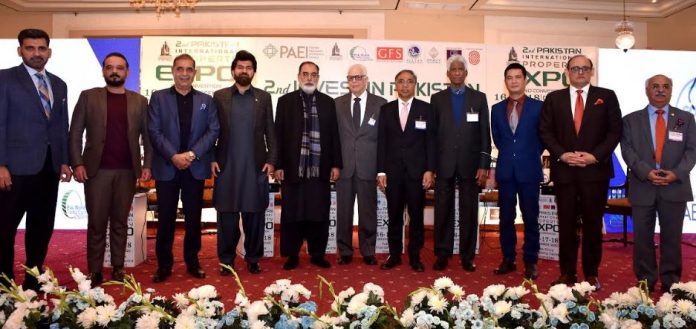
ISLAMABAD: The second Invest in Pakistan Business Conference was held at Serena Hotel. In which distinguished domestic and foreign ambassadors Ambassador of Brazil, H.E. Mr. Olyntho Vieira, Ambassador of Indonesia, Adam Mulawarman Togio, Mauritius High Commission H.E. Mr. Rashid Ally Soobadar, Ambassador of Vietnam H.E. Mr. Nguyeh Tien Phong. Apart from the prestigious real estate, various business community associated with the tourism industry participated in large numbers.

The purpose of this conference was expressed by the speakers regarding investment in Pakistan. Special guest Federal Minister Senator Talha Mehmood while addressing the conference said that there will be a free foreign policy only with a strong economy. We are laying the foundation of a strong country only by facing difficult economic conditions. The real estate and construction industry sector in Pakistan is growing rapidly. I assure the Pakistan Association of Exhibition Industry of full support and will continue to organize more exhibitions in this manner in terms of investment.

On this occasion, he thanked Chairman Pakistan Association of Exhibition Industry Muhammad Khurshid Barlas.

 Arif Jeeva said Preparation for any expo starts not weeks but months in advance and after days and nights of hard work such beautiful events are organized where families come with full confidence Traditional ways of doing business are changing and Pakistan Association The Association of Exhibition Industry has also taken this into account and taught Pakistan’s real estate market the best use of technology. Addressing the ceremony, Sardar Yasir Ilyas Khan said that Pakistan has to take the best practical steps to promote international investment.

RCCI organizes Tax Awards ceremony to acknowledge Taxpayers

DNA

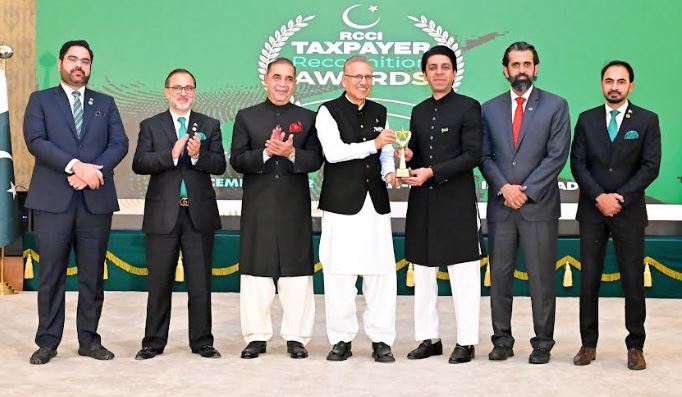
Rawalpindi: The Rawalpindi Chamber of Commerce and Industry (RCCI) organized the second tax awards ceremony at Awan e Sadr Islamabad to acknowledge taxpayers at regional and national levels.

Federal Tax Ombudsman Dr Asif Mehmood Jah, Chief Commissioner Inland Revenue Ms. Tahmina Amir, President RCCI Saqib Rafiq, Group Leader Sohail Altaf, SM Naseem, Senior Vice President Muhammad Hamza Sarosh, Vice President Faisal Shahzad, former Presidents, Executive Committee members, Islamabad Chamber President Ahsan Bakhtawari, Small Chamber President Tariq Jadoon, Women Chamber President Rafat Shaheen, representatives from Federal Board of Revenue, heads of trade associations and a large number of members and traders attended the ceremony.

Awards were given to highest tax paying organizations and individuals in various categories at the regional and national levels. Federal Tax Ombudsman Asif Jah was also awarded with a distinguished award.

President of Pakistan Dr. Arif Alvi in his keynote speech lauded RCCI for arranging the event and added that such events are a source of encouragement for taxpayers. Whenever any responsibility is given, Rawalpindi Chamber has always responded ahead, he said.

He termed the continuation of policies essential for sustainable economic growth, promotion of industrialization and attracting foreign investment.

Dr Arif Alvi underlined that digitalization of economy and business processes were vital for enhancing tax collection, promoting tax culture and transparency in the economy.

He said that hurdles in the process of filing taxes by the business community required removal, besides provision of facilitation to the business community and resolution of their grievances and issues.

The president said that Pakistan’s economy had been under stress due to multiple internal and external factors, adding that all stakeholders must act responsibly and display a unity of purpose to come out of the present situation.

The president also urged the need to focus on the skill development of youth and establishing partnerships between academia and industry, besides providing education to over 20 million out-of-school children.

The president also called upon the members of the business community to enhance the participation of women in businesses and industry, besides providing them safe and friendly environment at the workplace.

 RCCI President Saqib Rafiq said that RCCI was making efforts to promote business activities in the country, enhancing exports, and developing linkages with foreign trading partners in different sectors, particularly the IT sector. He further stressed upon continuation of policies for promotion of industrialization in the country, besides attracting foreign investors to invest in Pakistan.

RCCI Group Leader Sohail Altaf highlighted the need for political and economic stability, continuation of policies, providing facilitation to businesses, and taking steps to address their grievances.

Earlier, the president distributed the RCCI awards among the highest taxpayers from the business community in different sectors, including retail, manufacturing, pharmaceuticals, travel, construction, steel, poultry, and import sectors.

President FPCCI shows great concerns over unpredictable economic situation

ISLAMABAD, DEC 13: /DNA/ – Irfan Iqbal Sheikh, President, Federation of Pakistan Chambers of Commerce and Industry said that all the economic indicators have turned negative and the current unpredictable economic situation is creating great concerns in the business community. He said that he has never seen such an uncertain situation in his 45 years of his business life and stressed that the government should take business leaders on board to steer the economy out of troubles. He said that importers are paying US$ 120 per container per day as demurrage charges due to LCs issue and stressed that SBP should address this issue on an urgent basis. He said this while addressing the business community during his visit to Islamabad Chamber of Commerce & Industry.

Irfan Iqbal Sheikh said that Pakistan is doing exports with only 10-12 countries and it should tap new markets to increase exports. He said that Pakistan should focus on engineering products for exports as their share in the global market is 19% while the share of textile products is only 6%. He said that FPCCI will hold a conference on the charter of economy and a conference on exports in January 2023 to develop proposals for improving the economy and exports. He stressed that the business community should develop strong unity to influence the government for making business friendly policies and assured that FPCCI would continue to play a role to resolve the issues of the business community and improve the economy.

Speaking at the occasion, Ahsan Zafar Bakhtawari, President, Islamabad Chamber of Commerce and Industry (ICCI) said that LCs of the business community are not opening due to which production activities are badly suffering and if this situation continues, many industries would face closure. He said that consignments of imports including soybean are stuck up at ports as banks are not retiring LCs due to which the poultry industry would face a crisis and stressed that FPCCI should take up this issue with the government for early solution. He said that the forex reserves have tumbled down to USD 6.7 billion, which is creating panic in the market. He said that despite significant depreciation of the rupee, exports have shown a declining trend and the trade deficit is still high. He stressed that the government should bring down policy interest rate to single digit level to facilitate the growth of investment and businesses. He urged that the government should cooperate with the private sector in boosting exports to China, Africa, Central Asia and ASEAN countries to improve forex reserves.

Faad Waheed Senior Vice President, Engr. Azhar ul Islam Vice President ICCI, Khalid Iqbal Malik Group Leader ICCI, Aminullah Baig, Umar Masood ur Rehman and Qazi Akbar, Vice Presidents FPCCI, Mirza Abdul Rehman Chairman Coordination FPCCI, Muhammad Riaz Khattak Senior Vice President Pakistan Business Forum, Sajjad Anwar President Islamabad Chamber of Small Traders & Small Industries, Asad Mashadi former President Rawalpindi Chamber of Commerce & Industry, Zafar Bakhtawari, Muhammad Ejaz Abbasi, Mian Shaukat Masud, Sheikh Abdul Razzak, Khalid Chaudhry and ICCI Executive members  also spoke at the occasion and stressed that the government announced a clear strategy to revive the economy.

Serena Hotels takes over PC Hotel Peshawar

DNA

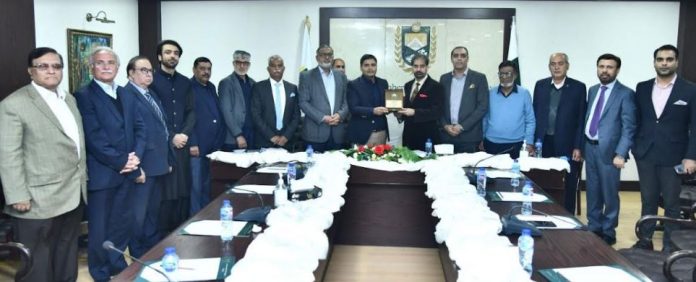
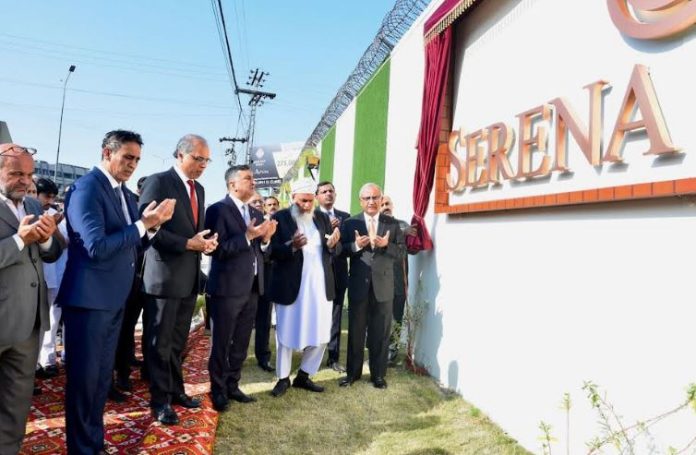
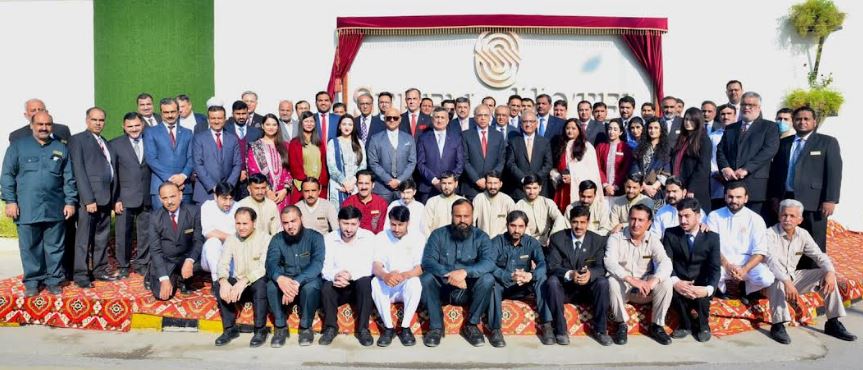
PESHAWAR: Tourism Promotion Services (Limited) Pakistan, the owners and managers of Serena Hotels in Pakistan announces the take over of Pearl Continental Hotel Peshawar. This will be the ninth Serena Hotel property in Pakistan.

The addition of Serena Hotels in Peshawar, the oldest city of Pakistan with a rich cultural heritage, will not only help in extending the tourist circuit in the province of Khyber Pakhtunkhwa, but will also allow regional connectivity for tourists and business travelers through its vast portfolio of hotels in Islamabad, Peshawar, Kabul, and Dushanbe. The Hotel shall serve as a gateway to Central Asia, taking the brand portfolio to a whole new level.

Serena Hotels, a brand associated with unique destinations globally, will be renovating and refurbishing the centrally located Hotel building as all Serena Hotel properties’ stand as a reflection of its vision and brand values. Continuing our legacy of giving back to society and benefitting the communities where we operate, the company intends to exploit the untapped, rich potential in the tourism sector of Khyber Pakhtunkhwa. This will be the second Serena Hotel in the KP province after the Swat Serena Hotel, enabling the brand to connect the diverse tourist communities to the rustic areas of the province.

The upgradation of Peshawar Serena Hotel including the new construction will enhance the quality and comfort of the guest rooms, restaurants, banqueting and meeting rooms, public areas and Maisha Spa & Health Club.  The Company has rigorous training plans for its Associates to ensure service delivery, bringing it in line with Serena Hotels’ standards.

Serena Hotels’ properties in Pakistan are currently located in Islamabad, Faisalabad, Quetta, Gilgit, Shigar, Khaplu, Altit, Hunza and Sost. In addition, two new Hotels are under construction in Gilgit-Baltistan; the Hunza Serena Hotel with 85 rooms, expected to be commissioned towards the end of 2023, and Sost Serena Hotel with 56 rooms, expected to be comission in 2024.

Stay Connected

64FansLike
60FollowersFollow

Latest Reviews

Exchange Rates

USD - United States Dollar
EUR
1.17
GBP
1.35
AUD
0.67
CAD
0.72