Home Blog Page 1407

‘Establishment’ will not help Imran Khan get election date: Sanaullah

Minister for Interior Rana Sanaullah said Tuesday the “establishment” would not help Pakistan Tehreek-e-Insaf (PTI) Chairman Imran Khan get the date for general elections as the party ups the ante against the incumbent government.

In his address earlier in the day, the PTI chief announced that he would be revealing the date of both — Punjab and Khyber Pakhtunkhwa — assemblies’ dissolution on December 17 (Saturday).

“Once we dissolve both assemblies, we will hold elections in the provinces. Also, our 123-125 National Assembly members — whose resignations have not been accepted — will ask the speaker inside the assembly to accept their resignations,” Khan said.

In response, while speaking on Geo News’ programme “Aaj Shahzeb Khanzada Kay Saath”, the interior minister challenged Khan to dissolve the assemblies so “we can get it over with”.

“We [federal government] will hold elections for the assemblies that they dissolve, and we will conduct by-elections on the seats that will be left vacant after their resignations,” Sanaullah said.

Ruling out that the government is worried about the outcome if elections are held, the minister said he is confident of the ruling alliance’s victory in Punjab and other provinces.

“I think that he [Khan] might stretch this issue till March of February. However, I don’t want him to delay this further. Let’s end this uncertainty,” the interior minister added.

No 2018-like ‘facilities’

Sanaullah also stressed that the PTI would not have “facilities” that were provided during the 2018 general elections. “And let me assure you, Imran Khan has neither pressurised the government nor the establishment.”

If the country heads towards polls, the interior minister said, Pakistan Muslim League-Nawaz (PML-N) supremo Nawaz Sharif would lead the party’s election campaign.

Sources told Geo News last week that if assemblies are dissolved, then Nawaz would be requested to come back to Pakistan immediately.

“I also want Imran Khan to not announce the dissolution date on December 17, but rather announce the dissolution of assemblies. We will form the government in Punjab, I am sure about it,” Sanaullah said, adding, “Imran Khan’s blackmailing narrative has been buried.”

‘Default campaign’

Defending the government’s stance to not dissolve the National Assembly, the minister said that the ruling wanted to stay in power for the better of the country due to the uphill task on the economic front.

“We have already sustained all the political setbacks that we had to,” he said, adding that the ruling coalition is focusing on strategies to ensure stability.

Sanaullah said if the federal government goes home and a caretaker set-up was formed, then 90 days — during which all the polling process takes place — “would take a heavy toll on the country”.

The minister also blamed the PTI chief for running a “campaign to default Pakistan” — as the markets are jittery due to the persistent political instability.

Former finance minister Miftah Ismail also fears that the path Pakistan is on might take the country towards default, but Finance Minister Ishaq Dar had assured that nothing of the sort would happen.

FM Bilawal calls on UNSC to implement Kashmir resolutions

NEW YORK: Foreign Minister Bilawal Bhutto-Zardari stressed upon the United Nations Security Council to implement its resolutions over the Kashmir issue and deliver upon its commitment to peace in the region and “prove that multilateralism can succeed”.

Speaking on “Reformed Multilateralism” in the Security Council, the foreign minister said that there was an agenda item left unaddressed by the UNSC — the issue of Kashmir.

“We believe it a multinational agenda — an agenda of this UNSC — and if you want to see the success of the multilateral institution or multilateralism and the success of this very Council, surely you can aid in this process; allow the implementation of the resolutions of the UNSC, when it comes to the question of Kashmir, prove the multilateralism can succeed, prove that the UNSC can succeed and deliver peace in the region,” he added.

He said that Pakistan believed that further democratisation of UN, UNSC and General Assembly would empower this institution and provide it with the moral authority to act. “It would serve the institution to further democratize and to allow the sovereign quality of all and not the superiority of some.”

“It does not serve the purposes of the UN to add more members to its elitist club and to expand the tyrannical power of veto,” he said.

The foreign minister said the Security Council has primary responsibility for the maintenance of international peace and security.

Multilateral solutions, under the umbrella of the Security Council, offer the most effective approach to promoting peace and resolving conflicts, he added.

“Parties to a dispute cannot advocate multilateral processes one day and insist on “bilateral” avenues the day after. Pakistan firmly believes that the major security problems, including those in our region, can be effectively and peacefully resolved through the active involvement of the Security Council and the secretary-general,” he added.

Pakistan’s foreign minister further said that “multilateralism” must be based on universal and consistent adherence to the fundamental principles of the UN Charter — self-determination of peoples, non-use or threat of force, non-acquisition of territory by the use of force, respect for the sovereignty and territorial integrity of States and non-interference in their internal affairs.

Strict adherence to the charter’s principles has become all the more essential in the context of recent and ongoing conflicts.

The council must seek to resolve conflicts and disputes, not merely “manage” them, he said. It should address the underlying causes of conflict, such as foreign occupation and suppression of the recognised right of peoples of self-determination, he said.

And, in accordance with their obligation under Article 25 of the charter, the member states must implement the decisions of the Security Council, he noted.

The Security Council, the foreign minister said, must act, not only after a conflict has erupted. It must act pre-emptively to prevent and avert conflicts before they occur.

The Security Council should, he said, no doubt, reflect “contemporary global realities”.

The most significant change in global realities is the emergence of a UN membership now composed by 193 mostly small and medium-sized states, Bilawal added.

The foreign minister underlined that they needed to be equitably represented through the expansion of the Security Council.

Adding new “permanent members” would numerically reduce the opportunities for the vast majority of UN member states to be represented on the Security Council, he said, adding, “We must adhere to the principle of sovereign equality of all-not the superiority of some.”

In the past, the Security Council has been unable to act due to differences among its permanent members and adding new permanent members would multiply the possibility of paralysis in the Security Council, the foreign minister pointed out.

“The problem cannot be the solution. And, surely, states that have a record of not implementing the resolutions of the Security Council cannot be considered as worthy of consideration for any form of Council membership,” he added.

He said that multilateralism offers many benefits. The benefits of multilateralism were very evident, he said.

Foreign Minister Bilawal further said that in this complex world, confronted by multiple threats and challenges, inclusive multilateral processes, within the framework of the United Nations, offered the most promising prospect for promoting peace and security, economic and social development and effective responses to the several interlocking global challenges.

He said that it was therefore vital to empower and efficiently utilize all the main organs of the United Nations: the General Assembly, the Security Council, the Economic and Social Council, the Human Rights Council, the International Court of Justice and the Secretary-General and Secretariat of the United Nations.

“We must also induct equality and democracy in the structures of global financial and economic governance, especially the Bretton Woods institutions. The UN General Assembly — the most universal global forum — must play the central role in reinforcing multilateralism and enhancing equity and justice in international relations,” he stressed.

The world’s attention should also be redirected away from narrow, national ambitions, Bilawal said. Instead, the world should address collectively and multilaterally, first and foremost, the existential threats that they face as a race — whether it be the Covid-19 pandemic, climate change, the nuclear threat, or terrorism, he asserted.

“The increasing propensity for narrow-minded populism, authoritarianism, we must confront the rise of the ideologies of hate, xenophobia, populist extremism and racial and religious intolerance, including Islamophobia, which imposes discrimination and violence, and even threats of genocide, against vulnerable minorities in certain countries,” he observed.

The foreign minister said that their endeavours to promote world order, peace and stability would come to nought unless they could realise the charter’s second objective: universal socio-economic development.

As a result of the COVID-19 pandemic, raging conflicts and the more frequent and ferocious impacts of climate change, nearly a hundred developing countries were in extreme economic distress, he added.

The foreign minister said that in their capacity as G77 Chair to continue to pursue an extensive agenda of multilateralism.

They witnessed a victory for the developing world during Pakistan’s chairmanship of the Group of 77 and China’s presidency of COP27 in Egypt, he said. “We saw a victory for the climate justice with the addition of loss and damage funding facility,” he added.

Azam Swati ‘shifted to Islamabad’ after cases in Sindh disposed of as ‘C-class’

KARACHI: The Sindh High Court (SHC) on Thursday ordered that no cases should be registered against Pakistan Tehreek-e-Insaaf (PTI) Senator Azam Swati in the province any more in the controversial tweets case

At the outset of the hearing, Inspector General of Sindh Police Ghulam Nabi Memon apologised to the court for his comments during the previous appearance.

Meanwhile, Sindh Prosecutor General Faiz Shah informed the SHC that Swati’s custody has been given to Islamabad Police. He also added that the cases registered against the senator have been categorised as “C-class”.

“All applications are now ineffective,” said the government lawyer, adding that the cases were registered by private citizens.

“According to law, the statement of these persons was bound to be recorded,” he added.

At this, Justice Karim Khan Agha lauded the Sindh government and IG Memon for resolving the “problem”.

The court then directed that no further FIR should be registered against Azam Swati in the case. It added that multiple cases were registered against Swati in different areas of the province on a single charge.

The court also directed that the C class report should also be submitted to the concerned courts in three days.

The court then disposed of the petitions filed by Usman Swati — PTI senator’s son.

Swati transferred to Islamabad

Meanwhile, sources told Geo News that Swati has been shifted to Islamabad and taken into the police’s custody. The senator was brought to the capital via a special plane from Sukkur, they added.

‘34 cases registered against Swati in Sindh’

Speaking to the media after the hearing, Swati’s lawyer Anwar Mansoor Khan told the media that 34 cases were registered against his client in Sindh and all have now been categorised as “C class”.

Khan said that the C class categorisation means that the FIRs are no longer effective. He added that he contended before the court that the cases against his client be cancelled through the judicial procedure.

“Judicial procedure requires that those cases shall be disposed of by the concerned judicial magistrate,” said the lawyer adding that the police will now submit a fresh report before the concerned magistrate.

SHC bars police from arresting Swati in more cases

Earlier this week, SHC barred the provincial police from arresting Senator Swati in more cases and also combined two petitions filed by his son Usman, seeking annulment of all cases.

During the hearing of the petition, SHC bench led by Justice Karim Khan Agha had directed the Prosecutor General Sindh (PGS) to furnish the court with a reply by December 15.

The court also issued notices to Inspector General Police (IGP) Ghulam Nabi Memon and the PGS.

The court also directed IGP to submit a detailed report regarding cases against Azam Swati in the province.

Swati was taken into custody by Sindh police last week over two cases registered in Warah and Qambar police stations after the Balochistan High Court ordered the quashing of all cases against him.

Controversial tweets cases

Swati was booked in multiple cases across the country for his controversial tweets against military officials.

He was first arrested in the case of a controversial tweet in October, after he posted a highly-hateful and threatening message against the army chief, judiciary, and other state institutions, on his official Twitter account.

The senator secured bail in that case.

But on November 27, the Federal Investigation Agency once again arrested him for using abusive language against senior military officers, including the then army chief.

One killed, 15 injured as Afghan forces open fire on Chaman border area: officials

CHAMAN: One person was killed and 15 people were injured when Afghan border forces opened indiscriminate fire on a civilian area on the Pakistani side after which security forces responded befittingly, Levies and hospital officials said Thursday.

According to local administration, the border area is being evacuated after clashes and an emergency has been declared in DHQ Chaman.

Medical Suprindent Dr Malik Achakzai said that at least 12 people are under treatment at the health facility.

Levies officials reported that multiple artillery rounds were fired upon the civilian population around the Boghra Road and Custom House areas from the Afghan side. They added that the Pakistani forces have given a befitting response to Afghan shelling.

The deputy commissioner of Chaman shared that an emergency has been declared at the hospital, adding that the citizens have been asked to evacuate from Mall Road, Boghra Road bypass, and Border Road.

Authorities have said that the clashes broke out over the intervention of Afghan forces during the repair of the fence in the Sheikh Lal Muhammad sector of the border. 

Afghanistan apologises 

This is the second time in five days that the Afghan border forces opened unprovoked and indiscriminate fire, using heavy weapons, at the civilian area in Balochistan’s Chaman city. 

During last week’s attack, six people were martyred and 17 others were injured, a statement issued by Inter-Services Public Relations (ISPR).

According to the military’s media wing, the Afghan border forces used artillery and mortar in the attack.

The ISPR said that Pakistan’s troops at the border gave a befitting albeit measured response against the uncalled-for aggression, but avoided targeting innocent civilians in the area.

The statement added the Pakistani border forces have also approached Afghan authorities in Kabul to highlight the severity of the situation and demanded strict action to avoid any such recurrence of the incident in the future.

On December 2, Pakistan’s Head of Mission to Kabul Ubaid-ur-Rehman Nizamani escaped an assassination bid.

In a statement, the Ministry of Foreign Affairs (MoFA) had said the embassy’s compound in Kabul came under attack targeting the head of mission, but “by the grace of Allah Almighty, the head of mission is safe”.

However, a Pakistani security guard Sepoy Israr Mohammad had been critically injured in the attack while protecting Nizamani, the Foreign Office said.

It said that Pakistan’s government strongly condemns the assassination attempt and attack on the embassy demanding the Afghan government conduct an immediate investigation into the incident.

China cultivates world’s first rice seeds in orbit

By Wu Yuehui, Yu Jianbin, People’s Daily

The third batch of space scientific experimental samples from China’s Tiangong space station were delivered to scientists after a return capsule, carrying astronauts of the Shenzhou-14 crew, touched down at the Dongfeng landing site in north China’s Inner Mongolia autonomous region on Dec. 4, Beijing Time.

The returned experimental samples included three cold packs of rice and Arabidopsis, and a bag with four boxes of container-free materials.

Rice, the main crop for humans, is a major candidate crop for the life support system in future manned deep space exploration.

Rice breeding under space microgravity is one of the important directions of space botany research. To ensure long-term survival in space, humans must make sure that plants can complete the alternation of generations and successfully reproduce in space.

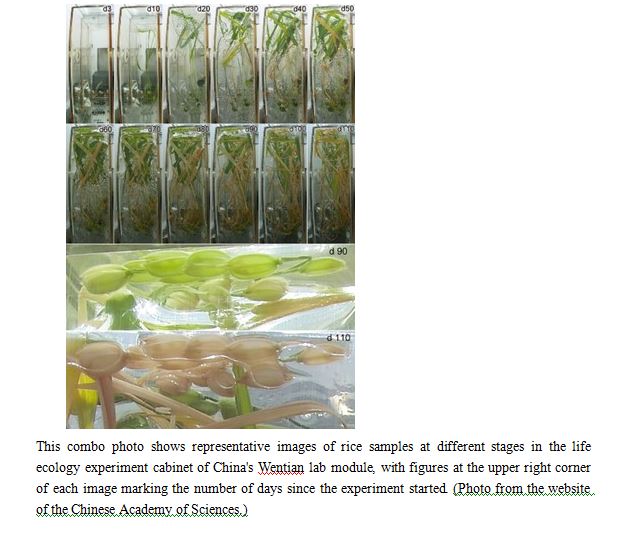
It was the first time in history that the full life-cycle growth experiment of rice was completed in space. Previously, only thale cress, rape, peas and wheat had successfully grown from seed to seed in the space environment, but the rice had not been able to complete the full growth cycle in such circumstances.

The life-cycle growth experiments of rice were handled by Zheng Huiqiong, a researcher at the Center for Excellence in Molecular Plant Sciences under the Chinese Academy of Sciences, and her team.

Flowering is a crucial stage for plant reproductive development. The team also systematically studied the effects of microgravity on flowering in space using the model plant Arabidopsis

Several life sciences experiments were done during 120 days in orbit. Experimental seeds of rice completed the entire growth process from seed to seed, and relevant images were acquired from space for analysis. The rice was grown after the pruning and it yielded the second crop of mature seeds in space.

Besides, the experiments also completed the analysis and sampling on seed germination, seedling growth and flowering of Arabidopsis under space microgravity.

Preliminary results showed that rice plants became looser in space with larger leaf angles. Short-grain rice grew shorter while the height of tall-grain rice was not significantly affected. Besides, the spiral upward movement of rice leaf growth controlled by the biological clock was more accentuated in space.

Moreover, the ratooning rice can sprout two ears of rice 20 days after pruning in space, which confirms the possibility of growing ratooning rice in a small closed environment. It has provided new ideas and a solid basis for the efficient production of crops in space.

It marked the first time in the world to apply ratooning rice technologies in space, and is expected to significantly increase the yield of rice per unit of volume.

Scientists for the first time studied the key biological clock-controlled genes that regulate photoperiodic flowering in space. They found that for Arabidopsis, the genes’ response to a microgravity environment is significantly different from that on the ground. It has provided a new direction for using modified flowering genes to make plants better adapt to microgravity in space.

New professions give a boost to employment

By Li Xinping, People’s Daily

An updated directory on occupational titles released by China’s Ministry of Human Resources and Social Security (MHRSS) will soon be printed.

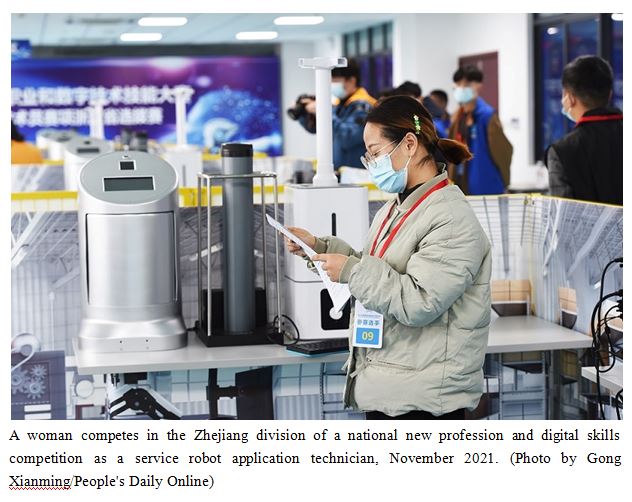
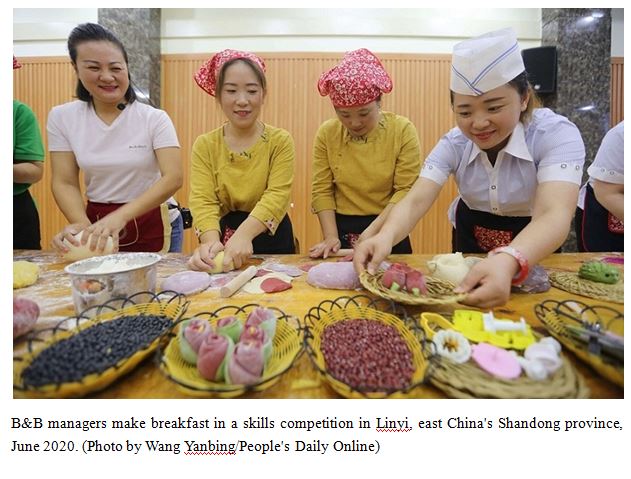
Seventy-four new professions have been included in the directory in five batches, such as B&B managers, family education tutors, educational tourism guides and robotics engineering technicians.

These emerging new professions not only offer new job opportunities and choices, but also drive the development of relevant industries and reflect the trends in new technologies and demands. They are an indicator of China’s economic development.

According to statistics released by the China Academy of Information and Communications Technology, China’s digital economy grew from 22.6 trillion yuan ($3.24 trillion) in 2016 to 45.5 trillion yuan in 2021, accounting for 39.8 percent of China’s GDP.

The prospering development of the digital economy catalyzes the emergence of digital professions. Half of the 18 new professions unveiled this year are related to the digital economy.

Yang Weiguo, dean of the School of Labor and Human Resources at Renmin University of China, said that the digital economy has become a part of people’s lives and led to the emergence of new products and business models, thus boosting new professions.

As China is pressing ahead on a green transition path, green jobs, including carbon emissions managers, appraisers of carbon sink measurement and consultants for structure energy saving and emission reduction, have embraced a golden age of rapid development.

An official with the MHRSS said that carbon peaking and neutrality is necessary for China to achieve higher-quality and sustainable economic and social development. It is changing the energy and economic structures, promoting industrial upgrading and generating green jobs, the official added.

For instance, the B&B business, in just a few years, has developed into a large industry that involves millions of employees, including B&B managers, a new profession that emerged in recent years.

As urban rail transit systems are constantly put into use, the urban rail transit sector is seeing a massive demand for professionals. The new profession of urban rail transit repairer exactly lays a solid foundation for ensuring a better life for the people.

Besides, a number of new professions are generated as people pursue a better life, such as beverage concoctors and educational tourism guides.

An MHRSS official noted that new professions are the professions not included in the 2015-version directory on recognized occupations, but already involve a certain number of jobholders and require a certain degree of professionalism.

The recognition of new professions is of great significance for the labor market. Li Chang’an, professor at the University of International Business and Economics, said the country’s recognition and regulation of new professions, which are generated amid economic and social development, will raise the social recognition and credibility of new jobs and match more job-seekers with employers, thus contributing to the employment.

Wang Bo, an educational tourism guide, is quite glad to see such recognition. “I could only say that I’m a supervisor for summer or winter camps when I introduced myself in the past. Now I could use the new profession title to address myself and I hope I can be recognized by more parents and children in the future,” Wang said.

According to the Tourism College of Zhejiang in east China’s Zhejiang province, all of its 30 graduates majoring in B&B management have secured a job this year, which indicated a huge demand from the job market.

Today, there are nearly 100 million employees engaged in new professions across China, such as online delivery couriers, online marketing operators and online tutors, and the number keeps growing.

It is reported that human resource and social security authorities will set relevant standards for the new professions and launch training and evaluation programs.

“The recognition of new professions and the making of corresponding vocational standards will provide a basis for setting vocational education majors and training courses, and for the compilation of relevant textbooks, which helps better connect talent training with the market and society,” said Li.

Digital industrial clusters prosper in China

By Wang Zheng, People’s Daily

The rapid development of the digital economy over the recent years in China has led to a tide of the construction of digital industrial clusters.

A batch of digital industrial clusters with international competitiveness has taken shape and grown strong across China, injecting fresh impetus into the high-quality development of the Chinese economy.

Digital industrial clusters, led by new development philosophy, include enterprises and relevant organizations driven by digital factors and engaged in digital product manufacturing, digital services, and digital technology application. They have strong core competitiveness.

According to China’s 14th Five-Year Plan (2021-2025) on the development of the digital economy, the country aims to raise the proportion of the added value of core digital economy industries in its GDP to 10 percent in 2025, up from 7.8 percent in 2020.

The China Center for Information Industry Development (CCID) said over 60 percent of China’s 25 advanced manufacturing clusters are engaged in the digital economy. The prospering development of the digital economy is driving the upgrade of industrial clusters.

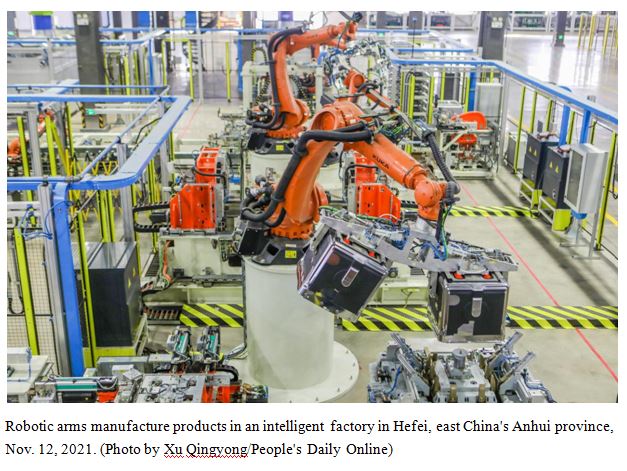
China Speech Valley, an industrial base focusing on speech recognition technologies in Hefei, east China’s Anhui province, reported revenue of 137.8 billion yuan ($19.71 billion) from its main businesses last year. Led by leading artificial intelligence and speech technology company iFLYTEK, the industrial base is home to 1,423 enterprises. The annual average growths in its output value and number of enterprises have both exceeded 30 percent over the past five years.

A digital security industrial cluster in Hangzhou, east China’s Zhejiang province, is home to leading Chinese video surveillance product and solution provider Dahua Technology, top-notch manufacturer and supplier of video surveillance equipment Hikvision, as well as over 4,300 other innovative enterprises engaged in the industry. The revenue of core businesses of the cluster reached 272.08 billion yuan ($38.9 billion) last year, up 17.2 percent year on year. It has the world’s largest two producers of digital video recorders and cameras, with a market share of over 50 percent.

Represented by global leading provider of optical products Yangtze Optical Fibre and Cable Joint Stock Limited Company and laser technology developer Huagong Tech, the Optics Valley in Wuhan, central China’s Hubei province, has received total investment exceeding 200 billion yuan during the past three years and owns more than 15,000 optoelectronic enterprises. The industrial cluster has witnessed a series of breakthroughs, such as the making of the world’s first 128-layer 3D NAND flash memory chip and China’s first 400G silicon photonics optical module.

Platform-based synergetic online development and production is one of the features of digital industrial clusters. For instance, Chinese tech firm Xiaomi, establishing over 100 enterprises in its ecological chain in the Beijing-Tianjin-Hebei region, Yangtze River Delta and Pearl River Delta, has created more than 100 hot-selling products. So far, the Chinese company has gathered over 4,000 online development teams on its platform.

The new model of work division is another feature of digital industrial clusters. Gao Yingmai, director of the Digital Economy Strategy Research Office of CCID, told People’s Daily that different from the models of one-to-one division adopted by traditional industrial clusters, digital industrial clusters use platforms to connect businesses.

Data alignment and interaction as well as artificial intelligence-enabled analysis make industrial collaboration more precise and efficient, Gao explained.

For instance, these platforms could detect shortages of key spare parts and then seek suppliers, and could also predict fluctuations in the market and thus ensure a reasonable inventory and timely production, Gao noted.

Digital industrial clusters can achieve synergy in R&D, orders, production, quality, inventory and services, said Fan Qiuci, an expert with the AliResearch, a research arm of Alibaba Group. Fan said the clusters can digitalize and align various systems for a closed synergy loop, so as to stabilize and strengthen industrial and supply chains,

An official with the Ministry of Industry and Information Technology said that China will strengthen digital industrialization, industrial digitalization and its data-to-value capability, so as to build digital industrial clusters with international competitiveness in different fields in a phased manner.

According to the official, the country will accelerate the development of industrial clusters, with market potential and dominated by innovative players. China will also build a development pattern led by major enterprises, followed by small- and medium-sized enterprises and constantly joined by innovative companies, to continuously integrate the digital economy with the real economy and traditional industries.

Besides, China will also speed up its efforts to build a national big data center and actively explore the new models of data flow and transaction, to fully turn digital dividends into development potential, the official added.

Palestinians say FIFA World Cup proves their cause not ‘buried’

Morocco’s support for the Palestinians during the Atlas Lions’ historic FIFA World Cup run shows the cause has not been “buried”, says Palestinian Football Association chief Jibril Rajoub.

Like several other Arab nations, Morocco has agreed full diplomatic ties with Israel — but this has not stopped its players from making clear their loyalties regarding the decades-old conflict.

They unfurled a Palestinian flag on the pitch after their stunning Dec 6 upset victory against Spain, and also after beating Canada during the group stage.

Moroccan players have also made pro-Palestinian social media posts during the tournament.

Palestinians in the Israeli-occupied West Bank, Gaza and annexed east Jerusalem have — like much of the Middle East — embraced Morocco, the first Arab nation to reach a FIFA World Cup semi-finals.

Ramallah sporting goods store owner Saeed al-Ramahi said enthusiasm for the Moroccan team seemed unquenchable, with all of their jerseys sold out.

“If I had 300,000 shirts, I would have sold them all in the last two days,” he told AFP.

That is despite Morocco joining the United Arab Emirates and Bahrain in establishing full diplomatic ties with Israel in 2020 under deals brokered by then US president Donald Trump.

Rajoub, the Palestinian top football official, said this proves the enduring support for the Palestinian cause, regardless of any decisions made by Arab leaders.

“The World Cup reveals the lie that the Palestinian cause has been buried by the recent normalisation agreements” said Rajoub, who is also the secretary general of Palestinian president Mahmud Abbas’s Fatah movement.

Palestinians condemned those normalisation deals as “a stab in the back,” and a betrayal of the decades-old Arab League position against recognising Israel until it agrees to the establishment of a Palestinian state with its capital in east Jerusalem.

‘Slap in the face’

Arab states did however secure diplomatic gains through the agreements.

In Morocco’s case, that included the Trump administration recognising Rabat’s sovereignty over the disputed territory of Western Sahara, in defiance of the international community’s long-standing call for a referendum to decide its status.

Rajoub described the World Cup, including the Moroccan gestures and the widespread expressions of Palestinian solidarity across Qatar, as “a slap in the face to the idea of normalisation”.

The leading Palestinian public polling group, in a study released on Tuesday, argued that “the World Cup in Qatar helps restore Palestinian public trust in the Arab world after years of disappointment”.

“The vast majority of the Palestinians say they have now regained much — or some — of the lost confidence in the Arab peoples in light of the solidarity with Palestine expressed by the fans during the football games,” said the Palestinian Center for Policy and Survey Research.

Rajoub called Palestinians the “33rd team” to qualify for the tournament in Qatar.

‘Bitter truth’

Hazem Qassem, a spokesman for Gaza’s rulers — the group Hamas who are backed strongly by Qatar — said the World Cup has affirmed the importance of the Palestinian cause “on the international scene”.

Israel is home to hundreds of thousands of Jews of Moroccan descent and some in the country have celebrated the side’s stunning performance ahead of its semi-final match against France on Wednesday.

But leading Israeli media outlets have conceded that, despite forecasts about a changed Middle East following the normalisation deals, the World Cup has made clear where Arab sympathies lie.

“The Moroccan festivities at the World Cup have proven that the Arab world is far from normalisation with Israel”, the Maariv newspaper said in a commentary on Sunday.

“As Israeli viewers, we will continue to watch until the final whistle, while witnessing the bitter truth that the Arab fans have put before our eyes,” it said.

The left-wing Haaretz newspaper agreed, concluding that “the real winner of the World Cup on social media is Palestine”.

PM Shehbaz calls for enhancing economic, bilateral ties with Tajikistan

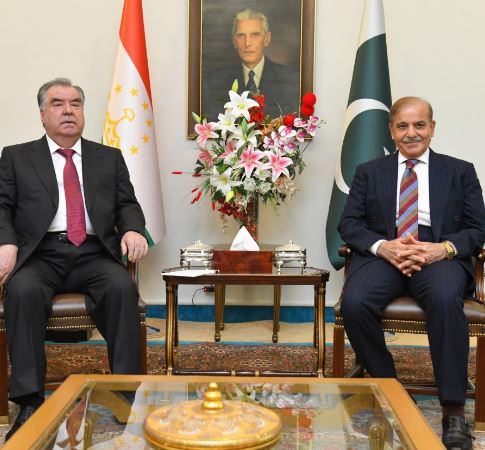
ISLAMABAD, DEC 14:: Prime Minister Shehbaz Sharif on Wednesday called for enhancing economic cooperation and bilateral trade with Tajikistan.

He made the remarks while addressing a press conference alongside Tajik President Emomali Rahmon, who arrived in Pakistan earlier today on a two-day visit. Earlier in the day, the two leaders held a one-on-one meeting at the Prime Minister’s House.

Addressing the joint press conference, where the two leaders signed memorandums of understanding (MoUs), PM Shehbaz said: “We need to work very closely with each other to strengthen our economic cooperation and enhance our bilateral trade in the field of industry, agriculture, joint ventures and energy cooperation.”

The prime minister said Tajikistan had a very “important place” in Central Asia and was a “gateway” to the region.

He went on to say he was looking forward to working closely with Rahmon for the completion of the Casa-1000 power project as early as possible as well as for establishing rail, road and energy connectivity with Central Asian countries.

He hoped that the Tajik president’s visit would usher in a “new era of cooperation and development” between the two countries.

Regarding their earlier discussions, PM Shehbaz said the two leaders had “very productive and useful” talks which focused on strengthening relations between their countries, promoting investment and enhancing trade and cultural exchanges.

Earlier, President Rahmon was accorded a red-carpet welcome upon his arrival at the Prime Minister’s House, where he was received by the premier. He was presented with a guard of honour. Later, he also planted a sapling in the lawns of the PM House.

Imran Khan to announce assemblies’ dissolution date on Dec 17

After holding back-to-back consultations with his party’s leadership, Pakistan Tehreek-e-Insaf (PTI) Chairman Imran Khan said Wednesday he would announce the dissolution of both assemblies — Punjab and Khyber Pakhtunkhwa — on December 17.

In his address to the nation via video link, the former prime minister said he would announce the date for the assemblies’ dissolution during the party’s public gathering at Lahore’s iconic Liberty Chowk.

Khan’s address came after he consulted the party’s senior leadership today on important political and economic matters that “required his party to take action”.

“Once we dissolve both the assemblies, we will hold elections in the provinces. Also, our 123-125 National Assembly members — whose resignations have not been accepted — will ask the speaker inside the assembly to accept their resignations.”

Following these moves, Khan said as much as 70% of Pakistan would move towards elections and in line with the law, elections should take place within 90 days of the assemblies’ dissolution.

“So understand this: I will announce the date on December 17 and after that, 70% of Pakistan will go into election made. Logic dictates that if 70% of Pakistan will see elections, then the country should move towards general elections.”

“But unfortunately, our leaders are corrupt and convicts. They do not care about what happens to Pakistan and when bad times take over the country, they will exit the country,” he said.

Khan said the coalition rulers were worried that if they step down then another government would be formed and their corruption cases would be reopened.

“Their interests and the nation’s interests are poles apart.”

“I have never seen cases of big dacoits being closed in my 70 years of experience. I am sure that even banana republics don’t do such things,” the ex-premier said.

The PTI chief said no country can progress without rule of law and justice as he claimed that Pakistan was on the “brink of destruction” as there was “no rule of law”.

“Why are we here? Because the poor people are in jail as powerful people are receiving NROs, getting their cases closed, and coming back to the country,” the ex-prime minister said.

Khan said documentaries have been shot and books written on the corruption of two families that belong to the Pakistan Muslim League-Nawaz (PML-N) and Pakistan People’s Party (PPP).

“It is so saddening that Suleman Shehbaz came back to Pakistan and addressed a press conference claiming that he was a victim,” Khan said as he asked Prime Minister Shehbaz Sharif’s son the reason behind the death of the people involved in the case.

“How did all the witnesses die of heart attacks in his money laundering case? Someone should investigate this case. Also, Ishaq Dar has also been given a clean chit […] when he was asked for the receipts of his income, he flew abroad on the prime minister’s plane.”

The PTI chief said even the people belonging to the “Zardari mafia” will be forgiven, including his sister Faryal Talpur. “The powerful can only survive here.”

The cricketer-turned-politician said that anybody who understands the economy knows that the first rule is to ensure there is political stability as “markets can’t perform under uncertain situations”.

“Investors and businessmen are reluctant to invest their money as the risk of default has grown to 100% as compared to 5% which was left behind by PTI,” he added.

Earlier today, Pakistan’s five-year credit default swap —used to insure against restructuring or default — declined significantly by 3,168 basis points (day-on-day) to 5,882 basis points.

“Because of this reluctance salaried people are struggling to make ends meet as electricity prices are currently sky-high,” he said blaming the coalition government for increasing the price of gold to 224.80 per litre which was around Rs150 per litre when PTI was ousted in April.

Stay Connected

64FansLike
60FollowersFollow

Latest Reviews

Exchange Rates

USD - United States Dollar
EUR
1.17
GBP
1.35
AUD
0.67
CAD
0.72