Home Blog Page 1406

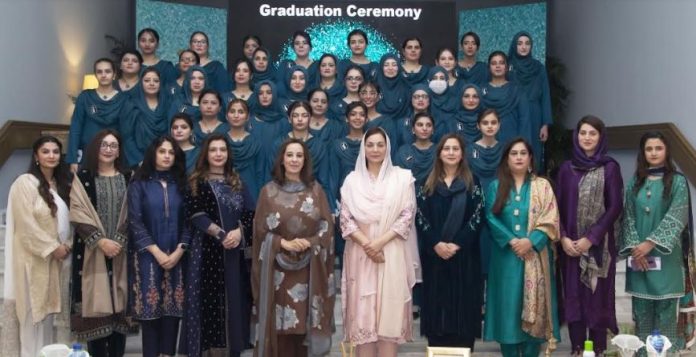
Graduation ceremony held at PAF Finishing School Islamabad

ISLAMABAD, DEC 12: /DNA/ – Graduation Ceremony of the 52nd batch of PAF Finishing School was held at the Officers’ Mess, PAF Complex Islamabad. Begum Marium Baber President Pakistan Air Force Women Association (PAFWA) & Patron-in-Chief of PAF Finishing School was the chief guest on the occasion.

The Chief Guest awarded certificates to the graduating students. She congratulated the students on successful completion of their personality development programme. She also praised the standards of training at the institution and lauded the efforts of the faculty members in grooming the womenfolk of our society. Earlier, Director Finishing School Ms. Zeba Shaukat presented a report highlighting the main aspects of the training which are aimed at transforming young girls into useful members of society.

Established in July 1996, PAF Finishing School is the first of its kind in Asia, offering various courses in communication skills, languages, management, art of self-presentation, domestic sciences, general culture, cuisine, protocol art, child care, introduction to psychology and spiritual enrichment. The school is an initiative of PAFWA for the grooming of young girls and the promotion of education in the country.

Devcom honours sixteen with 3rd PAMPA

DNA

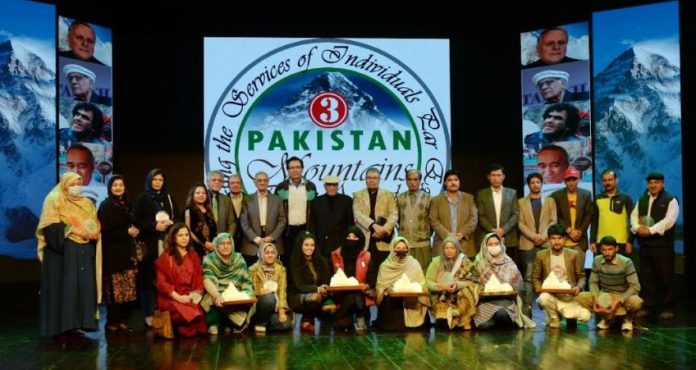
ISLAMABAD, DEC 12 – As many as 16 were awarded 3rd Pakistan Mountains Pride Awards on Monday, the grand finale of 12th Pakistan Mountain Festival, a flagship event by Devcom-Pakistan. The 12-day long advocacy festival was organized in collaboration with NRSP, PPAF, PNCA, National Heritage and Culture Division, Fatima Jinnah University, Rawalpindi Women University, SZABIST Islamabad Campus, Islamabad Wildlife Management Board (IWMB) Comsats University CS Adventure Club, and GBC Council to commemorate International Mountain Day that falls on December 11.

The guests of honour included Country Head of Italian Cooperation Development in Pakistan Emanuela Benini, chairman Rural Support Programmes Network Shoaib Sultan Khan, Pakistan’s renowned mountaineer Nazir Sabir, EvK2CNR Senior Scientific Advisor Ashiq Ahmed Khan, Pakistan Poverty Alleviation Fund (PPAF) Group Head Institutional Development, Innovation and Integration Irshad Khan Abbasi, Pakistan’s globally celebrated mountaineer Sarbaz Khan, Director General PNCA Ayub Jamali.

Sifat Gul, Garamchashma (Chital), Sakina Bi Ibrahim from Shigar (Baltistan), Gul Begam from Ghizer, Nusrat Yousuf from Rawalakot, Azad Jammu and Kashmir (AJK) won the Shoaib Sultan Khan Mountain Community Development Awards.

Marium Majeed Dar belongs to Forward Kahuta (AJK) and Rashida Khanam from Chitral was given the Agostino Da Polenza Mountain Conservation Award.  

Pakistan celebrated women mountaineers Sameena Baig and Naila Kiani got Nazir Sabir Mountaineering Award.

Ustad Mir Afzal, sitar player, was conferred upon the Ustad Jan Ali Mountain Music Award.

Pakistan Poverty Alleviation Fund launched ‘PPAF SMEs Award’ under the banner of Pakistan Mountain Awards. This year’s award winners included Nazia Hussain (Chitral), Nasreen Moosa (Skardu), Karim Salman (Hunza), and Samiullah (Swat).

Gilgit-Baltistan Music Group and maestro sitar player from Swat Mir Afzal created a fusion of mountain music, performing together. PNCA National Performing Arts Group (NPAG) presented Kalash dance and Sndhi jhoomar. A young vocalist from Rawalpindi Women University Laiba Khan sang Paharo ki qasm challay aao. A seasoned filmmaker Khalid Mahmood showed his documentary about the Pakistani climbers who summited K2 during 1977-2022.

Talking about the objectives of the Pakistan Mountain Festival and Pakistan Mountains Pride Awards, Devcom-Pakistan Executive Director Munir Ahmed said: “Pakistan Mountains Pride Awards (PAMPA) were launched in 2019 to recognize the services par excellence of the individuals who have rendered their services to mountain conservation and uplift the communities over the decades, mountaineering, sustainable mountain tourism and for the promotion of mountain music. Before PAMPA, there was no system of recognition and encouragement to the marvelous people of mountains. The PAMPA was launched to fill the void, initially with five categories. PPAF has added four SMEs awards from this year that makes a total of sixteen awards.”  

Speaking on the occasion, Nazir Sabir said: Some Pakistani women are showing courage in mountaineering, more shall join the flock. Sameena Baig, first and Niala Kiani both are internationally acclaimed mountaineers. Naila Kiani has become the first Pakistani woman to scale three peaks of over 8000 meters, as she climbed Gasherbrum 1 peak in August 2022 morning. Gasherbrum is the 11th highest mountain peak in the world.

Shoaib Sultan Khan said our rural support programmes have significantly contributed to the socioeconomic development of communities all over Pakistan especially in mountain areas. They do a wonderful job, and recognition of their services is much appreciated. It would encourage mountain communities, mountaineers and conservationists to do more in a much befitting manner.

Wuyishan National Park strikes balance between ecological conservation, local development

By Wang Yinxin, People’s Daily

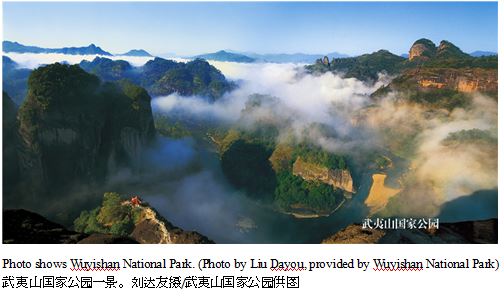
Tea is a symbol of Wuyishan Mountain, which sits at the border of east China’s Jiangxi province and southeast China’s Fujian province. Tea planting and making has long been a tradition in the local community.

In October 2021, Wuyishan National Park was set up, and the construction and management of tea plantations became one of the most important parts of the park’s ecological conservation efforts.

Liao Hong, director of the Root Biology Center of Fujian Agriculture and Forestry University, still remembers the picturesque view she saw and the tea aroma she smelled when she came to Wuyishan Mountain for the first time in 2001.

However, on her second trip to the mountain in 2015, she found that the local ecology haddeteriorated and the quality of local tea products had declined.

This was a result of the local tea industry’s excessive pursuit of output.

“Under traditional tea planting models, expanding planting areas and utilizing fertilizers is the major way to increase tea output. Therefore, over-reclamation and overuse of fertilizers were common, resulting in ecological damage and a decrease in the quality of tea products,” Liao explained.

In 2016, a pilot project of the national park system was implemented in Wuyishan mountain.

Over3000hectares of tea plantations on the mountain were included in the protected area of the national park, which made protection and development even more contradictory against each other, said Liao Chuanping, head of the ecological conservation department of the management bureau of Wuyishan National Park.

“Tea planting is the primary source of income for local people, but what come with the national park are strict ecological protection measures,” Liao Chuanping told People’s Daily.

The choice between ecological conservation and the development of the tea industry soon became a headache for local authorities.

Therefore, Liao Hong, as an expert in this field, started working to make an innovative model that both addresses ecological issues and increases tea production.

She had investigations in multiple major tea-producing areas in Fujian province, leaving her footprints on every corner of Wuyishan Mountain.

In 2015, she met tea maker He Shi’an. They soon hit it off on an eco-friendly tea planting. In the following year, Liao Hong carried out a series of experiments at the invitation of He, in an attempt to make tea plantations safer and more efficient.

“We planted oilseed rape in winter and soybean in summer. With organic fertilizers specifically developed for tea plants, both the quality and production of tea increased significantly,” Liao Hong said, adding that tea plantations looked healthier and the taste of tea products was also improved.

In 2018, with the support of the local government, Liao Hong brought this new eco-friendly model to Wuyishan National Park, and it was warmly welcomed by local tea farmers.

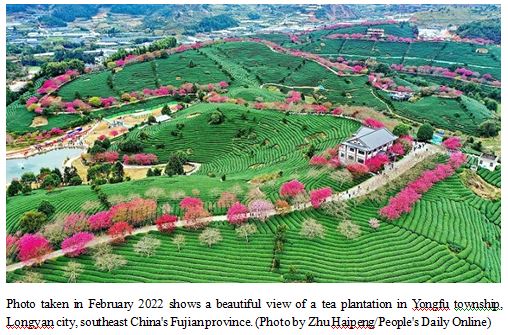
Since March 2018, the management bureau of Wuyishan National Park has been planting precious seedlings in tea plantations to improve the ecology. According to Liao Chuanping, oriental cherries have been planted in 20 hectares of tea plantations over the past year.

So far, the new eco-friendly model has been comprehensively promoted in the national park.

Fang Zhou, a local tea farmer whose eco-friendly tea garden is in Xingcun township, told People’s Daily that good ecology has brought good quality to tea products, which means a higher market price.

Fang said many tea farmers have planted native deciduous trees in tea plantations over the past year, as the higher market price of tea products made them realize the importance of ecological conservation.

The construction of eco-friendly tea plantations also drives the development of relevant industries. “The oriental cherries planted in the plantations not only improved ecology but also the scenery of plantations, which makes tea-themed tourism possible,” Fang said.

Fang’s dream, he said, is to turn tea plantations into a park, and now this dream is coming true.

China is marching forward confidently: secretary-general of Egyptian Socialist Party

By Zhou Zhou, People’s Daily

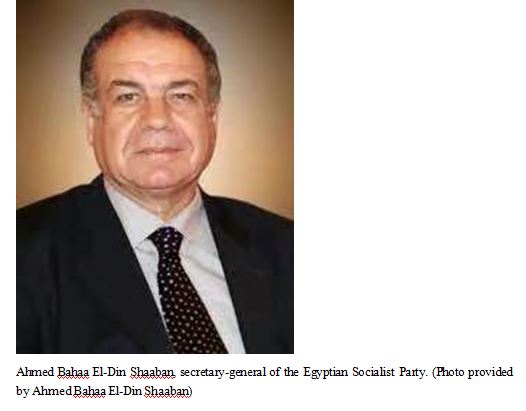
In the office of Ahmed Bahaa El-Din Shaaban, secretary-general of the Egyptian Socialist Party (ESP), a porcelain vase dotted with peach blossoms and carps was quite eye-catching.

“This was a gift I received from the comrades of the Communist Party of China (CPC) when I firstly visited China in 2017. I cherish it very much. The porcelain vase, which carries strong Chinese cultural features, reminds me of the good time I spent in China,” Shaaban told People’s Daily.

He said CPC cadres are very professional, open and inclusive, which left a deep impression on him.

Shaaban has long been interested in China. He has many books introducing China in Arabic at home, including those about Mao Zedong Thought, the development of the People’s Republic of China and the CPC, and Chinese culture. Through these books, Shaaban has obtained massive information about China’s development.

“I always observe China’s development with admiration. China has a long history and has paved a development path that suits itself through reform and opening up,” he said, adding that the country has proved with concrete actions that a country must make a development path that suits its national conditions in order to drive social progress and achieve prosperity.

The ESP secretary-general noted China has achieved glorious accomplishments in economic, social and livelihood development, and he is proud of China’s prosperity and progress.

He said the simple, safe and wonderful Winter Olympics hosted in Beijing earlier this year amid COVID-19 demonstrated China’s remarkable strength.

“Under the strong leadership of the CPC Central Committee with Comrade Xi Jinping at the core, China is marching forward confidently,” Shaaban told People’s Daily.

He attributed China’s stable and healthy economic and social development, and the changes of people’s life to the active practices of the CPC.

In the fight against COVID-19, the CPC takes a people-centered approach to protect people’s lives and health to the fullest extent, he said.

Xi Jinping, general secretaryof the CPC Central Committee, always bearing in mind the impoverished regions and the people there, has taken poverty reduction as an important task of national governance, he said, adding Xi has led the CPC to fulfill its commitment of eradicating absolute poverty as scheduled.

“China’s progress is the world’s progress,” Shaaban remarked. He said Xi has provided a series of global public goods and cooperation platforms, including the vision of building a community with a shared future for mankind, the Global Development Initiative and the Global Security Initiative, to promote global solidarity and win-win cooperation.

China sincerely shares its development experiences with the rest of the world and its development benefits the rest of the world, Shaaban said.

In 2017, he attended the CPC in Dialogue with World Political Parties High-Level Meeting hosted by the International Department of the CPC Central Committee in China, where he listened to a keynote speech delivered by Xi.

“Xi, humble and always caring for the people, is a leader with great visions and noble characters,” Shaaban said.

He told People’s Daily that Xi’s remarks made at the meeting, such as “Political parties play an important role in the political life of our countries and progress of human civilization,” are still inspiring for him today.

In July 2021, the ESP attended the CPC and World Political Parties Summit via video link. When Xi was delivering a keynote speech, Shaaban took pages of notes.

“What impressed me the most was that Xi associated political parties’ responsibilities with ensuring the people’s wellbeing and pursuing the progress of mankind, advocated building a community with a shared future for mankind and stressed promoting coordination and cooperation among countries. This reflected the CPC’s courage to shoulder historical responsibilities and make development fruits shared by more people in a fairer way,” Shaaban remarked.

Shaaban said the CPC carries a mission to seek happiness for the Chinese people and seek progress for humanity, and has contributed important plans to coping with global challenges, which sets a good example for global political parties in joining national construction and development.

“We will keep deepening our solidarity and cooperation with the CPC, to jointly oppose hegemonism and power politics, carry forward the common values of humanity, safeguard international peace and justice, and promote common development,” Shaaban noted.

The revival of large yellow croaker industry in Ningde, China

By Lian Jintian, People’s Daily

The large yellow croaker is an endemic commercial fish in coastal areas of China. The sea area in Ningde city, southeast China’s Fujian Province is an important inner bay spawning ground for large yellow croakers.

However, overfishing led to a sharp decline in the population of wild large yellow croaker in the 1960s and 1970s, and the species was once in danger of extinction.

Nowadays, the large yellow croaker has embraced a revival.

According to statistics from the Ningde’s government, last year, the total production of large yellow croakers in the city reached 191,000 tonnes, accounting for 80 percent of the country’s total production. The output value of the fish reached about 6.92 billion yuan (about $976 million) in the same year.

Over the past few decades, government departments, research institutions and fishermen in Ningde have taken concerted efforts to promote the scientific cultivation of large yellow croakers and improve the aquatic environment.

As a result, the fish population has gradually recovered. Nowadays, the breeding of large yellow croakers is carried out on a large scale and in a scientific manner, achieving high-quality development in the relevant industries.

In July 2018, Ningde carried out comprehensive management of seawater, as well as the transformation and upgrading of the fish breeding. Under the coordinated efforts of multiple departments, Ningde built a new order for marine farming which features clarified seawater ownership rights and a grid-based management model.

To date, the city has shut down or upgraded nearly 1.43 million outdated breeding cages and removed 106,000 tonnes of floating garbage and 5.38 million foam balls from the ocean.

The city has also taken intensive efforts to upgrade and renovate farming facilities.

“We encourage farmers to renovate small breeding cages into bigger ones and turn big breeding cages into deeper ones, with subsidies provided by the government,” introduced Huang Shaoyuan, a researcher from the ocean and fisheries bureau of Ningde.

So far, the city has built 3,450 deep and large breeding cages, which are arranged more properly and scientifically, with enough distance left between the breeding cages to guarantee a smooth flow of water, Huang said.

Huang noted that governments at various levels in Fujian have invested more than 4.5 billion yuan to build a total of 440,000 ecological breeding cages for marine farming. The cages, each with a depth of 12 meters and 26-meter side lengths, are placed deep in the seawater, improving the production and quality of aquatic products.

Ningde has promoted smart breeding by operating fish farms through the application of technology.

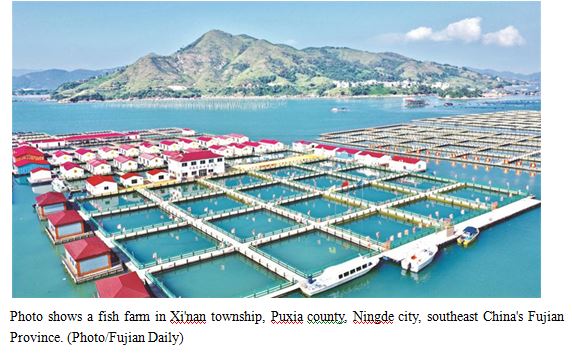
The deepwater plastic fish farm of Fujian Sanduao Foodstuff Co., Ltd., which can withstand winds and waves, is located in Sandu Bay, Ningde. The fish farm has 84 large breeding cages, with each covering one mu (0.067 hectares), as well as 9 buildings with red roofs which are connected by walkways.

“We used to cultivate fish in small cages and walk on channels built from floating balls, bamboo poles and wood boards. I often fell into the water. Nowadays, as the new walkway is more than two meters wide, I can run on it,” said Song Xiangguo, head of the breeding base who has 26 years of experience in the industry.

“In the past, I carried fish feed on my shoulders, and nowadays, I provide food for the fish through a pipeline. I can conveniently take care of the fish via my mobile phone which is connected with smart monitoring poles installed in the fish farm through the 5G network,” Song added.

Four wind turbines are installed on the roof of the fish farm’s power generation house. The wind turbines, together with the solar photovoltaic devices, are connected to the power storage facility and the electric transducer of the fish farm.

The fish farm has a set of seawater desalination equipment to supply household water. Both solar photovoltaic panels and wind turbines can produce electricity for the farm, and the electricity can be stored to support the farm all day long, Song said.

At a fish hospital located in the sea area, a farmer was seeking medical treatment for his fish. The fish was carefully examined by a technician under a microscope, and an expert conducted remote consultation for the fish based on real-time medic images.

Today, Ningde has established a fish disease prevention and control network covering a green fish breeding technology service platform at the municipal level. Fish hospitals and medical service centers have also been built at the county, township and village levels.

Ningde has been continuously exploring the industrial value of large yellow croakers. With its scale exceeding 10 billion yuan, the large yellow croaker industry of Ningde boasts an industrial chain involving fry hatching, breeding, processing, cold-chain logistics and transportation, and marketing.

Large yellow croakers have been sold on the Internet. Local fish farmers have cultivated many brands of large yellow croaker products through livestreaming and other new media measures.

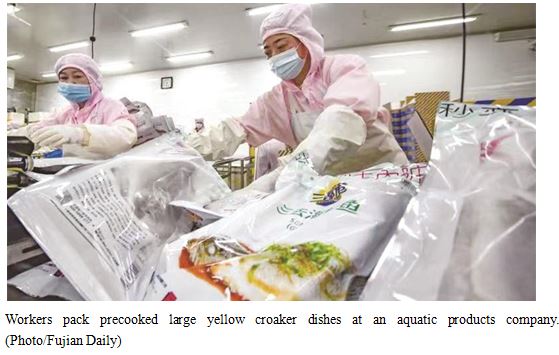
In addition, the popularity of precooked food has driven the development of local aquatic product companies in Ningde. The processed products from Ningde have been sold to Japan and South Korea and the annual sales of frozen fish products can reach 30 to 40 million yuan.

Today, in addition to cultivating and selling fish, fish farmers in Sandu Bay are also benefited from the beautiful scenery of the sea. In many fishing villages, local fish farmers have built homestays in their fish farms, embarking on a path toward prosperity through the integration of fish farming and tourism.

Pakistan on the brink again

Pakistan’s time is running out. For decades, the country has run a system that needs near-constant external assistance. The system doesn’t deliver prosperity outside a tiny elite. Real incomes are, at best, stagnate. We barely export or save. If there is a strategy, it is waiting for someone to invade Afghanistan to extract geopolitical rents from them.

Underlying these decades-long challenges is a fundamentally changing society. For one: over the next 28 years, Pakistan will add about 132 million more people above its current population size. Pakistanis also now live increasingly in urban areas which reshapes how people interact with each other – opening new avenues for collective action and greater demand for public services. Add to this increased access to technology. The country is changing even if the economic system that governs them remains the same.

The changing dynamics demand sustained economic growth to improve lives, but our current system doesn’t allow growth. Whenever the economic growth rate exceeds 4-odd%, Pakistan’s import bill skyrockets pushing the country into a balance of payments crisis. This is a fundamental constraint in Pakistan’s growth model: nothing short of a complete break from the current trajectory will work.

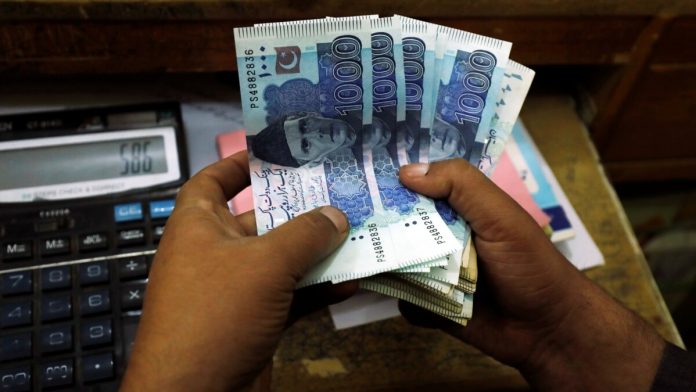
Today, Pakistan is on the brink again. While a sovereign default is unlikely, what is clear is that Pakistan’s survival once again depends solely on the generosity of its few allies. This generosity might be eventually forthcoming allowing us to kick the bucket down the road for a few months – but then what? What happens a few months from now when once again we need more money to pay for imports or service our debt?

We need a radical break. There must be an immediate realization that the current economic system neither delivers growth for its citizens nor is stable enough to be maintained. Critically: even those who benefit from the current economic system, must realize that the system isn’t sustainable – even for growing their wealth. A different pathway requires a pro-growth coalition that pushes for reforms that can make real gains in Pakistan’s productive capacity.

What should such a reform agenda prioritize? I suggest three actions. First: Pakistan must discourage the capital stuck in real estate. Putting a large chunk of domestic savings into real estate takes capital away from sectors that can contribute towards exports (plots can’t be exported, alas). A great way to do this is by levying an annual tax on urban land. Not only would this raise revenue for public services but help allocate capital towards tradable sectors.

Second: We need deliberate and significant efforts to improve female labour market participation. Currently, only two out of 10 adult women are in the labour market; this is below countries of similar income levels. One way to do so is by investing in urban transport systems that would disproportionately benefit women as they face the highest mobility barriers.

Third: Pakistan should reduce policy-induced market distortions that are often in place to benefit vested interests. One example are the import duties that incentivize firms to sell domestically rather than attempt to innovate and compete abroad (a recent report by the World Bank calculates that a 10% import duty ups the profitability of selling domestically as opposed to exporting by 40%). By making the market a level playing field, we can incentivize firms to innovate and compete globally.

Pakistan is on a path to the abyss. In 1990, a child born in Pakistan would expect to live longer than a child born in India or Bangladesh. Today, that has been completely reversed. You’re better off being born in Dhaka or Chennai, than Lahore. This trajectory will continue if we don’t do something differently. Time is running out.

Toshakhana: Court to announce verdict on ECP plea against Imran Khan on Dec 15

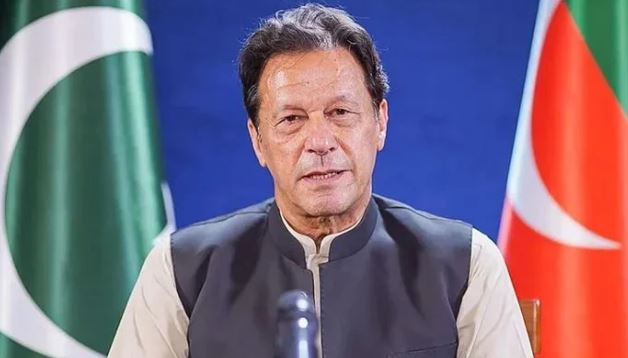
ISLAMABAD: A district and sessions court in Islamabad Monday reserved the verdict on a plea filed by the Election Commission of Pakistan (ECP) in the Toshakhana case against Pakistan Tehreek-e-Insaf (PTI) Chairman Imran Khan.

The verdict will be announced on December 15 at 2pm.

On November 22, the trial court took up the Toshakhana reference filed by Election Commission against Khan for allegedly indulging in corrupt practices, which the former premier denies.

As per the electoral body’s order, the trial court in Islamabad sent a notice to the PTI chief in the trial opened against him in the Toshakhana reference.

Later, Additional Sessions Judge Zafar Iqbal adjourned the hearing till December 8, 2022.

Today’s hearing

At the outset of the hearing, ECP’s lawyer Saad Hassan appeared before the court and presented his arguments.

“Imran Khan said that he constructed a road with the money [acquired from] Toshakhana [gifts],” he said, adding that a prime minister has to deposit any gift they receive to the Toshakhana.

He further stated that the Toshakhana gifts could be retained after paying 20% of the gift’s price until the PTI government introduced a new law which allowed taking the Toshakhana gifts after paying 50% of its price.

“The price of the watch was estimated at Rs85 million,” he said, adding that Khan failed to state the amount for which he sold the Toshakhana watch.

Hassan stated if any Toshakhana items were transferred then it was mandatory to mention them in the tax income statements.

“It is not possible to personally own an item from the Toshakhana without declaring it,” said the lawyer.

He said that the Election Commission “believes the income tax statements provided by the former premier in 2022-2021 are correct”, adding that the Toshakhana matter was brought to the National Assembly and the case was taken to the high court in 2020-2021.

Lawyer Hassan said that Khan’s way of dealing with the Toshakhana gifts is tantamount to money laundering.

“Imran Khan said that he has deposited the amount [ he paid for] for all the items in the same bank account,” said the ECP’s lawyer, adding that the properties or gifts taken by Khan during 2018-2019 would be counted among his assets.

Khan should’ve disclosed all his assets before Election Commission, said Hassan. “Ex-premier also took jewellery from the Toshakhana but did not declare it.”

The lawyer said that the former prime minister also talked about four goats and Rs500,000 in the statements.

The lawyer maintained that the former premier and his wife took a total of 58 gifts from Toshakhana during three years which were worth Rs142 million, at an amount equal to 20% of the gifts’ cost.

He said that Khan acquired the gifts from Toshakhana worth Rs107 million out of the said Rs142 million during 2018-19.

The lawyer further stated that Khan didn’t want to make the gifts worth Rs142 million public

“In 2019/20 Khan declared Rs8 million on account of tax returns but didn’t reveal which item’s price it was,” the lawyer stated.

Disqualification

Last month, ECP, in a consensus verdict in Toshakana reference, disqualified the former prime minister and ruled that the PTI chief was no more a member of the National Assembly.

The ECP stated that the PTI chief had submitted a false affidavit and was found involved in corrupt practices under Article 63(1)(p).

“As a sequel to our abovementioned findings, facts available on record and keeping in view the argument of learned counsel for parties herein, we are of the considered opinion that the Respondent has become disqualified under Article 63(1)(p) of the Constitution read with Section 137,167 and 173 of the Elections Act,2017, consequently he ceases to be a member of the National Assembly of Pakistan and his seat has become vacant accordingly,” the ECP order stated.

In the verdict, ECP also declared that Khan had made “false statements and incorrect declarations, therefore he has also committed the offence of corrupt practices defined under Sections 167 and 173 of the Elections Act, 2017”.

It added that the offence was, punishable under Section 174 of the Elections Act, 2017 and directed legal proceedings and follow-up action under Section 190(2) of the Elections Act.

Virat Kohli pays tribute to Cristiano Ronaldo after FIFA World Cup exit

Indian batter and former skipper Virat Kohli extended support to Portugal’s star footballer Cristiano Ronaldo after his unceremonious exit from the FIFA World Cup 2022.

Morocco became the first African and Arab country to reach the tournament’s semi-finals with a 1-0 victory over Portugal on Saturday night.

The 37-year-old Portuguese star faced criticism after his side’s dismal show in the knockout stage. Ronaldo couldn’t control his tears at the final whistle and left the pitch as this was also his last World Cup. 

Being an athlete and one of the biggest supporters of star footballer, Kohli must have felt the pressure Ronaldo was going through.

“No trophy or any title can take anything away from what you’ve done in this sport and for sports fans around the world,” wrote Kohli who left India’s all-formats captaincy following immense criticism on his leadership.

“No title can explain the impact you’ve had on people and what I and so many around the world feel when we watch you play. That’s a gift from god. A real blessing to a man who plays his heart out every single time and is the epitome of hard work and dedication and a true inspiration for any sportsperson. You are for me the greatest of all time,” added the star batter.

As a captain, Kohli also failed to win any tournament trophy. Ronaldo’s dream to win a World Cup also ended after a loss to Morocco.

The two athletes are one of the most followed ones in their respective sports.  

The historic win

Youssef En-Nesyri leapt high in the air to head home the game’s only goal just before half-time at the Al-Thumama Stadium to strike a significant blow against football’s established order and book a semi-final on Wednesday against either England or France, who meet later on Saturday.

It was also one of Morocco’s better performances in Qatar, full of determined defending and canny counters, keeping at bay a collection of world stars despite losing key defender Nayef Aguerd to injury before the match and his back four partners and captain Romain Saiss early in the second half.

Morocco, again noisily encouraged by the majority of the 44,198-strong crowd, and immediately went into defensive mode as Portugal attacked from the outset.

A fourth-minute free kick for Portugal from wide on the right was swung into the penalty area, and met by Joao Felix’s diving header, producing a fine save from Yassine Bounou.

But the supply quickly dried up thereafter as Morocco closed the passing lanes and frustrated the Portuguese attackers.

Joao Felix had two more half chances in the first half but Morocco gained in confidence and found a sudden spring in their step, frequently breaking on the counterattack.

Left-back Yahya Attiat-Allah made several surging runs down the flank, presenting Selim Amallah with a good chance in the 35th minute, which he was unable to convert.

But seven minutes later, a high ball from the fullback into the Portuguese box was met by a towering header from En-Nesyri, outjumping both goalkeepers Diogo Costa and defender Ruben Dias to hand Morocco the lead.

Portuguese frustration was evident as they swarmed the Argentine referee Facundo Tello at the end of the first half, complaining that several penalty appeals had been turned down.

Morocco came close to a second goal four minutes into the second half as Jawad El Yamiq got a touch to Hakim Ziyech’s in-swinging free kick but Costa was in place this time to block.

Ronaldo’s entry in the 51st minute was met with a loud chorus of jeers, but he did inject new energy into the Portugal side for whom Goncalo Ramos, the hat-trick hero of their 6-1 win over Switzerland in the previous round, missed with a close-in header in the 58th minute.

Bruno Fernandes hit over the top of the crossbar five minutes later as Portugal threw more into attack and Morocco began to sit deeper. Bounou saved again from Joao Felix with seven minutes left.

Morocco’s Walid Cheddira was sent off in stoppage time after receiving two yellow cards in quick succession.

But his side, to the delight of their raucous support, held out for a famous victory.

More Iranians at imminent risk of execution: rights groups

PARIS: Rights groups warned Sunday that several protesters in Iran are at imminent risk of execution, following an international backlash against the clerical regime’s first hanging linked to ongoing demonstrations.

The almost three-month-old protest movement was sparked by the death in custody of Mahsa Amini, a Kurdish-Iranian arrested by the morality police for allegedly breaching the Islamic republic’s strict dress code for women.

The protests, described by the authorities as “riots”, represent the biggest challenge to the regime since the shah’s ouster in 1979. They have been met with a crackdown that activists say aims to instil public fear.

Iran on Thursday executed Mohsen Shekari, 23, who was convicted of attacking a member of the security forces. Rights groups said he underwent a show trial marked by undue haste.

Iran’s judiciary says it has handed down death sentences to 11 people so far in connection with the protests, but campaigners say around a dozen others face charges that could see them receive the death penalty.

Unless foreign governments “significantly increase” the diplomatic and economic costs to Iran, the world “is sending a green light to this carnage”, said Hadi Ghaemi, executive director of the New York-based Center for Human Rights in Iran (CHRI).

Amnesty International said Iran was now “preparing to execute” Mahan Sadrat, 22, just a month after his “grossly unfair” trial. He was convicted of drawing a knife in the protests, an accusation he strongly denied in court.

On Saturday, Sadrat was transferred from Greater Tehran Prison to Rajai Shahr prison in the nearby city of Karaj, “sparking concerns that his execution may be carried out imminently”, Amnesty said.

‘Show trial’

“Like all other death row prisoners, he was denied any access to his lawyer during the interrogations, proceedings and show trial,” said another group, Oslo-based Iran Human Rights.

Amnesty warned the life of another young man arrested over the protests, Sahand Nourmohammadzadeh, was also at risk “after a fast-tracked proceeding which did not resemble a trial”.

He was sentenced to death in November on accusations of “tearing down highway railings and setting fire to rubbish cans and tires”, the group said.

Among others handed the same sentence is rapper Saman Seyedi, 24, from Iran’s Kurdish minority. His mother pleaded for his life on social media in a video where she stated “my son is an artist not a rioter.”

Another dissident rapper, Toomaj Salehi, who expressed support for anti-regime protests, is charged with “corruption on earth” and could face a death sentence, Iranian judicial authorities confirmed last month.

“We fear for the life of Iranian artists who have been indicted on charges carrying the death penalty,” United Nations experts said in a statement, referring to the cases of Sayedi and Salehi.

Amnesty and IHR have also raised the case of Hamid Gharehasanlou, a medical doctor sentenced to death. They say he was tortured in custody and his wife was coerced into giving evidence against him which she later sought to retract.

‘Boundless contempt’

“Protester executions can only be prevented by raising their political cost for the Islamic republic,” IHR director Mahmood Amiry-Moghaddam said, calling for a “stronger than ever” international response.

The US, European Union members and UK strongly condemned Shekari’s execution. German Foreign Minister Annalena Baerbock said it showed a “boundless contempt for human life”.

Iran on Friday and Saturday again summoned the German and British ambassadors to protest their countries’ actions, marking the 15th time in less than three months Tehran has called in foreign envoys.

Many activists want the foreign response to go further, extending even to severing diplomatic ties with Iran.

After the widespread international outrage at Shekari’s execution, Iran said it was exercising restraint, both in the response by security forces, and the “proportionality” of the judicial process.

Iran’s use of the death penalty is part of a crackdown that IHR says has seen the security forces kill at least 458 people.

According to the UN, at least 14,000 have been arrested.

Meanwhile, two actors and a theatre director detained in November for making a video supporting the protest movement have been released on bail, local media reported.

“Theatre director Hamid Pourazari and actresses Soheila Golestani and Faezeh Aeen, were released on Sunday evening,” the ISNA news agency said.

Pakistan, Japan constitute economic body to reinforce trade and cultural ties

DNA

ISLAMABAD: Japan, Pakistan Economic & Cultural Association (JPECA) has been established to facilitate the business and cultural activities between Japan and Pakistan, also having the objective of bringing both countries’ business leaders, social organizations, chambers of commerce, and industrial associations on a united platform.

The two countries’ new joint association, in a ceremony held here on Monday, announced its office-bearers, appointing Takeo Kawamura and Mirza Asif Baig as Co-Chairman while Ijaz A. Khokhar and Jawwad A. Chaudhary were nominated as Vice-Chairman and Senior Coordinator respectively.

JPECA Co-Chairman Mirza Asif Baig, while addressing the ceremony, observed that our key endeavor and thrust is on easing barriers for Pakistani businesses in Japan, as we seek a flourishing and prosperous Pakistan with sustained economic growth ensured through effective and continued policies.

Mirza Asif Baig said that the JPECA’s mission is to provide the best platform for two countries’ public-private sector dialogue on the role and needs of business in achieving inclusive, resilient and sustainable development. The Association has already held its launching ceremony in Japan, where it attracted participants from business, government, academia and civil society from Japan as well as Pakistan.

Mirza Asif Baigh briefed the audience about this Association, which is registered and incorporated in Japan, aiming to strengthen the social and economic values between Japan and Pakistan. He said that JPECA would collaborate to develop a framework of cooperation and undertake actions aimed at strengthening bilateral trade and cultural activities between Pakistan and Japan.

JPECA Vice Chairman Ijaz A. Khokhar, who is also the PRGMEA former chairman, addressing the ceremony, said that  JPECA has recently signed a MoU with PRGMEA to open new avenues for Pakistan value-added apparel industry for liaison with Japan buyers and other leading brands.

Ijaz A. Khokhar said that the JPECA has been formed with a view to cover a wide range of activities for collaboration between Japan and Pakistan such as exchange of information on trade and culture, co-hosting seminars, exhibitions and business delegations, and advocating for enabling business environment and creating soft image among each other countries.

JPECA Vice Chairman said the promotion of mutual trade and investment between two countries was needed to ensure the synergy between the two countries is strengthened. He said that the new organization would be emerged as the leading voice of the private sector through a sustained public policy advocacy, stakeholder engagement, trade and cultural promotion activities both locally and internationally.

Ijaz Khokhar said that this Association would address major issues being faced by the industry of Pakistan and bring those issues to limelight, including compliance, gender training and exchange of delegation.

“ JPECA will pursue the goal of promoting cooperation between Pakistan and Japan cultural societies to realize common development of both countries,” he added.

Our aim is to find how we get SMEs introduced in Japanese market, by promoting Pakistan’s soft image there, he said and added that at the first stage we are planning to take a high powered delegation to visit Japan to interact with the business community of Japan where we would visit Different Chambers.

“We will also invite Japanese counterparts to Pakistan so that we could show them manufacturing of different products in our factories. We will also expand the JPECA activities to the other parts of country. JPECA also plans to start a membership campaign of different product manufacturers produced in Pakistan while its Japan side will provide us the list of items being imported in Japan from different countries which will give an idea to Pakistani manufacturers to focus these items for exports to japan. Our ultimate goal is to get extraordinary concession which japan is already offering to our regional competitors like India and Bangladesh.

Stay Connected

64FansLike
60FollowersFollow

Latest Reviews

Exchange Rates

USD - United States Dollar
EUR
1.16
GBP
1.34
AUD
0.67
CAD
0.72