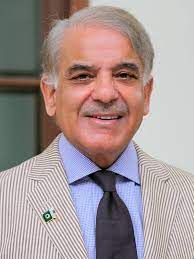
While laying the foundation stone for the M6 Sukkur-Hyderabad motorway, Prime Minister Shehbaz Sharif on Tuesday vowed that he will not compromise on the quality of the work.
Addressing the foundation stone laying ceremony, PM Shehbaz also warned that he will make surprise visits to the site to see the speed and quality of the work.
“Consider it my bad or good habit I make surprise visits for projects. Will take [Sindh Chief Minister Murad Ali] Shah to oversee the quality,” PM Shehbaz told the audience.
The premier also said that the project should be completed within 30 months, adding that the motorway, once completed will be beneficial for the transporters and passengers. The project is being completed under a public-private partnership agreement, he added.
The premier also highlighted that without Balochistan’s progress Pakistan will not prosper, adding that there is a need to make Gwadar port operational.
He said this project was unnecessarily delayed by the previous government.
“The coalition government is committed to bringing development and prosperity in all deprived areas of the country including Balochistan and Sindh.”
Regarding rehabilitation work for flood-affected people, the prime minister reiterated his resolve to utilise all available resources for this purpose.
Before the PM’s address, CM Sindh Murad Ali Shah deplored that former prime minister Nawaz Sharif had promised that the federal government would build the Sukkur-Rohri bridge and asked him for funds for the project.
At this, PM Shehbaz told the CM that his brother, during his tenure, had announced the project and he is announcing its completion.
PTI lays claim to project
Ahead of the PM’s address, former planning minister Asad Umar congratulated the people of Sindh for the start of work on the Hyderabad-Sukkur Motorway but lamented the eighth-month delay in it.
Umar said that the Executive Committee of the National Economic Council (ECNEC) had approved the project during former prime minister Imran Khan’s tenure in 2021. He also shared that the project was approved by the Public-Private Partnership Board on March 31, 2022.
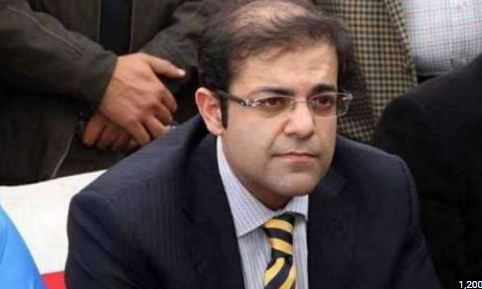
ISLAMABAD: The Islamabad High Court (IHC) on Tuesday granted protective bail to Prime Minister Shehbaz Sharif’s son Suleman for 14 days in a money laundering case registered against him by the Federal Investigation Agency (FIA) and an asset beyond means reference filed by the National Accountability Bureau (NAB).
Earlier today, Suleman appeared before a single-member bench of IHC Chief Justice Aamer Farooq for bail in the money laundering case.
During the hearing, Justice Farooq asked Suleman’s counsel about the court his client has to appear before.
Amjad Pervez, Suleman’s lawyer, told the IHC CJ that his client has to appear before a special judge central in Lahore.
Justice Farooq, after learning this granted the protective bail to the PM’s son and directed him to appear before the relevant court within 14 days.
In his petition before the IHC, Suleman contended that he left Pakistan in 2018 and the case was registered against him in 2020. He also shared that the FIA had not issued a call-up notice to him, adding that he was declared a proclaimed offender by the court without any action.
Later in the day, Suleman appeared before a divisional bench of IHC to seek bail in the assets beyond means case.
After hearing arguments, the bench approved a 14-day protective bail in the case and directed the accountability watchdog not to arrest him.
Suleman was declared proclaimed offender by a court due to his failure to appear in the case
IHC had earlier ordered Suleman to surrender before it by December 13 and barred authorities from arresting him till then.
The court had issued the order after his client had assured the bench that Suleman would return to the country.
Following the court’s order, Suleman landed in Pakistan after spending over four years of self-exile in the United Kingdom on Sunday.
‘Time for Imran Khan accountability’
Addressing the media after the court hearing, Suleman slammed Pakistan Tehreek-e-Insaf (PTI) Chairman Imran Khan and said that his time of accountability is here.
“The time of accountability is here; we will not spare him. We will not give him any space now, he will be punished,” said Suleman.
Asking about Farah Gogi, a friend of Imran Khan’s wife who allegedly sold the watches gifted to Khan, Suleman wondered why did she run away from Pakistan.
“You are crying that Farah Gogi is not a public office holder. I was not a public office holder either,” said Suleman. He added that PTI chairman, while he was in power, did not even think about women and arrested them.
“You had the power, you could have proven the cases,” said Suleman.
The PM’s son also slammed former National Accountability Bureau (NAB) chairman Javed Iqbal, saying that he was a “black stain” on the accountability system.
Suleman shared that a case was filed at the Pakistani government’s request, during Imran Khan’s tenure, in the United Kingdom. However, he added that the UK’s National Crime Agency found no proof of money laundering against his father.
The PM’s son asked the PTI chief to show the transaction of the money he got from selling the watches gifted by the Saudi crown prince.
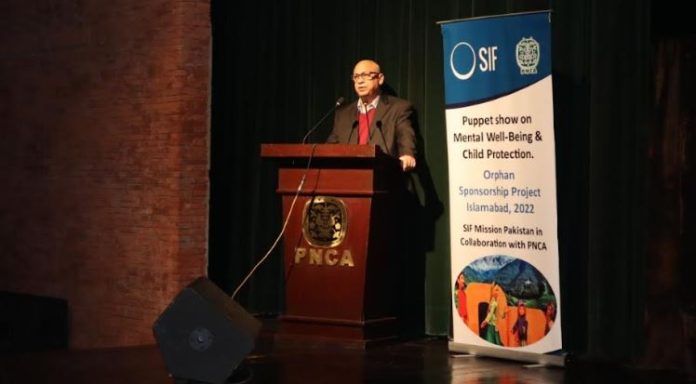
Islamabad, Dec 13 /DNA/ – Under its Orphan Sponsor Program, The Secours Islamique France (SIF) organized a puppet show at the Pakistan National Council of Arts (PNCA) Islamabad for the recreation and awareness of the children on their rights and protection. These children are mostly from sponsored orphan families in Rawalpindi and Islamabad.
Secours Islamique France (SIF) is implementing an Orphan Sponsorship Program in Islamabad and Rawalpindi at the community level, target group of the program are vulnerable orphan families which are targeted for the provision of stipend to support the education of the orphan children in addition to awareness raising to the sponsored families regarding child rights and protection. SIF is currently supporting 683 orphan children in Islamabad, Rawalpindi and Tharparkar. To enable vulnerable families to afford their children’s education, SIF provides cash assistance every year. SIF also provides livelihood support to sponsored families through vocational training programs, apprenticeship, enterprise development assistance and livestock support.
Speaking at the occasion, Head of Mission SIF Pakistan Dr. Altaf Abro Said” Puppet show organized under the orphan sponsorship program (OSP) of SIF is not only to entertain children, but also to relay messages highlighting the importance of education, especially for girls, skills development for youth and children’s rights and protection in general”.
Founded in 1991, SIF is an international non-Governmental solidarity Organization acting in the fields of humanitarian and development sectors. Working in the field for over 30 years, SIF is now active in more than twenty countries, mainly in sectors including Water and Sanitation (WASH), Food Security & Livelihoods (FSL), Education, and Child Protection. SIF is present in Pakistan since 2010.
The program was attended by a large number of Children their guardians and extended families, SIF staff and volunteers. All the participants appreciated the program and efforts of SIF in arranging such a delightful and informative program. Participants stressed that in future such programs should also be organized on a regular basis for grooming the children and creating a healthy & vibrant society in Pakistan.
A Long March-2F Y15 carrier rocket blasted off from the Jiuquan Satellite Launch Center in northwest China at 11:08 p.m. (Beijing Time) on November 29, sending the Shenzhou-15 spaceship and three Chinese astronauts into the space.
It was the last manned mission in the construction phase of China’s space station.
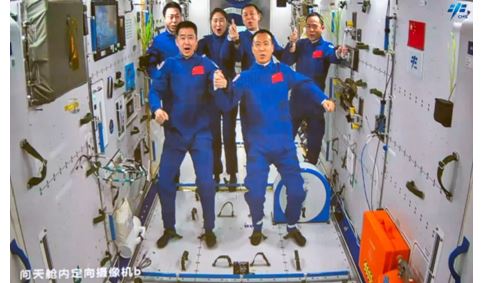
At 7:33 a.m. the next day, the Shenzhou-14 crew opened the hatch of the Tiangong space station in its T-shape configuration, and welcomed the Shenzhou-15 crew. Later, the six astronauts took a group photo together in the space station.
The three Shenzhou-15 crew members are Fei Junlong, Deng Qingming and Zhanglu. The two crews will live together in orbit for around five days.
The first in-orbit rotation in the Chinese space station is challenging. Therefore, the astronauts have made full preparations.
According to experts, during the in-orbit rotation, the two crews will work according to their respective tasks and plans. The Shenzhou-14 crew will make preparations for their return, while the Shenzhou-15 crew will focus more on adapting themselves to the in-orbit environment. The work handover will be completed before the in-orbit rotation ends.
There are two sets of kitchen equipment in orbit, allowing the six to prepare a meal at the same time and share food with each other. In addition, two modules of the space station are equipped with two sanitary areas and six sleeping areas, all of which can be used independently.
The Shenzhou-15 spaceship, the last manned mission launched in the construction phase of China’s space station, is the first one to visit the space station after the T-shape configuration was formed.
The safe arrival of the spaceship marked that the Chinese space station has for the first time expanded to its largest configuration with three modules and three spaceships, having a total mass of nearly 100 tons.
The three modules refer to Tianhe and two lab modules Wentian and Mengtian, and the three spaceships the cargo craft Tianzhou-5 and two spaceships Shenzhou-15 and Shenzhou-14. They demonstrate the remarkable capability of China’s manned space.
It is the first time that two Shenzhou spaceships have docked with the space station simultaneously.
Zhang Yi, designer of the Guidance, Navigation and Control subsystem of Shenzhou spaceships with the China Academy of Space Technology, said that during the rotation, the information of the two manned spaceships will be transmitted through different lines for exclusiveness and accuracy. The space station will offer ventilation and thermal support for the two spaceships. Air supply volume will be distributed according to the thermal environments of the two spaceships. Besides, an emergency evacuation strategy based on the situation of two berthing spaceships has been worked out to ensure the safety of the astronauts.
It is reported that the scientific experiment cabinets carried by the three modules will be comprehensively utilized during the Shenzhou-15 mission. More than 40 experiments and tests in the fields of space science research and application, space medicine and space technology are expected to be carried out.
As space activities are vigorously carried out, the studies on how creatures, including humans, respond to, exist in, change in and adapt to zero-gravity and cosmic radiation conditions, have become an important research subject of space life science.
According to the Chinese Academy of Sciences (CAS), two “mini cubes” supporting life science experiments are taken to the space station by the Shenzhou-15 spaceship.
One of them will be taken to the life and ecology experiment cabinet inside the Wentian space lab to be used for the study and research on space radiation metrology and biological damage assessment technology.
Cai Weiming, a researcher with the CAS Center for Excellence in Molecular Plant Sciences, said the experiment will provide an important basis for in-orbit radiation damage assessment and protection.
Rural museums are sprouting in the vast countryside of China due to a “cultural museum fever” that swept the country in recent years.
Donghong village in Jianghai district, Jiangmen city, south China’s Guangdong province has a long history, and is home to over 600 residential buildings that were built more than 100 years ago.
The 2.2-square-kilometer village has eight rural museums, which collect old stuffs to showcase local farming culture and traditional folk customs, such as rice pounders, fishingboats, spinning wheels, and kerosene lamps. These museums have turned such old stuffs into wealth and are a witness to the village’s history and traditions.
To the east of the east section of Chaoshan mountain scenic area in Hangzhou, east China’s Zhejiang province, there are three Hui Style architectures built in the Qing Dynasty (1644-1911) and Ming Dynasty (1368-1644). They belong to a museum that collects over 6,000 traditional pastry moulds. The museum was listed by authorities as one of the first rural museums in the province.
Apart from common wooden pastry moulds, it also collects those made of porcelain, as well as stone ones manufactured in the Southern Tang Dynasty (937-975).
The exhibits explain the close relationship between pastry moulds and local customs, the development of pastry moulds, and pastry mould cultures in different regions.
On the second floor of the museum, there are two rooms where visitors can make traditional Chinese cakes. The museum hosts pastry-making activities on every important traditional Chinese festival, such as the Mid-Autumn Festival and the Chongyang Festival, or the Seniors’ Day.
Besides, the museum has also set up a sub-venue at a local primary school that offers relevant courses for students, presenting local customs and the charm of the pastry mould culture.
Citing the Chinese saying that “The trait of folks is determined by the local environment,” An Laishun, vice president of the International Council of Museums and professor with Shanghai University, noted that rural museums are different from the archaeological and art museums in cities, as they focus on agriculture, rural areas, and farmers, and thus help enhance farmers’ recognition for local culture and create a more harmonious atmosphere in the countryside.
He said rural museums are a bond linking rural residents, as well as a platform driving the development of relevant sectors. The construction of such museums and relevant activities can make rural tourism more attractive, spur local economic development, and increase farmers’ income, thus boosting rural vitalization, An added.
Zhejiang province issued China’s first guidance document on the construction of rural museums in April this year, which set regulations on rural museums from multiple perspectives. According to the document, Zhejiang province will have 1,000 rural museums by 2025.
Experts said the document pointed out some problems bothering the development of rural museums, such as museums being homogeneous and lacking correlation with local cultures.
The document stressed that rural museums should have a basic display method and clear themes, and exhibitions should be diverse and carry local features.
An believes that in order to achieve long-term and sound development, rural museums must draw social participation and integrate with other local cultural resources.
Hou Xiaolei, professor with the School of Architecture, Central Academy of Fine Arts, noted that farmers must take the initiative to vitalize rural ecology, economy, and social development.
“A multi-party mechanism should be established for the operation of rural museums, covering government funding, social donations, self-raised funds by museums, and special funds. This mechanism will create jobs for farmers and promote livelihood development,” Hou said.
Chinese colleges and universities, including those under the administration of the Ministry of Education (MOE), have made great efforts in assisting poverty alleviation and achieved fruitful results in advancing rural vitalization, a major task in realizing the great rejuvenation of the Chinese nation.
In 2012, 44 universities under the administration of the MOE paired up with 44 national-level poverty-stricken counties, and 11 joined a special poverty alleviation program in southwest Yunnan province.
Six years later, the ministry launched an action plan which involved 20 more universities under its direct administration in pair assistance programs for poverty alleviation.
University of Electronic Science and Technology of China has built an intelligent animal husbandry system for Tashan village, southwest China’s Guizhou province, which standardizes cattle and chicken breeding through a visualization system.
Xi’an Jiaotong University invested over 2 million yuan ($283,126) in developing a health management system to strengthen the respiratory and critical care medicine department of the county-level hospital in Shidian county, southwest China’s Yunnan province.
In Funan county, east China’s Anhui province, Tongji University built a biogas production base that turns organic waste into energy. The base has been recommended nationwide by relevant authorities as an example of renewable energy making.
“Over the past decade, universities have invested and introduced more than 4.43 billion yuan to poverty alleviation programs. They purchased and helped impoverished regions sell 4.4 billion yuan of agricultural products and introduced 663 enterprises to these regions with an actual investment of 15.16 billion yuan,” said Liu Changya, director-general of the Department of Development Planning under the MOE.
Fully exploiting their advantages of disciplines, technology and human resource, these universities have gradually developed a characteristic path for poverty alleviation with their features that meets the demand of impoverished regions, Liu added.
Universities have worked to enhance education in impoverished regions through both facility and capacity building. They donated materials and offered aid education, training sessions and partner assistance to these regions. The training sessions have been joined 116,400 times by teachers in impoverished regions over the past decade, promoting the quality of local education.
In terms of industrial development, universities have made development plans, facilitated the commercialization of scientific results and adopted many other measures to help farmers better the varieties and quality of crops. Over the past 10 years, they have trained 777,600 grass-root cadres and technicians, planned 1,352 assistance programs and implemented 1,949 scientific projects.
To expand the healthcare service capability of impoverished regions, these universities sent doctors and medical equipment, trained local medical workers and launched healthcare publicity activities. Thanks to the assistance, a number of impoverished counties now have their first third-grade hospitals, which rank at the top of China’s three-tier hospital grading system.
Universities have also mobilized all available resources to further expand the sales channel of agricultural products for impoverished regions. They set up “make-to-order” production bases, purchased farm produce from impoverished regions, and helped these regions sell agricultural products through livestreaming commerce.
Such a strong synergy comes from efficient cooperation mechanisms. According to Liu, relevant parties have set up assistance alliances, which are joined by 131 universities under the administration of the MOE and enterprises, to further promote resource sharing and match universities’ capabilities to the demand of impoverished regions.
Thirty-seven universities under the administration of the MOE joined the discipline construction of 14 universities jointly built by the MOE and provincial governments, which effectively improved the operation of the latter and demonstrated the catalytic role of poverty alleviation and rural vitalization.
Since the implementation of the 2018 action plan, universities have given full play to their advantages in sci-tech innovation and achieved remarkable progress in assistance.
According to statistics, over 18,000 applicable agricultural techniques have been commercialized over the past five years, generating revenue of more than 71 billion yuan, which has significantly promoted the modernization of agriculture and rural areas.
Besides, Chinese universities have won eight science awards, 20 technical invention awards and 46 sci-tech progress awards at the national level in the field of agriculture and rural areas.
With regard to frontier technologies, a research team from Tianjin University has fundamentally tackled the problem of the limited source of pesticide raw materials and excessive consumption of resources by realizing efficient synthesis of biopesticide varieties in chassis cells of microorganisms. A genome editing technology independently developed by China Agricultural University has offered core technological support for the development of China’s seed industry.
Besides, universities are also working to solve the bottlenecks restraining the development of agriculture and rural affairs and have achieved remarkable progress in developing water-saving agriculture, recyclable agriculture and climate-smart agriculture.
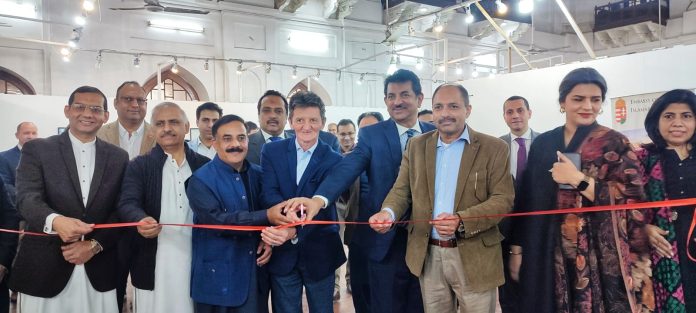
One year after the unforgettable exhibition in the Lahore Fort of the paintings of August Schoefft restored by experts from Hungary,on Friday the Hungarian Embassy was back with its brand new project in the cultural capital of Pakistan. This time the Embassy displayed the beautiful photo collection of the Islamic architectural heritage of Hungary. The venue of the event, the Grand Hall of the College of Art and Design, University of the Punjab had a symbolic meaning being just a few steps away from the Oriental College founded by the Hungarian professor Dr. Wilhelm Leitner.
Ali Hamza/DNA
LAHORE, Dec 09 (DNA): Embassy of Hungary organized an exhibition on Islamic Architectural Heritage of Hungary in collaboration with the College of Art and Design, University of the Punjab, at their historic Grand Hall. The exhibition is conceived with an idea of highlighting the architectural heritage from the 16-17th century Ottoman period of Hungary (Madjaristan).
Speaking at the inauguration Béla Fazekas Ambassador of Hungary to Pakistan, mentioned that there are hardly any European countries; apart from Spain and the countries of the Balkans, in which Muslim memories complement the range of architectural styles. This rich Ottoman Islamic architectural heritage of Hungary is represented by well preserved and renovated mosques, minarets, tombs and hammams those were built by the finest artists of the time. These are the northernmost examples of Ottoman architecture in a non-Muslim European cultural environment.
In his opening remarks the Ambassador highlighted that „even if the large majority of your country belongs to one religion it does not mean that you can afford the luxury of not taking care of the rich cultural heritage of the minority people. It is not only a generosity, but a great potential for the religious tourism.”.
Béla Fazekas also mentioned that later on the Embassy was planning to take the exhibition to Islamabad and Peshawar as well.
Principal of the college Prof.Dr. Sumera Jawad, explained the students about the value and contribution of Muslimarchitectural art in Europe and precisely in Hungary.Teachers, students, journalists and people from different walks of life visited the gallery and appreciated the initiative.
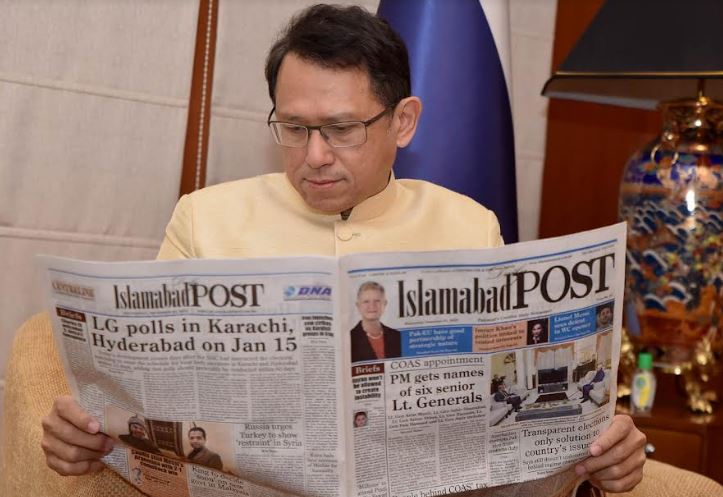
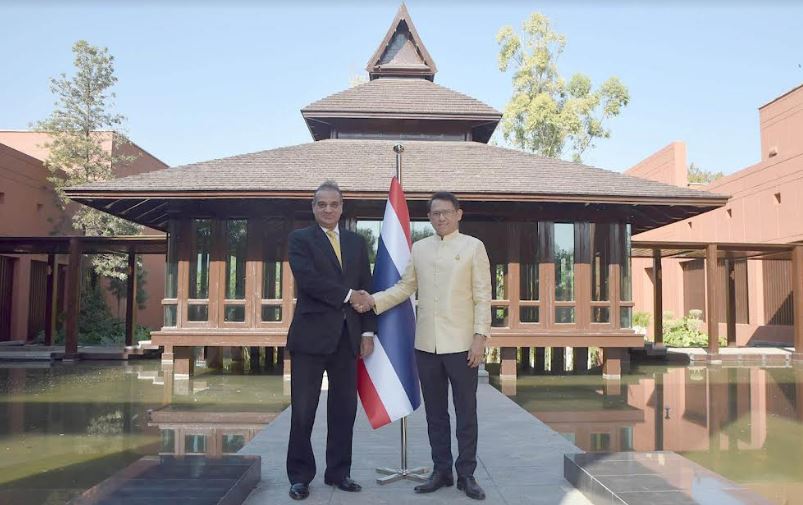
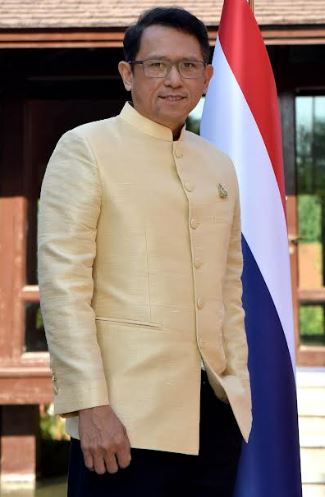
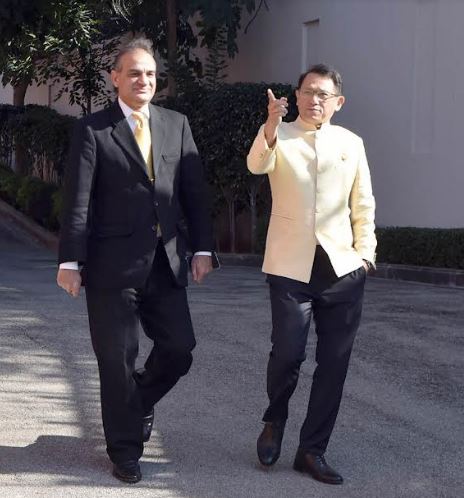
Ambassador of Thailand talks to Centreline, Daily Islambad POST and DNA News Agency
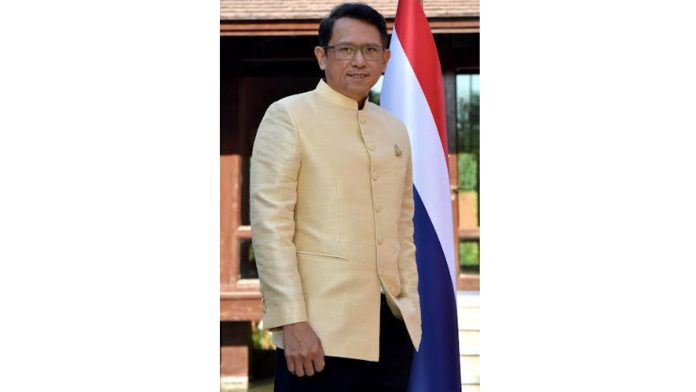
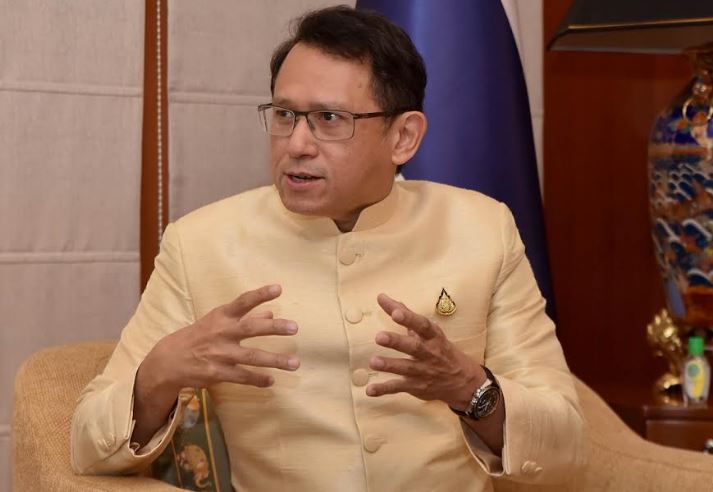
Ambassador of Thailand to Pakistan Chakkrid Krachaiwong talked to Centreline. During the interview the Ambassador touched upon various aspects of bilateral as well multi-lateral issues. Here is the text of his interview.
Ansar Mahmood Bhatti
1) First let us begin with bilateral relations, can you please shed some light on the bilateral relations in political, trade and economy fields?
I am pleased to say that we are living in a very exciting moment of Thailand-Pakistan relations.
The reason I’m saying that is because this year marks the 60th anniversary of the late Bhumibol Adulyadej, the Great and Her Majesty Queen Sirikit’s landmark visit to Pakistan. To commemorate this auspicious occasion, the Royal Thai Embassy, in kind cooperation with the Punjab Governor House, accomplished a project to improve the landscape around the mango trees that Their Majesties planted during their visit in 1962. Sixty years have passed, these old mango trees still stand strong as a testament of our closed and cordial ties. I would like to also express my sincere appreciation to our Pakistani friends who help taking very good care of these important trees.
His Majesty the current King of Thailand has also visited Pakistan 3 times when His Majesty was the Crown Price. At one of his visits in 2006, the then Crown Prince, brought with him relief assistance granted by his father for the earthquake victims in Pakistan and during the recent severed flood, His Majesty has also sent a Royal Condolence Message to those who were affected by the flood.
Additionally, since October last year, the Embassy along with Pakistanis friends from several sectors as well as the Government of Pakistan have celebrated the 70th anniversary of the establishment of diplomatic relations through numerous activities. In fact, linkages between our two countries actually dated back more than 2,000 years through exchanges of trade and culture since Gandhara civilization. Recently, the Royal Thai Government presented a container of the Lord Buddha’s relics as a gift to commemorate the 70th anniversary to Taxila Museum which combines the beautiful Thai and Gandhara arts reflecting such linkages. Also, under Punjab and Pakistan authorities’ invitation and support, the Thai Buddhists have also performed one of the largest Buddhist ceremonies in Taxila demonstrated Pakistan’s harmony and interfaith principle.
In March this year, H.E. Mr. Don Pramudwinai, Deputy Prime Minister and Minister of Foreign Affairs of Thailand, participated in the OIC Foreign Minister Conference organized in Islamabad. This visit not only demonstrated our cooperation in multilateral aspect but also to represent Thailand’s strong support to our Pakistani friends as the host country.
In terms of trade, despite of the global pandemic, our trade volume last year has reached the highest record in the entire history of our bilateral trade at 1.8 billion US Dollars. I am hopeful that this year’s bilateral trade would break yet another record as the trade volume until this September has already reached 6 percent higher than the same period of last year. We are also looking forward to the conclusion of Thailand-Pakistan Free Trade Agreement which is anticipated to enhance our trade dynamic and strengthen our trade links to a higher level for our mutual benefit.
When I visited Sialkot, I am delighted to learn that the rubbers and latex that have been imported from Thailand are used by factories there, to make footballs for players around the world especially World Cup during the past several years, including the “Al Rihla football” using in World Cup 2022 in Qatar. The synergy between high-quality rubber from Thailand and skill craftsmanship and technique from Pakistan represents as a symbol of strong relationship between Thailand and Pakistan and cooperation that benefit beyond our two countries.
Regarding investment, Charoen Pokphand Group, Thailand’s agro industry, which has established its large investment in Lahore, has shared with us that they are very pleased with the productivity and already planned to increase their investment next year, creating more jobs for the local people. We also have received good news that Pakistani businessman who joined Rawalpindi Chamber of Commerce’s trip to Thailand in July has invested in buying two hotels in Phuket, Thailand. I still believe that there are more rooms to be explored.
2) Direct air links between the two countries have contributed greatly towards deepening of bilateral ties. Bangkok can also be a transit hub for rest of the world. Please share your thoughts on this?
One of the first questions I was asked since my arrival last year was “When Thai Airways will resume its flight between Pakistan and Thailand?”. Since then, the Royal Thai Embassy in Islamabad had been working closely with the Thai Airways toward the flight resumption. Finally in March this year, the Thai Airways has resumed its direct flights from Bangkok to all three major cities in Pakistan: Islamabad, Lahore, and Karachi. Not only that, the number of flights has quickly increased from only once a week to 4 or 5 times a week. Not only Pakistanis can travel to Thailand more comfortably but also, for the last couple of months, we have noticed a sharp increase in numbers of Thai people travelling to Pakistan, deepening the people-to-people ties, which is another important element of our bilateral relations. Recently, we have seen more and more stories about Pakistan published in the Thai social media, including one of my own, sharing the true beauty of natural landscape and world ancient heritage sites which have not presented well enough through the eyes of the global media.
3) Cultural linkages are yet another area where both countries have been cooperating closely. How do you see Pakistan government arrangements to preserve especially the Buddhist heritage?
I believe that culture, arts, music, dance, and food can be key elements to create understanding and unity as they are understandable and appreciable by all humanity. It is a common language of all man kinds. That is why for the past year the Embassy has participated in several culture and social activities from fund raising bazar with MOFA to traditional dress show to Thai Festival in Lahore, the largest scale event from Thailand which attracted almost 10,000 visitors.
Regarding the heritage sites, Pakistan is home to the ancient Gandhara civilisation with plenty of ancient Buddhist sites declared as UNESCO World Heritage. I admire the arrangement of the Pakistan’s authorities as well as the local Pakistanis in preserving these world heritage sites. By doing so, not only the Pakistanis have preserved these sites for your country but also for the people from around the world. The Pakistan Government’s vision to promote the tourism of these historical sites will bring more development to these areas and the local people and economy would also benefit greatly from this tourism.
I would like to see more people visiting Pakistan because I want them not only to see your country’s beauty and heritage but to also experience, as I do, the friendliness and kindness of the Pakistanis.
4) Inspired by Pakistani truck art; the Royal Thai Embassy recently got its wall painted, an idea which was liked by many Pakistanis and other foreign mission as well. What was your motivation behind this initiative?
The 226-foot-long wall of the Embassy, which was painted with the Pakistan’s truck art, is one of the projects to celebrate the 70th anniversary of the establishment of Thailand-Pakistan diplomatic relations.
The Pakistan’s truck art is globally known for its unique charm reflecting appreciation for Pakistan’s love of art, friendliness, joyfulness, and diversity that resemble Thai people. I hope that this painted wall will connect the Pakistani and Thai people together in the sense that when the Pakistanis come to the Embassy, they would feel welcomed by the art of their own and, at the same time, when the Thai people come to the Embassy, they would get to know more about the Pakistan’s art and culture through this painting. It is also to demonstrate our respect to Pakistan’s rich culture and talented artists.
I would like to express my appreciation to the very talented artist, Mr. Siyar Khan, from Peshawar who has preserved this indigenous art for over 20 years of his work. We hope that this painting will contribute to the promotion and preservation of indigenous art, which has long history, in this digitalized era. I also would like to thank the Pakistan’s media that help promoting this project to wider audiences. I am very pleased the Thai media are also interested in and published a number of articles on this project, one of which is written by myself.
5) Thailand as we know contributed generously towards flood relief activities. Please share with our readers some details about the assistance provided so far including a gala fundraiser held in collaboration with the Serena Hotels?
I wish to express my sincere condolences and pass on solidarity from the people of Thailand to those who have been affected by one of the most devastating floods in the Pakistan’s history.
The Ministry of Foreign Affairs of Thailand, the Royal Thai Embassy, and Thai civil society organizations contributed approximately 134 million Pakistan Rupees for the flood relief operations. Moreover, I also have a conversation with Mr. Aziz Boolani, CEO of Serena Hotel, and we agreed to have professional Thai traditional dancers and Muay Thai boxers who flew in from Thailand to perform at the Fundraising Gala Dinner both in Islamabad and Faisalabad to assist those who suffered from the severed flood. We are proud to be a crucial part of these fundraising galas and are appreciative of Serena Hotel and the donors as well as participants of the events.
Currently, the Thai civil society still continues its financial support to the flood victims because we understand that even if the flood has been subsided in many areas, the rehabilitation of the flood affected people still be a priority.
I believe that it is important for the international community to focus much more on combating climate change and global warming. Otherwise, this can happen again and it could happen to any country.
6) Anything you would like to add?
I extremely value my assignment here as Ambassador because it allows me to meet Pakistani friends from all walks of life as well as my friends in Diplomatic Circle. It has also given me profound respect for the people of Pakistan and their patriotic minds and passionate hearts as Pakistan progresses through this challenging world. My Ambassadorship is also giving a great opportunity for me and our families at the Embassy, to return your kind hospitality, with our sincere friendship to our dear friends in Pakistan. Rest assured that, as a friend, Thailand will work hand in hand with Pakistan to achieve our common goals for the benefits of our peoples as well as people of the world.
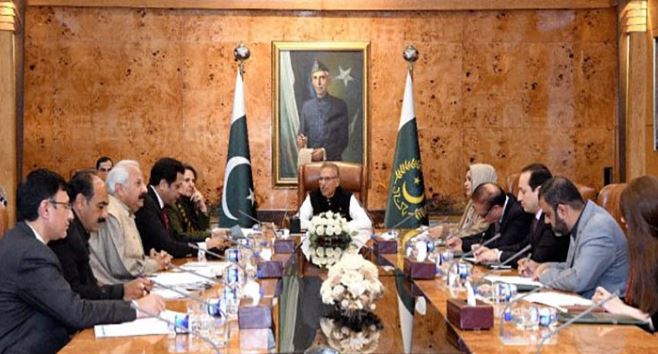
ISLAMABAD – President Dr Arif Alvi on Monday emphasized the need for uniform, comprehensive and all-inclusive facilitation of Differently-Abled Persons (DAPs) for their registration with the National Database and Registration Authority (NADRA).
Talking to NADRA Chairman Muhammad Tariq Malik, the president stressed on resolving the issues pertaining to issuance of identity cards, provision of healthcare facilities, and assessment of their disability level and its nature in a hassle-free manner.
He said the DAPs’ inclusiveness was essential for developing a strong and healthy society.
During the meeting, the president urged the need for a comprehensive and inclusive awareness campaign at the national and provincial levels to eliminate discrimination against the DAPs in society and to remove stigmas and stereotypes.
He also called for granting complete access to the disabled in mainstream educational institutions without any discrimination or non-professional treatment. He said training institutions should take steps for the inclusion of DAPs, and devise special curricula and techniques for their skill development.
He said employers should factor in their disabilities and create special jobs for the disabled, besides providing them with Assistive Technology so that their full potential could be realized.
The president said the medical boards to assess the disability of the DAPs across Pakistan should have the same terms of reference, procedures, and forms.
He appreciated NADRA for giving free-of-cost services to the DAPs, establishing exclusive counters, and creating barrier-free access in most of its centers across the country.
President Alvi also emphasized the need for creating awareness of different incentives and schemes offered for the DAPs at various levels, including stipends under the Benazir Income Support Programme (BISP), discounted entry at Metro Bus Service, BRT Peshawar, railways and Pakistan International Airlines so that they could avail the services and enhance their productivity.
The president also appreciated the issuance of juvenile cards by NADRA and also urged the need to create plastic-based cards for the DAPs from ages five to nine years, which would be useful for them and also be easy to keep.
He said the best practices developed by NADRA to facilitate the PWDs (People with disabilities), and the best practices of other federal institutions in providing services to the DAPs should be shared with all the provinces at all levels for their duplication to provide better facilities to them.
He also appreciated NADRA for maintaining a record of around 0.6 million registered disabled persons, stressing that the0 ratio needed to be increased.
The president said that unfortunately the DAPs continued to face a wide array of issues, including the lack of wheelchair-friendly ramps, screen readers, braille, signage, and employment opportunities, and stressed the need for all relevant stakeholders to take measures for extending the benefits of the modern and Assistive Technology to support them.
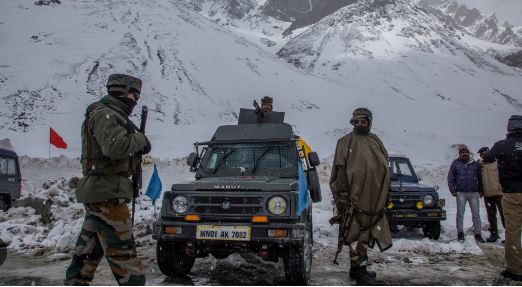
DNA MUMBAI, DEC 12: Indian and Chinese troops suffered minor injuries in a clash in the Tawang sector of India’s Arunachal Pradesh state on Dec. 9, the Indian army said on Monday, the first such incident since the deadly clash between the two neighbours in June 2020. Arunachal Pradesh is located on India’s eastern tip and shares a border with China. “Both sides immediately disengaged from the area,” the army said, adding that the incident was followed by its commander in the area holding a meeting with his Chinese counterpart to discuss the issue. An Indian foreign ministry spokesperson did not respond to a request for comment, while a defence spokesperson declined to comment on injuries sustained by Indian or Chinese soldiers during the skirmish. Neither the Chinese foreign ministry nor its embassy in New Delhi responded to a request seeking comment. The un-demarcated 3,800 km (2,360 mile) frontier between the Asian giants has stayed largely peaceful since a war in 1962, before the clashes two years ago sent relations nose-diving. In June 2020, Indian and Chinese troops were involved in a hand-to-hand combat in the Galwan Valley of Ladakh, abutting the Chinese-held Tibetan plateau. The incident led to the death of 20 Indian soldiers, while China suffered an undisclosed number of casualties. The two sides agreed to disengage from the disputed area along the Himalayan border in September this year. For long, troops on both sides have adhered to long-standing protocols to avoid the use of any firearms along the de facto border known as the Line of Actual Control.