Home Blog Page 1403

China, Saudi Arabia see constant outcomes of cooperation

By Yan Huan, Shen Xiaoxiao, Zhou Zhou, People’s Daily

As China and Saudi Arabia synergized their Belt and Road Initiative and Saudi Vision 2030 over the recent years, the two countries’ cooperation in energy, technology and infrastructure sectors have been gradually deepened and achieved constant outcomes.

The Yanbu Aramco Sinopec Refining Company in Yanbu, which sits on the west coast of Saudi Arabia, is a joint venture between Saudi Arabia’s oil giant Aramco and China’s largest oil refiner Sinopec. Covering an area of about 5.2 million square meters, the refinery boasts total investment of over $8 billion. It is the largest Chinese investment project in Saudi Arabia.

The oil refinery has maintained sound operation since it was put into use. With a designed refining capacity of 400,000 barrels per day, its products are sold to Europe and the Asia-Pacific region. Its profit between January and October this year set a record high since its operation.

China and Saudi Arabia have made good use of their respective strength and cooperated well in this project. The Yanbu Aramco Sinopec Refining Company has received a series of international awards in engineering construction and operation and management.

Apart from the economic benefits, the oil refinery is also a great platform for the career development of local young employees.

A 32-year-old engineer surnamed Hussein works for the refinery’s coking workshop. He came to the oil refinery in 2015 after graduating from University.

The workshop is the first coking facility introduced to Saudi Arabia, so the job was quite difficult for Hussein at first. Thanks to the assistance offered by Chinese engineers and the man’s hard work, Hussein gradually acquired the skills needed for the job. Now, Hussein has been promoted to supervisor and became friends of the Chinese engineers.

At present, the oil refinery has over 1,200 employees from Saudi Arabia, who account for 87 percent of its total staff. Since its operation, the oil refinery has provided, directly and indirectly, more than 6,000 jobs for local communities. Besides, it has nurtured a batch of local managing personnel and technical workers through training and continuing education programs it launched, injecting momentum into the economic and social development of local communities.

Saudi Arabia is hot and dry. Domestic water is extremely precious in the country. Therefore, the fresh water desalinized from seawater is an important supplement to Saudi Arabia’s regular water resources.

In March this year, the Saudi Arabia Rabigh Phase III seawater desalination plant was put into use. It was built by SEPCOIII Electric Power Construction Co., Ltd., a subsidiary of the Power Construction Corporation of China. It is the first major seawater desalination plant constructed by a Chinese firm overseas.

As an important livelihood project of Saudi Arabia, the plant produces 600,000 cubic meters of water on a daily basis and is able to supply domestic water for over 2 million households in major cities around it, including Rabigh and Mecca.

“Before the plant was built, domestic water always ran out,” said a local resident surnamed Abdullah in Rabigh. People had to purchase water from supermarkets whenever their domestic water was used up, Abdullah added.

Now, with the seawater desalination plant, clear water is always available. “Thank Chinese enterprises for eliminating our worries about domestic water shortage,” Abdullah said.

Khaled Al Qureshi, CEO of Saudi Water Partnership Company, the owner of the plant, spoke highly of the Chinese constructors that built the plant. He said these constructors, who still maintained rapid progress, safety and good management of the project despite the impacts from COVID-19, have set an example for other projects of Saudi Water Partnership Company.

The Yanbu Aramco Sinopec Refining Company and the Saudi Arabia Rabigh Phase III seawater desalination plant are a miniature of China assisting Saudi Arabia’s economic upgrade and lifting the latter’s livelihood.

China isSaudi Arabia’s largest trading partner, and Saudi Arabia is China’s important energy supplying country and largest trading partner in West Asia and North Africa. The two sides reported bilateral trade volume of $87.31 billion last year, up 30.1 percent year on year.

Saudi Minister of Investment Khalid bin Abdulaziz Al-Falih said under the guidance of the leaders of China and Saudi Arabia, the two countries’ economic and trade cooperation embraced prosperous development, with increasing mutual investment and accelerated releasing of cooperation potential in green and low-carbon development. China has become the most reliable partner of Saudi Arabia in the latter’s pursuit of the Saudi Vision 2030, he added.
To build a China-Arab community with a shared future in the new era

By He Yin, People’s Daily

Chinese President Xi Jinping paid a state visit to Saudi Arabia on Dec. 8, and will attend the first China-Arab States Summit and the China-Gulf Cooperation Council (GCC) Summit on Dec. 9 in Riyadh upon invitation.

Xi and leaders from Arab states are expected to jointly lay out the blueprint for future cooperation, usher in a bright future of China-Arab strategic partnership, chart the course for building a China-Arab community with a shared future in the new era, and inject confidence and impetus in promoting world peace and development.

Xi will attend the inaugural China-Arab States Summit. This will be the largest and highest-level diplomatic event between China and the Arab world since the founding of the People’s Republic of China as well as an epoch-making milestone in the history of China-Arab relations.

China and Arab states are important members of the developing world and important political forces in the international community. China has all along viewed Arab states as strategic partners  in terms of pursuing peaceful development, further cooperation with developing countries and building a community with a shared future for mankind.

Over the recent years, the two sides have gradually consolidated political mutual trust and reaped fruitful results in practical cooperation in various fields. They have made constant achievements in the high-quality development of the Belt and Road Initiative (BRI).

They firmly support each other in safeguarding their core interests and join hands to safeguard the basic norms governing international relations.

Changes unseen in a century are accelerating. The world has entered a new phase of turbulence and transformation. To hold the first China-Arab States Summit is a joint strategic decision of both sides to strengthen solidarity and coordination under the current circumstances. China and Arab states will send a strong message about their determination to strengthen solidarity and coordination, render each other firm support, promote common development and defend multilateralism.

The first gathering of leaders from China and GCC countries will have a profound influence on the development of China-GCC relations.

The GCC is one of the world’s most dynamic regional organizations. It plays a positive role in the region and even the world.

China and GCC countries are good brothers, friends and partners that enjoy a high degree of political mutual trust, solid economic and trade cooperation and frequent people-to-people exchanges. Their relations, which are healthy, stable, and comprehensively developed, have become a front-runner in China’s relations with Arab states and set a good example for cooperation between China and developing countries.

China has maintained the largest trading partner of the GCC. Last year, two-way trade bucked the trend and surged 44 percent. Lifting their relations onto a new level, the two sides should cope with the turbulent international situation with their stable relations and promote regional prosperity with their mutually beneficial cooperation.

This trip was Xi’s second visit to Saudi Arabia in six years. It elevated the China-Saudi Arabia comprehensive strategic partnership to a higher level.

China and Saudi Arabia are good friends, partners and brothers that enjoy mutual trust, win-win cooperation and common development. China attaches great importance to the development of China-Saudi Arabia relations and puts Saudi Arabia at a priority position in China’s overall diplomacy, its diplomacy with the Middle East region in particular.

Given the profound and complicated changes in the international and regional situations, the strategic and overarching importance of China-Saudi Arabia relations has become more evident.

China will continue to promote the synergy between the BRI and Saudi Arabia’s Vision 2030 and forge a high-level cooperation pattern between the two countries in such fields as energy, economy and trade as well as high technology, enhance coordination in international and regional affairs, and constantly enrich the connotation of the China-Saudi Arabia comprehensive strategic partnership.

Security and development have long been two major issues for countries in the Middle East. China has always adhered to the principle of non-interference in internal affairs of sovereign countries in dealing with Middle East affairs, and remained an important constructive force promoting peace in the region and supporting the development of the region.

At the opening ceremony of the eighth ministerial meeting of the China-Arab States Cooperation Forum, Xi proposed the two sides to together pursue common, comprehensive, cooperative and sustainable security, which has offered an important method to tackle the security dilemma in the Middle East.

The China-proposed Global Security Initiative is of great significance for promoting peace and stability in the Middle East. It has been widely recognized and supported by Arab states.

The Global Development Initiative (GDI), which is also proposed by China, has been supported by 17 Arab states, and 12 have joined the Group of Friends of the GDI.

Chin will work with Arab states to implement the GDI, help the latter improve livelihood and their capability of independent development, and assist Arab countries in achieving the goals of the UN 2030 Agenda for Sustainable Development. China and Arab states are actively exploring a governance path for the Middle East that promotes peace through development, which will help the region achieve long-term peace and stability.

Under new historical conditions, China and Arab states need to reinforce cooperation, tide over difficulties and march forward together more than ever.

Taking the visit as a new starting point, China will definitely work with Arab states to further carry forward their traditional friendship, deepen their all-round, multi-level and wide-ranging cooperation, and build a China-Arab community with a shared future in the new era, so as to benefit the people of both sides, promote solidarity and cooperation among developing countries, and jointly safeguard international peace and development.

Chinese President Xi Jinping is warmly greeted upon his arrival by Governor of Riyadh Province Prince Faisal bin Bandar Al Saud, Foreign Minister Prince Faisal bin Farhan Al Saud, Minister Yasir Al-Rumayyan who works on China affairs and other key members of the royal family and senior officials of the government at the King Khalid International Airport in Riyadh, Saudi Arabia, Dec. 7, 2022.

Chinese President Xi Jinping arrived here Wednesday afternoon to attend the first China-Arab States Summit and the China-Gulf Cooperation Council (GCC) Summit, and pay a state visit to Saudi Arabia at the invitation of King Salman bin Abdulaziz Al Saud of Saudi Arabia. (Xinhua/Huang Jingwen)

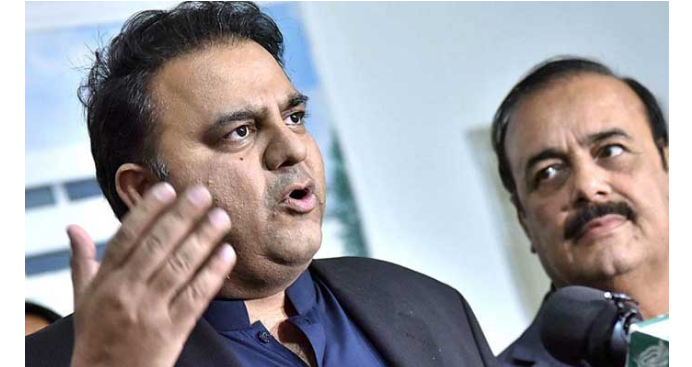
‘Audio leaks won’t harm Imran Khan’: Fawad on Bushra Bibi’s latest clip

After another purported audio of former first lady Bushra Bibi — in relation to Toshakhana gifts — got leaked, Pakistan Tehreek-e-Insaaf (PTI) Senior Vice-President Fawad Chauhdry Friday shrugged off the negative impact of such leaks on party’s chairman Imran Khan.

“Those who think such audios will harm [credibility of] Imran Khan should step out of the imaginary world,” Fawad said speaking with journalists in Lahore’s Zaman Park.

Earlier today, another alleged audio leak of Khan’s wife, over the Toshakhana gifts came to the fore in which she could be heard talking to Inaam Khan, the former administrator of the ex-prime minister’s residence at Bani Gala.

In the audio, Bushra Bibi could be heard yelling at the staff for allegedly making photographs of the gifts brought inside the premier’s private residence.

Commenting on the audio of the former prime minister’s wife, the ex-PTI minister claimed that it is a manipulation of different audio clips.

“Different audios were recorded and then spliced together. All the audios which are coming now have been joined after being cut and pasted,” the former minister said claiming about audio’s inauthenticity.

The minister said that the government brought forward “ridiculous scandals and discussions”.

Speaking on the potential dissolution of the Punjab and Khyber Pakhtunkhwa assemblies, Fawad said that it will help the political process move ahead deeming elections as the way to ensure stability in the country.

“Imran Khan will announce the date for the dissolution of assemblies tomorrow [Saturday]. Dissolution of assemblies will advance the political process. There will be stability in the country,” the former minister added.

Mustafa Nawaz Khokhar quits PPP, says to continue further would ‘compromise his self-respect’

Weeks after resigning as a senator, PPP leader Mustafa Nawaz Khokhar announced on Friday that he decided to quit the party.

He confirmed his decision to leave the PPP.

Separately, in an interview, Khokhar elaborated on his reasons for leaving the party.

He said that he had a good run with the party but to continue further “is compromising on my self-respect”. However, he refused to provide any specifics, saying it was no use delving into the past.

Talking about the reason for resigning as a senator, he said that the PPP leadership could provide a better answer. He said he suspected that the positions he took on certain issues were not well-received by the party.

“That is why maybe some people in the party may have questioned him (PPP Chairman Bilawal Bhutto-Zardari) so he may not have liked it and he thought it felt appropriate to ask for my resignation.”

Khokhar further said that he was not “disappointed” with how the events unfolded. “My heart is content over the positions I took and I will raise my voice and will not compromise on my independent thinking if there are more issues in the future.”

He said that political parties needed to give space for criticism. If there is no room for dialogue, then they become less like political parties and more like fiefdoms, he said.

When asked about his thoughts on the incumbent coalition government, the former senator said: “Hybrid regime 2.0 — absolutely. The kind of decisions being taken since Shehbaz Sharif was made the prime minister, those decisions were maybe not even taken in Imran Khan’s time.”

After the PTI government’s tenure, the current government “should’ve responded to Imran Khan’s wrongs in a democratic manner. Today we have pushed the country back to the 90s. If Imran Khan comes back in power, then he will want to take revenge,” he said.

Continuing his line of thought, he said the current government was in the wrong. “See, there are many things in Islamabad that we can’t discuss on TV. What is happening with Azam Swati? Why is Ali Wazir still in jail? He is not a politician’s prisoner.”

Khokhar also held political instability responsible for the country’s economic woes, adding that “fresh elections were the only solution”.

“We are politicians, what fear do we have of going among people? They [the government] fear that if elections happen then Imran Khan will win.

“There is no other solution except for fresh elections. The economy is the biggest challenge, you have to fix it. Today the government can’t take the decisions which our economy needs,” he said.

Khokhar had formally resigned as a senator on November 10, two days after announcing plans to vacate his seat in the upper house of parliament.

At the time, he said a senior party leader had conveyed the leadership’s unhappiness with his “political positions”. He further said that as a political worker, he cherished the right to express his opinions on matters of public interest.

In December 2020, Khokhar had resigned as the official spokesperson for Bilawal but stated that he would continue to be a part of the PPP.

He had said he would be able to comment and express his thoughts more freely, without any compulsions and responsibility that came with the position of spokesperson of a party head.

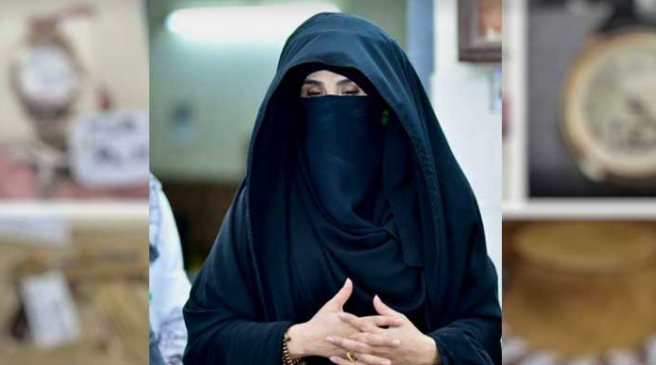
Another purported audio of Bushra Bibi muddies the waters

ISLAMABAD – Another purported audio of Bushra Bibi, wife of Pakistan Tehreek-e-Insaf (PTI) chairman and former prime minister Imran Khan, has come to the fore.

The audio leak emerged days after an alleged audio clip of PTI Chairman Imran Khan’s wife Bushra Bibi and former special assistant to prime minister Zulfi Bukhari’s conversation about the sale of expensive wristwatches gifted to the former premier by world leaders.

In the latest leaked audio, Bushra Bibi can be heard grouching at Bani Gala’s administrator Inam Khan for taking pictures of Toshakhana gifts and lashed out at him for not taking permission from her.

The former first lady informed the former Bani Gala administrator, “From now on, you won t visit [my] house and stay where you are with those images.”

In the earlier audio, Zulfi Bukhari was heard greeting Bushra Bibi and calling her “Murshid”. In reply, she asked about the caller’s wellbeing. She can also be heard saying that she has some watches of the former premier and that she wants him (Bukhari) to sell these as they are no longer in use. Mr Bukhari says he will sell these.

Later, Pakistan Tehreek-e-Insaf (PTI) leader Zulfikar Bukhari on Thursday declared the alleged audio leak involving former first lady Bushra Bibi “fake” and demanded its forensic anlaysis. “Earlier, it was reported that the watch had been sold to a man, Umer Zahoor, but after serving him legal notice, a new story emerged. Mr Bukhari added that college students could also create audio like this. He said he was prepared to pay for the forensic analysis of the alleged audio.

Transcript of the audio

Bushra Bibi: Hello!

Inaam: Assalamoalaikum

Bushra Bibi: Waalaikum salam. Did you ask Akbar to make its photographs of the items that came from the Toshakhana?

Inaam: No, I didn’t

Bushra Bibi: Then why were the photographs made? Photos of things that come inside the house shouldn’t be made. Photos should only be made of the things going outside the house.

Inaam: It was just that…

Bushra Bibi: Why are photos being made of things which are coming to me?

Inaam: No, I… I didn’t ask to…

Bushra Bibi: He said Inaam has asked me and I’ve sent those to him.

Inaam: No no no… I didn’t…

Bushra Bibi: Please hold.

Inaam: Sure.

Bushra Bibi to Akbar: Did you send the photos to Inaam?

Inaam: He has sent it, but I never asked

Bushra Bibi to Akbar: Did Inaam tell you to make photographs?

Bushra Bibi: What? What?

Bushra Bibi to Akbar: Who asked for the photos to be made? Who? Why? Who… what evidence? Photos of things coming inside the house can’t be made because they were coming to me. Photos should be made of things going outside the house. Who makes photos of things coming inside the house? Proof of what? Why… why do you need to approve anything? Did you ask me? Did you ask me?

Akbar: Sorry jee.

Bushra Bibi to Akbar: What do you mean by sorry jee? Did you ask me? You people have made a mockery of this house. The MS is trusting us. He didn’t make any photos, who are you to make the photos?

Bushra Bibi to Inaam: And why has he sent you the photos?

Inaam: Madam, I don’t know. I just received the photos that we’ve received these things and we’re sending them inside. I said okay, give it to Bibi, she’ll deal with it.

Bushra Bibi: What’s the point of this?

Inaam: Madam, what are we going to do with the photos or…

Bushra Bibi: No, what would you do? what would you do? You won’t be coming inside the house from now on? Do you get it?

Inaam: Okay.

Bushra Bibi: Stay where you are sitting with the photos.

Inaam: Okay.

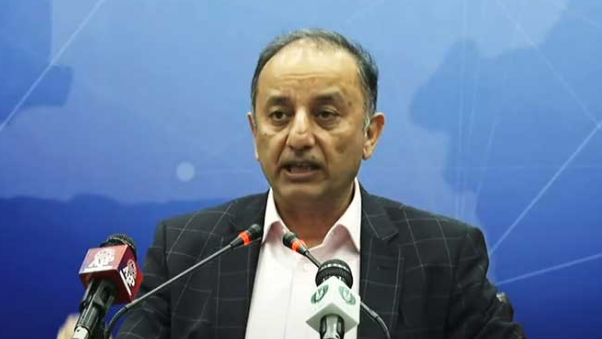
Malik refutes Bilawal’s claim, reiterates ‘Russia to sell us discounted oil’

Minister of State for Petroleum Musadik Malik has reiterated that Russia will, in fact, give Pakistan crude oil at discounted rates, contradicting Foreign Minister Bilawal Bhutto-Zardari’s claims that “Pakistan is not getting cheap energy from the energy-rich country”.

Bilawal, in an interview with PBS NewsHour, denied reports that Pakistan is “pursuing or receiving” any discounted energy from Russia, saying that the country does have energy insecurity and it is exploring various avenues to expand areas to get energy.

However, the federal minister did not outrightly reject the foreign minister’s statement and said that he is, in fact, right. “At this time, we are not taking any oil from Russia, however, I haven’t watched Bilawal Bhutto’s detailed interview,” he said at a press conference in Islamabad Friday.

Malik said that the process of getting cheaper oil from Russia is moving ahead. “Details of matters in this regard, which have been agreed with Russia, will be handed over to the foreign ministry so that there isn’t any ambiguity.”

He added, “It is our responsibility to take the Ministry of Foreign Affairs onboard. Our ministry needs to do extra work on this issue.”

Bilawal’s comment came just a few days after his cabinet colleague Malik had claimed that Pakistan is seeking oil at discounted rates from the energy-rich country.

Speaking on the talks being held with Russia, the minister said that it only happened after discussions with Pakistan’s refineries.

Malik added that crude oil will help reduce the cost of energy in the country and it will be possible to refine two types of Russian crude oil in Pakistan’s refineries — Sokol and Eurol.

The minister of state went on to say that an impression of Pakistan defaulting is being spread, even though nothing as such is happening. The Asian Development Bank wouldn’t be signing agreements with us if that would have been the case.

He said that the ministry has told gas companies to not reduce pressure during mealtimes including breakfast, lunch, and dinner. However, the minister said that it doesn’t mean there won’t be gas other than these times.

“We have told the companies that gas pressure can be reduced outside these hours, but it has to be increased during mealtimes.”

The energy minister said that they are working on a framework of an agreement with Azerbaijan regarding gas, and they are trying to get one LNG cargo in January.

Compared to last year, there will be one additional cargo each in January and February, he said.

On December 5, Malik, after visiting Moscow, had claimed that Russia agreed to provide crude oil as well as petrol and diesel to Pakistan at discounted rates.

But Malik insisted in the press conference today that Russian officials had said they would give cheap crude oil, diesel and petrol to Pakistan and that Russia would only give the same kind of concessions that it gives the rest of the world.

He said after Pakistan receives discounted oil from Russia, it will help lower energy prices. “When the energy cost goes down, the cost of transport and manufacturing will go down … consequently, the price of every item in a shop will go down. This is the prime minister’s vision.”

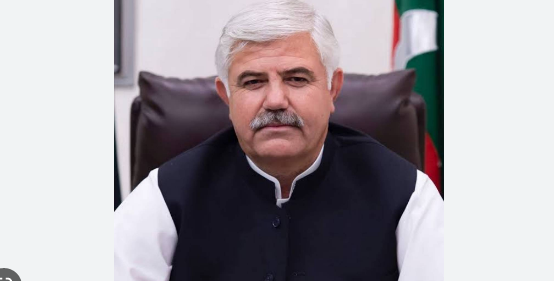
CM Mehmood warns to stage sit-in if KP funds not released

PESHAWAR, DEC 16 (DNA) — Khyber Pakhtunkhwa (KP) Chief Minister Mehmood Khan has vowed he would dissolve the provincial assembly immediately after being asked by his party’s chief Imran Khan to do so.

While addressing a meeting at Dargai in Malakand, Mahmood Khan said this government manifested Imran Khan’s trust in him, so if the PTI chief directed him to dissolve the assembly, he would waste not a single minute acting accordingly. 

He said that vehicle of the “imported government” is about to plunge into the ditch itself because all the riders including its driver are running away from the country after looting and plundering the national wealth. 

“The world has no faith in these thieves. That’s why the country’s economy is on the brink of destruction.”  KP Chief Minister alleged that the federal government is depriving the KP of its legitimate funds.

“We are warning the federal government today that we should be given dues, our money, which is KP ’s right.” He warned further that if the center does not release its funds, they would stage a sit-in before the parliament in Islamabad. 

Mahmood Khan said that we are spending the resources on the welfare and development of the people and in the upcoming elections the people will trust us with a two-thirds majority in return for these services. The Chief Minister also inaugurated Dargai Hospital and Swat University Dargai Campus on the occasion. =DNA

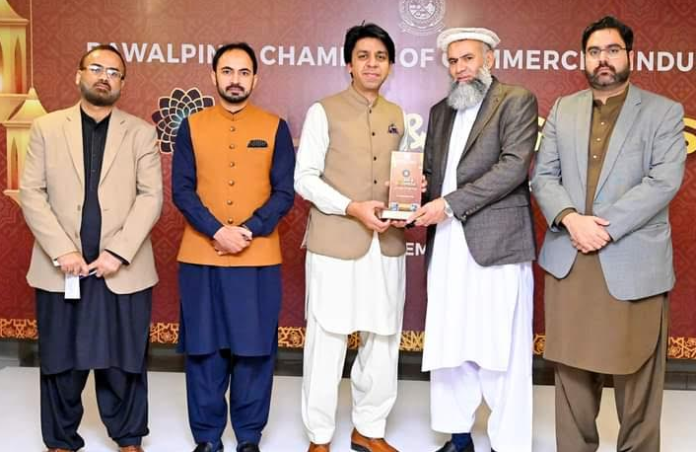
RCCI organizes seminar on Islam and Business 

DNA

Rawalpindi: A seminar on Islam and Business was organized in Rawalpindi Chamber of Commerce and Industry (RCCI) here on Friday. Dr. Taj Afsar, Deputy Dean, Faculty of Usuluddin, International Islamic University, Islamabad  addressing the seminar that the Islam permits and encourages trade. However, it provides a few conditions to protect the interest of the parties involved in the trade and in the interest of the society. One cannot trade in the commodities that are prohibited and clearly mentioned in Quran and Ahadith and that are not in the collective interest of the society.     

The basic principle of the religion of Islam on trade  is human respect, transparency and respect for hard work.

Adulteration, fraud, and profiteering are strictly prohibited in Islam.

Chamber President Saqib Rafiq said in his opening speech that it is our duty and responsibility to implement the five principles of trade that Islam has set.

A question and answer session was also held on the occasion of the seminar, in which the participants asked questions regarding transactions, advances, bank loans, rent and partnership, sale and purchase of land, business of property files, profit on rental, Dr. Taj Afsar. In response to the questions, he said that in any aspect of trade, the basic principle of Islam should always be kept in mind, in which it is forbidden to make profit by taking advantage of coercion, and the interests of the community should be cherished under free trade and transparency.

Senior Vice President M. Hamza Sarosh, vice president Faisal Shahzad, chairman Kashif Raheem, representatives from trade associations , executive committee members and members attended the seminar.

Pakistan summons Afghan envoy to condemn cross-border shelling

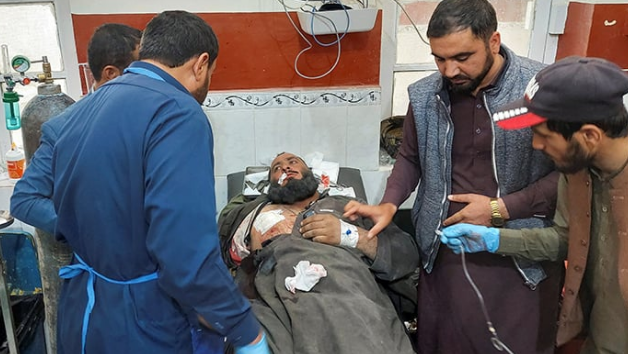
Pakistan on Friday summoned Afghanistan’s chargé d’affaires in Islamabad and “strongly condemned” the recent unprovoked cross-border shelling by its border security forces.

“Pakistan’s strong condemnation over recent incidents of unprovoked cross-border shelling by Afghan Border Security Forces in the Chaman-Spin Boldak area, resulting in loss of life, injuries and damage to property, was conveyed,” said Foreign Office Spokesperson Mumtaz Zahra Baloch in a statement.

Islamabad reiterated to the Afghan side that the protection of civilians remained the responsibility of both countries and that the recurrence of these incidents must be prevented.

“It was agreed to use established institutional mechanisms in this regard. Pakistan remains committed to maintaining fraternal relations with Afghanistan. Peace along the Pak-Afghan border is intrinsic to this end,” said the spokesperson.

Election on time linked to availability of census result by March 31: ECP

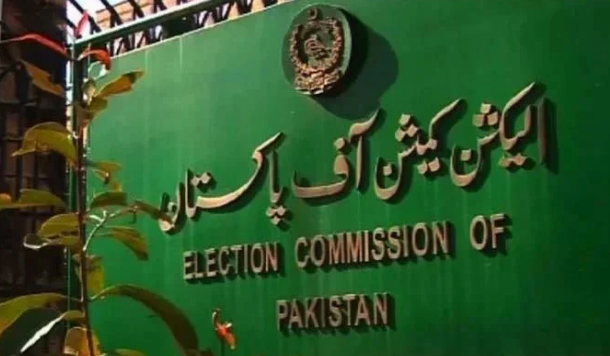
The Election Commission of Pakistan (ECP) on Friday expressed its inability to conduct general elections as per the schedule if the final results of the seventh census are not provided to the body by March 31, 2023.

In a letter to the Ministry of Planning, Development, and Special Initiatives secretary, ECP Special Secretary Zafar Iqbal Hussain wrote: “It would be difficult for the ECP to undertake the exercise of fresh delimitation of constituencies as per Article 51(5) of the Constitution, complete other electoral activities mentioned above and conduct of General Election-2023 in time as per Constitutional mandate in case official results are not provided on or before March 31, 2023.”

He maintained that a meeting between the chief election commissioner and chief statistician was held on December 8, wherein the latter informed the former that the Council of Common Interests approved the timelines for the conduct of the seventh Population and Housing Census “digitally” in its 49th session.

As per the initial plan, the Pakistan Bureau of Statistics (PBS) had to provide the provisional results of the census by December 31, 2022, to the ECP, read the letter.

“In the meeting, PBS took the stance that initially PBS engaged NRTC for provision of software, hardware and allied services, however, NRTC pulled out and showed an inability to provide the services resultantly four months delay occurred,” said the special secretary.

Afterwards, NADRA was engaged for the above services. Further, the transition of government and the economic situation of the country caused further delays, read the letter.

The commission was informed that as per revised timelines the PBS would be able to provide provisional census results to ECP by April 30, 2023.

During the meeting, the PBS has been informed that the ECP time and again took the matter with the ministry of planning and other concerned authorities with the request that the final results of the census be published by December 31 to enable the commission to complete key electoral activities for the conduct of the general election.

Federal Minister for Planning, Development, and Special Initiatives Ahsan Iqbal had also last month ruled out the possibility of general elections in Pakistan before August 2023.

“Also, in March or April, the results of the new census will be released. The Sindh government and the [people of the] province have a clear stance: next elections will be held on the basis of the new census.”

In case the new census is out by March or April, then the Election Commission of Pakistan (ECP) will take at least four to five months for delimitation and the country will ultimately move towards polls in August.

“This is an administrative and natural timetable that might not change,” the minister said as he strongly opposed holding country-wide elections.

Stay Connected

64FansLike
60FollowersFollow

Latest Reviews

Exchange Rates

USD - United States Dollar
EUR
1.17
GBP
1.35
AUD
0.67
CAD
0.72