Home Blog Page 1402

Whatever the ending, Qatar World Cup duly delivered

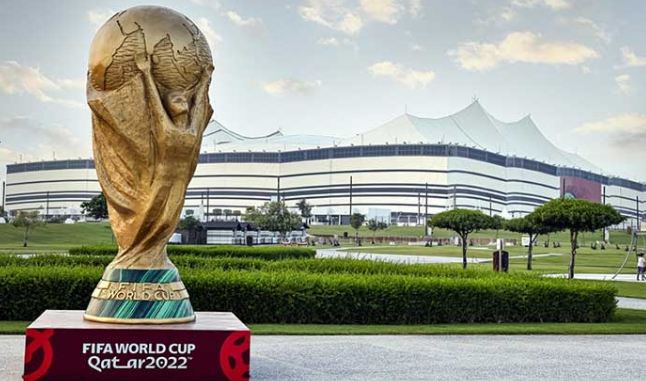
DOHA – A World Cup that has defied all expectations reaches its climax on Sunday when Lionel Messi could join Diego Maradona in Argentine immortality by taking the south Americans to the title or France could become the first nation to retain it since 1962.

Both scenarios would be an appropriate final act to the first World Cup staged in an Arab country.

But whatever happens, a tournament ridiculed in the build-up and which began a little awkwardly delivered an exhilarating rollercoaster ride that even the cynics leapt on board.

Millions of words were written criticising the choice of Qatar as host to the world s second-largest sports event and the debate will continue long after the last ball is kicked.

But for a month the so-called beautiful game did, in the words of FIFA president Gianni Infantino, spread some joy.
The marquee names of Messi, Kylian Mbappe, Neymar and Cristiano Ronaldo delivered storylines. Saudi Arabia, Japan, South Korea and Tunisia delivered shocks. New heroes emerged.
Yet the abiding memory for many will be Morocco s shake-up of football s hierarchy.

Thousands of their fans painted the desert red and turned Doha s souq into a corner of Marrakesh as the Atlas Lions roared into the semi-finals.

Harnessing the energy of their followers, Walid Regragui s men scored victories over European aristocrats Belgium, Spain and Portugal on the way to becoming the first African and first Arab country to reach the last four.

France proved a match too far as they set up a showdown with Argentina in the spectacular Lusail Stadium where nearly four weeks earlier Argentina s 2-1 defeat by Saudi Arabia lit the blue touchpaper for an extraordinary tournament.

In five second-half minutes Saleh Al-Shehri and Salem Al-Dawsari wrote themselves into Saudi sporting folklore by scoring the goals to overturn a Messi penalty and seal the biggest statistical shock in World Cup history.

Infantino, who raised eyebrows on the eve of the tournament with a passionate monologue defending the Qatari organisers, described the group phase as the best ever. Few would disagree.

The 48 games produced 120 goals, only two red cards, and enough head-spinning moments to garnish three tournaments.
A day after Saudi Arabia s win, Japan came from a goal down to beat Germany — a result the four-time champions never recovered from as they went home early.

Iran, against a backdrop of widespread anti-government protests at home, were smashed 6-2 by England, then beat Wales with goals in the eighth and 11th minutes of stoppage time.
Late goals and hasty re-writes for the world s written media were a recurring theme and the last three nights of group action were a white-knuckle ride on and off the pitch.

Japan stunned Spain in a stomach-churning finish to Group E which at one point looked to be sending Costa Rica and Japan into the last 16 at the expense of Spain and Germany.

South Korea conjured a stoppage-time goal to beat Portugal and make it out of Group H to the heartbreak of Uruguay while Mexico s manic attempt to score enough goals against the Saudis to pip Poland to second spot in Group C ended in failure.
Every continent was represented in the last 16 for the first time but after such a riotous group phase would it fall flat?

No chance.

Australia gave Argentina a mighty late scare, Mbappe dazzled for France against Poland and a free-scoring England ended the Senegalese party in the tent-like Al Bayt Stadium, one of seven new stadiums built for the tournament, including the 974 Stadium comprised of recycled shipping containers.

Brazil danced their way to a 4-1 thrashing of South Korea while Portugal did the unthinkable and left out Ronaldo only to find a new hero as Goncalo Ramos bagged a hat-trick in a 6-1 rout of Switzerland.

Morocco went toe-to-toe with Spain in an absorbing 0-0 draw, then knocked out the 2010 champions on penalties as Luis Enrique s side failed to net a single kick.

Unpredictable as the tournament was, the usual suspects assembled for the quarter-finals.

Some Neymar magic gave Brazil an extra-time lead against Croatia, only for Bruno Petkovic to level in the 117th minute with Croatia s first effort on target. Almost inevitably, Brazil slumped out on penalties.

Argentina squandered a 2-0 lead against a Netherlands side who dumped their usual scientific approach in favour of lumping high balls into the box to destructive effect.

Wout Weghorst s brace, the second in the 11th minute of stoppage time silenced the blue and white hordes, but Messi and Co edged a penalty shootout to decide a fractious contest.

Ronaldo became the first man to score in five World Cups but his last appearance, again as a substitute, ended in tears as Portugal went down 1-0 to a history-making Morocco.

England s penalty curse then returned as Harry Kane s botched effort condemned them to a 2-1 defeat by France.

Messi, channelling his inner-Maradona, inspired Argentina to beat Croatia and few would begrudge the diminutive number 10 s record-breaking 26th World Cup appearance ending with him holding aloft the gleaming trophy.
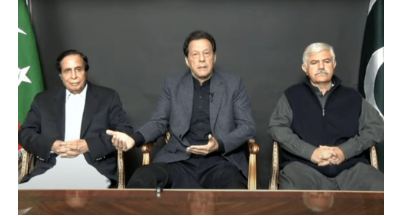
Punjab, KP assemblies to dissolve on Dec 23 : Imran

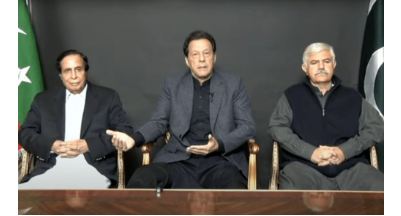
LAHORE, Dec 17: PTI Chairman Imran Khan on Saturday announced that his governments in Punjab and Khyber Pakhtunkhwa will dissolve their assemblies on December 23 to pave the way for fresh elections.

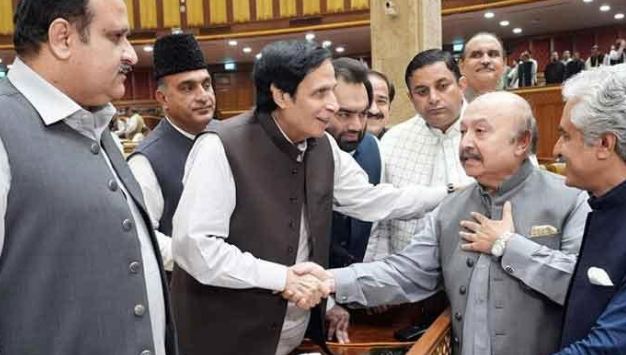
Punjab Chief Minister Parvez Elahi and Khyber Pakhtunkhwa Chief Minister Mahmood Khan are beside him as well for the address. Imran thanked the two provincial chiefs for their cooperation with him.

At the outset of his address, Imran said the country needed “fresh and fair elections”.

“We fear the country is drowning,” he added.

Imran started his address by bemoaning the current economic situation of the country and contrasted that with his government’s performance.

He lamented the brain drain ongoing in the country, saying that skilled people and professionals were leaving the country in droves.

“My question today is, who was responsible for this regime change?” he said, referring to his government’s ouster via a no-confidence motion earlier this year.

Imran said unemployment and inflation were on the rise and foreign confidence in the country had eroded, leading to investments drying up.

“Loans keep on increasing. There was only one way to solve this which we did: to increase the country’s wealth. They (the government) don’t have a plan.”

Imran said free and fair elections were the only solution to these problems and said the government was “afraid” of new elections due to the fear of losing.

He also expressed concern that the government might not hold general elections even in October 2023.

The PTI chairman once again raised the question of who was actually responsible for the current affairs of the country. “Only one man is responsible: General (R) [Qamar Javed] Bajwa. I didn’t speak out against him because he was the army chief,” Imran added.

“We want our army to be strong so we kept quiet and kept looking at how the conspiracy happened.”

He said the former army chief had “decided to remove us (PTI government)”.

“My next question is that when the government was ousted and they got to know that the public came to stand with us … and rejected these thieves and our popularity started increasing … then instead of admitting that you made a mistake, [instead] the kind of injustice they did against us, I never saw it before,” Imran said.

The PTI chief mentioned the treatment being meted out to party senator Azam Swati and those who support the PTI, alleging that the former army chief was behind it all and also responsible for giving “NRO-2” to leaders in government.

“I was told at one point by Gen Bajwa that ‘we have files on your people about corruption and their videos have been made’. I said to him, ‘Is this the job of our agencies? That they make videos and files on people? This nation sustains its agencies for their security by sacrificing.’”

The former prime minister also mentioned his own audio leaks, saying that he was the premier and “my own phone was tapped … no one is asking that this is a violation of the Official Secrets Act. Where does this happen? If I am talking to my principal secretary then that was leaked.”

Imran claimed that according to an opinion poll, “70 per cent” of the people were demanding fresh elections, saying that is what the PTI had attempted to convince the government about through its second long march.

Decision on dissolution of assemblies expected as Imran addresses nation

LAHORE, Dec 17: PTI Chairman Imran Khan is currently addressing the nation and a decision is expected on his dissolution of the Punjab and Khyber Pakhtunkhwa assemblies.

Punjab Chief Minister Parvez Elahi and Khyber Pakhtunkhwa Chief Minister Mahmood Khan are beside him as well for the address. At the outset of his address, Imran said the country needed “fresh and fair elections”.

“We fear the country is drowning,” he added.

Imran started his address by bemoaning the current economic situation of the country and contrasted that with his government’s performance.

He lamented the brain drain ongoing in the country, saying that skilled people and professionals were leaving the country in droves.

“My question today is, who was responsible for this regime change?” he said, referring to his government’s ouster via a no-confidence motion earlier this year.

Imran is expected to disclose the date of dissolution of the two assemblies — KP and Punjab — where his party is in power. Last month, Imran said that his party would disassociate itself from the “current corrupt political system” by quitting the two provincial assemblies.

The decision to dissolve assemblies was met with great objection from PML-N and PPP leaders — the main forces of the ruling Pakistan Democratic Movement government. Later, the PML-N had announced that it was ready to contest elections in case the PTI continued with its decision to dissolve the two assemblies.

Footage from Liberty Chowk showed a large crowd of people gathered for Imran’s address.

Earlier, party leader Hammad Azhar lead a caravan of vehicles towards Liberty Chowk.

The movement towards Liberty Chowk began in earnest after Imran wrapped up an important meeting with the Punjab and KP CMs at his Zaman Park residence.

Following the meeting, Punjab CM Parvez Elahi said that he returned Imran’s “mandate of the Punjab Assembly back to him”.

Parvez, his son Moonis Elahi and MNA Hussain Elahi were part of the meeting. KP CM Mahmood Khan, PTI Vice Chairman Shah Mahmood Qureshi, senior leaders Asad Umar, Fawad Chaudhry, Pervez Khattak, Shibli Faraz, Ali Amin Gandapur and others were also present.

According to a press release from the CM Secretariat about the meeting’s details, the PTI chairman will announce his decision pertaining to the dissolution of assemblies alongside the two chief ministers.

Mushahid sees transformation in foreign policy post-Afghanistan

KARACHI, Dec 17: The rise of Hindutva in India is transforming a society which was once based on secularism into a bigoted, divisive and narrow republic targeting non-Hindu minorities.

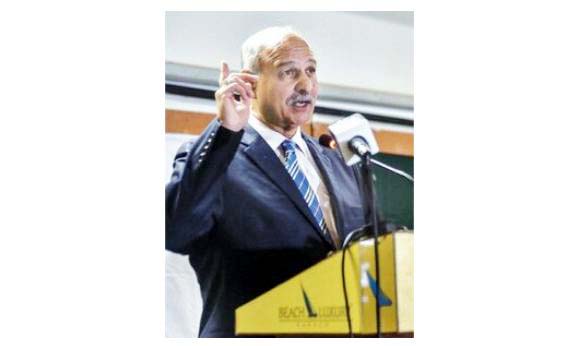
This was highlighted by Senator Mushahid Hussain during his talk on ‘Pakistan and Changing Regional Scenario: Challenges and Opportunities’ organised by the English Speaking Union of Pakistan (ESUP) at a local hotel on Friday evening.

Senator Hussain started off by saying that we are living in times of turbulence and transformation — a very historic period. Recently, he was struck by statements given by different world leaders. President Biden on Oct 12 said ‘this is going to be decisive decade’. President Putin on Oct 27 said ‘this is the most dangerous decade after the Second World War’. After that came the statement of President Xi Jinping referring to ‘once in a century changes’. Then an article appeared in Foreign Affairs by German Chancellor Olaf Scholz where he talked about a ‘historic turning point’.

Before expanding on the changes, Senator Hussain went down memory lane to shed light on the vision of the founding fathers of Pakistan. Allama Iqbal, 90 years ago, wrote mashriq se ubharte huay suraj ko zara dekh (see the sun rising in the East) and about the rise of China. Quaid-i-Azam Mohammad Ali Jinnah in his first interview with a foreign journalist on Jan 5, 1948 said, ‘Pakistan is the pivot of the world placed on the frontier on which the future of geopolitics of the world revolves.’ When Quaid-i-Millat Liaquat Ali Khan went on his famous visit to the US, a compendium of his speeches was titled Pakistan, the Heart of Asia. “So the vision of Pakistan was not confined to just one area, it was a larger vision.”

Says national security can no longer be measured in terms of military might alone

The senator, coming back to the topic, argued, “When we talk of the global changes impacting on us, I will sum it up in three Rs: the retrenchment of American power in the Muslim world; the resurgence of Asia; and the rise of Hindutva in India that is transforming a society which was once based on Nehruvian secularism into a bigoted, divisive and narrow republic of Hindutva targeting non-Hindu minorities such as Muslims, Christians and Sikhs.

“What are the major trends of our times? The first is that we are seeing the signs of a new Cold War focusing partly on Europe and partly on Asia with the demonization of China and Russia. The second focus of the new Cold War is China. At the core of this new war are the flashpoints that have increased. We have a flashpoint in Korea, a flashpoint in South Asia, we have a flashpoint in the Middle East, Palestine, in Europe.”

He pointed out that it’s the trade and tech war between the US and China. He referred to a report published by Harvard University in December 2021 which called it the great tech rivalry and the conclusion of the report was that China is overtaking the US as the biggest high tech manufacturer.

Senator Hussain said there’s a global consequence of the war in Ukraine. “The initial divide was Islam versus the West. That has been replaced by a north-south divide [north being the West, and south being the developing countries]. For the first time Pakistan, India and China have the same position on Ukraine. So they’re not following what the West is telling them, and the biggest expression of that is the recent visit of Xi Jinping to Saudi Arabia. We’re seeing the emergence of Muslim middle powers — Pakistan, Turkey, Iran and Saudi Arabia.”

Speaking on Pakistan’s foreign policy, he was of the opinion that geopolitics has pushed it to change.

“The post-Afghanistan transition in Pakistan’s foreign policy has begun otherwise our policy was Afghanistan-driven. The central focus of our foreign policy is no longer Afghanistan. Secondly, we are also in a transition domestically to redefine the notion of national security. National security can no longer be measured in terms of military might alone. It is human security, the lives and livelihoods of people, the economy, energy, climate change. Gen Bajwa before he left also mentioned these things. These are the issues facing the people of Pakistan.

“Then the future belongs to regional connectivity. We are the hub of it and the hub is through CPEC, and the centre piece of CPEC is Gwadar Port. We are [also] talking of a greater South Asia driven by economy. A new world is opening up. We are talking of pipelines. We still have on paper the Iran-Pakistan pipeline. We should also invite India to rejoin it — IPI. Originally it was Iran, Pakistan and India.”

Earlier, ESUP President Kalim Farooqui introduced the speaker to the audience. Afshan Lalani and Aziz Memon also spoke.

Pakistan dismissed for 304 by England in 3rd Test

Karachi: England spinners Jack Leach and Rehan Ahmed shared six wickets between them on Saturday as Pakistan were dismissed for 304 on the opening day of the third and final Test in Karachi.

Leach grabbed 4-140 while teenager Ahmed finished with 2-89 after Pakistan won the toss and batted on a slow turner at the National Stadium.

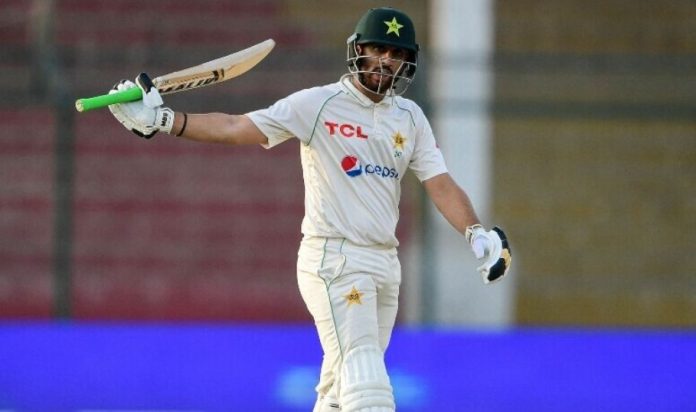
For Pakistan, skipper Babar Azam top scored with 78 and Agha Salman made 56. England lead the three-match series 2-0.

Ahmed had got his first wicket for England before Pakistan reached 204-5 at tea, making history by becoming the youngest player to debut for the side at 16 years and 126 days.

He dismissed Saud Shakeel, who failed to keep a defensive shot down as Ollie Pope dived forward to take a brilliant catch, in his seventh over for 23. At the break, skipper Babar Azam was unbeaten on 71 and Agha Salman on one after Pakistan won the toss and opted to bat on a National Stadium pitch that has a slow turn.

Mohammad Rizwan also failed as he lofted a catch off a Joe Root full toss for 19.

In the first session, Pakistan lost three wickets. Azhar Ali — playing his last Test — fell at the stroke of lunch when he gloved a catch to a diving wicketkeeper Ben Foakes off pacer Ollie Robinson.

Azhar and Azam added 71 for the third wicket, repairing the innings after opener Abdullah Shafique fell for eight and Shan Masood 30.

Sensing the pitch would take spin, England started the attack with left-arm spinner Jack Leach, who trapped Shafique leg-before in the sixth over of the day.

Masood fell to the trap of short bowling as he pulled fast bowler Mark Wood straight into the hands of deep fine-leg fielder Leach.

Masood hit five boundaries while Azhar had six hits to the ropes.

Hard-pressed to avoid their first-ever whitewash in a home series, Pakistan made four changes with Azhar, Masood, Mohammad Wasim and Nauman Ali drafted in the side.

England, who lead the series 2-0, brought Foakes and Ahmed into the side.

Before Ahmed, Brian Close was the youngest England debutant at 18 years and 149 days when he played against New Zealand in 1949.

Teams:

Pakistan: Babar Azam (captain), Abdullah Shafique, Azhar Ali, Shan Masood, Saud Shakeel, Mohammad Rizwan, Agha Salman, Faheem Ashraf, Mohammad Wasim Junior, Abrar Ahmed, Nauman Ali

England: Ben Stokes (captain), Harry Brook, Zak Crawley, Ben Duckett, Ben Foakes, Jack Leach, Ollie Pope, Ollie Robinson, Joe Root, Mark Wood, Rehan Ahmed

Umpires: Joel Wilson (WIS) and Ahsan Raza (PAK)

Tv umpire: Marais Erasmus (RSA)

Match referee: Andy Pycroft (ZIM)

CM Elahi vows to back ‘all decisions’ of Imran as PTI chief set to announce dissolution date

Chief Minister Punjab Chaudhry Parvez Elahi Saturday vowed to back “all decisions” of Pakistan Tehreek-e-Insaf (PTI) Chairman Imran Khan as the allies are all set to move towards dissolving the assemblies of the provinces where they rule — Khyber Pakhtunkhwa and Punjab.

“I will support all of Imran Khan’s decisions. I owed the Punjab Assembly to Imran Khan and I have returned my debt to him,” the chief minister said in a tweet hours before Imran’s scheduled announcement of the dissolution date.

Imran is expected to announce the date of dissolution during the party’s public gathering at Lahore’s iconic Liberty Chowk later tonight, but there were reports of issues between the PTI and Pakistan Muslim League-Quaid (PML-N) on the date of dissolution.

CM Elahi also stressed that Imran has made his political opponents “zero” and said that the people spreading rumours — about a rift between the allies — “have failed once again”.

PML-N to table no-trust motion against CM Parvez Elahi, Speaker Sibtain Khan: sources

Pakistan Muslim League-Nawaz (PML-N) has decided to move a no-confidence motion against Punjab Chief Minister Parvez Elahi and Punjab Assembly Speaker Muhammad Sibtain Khan, reported Saturday citing sources.

According to the sources, the members of the PML-N signed the resolution at Rana Mashood Ahmad Khan’s house. About 106 party members were present at Mashood’s residence. The party is likely to submit the motion today, added sources. 

Meanwhile, Pakistan Tehreek-e-Insaf (PTI) Chairman Imran Khan is holding a consultative meeting with party leaders at Zaman Park regarding the dissolution of Punjab and Khyber Pakhtunkhwa assemblies. 

The meeting is being attended by senior PTI leadership including Vice President Shah Mahmood Qureshi, Fawad Chaudhry, Khyber Pakhtunkhwa Chief Minister Mahmood Khan, Parvez Khattak, Shibli Faraz, Ali Amin Gandapur, and others.

During the meeting, the party leadership is expected to finalise the speech of today’s jalsa and the prevailing political situation. 

Elahi meet Imran

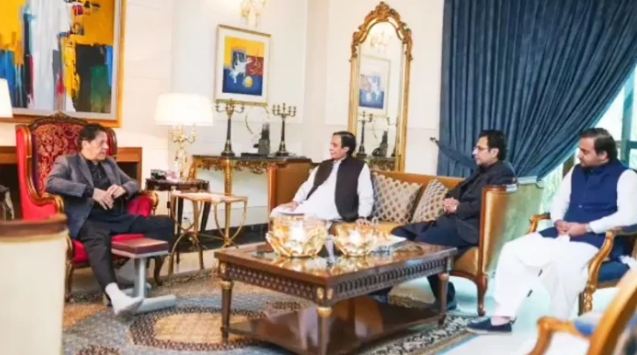
Meanwhile, Chief Minister Elahi has also held a consultative meeting with Imran Khan at his residence in Zaman Park residence ahead of the Lahore rally. The CM’s son Moonis Elahi also joined them. 

Sources also said that Imran asked CM Elahi to sit beside him during today’s rally. The chief minister is expected to meet the PTI chief again at 7pm. 

In a tweet, Moonis also said the he met Imran and stands “firmly with him”.

As per the sources, PML-Q leader  Moonis met the former prime minister last night as well. Both leaders discussed the political situation during the meeting. 

The sources said that Moonis also took Khan into confidence regarding the whole situation. 

He told the PTI chief that the Pakistan Democratic Movement (PDM)-led government can victimise the PTI and PML-Q leadership if the assemblies are dissolved.

“You are authorised to make a final decision [on the dissolution of the assembly],” Moonis conveyed Parvez’s message to the PTI chairman, according to well-placed sources.

The PML-Q leader reassured the former premier that the assembly would be dissolved whenever the latter asked. CM Elahi, however, suggested that it was not an appropriate time for the decision.

The PML-Q leader apprised Khan that the majority of his party’s lawmaker wants the continuation of development work in their concerned areas.

CM Elahi holds crucial meetings

CM Elahi, a day earlier, held a crucial meeting in Rawalpindi ahead of Khan’s announcement of the date for the dissolution of assemblies.

The chief minister travelled to Rawalpindi on Friday evening where he held an important meeting. After returning to Lahore at night, he consulted with party leaders on the current political situation. 

Earlier in the week, the PTI chief had said that he would announce the date for the dissolution of the assemblies of Khyber Pakhtunkhwa and Punjab on December 17. 

PTA hosts Workshop on Gender Inclusion Strategy

DNA

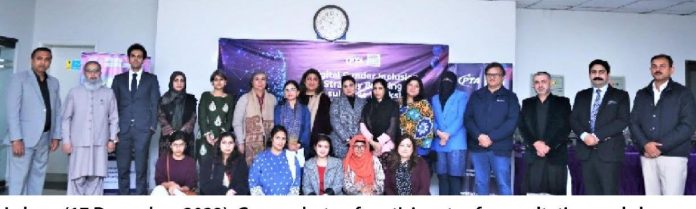
Islamabad, Dec 17: Pakistan Telecommunication Authority (PTA), in collaboration with UNESCO Pakistan, hosted a consultative workshop in Lahore for the development of digital gender inclusion strategy.

The workshop, held at PTA’s Lahore Zonal Office, was the second of a series of five consultative workshops being organized to collect multi-stakeholder experts’ input for a strategy to reduce digital gender divide in Pakistan. The workshop was conducted by Ms. Sadaf Khan, UNESCO consultant. Experts from various stakeholder groups including Global System for Mobile Communications Association (GSMA), telecom operators, academia, and digital gender rights groups participated in the workshop.

The objective is to ensure that the gender inclusion strategy is responsive to the needs of the people and can be effectively integrated into the systems that are already in place.  This strategy will help PTA to coordinate a holistic effort, with other public and private sector stakeholders, to tackle various barriers to women’s use of mobile and ICTs. Last month, the workshop was conducted in Peshawar and the next workshops are planned to be held in Karachi, Quetta and Islamabad.

Annual food and music festival, PINDI EATS kickstarts at PC Hotel Rawalpindi

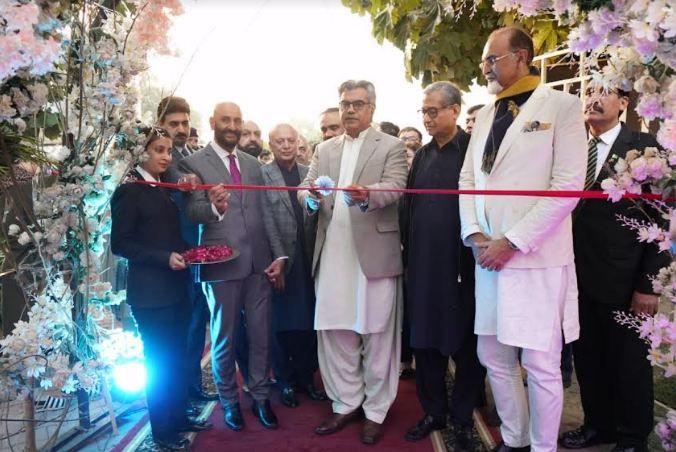
ISLAMABAD/RAWALPINDI, DC 17 /DNA/ – In celebration of the vibrant Pearl-Continental culture, Pearl-Continental Hotel Rawalpindi is hosting PINDI EATS from 16th-18th December, 3:00-11:00 pm. Sponsored by D1 Capital Park City and WonderWorld, PINDI EATS is a family-oriented food and music festival aiming to bring people together through the collective love of good food, fun-filled activities, and great music.

The festival was inaugurated by Mr. Saqib Mannan, Commissioner Rawalpindi, on Friday, in the presence of Mr. Haseeb Gardezi, COO, Hashoo Group, Mr. Aqeel Ahmed Abbasi, General Manager, Pearl-Continental Hotel Rawalpindi and Mr. Muhammad Farooq Dar, Chairman D1.

The beautiful outdoor setting, coupled with delicious food offerings from our acclaimed hotels, includes Dumpukht from Pearl-Continental Hotel Lahore, Kashmiri Cuisine from Pearl-Continental Hotel Muzaffarabad, Khyber Hujra from Pearl-Continental Hotel Bhurban, Tai-Pan, Jason’s Steak House and Bukhara from Pearl-Continental Hotel Rawalpindi.

Along with delicious cuisines, there will be live performances by Rahim Shah, Drum Circle and also a Qawali Night. Other activities will include a jumping castle, face painting and a magic show for children.

The tickets for the event will be available at the Front Desk, Pearl-Continental Hotel Rawalpindi, throughout the weekend. For more information, contact the hotel at 051-111-505-505.

China, Saudi Arabia achieve steady progress in cultural communication

By Xie Yahong, Ren Haoyu, People’s Daily

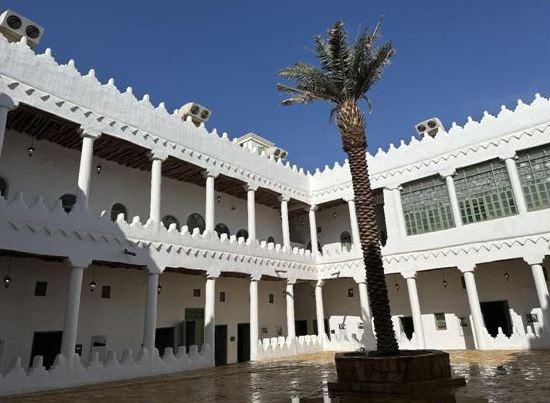
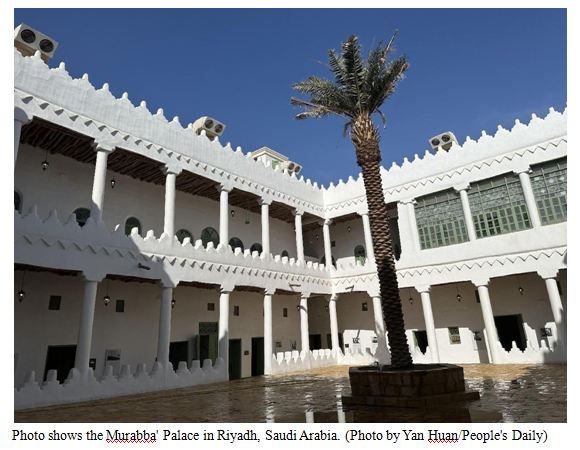
The Murabba’ Palace, also known as the Qasr al Murabba, which means “the square” in Arabic, is a two-story structure in the southwest corner of the yard of the national museum in Saudi Arabia’s capital Riyadh.

It is a witness to the China-Saudi Arabia friendship.

On Jan. 20, 2016, Chinese President Xi Jinping visited the Murabba’ Palace in the company of King Salman bin Abdulaziz Al Saud of Saudi Arabia.

“I was honored to receive President Xi together with King Salman bin Abdulaziz Al Saud,” said Abdullah S. Alotaibi, director of the King Abdulaziz Memorial Hall and the Murabba’ Palace.

Alotaibi still remembers every detail of the visit more than six years ago.

According to him, Xi watched Saudi folk performances such as sword dance, tasted traditional Arab coffee and cuisine, and visited the exhibition hall of the life of King Abdul Aziz Ibn Saud, who founded the Kingdom of Saudi Arabia in 1932.

Alotaibi said Xi always nodded with a smile on his face during the visit, which was very impressive.

A year later, King Salman bin Abdulaziz Al Saud visited China. Xi held talks with him at the Great Hall of the People in Beijing. After the talks, the two heads of state attended the closing ceremony of an exhibition titled Roads of Arabia: Archaeological Treasures of Saudi Arabia held at the National Museum of China.

The exhibition displayed over 400 pieces and sets of cultural relics, demonstrating the profound culture of Saudi Arabia.

Xi pointed out that the exhibition was a result of the two sides’ efforts to promote cultural dialogue and enhance cultural exchanges, and mirrored the comprehensive strategic partnership between China and Saudi Arabia.

He stressed that China and Saudi Arabia should develop a framework of cultural exchanges featuring liveliness, diversity and harmonious co-existence, so as to lay a solid people-to-people and cultural foundation for the cooperation between the two countries.

Over the recent years, the two countries have witnessed steady progress in cultural exchanges. They have launched activities such as joint archaeological excavations, Chinese language education, the Saudi-Arabia Cultural Week, and calligraphy exhibitions.

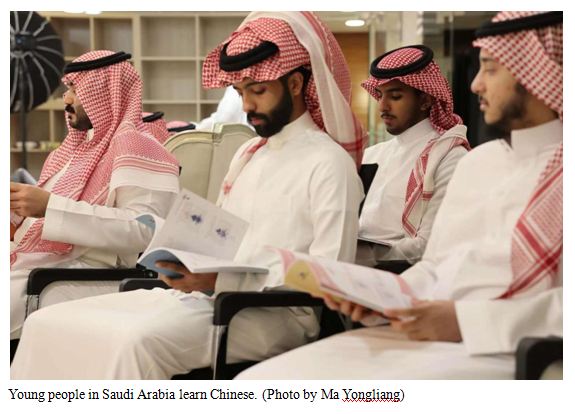
Recently, a special experience activity was held at an institution teaching the Chinese language in Riyadh. Students from local universities and enthusiasts of Chinese culture made and tasted Chinese food and shared their opinions on Chinese culture.

Abdulaziz Shabani, an expert on China from Saudi Arabia who attended the activity, told People’s Daily that more and more people in Saudi Arabia hope to learn Chinese and understand the country.

Today, there are more schools and social institutions in Saudi Arabia teaching Chinese. Educational departments, universities and relevant institutions from China and Saudi Arabia are also cooperating on the textbook compilation, as well as students and faculties exchanges.

In January 2020, eight middle schools in three provinces in Saudi Arabia started teaching Chinese. This year, the country’s Ministry of Education planned to set up Chinese language courses in 746 schools.

A former Counsellor for Cultural Affairs of the Embassy of Saudi Arabia in China noted that communication among civilizations starts with language. Many Chinese universities have set up Arabic language majors, and Saudi Arabia has also included Chinese in its national educational system.

By learning each other’s language well, the young people from the two countries can advance cooperation more smoothly, and the two countries will also enjoy more solid popular support, which will further drive the two countries’ cooperation in various fields.

Stay Connected

64FansLike
60FollowersFollow

Latest Reviews

Exchange Rates

USD - United States Dollar
EUR
1.17
GBP
1.35
AUD
0.67
CAD
0.72