Home Blog Page 1395

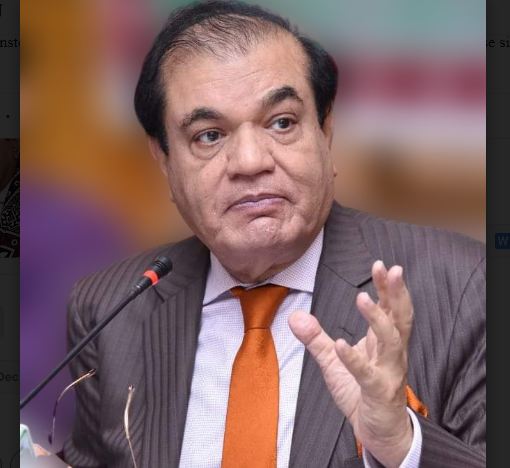
Revenue shortfall of Rs800 billion will be unbearable: Mian Zahid Hussain

ISLAMABAD, /DNA/ – Chairman of National Business Group Pakistan, President Pakistan Businessmen and Intellectuals Forum, and All Karachi Industrial Alliance, and former provincial minister Mian Zahid Hussain on Monday said some failed politicians are only concerned about power and least interested in the economic recovery.

The political chaos is causing great damage to the country’s economy which should be brought to an end in the national interest, he said.

Mian Zahid Hussain said that the production, exports, investment, and remittances are continuously falling and due to an unannounced ban on imports and some other factors, the revenue shortfall will be at least Rs800 billion which may cross the mark of Rs1100 billion.

Talking to the business community, the veteran business leader said that if the prices of oil in the global market are further reduced, instead of reducing their prices in the local market, the revenue shortfall should be met by increasing the sales tax.

An aggressive marketing policy should be made to increase exports. Subsidies should be stopped and this money should be spent where it is needed, he said.

Mian Zahid Hussain said that if the government convinces the IMF to lower the tax target, the revenue shortfall can also be reduced, but this will be a temporary measure.

He stressed that in order to maintain the current setup and win the next election, the current government has no option but to improve the economy.

If the economy cannot be improved, people will not vote for him. The current ground situation is that industrial and agricultural production, exports, investment, and remittances are continuously falling.

Production of major industries has decreased by almost 8% while in the month of October the textile sector has decreased by 24.6% compared to the same month last year.

 Hundreds of factories have been closed and millions of people have become unemployed.

There are 4,000 containers of imported goods at the port which are not being cleared due to a shortage of foreign exchange and the effects of the shortage of many essential commodities in the country are beginning to be felt, he informed.

Due to the difference of twenty-five rupees between the official and market rate of the dollar, handi traders have found a new opportunity, and Pakistanis living in other countries are also preferring illegal means to send the foreign exchange to Pakistan.

In this situation it would be better to liberalize the dollar, the appreciation of the dollar would increase exports, remittances, and revenue collection, which would also provide resources for direct subsidies to the low-income class to combat inflation.

Mian Zahid Hussain further said that the interest rates are increasing in developed countries due to which investors are preferring Western countries for investment instead of developing countries therefore policymakers plan to deal with these situations.

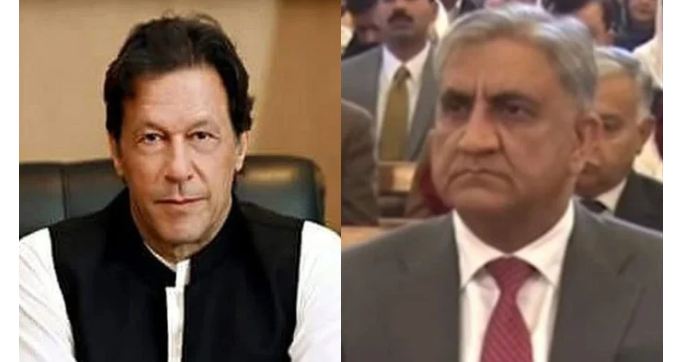
‘Codal limitations’ stopping Gen (retd) Bajwa to respond to Imran Khan’s allegations

ISLAMABAD: Former army chief Gen (retd) Qamar Javed Bajwa has a lot to tell about Imran Khan, his rise and rise in politics and how he ran his government.

Sources close to General (retd) Bajwa said that the recently retired former Army Chief could not respond in public to what PTI chairman alleges against him because of some codal limitations but it is insisted what Khan mostly says about Bajwa is untrue.

Gen (retd) Bajwa is now the focused target of Imran Khan who not only sees the former army chief as the sole reason for all his failures in the government but also alleges that the general had removed his government as part of a US conspiracy.

While Imran Khan says it was General (retd) Bajwa who was controlling NAB and deciding the arrest and release of politicians, the other side insists that Khan during his premiership was paranoid towards his opposition and wanted to see all his key opponents behind the bars.

These sources said when General (retd) Bajwa will speak, he would have no different tale to tell than what the former DG FIA Bashir Memon had alleged about the-then prime minister Imran Khan.

Like Bashir Memon, who had alleged to have been pressurised by the-then prime minister to arrest his opponents, according to the sources the former premier had also been asking General (retd) Bajwa to get a number of the-then opposition politicians arrested.

The sources said that when Gen (retd) Bajwa said how he could do it, Khan had referred to General (retd) Musharraf and his fashion of dealing with his political opponents during his rule. On this, Gen (retd) Bajwa had reportedly told Imran that Musharraf was a dictator. Gen (retd) Bajwa told Khan to order him in writing what he desired. Khan, however, did not do it.

These sources allege that the NAB was controlled and managed by the-then prime minister through a duo, Barrister Shehzad Akbar and a key spymaster. These sources claimed when new DG ISI called on the-then prime minister Imran Khan, the latter asked the top spymaster about the major problem of Pakistan. Khan was told, according to these sources, “It’s the economy”. But Khan responded “No, it’s the opposition”.

On one occasion in the presence of several PTI ministers, the sources close to the retired general said, the former army chief reportedly warned Imran Khan against his wish of fixing all his opponents as well as many of his own party leaders. These sources, however, confirm that Gen (retd) Bajwa had been advising the former prime minister to focus on economy instead of his opposition.

During his government, Imran Khan himself has been heard complaining about the fear of NAB and its negative impact on economy and civilian bureaucracy. But his urge to fix the opposition did not let him reform the NAB.

General (retd) Bajwa is mostly blamed for keenly pursuing what is generally referred to as “Imran Khan project.”

It is alleged by Khan’s opponents and many media commentators that the establishment initiated supporting Imran Khan almost a decade back.

PTI’s 2014 sit-in was also alleged to have been a part of the Imran Khan project, which reportedly saw its height in 2017 and 2018. The 2018 elections were considered as massively “managed” and “engineered” in favour of Imran Khan.

During Imran Khan’s tenure, the establishment supported him like never before and being the prime minister, Khan repeatedly admitted it and used to praise Gen (retd)  Bajwa as the best-ever army chief.

Khan gave three years extension to Gen (retd) Bajwa, had offered another extension in March this year to save his government and later even suggested in October 2022 to let Gen (retd) Bajwa continue till the holding of next general elections and formation of a new elected government.

Gen (retd) Bajwa, shortly before his retirement, admitted that the establishment had made mistakes in the past. He had disclosed that as an institution, the army decided in February 2021 to get apolitical.

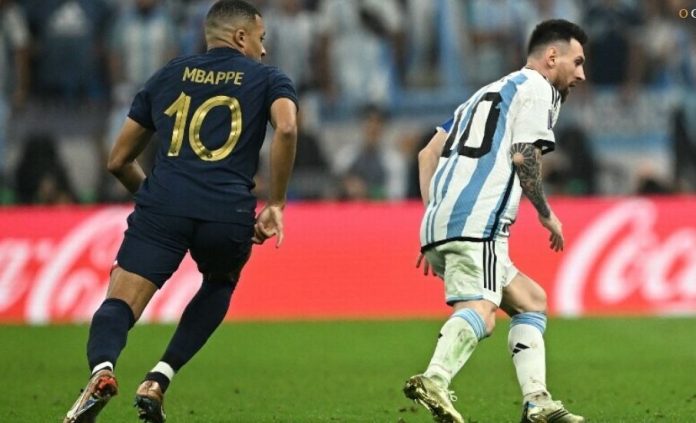
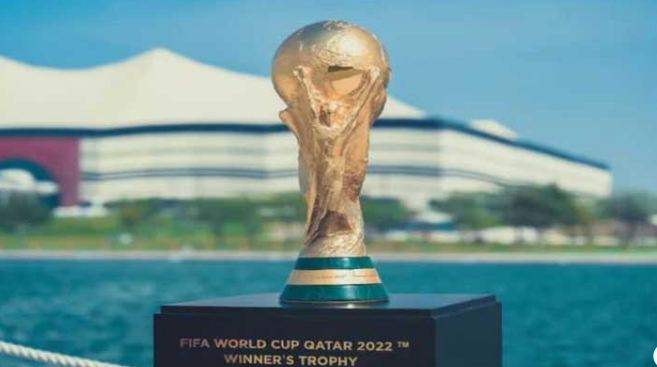
Messi conquers final frontier as Argentina crowned FIFA world champions

DOHA: Argentina beat France in the penalty shootout of the FIFA World Cup 2022 final on Sunday at Qatar’s Lusail Stadium to become the winners.

The final went to a penalty shootout on Sunday after it finished 3-3 in extra-time.

The match ended 2-2 after 90 minutes but Lionel Messi poked in a goal to put Argentina 3-2 ahead in the 108th minute before Kylian Mbappe completed his hat-trick two minutes before the end of extra-time.

CM Elahi reminds ‘ungrateful’ PTI of Bajwa’s favors, warns it to keep criticism ‘within limits’

LAHORE, DEC 18: Punjab Chief Minister Parvez Elahi on Sunday reminded the “ungrateful” PTI about the “favours” of Gen (R) Qamar Javed Bajwa upon the party and warned it to keep criticism of the former army chief “within limits”.

In an interview with ARY News programme The Reporters, Elahi said the PTI should “remember Bajwa sahab’s favours and not be ungrateful”, adding that the former army chief “elevated the party’s stature from nothing” and supported the government on many international matters such as negotiating procurement of funds from Pakistan’s Arab allies or the International Monetary Fund.

“What do they (PTI) think of themselves? Have they descended from the heavens above? If any one of them speaks against Bajwa sahab then I will be the first to speak out and then our entire party will.

“They have made it a joke. Can a person be so ungrateful? To say whatever they want … stay within your limits. No one will say [anything more now],” the chief minister said.

“I told [PTI Chairman Imran] Khan sahab three months ago that Bajwa sahab is ours, yours and PTI’s mohsin (benefactor) so fear God and don’t speak against him.”

He said he had reiterated the same in his meeting with the PTI chief a day ago at Imran’s Zaman Park residence. “He (Imran) replied: ‘I’ve received many requests [not to speak against Bajwa],’ so I said: ‘Then accept them,’” Elahi added.

Regarding Imran’s subsequent announcement of the date for dissolving the Khyber Pakhtunkhwa and Punjab assemblies with the two chief ministers at his side, during which he criticised the former army chief again, Elahi said: “The injustice that Imran Khan did is that making us sit beside him, he criticised Bajwa sahab in front of me.”

He said he had “felt very bad” about the entire situation but could not raise the issue since there were too many people and he could not have time for a personal meeting with Imran. “We will not tolerate this. He is our mohsin and we don’t hear anything against them,” Parvez added.

Since Gen Bajwa’s retirement, Imran has increasingly turned his criticism towards the former army chief and levelled a series of allegations against him.

In his 50-minute speech a day ago, the former prime minister continued chiding former army chief Bajwa for ditching him as “he was neither allowing him to proceed against the corrupt nor letting him know that he was playing a double game and getting PML-N and its allies to bring in the government through conspiracy”.

Personally, he claimed, Bajwa had continued assuring him that the PTI government would not be toppled nor the corrupt politicians installed to rule the country. “I did not speak against Gen Bajwa openly because he was the army chief and any comment could have earned a bad name for the institution,” Imran had said.

Imran had accused Gen Bajwa of unleashing torture, threats, humiliation, and fake cases against himself, his party leaders, office-bearers, workers, and even social media activists.

“Gen Bajwa committed a mistake but he never realised it, not even after seeing the reaction of the nation [which] sided [with PTI] soon after the toppling of my government,” the PTI chief had said.

Criticism of Gen Faiz

Parvez also complained that “Imran never made Moonis a minister” and further launched allegations on former director general of the Inter-Services Intelligence (ISI) Lieutenant General (R) Faiz Hameed, saying that “he committed injustice with us every now and then to get us arrested.”

He claimed that Gen Faiz was “strongly against” him, alleging that the ex-ISI chief had called up the National Accountability Bureau chairman at the time and told him to “arrest me and Moonis” around the time of Bajwa’s extension.

“He crossed all limits,” Parvez said, adding that he had then called Gen Bajwa who “straightened Faiz out”. “He (Gen Faiz) was not resisting and then he said that ‘there were orders from above of Imran Khan’,” Parvez added.

“So what is this treatment? When have we never supported Imran?” the chief minister questioned, adding that the PTI had “straightened” after the PML-Q’s support for the Senate elections and made Moonis a federal minister.

He said God had “created such a situation” around the PTI and Imran that even Parvez’s detractors were saying that “if you (Imran) don’t make Chaudhry sahab [the chief minister] then your party will be over … and the PML-N will come [to power].”

Our unity is permanent: Moonis

Meanwhile, the chief minister’s son, Moonis Elahi held a meeting with Imran at his Lahore residence in which the two had a discussion on advancing a “common political agenda”. After the meeting, Moonis said: “Our unity is permanent and will continue to be.”

PTI Vice President Fawad Chaudhry responded to Parvez’s comments during a press conference in Lahore and said the chief minister had his “own party and own views”.

“He is a politician so he will hold his own views. As far as his relationship with Imran Khan is concerned, it is based on respect and till now he has done everything that Imran has decided.

“He has fully given his opinion but accepted Imran’s decision and this is the beauty of this relationship and that is why the PTI and PML-Q will be allies in the next elections,” Chaudhry said.

Chaudhry Shujaat tasked with ‘blocking assembly dissolution’

LAHORE, DEC 18: Pakistan Muslim League-Quaid (PML-Q) senior leader Chaudhry Shujaat Hussain has been tasked with preventing the Punjab Assembly from being dissolved at the hands of Imran Khan-led Pakistan Tehreek-e-Insaf (PTI), well-placed sources revealed.

The development came during multiple meetings between Prime Minister Shahbaz Sharif, Pakistan Peoples Party (PPP) Co-chairperson Asif Ali Zardari and Shujaat Hussain.

PM Shehbaz and Asif Zardari decided not to contact Parvez Elahi until a green signal is received from Shujaat Hussain, the sources added.

Following the huddle, Zardari also called on Hussain and discussed various strategies to counter the PTI’s plan.

Talking to journalists, PML-N’s Attaullah Tarar said that Punjab’s situation was discussed during the meeting between the prime minister and the PPP’s co-chairman.

All the constitutional options, including the vote of confidence, were discussed in the meeting, he added. The PML-N leader said that a final decision in this regard would be madding during his party’s meeting scheduled to be held tomorrow.

It is pertinent to mention here that Imran Khan, a day earlier, announced dissolving the provincial assemblies of Punjab and Khyber Pakhtunkhwa on December 23.

Earlier today, PM Shehbaz Sharif and PML-Q leader and Punjab Chief Minister Chaudhry Shujaat Hussain agreed on further strengthening bilateral cooperation to steer the country out of the prevailing crisis.

The development came during a meeting between the prime minister and the PML-Q leader held at the latter’s residence in Lahore. 

According to a declaration, PM Shehbaz visited Shujaat Hussain and inquired after his health. During the meeting, matters of mutual interest and current political situation in the country were discussed.

Hussain lauded the premier’s efforts for the restoration of the economy and providing relief to the masses, read the declaration. He also appreciated the prime minister for taking measures to steer the country and the people from the problems, it added.

“Close cooperation [between PML-N and PML-Q] is vital for political stability and steering the country out of the prevailing crisis,” agreed both the leaders.

Federal ministers Tariq Bashir Cheema, Chaudhry Salik Hussain and Special Assistant to the Prime Minister Malik Muhammad Ahmad Khan were among the attendees of the meeting.   

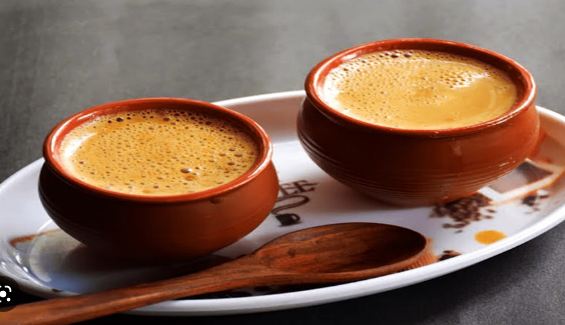
Aromatic flavored tea attracts tea lovers in chilly weather

ISLAMABAD, Dec 18 (DNA) — With the onset of chilly weather, aromatic flavored tea available at the eateries ranging from the small kiosks to the big restaurants in the federal capital is attracting a large number of tea lovers, especially youngsters.

Tea is one of the most frequently consumed beverages in Pakistan like in other parts of the world as any official or private gathering remains incomplete without a hot cup of tea.

Black tea, spiced tea, green tea, Kashmiri tea, and ‘Doodh Patti’ were the varieties liked by most of the people in Pakistan for long but now the innovation introduced has become a source of attraction for the tea fans. Many new varieties of this beverage have been introduced during the recent few years as many of the restaurants, stalls and cafes are offering different variations of the most admired beverage.

Mutka, Flavored, Tandori, Ginger, Cinnamon, Shahi, Shanshahi, Qalandari, Karak, Dabang and Jaggery varieties are the most demanded varieties for tea lovers during this winter. Tea points in the city are witnessing a huge rush of tea lovers specifically during the evening and night hours.

Muhammad Aslam, a frequent visitor of the most popular Tandoori Tea stall in Blue area said, “A cup of hot tea is a mandatory part of our friends’ gatherings and we use to visit open-air tea stalls to have a flavored ‘Tandoori Chaye’ during gossips.” The aroma of clay mixed in the tea creates a unique taste and all of my friends are great fans of this flavor of tea, he added.

Mehreen Khan, a visitor at the tea stall in Jinnah Super said, “Normally, I am not a big fan of tea but I can’t resist the aroma of flavored `Tandoori Chaye’ while going through this place”. She said, “Apart from its taste, I also enjoy the making process of the tea. The pouring of the tea in a pre-heated clay pot creates a surprising sound which attracts me a lot.”

Saeed Ali, a said regular visitor of the Tandoori tea stall said, “Having tea most of the time has become a tradition for majority, especially in winter however for me it’s not merely a tradition but an addiction.” He said, “I often visit Daman-e-Koh tea point in the evening and enjoy the aromatic `Jaggery tea’ and fritters (pakoras) while enjoying the natural ambiance of the place”. =DNA

World Cup of firsts ends with clash of titans

DOHA – There is no new name on the trophy and many of football s global superstars are taking their final bow but the most controversial World Cup in history will be remembered as a tournament of firsts.

The build-up to Qatar was overshadowed by allegations of corruption, mistreatment of migrant workers and criticism of the Gulf state s human rights record from the moment it won the bid in 2010.

FIFA president Gianni Infantino made an impassioned defence of the World Cup on the eve of kick-off, blasting the “hypocrisy” of Western critics, but off-field issues continued to rumble.

Heavyweights France and Argentina progressed to the final, each looking to win the trophy for a third time after a tournament packed with shocks and surprises.

Four-time winners Germany crashed out at the group stage for the second successive time while Argentina were beaten by Saudi Arabia in their opener in one of the biggest shocks in the tournament s history.

Japan beat Germany and Spain to progress to the last 16 while South Korea also made it to the knockout rounds in a strong showing for Asian teams.

Lionel Messi has had arguably his best World Cup at the age of 35

But Morocco were the nation that caught the imagination — becoming the first side from Africa or the Arab world to reach the semi-finals, before losing 2-0 to defending champions France.

The north African nation beat fancied Belgium in the group stage before eliminating Spain and Portugal in the knockout rounds, with their victories celebrated in Doha and across the Arab world.

Morocco broke new ground by reaching the World Cup semi-finals

Walid Regragui s team showed other African and Arab sides what is possible, especially as the expansion of the tournament to 48 teams from 2026 increases the number of qualifiers. Africa will have nine slots while Asia will have eight.

“With nine participants, we re going to learn. In 15, 20 years, I m sure an African team will win the World Cup because we ll have learned,” said Regragui.

No African teams made it beyond the group stage in Russia four years ago, but this time Senegal also reached the last 16 while Cameroon became the first team from the continent to defeat Brazil at a World Cup.

Every inhabited continent was represented in the knockout stages, allowing Infantino to celebrate the sport “becoming truly global”.

Qatar flop

It was a different story for Asian champions Qatar, who produced the worst performance by a World Cup host — dumped out of the group stage without a point and with just one goal.

Other notable milestones included Stephanie Frappart becoming the first woman to referee a men s World Cup match.

France s Stephanie Frappart became the first woman to take charge of a men s World Cup game

Another talking point is that officials have added unprecedented amounts of stoppage time to games.

“People want to watch football, more football. And we, FIFA and IFAB have been asked to do something about it for years,” said FIFA refereeing chief Pierluigi Collina, referring to football s lawmakers.

The quality of football has not suffered from the decision to shift the World Cup to a November and December timeslot — the middle of the European season — for the first time.

There had been seven goalless draws before the final — up from just one four years ago, but FIFA s head of football development Arsene Wenger was adamant that the shorter preparation time had not impacted the tournament.

A total of 166 goals were scored before Sunday s showpiece, an average of 2.6 goals per game — almost identical to 2018.

Messi s brilliance

Brazil failed to live up to their status as pre-tournament favourites, eliminated by European opposition before the final at a fifth consecutive World Cup.

Neymar and Luka Modric side by side during the quarter-final between Brazil and Croatia

Neymar said he was “psychologically destroyed” by the result, indicating he could quit international football.

New heroes emerged — Jude Bellingham shone for England while Argentina unearthed a new star in Julian Alvarez — but the veterans still dominated the headlines.

Luka Modric, at 37, and 36-year-old Olivier Giroud stood out, while Cristiano Ronaldo — reduced to the role of substitute — and Luis Suarez bowed out in disappointing fashion.

Lionel Messi, at 35 and playing at his fifth finals, has arguably been better than ever for Argentina.

“It s been a tournament of players who are ready earlier and earlier in top-level sport and players who have lasted longer and longer than ever before,” said Wenger.

Rights issues

Despite the excitement on the pitch, the issues that dominated the build-up to the tournament never entirely went away.

Germany s players covered their mouths for the team photo before their opening match against Japan in protest at a ban on wearing anti-discrimination armbands in a country in which homosexuality is illegal.

A Kenyan security guard died after falling from an upper floor at the Lusail Stadium, adding to the toll since Qatar was awarded the tournament.

Organisers had said before the latest fatality that there had been 37 deaths of World Cup workers, but only three involving “work-related” accidents.

Rights groups says thousands of foreign migrant workers have died on construction projects across Qatar over the past decade and have demanded a special compensation fund.

For Infantino the Qatar World Cup was the “best ever”. For others, the jury is still out. 

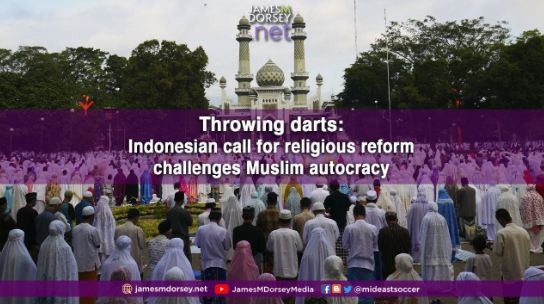
Throwing darts

At first glance, Islamic scholars discussing the religious legitimacy of the United Nations and the nation-state sounds esoteric. It’s not. On the contrary, it’s potentially revolutionary.

Religious scholars, led by Nahdlatul Ulama, the world’s largest and arguably most moderate Muslim civil society movement in the world’s largest Muslim-majority country and democracy, hope that the legitimization will counter notions of a caliphate and a transnational Islamic state as an alternative world order as advocated by militants such as Al Qaeda and the Islamic State.

If adopted, legitimization of the United Nations would make the UN charter with its references to “fundamental human rights…the dignity and worth of the human person, (and)…the equal rights of men and women” legally binding for its Muslim signatories, according to religious law.

In doing so, the religious legitimization would take substantial wind out of the sails of often whipped-up anti-Muslim sentiment that questions Muslim attitudes and loyalty towards the state.

That sentiment was, for example, evident when an anchor on India’s controversial Hindu nationalist, Hindi-language Z news recently asked whether “Muslims who sing the national anthem become kafirs.”  The anchor was using the Arabic word for an infidel.

The effort to reform Islamic jurisprudence so that it embraces the concept of the nation-state, and the United Nations, is part of a sustained Nahdlatul Ulama effort to spark reform of Islamic jurisprudence and inspire other faiths to take a critical look at their potentially problematic tenants as a way of countering extremism and religiously inspired violence.

That’s where the revolutionary aspect kicks in.

Reform of Islamic jurisprudence challenges a key pillar of autocratic strategies in the Muslim world designed to ensure the survival of repressive regimes.

Muslim leaders, parroted by their Western counterparts, have for more than two decades since 9/11 insisted that Islam and Islamic jurisprudence need no reform. Instead, they assert that jihadis misrepresent and misconstrue the faith.

In doing so, autocrats drown out criticism of their brutal, repressive rule that brooks no dissent and potentially provokes violence.

Casting jihadists as deviants rather than products of problematic tenants of jurisprudence that justify violence stymies criticism of the justification of autocracy as a necessary means to combat violence and promote moderate Islam.

Even so, that may not be a popularly shared approach. In a poll, 56 per cent of Saudis surveyed said the government was not “paying attention to the opinions of ordinary citizens like me.”

Timed to coincide with the centennial of Nahdlatul Ulama according to the Muslim Hijri calendar, the scholars will gather in February in the Indonesian city of Surabaya under the auspices of the recently constituted Religion Forum 20, a Group of 20 engagement tack, to discuss an “Islamic jurisprudence for a global civilization.” The Group of 20 brings together the world’s largest economies.

Nahdlatul Ulama’s concept note for the Surabaya conference argues that “views that legitimize and encourage suspicion, segregation, discrimination, and even hostility and conflict towards those who bear the legal status of “infidels…are scattered throughout classical texts on Islamic jurisprudence (fiqh). These views…are still considered…credible…and should…be practiced to the present day. Muslim groups involved in conflict – including the use of violence and terror – defend their position by citing references from these classical fiqh texts.”

The concept note was bolstered by a Nahdlatul Ulama religious finding in 2019 that eliminated the category of the kafir or in Islamic law.

Potentially, the concept note will put on the spot some of the invited speakers, such as Muslim World League General Secretary Muhammad al-Issa, Forum for Promoting Peace in Muslim Societies President Abdallah bin Bayyah, Tabah Foundation head Habib al-Jufri, and Ahmad Al Tayyeb the Grand Iman of Al Azhar, the Muslim world’s foremost seat of Islamic learning.

These men represent autocratic regimes that insist that Islamic jurisprudence needs no reform.

Mr. Al-Issa’s League is Saudi Crown Prince Mohammed bin Salman’s vehicle for propagating a socially liberal, politically repressive interpretation of Islam that demands absolute obedience to the ruler.

Messrs. Bin Bayyah and Al-Jufri serve the same purpose for United Arab Emirates President Mohammed bin Zayed. Mr. Al-Tayyeb’s Al Azhar is subservient to the government of Egyptian President Abdul Fattah al-Sisi and supported by the two Gulf monarchies.

Religious legitimization of the United Nations and the concept of a nation-state could have far-reaching consequences for the order of the Muslim world that partially bases its religious justification on the employment by the Organisation for Islamic Cooperation (OIC) of the language of Islamic jurisprudence to empower states.  The OIC groups the world’s 57 Muslim-majority countries.

By reforming the jurisprudence, Nahdlatul Ulama would, in theory, introduce guardrails for the incorporation by OIC members of Islamic law into domestic legal systems.

By and large, Muslim-majority states have used the OIC framework to monopolise the right to interpret Islamic law and bend it to their will, for example, in the justification of abuse of human rights or, in the case of countries like Saudi Arabia and the UAE, to demand absolute obedience of the ruler.

The OIC and some of its members have also used the organisation’s religious framing and 1990 Cairo Declaration on Human Rights in Islam to lobby the United Nations to classify blasphemy as a violation of human rights and a form of hate speech.

Liberal critics charge that Nahdlatul Ulama’s silence about a recently adopted new Indonesian criminal code has cast a shadow over its credibility.

The law defines apostasy as leaving a religion or belief and criminalises anyone who attempts to persuade a person to be a non-believer in a religion or belief. It also bans extramarital sex and curbs freedom of expression by, for example, outlawing insulting the president, but puts major limitations on who can file a complaint.

Nahadlatul Ulama’s acquiescence sparked questions on how it squares that with its unconditional endorsement of the Universal Declaration of Human Rights – a significant differentiator in its rivalry with state-sponsored autocratic versions of moderate Islam.

Privately, influential Nahdlatul Ulama sources defend the socially restrictive aspects of the law but concede that freedom of expression concerns are legitimate. The sources expect the law to be modified in challenges likely to be filed with the Constitutional Court.

Even so, scholars Sana Jaffrey and Eve Warburton warned that provisions of the law “threaten political dissent with prison sentences and have the potential to muzzle public debate about the purview of the state in citizens’ private and political lives.”

The criticism notwithstanding, Nahdlatul Ulama’s effort to anchor the United Nations and the concept of the nation-state in Islamic jurisprudence constitutes the most serious current challenge to autocratic Muslim justification of repressive rule. In doing so, it could prove to be revolutionary.

Thank you to all who have demonstrated their appreciation for my column by becoming paid subscribers. This allows me to ensure that it continues to have maximum impact. Maintaining free distributions means that news website, blogs, and newsletters across the globe can republish it. I launched my column, The Turbulent World of Middle East Soccer, 12 years ago. To borrow a phrase from an early proprietor of The Observer, it offers readers, listeners, and viewers ‘the scoop of interpretation.’ If you are able and willing to support the column, please become a paid subscriber by clicking on Substack on the subscription button and choosing one of the subscription options.

Dr. James M. Dorsey is an award-winning journalist and scholar, an Adjunct Senior Fellow at Nanyang Technological University’s S. Rajaratnam School of International Studies, and the author of the syndicated column and blog, The Turbulent World of Middle East Soccer.

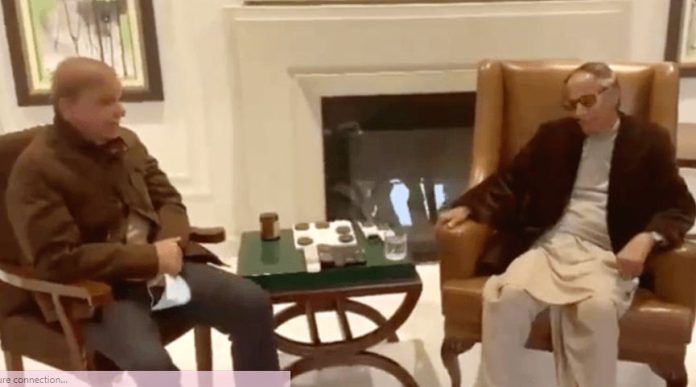
PM Shehbaz pays visit to PML-Q’s Chaudhry Shujaat to discuss ‘political situation’ among other things

LAHORE, DEC 18: Prime Minister Shehbaz Sharif on Sunday visited PML-Q President Chaudhry Shujaat Hussain at his residence in Lahore. The meeting came a day after PTI Chairman Imran Khan announced that his governments in Punjab and Khyber Pakhtunkhwa will dissolve their assemblies on December 23 (Friday) to pave the way for fresh elections.

The former prime minister made the announcement in a video address with Punjab Chief Minister Parvez Elahi and Khyber Pakhtunkhwa Chief Minister Mahmood Khan by his side.

PM Shehbaz, during his meeting with Shujaat today, enquired about his health and presented him with a bouquet of flowers.

RCCI inks MOU with White Ribbon Pakistan

DNA

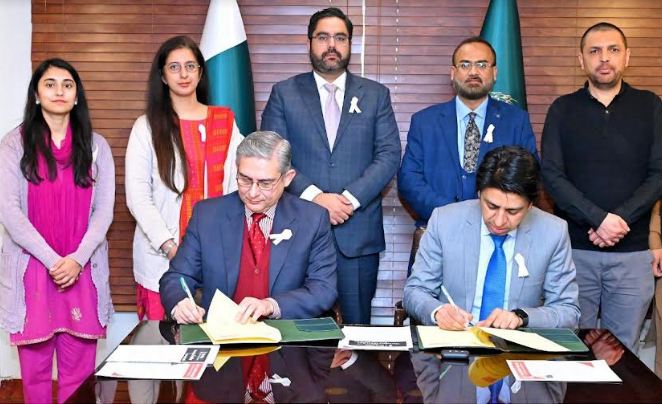
Rawalpindi: The Rawalpindi Chamber of Commerce and Industry (RCCI) inked a Memorandum of Understanding (MOU) with the White Ribbon Pakistan. The main purpose of the MOU was to eliminate domestic violence particularly violence against women and patriarchal mindset prevailing in the society.

President RCCI Saqib Rafiq and Omer Aftab, Founder/President White Ribbon Pakistan signed and exchanged the MOU documents at a ceremony held at Chamber house.

Senior Vice President Muhammad Hamza Sarosh and members were also present on the occasion.

Saqib Rafiq, said that there is a need to work on gender equality at the workplace and create a productive environment in business communities.

RCCI platform is available for policy advocacy and to bring more awareness about various laws and amendments to counter gender-based discrimination, violence against women, and economic and social empowerment of women.

He suggested nationwide campaign shall be initiated asking men from all occupations to pledge their allegiance to eradicate violence against women in every possible form.

RCCI is also a supporting partner with White Ribbon Workplace Gender Inclusion Awards 2023, he added.

Omer Aftab, Founder/President White Ribbon Pakistan said that White Ribbon Campaign is a movement of men dedicated to ending violence against women and girls. By addressing society’s and individuals’ patriarchal mindsets, we are addressing the issue of violence, he said. To effectively challenge the unfair power relations which promote gender-based violence, men must join with women to create awareness about women’s rights, he further added.

Stay Connected

64FansLike
60FollowersFollow

Latest Reviews

Exchange Rates

USD - United States Dollar
EUR
1.17
GBP
1.35
AUD
0.67
CAD
0.72