Home Blog Page 1392

Crypto assets can generate over $100 billion in Pakistan by the next 20 years

ISLAMABAD, DEC 20 (DNA) — The potential of crypto assets in Pakistan can generate over $100 billion in total income for technology talent over the next twenty years, contributing significantly to the national economy.

The last few months have exponentially increased societal, investor, and policy interest in crypto, blockchain, and Web 3.0 technologies because Pakistan ranks third in terms of crypto adoption in the Chainalysis 2021 Global Crypto Adoption Index.  

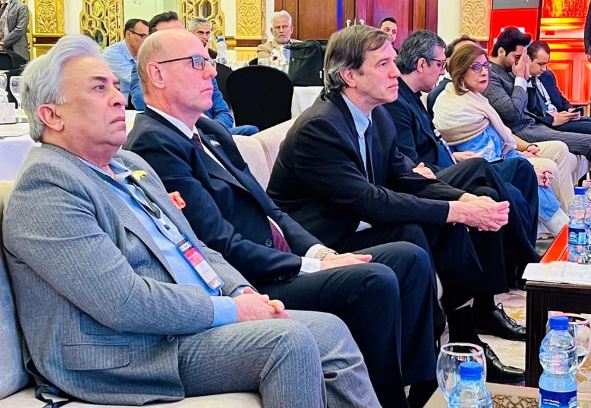
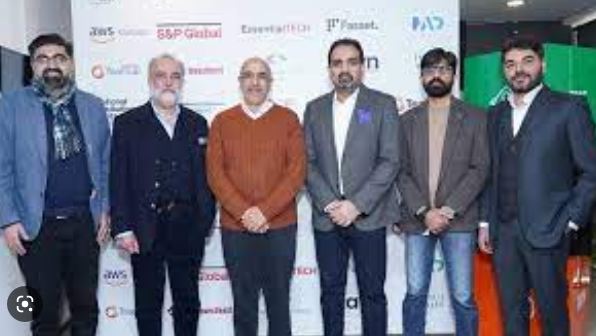
These observations were expressed by speakers at Pakistan’s largest Web 3.0 and blockchain event titled “W3B Summit” was held at the National Incubation Center (NIC) in Islamabad. It was attended by leading entrepreneurs, corporate leaders, technology professionals, and students. The summit was organized by Teamup and National Incubation Center in partnership with S&P Global and Fasset. The event aimed to lay down the foundation for emerging technologies in Pakistan.

Zouhair Khaliq, former CEO of Jazz, a veteran corporate executive, and Founding Partner, Teamup & National Incubation Centre Pakistan, welcomed the guests and delegates at the summit. He highlighted the role of the National Incubation Center, “I am glad to see NIC catalyzing innovation in Pakistan and this event is part of our attempts to turn Pakistan into a tech destination. There is tremendous potential in this field, and we must ensure Pakistan’s place in this rapidly developing landscape.”

Mujeeb Zahur, Managing Director S&P Global shared his firm belief in understanding and supporting the development of technology as the best way forward, “Technology is the only field that gives your economy and social progress an instant boost irrespective of your geo-political situation.

It is a world without divisions and works on pure merit and talent. Pakistan has no dearth of either. I hope to see such events regularly and look forward to S&P Global partnering with them in the future.”

Monis Rahman, a leading entrepreneur, and Founder, Rozee.pk & Dukan.pk, spoke on the future of fintech and Web 3.0 in Pakistan. “I have complete faith in the overwhelmingly young and tech-savvy population of Pakistan to take technology and innovation to new levels and enable a strong position for Pakistan as an emerging technology.” 

Noshad Minhas, Country Head Pakistan Fasset, was very optimistic, “Pakistan is amongst the top

3 Web 3 adopting nations in the world. It is home to some of the world’s best and brightest developers, researchers, and scientists in tokenization, digital assets, and blockchain technology.

 In tandem with National Incubation Centre, Fasset hopes to build awareness and educate the next generation of Web3 adopters on safe, responsible, and innovative development as well as the adoption of the future of this game-changing space. We believe that with the right building blocks, the talented youth of Pakistan can unlock $100bn of potential economic growth.”

It is noted that sectors from financial services to retail and e-commerce, media and entertainment, healthcare, IT, government, and energy, almost every sector is expected to adopt Web3.0 blockchain.

Industry leaders and users see potential in the highly transparent nature of a decentralized Web3.0, where all transactions are recorded and registered and can be easily traced. On the other hand, developers and IT teams invest in Web3.0 due to the strengths of its rapidly developing technology. = DNA
Energy conservation plan unveiled: Markets, restaurants to close at 8pm

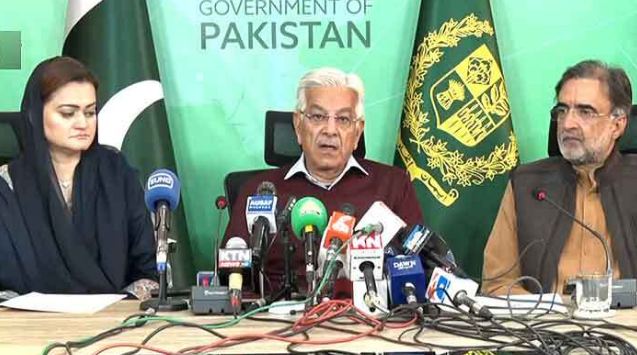
ISLAMABAD: The federal government on Tuesday unveiled its energy conservation plan, according to which all the markets and restaurants will be shut down at 8pm.

Speaking during a press conference after the cabinet meeting, Defence Minister Khawaja Asif said that the wedding halls will be closed at 10pm.

The timings of the restaurants may be extended an hour or so, he added.

“If 20% of the workers are sent to work from home on a rotational basis, this will save Rs56 billion,” said the minister.

The minister also shared that the federal government was recommending switching street lights on alternately which will save about Rs4 billion.

“The government is also introducing e-bikes which will phase out the bikes that use petrol. The government is negotiating with the companies to phase out the bikes that use petrol and modify the existing bikes,” said Asif.

The minister said that the government is reaching out to all four provinces to inform them about the policy and take them on board. He said that it is a National Energy Conservation Plan and will be launched with consensus.

Asif added that this plan will be finalised on Thursday after consultations with the rest of the provinces.

Asif said that the country cannot afford the current living conditions as it is going through a serious economic situation.

“We need to change our habits if we want to live within our means,” said the defence minister. Asif said that billions of rupees can be saved by conserving energy through different sources.

“Austerity will become a part of our nation which will end the economic problems,” he said.

Meanwhile, Adviser to PM Qamar Zaman Kaira assured that Pakistan will not default. He urged the people to accept the government’s policy.

“The biggest issue of Pakistan is the import bill which is $26 to $28 billion and it keeps increasing. There is no other option for us than to take these steps and the nation will have to cooperate with the government,” said Kaira.

Govt working out plan to reduce circular debt

Last week, sources had told that the government without allowing an upward revision in electricity and gas tariffs had directed the relevant authorities to come up with viable plans to reduce the monster of circular debt that had now peaked at Rs4 trillion.

However, without pricing adjustments, the International Monetary Fund (IMF) has rejected the initial plan for slashing the circular debt shared by Pakistani authorities with them in recent days because the Fund wants cost recovery of electricity and gas generation sectors.

Sources had told that Finance Minister Ishaq Dar chaired a high-level meeting to deliberate upon the cash-bleeding energy sector to prepare a plan for slashing down the circular debt, which will be presented to Prime Minister Shehbaz Sharif for approval.

Afterwards, this revised-updated plan will be shared with the IMF. But the meeting with PM was postponed.

The IMF high-ups assured the Pakistani authorities that they would continue holding virtual meetings during the Christmas holidays and Pakistani authorities were assigned to come up with a viable plan to erase the circular debt. The IMF had expressed its annoyance that the circular debt of the power sector had not shown improvements sought on the occasion of completion of the 7th and 8th reviews under the Extended Fund Facility (EFF) programme. The IMF’s displeasure further grew when the circular debt of the gas sector jacked up to Rs1,600 billion.

Death anniversary of Parveen Shakir to observe on DEC 26

DNA

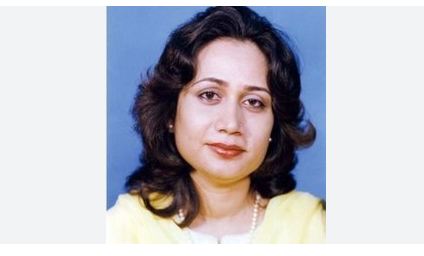
ISLAMABAD, DEC 20: 26th December 2022 marks the 28th Death Anniversary of the renowned national poet Perveen Shakir.  On this occasion The Perveen Shakir Trust will organize a floral wreath laying ceremony and FatehaKhawani at the poet’s grave in H-8 graveyard at 11.30 am.

Poets, writers, friends and people from different walks of life will assemble together to pay their tribute to the legacy and everlasting poetry of Perveen Shakir, whose sudden death in a tragic car accident shook the field of Urdu literature and left a vacuum that is difficult to fill.

Officers from the Customs Department will pay homage to the star of their Department.Later during the day Quran Khawani will be held at the residence of the Chairperson of the Trust for eesal-e-sawab of the poet.=DNA

Fawad lambasts imported govt for resurgence of terrorism 

Says Kh Asif sleeping when Murad warned of looming danger 

Regime Change operation not allow new era of Pak-Afghan ties to begin: PTI leader

DNA

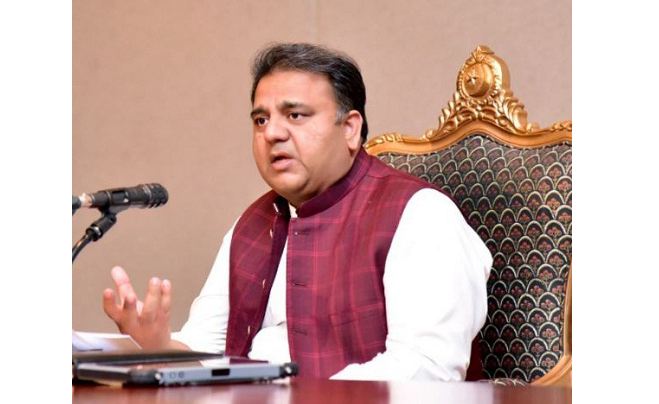
ISLAMABAD: Pakistan Tehreek-e-Insaf (PTI) Fawad Chaudhary came down hard on the imported government for enjoying sweet slumber when PTI senior leader Murad Saeed warned repeatedly of the looming danger, as the self-centered and power hungry crooked leaders were mere interested in prolong their rule for few more months, resultantly, Pakistan was now in the grip of terrorism. 

Fawad Chaudhary, in a statement on Tuesday, said that Pakistan was in the grip of terrorism; hence political stability was needed at this time, which can only come from elections.

He said that PDM had no option but to face the public as how much they could run away from elections, adding that they should not play with Pakistan for the sake of few months of power.

Lashing out at the Khawaja Asif for his remarks that border control should be done by the provincial government, Fawad stated that he should better to be put at pan shop instead of making him defense minister. 

He said that powers with zero understanding were dangerous as he was sleeping when Murad Saeed was shouting that there would be destruction.

Talking about imported government vote of no confidence, Fawad stated that until tomorrow, Rana Sanaullah and Ahsan Iqbal were saying that if assemblies were dissolved they would go to the election, but today they were running away from the elections.

He said that the purpose of no-confidence was to avoid elections; the PTI would not let them run away from the elections.

About the Taliban government, Fawad said that the Taliban government was also cooperating with Pakistan and wanted Pakistan’s role in relations with the world. He said that at Pakistan’s request, thousands of people succeeded in leaving Afghanistan easily. However, Fawad stated that Regime Change operation did not allow the new era of Pakistan-Afghanistan relations to begin. 

US organizes US-Pakistani Diaspora Engagement Conference in Islamabad

DNA

Islamabad, Dec 20At a U.S.-Pakistani diaspora conference today in Islamabad, United States Embassy Chargé d’Affaires Andrew Schofer emphasized that the United States considers the U.S.-Pakistani diaspora as a key partner in the humanitarian, social, and commercial sectors in Pakistan.

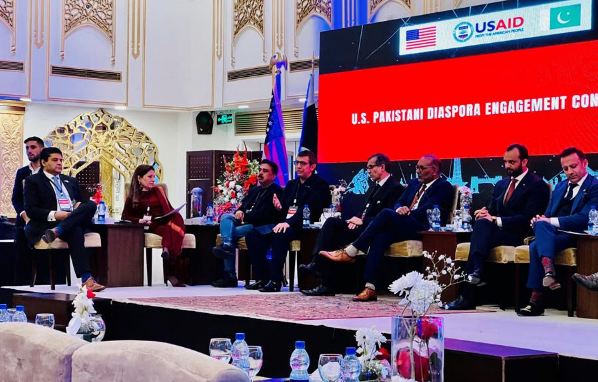
The United States Mission in Pakistan, through the United States Agency for International Development (USAID) and in close collaboration with the U.S.-Pakistani diaspora, hosted a one-day U.S.-Pakistani Diaspora Engagement Conference at the Marriott Hotel in Islamabad. 

The conference showcased key contributions and investments by the U.S.-Pakistani diaspora in the humanitarian, social, and commercial sectors, and explored avenues for future joint engagements.  Zeeshaan Shah, Prime Minister’s Ambassador at Large for Investments, spoke at the closing session.  More than 100 participants attended in-person, including members of the U.S.-Pakistani diaspora, and prominent local business leaders.

At the closing session, USAID signed two partnership memoranda of understanding with U.S.-Pakistani diaspora entities: one with Datarocx to set up digital centers in Pakistan in the Special Technology Zones and the other with Global Semiconductor Group and HUM Network Limited for Pakistan Katalytic Fund to improve access to growth capital for established businesses in the technology sector.

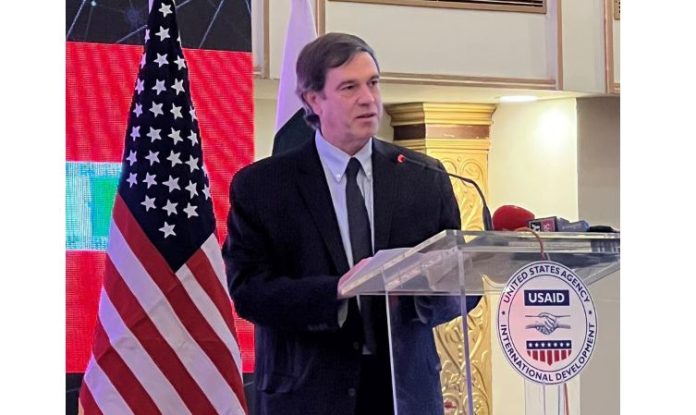
USAID Mission Director Reed Aeschliman said “The conference was an opportunity to highlight some of the contributions and investments already made by the Pakistani diaspora, facilitate collaborations between Pakistani diaspora entities, and develop a road map for collective action to address the current humanitarian and social challenges in Pakistan”.

In his remarks, Chargé d’Affaires Schofer highlighted the long history of the United States and Pakistan working together to advance Pakistan’s economic growth and to solve development challenges.  He also highlighted opportunities for future partnership: “As the Green Revolution improved lives in the past, a ‘Green Alliance’ between the United States and Pakistan will help us jointly strengthen climate resilience, develop clean energy alternatives, and foster economic growth.”

The United States remains firmly committed to engaging and partnering with the U.S.-Pakistani diaspora to address Pakistan’s challenges in the humanitarian, social and commercial sectors and to further Pakistan’s development goals.

Bannu’s CTD compound cleared, all terrorists dead: defence minister

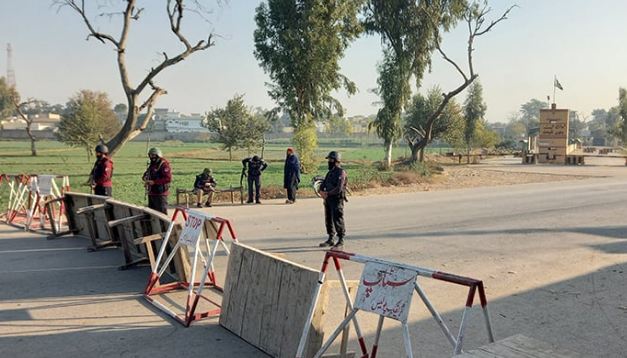
ISLAMABAD, DEC 20: Defence Minister Khawaja Asif said on Tuesday that the Counter-Terrorism Department’s (CTD) compound in Bannu, Khyber Pakhtunkhwa, was cleared after three days and all the 33 terrorists who overpowered security guards were killed in an operation.

In his briefing to the National Assembly, the federal minister said 10 to 15 soldiers had been injured and two martyred after the Pakistan Army’s Special Service Group (SSG) launched an operation earlier today.

“By 2:30pm, the SSG had cleared the compound. All the hostages have been freed,” Asif said. He also mentioned that the militants were not part of one group, rather they belonged to different banned outfits.

The defence minister added that there were 33 arrested terrorists inside the compound and one of them overpowered a man stationed at the centre. He then snatched his weapon and later the terrorists took over the centre, Asif said. Terrorists affiliated with the outlawed Tehreek-e-Taliban (Pakistan (TTP) were involved in the incident and in a bid to end the standoff, the Pakistani government initiated talks with the militant group’s leadership.

Sources earlier told that the terrorists were demanding a safe air route to Afghanistan.

“The unfortunate side of this incident is that terrorism is once again rearing its head, especially in KP and Balochistan. Incidents have taken place in other provinces, but in these two provinces, we have seen clear evidence.”

The defence minister also mentioned that the militants were not part of one group, rather they belonged to different banned outfits.

The defence minister mentioned that the provincial government — which oversees the CTD — has “completely failed” in carrying out its responsibility.

“The entire provincial government was a hostage of Imran Khan in Zaman Park. On the other hand, innocent people in KP were made hostage [by terrorists],” he said.

Asif added that even when floods hit KP, the Pakistan Tehreek-e-Insaf-led government — which is in power for the last nine years — has repeatedly failed to live up to the expectations.

“But this, this is an ‘utter failure’. Ultimately, our security forces had to get involved and sacrifice their lives […] the provincial government had no role in it whatsoever. This is a failure of nine years, not six months or a year,” he said.

Asif said Imran even uses the helicopters of the provincial government. “He is also thinking to come into power once again and destroy anything that is left,” the minister said. The defence minister slammed the KP government further and said that it was at a “complete collapse”.

HSHM hosts First World Tourism Day Int’l Conference

DNA

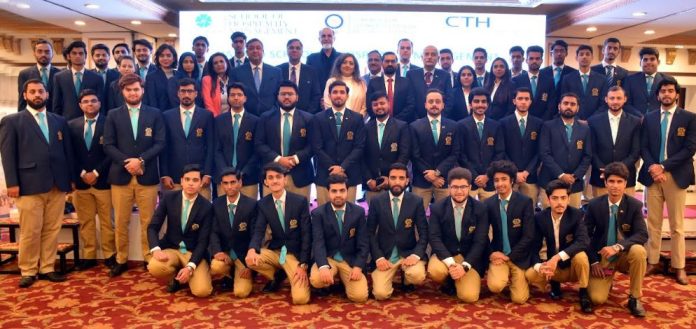
ISLAMABAD, DEC 20: Hashoo School of Hospitality Management (HSHM) hosted its first international conference to celebrate the World Tourism Day at Pearl-Continental Hotel Rawalpindi on 13th December 2022.The event revolvedaround this year’s theme, “Rethinking Tourism”.

The keynote speakers at the occasion wereDr. Syed Habib Ali Bokhari, VC,Kohsar University Murree, Dr. Ali Sajid, Tamgha-e-Imtiaz &Director Lahore School of Managementand AVM Ejaz Mahmood Malik, Tourism Development Consultant. The speakers from Hashoo Group included Mr. Haseeb A. Gardezi, COO, Brig. (R) Dr. Fiaz Mahmood Qamer, Head of Group Security & Vigilance, and Maj.(R) Faisal Naeem Khan, Director Education, HSHM.

The event was attended byseveral senior executives from CTTI Islamabad, Hashoo Group,faculty members and students from HSHM Islamabad as well as Peshawar Campus. Mr. Simon Cleaver from CTH UK, Dr. Saloomeh Tabari from Cardiff University, UK and Dr. Gul Erkol Bayram from Sinop University,Turkey joined via zoom session as guest speakers.The eventincluded presentations by the keynote speakers, an art exhibition and a photography competitionfollowed by lunch.

On the occasion, Mr. Haseeb A. Gardezisaid,“The pandemic highlighted the critical need for transformation of tourism industry as a tool for global development and cultural enlightenment, along with its impact on our society.” Addressing the HSHM students, he further added “You have chosen a prestigious profession with a bright future. Study well and gain hands-on experience at Hashoo Hotels to polish your skill sets. This will help you excel and become future leaders in the hospitality and tourism industry.”

The closing session of the conference included distribution of participation certificates and prizes for the winners of photography and art competition.

This conference served as the global observance day, fostering awareness towards sustainable tourism development in Pakistan.

Pakistan keen to enhance ties with Int’l community: Alvi

Envoys of Canada, Austria, Syria, Serbia & Slovak Republic present credentials to the President

Special Correspondent

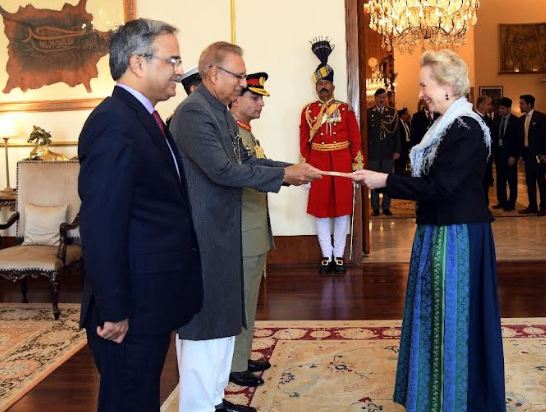
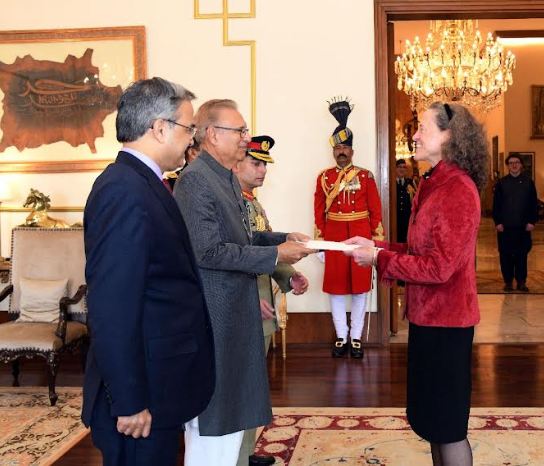
ISLAMABAD: The newly appointed envoys of Canada, Austria, Syria, Serbia, and the Slovak Republic presented their credentials to President Dr Arif Alvi during the Presentation of Credentials Ceremony, held at Aiwan-e-Sadr, today.

Later, the High Commissioner-designate of Canada, Ms Leslie Scanlon, Ambassador-designate of Austria, Mrs Andrea Wicke, Ambassador-designate of Syria, Dr Ramez Alraee, non-Resident Ambassador-designate of Serbia, Mr Dragan Todorovic, and non-Resident Ambassador-designate of Slovak Republic, Mr Ladislav Ballek, also made separate calls on the President. 

While talking to the Ambassador of Canada, the President highlighted that there was great economic potential in Pakistan, a market of 220 million people, and investment opportunities, adding that Canadian businesses should be encouraged to explore the opportunities available in Pakistan. He further said that the resolution of the Reko-Diq project was a positive development, and expressed the hope that it would encourage further Canadian investment in Pakistan.

The President stated that Pakistan and Canada enjoyed cordial and friendly relations and that Pakistan looked forward to greater bilateral cooperation in the areas of the economy, commerce, and investment.    

While welcoming the Austrian Ambassador, the President said that Pakistan attaches high importance to its relations with Austria, both bilaterally and in the context of the European Union. He informed that Pakistan’s investment regime was very liberal, and Austrian companies should benefit from it and consider making investments in the Special Economic Zones being set up all over the country. He further said that Pakistan offered significant opportunities for investment in the fields of hydropower, railways, communication, renewable energy, and waste management technologies. He added that there were ample opportunities for cooperation in start-ups and information technology sectors, and expressed hope that the two countries work towards enhancing cooperation in these fields.

The President also urged the need to further enhance bilateral trade and economic cooperation, adding that the true potential of bilateral trade was still unrealized. He noted that Austria has remained supportive of Pakistan’s GSP+ status, Pakistan looked forward to Austria’s continued support towards the successful completion of the ongoing 4th biennial review and for the new GSP Plus Scheme post-2023.

The President underscored that Pakistan would like to work together with its international partners, including Austria, to address the global issue of climate change. He expressed gratitude to the government and the people of Austria for providing Euro 2 million in humanitarian assistance for the flood victims in Pakistan.

Talking to the Syrian Ambassador to Pakistan, the President urged the need for regular contact between the two countries at different tiers of leadership in order to further cement cordial relations. He said that Pakistan’s relations with Syria were multi-faceted and deep-rooted and that cultural, religious, and historical ties bound the people of the two countries. He appreciated the friendly gesture by the Syrian government to open group visas for Pakistani Zaireen and commended the decision taken by the airlines of both countries to operate direct flights between Karachi and Damascus.

While talking to the Non-Resident Ambassador-designate of Serbia to Pakistan, the President said that both countries need to work diligently to strengthen their bilateral economic and trade relations in order to bring them to par with the actual trade potential. He further highlighted that Pakistan offered tremendous opportunities for investment and cooperation in the fields of hydropower, communication, higher and technical education, industrial and commercial interaction, renewable energy, information technology, circular economy and waste management technologies.

The President further said that Pakistan, having a population of over 220 million, was an ideal market to hire skilled and semi-skilled workers, which the Serbian corporate sector could utilize. “Skilled youth from Pakistan can help the construction sector which is presently booming in Serbia”, he added. 

The President thanked the Serbian side for agreeing to support Pakistan’s candidature for the Council of International Maritime Organization in September 2021. He also expressed gratitude to the Serbian side for supporting Pakistan’s candidature to the commission on the Limits of Continental Shelf (CLCS).

Talking to the Non-Resident Ambassador-designate of the Slovak Republic, the President expressed the hope that the Ambassador-designate would be able to contribute towards expanding bilateral ties between the two countries. He noted with satisfaction that the Ministries of Foreign Affairs of both countries had set up a mechanism for Bilateral Political Consultations, which would provide a good opportunity to review the overall relationship and take new initiatives.

The President further said that the investment policies of Pakistan were very liberal, and the Ambassador-designate may like to urge the Government of Slovakia and businesses to take advantage of them. He suggested that bilateral cooperation and investment in a variety of sectors, including the automobile industry, machinery, energy, construction, infrastructure, agriculture, electric industry, tourism and food processing.

The President also highlighted that Pakistan’s start-up and information technology sector was expanding very fast, and urged the Ambassador-designate to meet the concerned people in this regard. He also informed that Pakistan has also established Special Economic Zones and that Slovak investors were welcome to invest in them.

He also noted that GSP Plus has played an important role in the growth of trade between Pakistan and the EU countries and that Pakistan looked forward to Slovakia’s continued support towards the successful completion of the ongoing 4th biennial review and for the new GSP Plus Scheme post-2023.

China upgrades commercial districts with digital technologies for better experiences for consumers

By Wang Ke, Du Yifei, People’s Daily

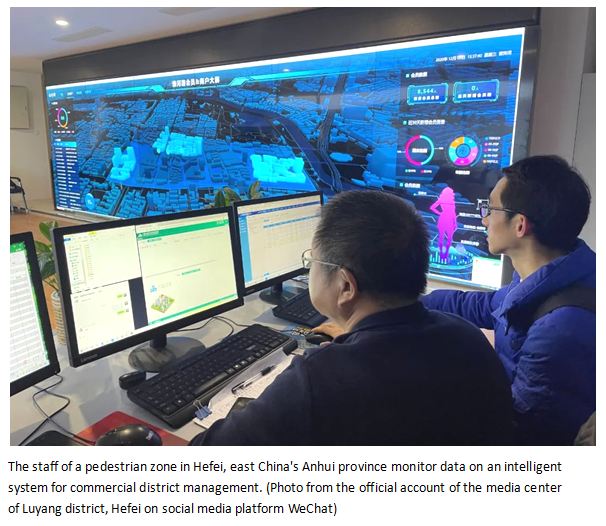
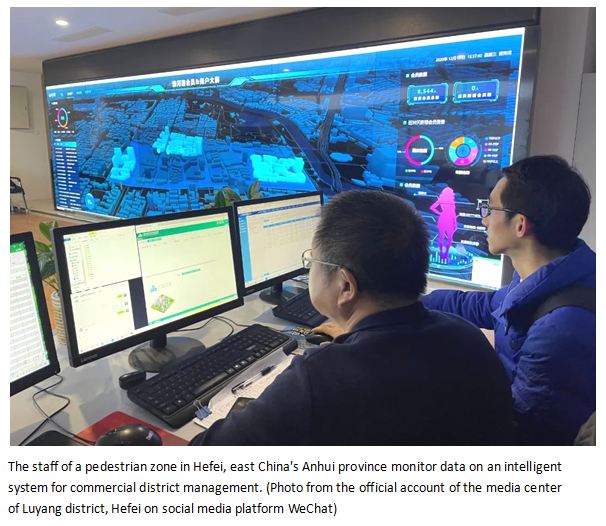
China’s Ministry of Commerce recently unveiled the first batch of 12 national demonstration intelligent commercial districts and 16 national demonstration intelligent stores, which mirrored China’s determination to upgrade and transform commercial districts with technology.

Commercial districts across the country have established big data platforms for smart operation, and shopping malls are integrating online and offline retailing. They have constantly upgraded service facilities to build immersive consumption scenarios.

The accelerated application of digital technologies in the sector is bringing new experiences to consumers.

Intelligent commercial districts are an important part of the urban commercial system, as well as a carrier for promoting distribution innovation and fostering emerging consumption.

Intelligent commercial districts, centered on big data platforms and employing modern information technologies, build a smart service system for consumers, merchandising enterprises, operating institutions and government departments.

Such districts are able to obtain relevant data, offer consumption services, guide surrounding traffic and push information. Besides, they also integrate mobile payment, delivery, and public services.

In the northern section of Beijing Road, Guangzhou, south China’s Guangdong province, an intelligent robot is always seen standing outside a smart service center – the “brain” of the Beijing Road commercial district.

The center is not only a big data platform, but also a service platform for merchants and tourists. It provides 179 efficient and convenient government services in public security, civil affairs and human resources.

As one of the busiest commercial districts in Guangzhou, Beijing Road is visited by over 600,000 people per day on holidays. Therefore, finding parking space has always been a headache for citizens.

Under the coordination of the smart service center, parking lots in the commercial district are put into centralized management with inquiry and guidance services. Nowadays, citizens visiting Beijing Road can check available parking spaces on a WeChat mini-program, which saves much time and has improved the utilization of parking lots to over 90 percent.

The construction of intelligent commercial districts enriches smart scenarios and better promotes traditional consumption with digital technologies.

“Many promotion activities have been held in our shopping mall, but we still could not find customers. Digital management well solves the pain points of traditional retailing,” said Wu Shengjun, vice general manager of a shopping mall on West Nanjing Road in Shanghai’s Jing’an District.

The shopping mall records information about 200,000 products from over 500 suppliers in a digital management system it has developed, which presents real-time data on inventory and consumer habits. The system helps the mall adjust the structure of its commodities in a more targeted manner, and thus better meet the demand of customers.

Artificial intelligence and virtual reality technologies have built interactive and immersive consumption scenarios and offered convenient public services for many commercial districts. The tech-ish and fashionable commercial districts are bringing new experiences to consumers, and further activating their own development.

In June 2021, the first naked-eye 3D LED display of east China’s Anhui province was installed in a pedestrian zone in the province’s capital Hefei. The LED display has soon become a landmark, attracting huge attention from citizens. On New Year’s Eve of 2021, over 450,000 citizens in the city gathered around to celebrate the New Year.

A shopping mall owned by major Chinese retailer Suning.com Co. in Xinjiekou, a central business district of Nanjing, east China’s Jiangsu province, has upgraded its facilities, sales models and consumption scenarios, to offer new interactive experiences for customers. The digital transformation, integrated with technological and fashion elements, has more than doubled the mall’s average monthly foot traffic.

Experts believe that in the future, intelligent commercial districts will continue to bring more convenience to the people, coordinate the demands of market entities, upgrade themselves with modern information technology, and improve their management capacity, to better meet the diversified demands of consumers.

China pushes for solid implementation of its 10 new measures of COVID-19 response

By Zhong Yin, People’s Daily

Local authorities across China are working to ensure forceful and effective COVID-19 response after the country issued its latest 10 prevention and control measures to further optimize pandemic control.

They are enhancing the popularization of healthcare knowledge among residents, guiding them to understand the novel coronavirus in a science-based manner, and encouraging them to be responsible for their own health.

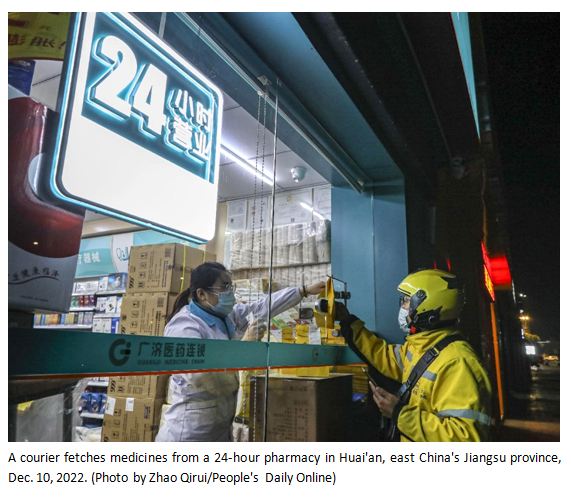
For instance, some local governments have issued pandemic prevention brochures for individuals, and some made short videos to instruct people to perform rapid antigen test. Besides, some published digital guidebooks that tell people when and where they should see a doctor.

Experts said that thanks to China’s previous efforts to contain the pandemic, the country has seen a prominent decrease in the pathogenicity of the virus and developed effective vaccines and medicines, thus embracing an opportunity to further optimize its control measures.

The 10 new measures were introduced based on the latest epidemic situation and mutation of the virusto contain the epidemic in a more targeted manner.

One of the goals of optimizing pandemic response is to lower the impacts from the virus on people’s life and work, ensure the treatment for the critically ill and groups at higher risk through effective resource allocation, better coordinate COVID-19 prevention and control with regular medical services, and better meet the demand for healthcare of the Chinese people.

Science-based and targeted implementation of these measures is important. From optimizing quarantine methods to ramping up the vaccination drive among the elderly, and from collecting health information about key groups to ensuring the functioning of the society and basic medical services, China is making unremitting efforts in various prevention and control work.

At present, China is working to ensure that responsibilities are fulfilled by local governments, departments, organizations and individuals, strengthen the construction and coordination of medical resources, improve the hierarchical medical system, and reinforce pandemic prevention capacity at the primary level, in hope of implementing the new measures in more targeted and effective manner.

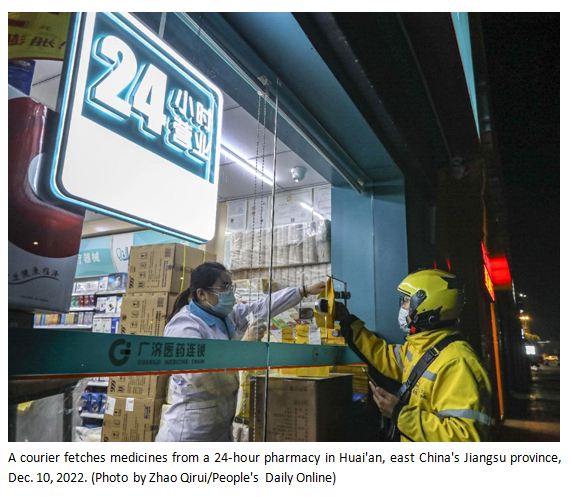
To tackle the difficulties facing the people, local authorities across the country have requested grade-two hospitals and qualified primary-level medical institutions to establish and open fever clinics to the best of their capacity. Besides, they also requested relevant organizations to offer door-to-door vaccination services for disabled seniors and those with mobility issues. Smooth logistics will be ensured and the protection of groups at higher riskenhanced, too.

Since the outbreak of the COVID-19 pandemic, China has always put the people and their lives in the first place, effectively responded to more than 100 regional outbreaks at home and five global resurgences.

Over the past three years, China has always been committed to the people-centered approach, and optimized prevention and control measures in view of the evolving COVID-19 dynamics.

China’s practice fully indicates that its COVID-19 response has to a very large extent protected the lives and safety of the Chinese people and facilitated people’s life, production and investment. The optimized measures will make more efficient use of prevention and control resources, and better coordinate epidemic prevention and control with economic and social development.

Stay Connected

64FansLike
60FollowersFollow

Latest Reviews

Exchange Rates

USD - United States Dollar
EUR
1.17
GBP
1.35
AUD
0.67
CAD
0.72