Home Blog Page 1391

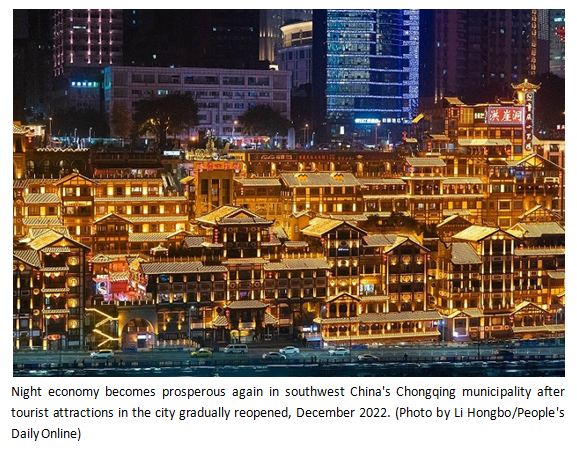
Chinese tourism bucks trend in 2022

By Zhao Shan

Recently, China Tourism Academy issued seven reports on Chinese tourism to summarize the performance of the sector this year.

According to the academy, new products and business models have emerged in the domestic tourism market, and niche sub-markets such as study tours, family trips, road trips and camping have seen flourishing development.

A report on domestic tourism said that there was an obvious shrinkage in both the distance of trips and the radius of tourists’ activities at their destinations this year, adding that 81.24 percent of domestic trips were made within provinces.

It said domestic trips this year present features of short time, short distance and high frequency, with new highlights such as mini vacations and hotel-staycations.

New products and business models of domestic tourism are favored by tourists. Driven by the 2022 Winter Olympics in Beijing, outdoor tourism is thriving, especially in Beijing and Zhangjiakou, where the Winter Olympics was hosted. More and more people have joined skiing, camping, hiking, mountaineering, horse riding, grass skiing and rafting to get close to nature.

In summer this year, waterside activities, countryside leisure, and trips for escaping the heat were popular among tourists.

A report on leisure tourism said the national leisure time has been significantly improved, and leisure activities at weekends are becoming regular. Short-distance trips have been frequently made across the country since the outbreak of the COVID-19 pandemic, and leisure activities were often carried out in places one to three kilometers from homes.

Leisure activities of Chinese people were diverse and prevalent in the life of urban residents. The number of urban residents visiting museums, exhibitions and science museums was on a rise.

Cultural tourism has gained bigger popularity among Chinese residents. More and more museums started exploring new methods to present visitors with individualized and immersive experiences and vitalize history and culture, bringing people closer to culture. During the National Day holiday this year, 93 percent of tourists joined cultural activities.

Consumption scenarios of tourism became diversified. Various activities can satisfy people’s different demands for tourism and leisure, including open spaces such as community gardens, urban pedestrian lanes, urban and suburban parks and national parks, commercial places such as restaurants, bars, coffee shops, shopping centers, wet markets, hotels and B&Bs, as well as cultural venues such as libraries, cultural clubs, museums, art galleries, cinemas, concert halls and cinemas.

The changing demands of tourists gave birth to new business models of leisure tourism. For instance, the Dewey Center Beijing has launched a light show themed on the works by Vincent van Gogh and Claude Monet; Jiaxing in east China’s Zhejiang province has built a chocolate-themed town. These new consumption scenarios have created infinite possibilities for the innovation and construction of scenic spots.

Scenic spots in China have also contributed to rural vitalization and played an important role in promoting common prosperity.

In the past three years, tourism bucked the trend in suburban areas in the country. Rural tourism used to depend on local scenic spots, but now villages have become part of the scenery.

The pattern of rural tourism has been changed by consumption scenarios defined by tourists. Every attractive scene in the countryside, be it an idyllic rural resident building, a time-worn countryside passage, or a tavern in the woods, is a great place to go to for urban tourists.

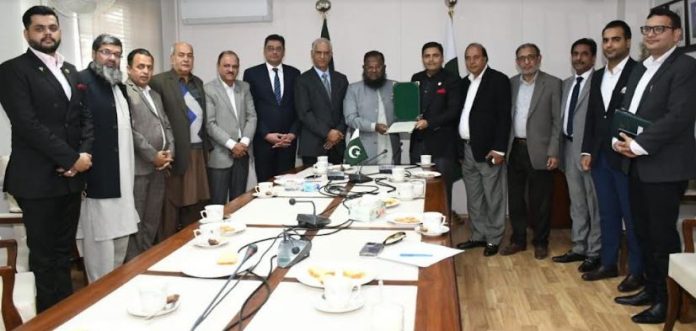
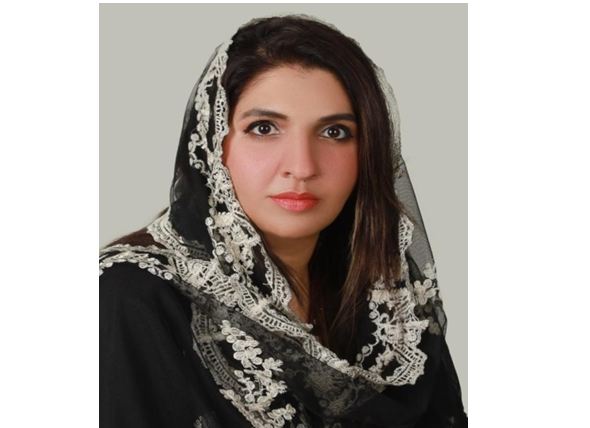
Ahsan Bakhtawari nominated Honorary Business Coordinator FTO to address grievances of taxpayers

Islamabad, DEC 21 /DNA/ – Ahsan Zafar Bakhtawari, President, Islamabad Chamber of Commerce & Industry (ICCI) has been nominated as the Honorary Business Coordinator by the Federal Tax Ombudsman Secretariat, Islamabad to work in coordination with FTO for addressing the grievances of taxpayers and facilitate them in tax matters. Dr. Asif Mahmood Jah, Federal Tax Ombudsman presented the letter of nomination to Ahsan Zafar Bakhtawari, President ICCI during a ceremony held at FTO Secretariat Islamabad.

Speaking at the occasion, Dr. Asif Mahmood Jah, Federal Tax Ombudsman said that the purpose of nominating Honorary Business Coordinators from the private sector is to give confidence to the taxpayers so that they could share their tax grievances, problems, issues, conflicts and concerns with them with ease and FTO would act proactively to address them. He said that ICCI should organize more awareness sessions on FTO so that maximum members of the business community could take benefit of its services for redress of their tax complaints. He said that this year, FTO dealt with around 6500 tax grievances. He said that FTO’s decision can only be challenged before the President of Pakistan and 90% decisions made by FTO were complied with by the FBR to provide relief to the taxpayers. He said that former President ICCI Muhammad Shakeel Munir had developed close liaison with FTO as Honorary Business Coordinator and hoped that Ahsan Zafar Bakhtawari would further strengthen his coordination with FTO to address the tax grievances of the business community.

Speaking at the occasion, Ahsan Zafar Bakhtawari, President, Islamabad Chamber of Commerce & Industry thanked Dr. Asif Mahmood Jah for nominating him as Honorary Business Coordinator for FTO Secretariat Islamabad and assured that he would play a role to address the tax problems of the business community that would help them in better promotion of business activities. He said that Dr. Asif Mahmood Jah was taking landmark decisions for the facilitation of taxpayers, which was laudable. He further assured that ICCI would organize more awareness programs on the role of FTO so that the business community could take full benefits of its services to redress their tax issues.

Muhammad Shakeel Munir, former President ICCI said that Dr. Asif Mahmood Jah has set great examples of a dynamic leader of FTO and added that the heads of other business related organizations should emulate his performance to make fast decisions for promoting ease of doing business in the country.

Dr. Arslan Subuctageen Advisor (Customs) FTO, Sheikh Muhammad Ijaz, Hamayun Kabir, Raja Imtiaz, Ameer Hamza, Akhtar Hussain, Rizwan Chheena, Khalid Chaudhry, Zia Khalid Chaudhry and others were also present at the occasion. 

Political instability in Pakistan

Dr. Muhammad Akram Zaheer

Pakistani Political system always has been protected the interests of elites. Although political leadership has been representative authority but they failed to raise hope for a democratic state that would provide socio-economic justice to all Pakistani citizens. The political leadership failed to createharmony on the national language, the role of Islam, provincial representation and the division of powers between the center and the provinces, delayed the constitution and postponed general elections. In October 1956, Pakistan came out from its infancy, a consensus was build and the first constitution of Pakistan came into force. The experience of democratic government was short but not sweet. In October 1958, General Muhammad AyubKha n easily staged a military coup.  The political paradigm shifted during the 1960s-70s, where class (revolutionary) politics was replaced by authoritarianism as a result of the influx of capital and urbanization.  Industrial workers, student unions and middle class socialist ideology emerged here. To counter the industrial class struggle of the 1960s, Zia furnishedPakistan with political-religious parties and place in politics through the street mosque culture within the power structure. For four decades after Zia, the Pakistani political scene was a hybrid of PML(N) and PPP patronage and intellectual politics. Once again, the landscape of Pakistan’s politics has changed when the poor and the educated are uneducated, devoid of critical thinking skills, which are influenced by anti-American and anti-establishment rhetoric. Anti-establishment and anti-American sloganeering has breathed new life into Khan’s April 2022 lows towards the end of his nearly 4-year rule. More than the dismissal of the PTI, there is public resentment over the return of the previous government, which was accused of corruption and nepotism. This resentment towards the PDM has been well cashed in by the PTI leadership even though it has little knowledge of its linkages with the geopolitical, geostrategic and geoeconomic realities of the contemporary international system. The PTI leadership dreams of a utopian world which is far from reality. This is a dream that has been shown to the people of Pakistan.

At present, Khan’s popularity chart is skyrocketing due to PTI’s constant tussle with state institutions, including the establishment, but the leadership strategy poses huge challenges in the field of foreign policy and security. People have hopes and calling the Azadi March a turning point for Pakistan.Even the blind can see the political engineering to bring PTI to power in 2018 as it is history of democratic regimes in Pakistan. Always the game of political engineering had been organized by the establishment. Now this Imran Khan was the beneficiary of this play and got the title “Ladla”.The PTI government has enjoyed unprecedented support from the establishment during its more than 3.5 years in power. PTI’s staunch supporters are also frustrated by the party’s poor performance, ambiguity and delays in government affairs. PTI’s popularity chart fell due to an unsatisfactory government but PDM comeback to rescue it.

Here, inciting the youth and people against the institutions of the state, institutional heads and the center of power of the country can have disastrous effects. This is Pakistan’s political history, political leadership frequent attacks on state institutions, especially on the establishment when they are away from the government. Opposition parties call them to rescue from the governmental brutal actions and illegal political cases.Bhutto’s inclination towards class politics along with his open opposition to Ayub Khan soon made him immensely popular with the masses. With an absolutist mentality he also desired absolute power; an absolutist mentality is a problem. Bhutto had become a dictator in the country with his power hungry mind. The quest for absolute power led him to an uncompromising situation with a power-sharing crisis that directed to a war of independence in the eastern wing.

The PTI’s philosophy of absolute power has hurt Pakistan on the foreign policy front where our Arab allies were angered when Erdogan tried to hold an Islamic summit in Malaysia, while our close neighbor the Iran was angered when Pakistan participated in a joint military exercise with Turkey in Azerbaijan. In addition, PTI’s poor performance during his tenure, he has several excuses including the lack of 2/3 majority.Now the PDM government which was considered most experienced has taken Pakistan on the point of devastation. Its experience, efficiency and administration have exposed. All the political parties are dictators in their political rooms now they have joint hands to protect themselves from the case of corruption.These political parties devoid of democracy always came to power for personal interests.

Now PTI’s turn to fundamentalist politics is based on direct confrontation with state institutions, including defamation campaigns against high officials and heads of institutions. The PTI young tigers being trained will soon trouble Pakistani society in the years to come. Our political leaders have a huge responsibility to build the political nursery of the state where they should nurture its political system on politics of reason instead of hatred, vandalism and fundamentalism. Radicalization of an already radicalized youth will permanently tear the fabric of our society.

Pakistan can emerge as a strong state and nation only when the socio-cultural trends of intolerance, exclusivity, nepotism, extremist ideologies and violence that have warped the national fabric are transformed as a nation. To be done and the political nursery of inclusiveness, tolerance, enlightenment, and coexistence in state building should foster critical thinking skills, inclusiveness, and respect for opposing ideologies in future generations of Pakistan.

REKO DIQ PROJECT: A ray of hope for Baluchistan

Gul.i.Ayesha Bhatti

PhD scholar International Relations

The federal and Baluchistan governments inked a deal on RekoDiq with the Canadian business Barrick Gold on 16 December, 2022, after the Supreme Court approved a settlement to begin mining at the site located in Chagai district. The Baluchistan administration described the arrangement as historic and the largest investment pact ever made by the state. The statement said, “The $6.5 billion punishment levied by an international court has been ineffective after signing the RekoDiq accord. Officially, Barrick owns 50% of RekoDiq, 25% by three federal state-owned enterprises, 15% by the Province of Baluchistan on a fully funded basis and 10% by the Province of Baluchistan on a free carried basis. 

RekoDiq is one of the largest undeveloped copper-gold deposits in the world. On July 29, 1993, the Chagai Hills Exploration Joint Venture Agreement (CHEJVA) was signed by BHP Minerals, the Baluchistan Development Authority (BDA), and others. On November 23, 2006, the Tethyan Copper Company (TCC) paid $240 million for BHP’s shares in CHEJVA. Due to a novation deal between the BHP and the Baluchistan government, it has joined the CHEJVA.

TCC filed its mining lease application and feasibility study on August 26, 2011, however, licensing authorities rejected them later. On November 6, 2011, a petition was submitted to the Supreme Court requesting to issue a directive prohibiting the Baluchistan government from awarding mining licences in an arbitrary and illegal way.

The Supreme Court declared CHEJVA to be invalid from the beginning on January 6, 2013. On December 12, 2011, the TCC filed a complaint with the International Centre for Settlement of Investment Disputes (ICSID) regarding alleged violations of the Australia-Pakistan Bilateral Investment Treaty (BIT) by Pakistan and with the International Chamber of Commerce (ICC) regarding alleged breaches of CHEJVA contracts by the Baluchistan government.

Initially, with respect to the ICSID procedures, the ICC tribunal suspended its own proceeding. The tribunal published a draught ruling on jurisdiction on February 12, 2016, holding that it had jurisdiction over TCC’s claims and TCC had invested in Pakistan. In this regard, Pakistan has violated its BIT commitments by expropriating TCC’s investment there.

The TCC was awarded damages against Pakistan by the ICSID tribunal on July 12, 2019, totaling $5.894 billion plus interest of $700,000 per day. The London Court of Arbitration also fined Pakistan $4 billion at the same time. Subsequently, the TCC started legal action to enforce the decision in a number of countries, including Australia, the US, and the UK (British Virgin Islands). The ICC reopened its case against the Baluchistan government and was anticipated to issue another award. Pakistan contested the ICSID Award at the time by starting legal action to have the award revoked.

The out-of-court agreement puts an end to the protracted battle over restarting the development of the RekoDiq mine in Baluchistan’s Chagai area by waiving the $11 billion penalty imposed on Pakistan by a World Bank arbitration court in 2019 as well as the other obligations. The agreement, which takes effect on December 16, was reached just days after Pakistan’s Supreme Court ruled that the March 2022 out-of-court settlement between the Pakistani government and the foreign corporations Barrick Gold and Antofagasta was legitimate.According to Mark Bristow, president, and chief executive officer of Barrick, “The project’s 2010 and 2011 feasibility expansion studies are now being updated”. “By 2024, it should be finished, with the first production set for 2028.”

“With its unique combination of large scale, low strip, and good grade, RekoDiq is expected to have a life of at least 40 years. We envisage a truck-and-shovel open pit operation with processing facilities producing a high-quality copper-gold concentrate.”

The project will be built out in two stages, with a total annual processing capacity of 80 million tonnes. The project is planned to begin production between 2027 and 2028, with an estimated initial capital cost of $7 billion.  During peak construction, the project is planned to employ 7,500 people and once in production, it will produce roughly 4,000 long-term employment. 

RekoDiq is predicted to have a profound influence on Pakistan’s economy. In addition to the economic advantages, the project will significantly increase Balochistan’s growth potential, by generating jobs, boosting the local economy, and expanding investments in healthcare, education, vocational training, food security, and the provision of clean water. Full funding of the province’s stake in the mine will allow Balochistan to profit from its 25% ownership’s dividends, royalties, and other advantages without having to contribute financially to its development or operation.

 Undeniably, the restructured arrangement is heavily skewed in the investor’s favor. Although, it’s true that a bird in the hand is worth two in the bush, however, it’s time to move on and utilize the agreement to its full potential. It is high time that Government should adopt the policies to make sure that Balochistan and its people will see these benefits quickly. Policymakers must start working to develop institutional capabilities, though, so they can create international accords that serve the interests of the nation rather than those of the investors.

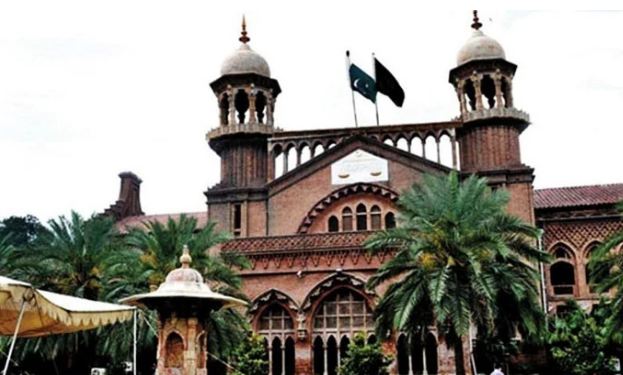
Punjab Assembly speaker ‘disposes’ governor’s order requiring CM Elahi to take vote of confidence

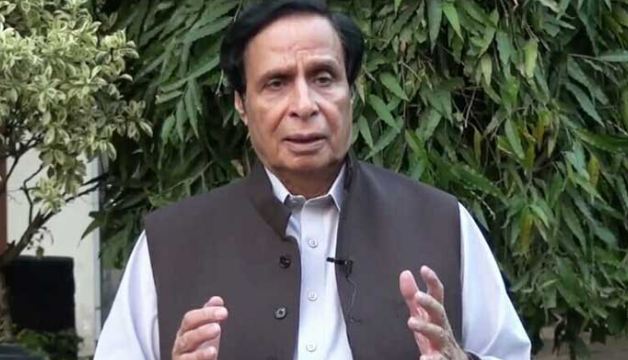
LAHORE: Punjab Assembly (PA) Speaker Sibtain Khan disposed on Tuesday Governor Balighur Rehman’s order requiring Chief Minister Parvez Elahi to obtain a vote of confidence from the house, saying that the instructions were “against the Constitution and Rules of Procedure”.

The speaker also adjourned the PA session till December 23 — the same day PTI plans to dissolve the provincial assemblies of Punjab and Khyber Pakhtunkhwa.

On Saturday, PTI Chairman Imran Khan announced that his governments in the two provinces will dissolve their assemblies on Friday to pave the way for fresh elections.

Subsequently, following days of hectic politicking, the Pakistan Democratic Movement (PDM) alliance sprang its own trap on Monday to limit the options available to Punjab Chief Minister Chaudhry Parvez Elahi.

In a double-edged move, Punjab Governor Balighur Rehman had asked the chief minister to obtain a vote of confidence from the PA on Wednesday (tomorrow), while PML-N and PPP lawmakers submitted a separate no-trust resolution against him in a bid to bar him from dissolving the assembly.

Under the law, the chief minister cannot dissolve the assembly if a no-confidence motion has been moved against him, while the governor’s requirement for the chief minister to seek a vote of confidence from the house means he has to ensure that he manages to secure 186 votes on Wednesday.

However, in a ruling during today’s PA session, Sibtain said that the assembly was “already in session” and “until and unless the current session is prorogued, the governor cannot summon any fresh session.”

The order — a copy of which is available with  — said that as per a Lahore High Court verdict, the matter of confidence in the chief minister could only be determined in a session that was “especially summoned for this purpose”.

It stated that the governor could not summon this special session while the current session was ongoing.

The ruling pointed out that the governor was empowered by Article 109 of the Constitution to summon or prorogue an assembly session, however, he had summoned the 41st assembly session but never prorogued it.

“That being the case, the governor is not empowered to summon the session requiring the chief minister to obtain a vote of confidence,” it added.

Therefore, the PA speaker ruled that “the order of governor requiring the chief minister to take a vote of confidence, being not in accordance with the aforementioned provisions of the Constitution and Rules of Procedure, may not be processed any further; hence, disposed of accordingly”.

Commenting on the matter after the PA session, the speaker told that he had had a meeting with lawyers on the interpretation of the Constitution and rules. “I have been saying this since the first day and I think [this interpretation] is correct,” he added.

Sibtain also termed the governor’s order to be “illegal and incorrect”.

Meanwhile, Chief Whip of PML-N Tahir Khalil Sindhu said the opposition alliance’s MPAs would reach the PA at 4pm tomorrow to attend the session summoned by the governor.

“The meeting called by the governor is in accordance with the Constitution and law,” he insisted.

Sindhu said CM Elahi would have to take a vote of confidence in any case, otherwise, he would cease to hold his office. “If the meeting does not take place tomorrow and the chief minister does not take the vote of confidence then the governor will de-notify him,” he added.

The PTI has 177 while the PML-Q has 10 members in the PA. On the other hand, the opposition boasts a combined 176 members from the PML-N, PPP and Rah-i-Haq parties.

Governor’s missive

According to a notification issued late on Monday night, the governor has summoned session of the Punjab Assembly on Wednesday at 4pm, and has required the chief minister to obtain a vote of confidence in terms of Article 130(7) of the Constitution.

In his order, the governor said CM Elahi has lost the confidence of his party president Chaudhry Shujaat and his own party MPAs. “It is widely known that over the last few weeks, serious differences of opinion have erupted between the two coalition parties – PTI and PML-Q – regarding political strategies, dissolution of assembly, development schemes and transfers of public officials.”

The order also cited differences between the coalition partners over inclusion of Khayal Ahmad of PTI in the provincial cabinet and resignation of provincial minister Sardar Hasnain Bahadur Dreshak.

The governor also cited Chaudhry Parvez Elahi’s Dec 4 statement that he was not going to dissolve the PA until March 2023 – “a position which is completely at odds with the PTI’s public position on the issue and it led to resignation of two PTI MPAs in protest.”

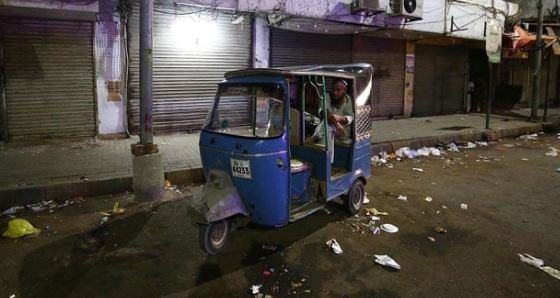
Traders, restaurant owners reject govt’s ‘energy conservation plan’

KARACHI/ISLAMABAD: Hours after the federal government came up with its fresh energy conservation plan, traders and restaurant owners rejected the measures announced, terming the policy “counterproductive rather than being productive”.

Condemning the restrictions — which are to be imposed by the Centre after consultations with the provinces — President All Pakistan Anjuman-e-Tajran President Ajmal Baloch Tuesday urged the government to immediately withdraw its decision to close markets and restaurants at 8pm.

Under its National Energy Conservation Plan, the government decided that the timing of wedding halls would be limited to 10pm, while restaurants, hotels, and markets would closed by 8pm.

However, it was learnt that there may be some room for the closing time for restaurants to be extended by an hour.

“The government, before defaulting the country, will bankrupt all traders,” he said, adding that traders purchase the most expensive electricity from 6pm to 8pm.

Warning the government of protests across the country, Baloch said: “The coalition government has wreaked havoc on the economy of Pakistan.”

Karachi Electric Dealers Association President Rizwan Irfan lamented that the traders are already facing difficulties due to electricity and gas load shedding. He warned that merchants would take strict actions in case these time restrictions are imposed.

‘Counterproductive policy’

Meanwhile, All Pakistan Restaurant Association (APRA) Chairman Athar Chawla termed the national energy conservation plan “counterproductive” rather than a productive approach to resolving Pakistan’s energy crisis.

He explained that if more people were dining in restaurants at night then less energy would be consumed compared to them staying indoors.

APRA’s Senior Vice President Suleman Chawla wrote a letter to Minister for Defence Khawaja Asif — who unveiled the cabinet’s decision in a press conference earlier today —for assistance in removing time limits.

“All restaurants carry an inventory of perishable items, which is to be kept in cold storage 24 hours a day and seven days a week, another major electricity consuming machinery are air conditions which are already off due to winter season,” the letter read, adding that therefore closing restaurants early will “not help to conserve any energy.”

Recalling the economic damage suffered during COVID-19, the association — which is a registered member of the Federation of Pakistan Chambers of Commerce and Industry (FPCCI) — mentioned that almost 50% of restaurants are running in losses due to the prevailing economic situation.

“Any further restriction will further aggravate the situation resulting in huge unemployment and loss of revenue for the government,” it said, mentioning that 40 industries allied with the restaurants will also suffer due to these restrictions.

The APRA requested the authorities concerned to allow restaurants to operate dine-in till 1am and take away and delivery should be allowed 24/7.

Pakistan, Afghanistan agree to resolve border issues

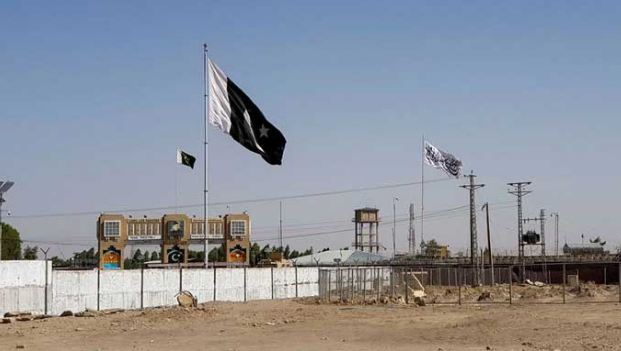
CHAMAN: After several days of hostility at the Pakistan-Afghanistan border in Chaman, authorities on both sides Tuesday agreed to resolve border and fencing issues through bilateral contacts and consultations.

The development came during a flag meeting between officials of the two neighbouring countries at the Friendship Gate in Chaman after the successful intervention of the local tribal council which was tasked with ending tensions between Pakistan and Afghanistan’s border forces.

District officials told Geo News that high-level civil and military officials participated in the meeting, along with the deputy commissioners of Pakistan’s Chaman and Afghanistan’s Spin Boldak. Religious scholars and elders also attended the conciliatory meeting.

The officials of both countries also agreed to resolve border issues through mutual consultation.

The Pakistani authorities said that the Afghan delegation expressed deep sorrow over the loss of life and property in Chaman’s civilian population. The neighbouring country’s delegation also acknowledged the sacrifices of the Pakistani nation and security forces for Afghanistan.

Participants in the flag meeting also prayed for the martyrs and recovery of injured people in the recent attacks prompted by the Afghan border forces.

Hostility at border

For over a month, Afghan security officials and border forces have been engaged in opening fire on civilians and Pakistan’s security forces.

The latest cross-border attack on a civilian area in Pakistan took place on December 15, two days after Afghanistan apologised for the incident —  in which indiscriminate firing by Afghan border forces claimed the life of one person and injured over a dozen.

A similar attack also took place on December 11 during which six civilians were martyred while 17 were wounded.

Pakistani security and border forces befittingly responded to these unsolicited attacks while Afghanistan’s chargé d’affaires in Islamabad were also summoned by the government.

LHC allows suspended PML-N MPAs to cast votes on no-trust motion against CM Elahi

LAHORE: In a major development, the Lahore High Court (LHC) Tuesday allowed the suspended lawmakers of the Pakistan Muslim League-Nawaz (PML-N) to attend the much-anticipated session of the Punjab Assembly with a crucial no-confidence motion — filed by the joint opposition against Chief Minister Chaudhry Parvez Elahi.

Punjab Assembly Speaker Sibtain Khan, on October 23, had banned the entry of 18 PML-N lawmakers to the assembly for their unruly conduct during the session.

According to the provincial assembly order, the opposition members started hue and cry when former CM Punjab Usman Buzdar was called to move his resolution.

The lawmakers started raising slogans and derogatory remarks against the leadership of PTI and the chair when the speaker requested them not to hamper the house’s proceedings.

Later, in pursuance of the powers vested in him in terms of rule 210 of the Assembly Rules, the speaker barred the lawmakers from attending 15 consecutive sittings of the house.

A day after the submission of the no-trust motion against the Punjab CM, the lawmakers challenged the October 23 order of the speaker.

A two-member bench of the LHC comprising Justice Shahid Bilal and Justice Risal Hassan heard the petitions.

The petitioners pleaded with the court to allow them to attend and exercise their democratic right during the upcoming crucial session of the provincial assembly scheduled to be held on December 21.

During the course of proceedings, PML-N MPA Rana Mashhood Ahmad Khan’s counsel argued that the speaker can suspend a lawmaker for 15 days after giving two warnings to the MPA.

But the suspension of the lawmakers for 15 sessions is unconstitutional, the lawyer argued. The speaker’s counsel, however, termed the application unmaintainable.

In short order, the court allowed the suspended lawmakers to attend the next session of the house and permitted them to cast their votes.

The resolution of no-confidence was moved against the chief minister days after Pakistan Tehkreek-e-Insaf (PTI) Chairman Imran Khan announced that the Punjab and Khyber Pakhtunkhwa assemblies would be dissolved on December 23.

Centre threatens to seal CM House if Parvez Elahi won’t take trust vote

ISLAMABAD, DEC 20: In view of the no-trust motion submitted against Chief Minister Parvez Elahi, Interior Minister Rana Sanaullah Tuesday threatened to seal the Punjab CM House if the much-anticipated session of the provincial assembly will not take place tomorrow (Wednesday).

Talking to journalists in Lahore, the security czar said: “Punjab CM House will be sealed if Chaudhry Parvez Elahi does not take the vote of confidence or the assembly session does not take place.”

The Punjab chief minister will have to take the vote of no confidence even if the provincial assembly session is not held, Sanaullah added.

“Elahi will lose the chief ministership if he does not take the trust vote,” he added.

Responding to a question, the interior minister said that the governor has the power to convene the provincial assembly session.

Referring to CM Elahi’s recent statement, Sanaullah said that the no-trust move must come when the chief minister himself said that 99% of lawmakers are against the dissolution of the assembly.

‘Governor can’t call meeting during ongoing session’

On the other hand, Punjab Assembly Speaker Sibtain Khan has said that the governor could not call a meeting during the ongoing session of the provincial assembly as per the rules.

Following his meeting with PTI Chairman Imran Khan at his Zaman Park residence, the speaker said that the PDM was running away from the elections.

He maintained that they were sitting at the secretariat late at night due to the assembly session.

“There is no confusion that we (PTI) and Parvez Elahi will have work together,” he said, adding that if 13 parties can work together under the umbrella of PDM then why not two parties.

‘PDM running away from elections’

In conversation with journalists in Lahore, PTI Senior Vice President Fawad Chaudhry said the assembly’s party aims to dissolve the assembly right after thwarting the no-confidence motion. The PTI leader said that the Pakistan Democratic Movement (PDM) is “running away from elections” and that if the ruling parties cannot run the country, they should step down.

“We will also face the no-confidence motion with full force. No matter what you (government) do, elections cannot be postponed,” he added.

Imran, Moonis ‘finalise strategy’ for dissolving PA

Pakistan Muslim League-Quaid (PML-Q) leader Moonis Elahi called on PTI Chairman Imran Khan at his Zaman Park residence to discuss the unfolding political situation in the country.

Clearing the air, the PML-Q leader said he and Khan finalised a strategy to dissolve the Punjab Assembly. He added that the PDM could not stop holding of early elections in the country. “Imran Khan will sweep the next elections.”

Travel for Indonesia to be eased: Indonesian Envoy

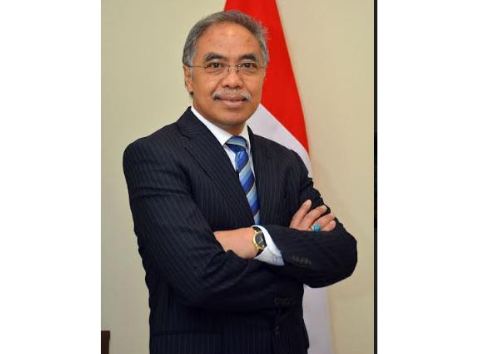
ISLAMABAD, DEC 20 (DNA) — Ambassador of Indonesia to Pakistan Adam M. Tugio has said that Indonesia is now open for international visitors and the normal visa-issuing process for different purposes has been resumed.

The Ambassador stated this while addressing a gathering of visa dropbox travel agents in Haripur organized by the Indonesian Embassy to brief on the post-pandemic new visa regulations. He said that the visa process now will take three working days upon the submission of the application with complete documents.

 In addition, the government has also been developing five new superior tourism destinations other than Bali to welcome international visitors for enjoying the multicultural beauty of the world’s biggest Archipelago, said the Envoy.

Responding to the possibility of starting a direct flight from Pakistan to Indonesia to facilitate the increasing number of visitors, Ambassador Tugio informed the participants that the Embassy has been striving to meet this objective by approaching the national flag carrier of Indonesia and private airlines and hoped that direct flights would soon to be materialized.

 “Initially, it was decided to start direct flights three times a week in 2020, but the pandemic forced the private airlines to reschedule it all together”, the envoy added. Talking about tourism promotion, he said that the Embassy will resume ‘Familiarization Trip’ programs for journalists, Dropbox travel agents, bloggers, and content developers to explore the unique cultural beauty of Indonesia.

On this occasion, a short video on the upcoming book of the Embassy “Indonesia Spice’s Up Pakistan: Winning the Hearts and Minds Through Food and Flavors” was also shown. “We hope that this book on spices would pique the interest of travelers, tourists, food lovers, and entrepreneurs as well as inspire the Pakistani friends to discover more innovative. = DNA

Stay Connected

64FansLike
60FollowersFollow

Latest Reviews

Exchange Rates

USD - United States Dollar
EUR
1.17
GBP
1.35
AUD
0.67
CAD
0.72