Home Blog Page 1387

PM Shehbaz reiterates resolve to uproot menace of terrorism

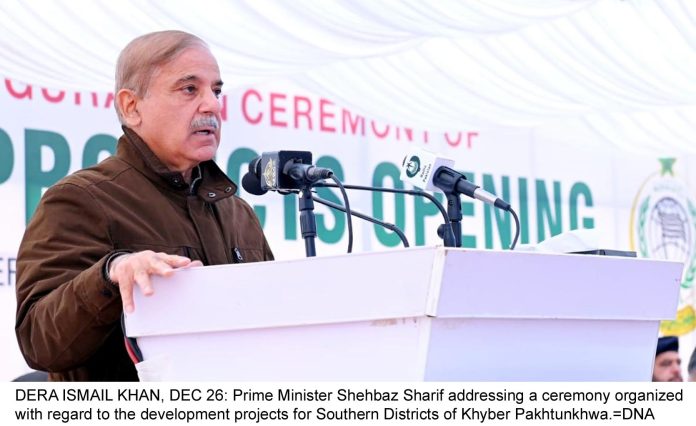
DERA ISMAIL KHAN, DEC 26: Prime Minister Shehbaz Sharif addressing a ceremony organized with regard to the development projects for Southern Districts of Khyber Pakhtunkhwa.=DNA PHOTO

ISLAMABAD, DEC 26: As the country has been witnessing an uptick in terror incidents, Prime Minister Shehbaz Sharif Monday reiterated his resolve to uproot the menace of terrorism by using all resources to bring back peace in Pakistan.

The premier, while addressing an event in Dera Ismail Khan, said that he will take all possible steps to control incidents of terrorism in the country.

PM Shehbaz’s assurance came while commenting on the recent terror incidents across the country, particularly highlighting the Bannu operation against the banned Tehreek-e-Taliban Pakistan (TTP) where its terrorists took the Counter-Terrorism Department’s compound hostage, which was later cleared by security forces.

“Security forces bravely combatted against the terrorists in Bannu. In recent weeks, incidents of terrorism are on the rise again. Those who embraced martyrdom in Bannu are Pakistan’s heroes. The nation will remember them,” the premier said, speaking at an event following the launch of development projects in DI Khan.

He told the attendees about visiting the Rawalpindi Hospital to meet soldiers injured in the Bannu operation. The prime minister also spoke about the spate of terror attacks in Balochistan a day earlier.

“Another terror incident took place in Balochistan yesterday. We are working hard to prevent incidents of terrorism. We will employ all resources to uproot terrorism to bring peace in Pakistan,” Premier Shehbaz added.

He also assured of the eradication of extortion and other incidents.

Inauguration of development projects

Commenting on the state of development in Pakistan, the prime minister said that the country was led towards a disaster due to the wrong policies of the previous government.

While inaugurating development projects in district DI Khan and realising the dream of Pakistan Muslim League-Nawaz supremo Nawaz Sharif of constructing motorways across the country, he said: “Inaugurated development works in DI Khan today. [We] have also laid the foundation for the Sukkur-Hyderabad motorway. Nawaz Sharif’s dream of motorways from Peshawar to Karachi has come true.”

The premier also lambasted the previous government of Pakistan Tehreek-e-Insaf (PTI) for not doing the necessary infrastructural work in DI Khan and Zhob.

“The previous government did not even lay a brick for the DI Khan and Zhib corridor. The provincial government did not spend a penny on the project that the federal government completed in the past,” he said.

The premier went on to say that the Chashma Right Bank Irrigation Project (CRBIP) would irrigate millions of acres of land in Chashma, Mainwali.

“This government has eight months. We will work day and night,” PM Shehbaz said, highlighting the need for building dams to ensure prosperity in the country.

He said that he will ask Chairman WAPDA Lt Gen Sajjad Ghani to devise a plan and brief about the dam’s completion.

Speaking on the construction of an airport, the premier said that it will be a waste to invest money in the old airport as water gets accumulated there. He added that to ensure the success of the airport, the government will complete the project of an industrial state.

In a veiled reference to PTI Chairman Imran Khan, PM Shehbaz said that he had brought disrespect to the country after selling out precious gifts presented by foreign leaders given as a symbol of fraternal ties with Pakistan’s people, but the former ruler sold them out in open markets.

He added that when taking an oath, Imran Khan did not realise the economic disaster that Pakistan was heading towards, as it was on the verge of default. But following the efforts of the coalition government, with all relevant institutions and prayers of the nation, they saved the country.

The premier said the country is still facing economic challenges. He added that Pakistan suffered a whopping loss of about $30 billion due to floods and these woes were multiplied by global inflation and recession, the Russia-Ukraine conflict and the exorbitant price of gas and oil in the international market.
Greater Power Aggression and the ineptitude of the United Nations

Sabah Aslam

The United Nations’ (UN) institutional flaws have allowed great powers, notably the United States (US), to advance their interests at the expense of the organization’s core purposes. It has failed to avoid wars; peace and security are now a thing of the past. While only the tactics and patterns of battle have changed, the flames of strife have never been extinguished.

The UN is clearly powerless, as it has failed to deter great power aggression. Any resolution opposing their conduct will be vetoed without delay. As a result, the UN serves little purpose during great power wars, and weak nations are subjugated without significant assistance or collective security.

The United Nations is the world’s primary institution for deliberating on issues of peace and security, although its activity extends well beyond peacekeeping and conflict aversion. Several UN agencies are committed to a spectrum of issues, including health and humanitarian concerns, as well as economic and cultural development, and environmental concerns. For 77 years, the US has served as the organization’s principal chaperon and significant sponsor as a founding member.

The US is the greatest donor to the UN, in 2021 alone, it contributed more than $11 billion, accounting for more than 20 percent ofthe total financing for the body’s collective budget. Despite former US President Donald Trump’s efforts to reduce financing, his administration has valued sovereignty above multilateralism. His administration claimed that the US suffered disproportionately high expenses and that UN initiatives contradicted the government’s strategic positions. However, US President Joe Biden has reaffirmed the centrality of the United Nations in US foreign policy and increased financing for the institution. Despite the promises and commitments, the United States owes the United Nations approximately $1 billion in peacekeeping alone, according to Executive Director of the Better World Campaign, Jordie Hannum’s correspondence with the media

Although the United States has been brutal to its competitors, its ascendancy to global hegemony has given the UN new verve. The United States has blanketed the world in security to serve as a global law enforcer; its economic dominance has allowed it to influence the global economy and attract alliances; its technological advantage has added another dimension to its power; and its ideological principles multilateralism, neoliberal economic system, and democratic political norms have provided it with the tools to craft the rules of the game. In its essence, the UN has been shielded by a hegemonic power; its values have been sustained solely by virtue of US exceptionalism.

US suspects that the hegemonic unipolarity that the US enjoyed during the Cold War is threatened by the rising multipolarity. Russia’s resurgence and China’s rise are viewed as threats by the US to its UN-led structure of the purported liberal democratic international order. The US has attempted to sway the geopolitics and foreign policy of South Asia on several occasions by using the UN system. The US has initiated a pattern of imposing sanctions and taking unjustified action through multilateral forums and the international community to serve its objectives in confronting China.

The United Nations can hence be viewed as both an ‘institutional bargain’,and the embodiment of the US-led vision of world order. The US’s ambiguous attitude toward the UN reflects the precarious nature of the institutional bargain. However, the tie is stronger than it appears since the Organization embodies ideals and objectives that US presidents have advocated for over the last 100 years. It has proven to be a suitable position for the US to exercise and enhance its already exceptional pool of ‘soft power’. 

Undermining the UN might make it slightly easier for the US to act alone when warranted, but the multilateral, institutional, and rule-of-law tendency in US foreign policy thought would not be easily overcome. This drive might manifest itself in organizations other than the UN, but the evidence does not point to the creation of a viable alternative anytime soon.

Recent happeningsin Ukraine, Afghanistan, Iran, and elsewhere have brought to light ironies, that the US was the architect of the very UN-based order that current US policy may seem to abolish; and that the US has a greater incentive to legitimize its power through multilateral mechanisms as it becomes more powerful in order to avoid effective opposition. The UN will continue to serve as an effective tool for the US to turn its interests and values into a global consensus and put its power behind more expansive collective goals for the foreseeable future.

*Ms. Sabah Aslam is the Founder and Executive Director of IICR. She is security analyst and Human Rights Activist. She served as research fellow at Institute of Strategic Studies Islamabad. She also served as professional trainer at CDA Training Academy. She regularly writes for national & international print media. She has served as visiting Lecturer at Quaid i Azam University and National University of Modern Languages. She has presented papers and have participated in many national and international conferences and workshops & seminars in Pakistan and abroad. She is EUVP Alumni. She worked with Parliamentary Committee on Kashmir Affairs, Government of Pakistan as Advisor on Research and Kashmir Youth Ambassadors program.

ICCWS-2022 in Islamabad, International Conference on Cyber Warfare & Security

ISLAMABAD, DEC 26 /DNA/ – National Centre for Cyber Security (NCCS) at Air University Islamabad organized a two-day event to invite researchers and cyber security practitioners across the world to share their research work and experiences related to the state-of-the-art and the emerging areas of cyber security in the 7th-8th Dec, 2022. ICCWS-2022 will provide its participants an opportunity to learn, share and demonstrate their ideas, strategies, and policies pertaining to cyber security. Prospective authors are invited to submit their original technical papers for presentation at ICCWS 2022.

It is noteworthy that effective cyber-attacks can cripple entire nation’s infrastructure and damage its economy. In fact, Cyber Security has now been recognized as a global problem, transcending national boundaries. The challenge is accelerating with new sophisticated zero-day attacks costing economies Billions of dollars annually. The scale of the problem, rapid advancement, and the technical nature of cyber-attacks widens the skills gap. To create cyber security awareness and ensure knowledge spill over to the society, there is a dire need of a domain specific scientific platform in the region to provide a knowledge sharing venue for researchers, academicians and industry experts.

As observer in Pakistan, telecom industry is facing cyber security threat since long, like online fraud, malware attack etc. Here we can see it’s not a single party responsibility and there’s no fit-all solution to handle cyber security risk among service provider like Jazz, ZONG, Ufone, and equipment provider like Huawei, ZTE, Nokia & Ericson.

“Taking on an open, transparent and sincere attitude, Huawei is willing to work with all governments, customers and partners through various channels to jointly cope with cyber security threats and challenges from cyber security” quote from Huawei cyber security statement. With the joint cooperation, Pakistan can have a better safer network space.

Pak Foreign Secy meets First Deputy Minister of Foreign Affairs of Uzbekistan

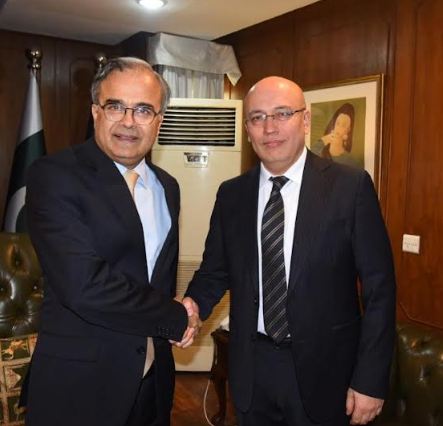
Tashkent, DEC 26 /DNA/ – Foreign Secretary Asad Majeed Khan received Furkat Sidikov, First Deputy Minister of Foreign Affairs of the Republic of Uzbekistan.

A wide range of issues of mutual interest were discussed to enhance political and economic cooperation between our two brotherly countries.

AMAN – 23: Coming together for peace

Ms. Hadiya Siddiqui

Since 2007, the Pakistan Navy has had the honour of conceptualising and hosting the AMAN series of exercises, which promotes peace at sea. The exercise includes a multinational exercise with friendly regional and extra regional naval forces, which has been essential in raising the morale of the Pakistan Navy. In order to ensure effective maritime security in the Indian Ocean Region, it is necessary to establish relationships, improve compatibility, and increase mutual understanding among navies (IOR).

While interacting with all the participating navies through joint bilateral and multilateral exercises, Pakistan Navy has proudly been able to claim the growing stature of the exercise and the largest participation of representatives of about more than forty friendly nations.

Pakistan Navy is conducting the AMAN series of exercise biennially since 2007 and the 8thof its edition has been scheduled in February 2023.The aim of the exercise is to establish Responses, Tactics, Techniques and Procedures against conventional and unconventional threats faced by today’s world.Therefore, these exercises play an important role for formation of a joint strategy among the participating navies to develop a united approach for the regional maritime security. Moreover the exercise includes enhancement of professional expertise in capability of joint operations and regional peace and security. Thus, this authenticates the exercise’s declared resolve of ‘Together for Peace.’

The resolve will not only help to eradicate terrorism and pledging peace and harmony in the region, but in fact the regional navies can ensure a smooth route to prosperity via trade, by strengthening multi-layered security cooperation and enhancing inter-operability in Naval Ops and cross culture interaction.

Pakistan Navy believes in inclusive policy and if the world stands together, there will be great benefits for all. The IORis experiencing swift geostrategic changes which have arose a number of challenges for Pakistan but have also provided many opportunities that promise a security improvement not only within Pakistan but also in the region at large. 

The strategic security environment of the world is being transformed by dynamism observed in global maritime trade and therefore, there requires an increase in security arrangements in and around theIOR. Regional nations that heretofore have provided periodic coastal protection may find they must expand patrols from the Strait of Hormuz to Egypt’s Suez Canal, transiting between the Red Sea and the Mediterranean and down the east coast of Africa to secure the waterways.  The Arabian Sea and Eastern waters would always be of immense importance and cannot be ignored. Hence, AMAN exercise also targets this particular aspect to warrant global Maritime security.

Furthermore, to combat the design to maintain Maritime Superiority by certain countries, especially in IOR, Pakistan encourages the nations to join hands and equip themselves to face traditional as well as non-traditional threats in the Sea. Maritime security challenges in the IOR are both multidimensional and multifaceted. Threats like maritime terrorism, drug trafficking, and piracy have acquired international dimensions. StymieingMaritime aspirations of conventional and unconventional threats, the AMAN exercise would help work against human trafficking, narcotics smuggling, and terrorism in the region. 

Cooperation between international fleets is essential for fending off growing threats, underscoring the necessity for a strong naval presence. Megaprojects present a wide range of regional and transregional economic opportunities, particularly in the marine sector, and Pakistan, a key player in the Arabian Sea’s maritime security, is completely dedicated to preserving freedom of navigation and the rule of law.

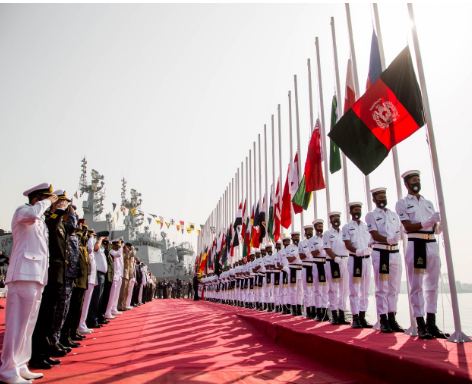
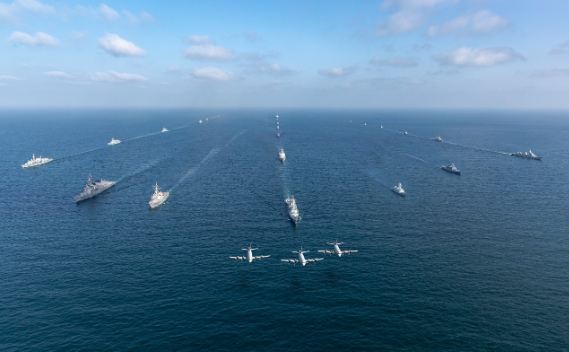
In the harbour phase of Exercise AMAN-23, there will be an international maritime conference, a maritime terrorism demonstration, roundtable discussions on professional topics, and various cross-cultural activities. Duringthe sea phase, advanced naval drills including antipiracy tactics, counter terrorism operations, maritime security operations and an International Fleet Review will be conducted.

With the launch of the AMAN series of exercises, the Pakistan Navy is taking the lead and laying more emphasis on international cooperation in an effort to make the world a safer place. Pakistan’s naval forces actively participate with other fleets in the IOR as a leading nation and significant contributor in the fight against terrorism, narcotics trafficking, people smuggling, gun running, and high seas piracy.

Hence, the strong realization that no one nation can single handedly cope with the quantum of this prevailing threat, making cooperative maritime strategy a matter of compulsion rather than choice and that the importance of this collaboration will enhance with the complete operation of China Pakistan Economic Corridor and Gwadar Port – which are meant to bring prosperity not only to Pakistan but the region and beyond.

Nepal’s ‘fierce’ ex-guerrilla chief becomes new prime minister

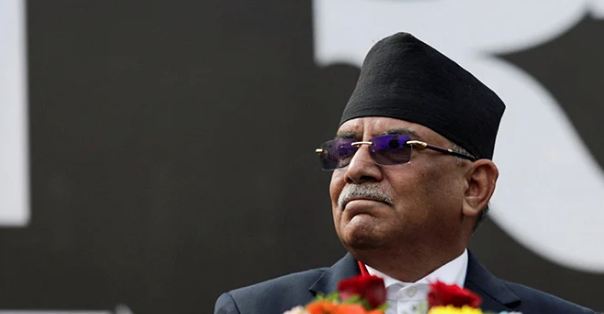
KATHMANDU: A former Maoist guerrilla who led a decade-long insurgency against Nepal’s Hindu monarchy was on Sunday appointed prime minister for a third time, in alliance with the main opposition after last month’s election returned a hung parliament.

Pushpa Kamal Dahal, who still goes by his nom de guerre Prachanda — meaning “terrible” or “fierce” — will head the new government for the first half of the five-year term with the support of the opposition Communist Unified Marxist-Leninist (UML) party and some other smaller groups, party officials said.

“He has been appointed and commands the support of a big majority of parliament,” Tika Dhakal, an aide to President Bidhya Devi Bhandari told Reuters.

Prachanda, who replaces Sher Bahadur Deuba of the Nepali Congress party, will step down in 2025, making way for the UML to take over the office, local media reported.

“This is the understanding. Remaining work of distribution of key other posts and ministries is still to be worked out,” Dev Gurung, the general secretary of Prachanda’s Maoist Centre party told Reuters after a meeting of the new coalition.

The new coalition comes to power hours after Prachanda, 68, surprisingly walked out of the ruling alliance led by Deuba of the Nepali Congress party. Deuba refused to back Prachanda for the prime minister’s job.

Deuba and Prachanda had both campaigned in the November election pledging to keep the old alliance intact for several years.

Prachanda’s Maoist Centre party won 32 seats in the 275-member House of Representatives. The UML has 78 seats, and the rest, required for the 138-majority, will be controlled by smaller groups.

The Nepali Congress party will be the main opposition controlling 89 seats.

Analysts said Prachanda was unlikely to provide the country with stability due to many coalition partners. He also faces serious economic challenges.

Inflation is more than 8%, the highest in six years. Nepal, tucked between China and India, also faces dwindling foreign exchange reserves, with an increasing dependence on imports of basic goods.

“It is unlikely for the economy to grow as political instability will spook investment and businesses,” former central bank governor Deependra Bahadur Kshetri told Reuters.

Nepal has seen 10 government changes since 2008 when the 239-year-old monarchy was abolished. 

U.S. government staff prohibited from visiting Islamabad’s Marriott Hotel due to possible attack

ISLAMABAD, DEC 25 /DNA/ – The U.S. government is aware of information that unknown individuals are possibly plotting to attack Americans at the Marriott Hotel in Islamabad sometime during the holidays.  Effective immediately, the Embassy in Islamabad is prohibiting all American staff from visiting Islamabad’s Marriott Hotel.  Furthermore, as Islamabad has been placed on a Red Alert citing security concerns while banning all public gatherings, the embassy is urging all Mission personnel to refrain from non-essential, unofficial travel in Islamabad throughout the holiday season.

Actions to Take:

  • Exercise vigilance at events, places of worship, and avoid locations with large crowds.
  • Review your personal security plans.
  • Carry identification and follow requests from law enforcement.
  • Be aware of your surroundings.
  • Monitor local media for updates.

5 soldiers embraced Shahadat during exchange of fir with terrorists

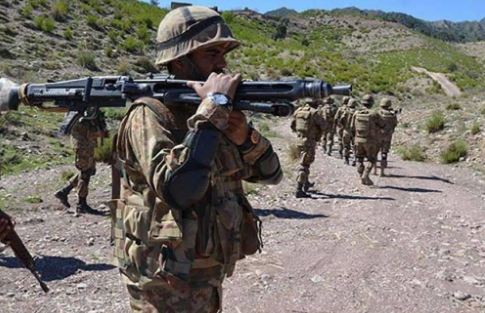
KAHAN, /DNA/ – Based on credible intelligence, a clearance Operation is underway in Kahan area of Balochistan since 24 Dec 2022. , Today, an IED exploded close to the leading party.

Resultantly, Captain Fahad along with four other brave sons of soil Lance Naik Imtiaz, Sepoy Asghar, Sepoy Mehran and Sepoy Shamoon have embraced Shahadat, laying their lives in defence of the motherland against an externally perpetrated threat of terrorism.

Such cowardly acts by inimical elements cannot sabotage the hard earned peace and prosperity in Balochistan.

Security Forces remain determined to challenge their nefarious designs, even at the cost of blood and lives

The sanitization Operation continues in the area to apprehend perpetrators.

President visits Quaid’s mausoleum, pays tribute

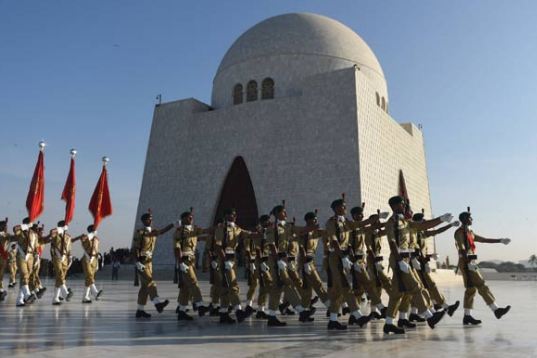
KARACHI, Dec 25 (APP): President Dr Arif Alvi on Sunday visited the mausoleum of the father of the nation, Quaid-e-Azam Mohammed Ali Jinnah, and paid rich tributes to him on his 146th birthday anniversary.

He laid a floral wreath and offered fateha.

The president also prayed for the development and prosperity of the country.

He, later, inked his impressions in the book of visitors.

While talking to media persons, he said the nation should follow the guiding principles of Quaid-e-Azam Mohammed Ali Jinnah for the development of the country.

He said that the Quaid was well aware of the misbehavour and maltreatment meted out to minorities, including Muslims in the subcontinent.

Dr Alvi said the poet of the east, Allama Iqbal, dreamt of Pakistan and Quaid-e-Azam struggled for its real existence. The President said that the dream came true through the struggle of the father of the nation.

He said, ‘We have to pursue Quaid’s guiding principles for the development of the country.’

He advised the nation to follow Quaid’s principles of unity, faith, and discipline.

He said that their real destination was to develop the nation as per Quaid’s vision.

Pak vs NZ: Babar Azam to meet Shahid Afridi today to finalise playing XI for first Test

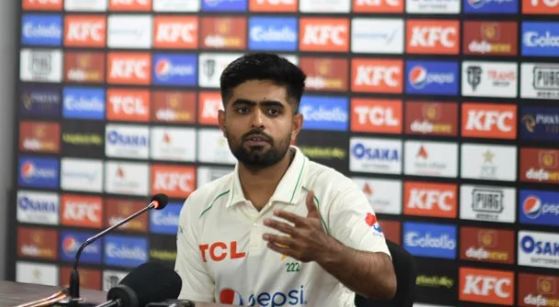
KARACHI: Pakistan’s captain Babar Azam has said that the final XI for the first Test against New Zealand will be decided after a discussion with chairman of selectors Shahid Afridi and insisted that players who will be best for the team will get the opportunity to play.

Speaking ahead of the first Test, Babar admitted that Pakistan made some mistakes in the three-match series against England but players are now confident of a good show against New Zealand.

He added that players are unfazed about the administrative changes in the board and are focused on what they can do on the ground.

“Things have changed in the past two or three days but as a professional, you have to face such things. Our job is to put effort on the ground, perform and apply what best we have. These things are out of the ground and our full focus is on the ground as to how to win the matches, how to take a good start in the series and how to do well in all three departments of the game,” he said.

“We could not play the last series the way we wanted because we committed small, small mistakes that left us behind. Now we need to overcome those mistakes and try to play good cricket,” Babar mentioned.

Babar added that the final XI for the first Test has not been decided and a final decision will be made after consultations with Shahid Afridi — the newly appointed chairman of selectors.

The Pakistani captain said that he was also consulted before three players were added to the Test squad by the selection committee last night.

“We will have a discussion with the selectors. Then we will decide the final XI, what is the best for the team we will pick, it’s not who to play it is about the best combination, what is the best for the team,” he said.

“We had a debate as to how we carry that forward. He [chief selector] has his own mindset. I gave my opinion and then we decided,” Babar said when asked if he was involved in the decision to include Mir Hamza, Sajid Khan and Shahnawaz Dahani in the squad.

Babar said that the pitch looks the same as they saw during the series against Australia. It changes day by day and things will get different, he added.

The skipper said that it is easier to say from the outside that he was not an aggressive captain but things on the pitch are very different.

“Even when I am sitting outside and seeing games, I feel like he should’ve done this or that but things are not as same in the middle as you see them from outside,”

“I adopt my strategy seeing how my opponent is playing,” the Pakistani skipper said.

Babar insisted that Pakistan’s batting has done well in the last series as well but in patches. 

“In Tests, you have to bat for longer periods. You have to show patience as a batting unit. I think bowling will also stage a comeback because we had some injuries so at this time our batting line is strong,” he highlighted.

When asked his thoughts on players publicly posting comments on social media in his favour, Babar said that everyone has his own mindset players always support each other.

“It’s our unit and that unity, not that they are supporting me only, they support each other. When you lose, such things come up. All sportsmen support each other. As a player and as a captain I keep myself in my zone. Yes, we have lost a series but Insha’Allah we will stage a comeback,” he said.

“To be honest I don’t take the pressure. If you take pressure your game goes down. I have a belief that its a new day, a new team and a new match so things will be different,” he concluded.

Test squad

Babar Azam (captain), Abdullah Shafique, Abrar Ahmed, Hasan Ali, Imam-ul-Haq, Kamran Ghulam, Mir Hamza, Mohammad Nawaz, Mohammad Rizwan, Mohammad Wasim Jnr, Naseem Shah, Noman Ali, Sajid Khan, Salman Ali Agha, Sarfaraz Ahmed, Saud Shakeel, Shahnawaz Dahani, Shan Masood and Zahid Mehmood

Revised itinerary

26-30 December — 1st Test, Karachi

2-6 January — 2nd Test, Karachi

9 January — 1st ODI, Karachi

11 January — 2nd ODI, Karachi

13 January — 3rd ODI, Karachi

Stay Connected

64FansLike
60FollowersFollow

Latest Reviews

Exchange Rates

USD - United States Dollar
EUR
1.17
GBP
1.35
AUD
0.67
CAD
0.72