Home Blog Page 128

Centre assures KP of restoring gas supply to CNG stations after successful talks

Centre assures KP of restoring gas supply to CNG stations after successful talks

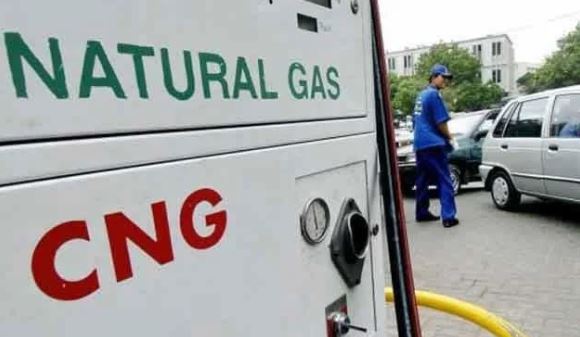
ISLAMABAD, MAY 20 – The federal and Khyber Pakhtunkhwa governments on Wednesday successfully concluded negotiations over the closure of CNG stations, with officials confirming an agreement on gas supply arrangements for the province.

The breakthrough came two days after Khyber Pakhtunkhwa Governor Faisal Karim Kundi and Chief Minister Sohail Afridi displayed rare political unity by criticising the federal government over the suspension of gas supply and demanding immediate restoration of the CNG sector.

Confirming the development, KP Governor Kundi has welcomed the restoration of gas supply to the province, describing it as a positive step towards addressing KP’s energy concerns.

In a post on X, the governor expressed gratitude to Prime Minister Shehbaz Sharif for constituting a committee and taking direct interest in the matter, terming it an important issue for the province.

He further said the development reflected the strength of unified advocacy, commending both the provincial government and opposition for standing together in defence of the rights of the people.

KP CM Adviser on Finance and Inter-Provincial Coordination Muzzammil Aslam said the federal government approved the restoration of 35 mmcfd gas supply to the province.

He added that the issue was resolved due to the chief minister’s continuous engagement with federal authorities.

In a post on X, Aslam also acknowledged Governor Kundi and Opposition Leader Dr Ibadullah for “joining the chief minister on this sensitive issue”.

The sources within the KP government told Geo News that CNG stations across the province would remain open from 6am until 6pm following the restoration of supply.

They added that the decision to restore gas supply to the province was taken during a high-level meeting attended by senior federal and provincial officials.

According to sources, the meeting was attended by Federal Minister Ali Pervaiz Malik, Rana Sanaullah, Governor Kundi and Dr Ibad, KP CM’s finance adviser, KP Chief Secretary Shahab Ali Shah, and Sui Northern Gas Pipelines Limited (SNGPL) Managing Director Amer Tufail.

Flour, wheat supply crisis addressed
In a separate decision, the federal government directed the Punjab government to immediately remove obstacles in the transportation of wheat and flour to other provinces, following growing concerns over supply disruptions affecting Khyber Pakhtunkhwa.

According to government sources, the Ministry of National Food Security provided the KP government with a WhatsApp number through which flour and wheat dealers could share videos and photographs if they faced hurdles while transporting supplies from Punjab.

The sources said the decision to remove barriers in the transportation of flour and wheat to KP was taken during a high-level meeting attended by Federal Minister for National Food Security Rana Tanveer Hussain and food secretaries from all four provinces.

During the meeting, the KP chief secretary said that he repeatedly approached the federal government and Punjab chief secretary to lift restrictions on wheat and flour transportation to the province.

He also informed the meeting that the KP government, opposition and governor were united on the wheat crisis and collectively seeking uninterrupted supply of flour and wheat to the province.

In the meeting, Punjab’s food secretary maintained that no restrictions had been imposed on the transportation of wheat and flour, prompting the KP chief secretary to question why flour prices had increased in Khyber Pakhtunkhwa if no ban existed.

The sources said that Federal Minister Hussain directed the relevant authorities to immediately remove all obstacles hindering the transportation of wheat and flour to KP.

Speaking to Geo News, KP Finance Adviser Aslam said the Punjab government had been informed during the meeting that constitutionally it could not impose restrictions on wheat and flour transportation between provinces.

He added that the price of a 100-kilogram flour bag in Balochistan was lower than in Khyber Pakhtunkhwa, despite the latter province being geographically closer to Punjab.

He further said the federal government had assured provincial authorities that the matter would be resolved and uninterrupted transportation of wheat and flour to Khyber Pakhtunkhwa would resume after the restrictions were lifted.
Iran threatens war ‘beyond the region’ if US attacks

Iran threatens war ‘beyond the region’ if US attacks

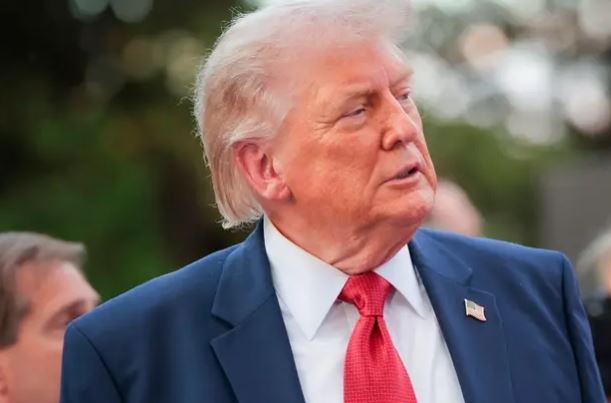
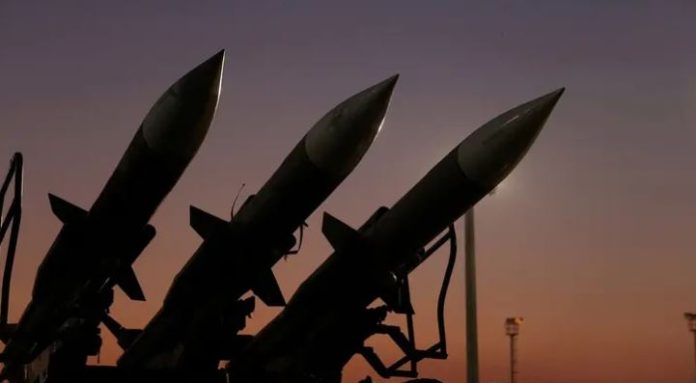
TEHRAN, MAY 20: Iran threatened on Wednesday to spread war beyond the Middle East if the United States attacks again, after President Donald Trump said he had come within an hour of restarting the military campaign.

Six weeks since Trump paused Operation Epic Fury for a ceasefire, talks to end the war have largely stalled.

Iran submitted a new offer to the United States this week, but its public accounts of it repeat terms previously rejected by Trump, including demands for control of the Strait of Hormuz, compensation for war damage, lifting of sanctions, release of frozen assets and the withdrawal of US troops from the area.

Trump said on Monday, and again on Tuesday, that he had come close to ordering a new bombing campaign but had put it off at the last minute to give more time for diplomacy.

“I was an hour away from making the decision to go today,” Trump told reporters at the White House on Tuesday.

Iran has repeatedly threatened to retaliate for any new attacks by striking countries in the Middle East that house US bases. On Wednesday it suggested it would also hit targets further afield.

“If aggression against Iran is repeated, the promised regional war will extend beyond the region this time,” the Islamic Revolutionary Guard Corpys said in a statement carried on state media.

Chinese tankers cross strait

Iran has largely shut the Strait of Hormuz to all ships apart from its own since the US-Israeli campaign began in February, causing the biggest disruption to global energy supplies in history. The United States responded last month with its own blockade of Iran’s ports.

Two giant Chinese tankers laden with around 4 million barrels of oil exited the strait on Wednesday, the latest signal that Iran is willing to ease its blockade for countries it considers friendly. Iran had announced last week, while Trump was in Beijing for a summit, that it had reached an agreement to ease rules for Chinese ships.

South Korea’s foreign minister said on Wednesday a Korean tanker was crossing the strait in cooperation with Iran.

Shipping monitor Lloyd’s List said at least 54 ships had transited the strait last week, around double the number from the week before. But that is still only a tiny fraction of the 140 or so each day that typically crossed before the war.

Pressure to end war

Trump is under pressure to end the war, with soaring energy prices hurting his Republican Party ahead of congressional elections in November. Since the ceasefire in late April, his public comments have veered from threats to restart bombing to declarations that a peace deal was at hand, often in the same breath.

On Tuesday he said the war would be over “very quickly.”

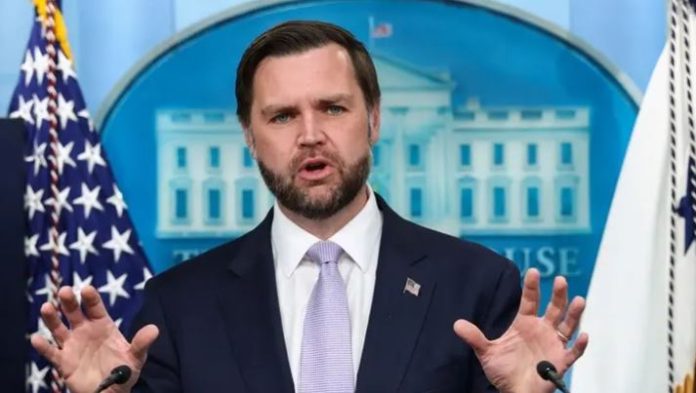
Vice President JD Vance, who led the US delegation last month at the only round of peace talks so far, also talked up progress: “We’re in a pretty good spot here,” Vance told a White House press briefing.

The fluctuating US stances have sent oil prices bouncing up and down from day to day, though they have risen week by week since early May. Benchmark one-month Brent crude futures eased about 1.5 percent on Wednesday morning, just below $110 a barrel but still well above last week.

“Investors are keen to gauge whether Washington and Tehran can actually find common ground and reach a peace agreement, with the US stance shifting daily,” said Toshitaka Tazawa, an analyst at Fujitomi Securities.

Ceasefire mostly holding

The US-Israeli bombing killed thousands of people in Iran before it was suspended in a ceasefire in early April. Israel has also killed thousands more and driven hundreds of thousands from their homes in Lebanon, which it invaded in pursuit of the Iran-backed Hezbollah militia.

Iranian strikes on Israel and neighboring Gulf states have killed dozens of people.

The Iran ceasefire has mostly held, though there was a spike in attacks on shipping and on Gulf states in early May when Trump announced a naval mission to reopen the strait. Trump called off that mission, Project Freedom, after just 48 hours.

This week saw a new volley of drones launched at Saudi Arabia and the UAE, which said they came from Iraq where militia allied to Iran operate.

Trump and Israeli Prime Minister Benjamin Netanyahu said when they launched the war that their aims were to curb Iran’s support for regional militias, dismantle its nuclear program, destroy its missile capabilities and make it easier for Iranians to topple their rulers.

But the war has yet to deprive Iran of its stockpile of near-weapons-grade enriched uranium or its ability to threaten neighbors with missiles, drones and proxy militias.

The Islamic Republic’s clerical leadership, which had faced a mass uprising at the start of the year, withstood the superpower onslaught with no sign of organized opposition.

UN chief wants end to hostilities

UN chief wants end to hostilities

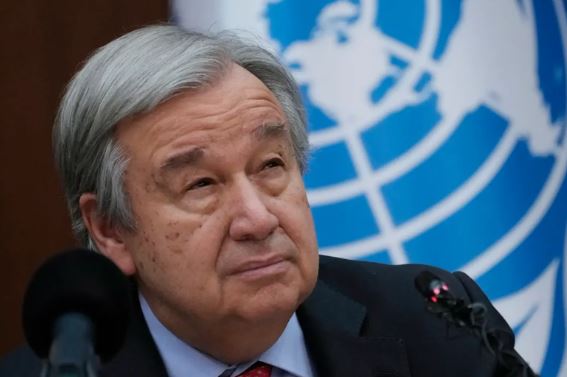
According to the UN Secretary-General, António Guterres, all parties involved in the conflicts must immediately halt violations of existing ceasefires and return to diplomatic engagement under international frameworks

DNA

UNITED NATIONS: The United Nations has reiterated the urgent need to end all ceasefire violations and push for a durable political settlement to the ongoing conflicts in the Middle East, warning that continued hostilities risk further regional destabilisation.

According to the UN Secretary-General, António Guterres, all parties involved in the conflicts must immediately halt violations of existing ceasefires and return to diplomatic engagement under international frameworks.

He stressed that the situation in the Middle East cannot be resolved through military escalation, adding that only a comprehensive political solution can ensure long-term peace and stability in the region.

The United Nations, through its peace and security mechanisms under the United Nations, continues to call on regional and global stakeholders to exercise maximum restraint and avoid actions that could widen the conflict.

The UN chief’s remarks come amid heightened tensions in several parts of the Middle East, where intermittent clashes and ceasefire breaches have raised concerns among international observers about the risk of a broader regional escalation.

He reaffirmed that sustained diplomatic engagement remains the only viable path forward, urging all parties to prioritise civilian protection and humanitarian access in affected areas.

Pakistan needs development-focused budget beyond short-term stabilization: Experts

Pakistan needs development-focused budget beyond short-term stabilization: Experts

ISLAMABAD, MAY 20 /DNA/ – The upcoming federal budget must move beyond short-term stabilization and focus on economic development, boosting exports, ensuring food security, promoting investment, and reducing inequality. However, without political will, authentic data, institutional coordination, and structural reforms to support these goals, the country may continue to face stagflation, rising poverty, and mounting balance-of-payments pressures.

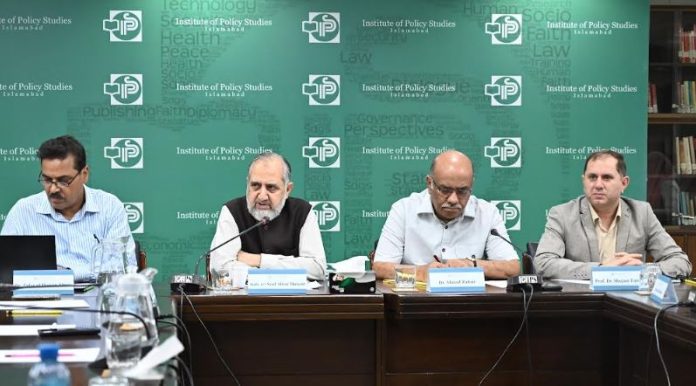
These views were expressed by economic and fiscal experts during a discussion organized by the Institute of Policy Studies (IPS), Islamabad, on the federal budget 2026-27 and Pakistan’s economic challenges.

The session was chaired by Dr. Ahmad Zubair, former chief economist, while the speakers included Dr. Zafar ul Hasan Almas, former joint chief economist; Dr. Shahid Naeem, consultant, Ministry of Poverty Alleviation & Social Safety; Prof. Dr. Shujaat Farooq, dean research, PIDE; Mehtab Haider, economic journalist; and Qanit Khalil Ullah, chartered accountant and economist. The session was joined by Amb (r) Syed Abrar Hussain, vice chairman, IPS, and members of academia and practitioners from various sectors.

Presenting an overview of the economy, Dr. Zafar ul Hasan cautioned that a substantial increase in consumable imports and emerging food security concerns could lead to higher food inflation in the near future. He noted that inflation is expected to reach 15% in the coming months, which may prompt an increase in the policy rate and require an additional Rs500-600 billion for debt servicing in the upcoming budget. He also highlighted persistent issues with data availability and authenticity, resulting in fragmented, inconsistent datasets and a lack of synergy among institutions. He warned that there is little room for further tax increases, while the balance-of-payments crisis may intensify due to stagnant exports.

Dr. Shahid Naeem observed that despite improvements in growth numbers, recent survey data indicate rising poverty and inequality, reflecting elite capture and the burden of exorbitant indirect taxation. He stated that many commodity prices have been delinked from the budget process through autonomous price-setting authorities, thereby reducing the budget’s importance and effectiveness. He further pointed out flaws in social protection programs, noting that multiple initiatives are functioning in silos without coordination. According to him, lack of political pressure and accountability in various domains has also weakened the effectiveness of government institutions and budgetary outcomes.

Dr. Shujaat Farooq highlighted that the budget has increasingly become ineffective from a regulatory perspective. He stressed that annual budgets should be aligned with five-year development plans, which currently remain neglected. He also pointed to weak coordination between federal and provincial institutions in economic planning, while noting that majority of the country’s districts do not contribute to exports. He observed that revenue targeting has overshadowed the broader objective of economic development. He added that the federal government has limited control over non-development expenditures and is operating heavily on borrowed resources.

Mehtab Haider stated that the salaried class remains the major contributor to tax revenues, while Pakistan continues to face stagflation. He argued that the IMF follows a “one-size-fits-all” stabilization approach, which may create additional economic challenges. According to him, prolonged stabilization policies are hurting economic growth, while wealthy segments of society remain outside the effective tax net. He pointed out that although legislation regarding agricultural taxation exists, implementation remains absent, as is the case with retailer taxation. He emphasized that political will is essential for meaningful reforms. He stressed that documenting the informal economy and promoting investment should be key priorities in the upcoming budget.

In his concluding remarks, Dr. Ahmad Zubair stressed that Pakistan must focus on development paradigms to increase per capita income and adopt innovative economic tools. He highlighted the importance of resource transfer mechanisms and warned that economic sovereignty is weakening while poor governance remains the core challenge. He further stated that, despite substantial tax collection, issues such as mounting circular debt in the energy sector and rising inequality persist.

Pakistan, China vow to elevate ‘All-Weather’ partnership as senate marks 75 diplomatic ties

Pakistan, China vow to elevate ‘All-Weather’ partnership as senate marks 75 diplomatic ties

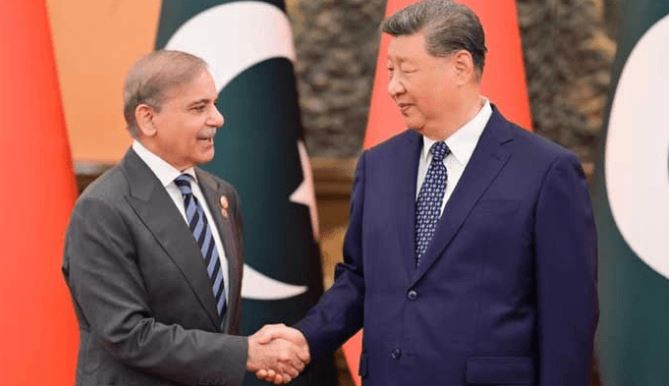
ISLAMABAD, May 20 /DNA/ – Pakistan’s Senate on Wednesday passed a unanimous resolution commemorating the 75th anniversary of the establishment of diplomatic relations between Pakistan and China, with top leadership reaffirming the “All-Weather Strategic Cooperative Partnership” as a bedrock of regional stability and shared prosperity.

Ahead of the resolution’s adoption, Deputy Prime Minister and Foreign Minister [Name as applicable; original text says “DPM/FM” but speech delivered by a Senate leader? The speech text says “I will be accompanying the Prime Minister” – assuming the DPM/FM delivered it] delivered wide-ranging remarks in the upper house, welcoming a high-level Chinese delegation led by Excellency Cai Dafeng.

“Our relationship is based on mutual trust, mutual respect, and mutual benefit,” the DPM/FM stated, emphasizing that the bond has withstood all tests of time. He deeply appreciated China’s consistent support for Pakistan’s sovereignty and territorial integrity, while reaffirming Pakistan’s firm adherence to the One-China principle and support for China on all core interests.

The Deputy Prime Minister also spotlighted recent joint initiatives to promote peace and stability in the Gulf and the Middle East, describing them as a reflection of both nations’ shared responsibility as “peace-loving nations.”

CPEC 2.0 and Parliamentary Diplomacy

The DPM/FM noted that over 75 years, the relationship has matured into a robust economic and strategic partnership, with symbols of friendship—from the Karakoram Highway to Gwadar Port—spread across Pakistan’s geography. He singled out the China-Pakistan Economic Corridor (CPEC) as the flagship project of the Belt and Road Initiative, crediting it with transforming Pakistan’s economic landscape.

“We look forward to its next phase, CPEC 2.0, focusing on industrialization, agriculture, and socio-economic development,” he said, expressing confidence that the benefits of the partnership will reach every citizen of Pakistan.

In a world of growing turbulence, the Deputy Prime Minister underscored the rising importance of parliamentary diplomacy. He welcomed the visit of Excellency Cai Dafeng as a means to deepen understanding between institutions and peoples. Speaking as a parliamentarian since 1993, he called for structured, regular parliamentary exchanges to build cross-party consensus.

Upcoming State Visit to China

The DPM/FM announced that he will accompany Prime Minister Muhammad Shehbaz Sharif on a state visit to China from May 23-26. During the visit, the leadership will hold meetings of two key mechanisms: the Pakistan-China Political Parties Forum and the CPEC Joint Consultative Mechanism. A large, multi-party parliamentary delegation from Pakistan will participate in these meetings.

Concluding his address, the Deputy Prime Minister extended heartfelt congratulations to the leadership and people of both nations, and looked forward to working together for “a shared future of peace, prosperity, and progress in our region and beyond.”

The Senate resolution was adopted with acclamation, followed by chants of “Pakistan-China friendship zindabad” and “Long live China-Pakistan friendship.”

Trump weighed Ahmadinejad as Iran’s next leader: Report

Trump weighed Ahmadinejad as Iran’s next leader: Report

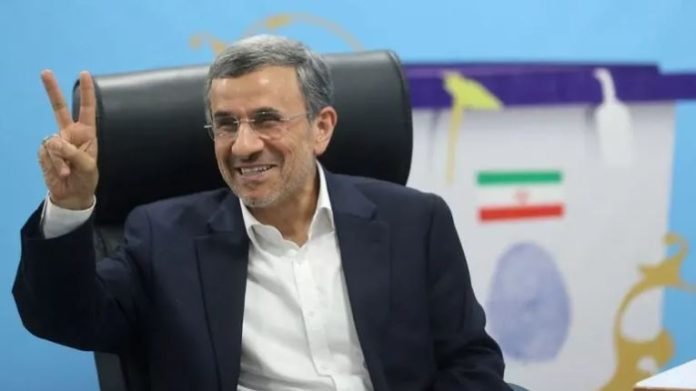
WASHINGTON, MAY 20: A failed Israeli strike on the Tehran home of former Iranian President Mahmoud Ahmadinejad at the start of the war was intended to free him from house arrest, The New York Times reported, citing US officials briefed on the operation.

According to the report, the strike was part of a broader Israeli plan, known to the United States, aimed at weakening Iran’s leadership and creating the conditions for regime change. US officials said Israel and the United States had considered Ahmadinejad, despite his hardline anti-Israel and anti-American record, as a potential figure who could help lead Iran after a leadership collapse.

The plan quickly unraveled. Ahmadinejad was injured in the first day of Israeli strikes, according to the report, and later became disillusioned with the regime-change effort. He has not been seen publicly since, and his current whereabouts and condition remain unknown.

US officials told the newspaper that the strike, carried out by the Israeli Air Force, was designed to kill the guards stationed around Ahmadinejad’s home and free him from confinement. The report said the house itself was not significantly damaged, but a security outpost near the entrance to the street was destroyed.

The former Iranian president, who led Iran from 2005 to 2013, has in recent years clashed with Iran’s leadership, accused senior officials of corruption, and was repeatedly blocked from running again for president. Iranian authorities had increasingly restricted his movements at his home in the Narmak district of eastern Tehran, according to the report.

The Times also reported that questions remain over how Ahmadinejad was recruited for the alleged plan. People close to him have previously faced accusations in Iran of having overly close ties to the West or even spying for Israel.

Iranian media initially reported that Ahmadinejad had been killed in an Israeli strike on his home. His political party later denied the reports, while official Iranian outlets said he had survived and that his guards had been killed.

US Senate advances measure curbing Trump’s Iran war powers

US Senate advances measure curbing Trump’s Iran war powers

WASHINGTON, MAY 20: The US Senate advanced a war-powers resolution on Tuesday that would end the Iran war unless President Donald Trump obtains Congress’ authorization, a rare rebuke of the Republican leader 80 days after US and Israeli forces began striking Iran.

The vote on a procedural measure to advance the resolution was 50 to 47, as four of Trump’s fellow Republicans voted with every Democrat but one in favor. Three Republicans missed the vote.

For all the latest headlines, follow our Google News channel online or via the app.

The result was a victory for lawmakers who have been arguing that Congress, not the president, should have the power to send troops to war, as spelled out in the Constitution. However, it was only a procedural vote, and the resolution faces steep hurdles before going into effect.

Even if it eventually passes the 100-member Senate, the resolution must also pass the Republican-led House of Representatives and garner two-thirds majorities in both the House and Senate to survive an expected Trump veto.

Democratic Senator Tim Kaine of Virginia, who sponsored the resolution, said a ceasefire offered Trump an ideal opportunity to make his case to Congress as the president has said Tehran has made a new proposal to end the US-Israeli war that began on February 28.

“That’s the perfect time to have a discussion before we start up war again. The president is receiving peace and diplomatic proposals that he is throwing into the trash can without sharing them with us,” Kaine said during debate before the vote.

Trump’s Republicans blocked seven previous attempts to advance similar resolutions in the Senate this year. They have also stopped three war-powers resolutions by narrow votes in the House this year.

Multiple votes

Senator John Fetterman of Pennsylvania was the only Democrat to vote against the measure. Republicans Rand Paul of Kentucky, Susan Collins of Maine and Lisa Murkowski of Alaska voted in favor, as did Senator Bill Cassidy of Louisiana, days after he lost his primary to an opponent backed by Trump.

The war-powers vote was the second in the Senate since the conflict hit a deadline on May 1, 60 days after Trump formally informed Congress that the conflict had started, for Trump to come to Congress about the war.

Under a 1973 US war-powers law passed in response to the Vietnam War, a US president can wage military action for only 60 days before ending it, asking Congress for authorization or seeking a 30-day extension due to “unavoidable military necessity regarding the safety of United States Armed Forces” while withdrawing forces.

Trump declared on May 1 that a ceasefire had “terminated” hostilities against Iran.

Despite that assertion, the US has been blockading Iranian ports and striking Iranian ships, and Iran has been effectively blocking the Strait of Hormuz and attacking US ships.

Democrats, and a few Republicans, have called on Trump to come to Congress for authorization to use military force, noting that the US Constitution says that Congress, not the president, can declare war. They have expressed concerns that Trump may have entered the country into a long conflict without setting out a clear strategy.

Republicans, and the White House, say Trump’s actions are legal and within his rights as commander in chief to protect the US by ordering limited military operations.

Some congressional Republicans have accused Democrats of filing the war-powers resolutions only because of their partisan opposition to Trump.

China’s Xi, Russia’s Putin praise ties at Beijing talks; energy in focus

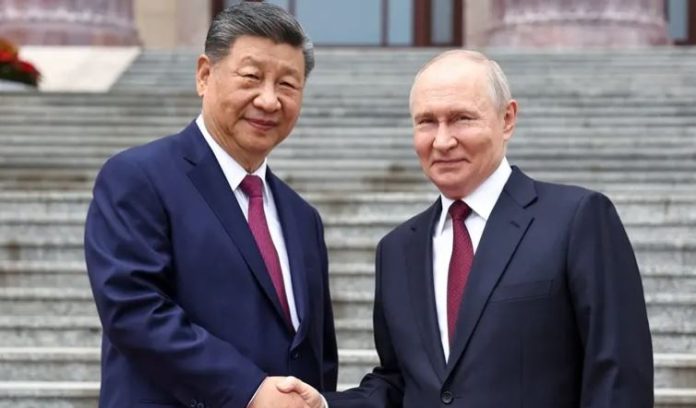
BEIJING, MAY 20: China and Russia’s leaders lauded on Wednesday progress in their strategic ties at a summit in Beijing, but despite the warm exchanges the talks did not appear to signal a breakthrough in a gas deal that has been under negotiation for more than a decade.

President Xi Jinping welcomed President Vladimir Putin with an honor guard and a gun salute at the Great Hall of the People, as children waved Chinese and Russian flags. Alongside formal talks, the pair are expected to cap the day with an intimate meeting over tea.

For all the latest headlines follow our Google News channel online or via the app.

Coming on the heels of US President Donald Trump’s visit to the Chinese capital, the optics and outcomes of the summit between the Chinese and Russian leaders were being closely watched.

Xi said the countries should focus on long-term strategy and promote a “more just and reasonable” global governance system, according to Chinese state news agency Xinhua.

“China-Russia relations have reached this level because we have been able to deepen political mutual trust and strategic cooperation,” Xi said at the start of his meeting with Putin. Putin said after the talks that Russian Chinese ties had “reached a truly unprecedented level and continue to develop.”

The Russian leader said the two countries were actively cooperating in energy and that his nation remained a reliable energy supplier amid Middle East disruption.

Putin also invited Xi to visit Russia next year.

Power of Siberia 2 pipeline
Moscow had signaled ahead of the visit that it was seeking further energy agreements with China, the largest buyer of Russian oil, including pipeline supplies and sea-borne shipments.

During Putin’s last visit in September 2025, Russian gas giant Gazprom said both sides had agreed to move forward with a second pipeline, the Power of Siberia 2 gas pipeline.

The planned 2,600-km (1,616-mile) system is expected to carry 50 billion cubic meters (bcm) of gas per year to China through Mongolia from the Arctic gas fields of Yamal, complementing the existing Power of Siberia 1 pipeline.

China has said very little publicly about the project, and while Xi said on Wednesday that cooperation in energy and resource connectivity should be the “ballast stone” in China-Russia relations, he did not mention the pipeline.

Key issues such as gas pricing remain unresolved, and analysts expect negotiations could take years.

The Kremlin said both sides reached a “general understanding on the parameters” of the project, although no details or clear timeline were agreed.

Comparing ceremonies
The Kremlin has set “serious expectations” for Putin’s visit, which also includes a banquet followed by a tea where the two leaders will discuss key international issues in an informal setting.

Xi is known for hosting visiting leaders over tea, but the setting and manner of such encounters can be viewed as a signal of the Chinese leader’s regard for his guest.

When Xi hosted Putin for talks in May 2024, the pair ditched their ties as they spoke over tea outdoors in Zhongnanhai, a former imperial garden that now houses the offices of the ruling Communist Party and the government.

In contrast, Trump’s stroll through a secret garden and tea with Xi in the same compound, as well as a tour of the Temple of Heaven last week, appeared more choreographed.

Kremlin spokesman Dmitry Peskov said on Wednesday that there was no point comparing the ceremony in China for the visits of Putin and Trump, and that people should focus on the content.

As Xi and Putin began their meeting, China’s commerce ministry confirmed a purchase of 200 Boeing jets that was announced by Washington following the Trump-Xi summit, signaling China’s desire to stabilize economic and trade ties with the US independent of its commitments with Russia.

Beijing will also seek an extension of the trade truce with the U.S. and push for reciprocal tariff cuts on $30 billion or more of goods each, the ministry said.

‘Law of the jungle’
The so-called “no limits” partnership between China and Russia has strengthened since the West imposed sanctions to punish Russia for the war in Ukraine.

Xi and Putin witnessed the signing of 20 cooperation documents and about 20 more were expected to be signed, according to the Kremlin.

Both sides jointly signed a statement on strengthening comprehensive strategic coordination and a declaration advocating multi-polarity in the world order.

“The global agenda of peace and development is facing new risks and challenges, with the danger of fragmentation of the international community and a drift back toward the ‘law of the jungle’,” a joint declaration said, according to the Kremlin.

The symbolism behind any joint statement and agreements alone will be significant regardless of substance, said Patricia Kim, a foreign policy fellow at the Washington-based Brookings Institution.

“It would reinforce the message that the China-Russia partnership remains strong, institutionalized, and coordinated across a broad range of strategic issues,” she added.

Putin, who has called Xi a “dear friend” and been labelled an “old friend” by the Chinese leader, visits at a time when bilateral trade is improving after a downturn last year.

Bangladesh complete 2-0 Test series whitewash over Pakistan

Bangladesh complete 2-0 Test series whitewash over Pakistan

SYLHET, MAY 20: Bangladesh beat Pakistan by 78 runs in the second Test at Sylhet International Cricket Stadium on Wednesday to clinch the two-match series 2-0.

Chasing a mammoth 437, Pakistan were bowled out for 358, handing the hosts a comprehensive victory and a series whitewash.

After resuming on day five following a brief rain interruption, Mohammad Rizwan and Sajid Khan added valuable runs in quick time, putting together a key 50-plus stand that pushed the total beyond 350.

The partnership was eventually ended by Taijul Islam, who removed Sajid Khan for 28 off 36 balls, a brisk innings featuring five fours.

Soon after, Pakistan lost another wicket when Shoriful Islam dismissed Mohammad Rizwan for a superb 94 off 166 deliveries, an innings decorated with 10 boundaries.

Taijul Islam then completed his six-wicket haul by cleaning up Khurram Shahzad for a duck, bringing the innings and the match to a close.

The Green Shirts had a shaky start to the chase as both openers were removed for 41 runs. Babar Azam and skipper Shan Masood then steadied the innings with a vital third-wicket partnership, guiding Pakistan past the 100-run mark.

Babar fell after a fighting 47, while Saud Shakeel managed just six, leaving Pakistan under pressure at 154-4.

Shan resisted with a composed 71, but was eventually dismissed by Taijul as Pakistan slipped further.

Despite the collapse, Rizwan and Salman rebuilt the innings with a crucial stand that pushed Pakistan beyond 200 runs and briefly stabilised the chase.

However, the 134-run partnership was eventually broken when Taijul struck again, removing Salman for a well-compiled 71. Hasan Ali was also removed by Taijul as Pakistan finished Day 4 on 316-7.

Earlier in their first innings, Bangladesh were bowled out for 278 despite slipping to 116/6, largely due to a composed and commanding innings from Litton Das, who held the innings together and guided the lower order.

The right-handed batter top-scored with a magnificent 126, decorated with 16 fours and two sixes. For Pakistan, Shahzad was the standout bowler, finishing with four wickets for 81 runs in 17 overs. Abbas took three wickets.

In reply, Pakistan were bundled out for 232 in 57.4 overs, handing the hosts a 46-run lead. Babar Azam top-scored with a fighting 68, while Sajid contributed valuable runs down the order, scoring 38.

Pacer Nahid Rana and spinner Taijul Islam led the Bangladesh attack with three wickets each, while Taskin Ahmed and Mehidy Hasan Miraz claimed two wickets apiece.

Bangladesh started their second innings with a 46-run lead and set a 437-run target for Pakistan. Mushfiqur Rahim struck a superb 137, supported by Litton Das and Mahmudul Hasan Joy.

Khurram Shahzad again impressed with four wickets, while Sajid Khan took three and Hasan Ali and Abbas shared the remaining scalps.

Vance says ‘a lot of progress’ made in Iran talks

Vance says ‘a lot of progress’ made in Iran talks

WASHINGTON, MAY 19: US Vice President JD Vance said on Tuesday the United States and Iran have made a lot of progress in their talks and neither side wants to see a resumption of the military campaign.

“We think that we’ve made a lot of progress. We think the Iranians want to make a deal,” Vance told reporters at a White House briefing.

Stay Connected

64FansLike
60FollowersFollow

Latest Reviews

Exchange Rates

USD - United States Dollar
EUR
1.14
GBP
1.34
AUD
0.70
CAD
0.71