Home Blog Page 1224

PM directs smooth distribution of free wheat flour during Ramzan

Abid Raza/DNA

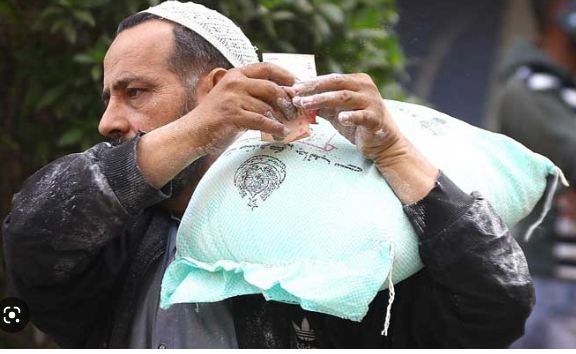
LAHORE, MAR 24: Prime Minister Shehbaz Sharif on Friday paid an unannounced visit to the distribution points of free wheat flour here and Kasur, and directed the authorities concerned to ensure hassle-free and uninterrupted supply of the commodity to the entitled people.

The free wheat flour is being distributed across Punjab and federal capital, under the Ramzan Package announced by the government to reduce the burden of inflation from the middle and low-income groups.

The prime minister, who was accompanied by Advisor Ahad Cheema and Special Assistant to PM Malik Ahmad Khan, interacted with the people including children at the distribution centers. He listened to the problems faced by them and issued instructions for their immediate redressal.

He directed the relevant authorities to continue the free flour distribution till 25th of Ramzan as per the program announced by the government.

Prime Minister Shehbaz, who also distributed flour bags among the beneficiaries, inspected the process of flour supply with the officials checking the particulars of the people before guiding them to the distribution point.

He also visited the waiting room established to facilitate the beneficiaries of the flour scheme, particularly keeping in view the month of fasting.

“No citizen should face any difficulty during Ramzan. Special attention should be given to the facilitation of old-aged and persons with disabilities,” he instructed and called for making arrangements to facilitate the women, particularly those coming with their children.

“Don’t consider it just an official duty rather serve it as a humanitarians work to seek the appeasement of Allah Almighty during Holy Ramzan.”

The prime minister appreciated the secretary food, Punjab chief secretary, commissioner and deputy commissioner and other workers for good arrangements at the distribution centers.

As per the plan, around 15.8 million households of Punjab province would be distributed wheat flour, free of charge during the Holy Ramzan. It is for the first time in the country’s history that a package for the distribution of free wheat flour has been prepared.

The wheat flour distribution would continue till the 25th of Ramzan through 8,500 Utility Stores. Moreover, around 20,000 flour distribution points have also been set up to facilitate the people.=DNA

=================

Pakistan Day Requires Commitment to Work Together

Dr. Muhammad Akram Zaheer

Correspondent Arifwala (Muhammad AkmalShahid) 23rd March is celebrated to pay tribute to the leaders and activists who played a key role in the creation of Pakistan.

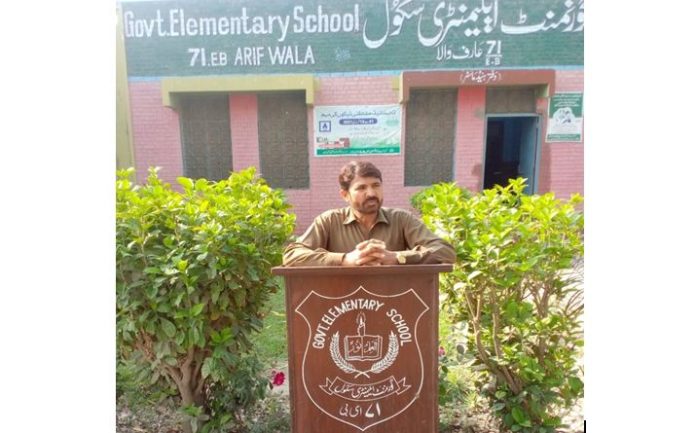
The day is a national holiday, and schools, colleges, and offices celebrate this day. Regarding Pakistan Day, a conference was organized under the chairmanship of Chaudhary Umar Hayat Headmaster Government Elementary School 71 EBArifwala. Apart from other speakers, Dr. Muhammad Akram Zaheer also addressed. He stated in his address, to achieve the objectives of the creation of Pakistan, there are several areas where efforts need to be focused. Pakistan needs to strengthen its democratic institutions to ensure that the people’s will is reflected in the decision-making process.

This requires strengthening the independence of the judiciary, ensuring media freedom, and promoting political pluralism. To achieve the objectives of Pakistan’s creation, it is essential to promote sustainable economic growth. This can be achieved through investment in infrastructure, education, healthcare, and agriculture. The government should also take measures to attract foreign investment and promote trade with other countries. Pakistan needs to ensure that its citizens have access to basic social services such as education, healthcare, and social protection.

This requires investing in human capital and promoting inclusive policies that benefit all citizens, regardless of their social status. Pakistan needs to address its security challenges, including terrorism, sectarianism, and regional conflicts. This requires developing a comprehensive strategy that involves both military and non-military measures, such as promoting interfaith dialogue and addressing the root causes of extremism. Pakistan needs to promote regional cooperation to achieve the goal of its creation.

This can be achieved by building strong relationships with its neighbors and participating in regional forums to promote peace, stability, and economic integration. Consequently, Pakistan requires a concerted effort from the government, civil society, and the people of Pakistan to work together towards building a stable, prosperous, and inclusive society.

President writes to PM; asks to direct authorities to assist ECP to hold general elections on time

President writes to PM; highlights human rights abuses by authorities

DNA

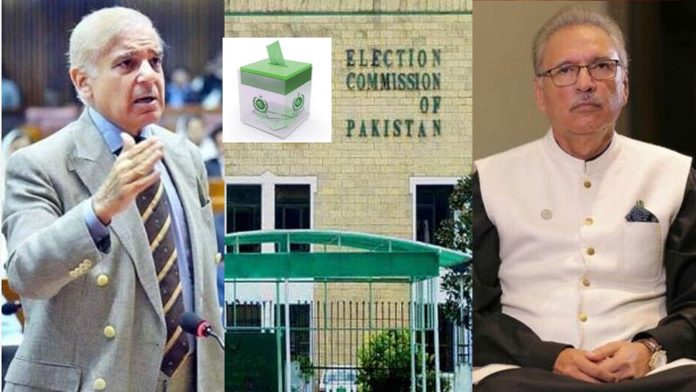
ISLAMABAD, MAR 24: President Arif Alvi has written a letter to the Prime Minister of Pakistan, Mian Muhammad Shehbaz Sharif, emphasizing that all concerned executive authorities of Federal and Provincial Governments should be directed to refrain from abuse of Human Rights and also to assist the Election Commission of Pakistan (ECP) to hold general elections in the provinces of Punjab and Khyber Pakhtunkhwa, within timeframe, in compliance of Supreme Court’s Order dated 1st March, 2023, to avoid further complications including Contempt of Court.

In his letter, the President said that he was writing the letter as events had taken place in the recent past that were highlighted by the print, electronic and social media about glaring violations of Fundamental and Human Rights that needed to be brought to Prime Minister’s notice to ensure remedial measures and preventive action.

The President stated that elections of Provincial Assemblies, in case of their dissolution under Article 105 or Article 112, were required to be held within 90 days under Article 224 (2) of the Constitution. He added that the Supreme Court of Pakistan vide its Order dated 1st March, 2023 had directed the ECP to propose date (s) to the President for holding the poll within 90 days or on a date that deviates to barest minimum from aforesaid deadline. He said that the Governor of Khyber Pakhtunkhwa was also directed by the Supreme Court to appoint a date for holding the general election for Provincial Assembly of Khyber Pakhtunkhwa as per above timeframe. Subsequently, ECP had proposed holding of general elections between 30th April – 7th May, 2023 and general elections for the Provincial Assembly of Punjab were announced to be held on 30th April, 2023 and the same was notified by the ECP.

The President said that it appeared that Federal and Care-taker Governments in Punjab and Khyber Pakhtunkhwa advised the heads of concerned departments to indicate their inability to provide necessary support for holding general elections. He referred to Article 220 of the Constitution which states that “it shall be the duty of all executive authorities in the Federation and in the Provinces to assist the Commissioner and the Election Commission in the discharge of his or their functions”.

The President underlined that in his opinion, flagrant violation of the Constitution had been committed by the executive authorities and government departments, adding that ECP had not implemented his announcement of holding general elections in Punjab on 30th April, 2023 and also blatantly violated the Supreme Court’s Order dated 1st March, 2023. The ECP has announced the date of 8th October, 2023 for holding general elections of provincial assemblies of Punjab and Khyber Pakhtunkhwa, he said.

The President wrote that it was a matter of concern that no meaningful consultation with the President on policy issues had been undertaken by the Prime Minister in line Article 46 of the Constitution, which provided that Prime Minister shall keep the President informed on all matters of internal and foreign policy and on all legislative proposals the Federal Government intends to bring before the Parliament. He added that Rule 15(5) of Rules of Business, 1973 also highlighted the responsibility of the Prime Minister, inter-alia, to furnish such information relating to the administration of affairs of the Federation and proposals for legislation as the President may call for.

In his letter, the President also drew the attention of the Prime Minister towards the seriousness of incidents of Human Rights violations, atrocities of police/law enforcement agencies and grossly disproportionate use of force against the citizens of Pakistan. He said that multiple fake and frivolous cases had been registered against politicians, workers, journalists and media persons; houses of political workers had been raided, and citizens had been abducted without warrants and lawful justification.

The President termed the incidents of Human Rights violations and oppression by state machinery against innocent citizens as in “clear breach and violations of Fundamental Rights” guaranteed by Article 4 of the Constitution, that provides for, and guarantees citizens to enjoy the protection of law and to be treated in accordance with the law. He also referred to Article 9 on ‘security of person’, Article 10 on ‘safeguards as to arrest and detention’, Article 10-A on ‘right to fair trial’, Article 14 on ‘inviolability of dignity of man etc.’, Article 15 on ‘freedom of movement etc.’, Article 16 on ‘freedom of assembly’, Article 17 on ‘freedom of association’ and Article 19 on ‘freedom of speech’, and said that the spirit and mandate of these articles were being clearly transgressed۔ This has tarnished the image of Pakistan in the international community and is casting negative repercussions on the future of democracy and state of Human Rights in Pakistan, he added.

The President further highlighted that in World Press Freedom Index of 2021, Pakistan ranked 145 out of 180 countries and dropped to 157 i.e., 12 points downwards in the World Press Freedom Index, 2022, which reflected the sorry state of affairs and this year’s actions and images would further exacerbate Pakistan’s already dismal ranking. He wrote that in recent months, Media had been further suppressed and journalists had also been subjected to charges of sedition and terrorism to stifle dissent and criticism against the government. It appears that a reign of terror has been unleashed against the media persons who have independent opinions, he added.

The President concluded that the Prime Minister, being head of Government, was responsible for the safeguard of Human Rights as well as Fundamental Rights of every citizen of Pakistan as enshrined in the Constitution, and therefore, all concerned executive authorities of Federal and Provincial Governments should be directed to refrain from abuse of Human Rights and also to assist the ECP to hold general elections in provinces of Punjab and Khyber Pakhtunkhwa.

Sheikh Rasheed files plea in SC for Punjab, KP elections

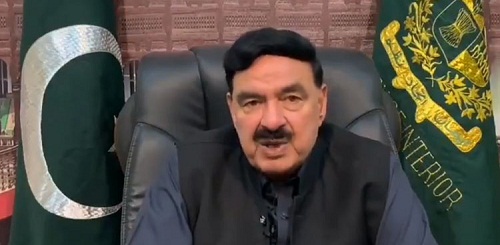
LAHORE, MAR 24 (DNA) — Awami Muslim League (AML) chief and former interior minister Sheikh Rasheed has filed a plea in Supreme Court (SC) Lahore registry for election in Punjab and Khyber Pakhtunkhwa (KP).

As per details, President Arif Alvi, the federation and the Election Commission of Pakistan were made respondents in the plea. The plea stated that the caretaker government should now be dissolved and a new setup should be in place.

The plea further stated that the court should direct the ECP to hold the elections within 90 days. Earlier on Wednesday, the Election Commission of Pakistan (ECP) announced to delay of the Punjab by-elections which were scheduled to be held on April 30.

The ECP withdrew the Punjab Election Program notification issued on March 8 and decided to postpone the Punjab election and announced October 08 as the new date for elections in Punjab.

The ECP spokesman said that the president Dr Arif Alvi also been informed about the postponement of elections in Punjab, adding that the new election schedule will release soon. — DNA

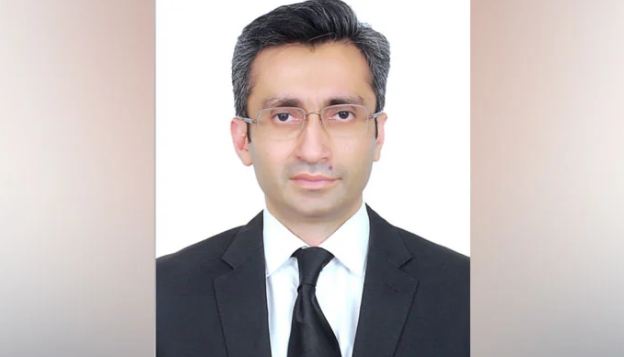
Barrister Shehzad Ata Elahi resigns as attorney general for Pakistan

ISLAMABAD: With less than two months in office, Barrister Shehzad Ata Elahi has resigned as Attorney General for Pakistan, sources privy to the development.

As per sources, Elahi has resigned from office due to personal reasons.

On February 2, the Ministry of Law and Justice announced that Barrister Shehzad Ata Elahi was picked as AGP.

A statement issued by the ministry and signed by Joint Secretary to the Government of Pakistan, Muhammad Umer Aziz, had stated back then: “In exercise of powers conferred under Article 100(1) of the Constitution of the Islamic Republic of Pakistan 1973, the President is pleased to appoint Barrister Shehzad Ata Elahi as Attorney General for Pakistan with the rank and status of Federal Minister with immediate effect.”

Article 100(1) states that the president would appoint someone, who was qualified to be appointed a judge of the Supreme Court, to be the AGP.

Elahi filled the shoes of AGP after Mansoor Usman Awan recused himself from taking charge as the government’s top lawyer.

President Dr Arif Alvi approved the appointment of Awan, who is a Supreme Court lawyer, as the AGP on December 23 after accepting the resignation of Ashtar Ausaf Ali. Ali had tendered his resignation in October last year due to health reasons.

However, the federal government did not notify the appointment — the reasons for which were not disclosed officially.

Why Crossing LOC isn’t a cakewalk for Indian Military

Global Misperceptions

Tanveer ul Haque

India being a powerful nation with a large military, may be tempted to undertake misadventures on the LoC, but it is not an easy feat. There are several reasons why the continuous gibberish of Indian generals about Azad Jammu and Kashmir is whimsical and dull-witted.

Pakistan has a well-trained and well-equipped military that is capable of defending its territory. Pakistan’s military is battle-hardened due to its involvement in multiple conflicts, including the ongoing war against terrorism. Any misadventure on the LoC by India can lead to a full-fledged war between the two nuclear-armed nations, which will not be in the interest of India. Pakistan has shown time and again that it is capable of defending its territory and giving a tough fight to its adversaries. The first visit of COAS Asim Muneer on LOC after assuming the charge is a clear message to the neighboring country that Pakistan Army is clear and ever ready to protect the country’s borders. Asim Muneer is an exemplary leader, an outstanding strategist, and a true patriot. His dedication to serving his country and protecting the lives of his fellow citizens is unparalleled, and his unwavering commitment to his troops has earned him the respect and admiration of all who have had the privilege of serving under his command. Any misadventure on the LoC by India will definitely lead to a strong response from Pakistan’s armed forces. Pakistan’s armed forces are among the most capable in the world and have a long history of defending the country’s borders against external threats. They are highly capable of defending the country’s borders. Their extensive training and experience, combined with modern equipment and technology, make them one of the most effective militaries in the world. Their motivation and discipline, combined with a close relationship with the civilian government, make them a formidable force that can protect Pakistan’s sovereignty against any external threat.

Any misadventure on the LoC by India can lead to a strong response from the local population in both parts of Jammu and Kashmir. We remember how in February 2019, the local people of Azad Jammu and Kashmir caught hold of Indian pilot Abhinandan whose fighter jet was destroyed by the Pakistan Air Force. The people of occupied Jammu and Kashmir have suffered immensely due to the ongoing conflict, and any aggression on the LoC can lead to a strong backlash from the local population in the region. India faces an overwhelmingly hostile population on both sides of the Line of Control and any large-scale aggression in such a region would be disastrous for the country. 

Moreover, it can lead to a strong response from Pakistan’s allies, especially China. China has been a strong ally of Pakistan and has been involved in several infrastructure projects in Azad Jammu and Kashmir. Any aggression on the LoC by India can lead to a strong response from China, further complicating the situation. India cannot circumvent the fact that Pakistan in the region holds a significant place due to its geographical location and influence in the Islamic world. The constant statements from Indian army generals have left many experts scratching their heads. The statement from Northern Army Commander Lt General Upendra Dwivedi in November last year has forced many military strategists to ridicule the general’s notion of war. It’s unclear where the general got his military expertise from, but it’s safe to say that it wasn’t from any reputable source. 

India’s actions on the LoC will be closely monitored by the international community, and any violation of international law can lead to sanctions and other punitive measures. The LoC is a highly sensitive area, and any aggression on either side can lead to serious repercussions for Modi-led India. India should exercise restraint and not invite the wrath of a strong army institution that has fiercely safeguarded the sovereignty of Pakistan. 

The author hails from Srinagar, Indian Illegally Occupied Jammu and Kashmir

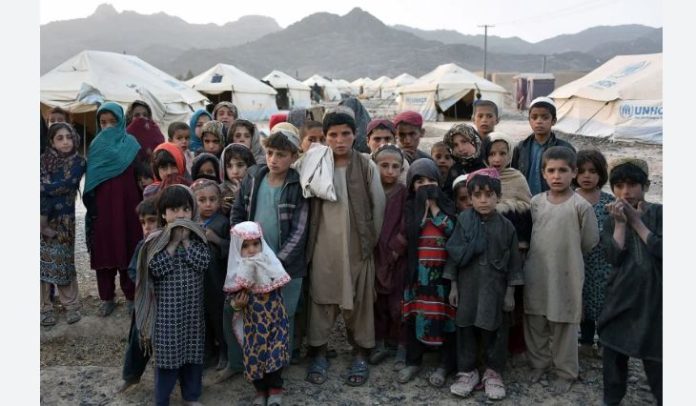
Failure to evolve effective refugee policy left them vulnerable

ISLAMABAD, MAR 24 /DNA/  – Consistent failure to evolve an effective refugee policy for Afghan migrants and refugees has created stress and suffering among Afghan communities, and left them vulnerable to exploitation and poverty, stated experts at Jinnah Institute’s roundtable titled ‘Status of Afghan Refugees & Migrants; A Humanitarian Perspective’, hosted in partnership with Verso Consulting on 22nd March 2023.

Pakistan has hosted a large Afghan refugee population over four decades since 1979. There are approximately 1.3 million registered Afghan refugees according to NADRA, of whom 58% are based in  Khyber Pakhtunkhwa, 23% live in Balochistan, and the rest are scattered in Pakistan’s urban centres.

 Unregistered Afghan refugees range between 400,000 and 775,000, and there has been a significant wave of more refugees forced to cross the border for fear of persecution or threat to their lives and livelihoods after the Taliban takeover of Afghanistan on 15th August 2021. However, there has never been a clear policy on how to deal with refugees owing to lack of political willingness and intent, participants stated.

Participants discussed that Pakistan is not a signatory to the UN Refugee Convention 1951 or its accompanying Protocol of 1967, and consequently no attention has been paid to asylum laws.

Pakistan Citizenship Act of 1951 does not address the legal status of asylum seekers, although UNHCR and Government of Pakistan issued Proof of Registration to Afghan refugees in 2006-2007 after a census of refugees was held in 2005. Additionally, about 840,000 Afghan Citizen Cards were issued in 2017-18.

It should be emphasized that these efforts have been piecemeal and simply do not address the magnitude of challenges and human rights abuse faced by refugees in Pakistan. Participants stated that Afghan refugees are daily subjected to threat, intimidation, violence and extortion by law enforcement agencies and others.

They cannot access healthcare in public hospitals for lack of registration, nor enroll their children in school. They are forced to work in the informal sector, if at all livelihoods are available. As a result, most Afghan refugees have been pushed into poverty and are concentrated in peri-urban slum localities. In addition, there is deep seated social prejudice and discrimination against them. Much of this emanates from unclear policy frameworks on how to integrate the refugee population and facilitate their presence in the country.

Participants debated whether Pakistan had done enough for refugees already, as some felt the burden of hosting alien communities had taken a toll on the economy and social fabric.

They also felt the responsibility to host more refugees lay with the international community. However, the war in Ukraine had dramatically changed the priorities of international development assistance, as well as countries attentive to the Afghan refugee crisis.

Pakistan should improve its border management mechanisms and pay more attention to the plight of Afghan refugees. Participants also felt that the demand for development assistance was misplaced, as the refugee challenge was one of our own making, and alleviating the plight of Afghan refugees is an obligation we have deliberately evaded.=DNA

================

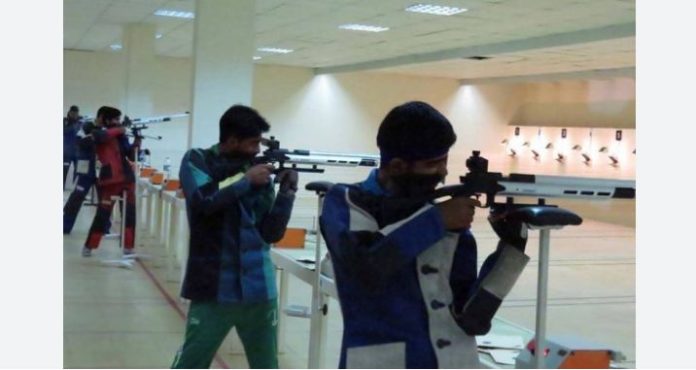
Senate Committee summons MC of Gun & Country Club Islamabad 

AFZAL JAVED

ISLAMABAD: The Senate Standing Committee on Inter-Provincial Coordination (IPC) on Friday summoned the Management Committee of Gun and Country Club Islamabad on alleged irregularities of millions rupees in the next meeting.

The meeting was chaired by Senator Nisar Ahmed Khurro and was attended by Senator Gurdeep Singh, Senator Mushtaq Ahmed, Senator Kamran Michael, Federal Secretary Ministry of Inter-Provincial Coordination Ahmad Hanif Orakzai and senior officers of the Ministry of IPC along with its attached departments and agencies which held at Parliament House, Islamabad.

Matters discussed included year wise audit details of the Gun and Country Club and briefing related to scope of the Ministry of Inter-Provincial Coordination.

The Ministry while briefing the Committee regarding audit details of the Gun and Country Club from June 2019 to June 2022 explained the issues related to the property and its management and apprised the committee of numerous irregularities that resulted from non-availability of staff that is well conversant with Government rules. In addition he committee was informed of an area of more than 100 acres that is in occupancy for a shooting game without any legal framework.

Chairman Committee Senator Nisar Khurro stressed the need for laws in this regard and questioned the delay despite orders of the Supreme Court in 2020. The Committee was informed that laws related to dealing with related matters were being formulated. The Committee stressed the need for expediting the process of law formulation and summoned the Ministry of Law for consultation of the matter in the next meeting.

Secretary of IPC Ministry informed the committee that Supreme Court directed to make legal framework related to gun and country club and Advocate Supreme Court Naeem Bukhari running the affairs of Gun and Country Club management committee, adding that we can only ask from the management committee on the irregularities but we cannot file an FIR against them as he has good relations with the Supreme Court.

Senator Mushtaq Ahmed said that Gun and Country Club is illegally built on land worth billions of  rupees which is occupied by Ashrafia as well as the Supreme Court has also become a shopping market for justice.  

Chairman standing committee Senator Nisar Khoro said that if the management committee does not respond then how will continue the work, they must respond on the irregularities.

The Committee summoned the Management Committee of the Gun and Country Club in the next meeting to give a detailed briefing on the irregularities of the gun and country club.

Deliberating over the scope of the Ministry of Inter-Provincial Coordination the Committee was informed regarding details of the related departments.

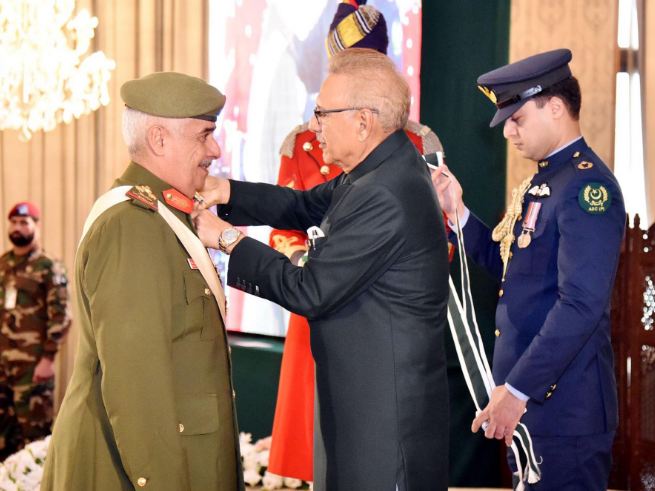
President confers mily awards on armed forces personnel

Commander of Bahrain National Guards Shaikh Mohammed Bin Salman Al-Khalifa was awarded Nishan-i-Imtiaz (military) and Defence Attache of Saudi Arabia Major General (Pilot) Staff Awad Bin Abdullah Alzahrani was given Hilal-i-Imtiaz (military)

ISLAMABAD, MAR 24 (DNA): President Dr Arif Alvi on Friday conferred military awards on the serving and martyred armed forces personnel at a Pakistan Day investiture ceremony held here at the Aiwan-e-Sadr.

A total of 49 officers and soldiers of the Pakistan Army, Navy and Air Force received the military awards including the families of four martyred troops in the categories of Nishan-i-Imtiaz, Hilal-i-Imtiaz, and Sitara-i-Basalat. Two foreign dignitaries from friendly countries also received prestigious awards.

Commander of Bahrain National Guards Shaikh Mohammed Bin Salman Al-Khalifa was awarded Nishan-i-Imtiaz (military) and Defence Attache of Saudi Arabia Major General (Pilot) Staff Awad Bin Abdullah Alzahrani was given Hilal-i-Imtiaz (military) in recognition to their illustrious services of strengthening defence ties with Pakistan.

The president conferred Sitara-i-Bisalat on the martyrs of the Pakistan Army in recognition of their valour demonstrated while fighting terrorists in operation areas. The awards were received by the family members of the martyrs, including Major Shujaat Hussain (30 Baloch Regiment, martyred in Angoor Adda, South Waziristan); Captain Bilal Khalil (Army Medical Corps, martyred in Noshki, Balochistan); Captain Faheem Abbas (72 Punjab Regiment, martyred in Jani Khel area of Bannu); and Sepoy Muhammad Waqas (18 Frontier Force Regiment, martyred in North Waziristan).

President conferred Hilal-i-Imtiaz (military) on Air Marshal Chaudhry Ahsan Rafiq (Air Headquarters), Air Marshal Waqas Ahmed Sulehri (AHQ), Maj Gen Khurram Nisar (Joint Services HQ), Maj Gen Qamar un Nisa Chaudhry (Army Medical Corps), Maj Gen Irfan Ali Mirza (AMC), Maj Gen Muhammad Rafiq Zafar (AMC), Rear Admiral Javed Iqbal (Naval Headquarters), Rear Admiral Muhammad Sohail Arshad (NHQ), Rear Admiral Salman Ilyas (NHQ), Air Vice Marshal Muhammad Nadeem Sabir (AHQ), Maj Gen Syed Khurram Shahzad (AMC), Maj Gen Bilal Umair (AMC), Maj Gen Muhammad Wasim (AMC), Maj Gen Muhammad Suhail Amin (AMC), Maj Gen Ariq ur Rehman Sulehria (AMC), Maj Gen Muhammad Aleem (AMC), Air Vice Marshal Salman Abbas Shah (AHQ), Maj Gen Muhammad Avais Dastgir (General Headquaretrs), Maj Gen Ahmed Sharif Chaudhry (JS HQ), Rear Admiral Muhammad Faisal Abbasi (NHQ), Maj Gen Omar Ahmed Bokhari (GHQ), Maj Gen Inayat Hussain (GHQ), Maj Gen Kamal Azfar (Frontier Works Organization), Maj Gen Muhammad Aamer Najam (National Defence University), Maj Gen Adil Yameen (GHQ), Maj Gen Fahim Amer (Inter Services Intelligence), Maj Gen Shahid Manzoor (JS HQ), Maj Gen Muhammad Kashif Azad (ISI), Maj Gen Tabassum Habib (GHQ), Maj Gen Kamran Ahmed Satti (GHQ), Maj Gen Adil Rehmani, Maj Gen Muhammad Hassan Khattak (ISI), Maj Gen Muhammad Shuja Anwar (General Officer Commanding), Maj Gen Majid Jahangir (JS HQ), Maj Gen Azhar Waqas (Rangers), Maj Gen Asif Mahmood Goraya (Army Air Defence), Maj Gen Akif Iqbal (ISI), Maj Gen Rashid Mahmood, Maj Gen Muhammad Irfan (GOC), Maj Gen Dilawar Khan (JS HQ), Maj Gen Abdul Moeed (GOC), Rear Admiral Muhammad Saleem (NHQ), Air Vice Marshal Shams ul Haq (AHQ), Maj Gen Chaudhry Muhammad Qamar ul Haq Noor, and Air Vice Marshal Muhammad Qaiser Janjua (AHQ).=DNA

===========

Education 4.0 in Pakistan: A precautionary call before disaster

We need a leader with telescopic visions and navigational capabilities.

Education is very vital for the development, prosperity and sovereignty of a country. It is important not only for individual development, earnings and employment but also for the country’s prosperity, economic stability, creativity & innovation, harmony & peace and for social stability. Educational system in Pakistan is not only out dated but also we are far behind from the rest of the surrounding world. Economically, Pakistan is at the 153rd position out of 174 countries and is included in ten countries with worst educational system. Many poorer countries have better literacy rate as compared to Pakistan. Low literacy rate not only decelerates economy growth but also impedes human development, skills, creativity and self-efficacy.
We are witnessing technological revolutions, drastic and swift changes all around us and receiving revolutions to impact lives, societies and global human interactions. Due to digital advancement, the world is changing at a very high pace. So, it is the time to make ourselves compatible with the pace. Pakistan is already facing many crises, economically, politically, nationally and internationally. The only solution to all these is quality education. We cannot predict future but if we couldn’t pace our quality education, we will face digital divide and gap nationally and internationally with a catastrophic end. Are we ready for these emerging challenges in education and society along with existing issues?. For this, we need a leader with telescopic visions and navigational capabilities.
To meet the new demands of tech world and to take countermeasures for technological challenges, Education 4.0 is a contemporary slogan among the educational reformers. The role of education is becoming more vivacious to address disruption, divide and to meet skills requirement with the rapid technological advancement. So, we have to understand Education 4.0 with the context of Industrial Revolution (IR) 4.0 and we have to be vigilant about future challenges.

Late in the 18th century, the first Industrial Revolution 1.0 occurred with generation of water and steam engines for mass and quality production in industry. Its impact appeared in the form of urbanization, boosted economy, massive transportation and industrialization. The introduction of paper-making machine, mechanical printing and type-writers unwrapped new integrations in Education 1.0 for limited fortunate societies only. However, the teacher remained the center of education in this era. The 20th century emerged on the calendar with Industrial Revolution 2.0. Water and steam engine were replaced by oil and electrical energy, mass production and industrialization emerged with low cost. Fertilizers, engines and aerodynamic industries are the product of IR2.0. However, Education 2.0 corresponded itself with IR 2.0 by introducing electronic devices such as computer, multimedia and printers etc. Mass education, standardization, large classes and open & new universities were constructed during this era. The role of teacher shifted from transmitter to facilitator. Computers, transistors and automation has reduced the efforts, costs & work-load and has introduced swiftness & global supply chain in industry by the end of the 20th century, with the immergence of Industrial Revolution 3.0. In Education 3.0, Semantic web, smart mobile devices and internet services were introduced. Students became more conscious about learning styles. Now their role shifted from passive listener to active and participative learner in the classroom. Teacher’s role shifted as collaborator and facilitator. Online and mobile learning became the area of interest for researcher, educator and students as well. However, personalized learning remained wrapped.
The concepts of digitization, globalization and mass production were coined during the Industrial Revolutions 1.0 to 3.0. However, IR 4.0 is diversified from all previous revolutions. The notion of Industrial Revolution 4.0 was propelled by Germany in 2011. It is a blend of Virtual/Augmented reality, Artificial Intelligence, robots, 3D printing, Internet of things, Simulation, Cyber security, material science, System integration, bio and nanotechnology, quantum computing, big data and cloud computing. Humans are being replaced by machines and distorted lines have been drawn between digital, biological and physical worlds. Societies, cultures, industries and economies are being intermingled with each other. So in response to IR 4.0, the term Education 4.0 emerged to align dents of disruption and to fill digital gaps among and within the societies. Societies, economies cultures, living and working standards are being transformed by the Industrial Revolution 4.0. So, it is vital to acclimate the educational system with the emerging issues and requirements of the new societies. Education 4.0 is interlinked with IR 4.0, focusing on the future education of technology and automation. Education 4.0 is addressing all the requirements of IR 4.0 by using technologies. Learning and teaching styles have been changed to ensure the future needs of the workforce and skills. It is a system that transmits quality education along with skills in a self-paced modus as per learner’s needs and capabilities. It is providing quality of information from the globe to teachers and students in a non-traditional way. The concept of Massive Open online Course (MOOCs), Flipped Classroom, smart learning, Open & online learning, self-paced & skill based learning, personalized learning and integration of modern technologies are embraced by Education 4.0. Creativity, Critical thinking and problem solving skills are fundamentals of Education 4.0.
The globe is being changed in all aspects: economically, socially and emotionally with the rapid advancement of technology. Systems are being revolutionized, multi-disciplinary approaches are being adopted. New earnings opportunities are emerging in developed and educated world. Nonetheless, digital divide, disruption, social inequality, cyber security, industrial destruction and ethical issues will become fortune for developing and under developing economies like Pakistan along with existing issues.
Nations with strong economy and high literacy rate have potentials to acclimatize with advancements linked Industrial Revolution 4.0. They have capabilities to take counter measures against emerging issues as digital divide, disruption, unemployment, cyber security industrial destruction and skills gap.
Pakistan’s education system is not only out dated but also has many flaws to meet emerging demands. Our educational system is still focusing on outdated instructional techniques and learning styles. Learning is still confined to physical building school and decelerating the literacy. Examination system is still a measuring inventory of memorization. It is the time to announce education emergency as emergencies have been implemented for natural disasters in 2005 and now 2022. It is the time to revive the whole educational system. Education is the only tool to accelerate economic development and social stability. This can be achieved by making education a priority and budgeting wisely for education. Although budgeting is a foremost impedance for adaption of Education 4.0. However, to embrace minimal features of Education 4.0, at initial stage with available resources, we have to invest in three areas: teacher training, curriculum and pace of learning. Teachers and educators can play a pivotal role for prompt and optimistic revolution in education. So, we have to invest in perpetuation of teacher’s dignity first and then in pre-service and in-service teachers training. Our curriculum is antediluvian and we have to revise our curriculum on futuristic approach as far as we can, to prepare our future generation for IR 4.0 skills and to enable them for contribution in global citizenship. To pace up learning efficiency and effectiveness, we have to augment the use of digital technology in education.
It is a soft precautionary call before disaster. We have to invest in transformation of
Education 4.0. We have to rethink, reimagine, revalue and revive the education. Otherwise, we have to keep in mind “Are our all stakeholders (Leaders, Teachers and parents etc) ready for accumulation of forthcoming challenges of IR 4.0 into prevailing ones or we can say for catastrophic end?”
“We do not yet know just how it will unfold, but one thing is clear: the response to it must be integrated and comprehensive, involving all stakeholders of the global polity, from the public and private sectors to academia and civil society (Schwab, 2016, p. 1).”

For feedback to author:
Muhammad Waseem
[email protected]
Contact at: 0323-5172174

Stay Connected

64FansLike
60FollowersFollow

Latest Reviews

Exchange Rates

USD - United States Dollar
EUR
1.17
GBP
1.34
AUD
0.67
CAD
0.72