Home Blog Page 1211

Toshakhana case: Court allows Imran Khan to mark attendance from car amid chaos at Islamabad Judicial Complex

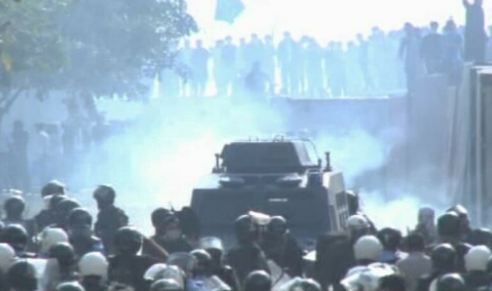
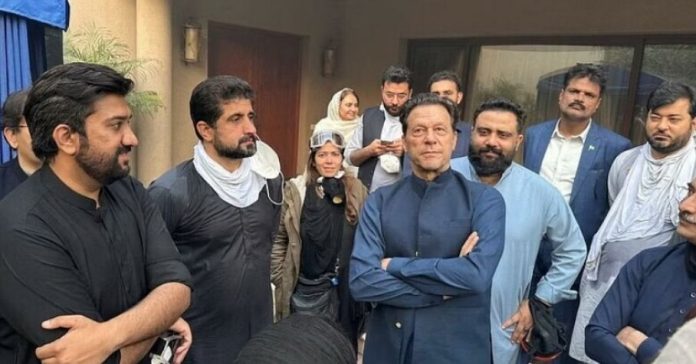
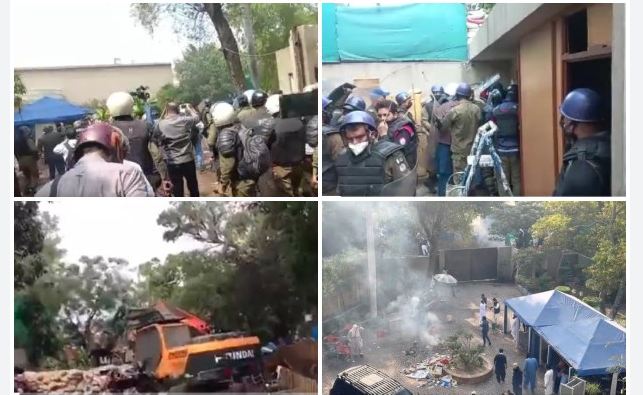
ISLAMABAD: Chaos gripped the Islamabad Judicial Complex as Pakistan Tehreek-e-Insaf (PTI) Chairman Imran Khan arrived at the site to appear before a court.

PTI workers clashed with police and caused damage to public property, forcing the law enforcers to briefly detain Khan’s Chief of Staff Shibli Faraz.

The PTI chief arrived at the Islamabad Judicial Complex several moments earlier, where he was scheduled to appear before a court in the Toshakhana case, but he left the premises due to the tense situation.

The former prime minister’s convoy also faced several hurdles on its way from Lahore to Islamabad — from vehicles overturning to police and party workers clashing on several spots.

They don’t want me to reach the court: Imran Khan

They don’t want me to reach the court: Imran Khan

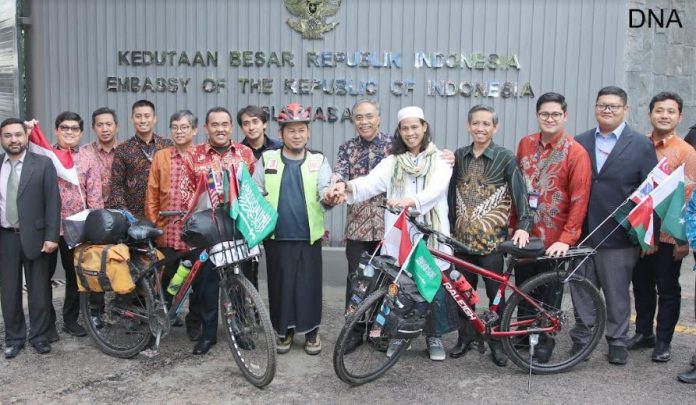
Indonesian ambassador bids farewell to cyclists

Cyclist also all praise for Indonesia embassy and the people of Pakistan for their gracious welcome and then send-off

DNA

ISLAMABAD: Ambassador of Indonesia Adam Tugio has said his embassy and colleagues were trying their best to ensure better facilitation of those who intend to visit Indonesia. He expressed these views on the occasion of the inauguration of the new-look visa section and saying goodbye to Cyclists duo to its next destination.

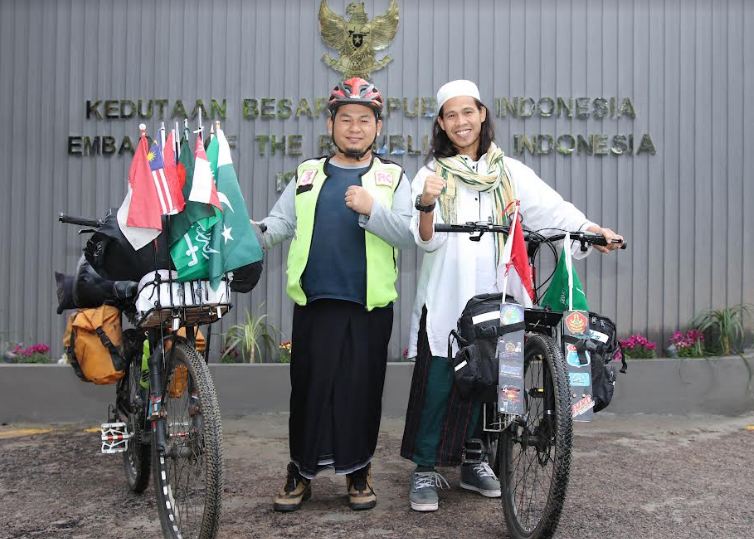
Ambassador Tugio further said cyclists Asid Kusuma Atmaja and Yunus who are on their way to Makkah (Saudi Arabia) on bicycles to perform Hajj are leaving for their next destination.

He said these cyclists shall reach Saudi Arabia en route Omna, Iran and UAE.

He termed their passion to face all the hardships of the roads and ordeal of a long journey to reach Saudi Arabia for Hajj highly valuable.

He added, it gave him immense pleasure to announce that the visa issues of the two Indonesian cyclists have been resolved and they can now resume their road.

The ambassador said the entire visa process for Indonesia has been made much simpler and easier for the Pakistani tourists and they can now get it within three days. He also thanked the Pakistani media as well as the tourism industry people for their cooperation to highlight Indonesia’s rich tourism potential, cuisine and culture.

The cyclist duo has been on the road since August 2022 and reached Pakistan earlier this month. Both of them while talking Islamabad POST said they were anxious to reach their final destination.

The further said that they were touched by the hospitality extended to them by the Indonesian ambassador and the entire embassy staff. They were also all praise for the people of Pakistan for their gracious welcome and then send-off.

Saudi sports blitz encounters headwinds

Saudi Arabia’s sports blitz is encountering headwinds. Activists, athletes, and the soccer associations of Australia and New Zealand will celebrate their thwarting of world football body FIFA’s plans to accept Saudi Arabia’s tourism authority as a sponsor of this year’s Women’s World Cup.

FIFA president Gianni Infantino admitted as much at a news conference convened this week shortly after he was re-elected unopposed for a third term, even if he belittled it as “a storm in a teacup.”

Nevertheless, the thwarting sent a rare message that money can buy a lot but not everything.

It constituted the first setback in a string of successful Saudi bids to sponsor or host everything under the sporting sun.

Despite its abominable and worsening human rights record, Saudi Arabia has secured hosting rights for the Asian Football Confederation’s 2027 AFC Cup, the Olympic Council of Asia’s 2029 Asian Winter Games, and the 2034 Asian Games.

A regional human rights group, ALQST for Human Rights, has asserted that at least 47 members of the Howeitat tribe in Saudi Arabia have been arrested for resisting eviction to make way for Neom, a US500 billion futuristic science fiction-like region under development on the Red Sea.

Trojena, a mountainous part of Neom, is where the Winter Games are scheduled to be held.

Saudi Arabia is also bidding to host the 2026 AFC Women’s Asian Cup, and, together with Greece and Egypt, the 2030 World Cup.

The World Cup, like this year’s women’s tournament, is likely to produce headwinds. Not only because it involves not one, but two of the world’s most serious violators of human rights, but also because it will encounter stiff competition.

A joint bid by Morocco, Spain, and Portugal could prove to be a serious challenge on multiple fronts to the Saudi-led effort.

It represents a trans-continental bid that, unlike the Saudi-led proposition, is not designed to circumvent FIFA’s practice of spreading out the tournament across continents.

On its own, Saudi Arabia, as a Middle Eastern state, would not stand a chance so short after last year’s World Cup in Qatar.

The circumvention element is borne out by the kingdom’s willingness to fund all of Greece and Egypt’s World Cup-related expenses in exchange for the right to host three-quarters of the tournament’s matches in Saudi Arabia.

Moreover, the Moroccan-Spanish-Portuguese bid is likely to spark less controversy than its Saudi-led competitor.

While Qatar demonstrated that human and migrant rights criticism need not put a serious dent in the reputational benefits of hosting a sporting mega-event, it also showed that once a focal point of attention, always a focal point of attention.

Three months after the Qatar World Cup final, one million people signed a petition demanding the Gulf state compensate workers and/or their families who had been injured or died or suffered human rights abuse while working on tournament-related projects.

For Morocco, winning the bid would have special significance. Coming on the back of its darling status during the Qatar World Cup, a win would amount to payback for Saudi opposition to Morocco’s failed effort to secure the 2026 tournament hosting rights.

Saudi Arabia supported the winning US-Canadian-Mexican bid as a way of punishing Morocco for its refusal to back the 3.5-year-long UAE-Saudi-led diplomatic and economic boycott of Qatar. The boycott was lifted in early 2021.

Perhaps the strongest headwinds the kingdom’s sports effort has encountered emanate from its controversial creation of LIV Golf, a US$405 million, 14-tournament league, to compete with PGA Tour, the longstanding organizer of the sport’s flagship events.

LIV Golf is “an exercise in public relations. A foreign government’s dollars are being used to enhance that government’s brand and positioning here in the United States,” US Congressman Chip Roy, a Texas Republican, said.

Even worse, circumvention was at the core of a ruling last month by a US federal judge ordering Saudi Arabia’s sovereign wealth fund, the Public Investment Fund (PIF), to answer questions and produce evidence as part of the discovery process in a legal battle between LIV and PGA. The PIF funds LIV Golf.

The discovery could cast a spotlight on the secretive fund’s decision-making. The fund’s powerful governor, Yasir Al-Rumayyan, is a Cabinet-level official.

Judge Susan van Keulen’s ruling rejected an attempt by the PIF and Mr. Al-Rumayyan to evade turning over information connected to the courtroom battle because they allegedly enjoyed sovereign immunity as a state institution and official.

Earlier, US District Court Judge Beth Labson Freeman, an avid golfer, ruled that the PIF and Mr. Al-Rumayyan fell under a commercial exception to US laws on sovereign immunity.

Some analysts suggest that Mr. Roy’s comment and the judges’ rulings could lead to LIV Golf being deemed a foreign influence campaign.

This would mean that its employees in the United States would have to register as foreign agents under the Foreign Agent Registration Act, or FARA.

The rulings call into question assurances provided in 2021 to England’s Premier League to assuage concerns that the PIF’s acquisition of England’s Newcastle United Football Club would put it under the control of the Saudi state.

The League’s chief executive, Richard Masters, said at the time that the Premier League had been given “legally binding assurances that essentially the state will not be in charge of the club” and that if there was “evidence to the contrary, we can remove the consortium as owners of the club.”

The League has so far refrained from taking the PIF to task in the wake of the US rulings because the Newcastle agreement stipulated that the Saudi state would not exercise control over Newcastle, not that it would not have the ability to do so.

Lawyers for Newcastle said there would only be a case if the Saudi state used its power to intervene in the club’s affairs.

“There’s an unmistakable irony in the sovereign wealth fund declaration emerging in a dispute about another arm of Saudi Arabia’s growing sports empire, but the simple fact is that Saudi sportswashing is affecting numerous sports, and governing bodies need to respond to it far more effectively,” said Peter Frankental, an Amnesty International executive.

Thank you for joining me today. I hope you enjoyed the newsletter and/or podcast. Diplomats, policymakers, investors, executives, journalists and academics listen to my twice-weekly podcast and/or read my syndicated newsletter that is republished by media across the globe. Maintaining free distribution ensures that the podcast and newsletter have maximum impact Paid subscribers help me cover the monthly cost of producing the newsletter and podcast. Please consider becoming a paid subscriber. You can do so by clicking on Substack on the subscription button at www.jamesmdorsey.substack.com and choosing one of the subscription options or support me on Patreon at www.patreon.com/mideastsoccer. Please join me for my next podcast in the coming days. Thank you, take care and best wishes.

Dr. James M. Dorsey is an award-winning journalist and scholar, an Adjunct Senior Fellow at Nanyang Technological University’s S. Rajaratnam School of International Studies, and the author of the syndicated column and podcast, The Turbulent World with James M. Dorsey.


Police, ICCI to together to further improve security in the Capital

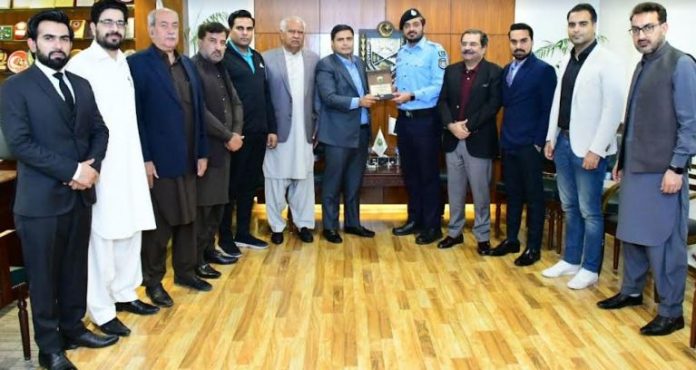
Islamabad, MAR 18 /DNA/ – Ahsan Zafar Bakhtawari, President, Islamabad Chamber of Commerce and Industry said that a secure and peaceful environment is the key requirement to promote business and investment activities and stressed that Islamabad Police should take ICCI on board to further improve the security situation in the Capital in order to boost business activities. He said this while talking to Hassan Jahangir Wattoo, SP Rural Islamabad during his visit to ICCI.

Ahsan Bakhtawari said that the rural areas in Islamabad need further improvement in the security situation and stressed that the police should work in close liaison with the trade associations of rural areas to provide a more secure environment to the traders community. He said that police should register data of all security guards deployed in the markets of rural areas and verify their credentials to make sure that clean record holders are employed as security guards in rural areas. He said that the police should hold open kuchehries so that the citizens could highlight their issues for redress. He further said that police should devise a strategy to deal with the issues being faced by the citizens due to anti-social elements.

Speaking at the occasion, Hassan Jahangir Wattoo, SP Rural said that the business community is playing a key role in the economic development of the country and providing them a secure environment is the high priority of police. He assured that he would work with ICCI and concerned market associations to further improve security arrangements in the rural areas. He said that police would collect data of security guards posted in housing societies of rural areas to verify their credentials. He said that police would also start the process of registering Afghan nationals in Islamabad and monitor their movements in order to ensure that they aren’t involved in any criminal activities. He said that open kuchehries would also be started soon as they were suspended due to the security situation.

Ch. Muhammad Ali, Muhammad Shabbir, Ameer Hamza, Khalid Chaudhry, Sai fur Rehman, Malik Mohsin Khalid and others also highlighted various issues that needed the close attention of SP Rural for redress.

Imran Khan says aware of govt plan to arrest him despite bail

ISLAMABAD: Pakistan Tehreek-e-Insaf (PTI) Chairman Imran Khan on Saturday claimed that he was aware that the government would arrest him as he headed to the Islamabad court to attend the Toshakhana case hearing, ARY News reported.

Taking to Twitter, the PTI chief, who is en route to Islamabad said: “It is now clear that, despite my having gotten bail in all my cases, the PDM govt intends to arrest me. Despite knowing their malafide intentions, I am proceeding to Islamabad & the court because I believe in rule of law. But ill intent of this cabal of crooks shd be clear to all.”

The PTI leader is scheduled to appear before the court of Additional District and Sessions Judge (ADSJ) Zafar Iqbal.

Imran Khan has departed from his residence in Zaman Park, Lahore, and is en route to Islamabad, according to an update shared on PTI’s official Twitter handle.

A large number of PTI leaders, including Faisal Javed and Musarrat Cheema, and workers are accompanying the convoy of the former premier.Keeping in view the security threats, Islamabad Chief Commissioner Noorul Amin Mengal shifted the hearing from F-8 Court Complex to the Judicial Complex in G-11.

Police raid Imran Khan’s Zaman Park residence

LAHORE: The Punjab police have raided Pakistan Tehreek-i-Insaf (PTI) chairman and former prime minister Imran Khan’s Zaman Park residence, reported on Saturday.

As per details, the police have arrested more than 13 PTI workers in the anti-encroachment operation at Zaman Park Lahore and one police constable was also injured in retaliation from the PTI workers.

Chinese chili planting program leads Pakistani farmers to prosperity

By Song Haoxin, People’s Daily

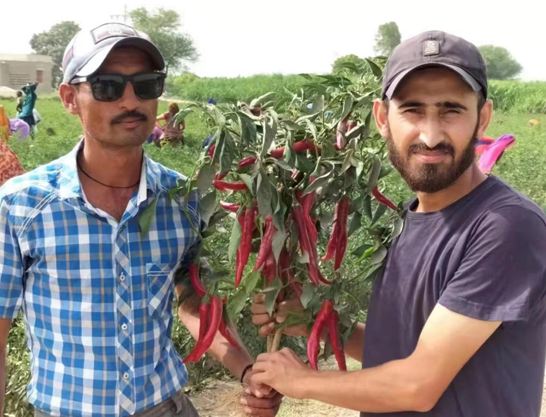
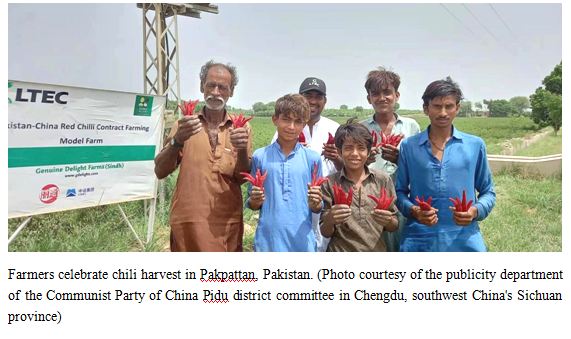
“It’s my first time growing chilies. I was not expecting such a good harvest,” said Wahid, a farmer from Pakpattan, Pakistan, while Chinese expert Zhao Jianhua was instructing him to pick the plants.

Looking at the glowing red chilies, the Pakistani smiled with joy.

The seeds of the chilies planted by Wahid and its planting technology were from Chengdu, southwest China’s Sichuan province, which is thousands of kilometers away from where he lives.

The seeds were brought to Pakistan over three years ago by Chen Changwei, head of the Sichuan-based company Litong & Food, as well as technicians of the company.

After analyzing the climate, temperature and soil in the country, the company established an international agricultural development corporation together with another company in Sichuan, and started massive chili planting in multiple regions in Pakistan, including Hyderabad, Multan, Kasur, Okara and Lahore.

In 2021, the chili planting program startedin the village where Wahid lives, and it struck Wahid after he learned that chili planting is a highly profitable business. In November of that year, the man who originally planted corn tested water in chili planting.

The average income of chili planting is three times that of other crops, which stands at around 1,500 yuan ($215.31) per mu, or 667 square meters.

According to Wahid, farmers joining the program would receive seedlings as well as technical support and guidance on management, picking and drying. After the plants are dried by the farmers and pass quality inspection, they will be purchased by the Chinese agricultural company, he told People’s Daily.

Finding that the chili planting business has doubled the previous income, Wahid and several other farmers recently extended their contract for another three months.

During the 2022-2023 planting season, 15,000 acres of chilies were planted by Pakistani farmers in cooperation with the Chinese agricultural company, and the harvest is expected to reach 37,500 tons, said Chen.

According to him, the business will generate export value of $45 million and has created thousands of jobs for the local community. Besides, it has also nurtured more than 100 local experts of chili planting.

On the third meeting of the China-Pakistan Joint Working Group on Agriculture held in September 2022, the chili planting program was included on a list of agricultural projects under the framework of the China-Pakistan Economic Corridor.

Six demonstration farms that joined the program in Punjab and Sindh provinces reported bumper harvests in the past year. At present, chili seedlings are being planted and transplanted in South Punjab, and soon field management will kick off. The planting in Sindh is also advancing as scheduled. These chilies are expected to enter the Chinese market in June this year.

Gu Wenliang, Agricultural Commissioner of the Chinese Embassy in Pakistan, said both China and Pakistan are major agricultural countries, and Pakistan is home to vast fertile and arable land. Over 60 percent of the people in Pakistan are engaged in agriculture-related jobs.

“China has gained rich experience in seed cultivation and crop planting. The two countries see huge potential in agricultural cooperation,” Gu said.

Enhancing South-South agricultural cooperation is an important means to cope with hunger, malnutrition, poverty, inequality, and other global issues.

Over the past few years, China has actively launched South-South agricultural cooperation with other developing countries and practically implemented cooperation projects to help more countries and regions improve sustainable agricultural productivity and promote common progress of developing countries.

Chinese economy sail to brighter future

By Han Xin, Ge Mengchao, People’s Daily

The 14th National People’s Congress (NPC), China’s national legislature, opened its first session at the Great Hall of the People in Beijing on March 5.

Chinese Premier Li Keqiang delivered a government work report at the meeting on behalf of the State Council, reviewing the government’s work in 2022 and the past five years and laying out key objectives for development in 2023.

Deputies to the 14th NPC said the country has acted on the general principle of pursuing progress while ensuring stability, and improved the quality and effectiveness of development. The new development philosophy has been embraced by the people, and firm measures have been taken to promote high-quality development.

The path of Chinese modernization is unfolding.

China’s economy has posted continuous expansion. Last year, the country’s GDP reached 121.02 trillion yuan, or $17.44 trillion, up 3 percent from a year ago. The Chinese economy now enjoys a more solid foundation and higher quality.

New growth drivers are increasingly underpinning China’s development. In 2022, China’s gross domestic expenditure on R&D for the first time surpassed the 3 trillion yuan milestone, and the value added of high-tech manufacturing grew by 7.4 percent year-on-year, 3.8 percentage points faster than that of the industrial enterprises above the designated size.

China continues to deepen reform and opening up. Zhang Weiyuan, deputy to the 14th NPC and head of Wuhan Hvsen Biotechnology based in central China’s Hubei province, said the company enjoyed tax and fee reduction of over 6.6 million yuan last year thanks to tax relief for R&D costs and other policies, which allowed it to focus more on technology R&D.

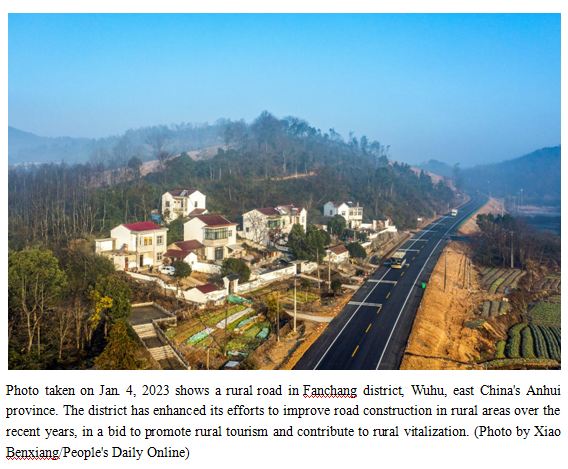
Effective measures secure people’s livelihood. Deputy Ma Yinping, also Party head of Xigouquan village, Linjing township, Zhenyuan county, Qingyang, northwest China’s Gansu province, noted that last year, the village applied for a 3.1 million-yuan special fund for building a county-level demonstration project of rural vitalization, and all of the money was invested in infrastructure construction in the village. With this fund, the village paved 4,700 meters of hardened roads and connected 518 households to the roads.

China has beefed up investment in livelihood improvement and worked to meet people’s basic living needs. Last year, the per capita disposable income increased by 2.9 percent from 2021 after deducting price factors, which was basically in line with the country’s economic growth. Besides, the country has achieved its annual target in the creation of urban jobs.

The 2023 government work report set out the main goals and tasks of economic and social development, including expanding GDP by around 5 percent, creating about 12 million new urban jobs and keeping a 3-percent rise in the consumer price index.

NPC deputies believe that as long as China forges ahead with enterprise and fortitude, the giant ship of the Chinese economy will surely brave winds, break waves and sail to a brighter future.

The strong leadership of the CPC offers a fundamental guarantee for China’s sustained and healthy economic and social development.

“China has gone through remarkable transformations over the past decade. The CPC Central Committee with Comrade Xi Jinping at its core has brought together the Chinese people of all ethnic groups to cope with complicated situations as well as risks and challenges,” said deputy Li Zhi, who’s also the mayor of Yueyang, central China’s Hunan province.

“China will see a stronger impetus for high-quality development as long as it adheres to the leadership of the CPC, pursuing progress while maintaining stability,” Li added.

China enjoys a solid material foundation, which supports the country in responding to both internal and external challenges.

“Today’s China owns the most complete industrial system and a domestic market with the greatest potential in the world. As an important global manufacturing center, it accounts for 30 percent of the global manufacturing output,” said deputy Zhang Lianqi, vice president of the Chinese Tax Institute.

This year, a series of major projects have commenced, enterprises are racing to expand their business abroad, and the catering industry is in recovery. They have offered solid support for the country’s sound economic development and once again indicate the strong resilience and huge potential of the Chinese economy.

The continuous release of dividends from deepening reform and opening up has created a favorable environment for investment and entrepreneurship.

“Reform and opening up is the source of energy for China’s development today,” said deputy Huang Maoxing, also vice president of the Fujian Academy of Social Sciences in east China’s Fujian province.

He said China should continue reforms to develop the socialist market economy, advance high-level opening up, seek growth momentum from reform and opening up, and maximumly release the impetus for innovation, entrepreneurship and creativity, so as to further stimulate entities.

China will accelerate the building of a new development pattern and consolidate the foundation of economic development.

Only by accelerating the building of a new development pattern can the country enhance its viability, competitiveness, development and sustainability amid foreseeable and unforeseeable risks and challenges, said Zhang Lianqi.

He suggested that China should focus on breaking down the main contradictions and problems that hinder the acceleration by consolidating strengths and minimizing weaknesses, to achieve higher-quality development that is more efficient, equitable, sustainable, and secure.

China to steadfastly deepen reform, opening up

By People’s Daily

China will never stop its endeavors to pursue reform and opening up. For the overall development of the Communist Party of China (CPC) and the country, the second plenary session of the 20th CPC Central Committee held recently raised specific requirements for steadfastly deepening reform and opening up.
It stressed that it is important to focus closely on the goal of building a modern socialist country in all respects, introduce a series of strategic, creative and pace-setting reform measures, strengthen the synergy in advancing reform to achieve coordination and high efficiency, and make new breakthroughs in key areas.
Since the 18th CPC National Congress, the CPC Central Committee with Comrade Xi Jinping at its core has comprehensively deepened reform with tremendous political courage. It has carried out critical tasks, enhanced top-level design for reform and removed institutional obstacles in all areas.
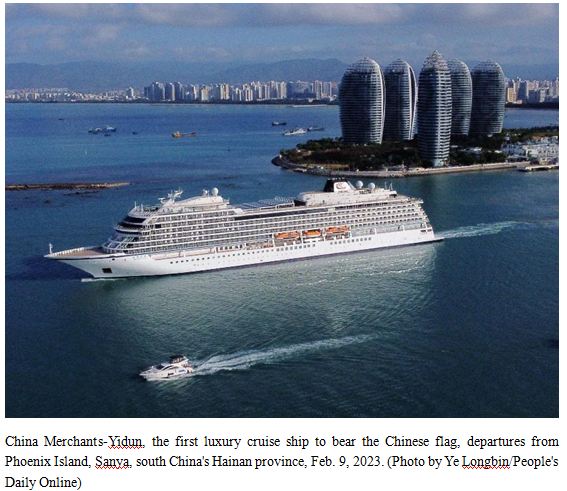
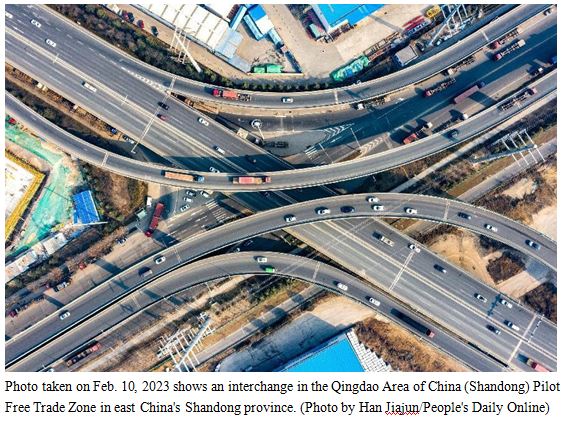
It has pursued a more proactive strategy of opening up. It has worked to build a globally-oriented network of high-standard free trade areas and accelerated the development of pilot free trade zones and the Hainan Free Trade Port, so as to promote high-quality development of the Belt and Road Initiative.
The efforts to comprehensively deepen reform and opening up in the new era enabled China to put in place foundational institutional frameworks in all sectors, and achieve historic, systemic, and holistic transformations in many fields. The system of socialism with Chinese characteristics has become more mature and well-defined, and China’s system and capacity for governance have been further modernized.
China has become a major trading partner for more than 140 countries and regions. It leads the world in the total volume of trade in goods, and it is a major destination for global investment and a leading country in outbound investment. Through these efforts, the country has advanced a broader agenda of opening up across more areas and in greater depth.
Reform and opening up is always an ongoing task and will never end. At present, profound changes unseen in a century are evolving rapidly in the world, and a new technological revolution and industrial transformation are advancing. China is facing new strategic opportunities, tasks, stages, requirements and environment.
Only by intensifying efforts to advance reform and explore new ground, remaining steadfast in expanding opening up, and working hard to remove deep-seated institutional barriers can China fully tap into the strengths of socialism with Chinese characteristics, continuously imbue its socialist modernization endeavors with fresh dynamism and vitality, and better translate its institutional strengths into effective governance.
Xi Jinping, general secretary of the Communist Party of China (CPC) Central Committee , stressed the importance of planning a new round of comprehensive reform and opening up centered on developing a high-standard socialist market economy and advancing high-standard opening upat the Central Economic Work Conferenceheld in Beijing last December.
China will uphold and improve its basic socialist economic systems, deepen mixed ownership reform of state-owned enterprises, and optimize the environment for developing private economy.
It will improve the modern corporate system with distinctive Chinese features, put in place a high-standard market system, and improve the system of macroeconomic governance.
It will also strengthen and refine modern financial regulation and reinforce the systems that safeguard financial stability.
The country will promote high-level opening up, steadily expand institutional opening up with regard to rules, regulations, management, and standards, and coordinate reforms in various fields.

Stay Connected

64FansLike
60FollowersFollow

Latest Reviews

Exchange Rates

USD - United States Dollar
EUR
1.17
GBP
1.34
AUD
0.67
CAD
0.73