LAHORE, MAR 19 /DNA/ – Pakistan Carpet Manufacturers and Exporters Association (PCMAEA) senior vice chairman Usman Ashraf has said that until the economy is based on exports, Pakistan’s prosperity will remain a dream.
In a statement issued here on Sunday, he said regarding exports, policies will have to be reframed in consultation with stakeholders and there is dire need to remove unnecessary obstacles created by State Bank and other institutions besides reducing cost of production. He suggested that in order to increase exports, a study report should be prepared for the countries of the region in the first phase and for other regions in the second phase.
Usman Ashraf said export promotion responsibilities should be assigned to embassies abroad, commercial attachés should be given not only formal targets, but also rewards and punishment system should also be introduced.
He said there are pavilions of different countries on the superstores established at the major airports of the world where their products are displayed, while Pakistan does not seem to be interested in this regard. “Homework should be done for this, social media tools should also be used to increase exports and a system should be brought under one roof for all exporters where fresh graduates can market Pakistani products and also do research work to be aware of the trends of different countries,” he added.
Usman Ashraf said that if Pakistan does not reorganize its export structure, Pakistan’s economic ship will continue to stumble like this and we will never be able to get rid of begging bowl.
PCMAEA asks govt to take rapid steps to boost exports

PIAF seeks serious measures as Pakistan exports continue to drop
DNA
Lahore, MAR 19: Raising grave concern over the continued falling trend of Pakistan exports the Pakistan Industrial and Traders Associations Front (PIAF) on Saturday said that the country’s textile exports dipped for the fifth consecutive month as shipments dropped by almost 30% year-on-year to $1.20 billion in Feb 2023, indicating that the government has failed to win the confidence of the business community due to continued rupee deprecation and uncertainty.
PIAF Chairman Faheem ur Rehaman Saigol, quoting the latest figures, stated that the overall exports during July-February 2022-23 totalled $18.678 billion against $20.57 billion during the corresponding period of last year, showing a decrease of 9.21 percent while the exports in Feb 2023 were $2.19 billion compared to $2.24 billion of Jan 2023 showing a decrease of 2.36 percent and by 22.69 percent respectively.
The PIAF Chairman pointed out that administrative measures to curb imports, leading to raw material shortage for the industry and resultantly lower production, were the main reason for the plunge while the slowdown in global demand amid monetary tightening was another reason, he said.
Faheem Saigol said that Pakistan has remained a potential market for foreign investors, who still have plans to make fresh investment in the country, but they have continued to wait for the return of economic stability. He highlighted uncertainty in the rupee-dollar parity as one of the major concerns of foreign investors. He said a slowdown in the economy had badly impacted business confidence. It is must for the authorities concerned to first create an enabling environment for the local businessmen desiring to make new investment.
Data shows that textile exports came in at $1.2 billion in February, down 11% month-on-month (MoM) however, in rupee terms, exports came in at Rs315 billion, up by 2% MoM.
Value-added textile exports decreased by 13% MoM to $812 million mainly due to lower shipments of readymade garments and knitwear, which declined by 13% and 18% MoM respectively, he said. Towels and bed wear exports decreased by 8% and 7% MoM respectively, according to Malik. Basic textile exports registered a decline of 8% MoM to $214 million in February 2023. In terms of volume, knitwear, towels and bed wear shipments decreased by 16%, 10% and 9% MoM respectively, whereas exports of readymade garments increased by 15% MoM. According to data, among basic textiles, cotton yarn exports were down by 22% MoM whereas cotton cloth shipments were up 11% MoM. Pakistan’s value-added segment declined on a YoY basis by 26%, 34% and 28% in the categories of bed wear, knitwear and readymade garments respectively.
Textile exports declined mainly due to import restrictions, resulting in unavailability of raw material, coupled with global recession which kept textile demand subdued, he said. Besides domestic issues, there are global reasons as well for the decline in exports that have also impacted other countries.
In the first eight months of current financial year (8MFY23), Pakistan recorded textile exports of $11.22 billion, down by 11% YoY, while in rupee terms, they were up by 19% YoY, while exports of basic and value-added textile declined by 21% and 9% YoY respectively.
Demand from major markets, such as the US and Europe, was the key concern among textile exporters, he said. Furthermore, the recent hike in electricity tariffs will pose a challenge to the sector.
On a year-on-year basis, cotton yarn exports registered 56.65 per cent negative growth, while on a MoM basis, it registered 18.09 per cent growth.
Rice exports declined by 12.09per cent during the first eight months of 2022-23 and remained $1.354 billion compared to $1.540 billion during the same period of the last fiscal year.
The PIAF Chairman advocated the need for raising the country’s tax base so that tax-to-GDP ratio improves from current poor level. He urged the trade officers to explore opportunities to diversify exports of goods and services in their respective areas, asking them to meet the challenges faced by Pakistan in European markets. He also suggested the ministry to devise strategies for promotion of Pakistani products, calling upon trade officers to take advantage of opportunities offered by China-Pakistan Economic Corridor (CPEC).
Anjum Nisar says declining exports trend to put more pressure on foreign reserves
DNA
ISLAMABAD, MAR 19: The Federation of Pakistan Chambers of Commerce & Industry’s Businessmen Panel on Sunday, stressing the need for putting the economy on a sustainable growth trajectory by providing incentives to the industry, lamented that the economy is facing multiple challenges of falling exports, high inflation, low growth and declining foreign reserves, with fiscal accounts under immense pressure on account of heavy interest payments.
FPCCI former president and Businessmen Panel (BMP) Chairman Mian Anjum Nisar said that the drop shows the government would find it difficult to achieve the industrial growth and export target, leading to more pressure on foreign exchange reserves of the country.
He asked the government to address the underlying structural vulnerabilities through smooth energy supply at competitive rates, as country’s overall export proceeds continued to shrink for the fifth consecutive month in a row.
Quoting the data, he pointed out 1.7 billion dollars decline in remittances during the first half of the current year compared to the same period the year before (a decline of 11.1 percent), exports declined by 6.6 billion dollars (6.8 percent decline), foreign direct investment dipped by 654 million dollars (58 percent decline), portfolio investment plummeted from negative 45.5 to negative 1032 million dollars, Public Sector Development Program decreased by 122 billion rupees (48.4 percent) and credit to private sector from 1043.1 to 703.6 million rupees which contributed to a decline in Nov 2021 Large Scale Manufacturing Sector growth of 6 percent to negative 5.50 percent in the comparable period this year.
Consumer Price Index rose from 12.3 in 2021-22 to 24.5 2022-23, while PSX index declined by 2.8 percent, market capitalization in rupees by 8.8 percent and in dollars by a whopping 28.8 percent.
Rising prices of wheat are the key factors responsible for affecting the general price level. International commodity prices are showing a downward trend on a YoY basis and its impact will ultimately be transmitted into domestic prices with some lags after adjusting the currency devaluation. While the government kept the administered prices at their current level to stabilize the overall prices but post floods persistent shortfall of essential crops is preventing inflation to settle down.
He observed that the drop in textile and clothing exports is gaining momentum over the past five months owing to multiple factors including high energy costs, stuck-up refunds and a slump in global demands despite the massive depreciation of the rupee. He believes that one of the main reasons behind falling exports was the exchange rate instability. The discontinuation of duty drawbacks on local taxes and levies by the government has also created liquidity issues for the export sector.
Mian Anjum Nisar said that the government has increased the gas and electricity tariffs and, at the same time, also the subsidy has been phased out, which will further increase the cost of production.
Month on month increases in consumer prices may be countered by a further mean reverting international commodity prices and some exchange rate stability due to decreased pace of depreciation. The overall money supply growth remains compatible with a return to low and stable inflation.
But the outlook of M2 is broadly dependent on fiscal accounts which are under immense pressure on account of heavy interest payments and rehabilitation spending. Nonetheless, the first five months of CFY have ended with some developments; containing fiscal deficit and surplus in primary balance due to effective fiscal management. The State Bank of Pakistan is also enacting a contractionary monetary policy to contain inflationary pressure. However, a larger portion of volatility in the current price level is explained by supply-side factors.
As imports fell more than the decline in exports, the trade balance of goods and services improved. Exports are constrained by domestic production issues related to the slowdown of demand in the main export markets and high domestic production costs. Imports are currently constrained by sluggish domestic demand and administrative measures to protect the official foreign reserves level.
Since no immediate reversal of these developments is envisaged, the trade balance may further stabilize or further improve somewhat in the upcoming months.
The textile exports remained weak mainly due to the demand and supply challenges being faced by the sector. Global recession, which reduced the purchasing power in key export markets, also resulted in lower bookings of orders, he added. Inventory piled up at large global retailers, while gas shortages and increased costs of working capital in the country also played a role in the decline, he said. He stated that a major enhancement in exports requires huge and wide structural reforms, urging the government to take business community on board, who are the real stakeholders in preparing policies to enhance exports, which is prerequisite for economic growth. As part of the agreement with the IMF, the government has announced discontinuing subsidies on energy for the export sector. The piling of containers at ports is also contributing to the decline in exports.
Beyond Boundaries: Australia empowering girls through cricket

DNA
ISLAMABAD, MAR 19: The Australian High Commission (AHC) and the Pakistan Cricket Board (PCB) with the support of Serena Hotels today hosted the 7th AHC-PCB Girls’ Cricket Cup in Islamabad.
Australia’s High Commissioner to Pakistan, Neil Hawkins congratulated the girls and the schools on their participation and welcomed the continued support of the PCB and Serena Hotels for the annual AHC-PCB Girls’ Cricket Cup.
“The Australian High Commission has been sponsoring girls’ cricket in Pakistan since May 2016 to promote gender equality through sport. We began with a single annual tournament in Islamabad but have since expanded to Lahore and Karachi,” Mr Hawkins said.
“Our countries share a passion for cricket. It’s more than just a game – it’s a powerful tool for people-to-people connects, for social change. By supporting events like the Girls’ Cricket Cup, we’re promoting equality, opportunity, and hope. Every time these girls hit a boundary or make a catch, they are taking a step towards greater empowerment,” Mr Hawkins added.
The girls attended an eight-day coaching clinic in the lead-up to the competition conducted by PCB first class cricket coaches, led by head coach Wasim Yousufi, Manager Game Development Aisha Jalil and Head of Pakistan Women’s Cricket Tania Mallick.
Mr. Hawkins highlighted that the Australian High Commission is pleased to support the initiative during the Pakistan Super League, in which Australian players, including Australian female cricketing star Tess Flintoff, is participating. “It’s an exciting time for cricket fans in both Australia and Pakistan. A shared love of cricket is one of the many bonds that bring our countries together,” he added.
Mr Aziz Boolani, CEO Serena Hotels, said, “This is the seventh year for Serena Hotels to be a part of this tournament. Cricket is a passion in Pakistan for men as well as women. We at Serena Hotels have been actively supporting and sponsoring all sports, including women’s sports. We truly believe in gender empowerment, which can only be realised if opportunities are provided for women to explore their true potential.”
The AHC-PCB Girls’ Cup Islamabad involved teams from four schools: Mashal Model School Bari Imam, SOS Children’s Village H-11, Islamabad Model School for Girls – F-6/1 and Islamabad Model School for Girls I-9/1 Islamabad.
Maryam’s obsession with Imran and Beleaguered government

By Qamar Bashir
Former Press Secretary to the President
Former Press Minister in Pakistan Embassy of France
The entire nation is reeling from the developments on the political, economic, financial, and security fronts, but the government, state machinery, and political assets have only one problem at hand, which is to arrest Imran Khan. To reduce his political size, change his software, either eliminate him entirely, or reintroduce him as a tamed, reformed, and toothless politician like any other politician in the country. The government and political leaders seemed totally numb to the cost the country may have to pay if things that are already mostly out of their control spiral out of control completely.
Instead of calming the highly charged political atmosphere, Maryam Nawaz spewed once again lethal venom against Imran Khan in her latest press conference and interview with a reputable channel and her favourite host. She compared him to a jackal and a mouse who is holed up in his Lahore residence and using a human shield to avoid arrest and production in court. She charged him with harbouring terrorists in his residence who are using petrol bombs which according to her are only those who know the sophisticated technology to make petrol bombs, conveniently ignoring that it needs only a bottle, a cock and matchbox to launch a petrol bomb.
She also accused him of using GB police to defend himself against his arrest, and transferred GB IGP Muhammad Saeed as a punishment without waiting for input from Punjab IG, who when asked denied any clash between Punjab and GB police adding that GB policemen had not pointed their guns at Lahore police personnel. Later, when asked how Imran could physically attend court hearings against over 96 FIRs filed on frivolous grounds, she innocently responded that he should go to the court and tell them that the FIRs are false.
She may be unaware that making false allegations and filing baseless FIRs are punishable offenses under PPC Section 182, which states that anyone who intentionally gives false information shall be punished with imprisonment for a term not exceeding six months, or a fine not exceeding ten thousand rupees, or both and according Section 211 filing a false police report or making false allegations against an offense is punishable by imprisonment for a term of up to two years, a fine, or both. I believe she is astute enough to assess these provisions and take the necessary precautions to avoid future problems.
In her press conference, she was flanked by top PML(N) leaders and the Minister for Information and Broadcasting, who could only get a seat in the far right corner of the head table. It reflected Maryam’s complete control over the government and the party. She was effectively acting as a de facto prime minister, making decisions without fear of being held accountable. She makes statements, makes promises, and issues orders, all of which fall under the exclusive jurisdiction of the Prime Minister and party leader, Shahbaz Sharif, who has been dwarfed and is only left to inaugurate half-baked and half-cooked development projects.
This concentration of power in Maryam appeared to have completely trampled the norm of separation of government and party affairs, which is a rule in all democracies around the world. According to universal principles, the government is in charge of enforcing policies and laws, whereas political party leaders are in charge of developing and promoting their party’s platform and values. The government should ideally be independent of political party leadership, and decisions should be made in the best interests of the country rather than the interests of a specific party or individual.
However, in our case, the lines between government and political party leadership are frequently blurred, and we have seen that the ruling party wields significant power over the government. This is a dangerous combination, and it is possible that it is the root cause of the country’s current political turmoil as power corrupts and absolute power corrupts absolutely.
Her obsession with arresting and imprisoning Imran Khan knows no bounds. She is using all of her arrows and weapons in her bow to ensure Imran’s arrest, regardless of the political, administrative, or financial cost. She has designated him as her No. 1 enemy, as well as all those she perceives as supporting him, whether he is a person, a country, or an institution.
In her recent press conference, she criticized Zalme Khalilzada, perhaps unaware that he is an American diplomat and foreign policy advisor who has served in a number of high-level positions in the United States government and has been involved in US foreign policy for several decades. He has also held senior positions in the US State Department, including Assistant Secretary of State for Political-Military Affairs and Counterterrorism Coordinator.
Whatever the circumstances and her feelings about Khalilzad, I believe she should have left it to the Ministry of Foreign Affairs to respond if deemed appropriate; after all, the Foreign Minister and Minister of State for Foreign Affairs should share some of the burden of the all-powerful Maryam Nawaz. But is Khalilzad the only one she has a grudge against?
She perhaps marked everyone who ever had a little connection or soft corner for Imran. She insulted former Chief justice of Pakistan Saqib Nisar for declaring Imran Khan truthful and trustworthy and demanded court martial of former DG, ISI for his alleged support to first bring Imran Khan to power and then playing a part in perpetuating his rule for around four years. She boycotted all TV channels who, according to her, were supporting Imran Khan in their talk shows and had a calculated narrative that the journalists should not side with any political party.
Interestingly, in various speeches she vowed to not hold any general elections until both sides of the balance are equal which according to her is equated only with putting Imran Khan behind bars whether rightly or wrongly as counterbalancing to her and her father’s going to jail. By pledging this, she self assumed herself over and above the election commission, judiciary, establishment and the government. Constitutionally election commission is responsible for holding of election, supreme court of Pakistan which in her latest ruling have directed the government to hold the election as soon as possible and government which is constitutionally bound to hold election as and when demanded by the Election Commission or by the supreme court of Pakistan, but she put each one of them under her foot by declaring if not in so many words that it is she who will decide when and how the elections will be held in the country, an amazing confidence and an amazingly exuberance of power.
Perhaps she should pause, reset her strategy, and take a step back to wait for the right movement to strike against Imran, as he is currently riding high on the popularity tide, and his fate is currently in the hands of people, if not under him. He has inspired the public to share his vision and work towards a common goal by articulating a clear and compelling vision and a deep sense of purpose. He has emerged as a gifted speaker who is able to use language in a powerful and persuasive manner to inspire his followers and is regarded as a role model and source of inspiration.
Even in the face of uncertainty or adversity, he has taken risks such as dissolving the Punjab and KP assemblies against all opposition from within his party. He is not afraid to challenge the status quo and raise people’s emotions to new heights. He has successfully sold his narrative of Haqiqi Azadi, demonstrated his fearlessness in the face of state power, and his ability to rally his supporters, who took to the streets in large numbers to oppose the use of any state power against him. Finally, as Maryam herself stated in so many words, he still enjoys the establishment’s support and loyalty, which is an important factor and still helps him to neutralize the state’s brute power. The movement he started has now gained its own momentum, which he may not even be able to control at this point. It is similar to a popular soap opera or television series that takes time to capture people’s attention before establishing its own moment that is controlled by the viewers rather than the producer.
She, who is a good political leader, should only attack from a position of strength in order to minimize casualties, increase the chances of victory, establish deterrence, and protect her party’s interests. This strategy will enable her to redeploy her tactics and exploit the Imran’s weaknesses, which can be critical to achieving her objectives. Instead of pressuring his arrest, she should allow him to make mistakes by manipulating the media and persuade voters to support her over him through clear messaging and strong branding. She has to bring new potent arsenal as the existing weapons, like Tyrian White, hiding terrorists, pitching GB police against Punjab police, using drugs, chicken hearted have been blunted by Imran and have left no utility and effectiveness.
On the other hand, I have nothing but admiration for Maryam, who has very successfully created a dense fog wall between the people and the burning issues that the government is faced with and its failure to handle any of them through her anti-establishment, anti-judiciary, and anti-Imran rhetoric. Imran’s focus has shifted from his demand for early elections to protecting himself, avoiding arrest, and preventing updates of his software. People’s attention has been diverted from the unprecedented price hike and hyperinflation to protect Imran Khan from his imminent arrest, businessmen are on hold awaiting the final outcome of the elephant war where they may be grass to be trampled, failure of negotiation between demoralized finance minister and stone faced IFM country director who has been stung by the overturning of agreement reached between them and Muftah Ismael by Ishaq dar is allegedly refusing to sign any agreement until new and legitimate government take over to guarantee implementation of the agreement in both letter and spirit.
Nation’s attention has also been diverted from the imminent threat to our nuclear programme, which was revealed by a statement made by our finance minister at an international forum with body language that reflected weakness, despair, lack of confidence and legitimacy in front of a completely hostile audience, which was disheartening.
Businesses are currently under enormous pressure, production lines are closing down, industry is being shifted to greener pastures due to a lack of raw materials and exorbitant utility prices, people are groaning under price hikes, and the less fortunate are even committing suicide to save themselves and their loved ones from starvation and the indignity of abject poverty and despair. Instead of political expediency, turmoil, commotion, and unrest, which the government has purposefully created, the government could have avoided this dire situation by showing a large heart and committing its collective wisdom, intellect, and abilities to bring reforms and provide some relief to the people.
Both Maryam and Imran Khan, unfortunately, have been calling the establishment in their support and have repeatedly expressed their anger and frustration at the army’s insensitivity to their demand and siding with them. Unfortunately, our politicians are so addicted to this toxicity that none of them are willing to believe the army’s pledge to no longer interfere in political and civilian affairs. They are also unwilling to believe that the army’s new leadership has demonstrated its neutrality in the face of the nation’s political and financial challenges. They are also ignoring the President’s advice that politicians should take the army’s pledge of neutrality at face value and work together to devise ways and means to fill the void left by them.
I believe it will take time for politicians to wean themselves from this lethal seduction, and it will also take time for the army to demonstrate to the people and politicians that it is no longer in the civilian domain. Only time will tell whether Maryam and Imran, our most popular leaders, will take the first step in devising their political strategies independently, without relying on the establishment’s support in achieving their political goals.
Out of our entire political leadership of both old and new generations, Maryam has the grit, courage, tenacity and stamina to stand against rising tides with confidence and determination to win against all odds. She will probably stay for a long time in the political arena of Pakistan. She has gone through a tough and arduous political training process and endured imprisonments and the tedious process of facing the courts.
While the rest of PDM leadership is relishing the power bestowed to them by change of fate as a one in lifetime chance, she is the only one left who is facing the daunting challenge of Imran Khan and successfully engaging the people to convey her political objectives.
But now she, the government and the establishment are faced with a new kind of rising tide which is rooted genuinely in the people’s heart and soul. They are dancing to the tune of Haqiqi Azadi to salvage themselves from the brute state power which is used on them as and when required with total impunity. Unlike other such tides of the past orchestrated by the establishment this one is different, genuine and spontaneous. The people have risen to the realization that the ultimate power rests with them only when they unite to a single cause built around dignity, self respect and honor and is the only way to confine the state machinery to its mandated roles and responsibilities.
The jurisdiction of both civilian and military bureaucracy are defined in so many words in the constitution and laws, rules and regulations emanated out of it. No state functionary or institute has the authority or power to come out of its defined parameters. Any step out of these confines would be illegal, illegitimate and detrimental to the national interests which gives the people who are actual owners of the country and land inherent right to put them back to their assigned rules by using their power of collectiveness. The latest events demonstrated clearly that people are not ready to accept any illegal act or order of the government or the courts. They have taken on themselves to protect their right and defend their leaders totally disregarding the danger of use of brute state force on them.
The country is currently confronted with new and emerging realities. We must all recognise that political unrest is the root cause of all the nation’s problems. All political leaders must pause, grasp new realities, comprehend the newly defined role of the establishment, devise political strategies that exclude the establishment, and begin engaging the people by providing them with a motive, a purpose, and objectives that truly represent their aspirations, dreams, and preferences. Use people’s power to keep the bureaucracy both civilian and military to their defined rules, use political tools of negotiation, consultations and consensus building to resolve issues faced by the nation. Set a mutually agreed-upon date for the next general election to allow the people to elect a legitimate, genuine, and truly representative government, and then allow it to complete its mandate period while using all political capital at their disposal to prevent any interference by state machinery in the civilian domain. Let us set aside our personal grudges, hateful vendettas, and personal agendas and allow the nation and its people to breathe freely.
Power transmission project ensures stable electricity supply for Ngari
By Shen Lin, Xu Yuyao, People’s Daily
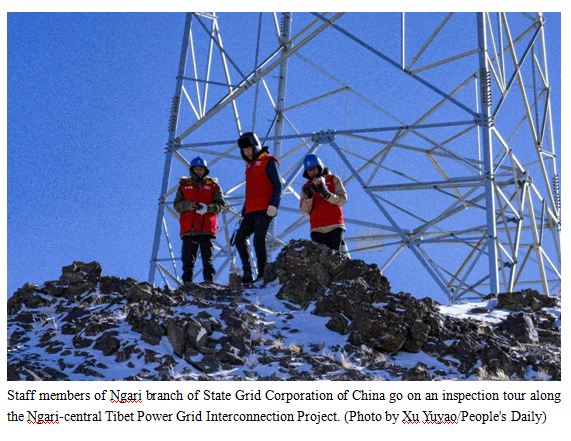
On the top of snow-covered mountains with an altitude of over 5,000 meters in the suburbs of Gar county, Ngari prefecture, southwest China’s Tibet autonomous region, stand a number of gigantic transmission towers, which are there to ensure stable power supply for families at the foot of the mountains and beyond.
With a total length of more than 1600 kilometers, the power transmission line, also known as the Ngari-central Tibet Power Grid Interconnection Project, spans 10 counties and districts in two prefecture-level cities of Tibet and was put into operation at the end of 2020. It is a 500 kV power transmissionand transformation projectwith the highest altitude and longest distance in the world.
The project marks the end of an era in which Ngari’s power supply relied on an isolated grid of its own and has fundamentally solved power shortage in the prefecture, offering safe and reliable electricity for 380,000 farmers and herdsmen in 16 counties along its route.
For more than two years, the project provides stable electricity supply, meets the needs of residents in lighting and heating, as well as needs for industrial development.
79-year-oldChagoin is aresident of a nursing home of Ngari. Her health is getting worse with age, thus an oxygenerator is needed constantly to ease her condition.
“There are many other seniors like Chagoin in the nursing home. The oxygenerators donated by the government could help improving their health conditions,” said Awang, head of the nursing home.
“We know that oxygen care for the elderly is important, but the power supply was unstable in the past, high-power appliances would always blow the fuse, let alone wide application of oxygenerators,” Awang told People’s Daily.
In the second year after the project was put into use, the nursing home introduced a series of equipment to better care for seniors living there.
According to Awang, oxygenerators as well as all other types of appliances can now be safely used in the nursing home without worring about tripping.
Since the prefecture’s connection to the state power grid, both nursing homes and residential complexes have upgraded their power equipment, said Losang Phuntsog, an employee of the Ngari branch of the State Grid Corporation of China.
Before the connection, power shortage was common in winter in the prefecture. Today, radiant floor heating systems and electric radiators are widely used by the local people, which is safer and cleaner.
Now, diesel and petrol generators are used less and less in business. Wang Baolong, who works for Tibet Ali Hotel, told People’s Daily that generators consume much fuel and thus leads to a high cost that’s much more expensive than the electricity from the grid.
“With stable power supply, we don’t have to spend that much anymore,” he said.
Since the project was put into use, the maximum electrical load in Ngari has expanded by 12.63 percent, with a supply reliability rate of 99.68 percent. The project has transmitted 218 million kWh of electricity in the past two years, or 76.49 percent of the total power supply in Ngari prefecture.
“Besides, the project has lowered electricity price by over 55 percent. It has also improved investment and business environment, injecting new impetus into Ngari’s economic and social development,” said the person in charge of the Ngari branch of State Grid Corporation of China.
Though theproject is a huge benefit for Ngari, the maintanance of the project in such a sparsely populated prefecture is no doubt a challenge.
The ardurous inspection tours along cliffs are extremely difficult. However, workers of the maintenance group of the project have long been used to the undertaking.
Jamyang Kelsang, head of the maintenance group told People’s Daily that once a sudden failure took place along the main line and special spare parts were needed to completely fix it. However, the parts couldn’t be found locally, he and other maintenance staff members had to stay in the place where the failure was for around a week to maintain emergency operation until the spare parts were delivered.
“Stable power supply is not only about the construction of the project, but also the maintenance of it,” Jamyang Kelsang said, adding that the project means greater convenience for residents and merchants, but to maintenance staff members, it means greater responsibility.
Courtyard economy thrives, contributes to rural vitalization
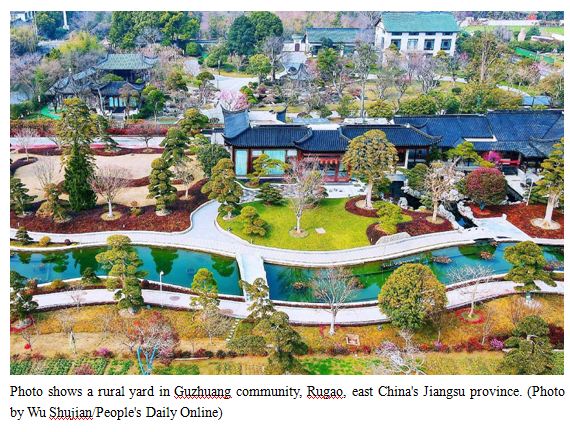
By Li Jie
Ruz, a resident in Shufu county, northwest China’s Xinjiang Uygur autonomous region, has his “masterpiece” — a vibrant courtyard where fruit scents arise all year round.
He always invites his neighbors to visit his courtyard.
Ruz’s courtyard, which hides behind a gigantic tree, is small but is neatly packed with plant pots and a mini parterre grown with flowers, medicinal herbs and green vegetables. In the backyard, there are grape trellises, apricot trees and peach trees, as well as a sheepfold and a cowshed.
“This small courtyard supplies my family with fruits and vegetables. I also earn some extra income through the beef and mutton business. The medicinal herbs are said to have a high economic return as well,” said Ruz, who does farm work during the agricultural season and often manages the courtyard when he’s not busy farming.
Small courtyards play an important role in China’s economic development. When idle land resources are revitalized, “micro economic units” engaged in various sectors speed up China’s rural vitalization.
Courtyard economy was included in China’s “No. 1 central document” for the first time this year. The document encourages all farmers in regions that have shaken off poverty to develop a courtyard economy if conditions allow.
Generally speaking, courtyard economy is a business form in which rural families carry out small-scale agricultural production at home or in surrounding areas for self-sufficiency or commercial profits. It is a part of the agricultural economy.
According to statistics from the Ministry of Human Resources and Social Security, 32.78 million people across China who had previously been impoverished were employed last year, an increase of 1.33 million people year-on-year. For those who have no opportunities to secure a job, courtyard economy remains a good choice.
He Anhua, a researcher of the Research Center for Rural Economy under the Ministry of Agriculture and Rural Affairs (MARA), believes that courtyard economy is beneficial for multiple parties.
He explained that it not only helps activate idle resources and gains extra income for rural families but also beautifies the countryside and rural residents’ living environment. In addition, developing featured industries under courtyard economy will help counties foster new growth drivers and reinforce the national foundation in food security.
There are many examples of “a hole in the wall” turning into a “gravy train” across China.
In northwest China’s Ningxia Hui autonomous region, villagers grow non-timber trees around their courtyards as decoration and an extra source of income.
In Delingha, northwest China’s Qinghai province, farmers are developing featured breeding in their courtyards.
In Huayuan county, central China’s Hunan province, B&B hotels, agritainment facilities and cultural activities are boosting local tourism.
According to relevant policies that have drawn a blueprint for the future development of courtyard economy, featured crop farming and breeding will remain a focus of courtyard economy, such as “micro” tea gardens, vegetable farms, orchards and fungi gardens, which satisfy the consumption demand of cities.
Featured handicraft businesses will be developed, including intangible cultural relics workshop, home-based factories and manual workshops.
Leisure tourism is also a direction in which courtyard economy will be developed. More featured B&B hotels, agritainment facilities and fruit picking farms will be built.
Besides, a batch of e-commerce sales centers, livestream commerce centers and express delivery centers will be built in rural areas so as to expand the income of rural households.
In short, the key to developing courtyard economy is to find a differentiated path that incorporates rural features.
The most important thing about developing courtyard economy is to promote self-reliance and diligence, and to encourage residents that have shaken off poverty to learn a skill and create a better future with it, he said.
By 2025, the courtyard economy will be developed on a larger scale, with more business forms, more vitality and a higher level of development, according to a guideline on encouraging rural areas that have been lifted out of poverty to develop courtyard economy.
Cause of gender equality enjoys sustained, healthy development in China
By Zhou Shanshan, People’s Daily
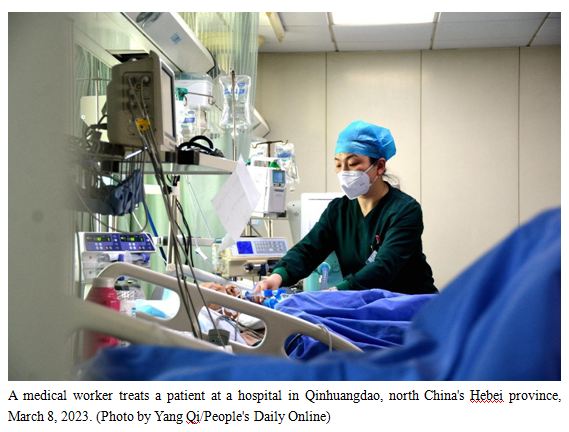
Women’s status mirrors a country’s social etiquette and civility. In China, female pediatric intensive care specialist Qian Suyun, who has nearly 40 years of pediatric experience, has brought a ray of hope to numerous children in emergency and critical conditions with her superb medical skills and ethics.
Bi Lixia, a woman that heads a rice farming cooperative in Jianli, central China’s Hubei province, has actively applied technologies in rice growing, contributing her strength to maintaining food security.
They are representatives of today’s females and have proven that women are creators of material and spiritual wealth and represent an important force driving social development and progresswith concrete actions. Such progress is inseparable from the high-quality development of the cause of gender equality in China in the new era.
China attaches high importance to the cause of gender equality. In the country, women are able to exercise their democratic rights, participate in economic and social development, and benefit from the outcomes of reforms and development on an equal and legal basis.
So far, it has built a legal system for the protection of women’s rights and interests, which covers over 100 separate laws and regulations. The average life expectancy of women has exceeded 80 years. The gender gap in the nine-year compulsory education has been basically eliminated. Women accounted for over 50 percent of students in institutions of higher education.
As of the end of 2020, the number of women participating in maternity insurance had reached 103 million, and 650 million women participated in basic medical insurance. Women accounted for 40 percent of the labor force and 45.8 percent of the total science and technology personnel across China.
These sets of data reflect the efforts made by China to promote the cause of gender equality, the solid guarantee for women’s rights and interests, the broad rights and interests enjoyed by women, and the increasingly prominent role of women in economic and social development.
Women are gaining increasing senses of achievement, happiness and safety, and their confidence is growing in pursuing their own dreams.
In the report to the 20th National Congress of the Communist Party of China, the country vowed to remain committed to the fundamental national policy of gender equality and protect the lawful rights and interests of women and children, eliminate unjustified restrictions and discrimination that undermine equal employment, and establish a policy system to boost birth rates. It has charted the course for achieving greater gender equality.
The cause of gender equality in China is entering a golden period featuring more benefits for women, a better development environment, and leapfrogging progress.
From finding a balance between work and family tobreaking through the glass ceiling in the workplace, Chinesewomen’s development is supported by the entire society. As relevant parties work together to keep advancing the healthy development of gender equality, the cause will see broader and brighter prospects.
China adopts multiple measures to promote high-quality development
By Liu Zhiqiang, People’s Daily
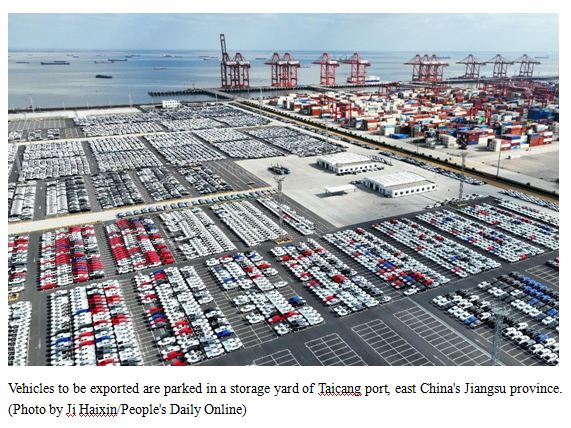
The State Council Information Office held a press conference in Beijing on March 6 about promoting high-quality development to set the stage for building a modern socialist country in all respects.
ZhaoChenxin, vice chairman of the National Development and Reform Commission (NDRC),outlined China’s remarkable economic performance in 2022.
According to Zhao, the country’s GDP exceeded the 120-trillion-yuan ($17.22 trillion) mark for the first time, and the consumer price index only rose by 2 percent while global inflation has surged to its highest level in over 40 years.
Besides, a total of 12.06 million new urban jobs were created last year, exceeding the annual target of 11 million. China maintained a basic equilibrium in thebalance of payments, and the scale of the country’s foreign exchange reserves remained over $3.1 trillion as of the end of last year.
China’s development quality saw steady improvement.
Innovation-driven development has played a more important role. China’s total expenditure on research and development (R&D) amounted to 3 trillion yuan for the first time, with the country’s ratio of R&D expenditure to GDP increasing to 2.55 percent. The country has climbed to 11th place in the Global Innovation Index (GII) 2022 Report.
Structural adjustment accelerated in the sectors of industry, investment, consumption and trade. Green and low-carbon development achieved steady progress, and poverty alleviation achievements have been continuously consolidated. The social security system and public services were also improved firmly.
China has constantly consolidated the foundation for safe development.
Fiscal and financial operations were generally stable and sound, and international payments were in basic balance. The country has achieved a bumper grain harvest for 19 consecutive years, and its annual grain output has exceeded 650 billion kilograms for eight years in a row.
It also enhanced the systems of energy production, supply, storage and sales, and the energy supply is maintained at a stable level. The capability to maintain the security of key industrial and supply chains has been continuously improved.
According to the government work report this year, China’s annual growth target is set at around 5 percent.
Zhao explained that as a developing country, China still takes development as its top priority. To achieve the targets set at the 20th National Congress of the Communist Party of China, the country needs to maintain reasonable economic growth to boost employment, improve people’s livelihoods,and prevent and defuse risks, Zhao added.
The 5-percent growth target, which is conducive to accelerating the creation of a new development paradigm and promoting high-quality development, is in line with current economic momentum, and will guide all sectors to focus on improving the quality and efficiency of development, Zhao said.
Besides, regions across China all have strong confidence in their development prospects, which lays a solid foundation for the country to achieve the annual growth target.
Zhao said the country will strengthen macro policy regulation, maintain the continuity and consistency of macro policies, make them more effective and targeted, enhance the integration and coordination of policies and ensure that all policies are consistent with the direction of macro policies.
The country will ensure that the implementation of the strategy to expand domestic demand is integrated with efforts to deepen supply-side structural reform, further unleash the potential of household consumption, boost investment, and implement the innovation-driven development strategy in an in-depth manner, and accelerate the building of a modern industrial system.
It will also build a high-standard socialist market economy and promote high-level opening up to constantly energize development. It will coordinate development and security, properly handle and defuse risks in areas such as property sector, finance, and local government debt, and practically enhance security capacity building in food security, energy resources and key industrial and supply chains.
Besides, China will thoroughly and effectively implement the employment-first policy, strengthen basic public services and constantly guarantee and improvepeople’s livelihood.
Final consumption is a lasting driver of economic growth. Li Chunlin, vice chairman of the NDRC, said that China’s consumer market has shown signs of rapid recovery. Consumption of catering, culture and other industrieshas rebounded since the Spring Festival holiday, getting the economy off to a strong start, he said.
Li believes that uncertain factors constraining the release of consumption potential are gradually eliminated, and the first half of this year is expected to see a steady increase in the growth of major indicators of consumption.
Consumption will serve as a main driving force boosting China’s economic growth in 2023, Li said.
In 2022, China’s fixed-asset investment increased by 5.1 percent over the previous year. In particular, investments in infrastructureand manufacturing rose 9.4 percent and 9.1 percent, respectively, playing an important role in stabilizing the macro economy.
Yang Yinkai, vice chairman of the NDRC, said China will keep working to expand effective investment this year, advance the construction of major projects, effectively drive investment from the society through government investment and policy incentives, consolidate the sound momentum for stable growth in infrastructure investment and manufacturing investment, and further enhance the key role of investment in optimizing the supply structure.
India says China situation dangerous on Himalayan front
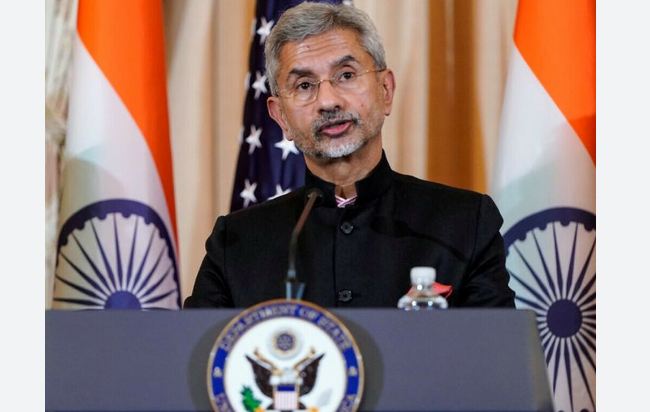
The situation between India and China in the western Himalayan region of Ladakh is fragile and dangerous, with military forces deployed very close to each other in some parts, Indian Foreign Minister S Jaishankar said on Saturday.
At least 24 soldiers were killed when the two sides clashed in the region in mid-2020, but the situation has been calmed through rounds of diplomatic and military talks.
Violence erupted in the eastern sector of the undemarcated border between the nuclear-armed Asia giants in December but did not result in any deaths.
“The situation to my mind still remains very fragile because there are places where our deployments are very close up and in military assessment therefore quite dangerous,” Jaishankar said at an India Today conclave.
India-China relations cannot go back to normal, he said, until the border row is resolved in line with the September 2020 in-principle agreement he reached with his Chinese counterpart.
“The Chinese have to deliver on what was agreed to, and they have struggled with that.”
Although forces from both sides have disengaged from many areas, discussions are proceeding over unresolved points, Jaishankar said.
“We have made it very clear to the Chinese that we cannot have a breach of peace and tranquillity, you can’t violate agreement and want the rest of the relationship to continue as though nothing happened. That’s just not tenable.”
Jaishankar said he discussed the situation with China’s new foreign minister, Qin Gang, on the sidelines of a meeting of the foreign ministers of the G20 nations hosted by India this month.
Regarding India’s presidency of G20 this year, Jaishankar expressed hope that New Delhi can make the forum “more true to its global mandate”.
“The G20 should not be a debating club or an arena only of the global north. The entirety of global concerns need to be captured. We have already made that point very forcefully,” Jaishankar said.
Two G20 ministerial meetings in India in the last three weeks have been overshadowed by Russia’s 13-month invasion of Ukraine.