Home Blog Page 1203

PML-N’s threat to SC, CJP

Imran Khan urges people to be ready for protection of Cons, democracy

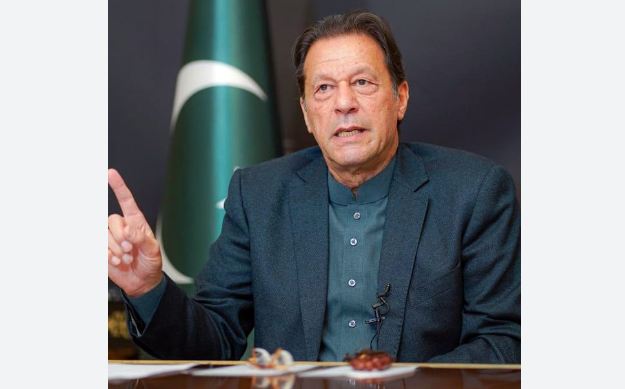
ISLAMABAD: Pakistan Tehreek-e-Insaf (PTI) Chairman Imran Khan urged people of Pakistan especially lawyers community to be ready to come out in streets for protection of Rule of Law, the Constitution and democracy, as the PMLN seemed all-set to launch 1997 like attack on Supreme Court (SC) and Chief Justice of Pakistan (CJP) because they were petrified of elections. 

In a statement on Friday, PTI Chairman said that as PMLN did in 1997 by storming apex court to attack the then Chief Justice of Pakistan Sajjad Ali Shah hearing a contempt petition against Nawaz Sharif, PMLN is again threatening SC and CJP today because they were petrified of elections. 

“I want people of Pakistan to be ready to come out in streets if need be to save Rule of Law, the Constitution and democracy,” he added. 

Imran Khan stated: “We will be talking to all those political parties who are prepared to stand up against this conspiracy. I especially appeal to Lawyers community to again take the lead as they did in 2007 Lawyers Movement to protect Pakistan’s Constitution and Rule of Law. 

Direct flights between Pakistan, Kazakhstan to begin in May

ISLAMABAD, MAR 31 (DNA) — Ambassador of Kazakhstan to Pakistan Yerzhan Kistafin announced that direct flights between the two countries would start in May 2023, bolstering bilateral economic connectivity.

He said this during a meeting with Khyber Pakhtunkhwa Minister for Commerce and Industries Adnan Jalil in Islamabad.  The ambassador said the direct flights between Lahore and Almaty would not only increase economic ties, but also the people-to-people contacts.

 He said the business communities and chambers of the two countries could play a role in enhancing bilateral trade between Kazakhstan and Pakistan. The ambassador said being a gateway to Central Asia, Peshawar was very important for mutual trade between Pakistan and Kazakhstan.

He emphasised the need to further strengthen the economic and trade relations between Peshawar and the areas of Central Asia. — DNA

Date for submitting Hajj applications extended

ISLAMABAD, MAR 31 (DNA) — The government has extended the date for receiving Hajj applications to April 7. According to a notification issued by the Ministry of Religious Affairs, Friday (March 31) was the last date for submitting applications under government scheme, but it was now extended until April 7.

The aspirants can submit their Hajj applications in 13 nominated banks. This year 179,210 Pakistan would perform Hajj. The ministry has also extended the date for filing applications under Hajj sponsorship scheme to April 7.

A ministry spokesman said as the expatriate Pakistan are facing hurdles in sending money an extension in deadline has been granted. — DNA

US, Pakistan work together on broad range of issues: State Dept

WASHINGTON, MAR 31 (DNA) — The United States has a deep security partnership with Pakistan including counterterrorism efforts and Pakistan’s decision not to participate in the second Summit for Democracy, hosted by President Jeo Biden, does not change US administration’s willingness to continue to work with Islamabad on a “broad range of issues”, said a State Department spokesperson.

Addressing a news briefing in Washington, State Department Spokesperson Vedant Patel said the US was “certainly sorry that Pakistan chose not to participate” in the three-day event that ended Thursday after discussing topics like strengthening democracy and defending against authoritarianism; addressing and fighting corruption; and promoting respect for human rights.

Patel said this certainly does not change our willingness to continue to work with Pakistan. The US and Pakistan worked together on a broad range of issues and “we continue to engage with them on issues surrounding democracy, human rights, including freedom of religion, belief, as well as there’s an important security partnership.”

Answering a question regarding rise of Taliban attacks in Pakistan, Patel said there was a deep security partnership with Pakistan, including counterterrorism efforts. “I saw those same reports of the recent attacks and would offer condolences to those who were impacted.”

China and Turkiye were excluded, but Taiwan was invited. When an Indian journalist drew attention to India’s External Affairs Minister S Jaishankar’s statement about not engaging with Pakistan on the plea that talks and terrorism do not go together, the spokesperson said he would let New Delhi add any additional commentary to his comments.

“But broadly,” Patel said, “what I would say is that the US values its important relationship with both our Indian partners and Pakistan as well, and these relationships stand on their own and are not a zero-sum proposition.” — DNA

I Want my Pakistan back

Written by Rehan Nabeel

In Pakistan, people do not appreciate talent. As now a Pakistani is a Scottish first minister and yes it is the same post as a pm. Now if he was to be in Pakistan he would not even be a governor. Governor is a long talk, not even a mayor. Pakistanis don’t appreciate people who can’t talk about things Fix things as he mentioned that he will help Scotland exit the UK and join the EU.

We like to talk about only The leaders who promise us a better Pakistan but end up destroying it. Here in Pakistan even former prime ministers cannot live in peace. We should build a better and smarter Pakistan.

Look at india, it was standing in the same economy as Pakistan in 1947. But now there are very much richer.

Just because of the nonappreciation of real economy boosting ideas other than lowering prices. My dadabu came all the way from Saudia even though he had options To go to other countries.

Just to help Pakistan alongside Imran Khan to fix Pakistan and now the new government is arresting PTI workers. PTI workers aren’t even safe neither the Pm nor the secretaries, officers and all are not safe 

This is not the Pakistan we wanted it is a Pakistan in ruins.

We appreciate Rishi sunak and Hamza Yousaf but the people who want to work in Pakistan are not appreciated.

We say that they are from Khan e waal and Gujranwla but we are not saying that we Pakistanis do not appreciate people If they were here they would be owning factories for a living and would not be recognised.

Let’s come to the point We talk about our believes while our holy prophet Hazrat Muhammad said no Arab 

Has power on a non Arab and a non Arab on a Arab whereas we say the Bhutto family will rule or the sharif family will rule.

Pakistan came in the name of Islam and we have forgotten this golden principle of Islam. Now where Pakistan stands at this time 

I ask this to my papa and my grandfather that this was built on the name of Allah. I’m 12 and I’m still wondering where this Pakistan is?

I can’t see my   future of Pakistan. IT is a falling nation on its own and it must come back to its own before it’s too late.

The national days and diffrent occasions I used to hear that we are a alive nation “hum zinda qaum hai hum tabinda qaum hai” is it really true? 

I feel that it is wrong on its own Whereas I believe we are not a nation but we are a crowd of a bunch of people and have no main direction.

Give us the Pakistan that Quad e Azam has promised that Allama Iqbal has dreamed And chaudhry Rehmat Ali dreamed.

If you go back to the two nation Theory it  was the project to divide the subcontinent on the base of religion why are we taking it to other paths.

We are not focusing on the real projection of  a country that gives equality, a nation which Quaid e Azam wanted where is that Pakistan?

and a nation that Rehmat Ali dreamed about is nowhere to be seen politics and democracy is on the peak of fall it all comes down to nothing to the hard work.

Today whats happening in Pakistan people are being violently harmed.

Why is Pakistan which was supposed to be a super power it is  in ruins just like other ruined nations.

We used to talk about the violence that Jews give to Muslims in Palestine.

But the same is being delivered  by Pakistanis by other Pakistanis where is the unity that we Pakistanis were built upon.

Where is it?

No where!

We need to act fast upon the present political and other conditions of our nation.

A country which went for 3 rupee a dollar in  1947 to 300 rupees a dollar.

That is how quickly we are falling it is not what 

Allama Iqbal dreamed about.

Where is that superpower we used to call Pakistan.

It is happening all due to not one cause but several we should act fast upon these conditions or we might be hit by a even worse situation soon.

Well what can be a worse condition than this people ask well we don’t have to give examples of other nations in our situation because they might come back but we would not if we don’t act on these mistakes other nations focus on sending rockets in the sky while we are still talking about stuff that doesn’t matter.

What is happening with our Pakistan.

Will we suffer in this nation waiting for a coincidence or keep working ourselves ?

That is my question not only to the government but to everyone.

How can we come back.

Well we can start by focusing on peace or technology either than trying to persuade people against other politicians why are we not embracing  peace instead of harming and violence.

Why?.

People are being punished just for being Pti members.

They don’t care if these people are mna or MPA.

They are not even being given importance they are being publicly punished .

While they have done nothing wrong.

They don’t care if these people are representatives of a right path.

These people do stuff to our politics, economy and people that even the worst of the worst can think about.

We are not being given the freedom of speech which a country must give.

Take anyone for example

Everyone is being treated the same which is the violent way.

Why?

I want to know the truth behind this?

Well everyone knows the truth behind this.

Yes everyone.

We know that this government won’t stop harming innocent people who support Pti.

Where is the promise?

We ask we need a better Pakistan from our government we need a better life from our government we  dont require a better nation at this point

We need it!

Pakistan ambassador Qureshi meets Greek foreign minister

DNA

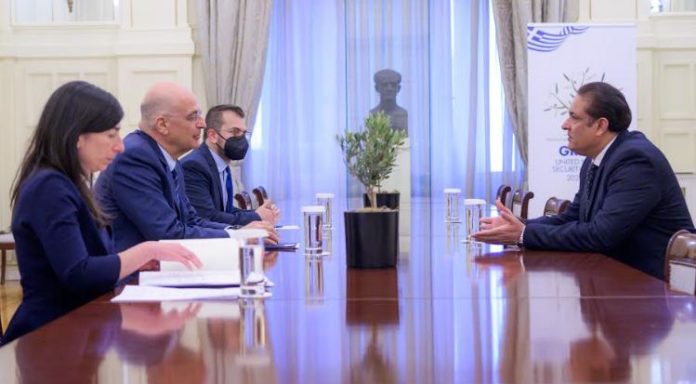
ISLAMABAD: Pakistan Ambassador to Greece Muhammad Aamar Aftab Qureshi met with the Foreign Minister of Greece Nikos Dendias. Both sides discussed matters of mutual interest and further expansion in bilateral relations. The Greek foreign Minister Mr. Dendias wished the Pakistani Ambassador a successful tenure in Greece.-DNA

Reforming Islamic jurisprudence shapes the battle to define moderate Islam

The world’s largest, most moderate Muslim civil society movement has called for abolishing the concept of a caliphate in Islamic law.

In a radical break with Islamic orthodoxy, Indonesia’s Nahdlatul Ulama, or Revival of Islamic Scholars, wants to replace the concept with notions of the nation-state and the United Nations that are non-existent in Islamic legal tradition.

The reform is one pillar of the Indonesian movement’s campaign to update or, in its words, recontextualise Islamic law, free it from obsolete or outdated concepts, and deprive militants and jihadists of the ability to employ references to the Sharia to justify their theology, extremism, and violence.

Islamic scholars from across the globe discussed the call in February at a day-long gathering in the Javan city of Surabaya.

The call was made public at a commemoration of Nahdlatul Ulama’s centennial, according to the Hijra calendar, attended by more than a million people and Indonesian President Joko Widodo.

“Nahdlatul Ulama believes it is essential to the well-being of Muslims to develop a new vision capable of replacing the long-established aspiration, rooted in Islamic jurisprudence (fiqh), of uniting Muslims throughout the world into a single universal state, or caliphate,” the group said in a declaration read out at the rally.

“It is neither feasible nor desirable to re-establish a universal caliphate that would unite Muslims throughout the world in opposition to non-Muslims. As recently demonstrated by the Islamic State in Iraq and Syria, or ISIS, attempts to do so will inevitably be disastrous and contrary to the purposes of Sharia (Islamic law): i.e., the protection of religion, human life, sound reasoning, family, and property,” the declaration went on to say.

The declaration asserted that Islam faces a choice: maintaining the obligation to create a caliphate or reforming Islamic jurisprudence so that it would “embrace a new vision and develop a new discourse regarding Islamic jurisprudence, which will prevent the political weaponization of identity; curtail the spread of communal hatred; promote solidarity and respect among the diverse peoples, cultures, and nations of the world; and foster the emergence of a truly just and harmonious world order.”

In a discussion paper distributed shortly after the conference and rally, Nahdlatul Ulama argued that “Muslims should acknowledge that a socio-political construct (or imperium) capable of operationalizing these normative views across the Muslim world no longer exists” and that “as a consequence of choosing to retain the established fiqh view and norms associated therewith it would automatically be a religious duty incumbent upon Muslims to revive the imperium. This, in turn, would necessarily entail dissolving any and all existing nation-states, under whose governance Muslims currently live.”

With its assault on the concept of a caliphate, Nahdaltul Ulama laid down a gauntlet for autocratic and authoritarian Muslim leaders by insisting that change needs to involve reform of religious jurisprudence, not just social change as enacted, for example, by Saudi Crown Prince Mohammed bin Salman and United Arab Emirates President Mohammed bin Zayed.

These reforms have enhanced women’s social rights and professional opportunities, eased restrictions on gender interaction and embraced Western-style entertainment. However, the two men anchored these changes in civil law and ignored the need to synchronise religious jurisprudence.

Anchoring the United Nations and its charter in Islamic religious law would increase the pressure on regimes in Muslim-majority countries to respect human rights.

The UN charter obliges member states to honour “fundamental human rights…the dignity and worth of the human person, (and)…the equal rights of men and women” and makes it legally binding for its Muslim signatories.

Muslim-majority states accepted that obligation when they joined the United Nations but couched their religious legitimacy in the language of Islamic jurisprudence employed by the Organisation for Islamic Cooperation (OIC) rather than the law itself. The OIC groups the world’s 57 Muslim-majority countries.

By reforming the jurisprudence, Nahdlatul Ulama would introduce guardrails for the incorporation by OIC members of Islamic law into domestic legal systems.

Muslim-majority states have used the OIC framework to monopolise the right to interpret Islamic law and bend it to their will, for example, in the justification of abuse of human rights or, in the case of countries like Saudi Arabia and the UAE, to demand on religious grounds absolute obedience of the ruler.

The OIC and some of its members have also used the organisation’s religious framing and the 1990 Cairo Declaration on Human Rights in Islam to curtail rights enshrined in the UN charter and lobby the United Nations to classify blasphemy a violation of human rights and a form of hate speech.

In its discussion paper, Nahdlatul Ulama asserted that the view that Muslims “should have a default attitude of enmity towards non-Muslims, and that infidels…should be subject to discrimination is well established within turats al-fiqh (the tradition of Islamic jurisprudence).”

An earlier Nahdlatul Ulama concept note argued that “views that legitimize and encourage suspicion, segregation, discrimination, and even hostility and conflict towards those who bear the legal status of infidels…are scattered throughout classical texts on Islamic jurisprudence (fiqh). These views…are still considered…credible…and should…be practiced to the present day. Muslim groups involved in conflict – including the use of violence and terror – defend their position by citing references from these classical fiqh texts.”

In 2019, the Indonesian movement put its money where its mouth is when 20,000 of its scholars issued a religious finding that eliminated the category of the kafir in Islamic law.

Nevertheless, notions of the kafir and the caliphate remain at the core of the Muslim world’s response to religious extremism and jihadism.

An open letter to Abu Bakr al-Baghdadi, the late leader of the Islamic State, written after he declared in 2014 a caliphate with himself as caliph, insists that “there is agreement (ittifaq) among scholars that a caliphate is an obligation upon the Ummah (Muslim community).” The letter was signed by 126 prominent Islamic scholars, including participants in the Surabaya gathering.

Among the letter’s signatories were state-aligned proponents of autocratic forms of moderate Islam.

They included Egyptian Grand Mufti Shawqi Allam; Egypt’s former grand mufti, Ali Goma, who religiously endorsed the killing on a Cairo square in 2013 of some 800 Muslim Brotherhood protesters by security forces; several members of Egypt’s state-controlled Fatwa Council; and scholars At Al Azhar, Cairo’s citadel of Islamic learning.

Also among the signatories were Abdullah Bin Bayyah, the head of the Fatwa Council of the United Arab Emirates, and one of its other members, popular American Muslim preacher Hamza Yusuf, men who do the Gulf state’s religious bidding.

For over two decades since the 9/11 Al Qaeda attacks on New York and Washington, Muslim leaders and their Western counterparts have insisted that Islam and Islamic jurisprudence need no reform. Instead, they asserted that jihadist ideology was not rooted in religious jurisprudence and misrepresented and misconstrued the faith.

Muslim autocrats and authoritarians have used that argument to squash criticism of their often brutal, repressive rule that brooks no dissent and potentially breeds violence.

Moreover, casting jihadists as deviants rather than products of problematic tenants of religious jurisprudence allowed them to project autocracy as a necessary means to combat extremism and promote a moderate Islam.

At the core of the debate about Islamic jurisprudence is a battle for the soul of Islam, involving competition for religious soft power and leadership of the Muslim world and who will define what constitutes moderate Islam.

The battle pits Nahdlatul Ulama’s concept of Humanitarian Islam, which calls for religious reform and unambiguously endorses pluralism, the United Nations Charter, and the Universal Declaration of Human Rights against an autocratic definition of moderate Islam that rejects religious and political reform but supports a formalistic, ceremonial form of inter-faith dialogue and the loosening of social restrictions long advocated by orthodox Islam.

Autocrats and their clerical surrogates ignore Nahdlatul Ulama at their peril.

The Indonesian movement is a player with an estimated 90 million followers, 18,000 religious seminaries, 44 universities, tens of thousands of Muslim scholars that constitute a religious authority independent of traditional centers in the Middle East, a five million-strong paramilitary militia, and a political party that was part of Indonesian President Widodo’s coalition government and is an influential member of Centrist Democrat International (CDI), the world’s largest alliance of political parties.

The degree to which Nahdlatul Ulama threatens proponents of an autocratic definition of moderate Islam was reflected in how prominent state-aligned Islamic scholars responded to invitations to attend the Surabaya conference.

Messrs. Bin Bayyah and Goma initially said they would attend but then backed out. Others opted for making statements on a video link but not participating in person or any of the conference’s deliberations.

Mr. Allam used his video remarks to express opposition to Nahdlatul Ulama’s proposition.

Muhammad Al-Issa, the head of the Muslim World League, Mr. Bin Salman’s vehicle for propagating his autocratic version of moderate Islam, chose to ignore Nahdlatul Ulama’s proposition in his video statement. Like Mr. Allam, Mr. Al-Issa had initially indicated that he would attend.

Theirs is a tactic that, at best, buys time for state-aligned Muslim scholars.

“The majority of the Arab and Islamic delegations at the First International Convention on Islamic Jurisprudence for a Global Civilization expressed a traditional mindset that has become outdated. For they dealt with the centenary of Nahdlatul Ulamas as if it were a carnival,” said Muhammad Abu Al-Fadl, deputy editor of Egypt’s Al Ahram newspaper, in his coverage of the Surabaya conference.

“If the leadership of religious institutions in the Arab world continues to insist on burying their heads in the sand, then Arab states may require another 100 years to absorb the Nahdlatul Ulama project in Indonesia,” Mr Abu Al-Fadl went on to say.

In the ultimate analysis, state-aligned Islamic scholars are either able to coopt the Indonesian reformers or will be forced to join the bandwagon.

So far, efforts to coopt Nahdlatul Ulama have failed.

These efforts included the Muslim World League joining Nahdlatul Ulama in hosting the November 2022 Religion Forum 20 or R20, a summit of religious leaders in Bali on the eve of the meeting of leaders of the Group of 20 (G20) that groups the world’s largest economies.

Indonesia, last year’s G20 chair, designated the R20 as an official G20 engagement party.

To be sure, Nahdlatul Ulama’s jurisprudential reform is not binding in a Muslim world where religious legal authority is decentralised.

Nevertheless, influential commentators in Saudi Arabia and Egypt echoed Nahdlatul Ulama’s call for religious reform without referencing the Indonesian group.

“All religious institutions must work to create contemporary jurisprudence… The Islamic world is waiting for (Saudi Arabia) to lead it towards contemporary jurisprudence,” said Okaz newspaper columnist and Jeddah-based lawyer Osama Al-Yamani.

Earlier, journalist Mamdouh AlMuhaini proposed top-down Martin Luther-like religious reforms that would be led by Mr. Bin Salman, even though the writer stopped short of identifying the crown prince by name.

“There are dozens, or perhaps thousands, of Luthers of Islam… As such, the question of ‘where is the Luther of Islam’ is wrong. It should instead be: Where is Islam’s Frederick the Great? The King of Prussia, who earned the title of Enlightened Despot, embraced major philosophers in Europe like Kant and Voltaire and gave them the freedom to think and carry out scientific research,” Mr AlMuhaini said.

The journalists’ comments suggest that, at the very least, Nahdlatul Ulama has laid down a marker that other Muslim religious authorities will ultimately be unable to ignore if they want recognition as proponents of a genuinely moderate Islam.

Commenting on Nahdlatul Ulama’s campaign, Mr. Abu Al-Fadl, the Al Ahram editor, asserted that Middle Eastern Islamic scholars risk missing the boat.

“The majority of Muslims look to the Arab world for guidance, and the failure of this region’s ulama (Muslim religious scholars) to keep up with the transformations taking place will lead to the rug being pulled out from under them. For the openness adopted by Nahdlatul Ulama and its new Chairman, Yahya Cholil Staquf, will not stop at one specific country or region.”

Thank you for joining me today. I hope you enjoyed the newsletter and/or podcast. Diplomats, policymakers, investors, executives, journalists and academics listen to my twice-weekly podcast and/or read my syndicated newsletter that is republished by media across the globe. Maintaining free distribution ensures that the podcast and newsletter have maximum impact Paid subscribers help me cover the monthly cost of producing the newsletter and podcast. Please consider becoming a paid subscriber. You can do so by clicking on Substack on the subscription button at www.jamesmdorsey.substack.com and choosing one of the subscription options or support me on Patreon at www.patreon.com/mideastsoccer. Please join me for my next podcast in the coming days. Thank you, take care and best wishes.

Dr. James M. Dorsey is an award-winning journalist and scholar, an Adjunct Senior Fellow at Nanyang Technological University’s S. Rajaratnam School of International Studies, and the author of the syndicated column and podcast, The Turbulent World with James M. Dorsey.

Lack of transparency in diplomatic missions

DNA

ISLAMABAD: The plight of Pakistani expatriates in Thailand and Malaysia is a cause for serious concern. Many of these individuals have been imprisoned for years due to a lack of diplomatic cooperation, while others face significant challenges due to corruption and poor policy.

Despite the presence of Pakistani diplomatic officials in both countries, little has been done to address the issues faced by Pakistani citizens. One major problem is the misuse of funds intended for the Pakistani community. The Community Welfare Fund received by the Pakistani High Commission in Kuala Lumpur and the Pakistani Embassy in Bangkok is being pocketed by diplomatic officials instead of being spent on the needs of Pakistani citizens. Additionally, the number of Pakistani diplomats in these countries is significantly lower than that of India, which has resulted in a lack of support for Pakistani expatriates.

Despite repeated complaints from Pakistani expatriates, these officials have failed to take action to address the issues faced by their fellow citizens. This stands in stark contrast to the Indian diplomatic staff in these countries, who are known for providing comprehensive support to Indian citizens. One major issue is the difficulty Pakistani citizens face in obtaining entry to Thailand and Malaysia.

Unlike Indian citizens, who receive visa-on-arrival and easy entry, Pakistani citizens are often turned away at the airport and deported back to their home country. This has resulted in significant financial losses for Pakistani citizens, as well as damage to the reputation of Pakistani passports.

Despite all of these challenges, the Pakistani High Commissioner in Kuala Lumpur and the Ambassador in Bangkok have failed to take action. They are known for their reluctance to meet with Pakistani citizens face-to-face, instead opting to listen to complaints through the e-Kachheri platform, which many villagers or non educated people find difficult to use. The situation is dire for Pakistani citizens imprisoned in Thailand and Malaysia, who suffer from a lack of access to medication and financial support.

The prisoner exchange agreement between Pakistan, Malaysia and Thailand, which is intended to facilitate the transfer of prisoners between the countries, has not been implemented. It is time for the Pakistani government to take action on behalf of its citizens in Thailand and Malaysia.

It is only through concerted effort and a commitment to transparency and accountability that the honor of Pakistani passports can be restored, and the rights of Pakistani citizens protected.

UAE’s ambitions for global sustainability

Opinion

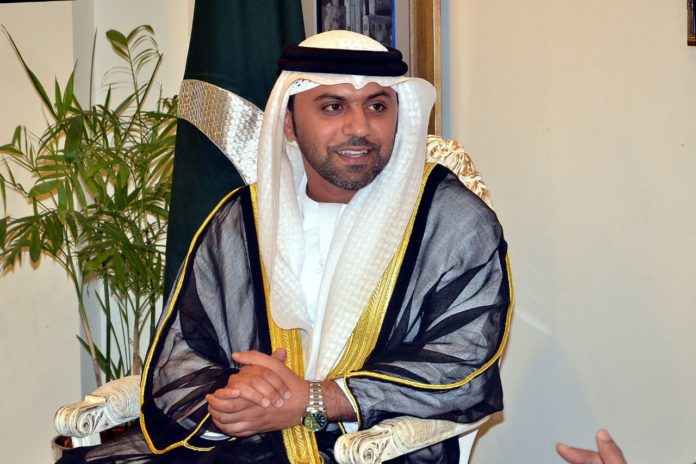
 Hamad Obaid Al Zaabi

As the UAE prepares to host the largest United Nations climate change conference, COP28, later this year, UAE President His Highness Sheikh Mohamedbin Zayed Al Nahyan recently announced 2023 as the “Year of Sustainability” to emphasize the importance of sustainability in shapinga more prosperous future.

This announcement signifies the UAE’s commitment to sustainable development and its recognition of the global climate emergency that can only be addressed through collective action. The Year of Sustainability will include a range of initiatives to reduce the UAE’s carbon footprint, increase environmental awareness, and promote sustainability in the public and private sectors.

The UAE has emerged as a global leader in sustainability in recent years as a result of its ambitious vision, strategic investments, and robust pro-climate policies. With a rapidly growing population, the UAE has recognized the need to transition to a more sustainable future and has taken bold steps to achieve this goal.

One of the key pillars of its sustainability agenda is renewable energy, as theUAE has set a target of generating 50% of its electricity from clean sources by 2050. In 2020, the UAE commissioned the world’s largest single-site solar energy project at Mohammed bin Rashid Al Maktoum Solar Parkwith a capacity of 1.2 gigawatts (GW).

Significant reforms are also underway in the transport sector, with sizeableinvestments in the country’s mass transit systems, such as the Dubai Metro. Dubai’s road and transport agency wants to see 100% electric and hydrogen-powered vehicles across the emirate’s public transport network by 2050, and around USD 160 billion is also being invested in a range of ambitious schemes aimed at achieving carbon neutrality through the UAE’s Net Zero by 2050 Strategic Initiative.

In addition to its domestic efforts, the UAE has also emerged as a leader in global sustainability initiatives. The country is a signatory to the Paris Agreement on climate change and has pledged to reduce its greenhouse gas emissions by 23.5% by 2030. The UAE also hosts the International Renewable Energy Agency (IRENA) and has convened several important international conferences on sustainability, including the World Future Energy Summit and Abu Dhabi Sustainability Week.

The UAE’s sustainability efforts have received widespread global recognition. In 2021, the UAE was ranked first in the Middle East and North Africa region in the Global Green Economy Index.

The UAE’s commitment to sustainability is a model for other countries to follow, and the Year of Sustainability will be a turning point for the country and for the world as the UAE demonstrates that sustainability is not only achievable, but essential for our future.

As we look ahead to COP28 and beyond, the UAE and Islamic Republic of Pakistan canadvanceregional and global cooperation through collective efforts to create a more sustainable, equitable and prosperous future for all, especially for the most vulnerable countries onthe Climate Risk Index.

In conclusion, the UAE’s role in sustainability is an inspiring example of what can be achieved when a nation prioritizes sustainable development through its investments in renewable energy, water conservation, and global initiatives. As the world confronts the urgent challenges of climate change and environmental degradation, the UAE’s leadership in sustainability is more important than ever.

The writer is the Ambassador of United Arabs Emirates to Pakistan

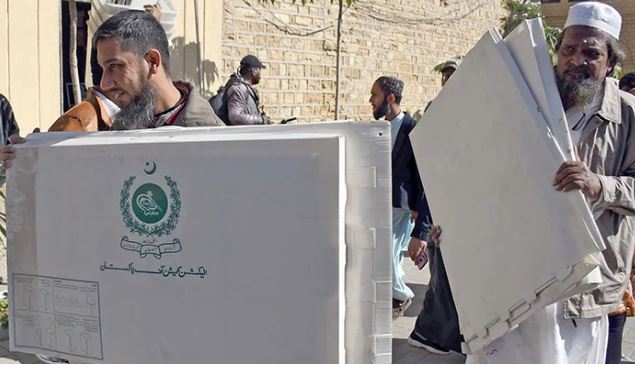
After Punjab, KP elections to be held on October 8: ECP

ISLAMABAD: The Election Commission of Pakistan (ECP) Wednesday night announced that the polls in Khyber Pakhtunkhwa would be held on October 30 — the same date as Punjab’s polls.

In a notification, the polling authority said: “…the Election Commission of Pakistan notifies 8 October, 2023 as poll date for the General Elections to the Provincial Assembly of Khyber Pakhtunkhwa. The Election Programme for election under Section 57(2) of the Elections Act, 2017 will be issued in due course of time.

KP Governor had earlier proposed May 28 as the date for the polls, but later, citing security concerns, he asked the election commission to stage the polls on October 8.

The development will not sit well with the Pakistan Tehreek-e-Insaf (PTI) as it has already opposed the delay of Punjab polls, while the federal government welcomed the postponement.

President Arif Alvi had given the date of April 30 after orders from the Supreme Court. However, on March 22, the ECP postponed the upcoming elections citing security reasons as the major cause behind the change of plan.

Amid the setback, PTI — which had dissolved both assemblies in January for holding early elections — moved the Supreme Court and the case is being heard by a five-member bench, including Chief Justice of Pakistan Umar Ata Bandial.

The ECP’s decision to withdraw the earlier announcement for Punjab elections came after security and financial bodies refused to back the commission during the upcoming polls.

‘Beauty of democracy’
The PTI claims that the government is running away from elections as it fears defeat, but the ruling Pakistan Democratic Movement (PDM) has denied the claim, saying it is always ready to contest polls.

PTI Chairman Imran Khan repeatedly alleged that key government figures were involved in the attempted assassination bid on his life and claimed that they were resorting to the measures to clear the way for elections.

“What is happening is that the government is petrified of elections. They’re scared that we’re going to win the elections. Therefore, they are trying everything to get me out of the way,” he said in an interview.

However, regarding the delay in the polls, Prime Minister Shehbaz Sharif justified the electoral body’s move by saying that the decision has been taken keeping in view the resurgence of terrorism in the country.

“No political party can run away from the elections, as polls are the beauty of a democracy,” he told a joint sitting of the parliament earlier this week.

The issue
In November last year, the PTI chairman had announced the dissolution of KP and Punjab assemblies, and after much back-and-forth, the legislatures were dissolved in January — Punjab on Jan 14 and KP on Jan 18.

Then came the step of announcing election dates and governors from both provinces were reluctant to issue dates until the Supreme Court’s order on March 1 — directing President Arif Alvi to announce a date for Punjab polls and Ali for KP.

Following the announcements of dates, the ECP held consultations with provincial and federal authorities, and it did not receive a welcoming response, as the authorities declined to back the electoral watchdog.

Citing its responsibility towards ensuring fair elections in the country, the election organising authority, in a notification, recounted its various endeavours in trying to ensure that the commission carried out its responsibilities diligently.

Stay Connected

64FansLike
60FollowersFollow

Latest Reviews

Exchange Rates

USD - United States Dollar
EUR
1.17
GBP
1.35
AUD
0.67
CAD
0.73