Home Blog Page 1199

Shaheen back in Pakistan squad for white-ball series against New Zealand

KARACHI, APR 4: The Pakistan Cricket Board (PCB) on Tuesday announced the Twenty20 International (T20I) and One-Day International (ODI) squads for the home series against West Indies, set to commence on April 14, with pace ace Shaheen Shah Afridi set to return to international cricket after a gap of four months.

In a press release, the cricketing board said that Shaheen had missed five Tests and three ODIs after the T20 World Cup in November last year as he was completing rehabilitation for a knee injury he had sustained in July.

The PCB noted that Shaheen had “staged a remarkable comeback” in the recently concluded Pakistan Super League, leading his team Lahore Qalanders to become the first side to successfully defend the title.

“Apart from Shaheen, also returning to both squads are skipper Babar Azam, Fakhar Zaman, Haris Rauf, and Mohammad Rizwan. All these players had rested for last month’s T20I series against Afghanistan in Sharjah,” the cricketing board said.

This means Babar will resume his normal services as captain in the ODI and T20I series against New Zealand, while Shadab will return to his original position as vice captain, the PCB said.

“Three young guns — Ihsanullah, Saim Ayub, and Zaman Khan — have been retained in the T20I squad following stellar performances in Sharjah, while Ihsanullah has also been added to the ODI squad for the first time in his career,” the statement added.

The squad will assemble in Lahore on April 6 while the training camp will commence the next day (April 7).

Squads
T20I: Babar Azam (captain), Shadab Khan (vice-captain), Faheem Ashraf, Fakhar Zaman, Haris Rauf, Iftikhar Ahmed, Ihsanullah, Imad Wasim, Mohammad Haris, Mohammad Nawaz, Mohammad Rizwan, Naseem Shah, Saim Ayub, Shaheen Shah Afridi, Shan Masood, and Zaman Khan

ODI: Babar Azam (captain), Shadab Khan (vice-captain), Abdullah Shafique, Fakhar Zaman, Haris Rauf, Haris Sohail, Ihsanullah, Imam-ul-Haq, Mohammad Nawaz, Mohammad Rizwan, Mohammad Wasim Jnr, Naseem Shah, Salman Ali Agha, Shaheen Shah Afridi, Shan Masood, and Usama Mir.

Reserves: Abbas Afridi, Abrar Ahmed, and Tayyab Tahir

Series schedule

14 April — 1st T20I, Lahore
15 April — 2nd T20I, Lahore
17 April — 3rd T20I, Lahore
20 April — 4th T20I, Rawalpindi
24 April — 5th T20I, Rawalpindi
27 April — 1st ODI, Rawalpindi
29 April — 2nd ODI, Rawalpindi
3 May — 3rd ODI, Karachi
5 May — 4th ODI, Karachi
7 May — 5th ODI, Karachi

CDA has given last deadline to remove showrooms being operated illegally in Islamabad

DNA

ISLAMABAD, APR 4: The Capital Development Authority has given a final deadline of April 20, 2023, for the removal of illegal showrooms in Islamabad.

In case of non. compliance, the lease of the property will be cancelled. If the illegal showrooms are not removed within the given deadline, the property will be sealed. Apart from this, heavy fines will also be imposed on those who are operating showrooms illegally in the city.

It is pertinent to mention here that during a recent survey carried out by Capital Development Authority, it was revealed that illegal showrooms are being operated in many properties in Islamabad. These showrooms not only affect other business activities but also diturb the pedestrian movement and traffic flow.Similarly, due to these showrooms, people coming to business centres also face parking problems.

WB cuts Pakistan’s GDP forecast on rising rates, limited fiscal space

The World Bank sharply lowered Pakistan’s current-year growth forecast, saying the country’s economic growth prospects have weakened due to tighter financial conditions and limited fiscal space.

The World Bank now expects Pakistan’s economy to grow 0.4% in the current year, from its October forecast of 2% growth. The bleaker forecast assumes an agreement is reached with the International Monetary Fund for bailout funds, it said.

Pakistan’s fiscal year starts in July and runs through June. Pakistan expects its economy to grow 2% in FY23, however, the country’s central bank chief said in January the growth forecast could face downward pressure.

The South Asian nation has been in economic turmoil for months with an acute balance of payments crisis while talks with the IMF to secure $1.1 billion in funding as part of a $6.5 billion bailout agreed upon in 2019 have not yet yielded fruit.

Lower economic output and high prices in Pakistan have led to stampedes and looting at flour distribution centres set up across the country.

“Elevated global and domestic food prices are contributing to greater food insecurity for South Asia’s poor who spend a larger share of income on food,” the bank said.

The World Bank lowered its 2023 regional growth forecast to 5.6% from 6.1% in October.

“Rising interest rates and uncertainty in financial markets are putting downward pressure on the region’s economies,” the report said.

Most countries have raised interest rates at a rapid pace since the war in Ukraine last year led to choking supply chains and stoked inflation globally.

The World Bank forecast Sri Lanka’s economy will contract by 4.3% this year, reflecting the lasting impact of the macro debt crisis, with future growth prospects heavily dependent on debt restructuring and structural reforms.

Sri Lanka follows the calendar year. In January, President Ranil Wickremesinghe said Sri Lanka’s economy could contract by 3.5% or 4.0% in 2023 after shrinking by 11% last year.

Inflation in South Asia is set to fall to 8.9% this year, and to below 7% in 2024, the World Bank said.

The World Bank also lowered its forecast for India’s economic growth in the current fiscal year that started on April 1 to 6.3% from 6.6% as it expects higher borrowing costs to hurt consumption.

Federal cabinet rejects top court’s verdict in election delay case

ISLAMABAD: The federal cabinet Tuesday rejected the Supreme Court’s “unanimous verdict” on the case pertaining to the postponement of election in Punjab and Khyber Pakhtunkhwa (KP), sources told Geo News.

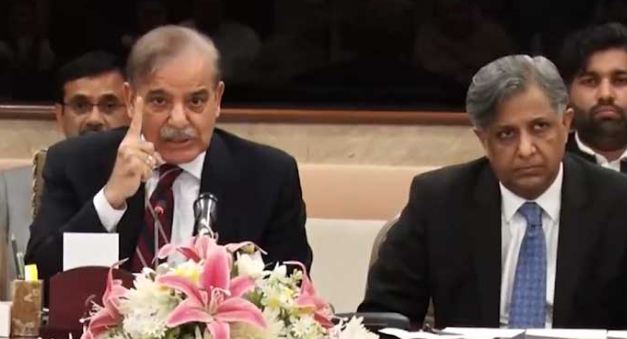
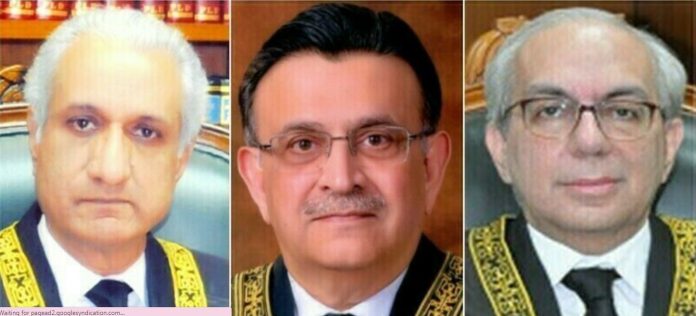
The development came during the cabinet’s meeting, chaired by Prime Minister Shehbaz Sharif, held after a three-member bench — headed by Chief Justice Umar Ata Bandial and comprising Justice Ijaz Ul Ahsan and Justice Munib Akhtar as members — announced the apex court’s verdict on the matter which it had reserved a day earlier.

Announcing the verdict on a plea filed by the Pakistan Tehreek-e-Insaf (PTI), the country’s top court declared the Election Commission of Pakistan’s (ECP) decision to postpone polls in Punjab and KP from April 30 to October 8 as ‘null and void’.

The Supreme Court, in its verdict, states that the ECP’s order dated March 22, 2023, is declared to be unconstitutional, without lawful authority or jurisdiction, void ab-initio, of no legal effect, and is hereby quashed.

“The Supreme Court’s decision is a minority verdict, which is why the cabinet rejects it,” the sources in the federal cabinet said.

The top court’s decision, as per the sources, is not enforceable.

The government would raise its voice in parliament regarding the verdict, the sources added. It was also decided in the meeting that the coalition parties in power will talk about the apex court’s decision in parliament, they added.

In the meeting, the cabinet decided to present its position on the verdict.

‘Last blow of conspiracy’
Commenting on the SC decision, Pakistan Muslim League Nawaz (PML-N) Senior Vice-President and Chief Organiser Maryam Nawaz took to her Twitter and wrote that today’s verdict is the last blow of the conspiracy which began by “rewriting the Constitution and presenting the Punjab government on a plate” to the bench’s blue-eyed boy, Khan.

Maryam termed the three-member bench as “Khan’s facilitators” and said that this was done so he could be reselected under their presence and supervision.

“This bench has taken responsibility for the work done by [Lt Gen] Faiz [Hamid], [ex-CJP Asif Saeed] Khosa and Saqib Nisar in 2018. A majority of the Supreme Court revolted against this appalling and brazen facilitation and one-man show,” the PML-N scion tweeted, stressing that it is now time for the parliament to stop this facilitation using its “constitutional and legal hands”.

She further stated that it is not enough for the federal cabinet to reject the verdict. The PML-N politician wrote that those who tried to impose the “favourite” by defying the Constitution and law should be brought to the rostrum.

SBP increases interest rate by 100 bps to 21%

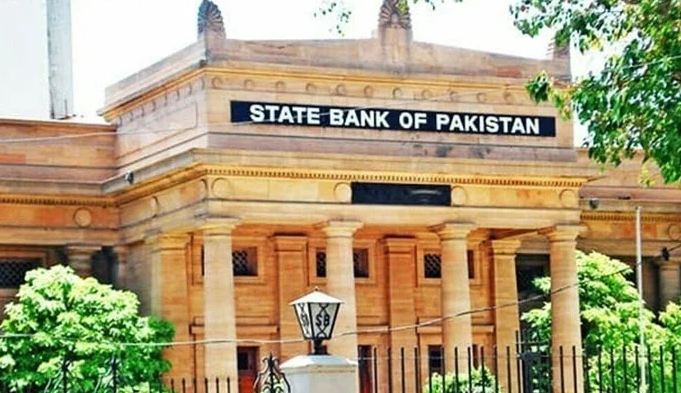
ISLAMABAD, Apr 04 (DNA): State Bank of Pakistan (SBP) on Tuesday
increased the interest rate by 100 basis points (bps) to 21 per cent, an
all-time high in the country in order to arrest ballooning inflation.

According to a private news channel, the SBP in its Monetary Policy
Statement issued here on Tuesday, at its meeting held on 4th April 2023,
the Monetary Policy Committee (MPC) decided to increase the policy rate
by 100 basis points to 21 per cent.

The MPC noted that inflation in March 2023 rose further to 35.4 per
cent, and is expected to remain high in the near term. However, there
are early indications of inflation expectations plateauing, albeit at an
elevated level. The MPC views today’s decision as an important step
towards anchoring inflation expectations around the medium-term target,
which is critical for achieving the objective of price stability. The
Committee further observed that Pakistan’s financial sector remains
broadly resilient, while economic activity continues to moderate.

Since the last meeting, the Committee noted three important developments
having implications for the macroeconomic outlook. First, the current
account deficit has narrowed considerably, more than previously
anticipated, mainly on the back of sizable import containment.
Nonetheless, the overall balance of payments position continues to
remain under stress, with foreign exchange reserves still at low levels.
Second, significant progress has been made towards the completion of the
9th review under the IMF’s EFF program.

Third, recent strains in the global banking system have led to further
tightening of global liquidity and financial conditions. These have
added to the difficulties of emerging market economies like Pakistan to
access international capital markets.

In this context, the MPC considers the current monetary policy stance
appropriate and stresses that today’s decision, along with previous
accumulated monetary tightening, will help achieve the medium-term
inflation target over the next 8 quarters. However, the Committee noted
that uncertainties attached with the global financial conditions as well
as the domestic political situation, pose risks to this assessment.

The MPC noted that the incoming data on economic activity continues to
reflect a broad-based slowdown. In particular, there has been a
significant decline in sales volumes of automobiles and POL in recent
months. Similarly, the contraction in large-scale manufacturing (LSM)
accelerated in January to 7.9 per cent y/y. Cumulatively, LSM output is
down by 4.4 per cent during Jul-Jan FY23 when compared with the
corresponding period of last year. Reflecting these trends, electricity
generation declined for the ninth consecutive month in February. In
agriculture, the information on cotton arrivals remains as per
expectation; however, the wheat production target is likely to be
missed. These developments, combined with the lagged impact of the
recent monetary tightening and new fiscal consolidation measures
implemented since the beginning of March, suggest growth in FY23 will be
significantly lower than the post-floods assessment of November 2022.

In February 2023, the current account saw a deficit of only $74 million
and the cumulative deficit now stands at $3.9 billion in Jul-Feb FY23,
about 68 per cent lower than the same period last year. This mainly
reflects the contraction in imports, which continues to outweigh the
combined decline in remittances and exports. Importantly, workers’
remittances have slightly recovered on an m/m basis in February and the
momentum is expected to continue in the coming months. However, despite
the lower current account deficit, higher loan repayments relative to
disbursements are keeping the foreign exchange reserves under pressure.
Thus, the Committee reemphasized that the early conclusion of the 9th
review under the IMF program is critical to rebuilding the FX reserve
buffers.

The MPC views that the fiscal outcomes during Jul-Jan FY23 have been
encouraging in the context of achieving macroeconomic stability. The
fiscal deficit was contained to 2.3 per cent of GDP during Jul-Jan FY23
compared to 2.8 per cent in the same period last year, while the primary
balance posted a surplus of 1.1 per cent of GDP against a deficit of 0.3
per cent last year. This improvement in the primary balance was achieved
on the back of lower subsidies, grants and development spending. Growth
in tax revenues, however, has remained below target, amidst a slowdown
in economic activity, reduction in imports and inadequate policy focus
on expanding the tax net, while debt servicing has increased. In this
context, the Committee noted that delivering the envisaged fiscal
consolidation is important to complement the ongoing monetary tightening
in order to achieve price stability.

Broad money growth showed a slight uptick in February, primarily due to
a significant expansion in net domestic assets of the banking system.
This was largely on account of higher public sector borrowing as growth
in private sector credit decelerated sharply to 11.1 per cent in
February 2023 from 18.6 per cent in February 2022. On a monthly basis,
private sector credit recorded a contraction for the second consecutive
month in February. This contraction was due to retirement in fixed
investment and consumer loans, while working capital loans saw a
marginal seasonal uptick during the month.

Shooting missiles, starving people, seeking luxuries: North Korea dear leader!!

North Korea had spent about $200 million on 70 times missile provocations in 2020. This expenditure can purchase 500,000 tons of rice which are afford to support the whole NK population for 45 Days.

Despite the chronic food shortage, with Kim Jong-Un having emphasized this year’s grain production as a matter of ‘serious national dignity’ at the 7th enlarged plenary meeting of worker’s party, the Kims luxurious life continues.

North Korean Central News Agency reported on 17th March of Kim Jong-Un and his daughter Kim Ju-Ae observing the test lauuch of the Hwasong-17 ICBM.

The coat worn by Kim Ju-Ae at that time was identified as Kid’s Hooded Down Jacket by Christian Dior, a luxurious brand that costs more than $1,900.

Meanwhile, according to the North Korean trade officer in Southwest Asia, Kim Jong-un, in violation of UN sanctions against NK, is known to enjoy leisure sports by purchasing Jet-Skis(SeaDoo) worth more than $40,000 per unit.

United Nations Food & Agriculture Organization(FAO) recently re-designated North Korea as a food-deficit country in need of external aid.

A report to the UNHCR on 9th March, by Elizabeth Salmon, Special Rapporteur on the human rights in the DPRK, shows that 42% of the North Korea population is suffering from malnutrition.

Six-judge SC bench overturns Justice Isa’s ruling on suo motu powers

ISLAMABAD, Apr 4 (DNA): A six-judge larger bench of Supreme Court has
overturned Justice Qazi Faez Isa’s ruling about powers of the chief
justice of Pakistan regarding suo motu notices and formation of benches.

The six-member bench was formed only hours before it conducted its first
hearing and shot down Justice Isa’s verdict without wasting any time,
saying the detailed judgement will be released later.

The larger bench was led by Justice Ijazul Ahsan, and comprised of
Justice Muneeb Akhtar, Justice Mazahir Naqvi, Justice Muhammad Ali
Mazhar and Justice Ayesha Malik.

On March 29, a three-member bench comprising Justice Qazi Faez Isa,
Justice Aminuddin Khan and Justice Shahid Waheed had issued a majority
verdict of 2-1, ordering the postponement of cases being heard under
Article 184(3) of the Constitution till the amendments made to Supreme
Court Rules 1980 regarding the discretionary powers enjoyed by the Chief
Justice of Pakistan to form benches.

The bench had issued the ruling in a suo motu case regarding the grant
of 20 marks to Hafiz-e-Quran while seeking admission to MBBS/BDS degree.
Justice Waheed wrote a dissenting note against the order, saying the
points raised and discussed in the order were not relevant to the case.

The court further held that neither the Constitution nor the rules
granted to the chief justice or the registrar, the power to make special
benches, select judges who will be on other benches and decide the cases
that they will hear.

On March 31, Chief Justice of Pakistan Umar Ata Bandial set aside the
observations made by the three-member bench and SC Registrar Ishrat Ali
had issued a circular, stating: “With respect to the said order the HCJ
has been pleased to observe as under:- The observations made in paras 11
to 22 and 26 to 28 of the majority judgment of two to one travel beyond
the list before the Court and invokes its suo motu jurisdiction”.

“The unilateral assumption of judicial power in such a manner violates
the rule laid down by a 5 Member judgment or this Court reported as
Enforcement of Fundamental Rights with regard to Independence of
Press/Media (PLD 2022 SC 306).”

“Such power is to be invoked by the Chief Justice on the recommendation
of an Hon’ble Judge or a learned Bench of the Court on the basis of
criteria laid down in Article 184(3) of the Constitution,” reads the
circular. It added that the three-judge bench’s majority judgment
“therefore disregards binding law laid down by a larger bench of the
Court”.

“Any observation made in the said judgment, inter alia, for the fixation
or otherwise of cases is to be disregarded. Accordingly, a circular be
issued by the Registrar slating the foregoing legal position for the
information of all concerned,” it concluded.

On April 3, the federal cabinet approved the withdrawal of the services
of Registrar Supreme Court Ishrat Ali in its special sitting. Secretary
Establishment division also issued a notification in this regard.

The development comes after Justice Isa challenged the authority of the
registrar of the apex court who, he said, had no right to annul a
judicial order.

In a letter written to the registrar of the Supreme Court, Justice Isa
said the chief justice of Pakistan also could not issue any
administrative order against a judicial order, and that the registrar’s
circular of March 31 was a violation of the judgement of the
three-member bench of the Supreme Court.

Justice Isa further wrote that the registrar should be aware of his
constitutional responsibility as a senior officer, and that if he knew
that the case in question was heard under suo motu No 4/2022 Article
184/3, he should not have issued the circular. He also advised Registrar
Ishrat Ali to leave the charge of the post.

SC fixes May 14 as new Punjab poll date

Three-member bench headed by CJP Bandial announces verdict, directs federal govt to issue funds for polls.

ISLAMABAD, APR 4: The Supreme Court ruled on Tuesday that the Election Commission of Pakistan’s (ECP) decision to postpone polls to the Punjab Assembly till Oct 8 was “unconstitutional” and fixed May 14 as the date for polls in the province.

“The impugned order dated 22.03.2023 made by the Election Commission of Pakistan is declared to be unconstitutional, without lawful authority or jurisdiction, void ab-initio, of no legal effect and is hereby quashed,” the ruling said. “Neither the Constitution nor the law empowers the Commission to extend the date of elections beyond the 90 days period as provided in Article 224(2) of the Constitution.”

The ECP had on March 22 announced that the elections in Punjab would be held on October 8. The date was earlier set on April 30, in consultation with the president.

The reserved verdict was issued today by a three-member bench headed by Chief Justice of Pakistan (CJP) Umar Ata Bandial and comprising Justice Munib Akhtar and Justice Ijazul Ahsan.

In the written verdict, a copy of which is available with Dawn.com, the top court restored the election schedule issued by the ECP on March 8 with certain modifications.

The changes made by the court in the election programme are:

The last date for filing appeals against decision of the returning officer rejecting/accepting the nomination papers is April 10
The last date for deciding on appeals by the Appellate Tribunal is April 17
The revised list of candidates will be published on April 18
April 19 will be the last date for the withdrawal of candidature and publication of the revised list of candidates
Electoral symbols will be allotted to contesting candidates on April 20
Polling will be held on May 14
The court noted that during the course of hearings, the ECP had categorically stated that if it was provided with necessary aid and assistance by the executive authorities in the provinces and Centre, then the commission would be able to organise and conduct the general elections to the Punjab and Khyber Pakhtunkhwa (KP) assemblies honestly, justly and fairly.

Keeping this in view, the court directed the federal government to release election funds worth Rs21 billion to the ECP by April 10 for elections to the assemblies of Punjab and KP.

“The Commission shall, by April 11, file a report in the court stating whether the said funds have been provided and received and if so, whether in full or in part. The report shall be placed before the members of the bench for consideration in chambers.

“If the funds have not been provided or there is a shortfall, as the case may be, the court may make such orders and give such directions as are deemed appropriate to such person or authority as necessary in this regard,” the SC order said.

It directed the ECP to utilise the funds for elections to the Punjab Assembly in the first instance and added that if there was a shortfall in funds for polls in KP later, the ECP “may make an appropriate representation to this court for such consideration and orders as deemed appropriate”.

The court also instructed the Punjab caretaker government, inspector general and chief secretary (security) to provide the electoral body with a security plan by April 10.

“Furthermore, in any case, the Government of Punjab and all officials thereof must, in the discharge of constitutional and legal duties and responsibilities, proactively provide all aid and assistance to the Commission for the holding and conduct of the general election,” the apex court verdict said.

It went on to say that the federal government, in the discharge of its constitutional duties, was bound to provide aid and assistance to the ECP as required by it for holding elections in Punjab and KP.

“Without prejudice to the generality of the foregoing, the federal government must make available all necessary personnel, whether from the Armed Forces, Rangers, Frontier Constabulary and all other forces under the direct, indirect or ultimate command and control of the said Government, as are required by the Commission for security and other purposes related to the general elections.”

In this regard, the federal government should provide a plan to the ECP by April 17, the SC stated.

It warned that if the Centre or the Punjab caretaker government failed to provide aid and assistance to the ECP, the commission could approach the court and an appropriate order would be passed on the matter.

Referring to elections in KP, the SC recalled that the counsel of the KP governor had withdrawn from appearance in court “on account of a certain stand taken by a political party which learned counsel was also representing”.

“The Governor, KP province, therefore, ceased to have representation before the court,” it maintained, pointing out that the matter on elections in KP was not adjudicated upon. “Permission is granted to the petitioners to file such petition and/or seek such relief before such forum as is deemed appropriate.”

The top court also mentioned its March 1 verdict in today’s order. In a 3-2 order last month, the SC had ruled that elections in KP and Punjab should be held within 90 days.

However, the government had disputed the court directions, calling the verdict 4-3 instead after Justice Jamal Khan Mandokhail and Justice Syed Mansoor Ali Shah — who were among the four judges who had written additional notes — raised objections on the constitution of the bench as well as the invocation of the apex court’s suo motu jurisdiction by the chief justice.

In its verdict today, the court said: “Respectfully, the position as claimed by the learned Judges in minority is erroneous and not sustainable in law.”

The SC further maintained that the March 29 judgement issued by Justice Qazi Faez Isa and Justice Aminuddin Khan did not have any effect on any observations made in today’s order.

In the 12-page order, the judges had called for the postponement of suo motu matters until amendments were made to Supreme Court Rules 1980 regarding the country’s top judge’s discretionary powers to form benches.

The SC’s much-anticipated decision on the PTI petition was announced by the top judge in Court Room 1 where coalition leaders, journalists and lawyers were in attendance. Outside the apex court’s building, heavy security was deployed with a large contingent of police guarding the main entrance.

Political crisis will further aggravate: law minister
In a press conference shortly after the verdict was announced, Law Minister Azam Nazir Tarar lamented the ruling and said the SC should have made a decision with “collective wisdom”. “The full court should have heard the case,” he added.

Law Minister Azam Nazir Tarar addresses a press conference in Islamabad on Tuesday. — DawnNewsTV
The minister foresaw that the “current political situation and crisis will further aggravate”.

He said ECP lawyers and other stakeholders had argued that the court should first decide on the March 1 verdict — which was “rejected 4-3 […] a full court should have cleared this confusion.”

He said the cabinet would discuss the matter in its meeting today.

Earlier today, Interior Minister Rana Sanaullah had said that elections should be held in the country simultaneously, adding that separate polls to provincial assemblies will only create anarchy, chaos and further political crises.

PTI calls verdict a ‘watershed moment’
Meanwhile, PTI vice-chairperson Shah Mahmood Qureshi congratulated the nation and said: “Today, the Supreme Court has buried the doctrine of necessity, restored the sanctity of the Constitution and buried all those conspiratorial forces that were creating hurdles in the way of democracy and a democratic and constitutional system in this country.”

PTI’s Shah Mahmood Qureshi and Barrister Ali Zafar talk to media persons outside SC on Tuesday. — DawnNewsTV
Speaking to the media outside the SC, he said today was a very important day in Pakistan’s political history. “I will call it a watershed moment,” he added.

Qureshi further said that today a clear distinction was made between democratic and constitutional forces and unconstitutional forces.

The PTI leader went on to say that the chief election commissioner was also now free to hold elections. “His hands that were bound are free now … He used to speak of [a lack of] resources and security personnel, but all of that is available now.

“The Supreme Court has freed them of all pressures and told them that it is their constitutional responsibility to hold free, fair and credible elections. They should fulfil their constitutional responsibility now,” he added.

Separately, PTI’s Fawad Chaudhry praised the CJP for the order, calling him a “people’s chief justice”.

“Very few people have the privilege to get the amount of respect that has come towards Justice Bandial and his fellow judges today,” he said.

‘SC has solved the lesser of the crises it is in’
Speaking to Dawn.com, legal expert Barrister Asad Rahim said that despite extraordinary pressure, the SC had done its duty to the law and Constitution, and singlehandedly kept democracy alive.

“It is a good day for the rule of law, and for Pakistan as a federation,” he said, adding that it now fell on the state – and the people – to make sure the judgment was enforced.

Lawyer Abdul Moiz Jaferii told Dawn.com that by declaring the ECP decision to delay polls till October illegal, the Supreme Court has “solved only the lesser of the crises it was involved in”.

“The greater crisis is of the court’s own making, and the CJP’s failure to build consensus amongst his colleagues leaves it unresolved. It is this failure to form a full court and exhibit a united front which has allowed for the government to issue the threats it has subtly conveyed over the weekend. These threats will only get louder now that the expected decision has been announced.”

He added that the government has repeatedly attempted to argue that the scheme of the Constitution requires the federal and provincial elections to be held concurrently.

“This is rooted in the government finding this politically expedient rather than any consistent respect for the constitutional rule as their commentary about the Supreme Court bench reflects,” Jaferii said.

“As they are facing a likely defeat due to Imran Khan’s surging popularity; it is likely that they will try their best to delay the implementation of this order through a steady drip of creative excuse-making,” the lawyer added.

Lawyer Basil Nabi Malik said doing the right thing the wrong way did not resolve issues, it only created new ones. “And that is precisely what this decision has done.”

Barrister Rida Hosain said that against all the odds, the Constitution had prevailed in Pakistan today.

“A simple but crucial constitutional command has been unequivocally enforced. The order of the ECP altering the date of the elections to 8 October has been declared unconstitutional and without lawful authority by the Supreme Court.

“The government raised arguments about lack of funds and the security situation in the country to justify the delay in the elections. These arguments were rejected by the Court and along with it the doctrine of necessity remains in the history books where it belongs,” she told Dawn.com.

Hosain said that in a country that had seen persistent interference in the democratic process, it was about time that the process was allowed to continue and flourish.

“This time, the Court has not left it to the ECP and the President to come up with it a date. It has given one: 14 May 2023,” the lawyer added.

Diminished bench
The hearings in the case, which lasted over a week, witnessed high drama after two judges of the original five-member bench — Justices Aminuddin Khan and Jamal Khan Mandokhail — recused themselves from hearing the case, laying bare the cracks within the SC.

Thereafter, the bench was reconstituted with the remaining judges: CJP Bandial, Justice Ahsan and Justice Akhtar.

However, the coalition government — which had been demanding a full court to hear the case — raised reservations on the bench. In a National Assembly meeting yesterday, Prime Minister Shehbaz Sharif categorically said the ruling coalition had no confidence in the three-member SC bench.

Law Minister Azam Nazir Tarar had also called on the top court judge to “get your hours in order”.

Last week, parties in the coalition government issued a joint statement which said that “a complete distrust had been shown in the three-member bench of the SC comprising CJP Bandial, Justice Ijaz-ul-Ahsan and Justice Munib Akhtar”.

“The huddle demands wrapping up [of] the three-member bench’s proceedings regarding the delay in elections to the Punjab Assembly forthwith,” it had said.

It had pointed out that there had been a “clear division in the SC, therefore it should refrain from issuing controversial political decisions”.

Earlier this month, the government also moved the Supreme Court (Practice and Procedure) Bill 2023 to the National Assembly and Senate. The proposed law aims to deprive the office of the CJP of powers to take suo motu notice in an individual capacity. While both houses have passed the bill, it is yet to be approved by the president.

Debate over election date order
During the proceedings, a debate was also held on the SC’s March 1 verdict regarding elections in Khyber Pakhtunkhwa and Punjab.

The apex court, had in a 3-2 verdict, ruled on March 1 that elections in Khyber Pakhtunkhwa and Punjab — both of which have been under caretaker governments since the provincial assemblies were dissolved in January — should be held within 90 days.

The government, however, had disputed with the court directions, calling the verdict 4-3 instead after Justice Jamal Khan Mandokhail and Justice Syed Mansoor Ali Shah — who were among the four judges who had written additional notes in the Feb 23 order — raised objections on the constitution of the bench as well as the invocation of the apex court’s suo motu jurisdiction by the chief justice.

Arguments over this contention were made by Attorney General for Pakistan (AGP) Mansoor Awan during the hearing. However, the CJP brushed aside the 4-3 controversy and said nobody had recused from the nine-judge bench, besides all judges had requested him to reconstitute the bench.

The CJP had also rubbished the concept of order of the day in case of dissenting judgement by asking the AGP to come up with any law requiring the issuance of an order of the court.

PTI petition
PTI’s petition, moved by party’s Secretary General Asad Umar, former Punjab Asse­m­bly speaker Mohammad Sib­tain Khan, former Khy­ber Pakhtunkhwa Assembly Speaker Mushtaq Ahmad Ghani and ex-lawmakers of Punjab Abdul Rehman and Mian Mahmoodur Rashid, pleaded that the ECP’s decision violated the Constitution and tantamount to amending and subverting it.

In the petition, PTI had sought directions for the federal government to ensure law and order, provisions of funds and security personnel as per the ECP’s need to hold the elections.

It also requested the court to direct the Khyber Pakhtunkhwa governor to announce the date for elections to the provincial assembly. Last week, KP Governor Ghulam Ali also proposed Oct 8 as the date for elections in the province. Earlier, he had announced May 28 as the date for polls.

The PTI questioned the ECP’s authority to “amend the Constitution” and asked how it could decide to delay elections to any assembly beyond the period of 90 days from the date of dissolution of the said assembly as mandated by the Constitution.

The petition argued that the ECP was bound to obey and implement the judgments of the Supreme Court and had no power or jurisdiction to overrule or review them.

In its March 1 verdict, the Supreme Court ordered to hold the election to the Punjab Assembly within 90 days and that the date be announced by the president. It also directed the authorities to provide funds and security personnel to ECP for the elections, the petition recalled.

The ECP cannot act in defiance of the Supreme Court’s directions as it has done in this case which was illegal and liable to be set aside, the petition pleaded. By announcing Oct 8 as the date, the ECP has delayed the elections for more than 183 days beyond the 90-day limit as prescribed in the Constitution.

The petition said that if the excuse of unavailability of security personnel was accepted this time, it would set a precedent to delay any future elections.

The petition added that there was no assurance that these factors — financial constraints, security situation and non-availability of security personnel — would improve by Oct 8.

The “so-called excuse” would mean the Constitution could be held in abeyance every time elections were due, the petitioners feared adding that in the past similar situations have persisted, but elections were held despite them.

These situations can’t be used as excuses to “subvert” the Constitution and deny people their right to elect representatives.

“Not holding elections in case of threats by terrorists will amount to giving in to the threats, which is in fact the aim of all terrorist activities,” the petition explained.


ICCI asks Minister of State for NHSRC to help address issues of pharma industry

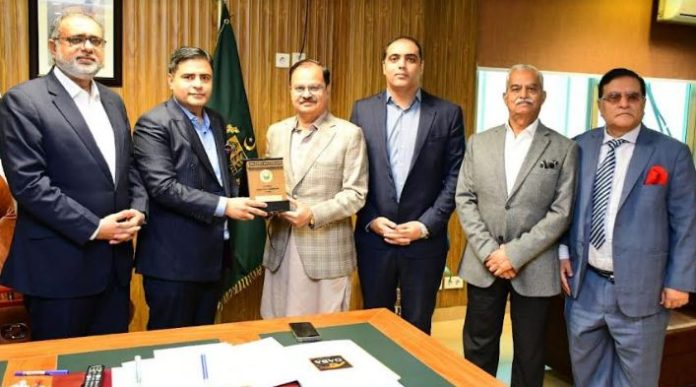
Islamabad, APR 4: /DNA/ – Ahsan Zafar Bakhtawari, President, Islamabad Chamber of Commerce and Industry (ICCI) leading a delegation called on Mahesh Kumar Malani, Minister of State for National Health Services, Regulations and Coordination (NHSRC) in his office to seek his help in resolving the key issues of the pharmaceutical industry.

Addressing the delegation, Mahesh Kumar Malani, Minister of National Health Services, Regulations and Coordination said that the pharmaceutical industry is playing an important role in meeting the domestic demand of medicines and promoting exports of pharma products and assured that he would cooperate in facilitating this industry. He also exchanged views on the importance of promoting interfaith harmony in the country and said that he would keep playing his positive role in this regard.

Speaking at the occasion, Ahsan Zafar Bakhtawari, President, Islamabad Chamber of Commerce & Industry briefed the Minister of State about the major issues of the pharmaceutical industry. He said that the survival of many pharma companies is in danger due to unaffordable production costs caused by the restrictions on imports, rupee’s devaluation, and rising inflation. He said that the manufacturing of medicines has declined by over 20 percent due to the issue of LCs for the import of raw materials and stressed that the government should address this issue on priority basis to save this industry from further problems. He said that Mahesh Kumar Malani should also play an active role in promoting interfaith harmony as our country is in dire need of national unity to cope with the economic and other challenges.  

Faad Waheed, Senior Vice President ICCI said that though the banks have resumed issuing LCs for imports, but due to the shortage of foreign exchange reserves, banks are approving only around half of requests for LCs and this situation is affecting the growth of the pharma industry.

Engr. Muhammad Azhar ul Islam Zafar, Vice President ICCI said that Pakistan has great potential to enhance the exports of pharma products and urged that the government should provide maximum facilitation to this industry.  

Khalid Iqbal Malik and Zafar Bakhtawari, former Presidents ICCI also highlighted the important role of the pharma industry in the economy and hoped that the government would resolve its issues on urgent basis. 

Stay Connected

64FansLike
60FollowersFollow

Latest Reviews

Exchange Rates

USD - United States Dollar
EUR
1.17
GBP
1.34
AUD
0.67
CAD
0.73