Home Blog Page 1198

Market of Storytellers

Munaza Kazmi

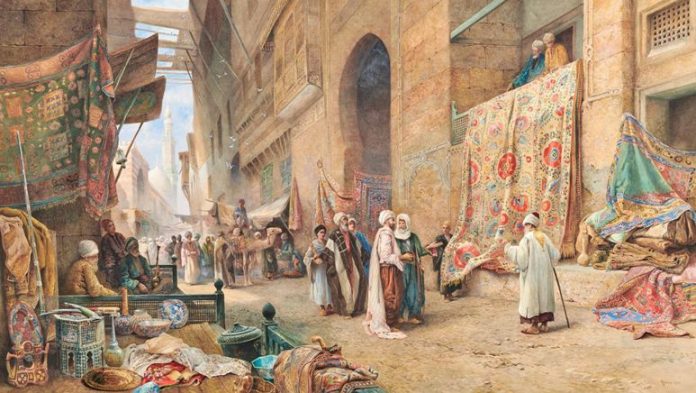
Peshawar “Oldest Living City” of South Asia dating back 539 BC, keeping alive centuries old rituals of culture, music, cuisine and traditions. One of Peshawar’s oldest and magnetizing aspects are the markets crisscrossing its various gates, passing enchanting Mughal Era architectural building, where merchants come from around the continent vending merchandize and leaving behind their stories.

Kabuli Gate is where Khyber Bazaar becomes QissaKhawani, the old ‘Market of Storytellers’. Peshawar’s most famous bazaar, that served as an encampment for caravans visiting from Sub-Continent, Afghanistan and Central Asian countries. The market is said to be as old as the city itself, framing several tales of culture, bravery, and love. In the daylight the traders were as busy as bee, exchanging the delicacies they took from different lands however, when the night sets vail on to the sun, they all gather around, sitting beside the fire,tasting tea and sharing the stories of their lands, their friends and the countries they travel around. It’s believed from there the market took its name.

The market was of much grandeur that, a visitor can buy an ordinary item of household to exquisite and rarest products, let’s say varieties of spices, dry fruits, food items of different regions, sweets, leather commodities, exclusive breeds of birds, perfumes, finest clothes including silk and hand-woven rugs, metals including brass and copper, besides precious stones and jewels etc.

Visiting QissaKhwani Bazaar the Urdu name of it, yet today is as functional as in the past, it never disappoints its traveler, always welcoming with delicious foods, fascinating sights of historic building, marvelous delicacies and that principle aroma of tea. Beside this, the market gave birth to the stars we love to watch on TV, let’s say the legendry Dilip Kumar, Raj Kapoor and family of Shahrukh Khan, their houses are among the fascinating tourist attraction of bazaar.

Food rooted strongly itself in the old alleys, hence when you are done with all the shopping and sight-seeing, food is the priority. Old style cafes, playing the folk music, with the luxury of live cooking, serving appetizing foods like Chappal Kebab cooked into perfection by adding spices into fresh meat and then fried till it becomes golden brown, Mutton Karahi that is mutton cooked with yogurt and black pepper, Kabuli Pulao a rich combination of rice cooked with meat and garnish with carrots and raisin, Fried Fish and Charcoal Chicken covered with delicious flavors, lip smacking Kulfi Falooda that is a lush mix of ice-cream, vermicelli, dry fruits and sauces  and their aromatic tea, however there’s a specialty of QissaKhawani you must try locally known as ‘Sheen Da Payo”, milk green tea.

It’s considered that, there’s little memory left of the traders and travelers that would gather here to swap tales, however in my opinion it’s still meeting place for the travelers and merchants, since they still gather there, on the pretext of selling or buying and in some ways, they still sharing their tales and their journeys. Well,it’s true that most of bazaarold teashops have given way to clothes and electrical shops, what used to be the old bird market have transformed into brass and copperware, the historic Mughal architectural buildings and gates are in miserable condition, that needs dire attention, the fashion and culture changed, but still the aroma of tea and spices carry a visitor to that ancient enterprise.

ICCI donates Rs.20 million and 50 kanal land to Pakistan Sweet Homes

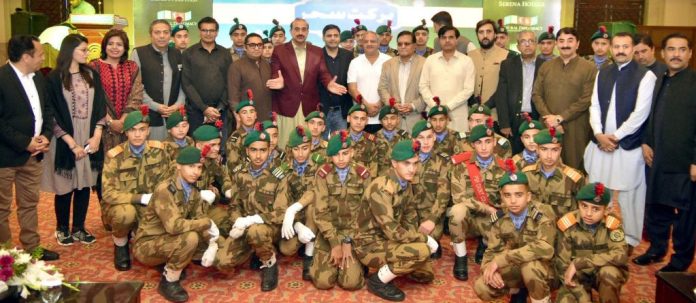
Islamabad, APR 9: /DNA/ – The Islamabad Chamber of Commerce & Industry hosted a Barkat-e-Sehar program in collaboration with Serena Hotels, Islamabad and collected donations of around Rs.20 million for Pakistan Sweet Homes. Prominent traders and industrialists of the city attended the program.

Addressing the event, Ahsan Zafar Bakhtawari, President Islamabad Chamber of Commerce and Industry announced to give 50 kanal land in Chakwal to Pakistan Sweet Homes (PSH) for constructing its branch in that area. He paid tributes to the services of Zamrud Khan, Patron in Chief of Pakistan Sweet Homes, who has dedicated his life for the welfare of orphans. He said that Zamrud Khan was grooming and educating orphans like a father which was commendable. He urged the members of the business community to fully cooperate with Pakistan Sweet Homes so that this institution could continue to provide better care to the orphans and enable them to become productive citizens of the country. He thanked the traders and industrialists for making rich donations for PSH and assured that ICCI would continue to cooperate with PSH in this noble cause.

Speaking on the occasion, Zamurrad Khan Patron in Chief, Pakistan Sweet Homes thanked ICCI members for contributing to the welfare of angels and fairies of Pakistan Sweet Homes. He also thanked Ahsan Zafar Bakhtawari, President ICCI for announcing 50 Kanal land for PHS and said that soon, the construction of a center of PHS would be built on that land. He said that with the blessings of Allah the Almighty and the cooperation of philanthropists, PSH has been making good progress day by day and has set up many centres across the country. He said that with the help of philanthropists, the first cadet college in the history of the world has been set up on an area of 80 kanals for orphans on GT Road in Sohawa in which hundreds of students are currently studying. He said that his aim was to make the children of Pakistan Sweet Homes proud citizens of Pakistan so that they could not only play an active role in the development of Pakistan but also make the country proud of them. He said that ICCI has always cooperated with PSH and hoped that this tradition would be maintained in future as well.


Zafar Bakhtawari, Secretary General UBG said that Zamurrad Khan has brought a revolution in serving the orphan children as he has built many centres for them. He said that Zamurrad Khan has been given Hilal-e-Imtiaz in recognition of his services for orphans and hoped that a day will come when he will be given the Nobel Prize that would make him pride of Pakistan.

Faad Waheed Senior Vice President, Engr. Azhar ul Islam Zafar Vice President ICCI, Sheikh Baser Daud,  Ch. Javed Iqbal, Akhtar Hussain, Dr. Usman, Humayun Kabir, Muhammad Naveed Malik, Khalid Chaudhry, Faheem Khan and others were present at the occasion.  

Riddled body of a woman found at a deserted place near Islamabad- DI Khan motorway

FROM QAZI SHOAIB KHAN

DNA

ATTOCK (APRIL-08) – In Attock a bullets ridled body of a woman found at the deserted place near Islamabad- DI Khan motorway  in village DhokeMalkan near Nehlud in the limits of Pindigheb Police station of district Attock on Saturday.

Police sources said that some passerby spotted a body lying at deserted place and informed police. On getting information, Police shifted the body to THQ hospital for autopsy. According to Police investigators, the dead body was two to three days old and she was shot somewhere else and later thrown her body her  to conceal the crime.

The body was not identified till filing this news report. Pindigheb Police registered a murder case against unknown assailants and started further investigation.

Chairman WAPDA visits accident site at Diamer Basha Dam Project

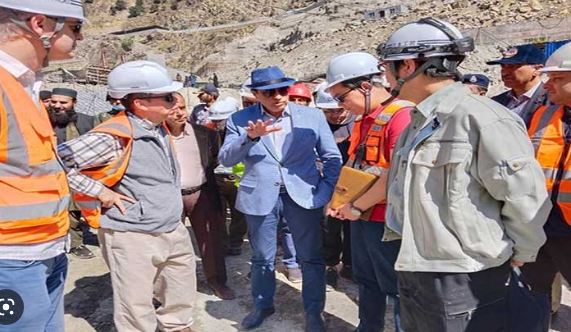
GILGIT BALTISTAN, Apr 08 (DNA): Chairman WAPDA Engr Lt Gen Sajjad Ghani
(Retd) visited Diamer Basha Dam Project in the wake of an incident that
took place on Friday at one of the construction sites of the project.

The Chairman had a detailed round of the incident’s site and interacted
with the workers during the visit. GM (Security), CEO Diamer Basha
Company, GM (Diamer Basha Dam Project) and representatives of the
Contractors and the Consultants were also present.

Earlier, the management of Diamer Basha Dam Project informed the
Chairman about causes of the accident and details about rescue and
relief operation.

The Chairman expressed grief over the loss of precious lives.
Emphasising upon the Contractors and the Consultants to thoroughly
re-look at the current safety guidelines, he directed the project
management to put in place at all construction sites an effective safety
mechanism to avoid such incidents in future.

The Chairman also gave away cheques of the compensation amount to the
workers who sustained minor injuries in Friday’s accident. It is to be
mentioned that Chairman WAPDA had already announced compensation of Rs.
500,000 each for the families of deceased, Rs. 500,000 each for the
workers severely injured and Rs. 200,000 each for the workers with minor
injuries. This compensation is in addition to the one which the
affectees of the incident will receive from the Contractor as per rules.

Diamer Basha Dam Project is being constructed on River Indus,
40-Kilometer downstream of Chilas town. Construction work is
simultaneously underway on more than dozen of sites.

Chairman WAPDA also visited under-construction Dasu Hydropower Project
and reviewed construction work on starter dam, cut-of-wall and
under-ground power house.

He was briefed that the second diversion tunnel is scheduled for
completion in mid April, while cut-of-wall in mid May. River diversion
system will also stand completed by mid May to pass through River Indus
round-the-year.

The Chairman urged upon the project authorities to complete construction
work as per the schedule. The 2160-MW Phase-I of Dasu Hydropower Project
is likely to start electricity generation in 2026.

Justice Isa says six-bench note cannot set aside order on suo motu

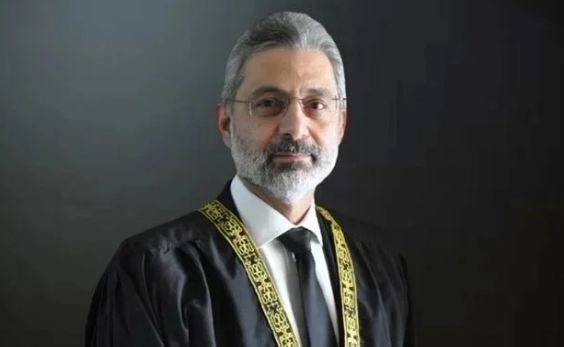
ISLAMABAD: As the crisis in the Supreme Court deepens, Justice Qazi Faez Isa has said that a six-member bench of the top court could not set aside an earlier order to halt suo motu proceedings.

A six-member bench last week — after a five-minute hearing — ‘closed’ the case that led Justice Isa to issue an order to freeze the hearings of all the sub judice suo motu notices.

The apex court had constituted the six-member larger bench to review the decision of a special SC bench, led by Justice Qazi Faez Isa, which ordered the shelving of all suo motu cases — invoked under Article 184(3) of the Constitution.

Justice Isa, while hearing a case examining the grant of additional 20 marks to Hafiz-e-Quran pre-medical candidates for admission into MBBS/BDS courses, had ordered the postponement of cases being heard under Article 184(3) of the Constitution till amendments were made to the Supreme Court Rules 1980 regarding the discretionary powers of the chief justice of Pakistan to form benches.

The new bench — which disregarded Justice Isa’s order — was headed by Justice Ijazul Ahsan and comprised Justice Munib Akhtar, Justice Sayyed Mazahar Ali Akbar Naqvi, Justice Muhammad Ali Mazhar, Justice Ayesha A Malik, and Justice Syed Hasan Azhar Rizvi.

But in his note today issued in the suo motu case, Justice Isa noted that the constitution of the bench was against the rules and it could not disregard his bench’s majority order.

“Since the gathering in a court of six distinguished judges was not permissible under the Constitution or under any law, the Supreme Court’s order dated 29 March 2023 passed in Case No. 4 could not have been set aside by the 4 April Note,” the judge said.

“Decisions emanating from a courtroom overcast with the shadow of autocracy cannot displace the Constitution,” the senior puisne judge added.

In its order, the senior puisne judge said: “The Constitution does not confer jurisdiction on a bench or on judges of the SC (no matter how many in number) to sit in appeal over an order of the SC.”

He maintained that the “so-called” larger bench was wrongly constituted purportedly to hear case no. 4 (the suo motu case).

“The larger bench did not constitute a (constitutional) court; it did not possess any of the abovementioned jurisdictions, and could not pass an order.

“The purported ‘order’ dated 4 April 2023 cannot be categorised as an order of the SC; it is of no constitutional or legal effect. It would be legally incorrect to refer to it as an order; therefore, it shall be referred to as the 4 April Note,” the judge stated.

Tensions high in Israel after deadly attacks

An Italian tourist was killed and five people were wounded in a car ramming in Tel Aviv on Friday that came hours after two Israeli sisters were killed in a shooting attack in the occupied West Bank.

The attacks, after a night of crossborder strikes in Gaza and Lebanon, added to an atmosphere of heightened Israeli-Palestinian tensions following Israeli police raids in Jerusalem’s Al-Aqsa mosque earlier this week.

The tensions threatened to spiral into a wider conflict overnight as Israel responded to a barrage of rockets by hitting targets linked to the Islamist group Hamas in Gaza and southern Lebanon but the fighting entered a lull on Friday.

However, the two attacks underlined how volatile the situation remains after successive nights of trouble that have drawn worldwide alarm and calls for calm.

In the latest attack, a car ploughed into a group on a street near a popular bike and walking path on a Tel Aviv promenade. The driver was shot dead by a nearby police officer when he tried to pull a gun, police said.

An Israeli security source identified the assailant as an Arab citizen of Israel from the town of Kafr Qassem.

Reuters video from shortly after the incident showed a white car upside down on the grass of a park. Police cordoned off the area that was brimming with emergency responders.

The Magen David Adom ambulance service said the victims were all foreign tourists and Italy’s Foreign Minister Antonio Tajani confirmed that an Italian had been killed and other Italians may have been among the wounded.

Earlier on Friday, two Israeli sisters, aged 20 and 16 with joint British nationality were killed and their mother wounded in a shooting attack on their car near the Jewish settlement of Hamra in the Jordan Valley.

“Our enemies are putting us to the test again,” Prime Minister Benjamin Netanyahu said following a visit to the site of the attack with Defence Minister Yoav Gallant.

As soldiers hunted for the gunman, Netanyahu ordered border police reserves and additional military forces to be mobilised to confront the wave of attacks.

Flashpoint
No claim of responsibility was made for either of Friday’s attacks, but Hamas that controls the blockaded Gaza Strip praised them and linked them to the tensions around Al-Aqsa mosque.

Friday prayers passed without major incident and apart from some stone-throwing, police said the situation had been quiet.

However twice this week Israeli police have raided the mosque, where hundreds of thousands of worshippers have been praying during the Muslim holy month of Ramazan, to dislodge groups they said had barricaded themselves with the aim of causing trouble.

Footage of officers beating worshippers who confronted them aroused concern, even among Israel’s allies, and prompted condemnation across the Arab world.

The site in Jerusalem’s Old City, holy to both Muslims and Jews, who know it as Temple Mount, has been a longstanding flashpoint, notably over the issue of Jewish visitors defying a ban on non-Muslim prayer in the mosque compound.

Clashes there in 2021 helped set off a 10-day war between Israel and Hamas and the exchange of crossborder fire awakened memories of that conflict but as the lull in fighting extended on Friday, neither side seemed keen to prolong the fighting.

“Nobody wants an escalation right now,” an Israeli army spokesman said. “Quiet will be answered with quiet, at this stage I think, at least in the coming hours.” One official with a Palestinian group told Reuters they were ready to keep the calm should Israel do the same, with the group having “made its point”.

A Qatari official said Qatar was helping international efforts to de-escalate the situation.

Even before the flare-up of the past few days, the West Bank has seen a surge of confrontations in the past several months, with frequent military raids and escalating settler violence amid a spate of attacks by Palestinians.

Since the beginning of the year, at least 18 Israelis and foreigners have been killed in attacks in Israel, around Jerusalem and in the West Bank.

In the same period, Israeli forces have killed more than 80 Palestinians, most of them fighters in militant groups but some of them civilians.

In the aftermath of the overnight strikes in Gaza, streets were largely empty except for some taxis and emergency vehicles. In Gaza City’s Tufah neighbourhood some houses and a children’s hospital were damaged.

Taxi driver Muhanad Abu Neama, 23, said his family barely escaped Israeli air strikes that hit near his house, filling rooms with dirt and debris and damaging his car.

“I could hardly see because of the dust, the dirt covered my sisters’ beds and I carried them out one by one,” he said.

With the international-led peace process long moribund, Palestinians’ hopes of creating an independent state in the West Bank and Gaza, with East Jerusalem as its capital, have faded.

Israel captured East Jerusalem in the 1967 Arab-Israeli war and annexed it as its capital in a move not recognised internationally.

Israel’s new hard-right government is set on expanding Jewish settlements in the West Bank and includes members who rule out a Palestinian state. Hamas for its part spurns coexistence with Israel.

Judicial imperialism causes extreme political polarization

DNA

Devcom-Pakistan webinar suggests a larger consultative process to resolve political confrontation sans politically motivated judicial imperialism. The judges of the supreme court too shall adhere to its code of conduct.

Islamabad, APR 8: A panel of experts at a webinar suggested the state institutions to understand the implications of their politically motivated conflicts on socioeconomic deterioration, and its dent to the democratic instability. Overstepping on other’s jurisdiction has created chaos and extreme divides. A larger consultative process among the political parties shall help cool down the political temperature, while the judges shall adhere to the code of conduct.

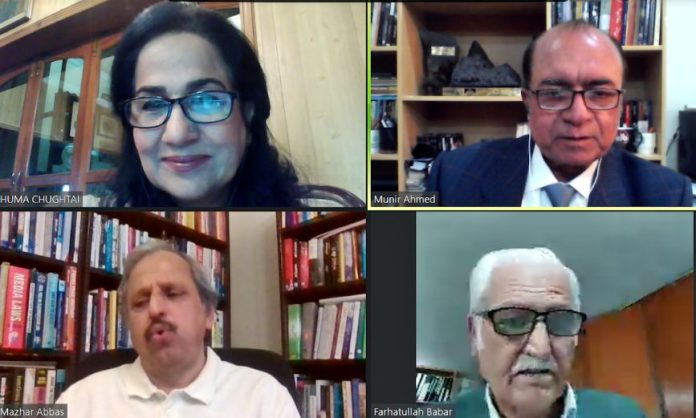
The webinar entitled “Judicial imperialism in Pakistan and its impact on society” was organized by DTN and Devcom-Pakistan (Development Communications Network) on Saturday. The panel of experts included Senator retired Farhatullah Babar, senior journalist Mazhar Abbas, Human Rights Law expert Huma Chughtai and Devcom-Pakistan Executive Director Munir Ahmed.

Senator Farhatullah Babar said the chaos began in 2009 with a statement of then Chief Justice of Pakistan that “parliament is not supreme but the constitution the way it is interpreted by the Supreme Council of Pakistan.” The 19th amendment axed the powers of parliament to oversight the judiciary including the appointment of judges that caused concentration of like-minded or favourite judges in the courts.

Chief Justice Iftikhar Muhammad Chaudhary elevated 126 judges while ousted over 100 judges only by his own will. It was the beginning of judicial imperialism in Pakistan. Most of the Suo Moto actions were taken in his tenure under the Constitution’s article 184(3). The same practice continued by Justice Saqib Nisar, Justice Asif Khosa and the present one, Chief Justice Umar Atta Bandial.

Farhatullah Babar said the rational jurisprudence makes the judiciary more pertinent for interpretation of the laws but since 2009, we have evolved an omnipotent judiciary. The 19th amendment has granted a veto to the chief justice for Suo Moto action only by his will. The judiciary has sent three prime ministers back home using the authoritative Suo Moto. He suggested a larger consultative process among the political forces to end the present crisis. The Supreme Court judges shall also talk to each other to end their rifts too.

Mazhar Abbas said the media played its glamourized Suo Moto actions since 2009 while the chief justices were caught up by the media phobia. The lawyers’ activism too played its role in the build up of the judicial chaos. The lawyers-activism could not stop after the Nawaz Sharif long march for the restoration of the chief justice Iftikhar Muhammad Chaudhary. Since 2008, even the elected parliaments could not restrict the Suo Motu powers of the chief justice though former president Asif Zardari could do it. Judges’ political support has created unpresented polarization and divided not only in the political arena but in the judiciary itself. Dialogue is the only solution for political parties while strict adherence to the code of conduct for the judges. He urged to scrap the designations of the PCO Judges who took their oath of offices under the Provisional Constitutional Orders, and stop their pensions and other benefits.

Huma Chughtai said the state institutions need to define their turf and avoid overstepping into other’s jurisdiction. Lawmaking in Pakistan had never been strong enough to restrict judicial activism, rather it was apologetic. direction. Pakistan’s judiciary has become an “elite club” where the subordinate or district judiciary has no representation. Judges in the high court and supreme court were appointed on favouritism. It has created groups within the courts while activism has taken to extremes. Judges need to pull them out of the chaos, divide and polarization.

Devcom-Pakistan Executive Director Munir Ahmed said Pakistan is a victim of a one-man power show that has led the country to judicial imperialism. It is unpresented even in South Asia. Supreme courts of our neighbouring countries take Suo Moto through consultative process. It is not exercised anywhere in the world for political maneuvering except in Pakistan. Parliament shall be the supreme and it shall come up with unanimous legislation to curb the judicial dictatorship.

Pakistan an IMF member, not a beggar: Ishaq Dar

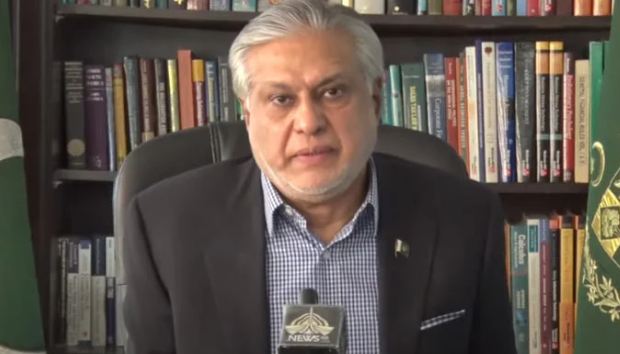
ISLAMABAD, APR 8: Rubbishing rumours that officials from International Monetary Fund (IMF) refused to meet him at the Bretton Woods institutions’ spring meetings, Finance Minister Ishaq Dar on Saturday clarified he postponed his visit to the US on Prime Minister Shehbaz Sharif’s request — in view of the political situation.

“Pakistan is a member of the IMF and not a beggar,” Dar said in a fiery speech addressing rumours that he decided to postpone his trip due to resistance from the Washington-based lender.

He emphasised that IMF “cannot stop me from attending the spring meetings”.

Dar was expected to attend the spring meetings of the World Bank-IMF that were taking place from April 10 to 16 in Washington.

Meanwhile, he was also scheduled to meet the IMF management for holding talks regarding the removal of bottlenecks for the revival of the derailed $6.5 billion programme.

Islamabad has been negotiating with the IMF since the end of January for the release of $1.1 billion from a $6.5 billion bailout package agreed upon in 2019. To unlock the funding, the government has cut back on subsidies, removed an artificial cap on the exchange rate, added taxes and raised fuel prices.

However, assurances from friendly nations for additional funds have delayed the agreement.

The finance minister — who was sworn in last year in September — said that currently the county of 220 million people was reeling through the repercussions of the constitutional crisis.

“The Ministry of Finance has a huge responsibility regarding the disbursement of funds to the Election Commission of Pakistan (ECP) in light of the Supreme Court’ April 4 ruling.

1 dead, 3 unconscious as fire erupts in building near Karachi’s generator market

KARACHI, APR 8: One person was killed and three found unconscious after a fire erupted at a building near a generator market in Karachi’s New Chali area on Saturday, rescue and police officials said.

According to a statement issued by Edhi Rescue, one person died and three were found unconscious after a “residential building near Bolton Market caught fire”. They were shifted to Civil Hospital Karachi (CHK) via Edhi ambulances, it added.

The deceased was identified as 46-year-old Ali Asghar while the three unconscious persons were aged 23, 25 and 28, the statement said.

Police surgeon Dr Summaiya Syed also confirmed one body was brought to CHK, adding it was “almost completely burnt”.

According to City Police Senior Superintendent of Police Arif Aziz, initial reports say the fire was caused by a short circuit.

He added that fire brigade and rescue teams were present at the scene along with senior police officials.

Mithadar Station House Officer (SHO) Mohammed Bhatti confirmed the casualties to Dawn.com, adding that the fire had broken out on the 10th (last) floor of the Arkay Square building.

He stated the condition of the injured to be out of danger and said the building was mainly commercial where offices were located.

Parts of Arkay Square in the New Chali area of Karachi are charred after a fire erupted on Saturday. — Photo by author
SHO Bhatti further said the fire has been brought under control and “cooling” was being continued, adding that people currently trapped in the building were being rescued with the help of rescue services.

He hinted it may “take a long time to check and clear the building”, after which the cause of the fire would be ascertained.

The police official added that Shahrah-e-Liaquat — the road on which the building is located — has been opened for traffic.

A fire brigade official said seven fire tenders, two fire snorkels and two bowser tankers were busy extinguishing the fire and cooling the building.

ICCI urges Govt to resolve tax issues of furniture industry

Islamabad, APR 8 /DNA/ – Engr. Muhammad Azhar ul Islam Zafar, Vice President, Islamabad Chamber of Commerce & Industry (ICCI) said that Pakistan has great potential to enhance the exports of furniture products by focusing on the furniture industry and urged that the government should resolve tax issues of this industry to facilitate its better growth. He said that tax authorities and field formations of FBR are issuing notices to furniture showrooms/shops to register as Tier-1 retailers, which is not practicable for all furniture businesses and urged that the furniture showrooms/shops covering area less than 2000 square feet should be exempted from sales tax registration to ease their problems. He said this while addressing a delegation of Pakistan Furniture Association that visited ICCI led by its Chairman Zahid Hussain. Mian Muhammad Ramzan Convener ICCI Tax Committee, Khalid Chaudhry former Senior Vice President ICCI and others were present at the occasion.

Engr. Muhammad Azhar ul Islam Zafar said that the small furniture retailers should not be subjected to Sub-Sec-43A of Sec-2 of Sales Tax Act 1990 as they purchase furniture from unregistered manufacturers of the cottage industry and cannot provide input invoices. He said that those retailers who occupy even one square foot less area than 2000 sq. ft. are exempted, which creates an anomaly. He assured that ICCI would cooperate with the Pakistan Furniture Association in resolving key issues of the furniture industry.

Speaking at the occasion, Zahid Hussain, Chairman, Pakistan Furniture Association stressed that the government should introduce fixed sales tax of Rs.5000/month for furniture showrooms/shops covering area of above 2000 sq. ft. up to 5000 sq ft., Rs. 10,000/month for showrooms/shops covering area of above 5000 sq. ft. up to 10,000 sq. ft and Rs.15000/month for showrooms/shops covering area of above 10,000 sq. ft up to 15,000 sq. ft. He said that such a fixed tax regime would protect the furniture businesses from unnecessary harassment and facilitate better growth of their business activities.

Mian Muhammad Ramzan, Convener, ICCI Tax Committee said that the furniture showrooms/shops which are not part of a national or international chain store nor are they located in air-conditioned malls, should be excluded from the category of Sub-Sec-43-A of Sec-2 of Sales Tax Act 1990 and should be declared as cottage industry with inclusion in Tier-2 regime.    

Stay Connected

64FansLike
60FollowersFollow

Latest Reviews

Exchange Rates

USD - United States Dollar
EUR
1.17
GBP
1.35
AUD
0.67
CAD
0.72