Home Blog Page 1194

New dean Islamic & Oriental Learning GCUF appointed

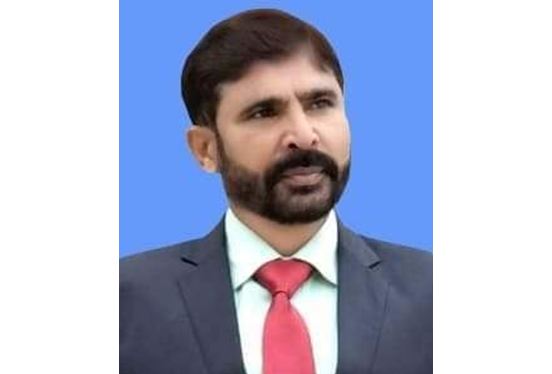
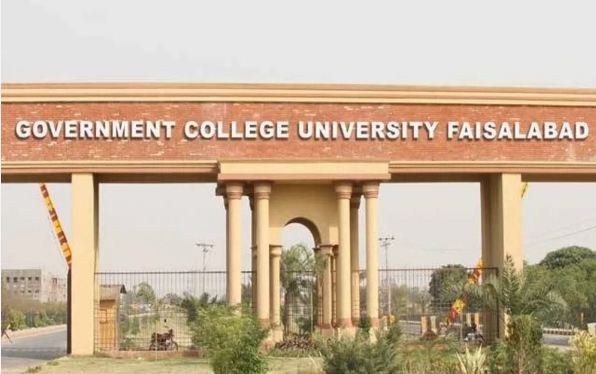
FAISALABAD, Apr 14 (APP): Dr Humayun Abbas Shams has been posted as dean Faculty of Islamic & Oriental Learning, Government College University Faisalabad (GCUF).

He has been appointed for a period of three years after approval of Punjab Governor Balighur Rehman, who is also chancellor of the university.

The Higher Education Department Punjab has issued notification in this regard.

Dr Humayun has already worked as dean Faculty of Islamic and Oriental Learning on an additional charge basis.

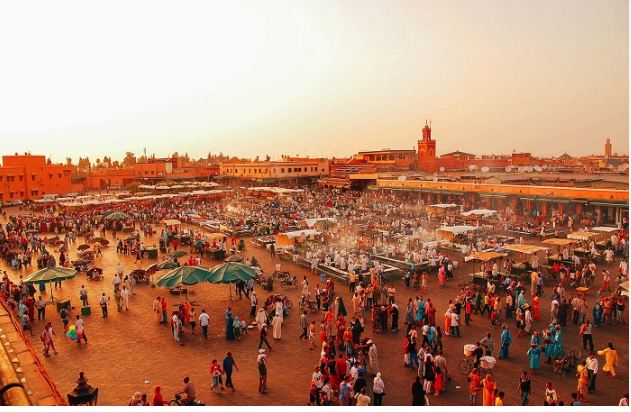
Morocco receives 2.9 mln tourists in Q1

RABAT, APR 14 /DNA/ – Tourist arrivals in Morocco reached 2.9 million in the first quarter of 2023, a 17-percent increase from the same period of 2019, a reference pre-pandemic year, the Moroccan Ministry of Tourism said on Thursday.

“Tourism in Morocco continues its ascent to unprecedented levels, as evidenced by the exceptional figures recorded at the end of March 2023,” the ministry said.

Tourists from Spain, the United Kingdom, Italy and North America recorded a growth of 45 percent, 28 percent, 9 percent and 5 percent, respectively, it added.

Nearly 13 million tourists visited Morocco in 2019, the year before the outbreak of COVID-19 pandemic, with its total tourism revenues amounting to 9.6 billion U.S dollars.

The North African country adopted on March 17 a 580-million-dollar plan to develop its tourism sector to attract 17.5 million tourists by 2026.

Chinese online literature embraces prosperous development

By Shi Fang, Chen Yuanyuan, People’s Daily

The revenue of the Chinese online literature market surged from 2.45 billion yuan ($356.7 million) in 2012 to 26.72 billion yuan in 2021, said a report released by the China Audio-Video and Digital Publishing Association at the sixth China Online Literature + Conference recently held in Beijing.

According to the report, the number of online literary works expanded from around 8 million to over 32 million during the same period, and the number of registered authors from 4.19 million to 22.78 million.

IP licensing revenue of the Chinese online literature industry grew from less than 100 million yuan to more than 4 billion yuan, and the industry gained over 2.9 billion yuan from the overseas market in 2021, up from 400 million yuan in 2018.

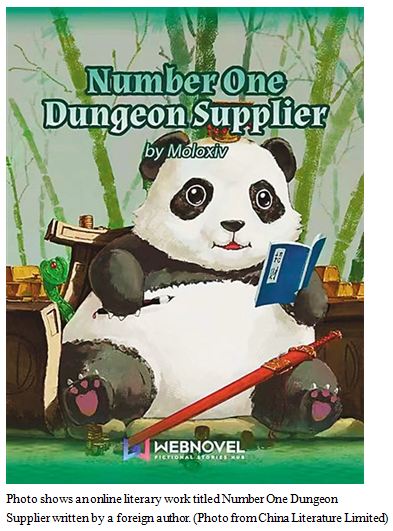
Online literature is a literary form whose creation and communication are internet-based. Most authors of online literary works are young people.

When the industry just emerged, its subjectswere mostly fantasy, mystery and xianxia, also known as spirit cultivation. It was later developed into more than 200 sub-categories under some 30 subjects, such as urban, history, sci-fi, industry, education and traditional culture. There are many online literary works that well depict the modern society and mirror the development of the times.

He Changzai is a member of the national committee of the Chinese Writers Association and vice chairman of Hebei Network Writers Association. A trip to Shenzhen, the forefront of China’s reform and opening up, inspired him to portray the great journey of the economic reform of the country in the past four decades, and later he published the novel Haodang, which literally means magnificence in Chinese. The novel soon earned him awards and became a hot seller.

“The great time we live in must be recorded by someone. Only by living in a down-to-earth manner can we create fantastic contemporary works that keep the common touch,” He said.

Online literary works enjoy huge development potential as they can be made into a number of peripheral products such as TV series, animations, reality shows, games, documentaries, stage shows, online performance, among others.

Miu Juan, who writes literary works online, said she enjoys the creation of online literature as she can get immediate feedback from her readers as she updates her works.

In 2021, over 32 million online literary works were published in China, and the number of registered online authors were five times more than that 10 years ago.

Insiders believe that online literature can be transformedinto multiple business forms thanks to the diversity of authors and content.

Online literature is a mirror of people’s mentality in today’s world, which is an advantage enjoyed by online literary works when being transformed into other products.

“Interactivity is the biggest difference between online literature and traditional literature. Interaction with readers enriches authors’ creation and makes authors more responsive in portraying the reality,” said Huang Jie, deputy editor-in-chief of Tencent Video.

According to her, online literary works tell stories about workplace, youth and hot topics that are closer to people’s life.

“I never thought that I’d be an author. It was under the advice from my husband that I started to write stories I wanted to read,” said a Philippine woman who names herself TheBlips online and is a fan of Chinese online literature. Having been writing on the international site of a Chinese online literature platform for four years, she is of some renown among local readers.

There are hundreds of thousands of overseas writers like her writing on the international versions of Chinese online literature platforms. So far, overseas platforms operated by relevant Chinese enterprises have published more than 300,000 literary works and gained over 145 million readers. Over 200,000 foreign readers have started writing novels online of various subjects in multiple languages. A development path that exports Chinese literary works, copyrights, as well as production models and culture has been preliminarily taken shape.

Online literature is an important way for many foreign readers to understand China. In 2021, more than 300,000 Chinese online literary works were exported.

“I started to know China as a child watching TV dramas like The Legend of the Condor Heroes and Justice Pao,” said the head of an online reading platform in Thailand. Now the online literature is a window for him to learn about China.

According to Xiao Jinghong, deputy head of the institute of internet literature of the China Writers Association, Chinese sci-fi, romance and comedy literature, dramas and movies were popular overseas, and online literature is bringing Chinese stories to more overseas readers.

Pak highly values its relations with Indonesia, says Muqam

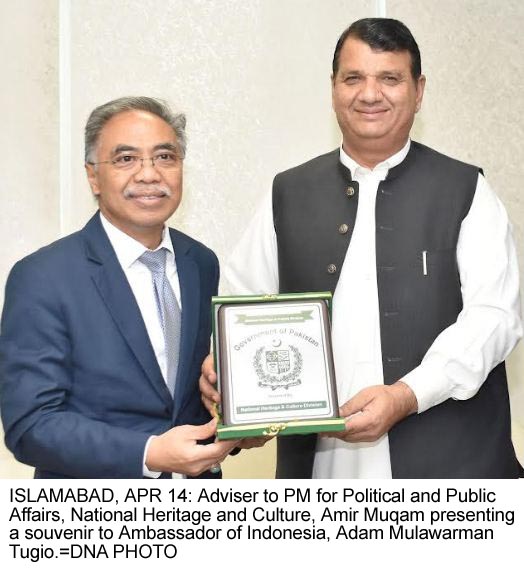
ISLAMABAD, APR 14: Adviser to PM for Political and Public Affairs, National Heritage and Culture, Amir Muqam presenting a souvenir to Ambassador of Indonesia, Adam Mulawarman Tugio.=DNA PHOTO

Ambassador Adam Mulawarman Tugio acknowledged the existing scope and scale of cooperation in the field of cultural heritage between the two countries

DNA

PESHAWAR, APR 14: Adviser to the Prime Minister for Political and Public Affairs, National Heritage and Culture, Engr Amir Muqam on Friday said that Pakistan attached great values to its relations with Indonesia, which were governed by mutual respect and cooperation.

Engr Amir Muqam expressed these views during his meeting with Ambassador of the Republic of Indonesia, Adam Mulawarman Tugio that called on him at his office in Islamabad, says a press release issued here today.

Adviser to Prime Minister Engr Amir Muqam conveyed that Pakistan attached great value to its relations with Indonesia which were governed by mutual respect and cooperation and expressed that Pakistan and Indonesia had maintained decades old close and cordial relations which had historical roots.

He said Pakistan was looking forward to further strengthen bilateral relations with Indonesian cultural heritage vis-à-vis regular exchange.

Ambassador Adam Mulawarman Tugio acknowledged the existing scope and scale of cooperation in the field of cultural heritage between the two countries and desired to undertake joint ventures in respective fields on progressive basis. He invited Engr Amir Muqam to visit Indonesia, which was accepted by the adviser to the Prime Minister.

The Indonesian Ambassador also requested for providing a space at Pakistan National Library for establishing an international corner, which was approved by the Adviser to Prime Minister.

The Ambassador thanked the Adviser to the PM and also accepted the invitation to visit Swat valley.

 Amir Muqam appreciated the efforts of the Indonesian Ambassador and assured that a lot is yet to be explored in culture between the two countries and we are hoping to start a cultural exchange program.

They also agreed to work together to promote people-to-people contacts, enhance trade and investment and strengthen the bilateral relations between the two countries.

Senior Joint Secretary for National Heritage and Culture Muhammad Bilal and Cultural Coordinator Indonesian Embassy Miss Hira Khan was also present on the occasion.

Non-Muslims enjoy better rights in Pak compared to minorities India: Mahesh Kumar

Islamabad, APR 14 /DNA/ – The Islamabad Chamber of Commerce and Industry (ICCI) hosted an Interfaith Iftar Dinner in honor of Minister of State for National Health Services Mahesh Kumar Malani which was attended by the representatives of Hindu and Christian communities as well as the members of business community. Chaman Lal, Pritam Das, Ashok Kumar, Rajesh Kumar, Om Prakash, Jadesh Kumar, Lal Chand, Lalat Kumar, Dilip Kumar, Raja Javaraj, Besham Kumar, Lajpat, Ramesh Kumar and others were present in dinner.

Speaking on the occasion, Minister of State for National Health Services Mahesh Kumar Malani said that the government is aware of the difficulties being faced by the business community due to import restrictions and LC issues. He said that matters with the IMF are progressing positively and assured that soon the LCs issue of the business community would be resolved which would help revive business activities. He said that after Eid, he would arrange a meeting of the representatives of the pharmaceutical sector with the Drug Regulatory Authority to resolve their problems. He said that compared to India, the non-Muslims are enjoying better rights in Pakistan and he is proud to be a Pakistani. He said that non-Muslims in Pakistan never felt any deprivation. He thanked ICCI for hosting the interfaith dinner and said that he will continue to play his role in promoting interfaith harmony to strengthen the national unity and take Pakistan on the path of sustainable development. He assured that he will cooperate with ICCI in resolving the key issues of the business community.

Ahsan Zafar Bakhtawari, President, Islamabad Chamber of Commerce and Industry, speaking on the occasion, briefed the Minister of State for National Health Services Mahesh Kumar Malani about the major problems of the business community and requested his cooperation to solve them. He said that due to non-opening of LCs, many industries are in danger of closing down and business activities are suffering. He demanded that the government should focus on resolving these issues as soon as possible. He said that the pharmaceutical sector is also facing some problems with the drug regulatory authority, so the Minister should cooperate in resolving them. He said that ICCI is the hub of activities to promote interfaith harmony as the Chamber celebrates Christmas with the Christian community every year and assured that ICCI would also try to celebrate religious events of Hindu community to further improve interfaith harmony as such events can play an effective role in promoting tolerance and strengthening national unity in Pakistan.

Faad Waheed, Senior Vice President ICCI, in his address, paid tribute to the efforts of Minister of State for National Health Services Mahesh Kumar Malani for promoting interfaith harmony and assured that the Chamber would strengthen his hands in these efforts.

Engr. Azharul Islam Zafar, Vice President ICCI thanked Mahesh Kumar Malani, Minister of State for National Health Services for visiting ICCI and hoped that he would help in resolving issues of the business community.

UBG Secretary General Zafar Bakhtawari and others also spoke on the occasion and emphasized the importance of promoting interfaith harmony for the development and prosperity of Pakistan.

Follow the constitution or set aside

Dr. Muhammad Akram Zaheer

Pakistan’s soaring political tension is an opportunistic struggle for power. It has pushed the country in a political tinderbox.  Not any regard is displayed on either side for the ongoing suffering of ordinary Pakistanis, who continue to pay the price for the country’s long history of political instability.

Today’s deadlock between Pakistan’s federal government and the opposition Pakistan Tehreek-e-Insaf (PTI) over the conduct of elections is continuing. The PTI has held a big meeting at the famous Minar-e-Pakistan Tower grounds in Lahore as the opening of election campaign.  Addressing to a large gathering of supporters, party workers and former parliament members,Former Prime Minister Imran Khan has announced a program to save Pakistan’s failing economy. A series of events haspersisted nearly a year in his quest to return to the Prime minister office. Khan’s campaign is enjoying widespread popular support and has succeeded in mobilizing the public, which is building pressure on the ruling coalition led by Prime Minister Shahbaz Sharif who is not agree for early elections. The coalition government, however, is determined to hold off polling as long as possible for provincial and national assembly elections. To justify the delay, the embattled government has referred to the country’s unpreparedness for the elections because of security threats from the Tehreek-e-Taliban Pakistan (TTP) militant group in the coming months. It has justified the possibility of terrorist attacks against officials and innocent civilian population. But behind this argument lies what has been a unfamiliar constitutional dilemma for Pakistan. There is a question, in which circumstances and by whose authority should national security concerns take precedence over constitutional obligations and the rule of law?

Confrontational views intensified when the Electoral Commission of Pakistan, claiming its inability to hold fair and just elections in light of the security situation and financial problems, mandated late April to early October and ignored the constitution by postponing the given provincial elections. This came after the army announced its failure to provide security for the polls due to continued engagement in counter-terrorism operations. Khan, who is currently dealing with multiple government-initiated charges for alleged criminal behavior, has sought the intervention of Pakistan’s Supreme Courts. In the recent moves of the PTI leader stated that the Election Commission and the Sharif government are engaging to break the constitution. To pushing back the government, PTI went to the Supreme Court to get legal support. Through a suo motu notice the Chief Justice of the Supreme Court of Pakistan suspended the Election Commission and government’s extra-constitutional measures.

Now, what did the Supreme Court Chief Justice Umar Atta Bandial play his role to break the political deadlock in Pakistan is whether acceptable for all stake holders? Against a backdrop of such questions about the rapprochement and impartiality of the judiciary among bar associations and senior judges, the chief justice has emerged as a central character in the political drama but many believe that the verdict of the Chief Justice is controversial. Khan has become a victorious in the Supreme Court; however, there is a possibility that the government and the security establishment will play a significant role in the game of Pakistani politics, whether or not they choose to implement their decision.

For the first time in Pakistan’s history, the ruling coalition government appeared to be trying to implement the country’s infamous “ideological necessity” without formally announcing it or seeking the approval of the Supreme Court. In response to the question of who has the authority to make extraordinary changes in the timing of general elections in Pakistan, in the past, there is not any precedent, it is the military establishment and the political elite are responsible that will determine when the situation is constitutional and we have to follow the constitution or to set aside.

Green manufacturing system taken shape in China

By Han Xin, People’s Daily

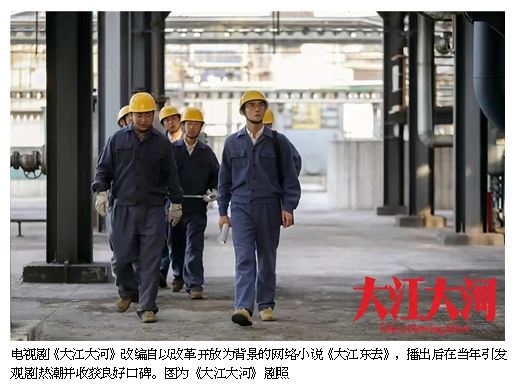
The manufacturing industry makes a major part of the Chinese economy. It is key to China’s green and low-carbon transition of production methods and industrial structure.

Today, green development is being extended from the production and supply chain to the infrastructure. Green factories and industrial parks are emerging across the country, recording  China’s accelerated efforts to promote green manufacturing.

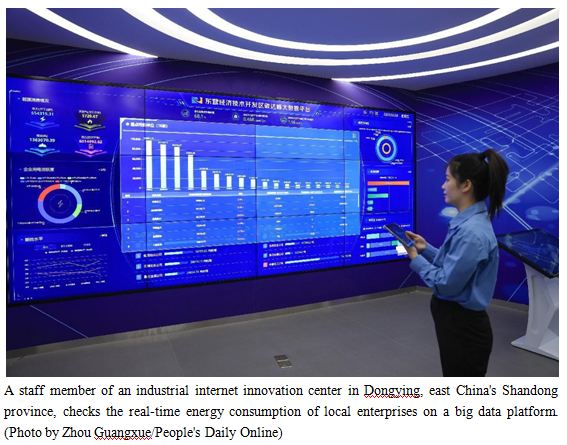
A smart production system enabled by big data and cloud computing technologies has been employed in a 5G intelligent workshop of Xin Feng Ming Group, a major chemical fiber producer in Tongxiang, east China’s Zhejiang province. In the workshop, a big screen displays the real-time energy consumption of production lines.

Adopting an innovative solution dyeing technique, the workshop can reduce 6 million tons of wastewater annually in the printing and dyeing process. It has also replaced wooden trays with recyclable plastic ones, which cuts the use of nearly 3 million wooden frames each year.

At the end processing link, the workshop employs an ultra-low-pressure vapor and condensate recycling technology, which helps cut solid waste by 95 percent and greenhouse gas emissions by 65 percent every year.

China has significantly improved its efficiency in energy and resource utilization. The energy consumption per unit of the added value of the country’s large industrial enterprises with annual revenues of more than 20 million yuan ($2.9 million) in 2021 dropped 5.6 percent from the previous year, after logging a 28-percent decline in the 2011-2015 period and a 16-percent decline in the 2016-2020 period. In 2021, the comprehensive utilization rate of massive solid waste has reached 56.8 percent, nearly 16 percentage points higher from 2012.

China’s green manufacturing has taken shape. Last year, it held a global market share above 80 percent for all manufacturing stages of the photovoltaic industry. Six Chinese enterprises were among the world’s top 10 wind turbine manufacturers and the country’s production and sales of new energy vehicles ranked first in the world for eight consecutive years.

China has basically established a green manufacturing system. So far, the country has nurtured 3,657 green factories, 270 green industrial parks, and 408 enterprises for green supply chains. Nearly 30,000 green products have been promoted in China.

It is estimated that over 95 percent of solid waste is recycled on average in the country’s green industrial parks, and a number of green factories boast energy consumption lower than the advanced level stipulated by national standards. A supply system for green products covering the whole industrial chain from raw materials to the consumption end is being built.

China has entered a new phase of development. It is greening its manufacturing industry in pursuit of a modern manufacturing model that features low consumption, low emissions, high efficiency and high benefit.

“Promoting green manufacturing is an inevitable choice for advancing new industrialization and a key to realizing high-quality development of the manufacturing sector,” said Liu Wenqiang, deputy head of the China Center for Information Industry Development.

“China still sees big room for improvement in green manufacturing compared with developed countries,” said Shan Zhongde, an academician with the Chinese Academy of Engineering.

At present, China’s industrial and energy structures are still high-carbon, with traditional resource-based industries making up a big proportion. The country will maintain rigid demand for energy and resources in the years to come, which puts it under high pressure of green and low-carbon transition.

To cope with the situation and realize high-quality economic and social development, China must achieve high utilization of resources and focus on low-carbon and recyclable development, and push for the upgrading of production and lifestyles with green manufacturing.

Swedish ambassador meets Foreign Secretary Asad Majeed

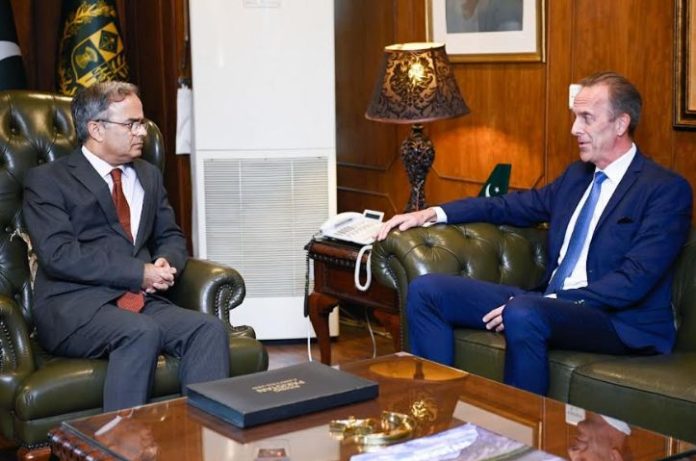
ISLAMABAD, APR 14 /DNA/ – Swedish Ambassador Henrik Person called on Foreign Secretary Asad Majeed in Islamabad, on Friday.

During the meeting they discussed ways to deepen bilateral relations, Foreign Secretary stressed the early resumption of normal consular services and full facilitation of Pakistani students by the Embassy.

Hainan free trade port in prosperous development

By Zhao Peng, Han Chunyao, Luo Shanshan, People’s Daily

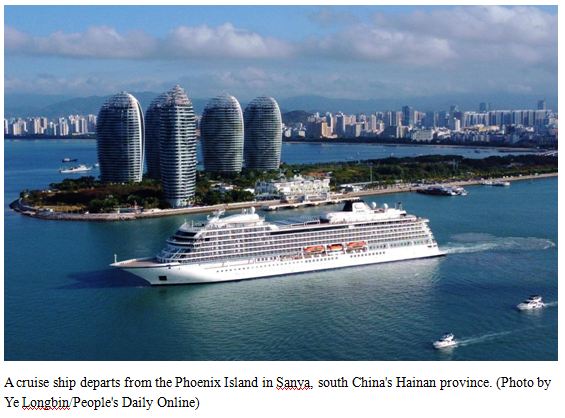
In April 2018, China announced the decision to support the southern province of Hainan in developing the whole island into a pilot free trade zone and gradually exploring and steadily promoting the establishment of a free trade port (FTP) with Chinese characteristics.

Five years on, the construction of the Hainan FTP has achieved fruitful results and significantly boosted the development of the province.

Hainan’s GDP expanded 5.3 percent annually on average in the past five years, while the province’s trade in goods and services surged 23.4 percent and 17.7 percent each year averagely during the same period.

Hainan’s total foreign trade accounted for 34.7 percent of its GDP last year, up 15 percentage points in five years. Besides, it’s actual use of foreign capital doubled for three consecutive years in 2018, 2019 and 2020, and the five-year total exceeds the sum of the previous 30 years.

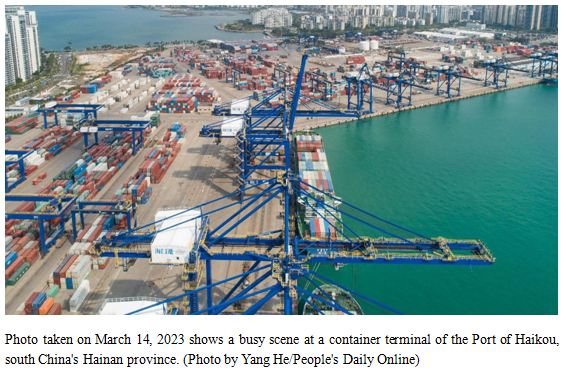
The Yangpu international container port at Yangpu economic development zone, Hainan province, has opened 40 domestic and international sea routes. Last year, the port handled nearly 1.77 million twenty-foot equivalent units, a year-on-year increase of 34.06 percent.

Tourism, modern services, high technology and high-efficiency agriculture with tropical characteristics, which are four leading industries of Hainan province, now make up 70 percent of the province’s GDP, up from 53 percent five years ago. In 2022, 13 key industrial parks in the Hainan FTP reported revenue of over 1.8 trillion yuan ($262.05 billion), 31.6 percent more from a year ago.

Hainan has become an engine that forcefully drives consumption. Sales of offshore duty-free shops in the province have exceeded 130 billion yuan in the past five years; the Boao Lecheng International Medical Tourism Pilot Zone, a cluster of industries of international medical tourism, has introduced and employed more than 300 types of drugs and medical equipment; six Sino-foreign education joint ventures and projects have been officially approved and kicked off in the Hainan Li’an International Education Innovation Pilot Zone.

Over the past five years, Hainan province has vigorously optimized its business environment, making it law-based, internationalized and business-friendly, as well as fair, transparent and expectable, which offers important support for the construction of the Hainan FTP.

Hainan has introduced more than 180 policies to optimize its business environment, including exempting tariffs for imported raw materials, transportation vehicles, yachts and self-use production equipment, lowering the income tax rate to 15 percent for eligible companies, capping the personal income tax rate at 15 percent for individuals with high-level and in-demand expertise working in Hainan, and exempting tariff for domestic sales of goods with added value. The province’s foreign investment negative list contains only 27 items, the shortest in the country.

As Hainan’s business environment continues to be optimized, the province has become a hot destination for business entities. It is reported that the number of newly established business entities in the province in the past five years is more than the total of the past three decades.

“Our trade volume increased significantly last year, with more types of products being exported. Our business has been expanded to South Korea, Malaysia, Indonesia and other countries,” said Li Xiaotao, general manager of a foreign trade company in Hainan.

Li’s company received its first Certificate of Origin under the Regional Comprehensive Economic Partnership (RCEP) on the day that the trade pact went into force on Jan. 1, 2022. Thanks to the certificate, the company enjoyed zero tariff treatment for a batch of aluminum sulfate products exported to Japan.

At present, Hainan province is enjoying the dividends from both the RCEP and FTP policies. Last year, the province’s trade volume with RCEP members grew 23.7 percent to reach 71.18 billion yuan, accounting for 35.4 percent of Hainan’s total foreign trade in the same period.

On Jan. 6, the first project for independent customs operations in Hainan province was completed at the Boao airport in Qionghai, Hainan.

Projects for independent customs operations are iconic and fundamental projects for the construction of the Hainan FTP. According to an overall plan on the construction of the FTP, before 2025, the province, centering on trade and investment liberalization and facilitation, and based on effective supervision, will take systematic steps to advance opening-up process, facilitate the convenient and efficient flow of various factors, achieve early harvest, and initiate independent customs operations throughout Hainan Island in due courses. So far, Hainan has comprehensively kicked off the preparations for independent customs operations.

The projects for Independent customs operations would turn Hainan province into a region inside the national border but outside the customs territory of China, which will further highlight freedom and facilitation, said Liu Feng, director of the Research Center for Free Trade Port with Chinese Characteristics of Hainan Normal University. According to him, independent customs operations will maximumly optimize the resource allocation for the Hainan FTP.

Election Tribunal summons Aslam Iqbal

LAHORE, Apr 12 (APP): Election Tribunal comprising Justice Ali Baqir Najfi of Lahore High Court (LHC) has summoned PTI Punjab leader Mian Muhammad Aslam Iqbal to hear appeals challenging acceptance of nomination papers by Returning Officer, PP-170 LHR XXVII, Lahore on April 13 (Thursday) tomorrow.

Two separate election appeals have been filed by Tauqeer Khalid and Tanveer Ahmed against the acceptance of Mian Aslam Iqbal’s nomination papers on the grounds that the latter concealed facts, alleging that Tauqeer Khalid, an overseas Pakistani transferred Rs.99,950,000 through crossed cheques to Mian Muhammad Aslam Iqbal but the said amount has not been disclosed by Mian Muhammad Aslam Iqbal either in his account or tax record mentioned in his nomination papers.

Tanveer Ahmed in his appeal has mentioned that Mian Muhammad Aslam Iqbal is the owner of renowned “DOCE Foods” and has transferred his ownership to the appellant and others, to avoid liabilities of millions of rupees that too without any consideration through sham transactions.

The counsel of the appellants while leading preliminary arguments highlighted the fact that Mian Muhammad Aslam Iqbal is the actual owner of DOCE Foods which until it was closed in August 2022 was run by his nephew Ali Imran. Referring to two entries in nomination papers Rs.16,422,500 (Receivable from Shaukat Ali) and Rs.29,100,000 (Payable to Dr. Muhammad Sarwar) both partners in DOCE Foods reflects that Mian Muhammad Aslam Iqbal still holds majority shares in partnership Firm DOCE Foods which were transferred on 22.07.2022 without any consideration to one of the appellants Tanveer Ahmed with huge liabilities ranging in millions few days after which it ceased operations.

The appellant further alleged that Mian Muhammad Aslam Iqbal managed to lodge various FIRs against him i.e. F.I.R. Nos. 1409-22, 1413-22, 1465-22 and 1528-22 all under Section 406 P.P.C. at Quaid-e-Azam Industrial Estate Police Station, Lahore kept him physical remand of 20 days under threat of further F.I.R.s and managed fraudulent transfer of land measuring 60 kanals situated at Khewat No.1302 Mutation No.18737, 18655, Khasra No.219 situated Moza Kaghan Lake, Naran adjacent to Arcadian Hotel, Tehsil Balakot, District Mansehra to third party during physical remand of the appellant in fake FIRs lodged by different persons at the behest of Mian Muhammad Aslam Iqbal, when he was serving as Senior Minister, Government of the Punjab.

Both the appellants have contended that the Returning Officer received their objections, but didn’t took up the objections. The appellants further alleged that the nomination papers filed by Mian Muhammad Aslam Iqbal were later altered after the acceptance by the Returning Officer, claims sanctity attached to the process stands compromised.

Stay Connected

64FansLike
60FollowersFollow

Latest Reviews

Exchange Rates

USD - United States Dollar
EUR
1.16
GBP
1.34
AUD
0.67
CAD
0.72