Home Blog Page 1190

Pak vs NZ: Triumphant Pakistan eye clinching T20 series against New Zealand

LAHORE: Triumphant Pakistan will try to notch their third successive win to take an unassailable 3-0 lead in the five-match T20I series against New Zealand when the two sides meet at the Gaddafi Stadium tonight.

Pakistan pocketed back-to-back wins over New Zealand with a 88- and 38-run victory over the tourists in the first and second T20Is.

Though New Zealand lost both matches fair and square, in the second game they showed promise with a better performance.

The way Kiwis showed a fighting spirit they would try and make a comeback in this game to reduce the lead taken by Pakistan.

Being 0-2 down in the five-match series, the visitors have an uphill task at their hands to script a comeback in the remaining three games.

New Zealand still have a chance to save this series but for that, they need to win all the remaining three T20 matches.

The Black Caps on both occasions failed to stop Pakistan from scoring runs. Matt Henry was the only successful bowler from their side with a hat-trick in the opening match and two wickets in the second.

The batting order of New Zealand performed better than in their second match but failed to chase the target of 193 runs and scored 154 runs in 20 overs.

Chad Bowes and Tom Latham opened the innings and provided a good opening start of 44 runs.

Mark Chapman was the most successful and highest run-scorer from their side with 65 runs to his name on 40 balls with the help of four boundaries and as many sixes.

He remained not out till the 20th over. Chad Bowes was the other batsman who put some runs on the board. He scored 26 runs off 24 balls and smashed three boundaries.

From Pakistan, Fakhar Zaman and Saim Ayub performed well in the first match but they failed in the second. Iftikhar Ahmed scored 33 runs in the second match while Babar Azam headlined with a masterclass ton.

Among the bowlers, Haris Rauf has been on fire as he took four wickets each in both games.

The Black Caps could bring in Blair Tickner in place of Ben Lister for this must-win encounter while Pakistan are expected to replace Muhammad Rizwan with Muhammad Haris due to a back injury the star batter sustained in the previous game.

The toss can play an important role in the decision of this match. As has been seen in the recent past, the team winning the toss at the venue has come out batting first and successfully defended the score.

The wicket prepared for the match at Gaddafi Stadium is expected to be full of runs. Clear weather is forecast for today.

Squads
Pakistan: Babar Azam (captain), Shadab Khan (vice-captain), Faheem Ashraf, Fakhar Zaman, Haris Rauf, Iftikhar Ahmed, Ihsanullah, Imad Wasim, Mohammad Haris, Mohammad Nawaz, Mohammad Rizwan, Naseem Shah, Saim Ayub, Shaheen Shah Afridi, Shan Masood and Zaman Khan.

New Zealand: Tom Latham (c, wk), Chad Bowes, Mark Chapman, Dane Cleaver, Matt Henry, Ben Lister, Adam Milne, Cole McConchie, Daryl Mitchell, Jimmy Neesham, Rachin Ravindra, Henry Shipley, Ish Sodhi, Blair Tickner, Will Young.

Boao Forum for Asia to carry forward multilateralism, promote cooperation

By Zhang Mengxu, Zhang Penghui, Chen Shangwen, People’s Daily

The Boao Forum for Asia (BFA) Annual Conference 2023 held its first press conference on March 28, on which the “Asian Economic Outlook and Integration Progress Annual Report 2023” and the “Sustainable Development: Asia and the World Annual Report 2023” were officially released.

Noting that uncertainty remains a prominent character of today’s world, BFA Secretary General Li Baodong said that the annual conference hopes to carry forward true multilateralism, practice open regionalism, explore certainty in an uncertain world and promote solidarity and cooperation among countries to better meet challenges through discussions.

The recovery of the world economy remains weak at present, which makes for a volatile external environment for Asia’s economic growth. However, as an important engine driving global economic growth, Asia is speeding up its recovery this year and becoming a reliable driver of world growth and an important pillar for multilateralism.

According to the Sustainable Development: Asia and the World Annual Report 2023, the weighted real GDP growth rate of Asia in 2023 is estimated to be 4.5 percent, an increase from 4.2 percent in 2022.

The International Monetary Fund predicted that China and India alone would contribute about half of the world’s growth this year. For every percentage point of higher growth in China, activity in other economies rises on average by 0.3 percentage point.

Anil Kishora, Vice-President and Chief Risk Officer of the New Development Bank, believes that the Asia-Pacific region, which accounts for 1/3 of the world’s population, over 60 percent of the global economy and close to half of global trade, is the most dynamic growth belt in the world.

As the manufacturing center of the world, the region will play a more important role in driving global growth and safeguarding stable industrial and supply chains , he said.

Lee Hyuk-joon, President of Hyundai Motor Group (China) told People’s Daily that China, as the second largest economy in the world, is a stabilizer and booster for the world economy, adding that China is the world’s largest consumption market, and the upgrading of this market will exert positive impacts on global trade and economic growth. As a major manufacturing center, China will also create more opportunities for the manufacturing industry of other countries, he noted.

The Asian Economic Outlook and Integration Progress Annual Report 2023 said Asia has played a more proactive and leading role in global macroeconomic policy coordination, and the world has entered the “Asian Moment” for global economic governance.

Zhang Yuyan, director of the Institute of World Economics and Politics at the Chinese Academy of Social Sciences, said the world today is facing uncertainties, but peace and development still remain the general trend. He believes China and Asia will make the world a more certain place.

Asia’s regional economic integration continues advancing despite the rise of geopolitical conflicts and anti-globalization. Asia is still a staunch supporter of multilateralism and an active promoter of global economic governance.

Lin Guijun, former vice president of China’s University of International Business and Economics (UIBE), told People’s Daily that most major economies in Asia had seen increasing dependence on Asian production between 2001 and 2021, which indicated a higher level of regional economic integration.

He said digital economy is one of the two engines driving Asia’s regional economic integration. According to him, the share of Asia’s digital service trade in the world has steadily expanded, reaching 25.6 percent in 2021. The other engine, according to Lin, is the demand of Asian countries to jointly cope with climate change and tackle environmental issues.

Institutional opening up mechanisms have been constantly releasing dividends since the Regional Comprehensive Economic Partnership (RCEP) took effect a year ago.

Sang Baichuan, dean of UIBE’s Institute of International Economy, said the RCEP has effectively lowered the cost of trade and investment among member countries, and there has been a higher level of economic integration.

As the world’s largest regional free trade agreement, the RCEP will continue releasing its dividends, promoting the integration of industrial and supply chains among member countries and becoming an important engine driving economic growth in Asia and the world.

Development is of important significance for poverty elimination, promoting economic and social progress and advancing regional economic integration in Asia. However, the sustainable development of the world is threatened. The official assistance provided by the developed world is less than half of what it has promised, and the scale of aid from a few countries is even shrinking. Challenges are ahead against realizing the UN’s 2030 Agenda for Sustainable Development.

This year marks the third year for the BFA to release the Sustainable Development: Asia and the World Annual Report. The report calls on Asian countries to take immediate actions to cope with the crisis threatening sustainable development.

All parties relevant need to make huge efforts to restore peace and narrow divides, governments and the society should take joint actions to mobilize resources and build a global partnership for development, Li said.

China proposed the Global Development Initiative in September 2021, and in less than a year, the High-level Dialogue on Global Development was held. Asian countries are working with other countries in the world to make development a priority on the international cooperation agenda, forge a united, equal, balanced and inclusive global development partnership, and bring the world back to the track of achieving the UN’s 2030 Agenda for Sustainable Development.

China treats other developing countries with good faith

By He Yin, People’s Daily

China has been enjoying a good reputation for valuing sincerity, friendship and equality while developing relations with other developing countries.

Serbian President Aleksandar Vucic said that Serbia is a true friend of China, and the Serbian side respects China and admires China’s great leadership. No matter what pressure or difficulty there may be, the steel-like friendship between the two countries will never change, nor will the friendly sentiment the Serbian side holds toward the Chinese people, he noted.

“Benin, though small in size, stands on the side of truth, equality and justice, and will continue to be a steadfast and reliable friend of China,” said Beninese President Patrice Talon during a meeting with Chinese Foreign Minister Qin Gang.

Crown Prince of Kuwait Sheikh Mishal Al-Ahmad Al-Jaber Al-Sabah also said that China is always a friend of Kuwait.

These remarks well indicate developing countries’ firm will to develop relations with China.

In the past 10 years since Chinese President Xi Jinping put forward the principles of sincerity, real results, affinity and good faith, China and other developing countries have always treated each other with sincerity and constantly expanded new areas of cooperation and growth, bringing their cooperation onto new levels.

China has always provided selfless assistance in helping other developing countries develop and modernize. It always respects the will of the people in other developing countries and assists them in developing their economies and improving people’s livelihoods to the best of its ability based on their actual needs. It never interferes in the domestic affairs of other countries.

China is the world’s largest developing country, and developing countries are its natural allies in international affairs.

China sincerely supports greater representation and a louder voice of developing countries in international affairs, helps reinforce the South which is a weak link in the global governance system, and works to make the global governance system better reflect the aspirations and interests of the majority of countries in a more balanced way, especially developing countries.

China always stands with other developing countries, speaking up for them at international fora.

It has endeavored to establish cooperation platforms at various events to deepen mutual understanding, enhance pragmatic cooperation and expand exchanges and mutual learning among developing countries, including the APEC Economic Leaders’ Meeting in Beijing, the G20 Hangzhou Summit, the Shanghai Cooperation Organization Qingdao Summit, the Belt and Road Forum for International Cooperation, the Beijing Summit of the Forum on China-Africa Cooperation and the Communist Party of China in Dialogue with World Political Parties High-level Meeting.

The “BRICS Plus” cooperation model proposed by China has set the pattern for carrying out South-South cooperation and seeking strength through unity for emerging markets and developing countries.

China sincerely shares its development experiences with other developing countries, which has injected impetus into their efforts to achieve prosperity.

China has promoted Chinese hybrid rice and Juncao technology, established agricultural technology demonstration centers and Luban workshops, carried out poverty reduction cooperation and set up a global development promotion center. It has always been committed to helping other developing countries achieve common progress.

China has effectively promoted Chinese modernization, made constant progress in enriching and developing a new form of human advancement, and busted the myth that “modernization means Westernization,” setting an important example for other developing countries in independently exploring a path to modernization based on their national realities.

The Chinese efforts have been widely lauded by the international community. It is believed that Chinese modernization has significant meaning for other developing countries as it indicates that modernization is not a single-choice question and there’s no one-size-fits-all standard.

Some said while promoting Chinese modernization, China has also helped improve the economic development of many countries, especially developing countries, and China’s success is inspiring other developing countries to pursue prosperity.

China and other developing countries are both in the process of rapid development. Their mutual understanding needs to keep pace with the time.

China always acts in good faith in addressing problems that might occur in bilateral relations, and will frankly discuss and deal with new developments and issues with other developing countries on the basis of mutual respect and through mutually beneficial cooperation.

Some Western countries are clinging to a Cold War mentality and attacking China for developing relations with other developing countries, trying to impede China from cooperating with them and undermine China’s friendship with them by fabricating lies that China follows the so-called “neo-colonialism” and creates the so-called “debt traps.”

However, developing countries have a clear understanding and fair stance, and have expressed strong dissatisfaction and criticism against the attacks by these Western countries.

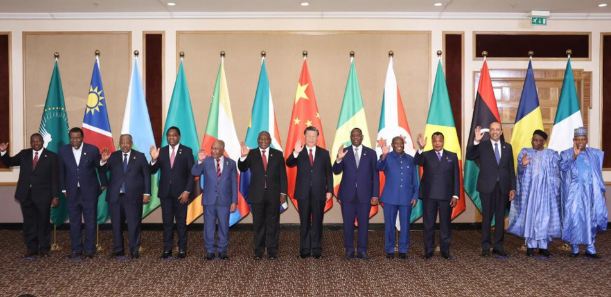
Namibian President Hage Geingob recently said that China respects his country and has never engaged in any colonialism or imperialism.

With the growth of developing countries, global prosperity and stability will be put on a more solid footing. China will keep working with other developing countries and adopt concrete measures to deepen their friendly cooperation so as to bring more benefits for them and make the world a more prosperous and stable place.

Sincerity makes friendship last

By He Yin, People’s Daily

This year marks the 60th anniversary of China dispatching its first medical aid team abroad. Over the past six decades, a total of 30,000 medical personnel have treated 290 million local patients in 76 countries and regions.

Chinese medical aid teams, benefiting local communities with their medical proficiency and ethics, have become an authentic representation of China’s sincerity in developing relations with other developing countries.

Chinese President Xi Jinping pointed out in a speech he delivered 10 years ago at the Julius Nyerere International Convention Center in Tanzania that sincerity is a defining feature of China-Africa relations.

The peoples of China and other developing countries are destined to be good friends as they have shared past experiences and similar aims and goals.

Treating developing countries with sincerity, courtesy and friendship has always been a feature and tradition of China’s diplomacy in the new era. China is committed to enhancing mutual understanding between the Chinese people and the people of other countries, and always works to build a solid social foundation for bilateral friendship, so as to nurture a better environment for mutually beneficial cooperation.

Strengthening exchanges and dialogue leads to a closer people-to-people bond.

China has built the Belt and Road into a road connecting different civilizations, and hosted the Conference on Dialogue of Asian Civilizations and the Communist Party of China in Dialogue with World Political Parties High-level Meeting.

It has also actively promoted cultural cooperation within the Shanghai Cooperation Organization, BRICS and other multilateral mechanisms, and has expanded cooperation with African countries, Latin American countries and Arab states on culture, education, science and technology and health, as well as growing exchanges between their media, think tank, youth and women.

China is actively building mutual learning platforms for civilization dialogues, inter-party exchanges and civil diplomacy, so that countries can draw wisdom from each other’s civilizations, enhance cultural understanding and people-to-people bonds, and build a broader consensus for building a community with a shared future for mankind.

It is generally believed by the international community that China has made important contributions to enhancing mutual understanding, solidarity and mutual trust among different civilizations by establishing cultural dialogue platforms.

Deepening pragmatic cooperation brings people closer. China always works to provide tangible benefits to developing countries with sincerity.

In Mozambique, farmers growing Chinese hybrid rice have enjoyed good harvests, and the rice produced has been “Good Taste” by the locals.

In Vanuatu, the China-assisted Malapoa College is like a lighthouse that illuminates the path to knowledge for young generations.

In Mexico, Chinese enterprises, showing respect for local culture, have actively funded public welfare projects including orphanages and nursing homes. The Chinese employees are like families to local people.

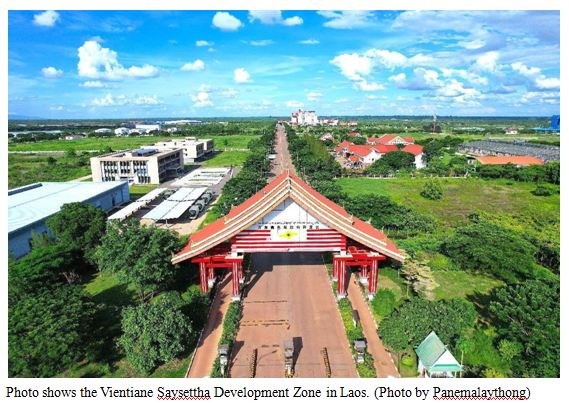
In Laos, the China-Laos Railway is like a “golden channel” that has completely changed the life of local people. It is nicknamed the “road to happiness” by Lao media.

These stories make a symphony of China and other developing countries working together through thick and thin and building a closer people-to-people bond.

As a famous Chinese line goes, “Friendship, which derives from close contact between the peoples, holds the key to sound state-to-state relations.” China actively promotes youth exchanges with other developing countries and builds broad platforms of talent training and mutual learning for young generations.

It has provided scholarships funded by the Chinese government for foreign students and strengthened international cooperation in vocational education. It has also held young leaders forums and youth exchange camps, sent young volunteers to other developing countries and invited youngsters from other countries to visit China.

China is helping more and more young people from other developing countries realize their dreams. Those youngsters, who become interested in the Chinese language and culture, are coming to China for study and work and becoming envoys of friendship between China and their own countries.

As a Latin American proverb goes, a real friend is someone who is able to touch your heart from the other side of the world. Indonesians often say that it’s easy to make money but difficult to make friends. There is a also saying in Persian that people’s hearts are connected. These all indicate that people-to-people bonds can build a strong power and only sincerity can make friendship last.

China will always be a true friend and sincere partner of other developing countries, working with them to build a community with a shared future for mankind and jointly creating a brighter future for humanity.

Indonesia to Russia via CPEC

Dr M Ali Hamza

Changes in population size impacts the consumer market potential.Population forecast assist us to stay in tune with the expected patterns of change, which is the key to strategize, adapt and succeed in the longer term. Therefore, monitoring demographic trends is an essential part of global business strategy for any country offering any sort of goods or services. To put it simply, rise in population triggers the increase in demand, that leads to a bulge in scale of production and pushes toward diversification of production patterns to meet the demand. 

On one hand the swelling in amount of global population appears challenging, but on the other it has all attributes of a positive contributor toward economy. More hands more production, more consumption, and ultimately more economic turnover. The western industrialization took all its advantages due to huge eastern population. Yes, channelizing the use of population for national development is a must. So did China, Indonesia, Bangladesh, Russia, and India do. Therefore, the economies of these countries showed up well, even being among the top ten populous countries in the world.

It is important to know that out of 7.888 billion human beings, 5.74 billion people live in the eastern world.This makes 72.85% of the world population. To clarify: In geography, the Eastern hemisphere is usually considered to be formed by all of Europe, Africa, Asia, Australia and the islands of the Pacific that are west of the International Date Line. However, in history, politics and economics, Europe, Australia and New Zealand is often grouped with America because of their cultural similarities, and collectively they are referred to as the Western World.Anyways, out of 5.74 billion, 4.24 billion: (73%) of eastern population lives in only few countries that exist between Indonesia and Russia like Malaysia, Philippine, Myanmar, Bangladesh, India, Sri Lanka, Afghanistan, Iran and Pakistan.

Besides population, the geographical landscape between Indonesia and Russia is hyper rich in natural resources,crops and livestock. For instance, more than 45% of world’s total wheat production happens only in four countries of the Asia; China, Russia, Pakistan & India.Indonesia is one of the world’s main suppliers of rubber, coffee, cocoa, and palm oil. China, Russia, Saudi Arabia and Iran are among top countries with the most natural resources. Afghanistan & Pakistan are rich in minerals. China, India, Russia, and Indonesia are the countries with most productive mining economies.Moreover, the central, south and south east Asian countries are almost self-sufficient in technology. China, Hong Kong, Malaysia, Philippines, and India are top technology exporters.

This all says that we are more than sufficient for each other, thus require a sense of harmony and structure of connectivity to easily transport our goods and services to each other. CPEC is a well long-sighted connecting route between all the countries from Indonesia to Russia. And that makes it a game changer. Does CPEC really offers higher financial gains and involvement of lesser intermediaries in transportation of goods? to understand we need to re-visit some statistics.

According to a 2021 data, Russia imports Palm & Coconut Oil and Rubber from Indonesia (worth $1.79 B), and Indonesia imports Potassic Fertilizers, Coal Briquettes and Semi-Finished Iron (worth $1 B). Besides lots of goods, Russia mainly imports rubber, electronic equipment, medical apparatus and boilers from Malaysia that worth around $1.8 billion, and in return exported plenty of goods to Malaysia like mineral fuels, oil, distillation products, and fertilizers worth $1.19 billion.Data of the same year reveals thatSouth Korea exported $10.4B to Russia. The main products were Cars, Motor vehicles; parts and accessories and Iron Structures. South Korea imported crude oil, mineral fuels, distillation products, steel and lot more that worth $13.22 billion from Russia.Moreover, other countries of ASEAN (Association of Southeast Asian Nations) like Vietnam, Thailand, Philippines, and Singapore total import from Russia is approximately $5.6 billion and Russian import from these countries is around $2.5 billion in 2021. The trading route of these all transactions is primarily Indian oceanto Red sea, and via Suez canal to Mediterranean sea, turns to Black sea and then the railways or road path. This route is long, expensive and full of many intermediaries. So, what is better option than CPEC that cuts down tremendously the cost of logistics, and taking permission from many countries, thus saves time.

For the sake of an argument; in 2021, China exported $5.48B to Sri Lanka. The main products that China exported to Sri Lanka are Broadcasting Equipment, Light Rubberized Knitted Fabric, and Vaccines, blood, antisera, toxins and cultures.Indonesia exported goods of around $54.5 B worth to China and in return Indonesia imported Broadcasting Equipment, Vaccines and Computers worth $60.4B from China in the same year. Malaysia’s import from China was $55.27 billion and exported products of $47.9 billion worth, in 2021. As China is shifting its major industry to western end: Xinjiang. Xinjiang province is emerging as industry, logistics and economic zone with Kashgar as its capital. Southern &central routes of silk road merge in Kashgar, therefore it is an important transfer hub of the Silk Road and that makes Kashgar the significant and global future trading center. Who does not want to connect with the promising trading hub of the near future? and if south and specially south east Asian countries will use old routes that go all the way from Pacific Ocean to eastern Chines ports and then all the way to Kashgar to connect with silk road, the transportation cost will go sky rocketing.

Furthermore, the total trade between CARs and ASEANs is more than half of billion US$. This trade and its profit margins can be extended through using CPEC. Central Asian Republics (CARs) are an important market. A studyindicates that for CARs, regional approach to the development of infrastructure is important, and policy toward infrastructure development should be associated with a further regional economic integration process.CPEC is a flagship program of greater plan of BRI that is designed to assure regional economic integration.

Above data is a speck of a larger reality. Countries that are between Indonesia and Russia need to re-visit their bi and multilateral economic policies to get the best of CPEC. This makes all responsible.It is not only China and Pakistan who needs to re-adjust but the countries of eastern world have to decide whether to stay dependent on west or enjoy economic freedom through accepting the differences and realizing each other’s strengths. Is it sensible to fuel the economies of people who do not and they never belonged to our side of the world? They were the infiltrators, and they will not stop doing it. It is us who need to be together for the greater good of our side of the world as well as the other.

Man Electrocuted While Trying To Catch Kite In Attock

DNA
QAZI SHOAIB KHAN
ATTOCK (APRIL-16) In Attock a young man was electrocuted when he tried to catch a kite at the outskirts village Langial within the jurisdiction of police station Pindigheb of district Attock .
Police sources said that victim Zahid Iqbal was trying to catch the kite stuck in the electricity wires near the house who got an electric shock which resulted his critical burn injuries.
On getting information, he was shifted to the tehsil headquarters hospital where he pronounced dead before taking any medical aid by the doctors.
Meanwhile, his dead body was handed over to his real heirs after getting his detailed autopsy and other related legal formalities. Later on, he was laid to rest in the local graveyard amid the tears of his mourners.

G7 pledges to quit fossil fuels faster, but no new deadline

The G7 pledged on Sunday to quit fossil fuels faster and urged other countries to follow suit, but failed to agree to any new deadlines on ending polluting power sources like coal.

The language reflects the depth of disagreements among the allies on the balance between climate action and energy security, with host Japan leading a pushback against the most ambitious proposals discussed.

After two days of talks in the northern city of Sapporo, the bloc’s climate and environment ministers vowed to “accelerate the phase-out of unabated fossil fuels so as to achieve net zero in energy systems by 2050 at the latest … and call on others to join us in taking the same action”.

But they offered no new timelines beyond last year’s G7 pledge to largely end fossil fuel use in their electricity sectors by 2035.

France’s energy transition minister Agnes Pannier-Runacher said the “phase-out” wording was nonetheless a “strong step forward” ahead of the G20 and COP28 summits.

Britain and France had suggested a new goal of ending “unabated” coal power — which does not take steps to offset emissions — in G7 power grids this decade.

But with global energy supplies still squeezed by the war in Ukraine, the target faced opposition from other members, including Japan and the United States.

“I would obviously have liked to have been able to make a commitment to phase out coal by 2030,” Pannier-Runacher told AFP.

But “it is one issue on which we can still make progress in forthcoming discussions, particularly at COP28”, the UN climate conference in Dubai set for November.

Call to reduce ‘gas demand’
The Group of Seven industrialised nations, which also includes Germany, Italy, Canada and the European Union, pledged to end new plastic pollution by 2040.

Britain, Canada and the EU already belong to an international coalition with the same goal, but this is the first time Japan and the United States have made the 2040 commitment.

Plastic waste has doubled globally in two decades and only nine per cent is successfully recycled, the Organisation for Economic Co-operation and Development says.

The G7 ministers also urged a peak in global greenhouse emissions by 2025 at the latest — language that experts say is aimed at the world’s largest carbon emitter, China, which is targeting its own 2030 peak.

Other topics proved more divisive.

The ministers had been under pressure to announce bold steps after a major UN climate report warned last month that global warming of 1.5 degrees Celsius would be seen in about a decade without “rapid and far-reaching” action.

But campaigners feared backsliding on previous pledges such as ending new overseas fossil fuel financing.

G7 leaders said last year that the “exceptional circumstances” of Russia’s war in Ukraine made gas investments “appropriate as a temporary response”.

Sunday’s statement contains similar language, but also sets multiple parameters around such investments and highlights the “primary need” for “gas demand reduction”.

Still, climate campaigners warned that ambiguity sends the wrong message.

“The science is crystal clear that leaving the door open to investments in new gas or [liquefied natural gas] leaves the G7 off track for 1.5C,” said Laurie van der Burg of Oil Change International.

Even so, Japan’s minister of economy, trade and industry Yasutoshi Nishimura characterised the communique as “ambitious” and praised the G7 for “recognising diverse paths towards carbon neutrality”.

‘Somewhat positive’
Fatih Birol, executive director of the International Energy Agency, told AFP he was pleased with the statement.

It takes “our current energy security concerns” into consideration but also “provides a road map on how we deal with the climate crisis”, he said.

The G7 stopped short of endorsing Japan’s strategy of burning hydrogen and ammonia alongside fossil fuels to reduce emissions — which activists say only serves to extend the lifespan of polluting plants.

Its statement simply notes that “some countries are exploring” the potential of hydrogen fuels, adding that this should be “aligned with a 1.5C pathway”.

Attempts to commit to halving emissions from vehicles in the G7 by 2035 also floundered.

There is still time for Japan to “demonstrate its leadership in the decarbonised automobile industry” before May’s G7 summit in Hiroshima, said Daniel Read of Greenpeace.

Overall, the nations had “made a somewhat positive step … in the right direction”, but “failed to set out adequately ambitious action plans to drastically reduce emissions”, he added.

Palestine ambassador hosts Iftar dinner

ISLAMABAD, APR 16 /DNA/ – Ambassador of Palestine Ahmed Rabei hosted Iftar dinner at his residence. Seen in the picture are Pir Naqeeb ur Rehman, Senator Mushahid Hussain Syed, Senator Talah Mahmood, CEO Serena Hotels Aziz Boolani, Ambassador of Jordan Ibrahim Al Madani, Dr. Luay Shabaneh UNFPA Representatives, Abedalrazaq Khalil Sector Leader World Bank, SAPM Faisal Karim Kundi, Editor Daily Islamabad Post Ansar M Bhatti, Ghalib Iqbal, Malik Ammad, Sultan Ali and others.=DNA

Unhappy PM orders crackdown against sugar mafia

LAHORE, APR 16 (DNA) — Prime Minister Shehbaz Sharif has approved initiating a major crackdown against the sugar mafia including smugglers, hoarders, and profiteers. While chairing a high-level meeting here on Sunday, he expressed displeasure at the reports of illegal profiteering and smuggling of sugar.

Punjab Chief Minister Mohsin Naqvi, Special Assistant to Prime Minister Ahad Cheema, Chief Secretary Punjab, Secretary Food Punjab, Inspector General Police Punjab, and other officials were present in the meeting.

Shehbaz Sharif directed that the elements involved in profiteering and hoarding should be dealt with an iron hand and given exemplary punishment. In this regard, the PM decided to summon a meeting in Islamabad on Monday to finalize measures to stop sugar smuggling.

During the meeting, a strategy would be formed for countrywide action to eradicate the smuggling of sugar and other items. Shehbaz Sharif said that people could not be left at the behest of smugglers, profiteers, and hoarders.

“We will take action against those who are causing difficulties for the people.” He instructed Chief Minister Punjab Mohsin Naqvi to take effective steps and monitor the situation in order to control the price of sugar in the province.

He said the provincial government should devise a strategy to provide the confiscated sugar from smugglers and hoarders to the general people at a low price. The prime minister also instructed the Punjab chief minister to hold a meeting with sugar mills owners for keeping sugar prices stable.

He also held a meeting on the issue last week in Islamabad and measures taken by him brought the price of sugar to Rs 92 per kg. — DNA

If Supreme Court interferes in parliament, it’s authority will be challenged: Raja Pervaiz Ashraf

If parliament of right to legislate is not acceptable; stop mockery of elections, says Speaker National Assembly

Chief Justice should reduce the atmosphere of conflict in institutions: Raja Pervaiz Ashraf

Islamabad, APR 16 /DNA/ – The Speaker of the National Assembly of Pakistan, Raja Pervaiz Ashraf, says that if the legislative authority of the Parliament is not to acceptable, then the mockery of the election should also be ended. He maintained that if the Supreme Court interferes in the matters of Parliament, then its authority will also be challenged.

He was sharing these views in a special interview with Voice of America correspondent Ali Furqan in Islamabad. He opined that legislation is the authority of the parliament and if Supreme Court interferes in these matters constitutional supremacy of the parliament would be ended. He added, if Supreme Courts continues interference, then the mockery of elections should be stopped and the legislation should be should be done by them (Supreme Court).

The Speaker said that the same Supreme Court, which is preventing the elected representatives of the people from making laws, had given military dictator Pervez Musharraf the right to amend the law. “The constitutional institutions of the state should work within their limits”, he added.

Pervaiz Ashraf said that the Parliament is the mother of all institutions from where the Constitution of Pakistan was formulated and according to it, epicenter of power is parliament, ‘’no other institution has this authority’’, he emphasized.

He said that he is unable to understand that when political parties and lawyers’ fraternity were demanding that a full court be constituted to address the issue of provincial assembly elections, what was wrong with it that instead of three or seven judges, full court listened to it.

If ambiguity can be removed from forming full court, then why is not anarchy avoided, he asked.

According to him, this conflict is not in anyone’s interest because it gives rise to mistrust and mismanagement between institutions and the country cannot run without mutual respect between state institutions.

Referring to the decision of the Supreme Court regarding the Punjab Assembly elections, Raja Pervez Ashraf said that the nation is still confused about the decision, “the Chief Justice would resolve this crisis”, he hoped.

Stay Connected

64FansLike
60FollowersFollow

Latest Reviews

Exchange Rates

USD - United States Dollar
EUR
1.17
GBP
1.34
AUD
0.67
CAD
0.72