Home Blog Page 1188

Pakistan, Bangladesh should find new ways to promote mutual trade

Pakistan

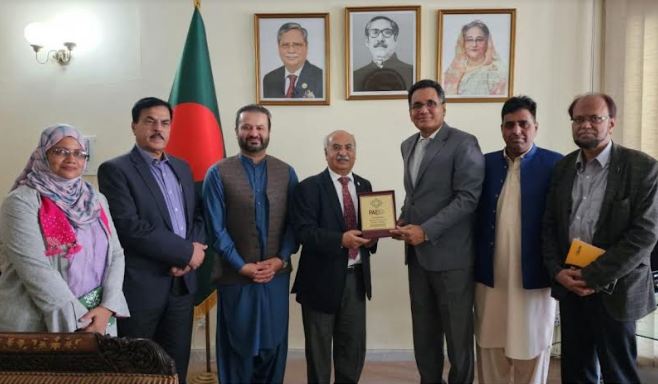
ISLAMABAD, SEPT 22 /DNA/ – The founder chairman of Pakistan Association of Exhibition Industry, Khursheed Barlas, along with the delegation including Fahad Barlas, convener Exhibition, Amin-u- Rahman, Shamriz Iqbal, EC members, along with Ruhul Alam Siddique, High Commissioner of Bangladesh posted in Pakistan, at the embassy.

In the meeting, Chairman Khursheed Barlas briefed the Ambassador of Bangladesh about “Third Pakistan International Property Housing and Construction Exhibition 17-19 November 2023” Pakistan China Friendship Center Islamabad.

A large number of various business community associated with bank projects and tourism industry including prominent builders, developers, allied construction industry from across the country will participate in the three-day exhibition.

During the conversation, Bangladesh Ambassador Ruhul Alam Siddique said that SAARC member countries should work together to promote trade. He said that Pakistan has expertise in the field of food processing.

Bangladesh can benefit from Pakistan in this sector. The two countries should find new avenues to promote mutual trade. He said that for investors in Bangladesh, Pakistan should invest in various sectors including tourism, agriculture, value-added textiles, construction sector and energy sector, especially renewable energy.

 There are immense investment opportunities in Pakistan. Promotion of bilateral trade and economic relations between Pakistan and Bangladesh can be a milestone in regional and global trade integration and linkages. Chairman of Pakistan Association of Exhibition Industry Khurshid Barlas, highlighting the exhibition, said that the Expo is a trade fair.

Known as Where property developers set up their stalls to introduce their latest property developments as well as upcoming projects to property buyers and investors Chairman PAEI presented a special invitation to the Bangladesh Ambassador at the 3rd Pakistan International Exhibition.

Which was accepted by the Ambassador of Bangladesh and assured that he will ensure his participation in this exhibition. Finally, Pakistan Association of Exhibition Industry also presented the shield to Ruhul Alam Siddique, High Commissioner of Bangladesh. On this occasion, Fahad Barlas  convener Exhibition, EC members, Amin-u- Rahman, Shamriz Iqbal were also present.=DNA

============

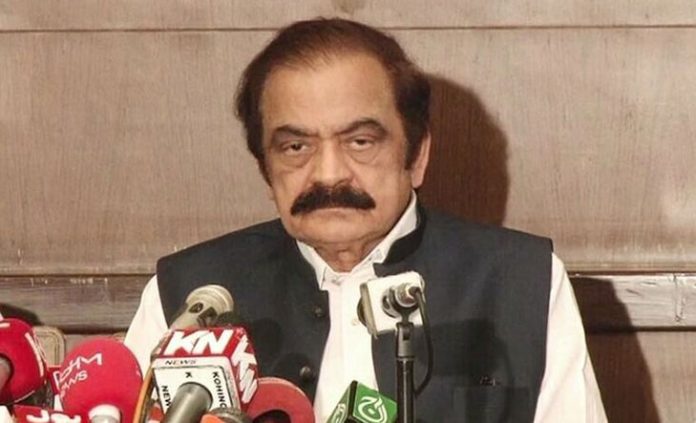
Bajwa, Faiz should be held accountable for causing instability: Rana Sanaullah

Bajwa

ISLAMABAD, SEPT 22: Former interior minister and leader of the Pakistan Muslim League-Nawaz (PML-N), Rana Sanaullah, pinned the blame for the country’s ongoing political and economic crises on former army chief Gen. (ret.) Qamar Javed Bajwa and former Inter-Services Intelligence (ISI) chief Faiz Hamid.

Sanaullah referred to the former top military leaders as “culprits of the nation” in an interview with a local TV station on Wednesday and demanded that they be prosecuted for causing political and economic instability in the nation.

In response to a question, Sanaullah said: “These people are culprits of the nation. They are the culprits of Pakistan. They are culprits of not just the PML-N but also of the entire nation.”

“They will not be forgiven. These people must be held accountable. They are responsible for the current instability in the country and they must be asked why they created instability in 2017,” he added.

Sanaullah responded to a different question about what course of action PML-N leader Nawaz Sharif would suggest if his party won power against Gen Bajwa, Gen Hamid, former Chief Justice of Pakistan (CJP) Saqib Nisar, and a sitting senior Supreme Court judge, whom he named while addressing his party’s Punjab Tanzeemi Committee via video link on Tuesday, or whether it was just a statement.

He responded that his party would hold off on seeking retribution against “these national culprits” when asked what the PML-N’s strategy was. He claimed that Sharif made it abundantly clear in his speech that immediate medical attention must be given to the injured person before taking legal action against the offenders.

“If the PML-N gets an opportunity to come to power, first of all, our priority would be to address the problems of the common man, and later those responsible for their plight, in my opinion as the decision would be made by the party, should be booked in a case.”

Sanaullah further said that these culprits should be brought to justice just the way Pervez Musharraf was brought to the dock and the credit for that must be given to the PML-N.

To another query, if action would also be taken against the sitting SC judge named by Nawaz Sharif, he said, “Yes, [he] should be accountable…. Yesterday, Nawaz Sharif’s statement was a policy statement and he said these people should be held accountable.”

Can ECP’s move pave way to stability?

Can ECP's move pave way to stability?

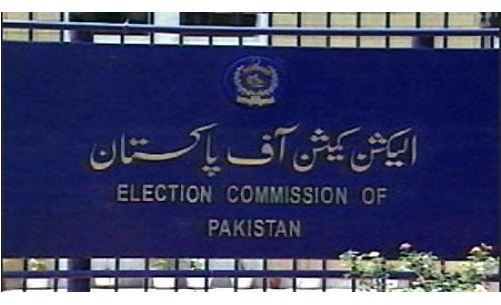
LAHORE, Sept 22 /DNA/ – The eagerly-awaited announcement by the polls oversight authority has apparently cleared the political fog surrounding the election timing and rekindled hopes of political and economic stability.

However, despite clearing some air, the Election Commission of Pakistan (ECP) has not announced the exact date of the elections, leaving room for speculation.

That is why, while the interim government and some political parties have welcomed the ECP’s announcement, the PTI, the former ruling party, has raised objections to the move

The PTI has questioned why the ECP has fixed the polling month instead of a polling day and why polls are taking place beyond the 90-day constitutional limit, especially, when a case seeking holding elections within 90 days of dissolution of assemblies is already pending before the Supreme Court.

In a statement, a PTI spokesperson said the nation would not accept any date out of the constitutionally defined timeframe of 90 days. Whatever date in January is set for polls, it would be outside the constitutionally defined deadline of the 90-day limit; hence it would be unconstitutional.

The sole responsibility of the ECP is to conduct free, fair and impartial elections in the constitutionally-defined timeframe and the on-time poll is the only way to steer the country out of the untold crises, the spokesperson added.

Read Polls to be held in last week of January: ECP

The National Assembly was dissolved on August 9, a few days before the completion of its five-year term. As per the Constitution, elections must be held within 90 days if a legislature is dissolved before completion of its term and therefore, the elections should be held in the second week of November.

Holding general elections in the last week of January means a violation of the constitutional timeframe.

However, general elections have also not been held within this 90-day timeframe in the province of Punjab and Khyber Pakhtunkhwa (K-P) whose legislatures were dissolved in January.

On January 14, the PTI, which ruled the two provinces, dissolved both provincial assemblies, hoping that this way it could pressure the PML-N lead federal government into announcing snap polls in the country.

That didn’t happen. The move only intensified the already tense political climate.

Caretaker Minister for Information Murtaza Solangi welcomed the ECP’s announcement regarding elections, saying it was a day of disappointment for those who spread rumours.

He said the ECP will complete all the work by November 30 and elections will be held in the last week of January. “We are happy that elections will be held in the country under the Constitution. The holding of elections will increase economic development and political stability in the country.”

In a statement, PPP’s Secretary General Syed Nayyar Hussain Bukhari asked the provincial and divisional presidents of the party to carefully review the lists of preliminary constituencies to be issued by the ECP on September 27. Bukhari directed the officials to raise objections to and suggestions on constituencies once the preliminary lists are published.

Meanwhile, JUI-F’s Maulana Abdul Ghafoor Haideri welcomed the ECP’s announcement, stating that the JUI-F has always demanded timely and transparent elections and that free, fair and transparent elections can lead to political and economic stability in the country.

Haideri, however, made it clear to ECP that it will face strong resistance if history of 2018 elections is repeated. “We want impartial elections in the country,” he said.

World Bank launches reforms for a brighter future of Pak

Pakistan

Pakistan has been facing numerous economic hardships including inflation, rising electricity prices, severe climate shocks, and insufficient public resources to finance development and climate adaptation: World Bank

Mahnoor Ansar

ISLAMABAD, Sept 22 —The World Bank has launched a new program to foster debate on the critical development policy issues facing Pakistan. ‘Reforms for a Brighter Future: Time to Decide’ is intended to engage in discussions with a broad range of stakeholders on what fundamental policy shifts are most needed to durably steer the economy towards stronger, more climate-resilient and sustainable growth and development. This consultation program includes the publication, today, of a series of draft Discussion Notes.

These will be progressively enriched by feedback received from a broad range of stakeholders. The Notes, which draw on international experience as well as a large body of evidence on Pakistan, propose fundamental policy shifts that are needed to move away from the current low-growth, anti-development status quo:

• From underfunded, inefficient, and fragmented service delivery and social protection systems towards coordinated, efficient, and adequately financed service delivery, targeting the most vulnerable—in particular to reduce abnormally high child stunting rates and to increase learning outcomes for all children, especially for girls.

• From wasteful and rigid public expenditures benefiting a few, towards tightly prioritized spending on public services, infrastructure, and investments in climate adaptation, benefiting populations most in need.

• From a narrow, distortive, and inequitable tax system towards one that is broad-based, efficient, progressive, and equitable—generating sufficient revenues to significantly increase public investment in human development, infrastructure, and climate adaptation.

• From a protected, stagnant, and unproductive economy with a large state presence towards a dynamic open economy driven by private investment and exports.

• From agriculture sector policies that lock farmers into a low-value, low-productivity farming towards a more market-driven, productive agricultural system, including value chains that are resilient to climate change impacts and water scarcity.

• From energy sector policies that drive high energy costs, environmental harms, and unsustainable accumulation of debt, towards efficient, sustainable, and resilient generation and distribution, based on accurate price signals, increased competition and private participation, and a cleaner energy mix.

• From a public sector that is inefficient, often ineffective, and vulnerable to capture by vested interests towards accountable, efficient, and transparent government, including at the local level.

“Pakistan has been facing numerous economic hardships including inflation, rising electricity prices, severe climate shocks, and insufficient public resources to finance development and climate adaptation—when the country is among the most vulnerable to climate change impacts. It is also facing a “silent” human capital crisis: abnormally high child stunting rates, low learning outcomes, and high child mortality.”, said Najy Benhassine, Country Director for the World Bank in Pakistan.

“These discussion notes contribute to debates on long standing policy issues that are muting Pakistan’s high economic and development potential. There is reasonable consensus on priorities and challenges. Determining specific solutions requires open debates on concrete, fundamental policy decisions. We hope this program of discussions will help build a consensus around a path towards inclusive, sustainable, and climate-resilient development”.

As part of the ‘Reforms for a Brighter Future’ engagement program, the World Bank together with the Pakistan Institute of Development Economics, conducted extensive consultations across the country to seek inputs and feedback on the recommendations included in the draft Discussion Notes. These have included discussions with students across 21 universities and provincial roundtables with thinkers from academia, and the public and private sectors. Participants in all four provinces have shared insights and perspectives that have helped shaped the understanding of what it would take to put Pakistan back on a path towards sustainable, climate-resilient, and inclusive growth. The ‘Reforms for a Brighter Future’ program will continue over the following months both online and at in-person events across the country, including the national conversation that will take place in Islamabad today and tomorrow.

Belarus, Pakistan Economic Ties focused at Gomel Economic Forum

Belarus

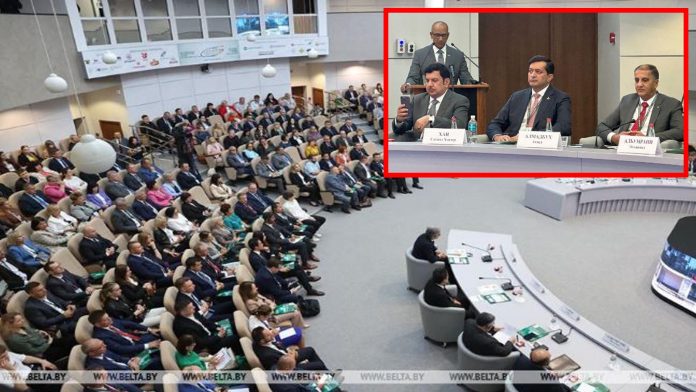
Minsk, Sept 22 /DNA/ – Ambassador of Pakistan to Belarus, Sajjad Haider Khan, participated in the Gomel Economic Forum held on 21 September.

The Ambassador lauded the Gomel Economic Forum as a remarkable platform for fostering international collaboration and exploring opportunities to strengthen economic ties. He emphasized the historical growth of diplomatic and economic relations between Pakistan and Belarus, rooted in cooperation for trade, investment, and technological advancements.

“The Gomel Economic Forum provides a unique opportunity to further strengthen these ties,” Ambassador Khan affirmed.

While acknowledging the impressive pace of economic development between Pakistan and Belarus, Ambassador Khan also highlighted the untapped potential for growth. He emphasized Pakistan’s strategic location and dynamic market as a gateway for Belarusian businesses to access South Asian markets and beyond. Pakistan has instituted a comprehensive investment friendly mechanism to facilitate the investors. Similarly, he pointed out that Belarus, known for its innovations and technological achievements, offers significant opportunities for Pakistani investors and businesses.

The Ambassador emphasized the pivotal role of agriculture in Pakistan’s economy and identified agriculture as a key area for cooperation. Belarusian tractors, renowned for their quality, are highly popular in Pakistan. Furthermore, Gomselmash, a prominent Belarusian agricultural machinery manufacturer, stands as a potential partner for collaboration.

He invited the Belarusian business to reach out to Pakistan’s textile industry, which accounts for approximately 60% of the country’s total exports. He also highlighted the potential for cooperation and investment in this sector.

Looking ahead, Belarus and Pakistan will celebrate the 30th anniversary of their diplomatic relations next year. To mark this significant milestone, a series of events, including educational and cultural initiatives, are in the pipeline, further strengthening the bonds between the two nations.

The Gomel Economic Forum stands as a testament to the commitment of Pakistan and Belarus to fostering economic growth, innovation, and collaboration. As these two nations continue to explore new avenues for partnership, the future holds great promise for their mutual prosperity.

Ethiopian envoy, Chairman Senate discuss strengthening bilateral ties

Ethiopian envoy

Chairman Sanjrani emphasized the importance of the existing strong bond between the two nations, rooted in shared history, common interests, and mutual support at international platforms

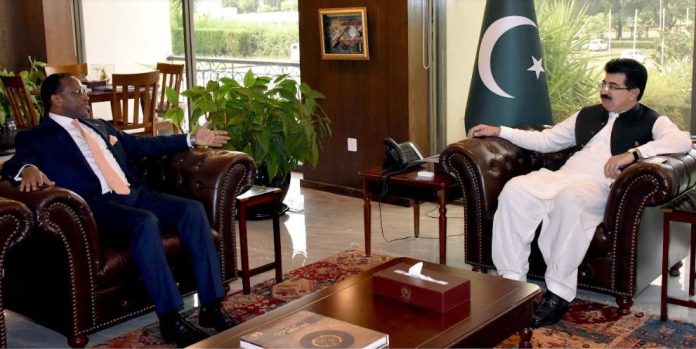
ISLAMABAD, Sept 22 /DNA/ – Ambassador of Ethiopia to Pakistan, Jemal Beker Abdula called on Chairman Senate Muhammad Sadiq Sanjrani here at the Parliament House today. The meeting focused on reinforcing the longstanding and friendly relationship between Pakistan and Ethiopia, concentrating on enhancing trade, parliamentary cooperation, and matters of mutual interest.

Chairman Sanjrani emphasized the importance of the existing strong bond between the two nations, rooted in shared history, common interests, and mutual support at international platforms. He stressed the need to foster trade and economic ties, highlighting the facilitation and improvement of contacts between Pakistani and Ethiopian businessmen.

In the discussion, both sides accentuated the augmentation of bilateral trade volume and applauded the resumption of flights between Pakistan and Ethiopia. Chairman Sanjrani Muhammad Sadiq Sanjrani lauded the initiative, stating that it would enhance connectivity not only within Africa but also with Pakistan. He further stressed the significance of increasing cooperation and public relations in the field of education and addressing global challenges such as Islamophobia through interfaith harmony and mutual respect.

Ambassador Jemal Beker Abdula reaffirmed Ethiopia’s importance under Pakistan’s Engage Africa policy and invited Chairman Sanjrani to visit Ethiopia on behalf of the Ethiopian Parliament’s leadership. Chairman Sanjrani expressed gratitude to the Ethiopian parliamentary leadership, government, and the ambassador, foreseeing that the exchange of parliamentary delegations would fortify relations.

Recognizing Ethiopia as a gateway to African countries, Ambassador Jemal Beker Abdula encouraged Pakistani investors to benefit from this strategic positioning. He reiterated his commitment to strengthen trade ties and promote bilateral relations between Ethiopia and Pakistan.

Hasan Ali replaces Naseem Shah in Pakistan’s World Cup 2023 squad

Hasan Ali replaces Naseem Shah in Pakistan's World Cup 2023 squad

LAHORE: In a much-awaited announcement, the Pakistan Cricket Board (PCB) has finally revealed the 15-member squad for the upcoming ICC World Cup 2023.

The announcement of Pakistan’s squad faced unexpected delays as the team management held consultations following a humiliating exit from the Asia Cup and the injuries faced by major bowlers during the tournament.

Chief selector Inzamam-ul-Haq unveiled the squad at Lahore’s Gaddafi Stadium.

Pakistan’s squad for ICC World Cup 2023. — PCB
Babar Azam will captain the team, while Shadab Khan remains the team’s vice-captain. Hasan Ali has been called in to replace pacer Naseem Shah — who has been ruled out from the tournament due to his shoulder injury.

Ali, however, will be returning to one-day international (ODI) cricket after a year-long hiatus following his last appearance against West Indies in Multan in 2022.

“We were forced to make one change because of an unfortunate injury to Naseem Shah. We had a few injury scares in the recent Asia Cup, but I am glad to share that all the players are fully fit and are eager to perform for their country in the all-important tournament. I have received encouraging reports from our medical panel about Haris Rauf. He has started to (shadow) bowl at the National Cricket Academy and will be available for selection,” said Inzamam while speaking during a press conference today.

“I have a firm belief that this squad can bring the World Cup trophy to Pakistan and make the whole nation proud with their incredible performances. It is time to get behind our team and provide them with the backing and support that they need.”

Babar Azam’s side enters the mega-event as the number one ranked side and enjoys the best win/loss ratio of 2.4 in this World Cup cycle for any side that has played the ODI format.

The ICC World Cup 2023 will take place in India with 10 teams fighting for the elusive title across 10 venues from October 5 to November 19, with the Narendra Modi Stadium in Ahmedabad hosting the tournament opener and the final.

The Cricket World Cup will be played in a round-robin format, with all teams playing against each other for a total of 45 league matches.

The top four teams will qualify for the semifinals, which will be held in Mumbai on November 15 and in Kolkata on November 16. The semi-finals and the final will have reserve days.

Squad
Babar Azam (c), Shadab Khan, Abdullah Shafiq, Fakhar Zaman, Haris Rauf, Hasan Ali, Iftikhar Ahmed, Imam-ul-Haq, Mohammad Nawaz, Mohammad Rizwan (wk), M Wasim Jnr, Saud Shakeel, Salman Ali Agha, Shaheen Shah Afridi, Usama Mir.

Reserves
Mohammad Haris, Zaman Khan, Abrar Ahmed.

Saudi Chief of General Staff calls on COAS Gen Asim Munir

DNA

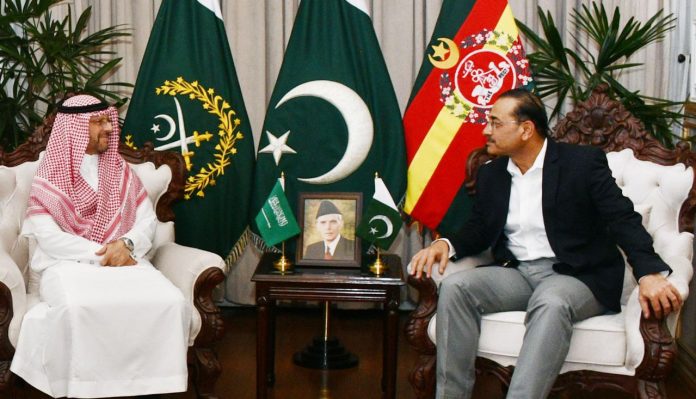
Rawalpindi, September 22, 2023:  H.E General Fayyadh Bin Hamed Al Ruwaili, Chief of General Staff Armed Forces of Kingdom of Saudi Arabia,led by a high powered military delegation called on General Syed Asim Munir, HI(M) Chief of Army Staff.

During the meeting, both sides deliberated upon various areas of mutual interest, bilateral cooperation including defence and security matters.

Earlier, delegation also met General Sahir Shamshad Mirza, HI(M) Chairman Joint Chiefs of Staff Committee at Joint Staff Headquarters.

Elections in January: the expected political scenarios

 The real concern lies in whether a government formed through maneuvering and gerrymandering can truly address the wounds afflicting our nation and breathe life into our nearly moribund economy. Unfortunately, the answer appears to be a resounding “no.”

Comment

Ansar M Bhatti

The Election Commission of Pakistan (ECP) has made a significant announcement, confirming that the general elections are slated to take place in the final week of January 2024. This announcement has triggered discussions among legal experts, as it appears to deviate from the Constitutional mandate requiring elections to be held within 90 days following the dissolution of the assemblies. Legal experts are raising concerns about the absence of a legal framework supporting this decision by the ECP. Many argue that such a move necessitates a clear legal basis.

In response to this development, the Pakistan Tehreek-e-Insaf (PTI) has taken a proactive stance, indicating their intent to bring the matter before the apex court. Meanwhile, other political parties, most notably the Pakistan People’s Party (PPP), which has consistently advocated for elections to be held within the constitutionally mandated 90-day window, are expected to unveil their strategies and future courses of action in the coming days. The political landscape in Pakistan is heating up as various parties grapple with the implications of this decision, setting the stage for what promises to be an eventful election season in early 2024.

In addition to the ordinary citizens of Pakistan, international actors have also expressed a strong desire for early, free, and fair elections in the country. Diplomats from prominent nations, including the USA, UK, Australia, UAE, and Saudi Arabia, have engaged in discussions not only with the Election Commission of Pakistan (ECP) but also with leaders from a diverse array of political parties. Against this backdrop, it becomes apparent that the ECP’s announcement may have been influenced by a combination of external and internal pressures, undoubtedly with the explicit consent of influential stakeholders.

Concerning the issue of whether all political parties enjoy an equal and fair playing field, it is evident that this is not the current reality. This is particularly apparent at this juncture, as the Chairman of PTI is incarcerated, and a relentless crackdown on PTI members and supporters persists without respite. If the PTI, which seemingly boasts significant public support, is not granted a fair and equal opportunity to participate in the election, it could cast doubt on the authenticity of the entire electoral process.

The PML-N, which aspires to lead the country, has been working diligently to foster unity within the party through increased inter-party communications. One of the paramount challenges facing the party is the secure and swift return of Nawaz Sharif. He is arguably the only leader who possesses the capability to aid the PML-N in its quest to rekindle its former prestige and support base. However, the recent Supreme Court ruling, which nullified the NAB amendments passed during the PDM government’s tenure, has exacerbated the challenges facing Nawaz Sharif.

In a surprising turn of events, Nawaz Sharif has called upon Shehbaz Sharif and Maryam Nawaz to convene in London for a series of discussions concerning the ever-evolving political landscape. Naturally, this move has left the PML-N leadership somewhat apprehensive, particularly in light of the potential reopening of NAB cases. Should the caretaker government choose not to file a review petition, it would imply that the powers-that-be are in alignment with the verdict of the apex court.

Just a few days ago, Nawaz Sharif confidently asserted that the PML-N is poised to assume power in the upcoming government. In fact, he went a step further by expressing his party’s intent to hold certain individuals accountable, including former army chief General Bajwa, former ISI Chief Faiz Hameed, and the next Chief Justice of Pakistan, Justice Ijazul Ahsan, whom he accused of ‘patronizing’ anti-PML-N factions. It’s worth noting that this particular assertion might have raised eyebrows within the ranks of the Establishment.

Even in my previous analysis, I emphasized the inherent challenge of Nawaz Sharif and the Establishment coexisting peacefully. It is undeniable that the Establishment wields significant influence within Pakistani politics, actively contributing to the shaping of political landscapes. Political parties readily acknowledge this influence when they find themselves in the opposition, but once in power, they often seem to disregard this crucial factor. This shift in perspective is where the real issue arises, potentially explaining why no prime minister has managed to complete a full term to date.

If the elections proceed under the current circumstances, it seems highly likely that no single party will be able to secure an outright majority. In this scenario, the PML N appears to be in a favorable position to secure a significant number of seats, particularly given the prevailing political landscape that seeks to exclude the PTI from the equation.

A plausible outcome could be the formation of a coalition government involving the PML N, the recently established Pakistan Istehkam Party, along with several smaller parties and independent candidates. Collaborating with the PPP would likely be the PML N’s least preferred option, serving as a last resort.

However, the real concern lies in whether a government formed through maneuvering and gerrymandering can truly address the wounds afflicting our nation and breathe life into our nearly moribund economy. Unfortunately, the answer appears to be a resounding “no.” So, what lies ahead? Are we destined to witness yet another cycle of a short-lived prime minister and a government that withers prematurely?

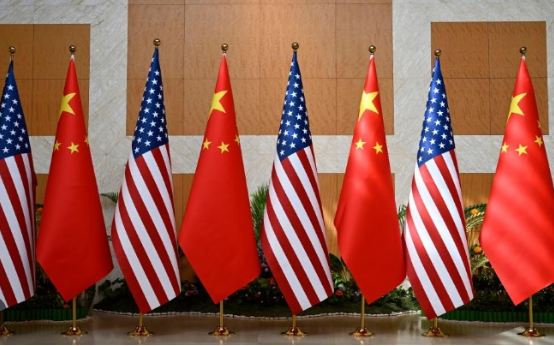
Defining entire China-U.S. relationship as competition is serious misjudgment

Defining entire China-U.S. relationship as competition is serious misjudgment

By Zhong Sheng, People’s Daily

In recent years, the United States has always emphasized “competition” when discussing China-U.S. relations, as if competition has become the dominant theme and even the sole focus of the relationship.

From the “competitive, collaborative and adversarial” rhetoric to the “invest, align and compete” strategy, competition has become the main tone of U.S. policy towards China.

The various measures taken by the United States clearly demonstrate that the so-called “competition” has become synonymous with comprehensive containment, unrestricted suppression, and relentless pressure on China.

As two major countries, it is normal for China and the United States to compete in areas such as trade and technology. Such competition should be fair and reasonable, conducted in a benign and regulated manner, with boundaries and prohibited areas. It should not disregard the rules of the market economy and basic principles of international relations. Core interests should not be used as tools for competition or provocative means.

The United States, under the guise of competition, has used its national machinery to suppress other countries, attempting to sacrifice the interests of other nations and hinder their development and progress in order to seek its own competitive advantage. This approach completely deviates from the true essence of competition and only exposes a zero-sum mindset and Cold War mentality.

The United States shows no intention of engaging in fair competition. It recklessly wields the stick of sanctions, forcefully promotes “decoupling” and so-called “de-risking.” Driven by ideological bias, it generalizes the concept of national security, imposes excessive regulations and scrutiny, and builds “small yard, high fence” around its own interests. It fabricates a false narrative of “democracy versus authoritarianism,” creates an encirclement against China, coerces other countries to take sides, and incites confrontation, disruption, and undermines peace. It constantly provokes China on core issues such as the latter’s political system and territorial sovereignty, seriously violating the basic principles of international relations and damaging the political foundation of China-U.S. relations.

The United States employs all means to hinder China, essentially aiming to deprive the Chinese people of their right to choose their own development path, their right to pursue a better life, their right to achieve legitimate development, their right to build national unity, and their right to develop normal relations with other countries.

America’s perception of competition as the entirety of its relationship with China is fundamentally flawed, and this stems from a directional problem in its understanding of China.

The United States consistently portrays China as the “most serious competitor,” the “most significant long-term challenge,” the “most significant geopolitical challenge,” the “most significant systemic challenge,” and the “only competitor with both the intention and capability to reshape the international order.” It is using its own template of hegemony to mirror China and misjudging China based on the trajectory followed by traditional Western powers.

Viewing the world from a zero-sum perspective, one sees division, competition, and conflicts; viewing the world from a perspective of shared destiny, one sees openness, cooperation, and win-win outcomes. The erroneous perceptions and actions of the United States not only disregard the reality of interdependence between China and the United States, but also distort the history of cooperation and mutual benefit between the two countries, dangerously impacting China-U.S. relations.

Singapore’s Deputy Prime Minister Heng Swee Keat recently warned that U.S. policy towards China is becoming a major issue for the world.

China and the United States bear a special responsibility for global peace, stability, and development. The world needs an overall stable China-US relationship.

The two countries should start from the perspective of shared interests and the future of humanity, and compete in such areas as who can govern their nations better and ensure the well-being of their own people, who can provide greater impetus for global post-pandemic recovery and growth, who can offer more public goods in addressing climate change, who can provide better solutions to regional hotspot issues, and who can make the planet safer, more peaceful, and more prosperous for the 8 billion people living on it, including both Chinese and American citizens.

The Earth is vast enough to accommodate the independent development and shared prosperity of both China and the United States. The United States should abandon zero-sum games and Cold War mentality, break free from the logic of competition and confrontation, and work with China in the same direction with a sense of responsibility towards history, the people, and the world, so as to realize mutual respect, peaceful co-existence and win-win cooperation.

Only by doing so, both countries can learn from each other, make progress together, shoulder international responsibilities as major countries, and contribute their wisdom and strength to global peace and development.

(Zhong Sheng is a pen name often used by People’s Daily to express its views on foreign policy and international affairs.)

Stay Connected

64FansLike
60FollowersFollow

Latest Reviews

Exchange Rates

USD - United States Dollar
EUR
1.17
GBP
1.35
AUD
0.72
CAD
0.73