Home Blog Page 1180

Dealing with Afghans: instead humble, polite procedure could be meaningful

Dealing with Afghans

Shamim Shahid

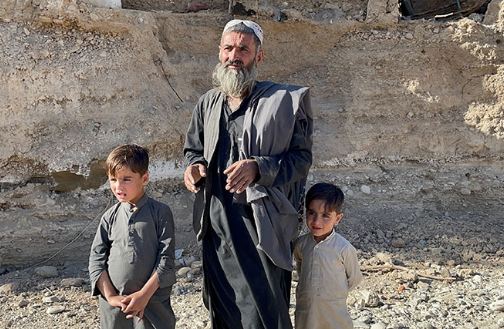
From last several weeks, crackdown against Afghan nationals is in progress throughout the country, especially in Karachi whereas biggest population of Pukhtoons exists. As a result of crackdown, hundreds of Afghans including women and children are being arrested, detained and later on forcibly deported to Afghanistan. However, in Karachi like city a large number of Pushtoons have also been arrested but later on made free on showing their original National Identity Cards, issued by NADRA and other related documents issued them by lawful authorities of Pakistan.

Whatever may be results of this crackdown against the Afghans but it generated anger and unrest not only amongst the Afghans scattered throughout the country but also at different international forums. Besides, illegally residing Afghans, the law enforcing agencies are also picking up and detaining those Afghan nationals who are in possession of POR ( Proof Of Registration) and Afghan Citizens Cards (ACC), issued by NADRA with collaboration of UNHCR. On such grounds, the Afghan Refugees Commissionerate had addressed a letter to Inspector General Police Khyber Pakhtunkhwa to  stop arrest of those people who are in possession of POR and ACC.

But the situation was further aggravated when caretaker Prime Minister Anwar Ul Haq Kakar time and again repeated the words insisting on repatriation of Afghans to their motherland and the Federal Interior ministry directed provinces to come up with data of Afghans either are in possession of cards and documents or illegally residing. Besides others, the Taliban leaders and commanders who are in occupation of important offices are also showing concern and resentment over crackdown against countrymen in Pakistan.

According to UNHCR data at the moment, around 2.780 million Afghans are residing in Pakistan. Amongst them 1.3 million are in possession of POR cards, 0.88 million are in possession of ACC and the remaining 600,000 are stated illegal or in lack of proper registration and other documents validating their stay. All these around 600,000 people entered Pakistan after fall of Kabul to Taliban on August 15th 2021 last. However certain officials believe that strength of Afghan nationals in Pakistan is over three million.

Compare to 2022, volunteer repatriation of Afghans to their motherland from Pakistan is encouraging in current calendar year. Last year around 6035 individuals returned to Afghanistan whereas till end of August 2023, more than 10600 people returned to Afghanistan. Couple of days back, Pakistan allowed return of those Afghans who are lacking POR and ACC cards through Afghanistan National Identity Cards called Tazkira. Getting opportunities over 60,000 people have crossed over Torkham to Afghanistan during a period of three days.

No one can deny the fact that increasing economic crises of Pakistan also affecting the Afghan nationals and now almost of jobless, poor are making efforts to go back. However, they considering host government’s policies a major hurdle before them. Earlier in end of 80’s, 90’s and even after 9/11 till 2015, Pakistan had permitted all Afghans to take away all belongings along with. But now these people are compelled to go empty hands.

Couple of days back, the Afghan Jirga in its meeting at Karachi while showing resentment over arrests and detention, requested Pakistan to review its crackdown focused policies as they wants repatriation to the motherland with honour and dignity. Former long term diplomat in Pakistan Abdul Jabbar Naeemi, has also asked Pakistani authorities to review its decisions of arrests, detention and finally forced deportation to Afghanistan. Similarly almost nationalist parties like Awami National Party, Pakhtunkhwa Milli Awami Party, Quami Watan Party and others are also unhappy with policies of sticks and guns. Even while addressing rallies and meetings at Karachi, ANP Khyber Pakhtunkhwa President Aimal Wali Khan threatened staging protests against Sindh government if it continue arrests of those Afghans who are in possession of cards and documents.

Due to external aggression and internal hostilities, the Afghans are depending in Pakistan since mid of 70’s. During this period millions of Afghans remained as refugees and dwellers of tent villages and mud houses throughout the country. Unfortunately, almost state organs of Pakistan has followed policies if US led allies- which is considered major stakeholder in the decades old Afghan conflict. After Mujahideen,  Pakistan had also used the Taliban, particularly its Haqqani faction a “stick yard” for safeguarding its interests in Afghan conflict. But first the Geneva Accord of April 1988 had affected Pakistan when three out of seven Jehadic parties refused to continue its participation in armed resistance against former USSR installed regime of Dr. Najib Ullah. Pakistan suffered the second set back when its most loyal Engineer Gulbadin Hekmatyar kept away from Kabul after fall of Dr. Najib Ullah government. During this period, Pakistan made a visible return from 1996 till November 2001 with patronization of Taliban first regime. Similarly post 9/11 situation was considered a severe setback for Pakistan. However, despite jubilating fall of Kabul to Taliban in mid of August 2021 last, now Pakistan is considered a stranger in Afghanistan as US is indirectly monopolizing Afghanistan’s internal and external policies through Qatar and Saudi Arab.

Keeping in view the ground realities, Afghanistan is seem no more depending in Pakistan. Almost of its transit trade has been diverted to Iran and other Central Asian Republics. The new economic phenomenon of “One Belt One Road” has made highlighted the importance’s of Afghanistan instead. On certain issues, almost high ranking Taliban ( Emirate Islami Afghanistan) leaders publically expressing reservations over Pakistan’s Afghan policies. Chief of Jamiat Ul Ulema Islam F Maulana Fazal Ur Rahman has recently suggested, “constitution of a joint commission” for settling issues between Pakistan and Afghanistan. In past suggestions of recommendations of such type of bodies proved nothing else a futile exercise due to lacking of confidence in each others.

Pakistan is still in commanding position on the issue of Afghanistan and its positive role could compensate all of previous losses and setbacks. It is the time to make assemble effective public opinion makers across a table for suggesting ways and means first to help in ensuring of a durable and sustainable peace and stability in war devastated Afghanistan which might be helpful in repatriation of Afghans. Secondly to create an atmosphere for the promotion of trade and business with almost of CAR states, which is possible with building up trust and confidence in Afghans not only in armed, religious or a political group or party. It is the time for Pakistan to review its acts and action based policies towards Afghanistan as “neighbours could be proved nice business partners” instead making them hostile and enemies.”
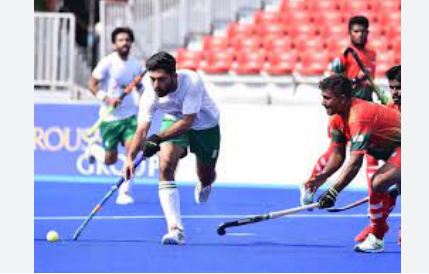
Pakistan outplay Bangladesh in hockey competition of Asian Games

Pakistan outplay Bangladesh

ISLAMABAD, Sep 26 (APP/DNA): Pakistan downed Bangladesh by 5-2 in the hockey competition of the ongoing 19th Asian Games at Hangzhou, China.
Pakistan hockey team showcased their mettle with yet another triumph and emerged victorious in their second pool match against Bangladesh, triumphing with a decisive score line of five goals to two.

Despite a momentary setback when Bangladesh seized the lead in the 19th minute through a penalty corner, Pakistan rallied valiantly.

Afraz came to the fore, leveling the score with a field goal in the 30th minute, setting the stage for Pakistan’s eventual triumph. In the 40th minute of the game, Pakistan’s youthful right striker Shahzeb Khan fortified Pakistan’s advantage by notching a field goal. Shortly after, in the 43rd minute, Pakistan’s left striker Mohammad Imad extended the lead by slotting the third goal for the team.

Bangladesh managed to narrow the gap, striking a field goal in the 46th minute. However, Pakistan remained relentless, as drag flick maestro Sufyan Khan thundered a rapid flick from a penalty corner, securing Pakistan’s fourth goal in the 48th minute.

In the 57th minute of the game, Pakistan’s talented drag flick specialist, Arbaaz Ahmed, showcased his exceptional skills by executing a precise and swift drag flick during a critical penalty corner, resulting in Pakistan’s fifth goal of the match.
Set to embark on their third match at 6am Pakistan time on September 28, the Pakistan hockey team was ready to face Uzbekistan in the Asian Games.

The tournament boasts twelve teams, divided into two pools. In Pool A, Pakistan was placed alongside India, Japan, Bangladesh, Singapore, and Uzbekistan, while Pool B includes Korea, Malaysia, China, Oman, Thailand, and Indonesia. Pakistan’s hockey team has displayed a striking offensive performance, scoring a remarkable 16 goals across their first two pool matches.

Online university empowers thousands of Afghan girls with remote education

Online university empowers thousands of Afghan girls with remote education

KABUL, Sept 25 – In response to the ban on girls’ education imposed by the Taliban, the “Women’s Online University” has emerged as a beacon of hope, providing educational opportunities for approximately 14,000 female students across diverse fields of study. Established about nine months ago, this institution, led by Abdul Farid Salangi and a team of dedicated professors, aims to bridge the educational gap faced by Afghan girls.

Amid the closure of traditional educational institutions under the Taliban’s rule, the Women’s Online University has stepped up to ensure girls’ access to quality education. Currently, it boasts an impressive enrollment of 14,000 students, distributed among 14 different academic disciplines.

Adela Zamani, the university’s Vice Chancellor, highlighted in an interview with Khaama Press News Agency, “The number of applicants is high, and for now, we are providing education to 14,000 students in 14 faculties as a standard.” She emphasized the university’s commitment to maintaining a high standard of education despite the challenging circumstances.

The university’s teaching staff, numbering 450 instructors, conducts classes both within and outside Afghanistan. These dedicated educators are determined to deliver a wide range of subjects to their eager students.

The Women’s Online University acknowledges that while online education cannot fully replace the in-person classroom experience, it serves as a lifeline to keep girls connected to the academic world. Adela Zamani emphasized the importance of knowledge and revealed plans for capacity-building programs to inspire girls and nurture hope for their future.

Professor Mohammad Ramin Alkozai, teaching at the Engineering Faculty of the Women’s University, passionately provides engineering subjects to girls who have been excluded from traditional education. He shared, “I prepare visual course materials and make them available to students, and we have online sessions twice a week.”

For students like Sahar Sharifi, a journalism student at the Women’s Online University, online classes are an opportunity to bridge the educational gap left by the closure of physical universities. She expressed her gratitude, saying, “I am glad to be a part of the Women’s Online University. While our dreams seem unattainable, this university can be a gateway to education.”

Krishna Amiri, another student, highlighted the resilience of these girls, stating that despite the limitations, they can continue their studies from the comfort of their homes.

The ban on girls’ education in Afghanistan extends beyond university-level education; even girls above the sixth grade face an uncertain future. Despite the Taliban government’s talk of reopening educational doors for girls, practical steps have yet to be taken, leaving these young minds in limbo. The Women’s Online University remains a vital lifeline, offering hope and education to thousands of Afghan girls determined to pursue their dreams.

National Day of Saudi Arabia: Sanjrani commends Saudi Arabia’s progressive vision

National Day of Saudi Arabia: Sanjrani commends Saudi Arabia's progressive vision
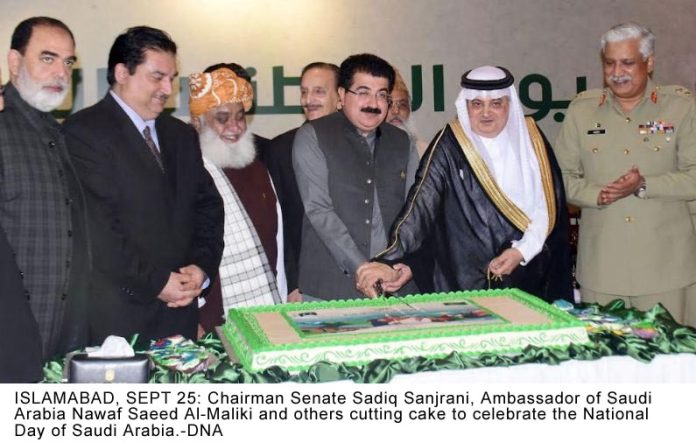
ISLAMABAD, SEPT 25: Chairman Senate Sadiq Sanjrani, Ambassador of Saudi Arabia Nawaf Saeed Al-Maliki and others cutting cake to celebrate the National Day of Saudi Arabia.-DNA

Islamabad, 25 Sept /DNA/ – Chairman Senate Muhammad Sadiq Sanjrani attended the National Day celebrations of the Kingdom of Saudi Arabia as the chief guest here in Islamabad on Monday. In his speech, he conveyed warm regards and best wishes on behalf of the Senate and the people of Pakistan to His Royal Highness King Salman bin Abdulaziz Al Saud, the Royal Family, and the Saudi nation.

Chairman Senate expressed his gratitude to Nawaf bin Said Al-Malki, for extending the invitation and commended the progressive portrayal of Saudi Arabia on the event’s invitation card, highlighting its holistic development and inclusive vision.

He emphasized the enduring and multifaceted bond between Pakistan and Saudi Arabia, founded on shared values, faith, and aspirations. The Chairman acknowledged Saudi Arabia’s significant support during challenging times and reaffirmed Pakistan’s unwavering commitment to reciprocate in diplomatic and security matters, highlighting recent high-level military engagements.

He remarked that the partnership is fortified by an unwavering commitment to regional peace and stability, underlining both nations’ readiness to support each other in diplomatic and security matters.

Chairman Senate Muhammad Sadiq Sanjrani lauded Saudi Arabia’s efforts to promote regional harmony through diplomacy, dialogue, and mutual respect. He expressed confidence that these initiatives would open doors to mutually beneficial opportunities for trade, cultural exchanges, shared initiatives, and collaborative endeavours, contributing to global progress. He underscored the importance of diplomacy, dialogue, and mutual respect in building a foundation for lasting peace and regional prosperity.

In his address, the Chairman said that the Crown Prince’s vision, epitomized by the Neom City project and initiatives like the Misk, showcases a holistic approach to modern society while remaining grounded in Saudi Arabia’s cultural heritage. Highlighting the close ties between Chagai and Saudi dignitaries,the Chairman Senate looks forward to further collaboration with Ma’aden, a rapidly growing Saudi mining company, for mutual development and prosperity in mineral-rich areas.

He also emphasized the importance of youth engagement and joint ventures in education, research, technology, and innovation as avenues to deepen cooperation between the two nations.

In conclusion, Chairman Sanjrani reiterated Pakistan’s steadfast support, admiration, and warm wishes to the Kingdom of Saudi Arabia, pledging to continue fostering this enduring friendship and brotherhood.

Pakistan strongly condemns Quran desecration in the Hague

Pakistan strongly condemns Quran desecration in the Hague

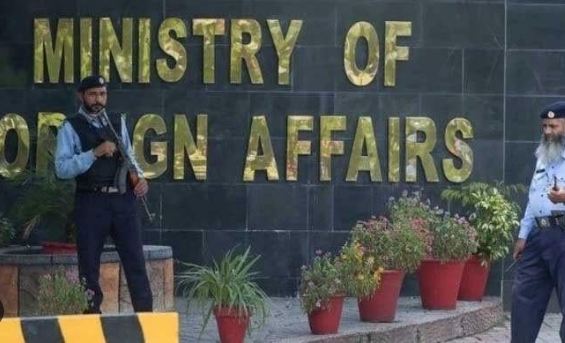
ISLAMABAD /DNA/ – Pakistan condemned in the strongest terms the latest senseless and deeply offensive act of desecration of the Holy Quran that took place in The Hague, the Netherlands in front of some embassies of OIC member countries including Pakistan.

It is a deliberately provocative and Islamophobic act that has hurt the sentiments of Muslims around the world. Such acts cannot be condoned under the guise of freedom of expression, opinion and protest.

Pakistan believes that freedom of expression comes with responsibilities. National governments should actively prevent racist and Islamophobic acts, which incite religious hatred.

It is important for the international community to raise its voice against Islamophobia and work in concert to promote interfaith harmony. That was the spirit behind the resolution passed by the United Nations General Assembly in 2022 to mark 15 March as the International Day to Combat Islamophobia.

Pakistan’s concerns have been conveyed to the Dutch authorities. We urge them to be mindful of the sentiments of the people of Pakistan and Muslims around the world and take active steps to prevent such hateful and Islamophobic acts.

Uncertainty ends as India issues visas to Pakistan team for World Cup 2023

World Cup 2023

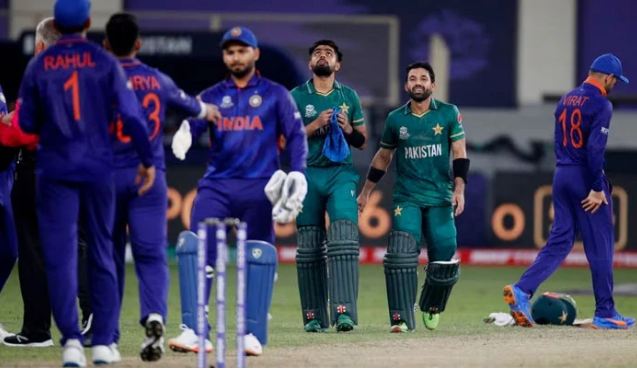
NEW DELHI: The uncertainty surrounding Pakistan’s participation in the most awaited ICC Men’s Cricket World Cup 2023 ended as India finally issued visas to the Pakistan team, the governing International Cricket Council (ICC) said on Monday.

ICC’s confirmation came after the complaints of a delay in the process of visa issuance.

The Pakistan Cricket Board (PCB) had written to the governing body complaining about a visa delay which, it said, had disrupted the team’s preparation for the showpiece event across the border.

“Visas have been issued to the Pakistan team,” an ICC spokesperson told Reuters without elaborating further.

PCB spokesperson Umar Farooq confirmed to Reuters they have been asked to collect their passports from the Indian High Commission in Islamabad.

India and Pakistan have suspended bilateral cricket, thanks to soured political relations between the neighbours, and play each other only in multi-team events like the World Cup and Asia Cup.

Earlier in a strongly-worded statement, Farooq decried the “inequitable treatment” metered out to a Pakistan team, who are scheduled to arrive in India on Wednesday.

“There has been an extraordinary delay in getting clearance and securing Indian visas for the Pakistan team for the ICC World Cup,” Farooq said in the statement.

“We have written to ICC raising our concerns about inequitable treatment towards Pakistan and reminding them of these obligations towards the World Cup.

“It’s a matter of disappointment that the Pakistan team has to go through the uncertainty ahead of the major tournament.”

Pakistan will play two warm-up matches before beginning their World Cup campaign against the Netherlands on Oct. 6.

Arch-rivals India and Pakistan are set to clash in a mouth-watering Oct. 14 contest in Ahmedabad.

India declined to tour Pakistan for the Asia Cup, which was played between August 30 and September 17, and played their matches in Sri Lanka instead.

Pakistan squad for ICC World Cup 2023
Babar Azam (c), Abdullah Shafique, Fakhar Zaman, Imam-ul-Haq, Iftikhar Ahmed, Mohammad Rizwan (wk), Shadab Khan, Mohammad Nawaz, Usama Mir, Haris Rauf, M Wasim Jnr, Hasan Ali, Shaheen Shah Afridi, Saud Shakeel, Salman Ali Agha.

Travelling reserves: Mohammad Haris, Abrar Ahmed, Zaman Khan.

Schedule of Pakistan’s warm-up matches:
September 29 — vs New Zealand in Hyderabad
October 3 — vs Australia in Hyderabad
Pakistan’s schedule for the ICC World Cup 2023:
October 6 — vs Netherlands in Hyderabad
October 10 — vs Sri Lanka in Hyderabad
October 14 — vs India in Ahmedabad
October 20 — vs Australia in Bengaluru
October 23 — vs Afghanistan in Chennai
October 27 — vs South Africa in Chennai
October 31 — vs Bangladesh in Kolkata
November 4 — vs New Zealand Bengaluru (Day match)
November 11 — vs England in Kolkata
The day matches which will start at 10:00am Pakistan Standard Time (PST) while all other matches will be day-night fixtures starting at 01:30pm (PST).

If Pakistan qualify for the semi-finals, they will play in Kolkata.

If India qualify for the semi-finals, they will play in Mumbai unless playing against Pakistan, in which case they will play in Kolkata.

President Erdogan visits Azerbaijan after Karabakh victory

President Erdogan visits Azerbaijan after Karabakh victory

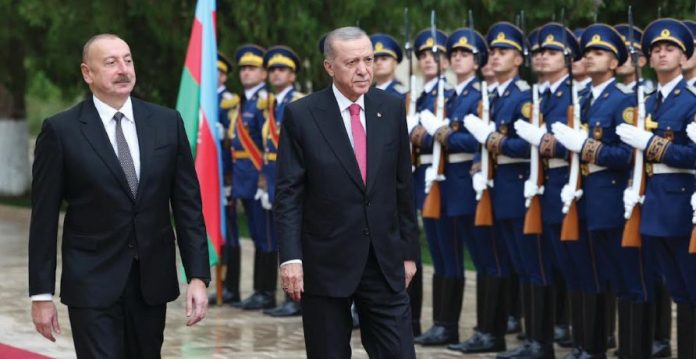
President Erdoğan visited Azerbaijan’s Nakhchivan on Monday where he was warmly welcomed by Ilham Aliyev, who led his country to a victory against the Armenian separatists of Karabakh last week

News Desk

Baku: President Recep Tayyip Erdoğan made a spontaneous visit on Monday to the Azerbaijani exclave of Nakhchivan. Announced one day before, the visit comes on the heels of Azerbaijan’s successful counterterrorism operation in Karabakh, a region regained from Armenia which, last week, was cleared of Armenian separatists.

Azerbaijani President Ilham Aliyev welcomed Erdoğan in an official ceremony before the two leaders headed for talks. The purpose of Erdoğan’s visit is the inauguration of a pipeline between Türkiye’s Iğdır and Nakchivan, and two leaders are also expected to attend the opening of a military complex in the exclave. Nakchivan, which shares Azerbaijan’s only land border with Türkiye, is surrounded by Armenian territories. So, Erdoğan’s visit was symbolic in the aftermath of the victory against Armenian separatists. Azerbaijan and Türkiye are the most intimate allies in the region, with their intertwined history as two Turkic nations. Erdoğan further advanced ties thanks to his close friendship with Aliyev. Two leaders call each other “brothers,” and Türkiye is the most outspoken advocate of Azerbaijan’s rights over Karabakh, forcibly taken by Armenia after the collapse of the USSR.

Karabakh has been quiet after last week’s operation, but Azerbaijan’s Defense Ministry announced on Monday that two Azerbaijani soldiers were killed and another was injured when their military truck hit an antitank land mine planted by Armenian forces in the region. It was the deaths of several Azerbaijani soldiers by a land mine that prompted Azerbaijan to launch a counterterrorism offensive against separatists.

The Azerbaijan military truck struck the mine at 5.35 p.m. local time on Sunday, the ministry said in a statement.

Two soldiers, Ekrem Shadmanov and Tural Seyidov, were killed, and Elvin Aliyev was injured in the explosion of an antitank mine planted by Armenian forces on the route between Azerbaijani positions for terrorist purposes. Aliyev is not in critical condition, the statement added. Some social media posts show Shadmanov was promoted to staff colonel in the Azerbaijani army before the incident. An investigation has been launched into the incident, and the general public has been warned not to enter liberated areas until the region has been cleared of mines.

Mines planted by Armenian forces have killed several Azerbaijani civilians and soldiers in recent years.

Relations between the former Soviet republics of Armenia and Azerbaijan have been tense since 1991, when the Armenian military occupied Karabakh, internationally recognized as an Azerbaijani territory and seven adjacent regions. When new clashes erupted on Sept. 27, the Armenian Army attacked civilians and Azerbaijani forces and violated several humanitarian cease-fire agreements. During the 44-day conflict, Azerbaijan liberated several cities and nearly 300 settlements and villages from the nearly three-decade occupation.

Despite the deal ending the conflict, the Armenian Army several times violated the agreement and martyred several Azerbaijani soldiers and a civilian, as well as wounded a few people, according to the Azerbaijani Defense Ministry.

Azerbaijani officials and a delegation of Armenian separatists held their second meeting following the counterterrorism operation on Monday. Officials of the two sides, who first met in Azerbaijan’s Yevlakh, held their second meeting in the town of Khojaly. On Tuesday, Brussels will host senior envoys from Azerbaijan and Armenia, the European Union said.

Simon Mordue, chief diplomatic advisor to European Council president Charles Michel, will chair the talks, Michel’s spokesperson said. Azerbaijan and Armenia, along with EU heavyweights France and Germany, will be represented by their national security advisors. The EU special representative for the South Caucasus, Estonian diplomat Toivo Klaar, will also attend.

Tuesday’s meeting in Brussels will be the first such encounter since the offensive, but the leaders of both countries are scheduled to meet next month. Armenian Prime Minister Nikol Pashinyan and President Aliyev will be at the European Political Community summit in the Spanish city of Granada on Oct. 5.

Pakistan’s Achievements in Peaceful Uses of Nuclear Technology Highlighted

Pakistan’s Achievements in Peaceful Uses of Nuclear Technology Highlighted

DNA

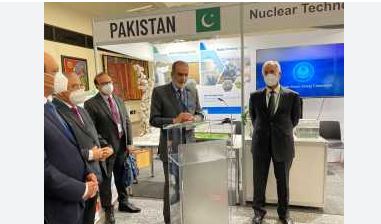
Vienna: Chairman PAEC, Dr. Raja Ali Raza Anwar, led Pakistan’s delegation at the 67th Session of the General Conference of the International Atomic Energy Agency (IAEA) which is underway in Vienna, Austria, at the IAEA Headquarters. During his statement, the Chairman underscored that Pakistan highly valued its cooperation with the Agency and remained committed to advance its collaboration by supporting the Agency’s role as per its motto, “atoms for peace and development”.

The Chairman appreciated the Agency’s continued assistance to member states in their efforts to meet developmental challenges through safe, secure and sustainable uses of nuclear science. He also underscored that global issues require global solutions, highlighting that Pakistan remains one of the most vulnerable countries to climate change. He stressed that Pakistan views nuclear power as an affordable, reliable and clean source of energy and a part of the solution to the climate crisis.

While acknowledging that Pakistan had been a beneficiary of the Agency’s assistance, the Chairman shared that Pakistan is effectively utilising nuclear science and technology in areas such as human health, food and agriculture, power generation, industry and environment protection. He also highlighted that Director General Rafael Mariano Grossi’s visit to Pakistan earlier this year provided further impetus to strengthen the mutually beneficial and decades long collaboration between Pakistan and the Agency.

The Chairman stressed that nuclear technology in the human health sector remained a matter of national priority for Pakistan. He shared that, at the moment, 19 cancer hospitals were being run by the Pakistan Atomic Energy Commission which were playing a vital role in providing quality treatment to over 80% of the country’s cancer patients. The Chairman added that nuclear technologies were being deployed to enhance food security and agricultural productivity. In this regard, Pakistan currently has four agriculture and biotechnology centres, out of which the Nuclear Institute for Agriculture and Biology (NIAB) has been designated as an IAEA collaborating Center and is also part of the Agency’s ZODIAC laboratories network. He further shared that, in a significant development, NIAB has been successful in producing coloured cotton and Pakistan is currently planning its large scale production.

On the margins of the General Conference, the Chairman will also hold multiple bilateral meetings to explore possibilities of collaboration in the peaceful uses of nuclear technology under the aegis of the IAEA.

The General Conference consists of representatives of the IAEA Member States who meet in a regular annual session, usually in September, to consider and approve the IAEA’s  budget and to decide on other issues raised by the Board of Governors, the Director General and Member States.

Pakistan, Azerbaijan discuss transport, trade cooperation

Pakistan, Azerbaijan discuss transport, trade cooperation

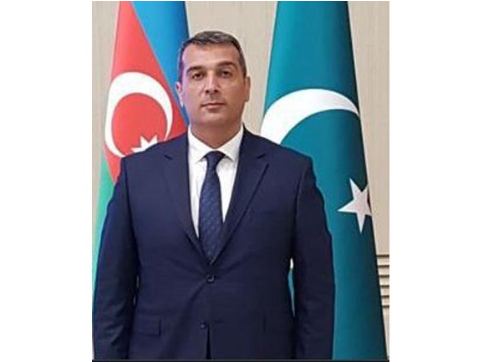
ISLAMABAD, SEP 25 (DNA) — Caretaker Federal Minister for Communications for Railways Shahid Ashraf Tarar, and Azerbaijani Ambassador to Pakistan Khazar Farhadov discussed issues of mutual interests and strengthened bilateral ties.

The ambassador during a meeting with the minister said the relationship between Pakistan and Azerbaijan is unparalleled in every aspect. The envoy said, following the commencement of direct flights between Pakistan and Azerbaijan, both countries aim to connect through railways and road networks.

The Ambassador said the primary goal is to boost economic cooperation and facilitate the movement of goods and people. “We are keen on promoting economic cooperation,” Ambassador Farhadov said.

He further said, “We envision Pakistan becoming a part of international transport networks, connecting with all regional countries.” He also highlighted the potential for Pakistani trade to gain access to Europe and Russia through Azerbaijan.

The ambassador said, that to achieve this, the private sector will play a crucial role in promoting trade and economic growth. Shahid Ashraf Tarar expressed his commitment to the idea, said, “I have instructed the Chairman of Railways to work on connecting rail routes with Azerbaijan.

“It is time to transform our good relations into economic cooperation,” the minister said. Both parties expressed the urgency of finalizing transit trade agreements between Pakistan and Azerbaijan, indicating their willingness to promptly implement these proposals. “I hope that both countries will collaborate to implement these recommendations swiftly,” the minister said.

The meeting between Minister Shahid Ashraf Tarar and Ambassador Khazar Farhadov reflects the shared determination of Pakistan and Azerbaijan to strengthen their economic ties and facilitate cross-border trade and connectivity. As these discussions progress, the potential for increased economic cooperation between the two nations remains promising. — DNA

Pakistan’s tax-to-GDP ratio stuck at 10.4%, World Bank offers solutions

Pakistan's tax-to-GDP ratio

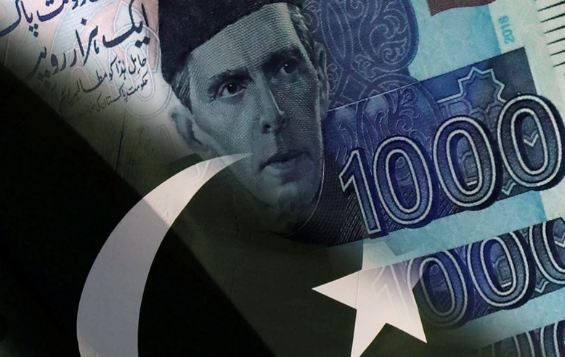
ISLAMABAD, SEP 25 (DNA) — Pakistan’s economy faces a concerning challenge as its tax-to-GDP ratio stands at a mere 10.4%, according to a report released by the World Bank.

The report, titled “Strengthening Government Revenues,” highlights the significant gap between the country’s tax collections and its tax capacity, which is estimated at over 22% of GDP. This decline in the tax-to-GDP ratio is attributed to rising tax expenditures, particularly at the federal level.

In the fiscal year 2022, Pakistan’s tax collections reached only 10.4% of GDP, a trend that has been steadily declining. The federal government’s tax expenditures increased from 1.3% of GDP in FY16 to 2.7% of GDP in FY22, putting further strain on revenue generation efforts.

Heavy reliance on indirect taxes

The report also highlights that the majority of revenues in Pakistan are collected at the federal level, primarily through indirect taxes on consumption.

These indirect taxes include sales tax, customs duties, and excises. In FY22, the federal government accounted for 91.2% of tax collection, partly due to increased taxation of services by provincial governments. Direct taxes, collected by the federal government, make up only around 33% of total taxes collected.

One of the key challenges noted in the report is the minimal revenue generated from agricultural income tax, with over 90% of farmers falling below the tax threshold. Additionally, total provincial revenue collection remains less than 1% of GDP.

World Bank’s recommendations for reform

To address these challenges and enhance revenue generation, the World Bank has launched a new program titled “Reforms for a Brighter Future: Time to Decide.”

The program offers several recommendations, including: Improving Federal-Provincial Coordination: Enhancing coordination between federal and provincial governments to streamline tax administration and policy reforms; Harmonizing Tax Bases: Creating a single tax market and reducing interactions between taxpayers and revenue authorities within the existing constitutional framework; Digitization Efforts: Expediting ongoing digitization initiatives to reduce compliance costs and minimize taxpayer interactions; Closing Corporate and Personal Income Tax Exemptions: Eliminating exemptions in the energy sector, power generation projects, and real estate investments to generate additional revenue; Increasing Excise Duties on Harmful Goods: Implementing uniform excise duties on items such as cigarettes, with automatic inflation adjustments, to generate more revenue; Reviewing COVID-19 Exemptions: Reevaluating costly exemptions introduced during the pandemic, including those in the pharmaceutical, energy, and food sectors; Eliminating Exemptions on Essential Food Items: Considering the removal of exemptions for essential food items like oil, pulses, animal products, fruits, and dairy; and Reevaluating Concessionary Rates on Fertilizers: Reducing fiscal costs by reevaluating concessionary rates on fertilizers.

The World Bank’s recommendations provide a roadmap for Pakistan to strengthen its revenue generation efforts and address fiscal challenges effectively. With significant potential for improvement in taxation, policymakers are urged to consider these reforms to boost the country’s economic stability.

Najy Benhassine, the Country Director for Pakistan at the World Bank, emphasized the importance of open debates on concrete policy decisions to achieve inclusive, sustainable, and climate-resilient development.

As part of the “Reforms for a Brighter Future” engagement program, the World Bank, in collaboration with the Pakistan Institute of Development Economics, conducted extensive consultations across the country to gather inputs and feedback on the proposed recommendations. The program will continue with online and in-person events in the coming months.

Stay Connected

64FansLike
60FollowersFollow

Latest Reviews

Exchange Rates

USD - United States Dollar
EUR
1.17
GBP
1.35
AUD
0.72
CAD
0.73