Home Blog Page 1179

ICC World Cup 2023: Babar Azam says Pakistan going to India with ‘high morale’

ICC World Cup 2023

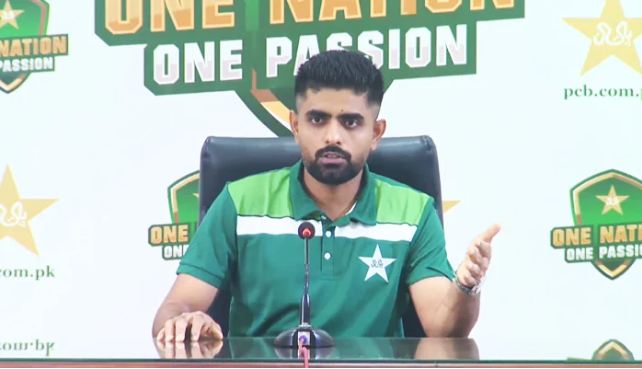
Pakistan skipper Babar Azam said Tuesday the Green Shirts were filled with confidence ahead of their departure to India for the ICC Men’s World Cup, with an eye on the coveted trophy.

“As a team, our morale is very high, we have confidence. We will try to play our best. I request all of you to pray for the team,” the skipper said during a pre-departure press conference in Lahore.

The team heads to the 50-over tournament after their setback in the recently concluded Asia Cup, where they came fourth and their ICC ODI ranking fell to second, but the skipper believes the debacle helped the team learn.

“We could not deliver up to the mark, but we learned from it. We just don’t point out our errors, but we also talk about how to improve those sides,” the captain noted.

https://youtube.com/watch?v=pGBdJ4SWhDY%3Fsi%3DFoGkGguUvGZLvTV0

Babar said the team’s planning for the Asia Cup was different, and another plan for the upcoming event would be different.

“The conditions are different from Asia Cup. We will monitor the conditions, and whatever is best for Pakistan, we will go into the match with that planning,” the stylish batter noted.

‘I trust my players more than I trust myself’

The team has been under criticism due to its lacklustre performance in the Asia Cup, with several pundits agreeing that the Green Shirts were lacking in middle-over bowling.

“I spoke to Shadab Khan and we gave confidence to each other. I and Shadab know that we aren’t bowling well in the middle overs, but I trust my players more than I trust myself,” he said.

The captain noted that this was the same squad that made Pakistan the number 1 ODI team and that he was well aware of the players who fought for the team.

Due to Naseem Shah’s injury, the team has included Hasan Ali in the squad despite him not representing Pakistan in the 50-over format for more than a year.

The captain, in response to a question, said Ali was picked due to his experience. Babar said that he and seven to nine other players were playing together since 2019, noting that he prefers keeping those in the squad he trusts.

“I make very few changes; when we are together, we produce good results. A player should be supported when he is not doing well,” he said, noting that the team would miss Shah.

Playing for first time in India

The captain, who will be playing in India for the first time in his years-long career, said he was excited and not worried about the conditions in the neighbouring nation.

Only two players from Pakistan’s current squad have travelled to India for cricket before — Mohammad Nawaz, who was part of Pakistan’s 2016 T20 World Cup squad and Agha Salman, who was in the Lahore Lions’ squad for the Champions League T20.

“I’m very excited to play in Ahmedabad. It is the biggest stadium in the world and will be jam-packed for the India-Pakistan clash,” he said.

“I have spoken to former cricketers about the condition and they are not that different,” he said.

“I will try to perform to the best of my ability. I can’t exactly tell you how I will do since I’m not an astrologer.”

“I’m not worried about my performance. I always try to perform in a manner that suits the team,” he added. 

‘Rift’ with Shaheen?

The Pakistan skipper also rejected reports of a “war of words” with pacer Shaheen Afridi, saying the players “love each other like a family”.

“Since when you became captain, the team has given you respect and everyone honours you a lot, even Iftikhar Ahmed considers you elder brother,” a journalist asked Babar.

He was then asked about rumours of differences within the team.

“There were reports regarding Shaheen Afridi after the Asia Cup debacle so the fans want to know how good your bonding is with Shaheen Afridi and how much he respects you?”

In response, Babar said: “Everyone gives me respect…. and see when you lose close matches then certain [diagreements] do take place in team meetings but this was taken out of context that there was a duel between us.”

“There’s nothing like this. We have the same respect for each other and will remain the same. We love each other like a family.”

Editorial: What is the SFIC up to?

Ansar M Bhatti

The Special Investment Facilitation Council (SIFC), unveiled in June this year, seems to be a concerted effort by the military leadership to bolster the struggling economy of our nation. Although the precise mechanisms by which this novel initiative will rejuvenate Pakistan’s ailing economy remain unclear, it has ignited a significant debate: Was there a genuine necessity for such an entity when pre-existing institutions like the Board of Investment (BOI) have, thus far, failed to yield tangible results? Is it wise to establish additional institutions, potentially funded by the public treasury, when previous institutions of a similar nature have failed to deliver desired outcomes? What sets apart the SFIC from the BOI, addressing the gaps that were evident in the latter?

Assuming that SFIC aims to distinguish itself from other institutions, the key question for attracting foreign investments is the quality of our business environment. Unfortunately, our current conditions fall short. Conversations with diplomats in Islamabad reveal that foreign investors are primarily concerned about law and order, legal procedures, and a conducive business environment for their operations.

There is no doubt that the blue economy plays a pivotal role in shaping a country’s overall economic landscape in today’s world. Countries such as Indonesia and our neighboring nation, India, have made significant efforts to prioritize and harness the potential of the blue economy. It is quite striking that the concept of the blue economy seems conspicuously absent from our national priorities. Notably, even the newly-formed SFIC lacks representation from the maritime ministry, indicating a lack of recognition for Pakistan’s untapped potential in the blue economy. This represents a missed opportunity for the SFIC, which should ideally be an inclusive organization, capable of leveraging resources from all available sectors.

Undoubtedly, Pakistan is in dire need of immediate measures to bolster its economic well-being. However, it is imperative that any new initiatives are meticulously planned and executed, preceded by thorough research and analysis. Rushing into initiatives without a comprehensive approach can risk yielding suboptimal outcomes.

Economic stability is undeniably intertwined with political stability, and the most viable path to attaining this political stability hinges on conducting free, fair, and punctual elections. This is a fundamental step in ensuring that the nation’s governance is representative and accountable to its people.

Speculations on petroleum products prices be avoided, says Solangi

Speculations on petroleum products prices be avoided, says Solangi

ISLAMABAD, Sep 26 (DNA): Minister for Information and Broadcasting Murtaza Solangi on Tuesday said that speculations regarding prices of petroleum products be avoided.

Using his X account, formerly Twitter, while tagging a news item of Khaleeq Kiani he said he appreciated the Oil and Gas Regulatory Authority ( OGRA)  for asking everyone to avoid speculations.

Thanking Khaleeq Kiani the minister said, “I was not in the business of speculations. During a presser, i was asked if the prices of POL were about to go up north. I clearly said the prices of petroleum products are mainly determined keeping in the prices in the international market and the dollar-rupee exchange rate.”

The minister clarified that he did mention a published report the same day predicting a price cut, without saying if that possibility was around the corner or not.

Murtaza Solangi said it remained the domain of OGRA and it was the only body to make any announcement about the petroleum products prices.

The minister said he did not hint at what was reported in a national English daily.He said it would help both the newspaper and Khaleeq Kiani to listen to the question asked to him and his complete answer before making any conclusion about it.

The minister also shared a paragraph  from the news report : ” Interestingly, the hints at price reductions were made by caretaker commerce Minister Gohar Ijaz and Caretaker Information Minster Murtaza Solangi, both of whom have no role in determining the prices”.

Elections Without PTI…

A Row costing $9 billion to India & Canada 

By Qamar Bashir | Former Press Secretary to the President | Former Press Minister to the Embassy of Pakistan to France | Former MD, SRBC

The Election Commission, under the weight of severe public outcry and the collective demand of all political parties (with the exception of PML(N), has declared that the general elections will take place at the end of January 2024. This announcement, while arriving nearly 90 days later than constitutionally required, has been met with a relatively muted reaction from political parties. It appears that, rather than dwelling on the inordinate delay, political parties are content with the assurance that elections will indeed occur, dispelling earlier predictions of indefinite postponement by political pundits and analysts.

With the elections now just four months away, ideally, political parties will have ample time to refine and reconsider their manifestos, redefine their messaging and focal points, and offer the people of Pakistan a vision of a promising and inspiring future. This newfound clarity on the election date brings an opportunity for political renewal and the chance to inspire hope and dreams of a brighter tomorrow for the citizens of Pakistan.

But far from ideal, the political landscape remains complex and marred with uncertainties. The recent overturning of the amendment to the NAB (National Accountability Bureau) ordinance has dealt a significant blow to the core objectives of the government formed by the constituent parties of the Pakistan Democratic Movement (PDM). The leadership of both the PPP (Pakistan Peoples Party) and PML(N) now finds itself once more under the influence of the establishment, with the same formidable threat that PDM parties had previously managed to blunt now looming ominously over their heads.

Furthermore, the recent nullification of the Supreme Court Procedure and Practices Act by the outgoing Chief Justice has shattered the hopes of both Nawaz Sharif and Jehangir Tareen to participate in the 2024 elections. This legal development has created additional complications and uncertainties in an already intricate political landscape.

The PML(N) party appears to be in a weakened state when it comes to public popularity. After being in government for over 16 months, they have faced criticism for their handling of the economy, which has brought the country to the brink of financial collapse. Despite this, they continue to emphasize their efforts to save the country from default, without acknowledging the heavy burden this has placed on the people.

The consequences of their economic policies are evident in the form of hyperinflation, rising prices, a sharp increase in the exchange rate of the dollar, and one of the highest interest rates in the world, all of which have made essential goods and services unaffordable for the poor, middle-class, and even the upper-middle class. Millions of people have fallen below the poverty line, and unemployment rates have surged. As a result, many people are struggling to make ends meet, leading to widespread frustration and discontent among the public.

In this context, PML(N) and its allied parties have lost their narrative against price hikes, as many people view them as a major contributor to the inflation and economic hardships faced by the population.

Indeed, the perceived alignment of PML(N) with the establishment,  their willingness to follow orders without question, their embrace of the Army chief’s economic and financial revival doctrine aimed at attracting billions of dollars in investment and their support for laws granting unprecedented powers to the caretaker government in terms of entering into strategic agreements with foreign countries, traditionally the prerogative of the elected government, have all contributed to their image as being closely aligned with the military establishment.

Their perceived failure to protect media freedom and prevent media censorship, as well as their apparent inability to safeguard the rule of law and the principles of the constitution, their perceived failure to insulate the courts from external pressures and influence, as well as allegations of using aggressive means to influence judicial decisions, have further eroded public trust in their commitment to democratic principles. Their perceived alignment with the establishment and the actions taken in support of these policies have, in turn, diminished their ability to maintain a popular anti-establishment narrative.

Ultimately, these factors have contributed to a sense of frustration and disillusionment among the public, leading to skepticism about the ability of political parties to govern effectively and address the needs and aspirations of the people.

It is evident that the PTI party and its leadership are contending with substantial challenges, marked by persecution and harassment. A significant number of their leaders find themselves either in hiding or incarcerated. Notably, the Chairman’s unwavering resolve and refusal to be deterred by these circumstances stand out. His ability to withstand immense pressure, maintain his determination, and remain resolute in the face of adversity serves as a testament to his unwavering courage and commitment. The Chairman’s steadfastness has the potential to inspire loyalty among PTI members and supporters, while also becoming a symbol of resilience in the face of perceived political persecution.

In a decade-old interview, Mr. Imran Khan declared that he fears only Allah, cannot be influenced or silenced, and follows his own ideology. His philosophy revolves around obeying Allah’s commands and giving back to society what he has received. His vision in government is to establish a welfare state where everyone is treated equally, irrespective of wealth or power, creating conditions for people to lead fulfilling lives in line with Islamic teachings.

He has backed these words with actions, even in the face of adversity, death threats, and assassination attempts. He hasn’t sought clemency, freedom, or compromised his principles for a comfortable life abroad. His unwavering character, courage, and determination set him apart from politicians aligned with the establishment.

While in France, I observed several aspects of a welfare state. Citizens with incomes below €900 per month receive state stipends of €900. The state supports families with multiple children, cares for orphans, aids businesses affected by disasters without applications, and offers free quality education and healthcare to those in need.

Notwithstanding the popular support for PTI, in a recent interview with a foreign channel, the caretaker prime minister asserted that free and fair elections could proceed without the PTI leadership participating. He firmly stated that actions and consequences would persist for all individuals, regardless of age, gender, or profession, who were in any way linked to the events of May 9th. The Army leadership, in their recent corps commander meeting, reiterated their commitment to pursuing those involved in the May 9th incident, promising further consequences and repercussions.

The exclusion of PTI from the electoral process has the potential to unleash a cascade of repercussions, including severe political instability, economic turmoil, and widespread social unrest. PTI supporters have an array of avenues to channel their deep-seated discontent, and the situation demands prudent management to avert a full-blown crisis.

PTI supporters, alongside human rights organizations and legal fraternity, may orchestrate peaceful nationwide protests and demonstrations. Their collective outcry would serve as a resounding condemnation of sidelining the nation’s largest and most popular party from the electoral landscape. This wave of public dissent could disrupt normal life, placing businesses, education, and essential services under strain, ushering in a period of social tumult and uncertainty.

The digital sphere, both within and outside Pakistan, stands as a potent realm for political activism. PTI supporters can harness platforms such as Twitter, Facebook, and Instagram to broadcast their grievances far and wide. Trending hashtags and viral campaigns can elevate awareness about their cause, fomenting a groundswell of support that transcends geographical boundaries.

PTI supporters facing exclusion from the electoral process may leverage international channels to garner support and seek intervention. They could engage in diplomatic efforts to rally foreign governments, international bodies, and human rights organizations to condemn this exclusion and demand a fair and transparent election. Additionally, they may explore legal remedies to challenge their exclusion, potentially by filing petitions in the judiciary. Such petitions could assert that their fundamental rights to participate in a democratic process are being infringed upon.

The exclusion of PTI from the electoral process would inflict severe damage on the credibility of the entire election system, threatening to plunge Pakistan into a maelstrom of political instability. Such a move risks stoking polarization and fomenting tensions among various political factions, adding fuel to an already volatile situation. The ensuing political instability, sparked by PTI’s exclusion, would cast a dark shadow over investor confidence, imperiling economic stability. Foreign and domestic investments, the lifeblood of economic growth, may wither, thrusting Pakistan into a daunting era of economic hardship.

Moreover, the repercussions may not be confined to Pakistan’s borders. Its international relationships, built on trust and cooperation, could be strained as global observers and partners express grave concerns over the perceived injustice and lack of fairness in the electoral process. The ripple effect of such a crisis could resonate far beyond the nation’s borders, painting a bleak picture of instability and uncertainty.

Now is the time for all stakeholders, including the government, election commission, judiciary, political parties, and institutions, to set aside personal and institutional vendettas. We must consider every citizen a patriot without casting doubt on their loyalty. Coercion and brute force should be replaced with love and affection to win true loyalty, as intimidation only begets obedience, not love.

The government and institutions should emulate a caring mother, nurturing every citizen without subjecting them to humiliation. Releasing political prisoners is an act of magnanimity that honors the nation and empowers people to choose their true representatives.

The caretaker government, establishment, and election commission should prioritize fairness, transparency, and open dialogue with all political stakeholders. Upholding democratic principles and ensuring a level playing field for all parties is the path to maintaining stability and credibility in the electoral process. It’s time to unite and build a stronger, more harmonious nation.

Dealing with Afghans: instead humble, polite procedure could be meaningful

Dealing with Afghans

Shamim Shahid

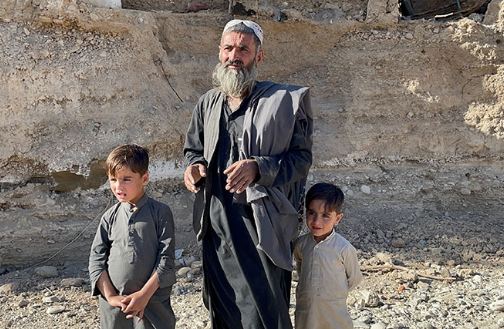
From last several weeks, crackdown against Afghan nationals is in progress throughout the country, especially in Karachi whereas biggest population of Pukhtoons exists. As a result of crackdown, hundreds of Afghans including women and children are being arrested, detained and later on forcibly deported to Afghanistan. However, in Karachi like city a large number of Pushtoons have also been arrested but later on made free on showing their original National Identity Cards, issued by NADRA and other related documents issued them by lawful authorities of Pakistan.

Whatever may be results of this crackdown against the Afghans but it generated anger and unrest not only amongst the Afghans scattered throughout the country but also at different international forums. Besides, illegally residing Afghans, the law enforcing agencies are also picking up and detaining those Afghan nationals who are in possession of POR ( Proof Of Registration) and Afghan Citizens Cards (ACC), issued by NADRA with collaboration of UNHCR. On such grounds, the Afghan Refugees Commissionerate had addressed a letter to Inspector General Police Khyber Pakhtunkhwa to  stop arrest of those people who are in possession of POR and ACC.

But the situation was further aggravated when caretaker Prime Minister Anwar Ul Haq Kakar time and again repeated the words insisting on repatriation of Afghans to their motherland and the Federal Interior ministry directed provinces to come up with data of Afghans either are in possession of cards and documents or illegally residing. Besides others, the Taliban leaders and commanders who are in occupation of important offices are also showing concern and resentment over crackdown against countrymen in Pakistan.

According to UNHCR data at the moment, around 2.780 million Afghans are residing in Pakistan. Amongst them 1.3 million are in possession of POR cards, 0.88 million are in possession of ACC and the remaining 600,000 are stated illegal or in lack of proper registration and other documents validating their stay. All these around 600,000 people entered Pakistan after fall of Kabul to Taliban on August 15th 2021 last. However certain officials believe that strength of Afghan nationals in Pakistan is over three million.

Compare to 2022, volunteer repatriation of Afghans to their motherland from Pakistan is encouraging in current calendar year. Last year around 6035 individuals returned to Afghanistan whereas till end of August 2023, more than 10600 people returned to Afghanistan. Couple of days back, Pakistan allowed return of those Afghans who are lacking POR and ACC cards through Afghanistan National Identity Cards called Tazkira. Getting opportunities over 60,000 people have crossed over Torkham to Afghanistan during a period of three days.

No one can deny the fact that increasing economic crises of Pakistan also affecting the Afghan nationals and now almost of jobless, poor are making efforts to go back. However, they considering host government’s policies a major hurdle before them. Earlier in end of 80’s, 90’s and even after 9/11 till 2015, Pakistan had permitted all Afghans to take away all belongings along with. But now these people are compelled to go empty hands.

Couple of days back, the Afghan Jirga in its meeting at Karachi while showing resentment over arrests and detention, requested Pakistan to review its crackdown focused policies as they wants repatriation to the motherland with honour and dignity. Former long term diplomat in Pakistan Abdul Jabbar Naeemi, has also asked Pakistani authorities to review its decisions of arrests, detention and finally forced deportation to Afghanistan. Similarly almost nationalist parties like Awami National Party, Pakhtunkhwa Milli Awami Party, Quami Watan Party and others are also unhappy with policies of sticks and guns. Even while addressing rallies and meetings at Karachi, ANP Khyber Pakhtunkhwa President Aimal Wali Khan threatened staging protests against Sindh government if it continue arrests of those Afghans who are in possession of cards and documents.

Due to external aggression and internal hostilities, the Afghans are depending in Pakistan since mid of 70’s. During this period millions of Afghans remained as refugees and dwellers of tent villages and mud houses throughout the country. Unfortunately, almost state organs of Pakistan has followed policies if US led allies- which is considered major stakeholder in the decades old Afghan conflict. After Mujahideen,  Pakistan had also used the Taliban, particularly its Haqqani faction a “stick yard” for safeguarding its interests in Afghan conflict. But first the Geneva Accord of April 1988 had affected Pakistan when three out of seven Jehadic parties refused to continue its participation in armed resistance against former USSR installed regime of Dr. Najib Ullah. Pakistan suffered the second set back when its most loyal Engineer Gulbadin Hekmatyar kept away from Kabul after fall of Dr. Najib Ullah government. During this period, Pakistan made a visible return from 1996 till November 2001 with patronization of Taliban first regime. Similarly post 9/11 situation was considered a severe setback for Pakistan. However, despite jubilating fall of Kabul to Taliban in mid of August 2021 last, now Pakistan is considered a stranger in Afghanistan as US is indirectly monopolizing Afghanistan’s internal and external policies through Qatar and Saudi Arab.

Keeping in view the ground realities, Afghanistan is seem no more depending in Pakistan. Almost of its transit trade has been diverted to Iran and other Central Asian Republics. The new economic phenomenon of “One Belt One Road” has made highlighted the importance’s of Afghanistan instead. On certain issues, almost high ranking Taliban ( Emirate Islami Afghanistan) leaders publically expressing reservations over Pakistan’s Afghan policies. Chief of Jamiat Ul Ulema Islam F Maulana Fazal Ur Rahman has recently suggested, “constitution of a joint commission” for settling issues between Pakistan and Afghanistan. In past suggestions of recommendations of such type of bodies proved nothing else a futile exercise due to lacking of confidence in each others.

Pakistan is still in commanding position on the issue of Afghanistan and its positive role could compensate all of previous losses and setbacks. It is the time to make assemble effective public opinion makers across a table for suggesting ways and means first to help in ensuring of a durable and sustainable peace and stability in war devastated Afghanistan which might be helpful in repatriation of Afghans. Secondly to create an atmosphere for the promotion of trade and business with almost of CAR states, which is possible with building up trust and confidence in Afghans not only in armed, religious or a political group or party. It is the time for Pakistan to review its acts and action based policies towards Afghanistan as “neighbours could be proved nice business partners” instead making them hostile and enemies.”

Pakistan outplay Bangladesh in hockey competition of Asian Games

Pakistan outplay Bangladesh

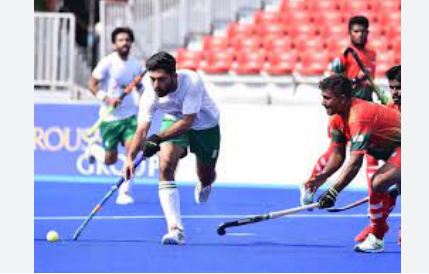
ISLAMABAD, Sep 26 (APP/DNA): Pakistan downed Bangladesh by 5-2 in the hockey competition of the ongoing 19th Asian Games at Hangzhou, China.
Pakistan hockey team showcased their mettle with yet another triumph and emerged victorious in their second pool match against Bangladesh, triumphing with a decisive score line of five goals to two.

Despite a momentary setback when Bangladesh seized the lead in the 19th minute through a penalty corner, Pakistan rallied valiantly.

Afraz came to the fore, leveling the score with a field goal in the 30th minute, setting the stage for Pakistan’s eventual triumph. In the 40th minute of the game, Pakistan’s youthful right striker Shahzeb Khan fortified Pakistan’s advantage by notching a field goal. Shortly after, in the 43rd minute, Pakistan’s left striker Mohammad Imad extended the lead by slotting the third goal for the team.

Bangladesh managed to narrow the gap, striking a field goal in the 46th minute. However, Pakistan remained relentless, as drag flick maestro Sufyan Khan thundered a rapid flick from a penalty corner, securing Pakistan’s fourth goal in the 48th minute.

In the 57th minute of the game, Pakistan’s talented drag flick specialist, Arbaaz Ahmed, showcased his exceptional skills by executing a precise and swift drag flick during a critical penalty corner, resulting in Pakistan’s fifth goal of the match.
Set to embark on their third match at 6am Pakistan time on September 28, the Pakistan hockey team was ready to face Uzbekistan in the Asian Games.

The tournament boasts twelve teams, divided into two pools. In Pool A, Pakistan was placed alongside India, Japan, Bangladesh, Singapore, and Uzbekistan, while Pool B includes Korea, Malaysia, China, Oman, Thailand, and Indonesia. Pakistan’s hockey team has displayed a striking offensive performance, scoring a remarkable 16 goals across their first two pool matches.

Online university empowers thousands of Afghan girls with remote education

Online university empowers thousands of Afghan girls with remote education

KABUL, Sept 25 – In response to the ban on girls’ education imposed by the Taliban, the “Women’s Online University” has emerged as a beacon of hope, providing educational opportunities for approximately 14,000 female students across diverse fields of study. Established about nine months ago, this institution, led by Abdul Farid Salangi and a team of dedicated professors, aims to bridge the educational gap faced by Afghan girls.

Amid the closure of traditional educational institutions under the Taliban’s rule, the Women’s Online University has stepped up to ensure girls’ access to quality education. Currently, it boasts an impressive enrollment of 14,000 students, distributed among 14 different academic disciplines.

Adela Zamani, the university’s Vice Chancellor, highlighted in an interview with Khaama Press News Agency, “The number of applicants is high, and for now, we are providing education to 14,000 students in 14 faculties as a standard.” She emphasized the university’s commitment to maintaining a high standard of education despite the challenging circumstances.

The university’s teaching staff, numbering 450 instructors, conducts classes both within and outside Afghanistan. These dedicated educators are determined to deliver a wide range of subjects to their eager students.

The Women’s Online University acknowledges that while online education cannot fully replace the in-person classroom experience, it serves as a lifeline to keep girls connected to the academic world. Adela Zamani emphasized the importance of knowledge and revealed plans for capacity-building programs to inspire girls and nurture hope for their future.

Professor Mohammad Ramin Alkozai, teaching at the Engineering Faculty of the Women’s University, passionately provides engineering subjects to girls who have been excluded from traditional education. He shared, “I prepare visual course materials and make them available to students, and we have online sessions twice a week.”

For students like Sahar Sharifi, a journalism student at the Women’s Online University, online classes are an opportunity to bridge the educational gap left by the closure of physical universities. She expressed her gratitude, saying, “I am glad to be a part of the Women’s Online University. While our dreams seem unattainable, this university can be a gateway to education.”

Krishna Amiri, another student, highlighted the resilience of these girls, stating that despite the limitations, they can continue their studies from the comfort of their homes.

The ban on girls’ education in Afghanistan extends beyond university-level education; even girls above the sixth grade face an uncertain future. Despite the Taliban government’s talk of reopening educational doors for girls, practical steps have yet to be taken, leaving these young minds in limbo. The Women’s Online University remains a vital lifeline, offering hope and education to thousands of Afghan girls determined to pursue their dreams.

National Day of Saudi Arabia: Sanjrani commends Saudi Arabia’s progressive vision

National Day of Saudi Arabia: Sanjrani commends Saudi Arabia's progressive vision
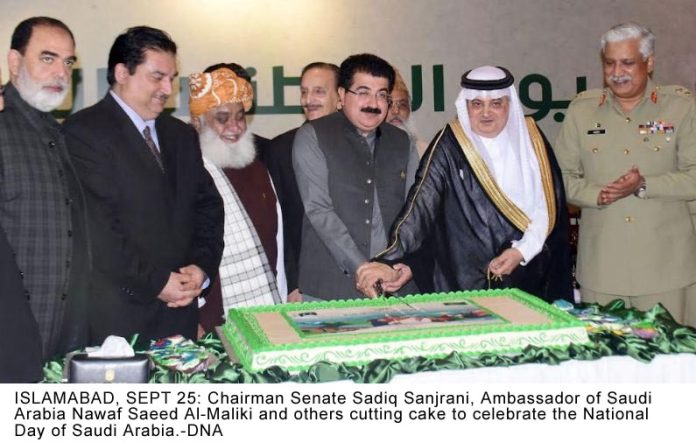
ISLAMABAD, SEPT 25: Chairman Senate Sadiq Sanjrani, Ambassador of Saudi Arabia Nawaf Saeed Al-Maliki and others cutting cake to celebrate the National Day of Saudi Arabia.-DNA

Islamabad, 25 Sept /DNA/ – Chairman Senate Muhammad Sadiq Sanjrani attended the National Day celebrations of the Kingdom of Saudi Arabia as the chief guest here in Islamabad on Monday. In his speech, he conveyed warm regards and best wishes on behalf of the Senate and the people of Pakistan to His Royal Highness King Salman bin Abdulaziz Al Saud, the Royal Family, and the Saudi nation.

Chairman Senate expressed his gratitude to Nawaf bin Said Al-Malki, for extending the invitation and commended the progressive portrayal of Saudi Arabia on the event’s invitation card, highlighting its holistic development and inclusive vision.

He emphasized the enduring and multifaceted bond between Pakistan and Saudi Arabia, founded on shared values, faith, and aspirations. The Chairman acknowledged Saudi Arabia’s significant support during challenging times and reaffirmed Pakistan’s unwavering commitment to reciprocate in diplomatic and security matters, highlighting recent high-level military engagements.

He remarked that the partnership is fortified by an unwavering commitment to regional peace and stability, underlining both nations’ readiness to support each other in diplomatic and security matters.

Chairman Senate Muhammad Sadiq Sanjrani lauded Saudi Arabia’s efforts to promote regional harmony through diplomacy, dialogue, and mutual respect. He expressed confidence that these initiatives would open doors to mutually beneficial opportunities for trade, cultural exchanges, shared initiatives, and collaborative endeavours, contributing to global progress. He underscored the importance of diplomacy, dialogue, and mutual respect in building a foundation for lasting peace and regional prosperity.

In his address, the Chairman said that the Crown Prince’s vision, epitomized by the Neom City project and initiatives like the Misk, showcases a holistic approach to modern society while remaining grounded in Saudi Arabia’s cultural heritage. Highlighting the close ties between Chagai and Saudi dignitaries,the Chairman Senate looks forward to further collaboration with Ma’aden, a rapidly growing Saudi mining company, for mutual development and prosperity in mineral-rich areas.

He also emphasized the importance of youth engagement and joint ventures in education, research, technology, and innovation as avenues to deepen cooperation between the two nations.

In conclusion, Chairman Sanjrani reiterated Pakistan’s steadfast support, admiration, and warm wishes to the Kingdom of Saudi Arabia, pledging to continue fostering this enduring friendship and brotherhood.

Pakistan strongly condemns Quran desecration in the Hague

Pakistan strongly condemns Quran desecration in the Hague

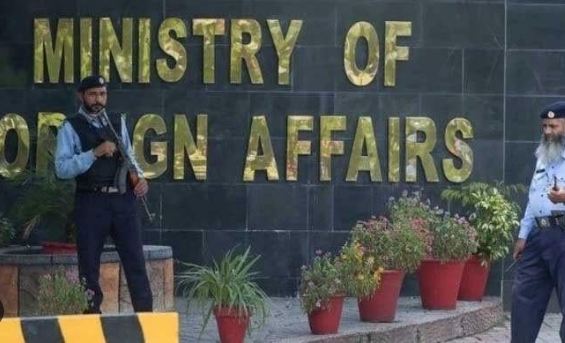
ISLAMABAD /DNA/ – Pakistan condemned in the strongest terms the latest senseless and deeply offensive act of desecration of the Holy Quran that took place in The Hague, the Netherlands in front of some embassies of OIC member countries including Pakistan.

It is a deliberately provocative and Islamophobic act that has hurt the sentiments of Muslims around the world. Such acts cannot be condoned under the guise of freedom of expression, opinion and protest.

Pakistan believes that freedom of expression comes with responsibilities. National governments should actively prevent racist and Islamophobic acts, which incite religious hatred.

It is important for the international community to raise its voice against Islamophobia and work in concert to promote interfaith harmony. That was the spirit behind the resolution passed by the United Nations General Assembly in 2022 to mark 15 March as the International Day to Combat Islamophobia.

Pakistan’s concerns have been conveyed to the Dutch authorities. We urge them to be mindful of the sentiments of the people of Pakistan and Muslims around the world and take active steps to prevent such hateful and Islamophobic acts.

Uncertainty ends as India issues visas to Pakistan team for World Cup 2023

World Cup 2023

NEW DELHI: The uncertainty surrounding Pakistan’s participation in the most awaited ICC Men’s Cricket World Cup 2023 ended as India finally issued visas to the Pakistan team, the governing International Cricket Council (ICC) said on Monday.

ICC’s confirmation came after the complaints of a delay in the process of visa issuance.

The Pakistan Cricket Board (PCB) had written to the governing body complaining about a visa delay which, it said, had disrupted the team’s preparation for the showpiece event across the border.

“Visas have been issued to the Pakistan team,” an ICC spokesperson told Reuters without elaborating further.

PCB spokesperson Umar Farooq confirmed to Reuters they have been asked to collect their passports from the Indian High Commission in Islamabad.

India and Pakistan have suspended bilateral cricket, thanks to soured political relations between the neighbours, and play each other only in multi-team events like the World Cup and Asia Cup.

Earlier in a strongly-worded statement, Farooq decried the “inequitable treatment” metered out to a Pakistan team, who are scheduled to arrive in India on Wednesday.

“There has been an extraordinary delay in getting clearance and securing Indian visas for the Pakistan team for the ICC World Cup,” Farooq said in the statement.

“We have written to ICC raising our concerns about inequitable treatment towards Pakistan and reminding them of these obligations towards the World Cup.

“It’s a matter of disappointment that the Pakistan team has to go through the uncertainty ahead of the major tournament.”

Pakistan will play two warm-up matches before beginning their World Cup campaign against the Netherlands on Oct. 6.

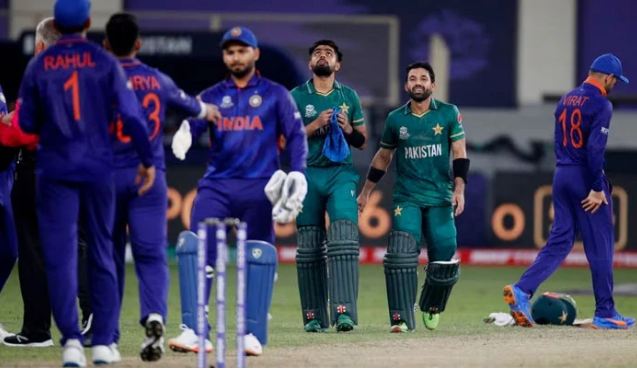
Arch-rivals India and Pakistan are set to clash in a mouth-watering Oct. 14 contest in Ahmedabad.

India declined to tour Pakistan for the Asia Cup, which was played between August 30 and September 17, and played their matches in Sri Lanka instead.

Pakistan squad for ICC World Cup 2023
Babar Azam (c), Abdullah Shafique, Fakhar Zaman, Imam-ul-Haq, Iftikhar Ahmed, Mohammad Rizwan (wk), Shadab Khan, Mohammad Nawaz, Usama Mir, Haris Rauf, M Wasim Jnr, Hasan Ali, Shaheen Shah Afridi, Saud Shakeel, Salman Ali Agha.

Travelling reserves: Mohammad Haris, Abrar Ahmed, Zaman Khan.

Schedule of Pakistan’s warm-up matches:
September 29 — vs New Zealand in Hyderabad
October 3 — vs Australia in Hyderabad
Pakistan’s schedule for the ICC World Cup 2023:
October 6 — vs Netherlands in Hyderabad
October 10 — vs Sri Lanka in Hyderabad
October 14 — vs India in Ahmedabad
October 20 — vs Australia in Bengaluru
October 23 — vs Afghanistan in Chennai
October 27 — vs South Africa in Chennai
October 31 — vs Bangladesh in Kolkata
November 4 — vs New Zealand Bengaluru (Day match)
November 11 — vs England in Kolkata
The day matches which will start at 10:00am Pakistan Standard Time (PST) while all other matches will be day-night fixtures starting at 01:30pm (PST).

If Pakistan qualify for the semi-finals, they will play in Kolkata.

If India qualify for the semi-finals, they will play in Mumbai unless playing against Pakistan, in which case they will play in Kolkata.

Stay Connected

64FansLike
60FollowersFollow

Latest Reviews

Exchange Rates

USD - United States Dollar
EUR
1.17
GBP
1.35
AUD
0.72
CAD
0.73