Home Blog Page 1173

Williamson fires on return as New Zealand beat Pakistan in World Cup warm-up match

Williamson fires on return as New Zealand beat Pakistan in World Cup warm-up match

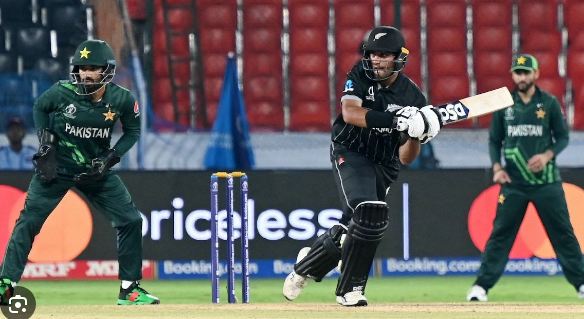
Hyderabad: Rachin Ravindra and returning Kane Williamson played key knocks as New Zealand chased down 345 to thrash Pakistan by five wickets in a World Cup warm-up match on Friday.

Chasing 346 for victory, New Zealand lost an early wicket before Ravindra (97) and Williamson (54) put on 137 to put their team on course and they achieved the target with 6.2 overs to spare in Hyderabad.

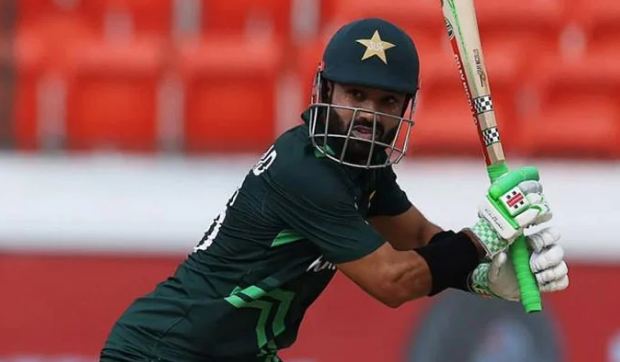
Mohammed Rizwan hit 103 and Babar Azam made 80 in Pakistan’s 345-5 after electing to bat first but the Kiwi batsmen made the total look easy against an attack missing pace spearhead Shaheen Shah Afridi.

Williamson, who returned from a six-month lay-off due to his knee injury and played the match only as a batsman, looked impressive in his 50-ball stay before he retired out.

“It held up pretty good,” Williamson, who will miss the tournament opener against England on October 5, said about his knee after the win.

“Little bit of icing after that (knock). But that’s part of the process.

Fortunate with that recovery and being named in the squad was exciting to me.“ Ravindra smashed the opposition bowlers to all parts of the ground as he hit 16 fours and one six but was denied a century by Agha Salman.

Pakistan spinner Usama Mir struck twice in the space of his two overs but Daryl Mitchell made 59 to keep the chase on track.

Left-hand batsmen Mark Chapman, who hit the winning six in his unbeaten 65, and James Neesham, who made 33, put on a partnership of 68 as New Zealand reached the target in 43.4 overs.

Earlier Azam hit eight fours and two sixes before he fell to Mitchell Santner but Rizwan stayed on to complete his century in another key stand with Saud Shakeel, who made 75.

Rizwan struck nine fours and two sixes in his 94-ball innings and said: A “hundred is hundred in any conditions. I feel proud and satisfied.”

The match, which along with other warm-ups was not an official one-day match, was played in an empty stadium due to a Hindu festival and security issues in Hyderabad.

Pakistan’s 15-member squad for the mega tournament was announced last week by Cricket Chief Selector Inzamamul Haq. It notably includes bowler Hasan Ali, and excludes star pacer Naseem Shah, who was injured in the Asia Cup.

Other notable exclusions are bowlers Faheem Ashraf, who was part of the Asia Cup squad, and Mohammad Hasnain.

Squad: Babar Azam (captain), Shadab Khan (vice-captain), Abdullah Shafique, Fakhar Zaman, Haris Rauf, Hasan Ali, Iftikhar Ahmed, Imamul Haq, Mohammad Nawaz, Mohammad Rizwan, (wicketkeeper) Mohammad Wasim, Agha Salman, Saud Shakeel, Shaheen Shah Afridi, Usama Mir

Reserves: Mohammad Haris, Abrar Ahmed, Zaman Khan

Asian Games a chance for China to break the ice with sports diplomacy

Asian Games a chance for China to break the ice with sports diplomacy

Beijing: With the biggest-ever Asian Games in full swing, host China has high hopes not only of dominating the medal table but also of softening its image and mending fences with its neighbours. Major sporting events offer a chance to rebuild trust and bridge differences, but observers warned the task of rebuilding relations through the 19th Asiad – delayed for a year by the Covid-19 pandemic – may prove particularly daunting for Beijing.

Ties with China’s Northeast Asian neighbours are at a low point, amid the intensifying US-China feud, and there are also risks and challenges in mixing sport with politics, despite past successes, they said.

Ping-pong diplomacy famously helped to break the ice between China and the US in 1971 and the 2008 Summer Olympics in Beijing is still regarded as China’s coming out party to the world.

More recently, in 2018 athletes from North and South Korea marched together under a unified flag, first at the Asian Games in Indonesia and then again at the Winter Olympics in South Korea.

Chinese President Xi Jinping opened the Games last Saturday in front of 80,000 spectators at Hangzhou Olympic Sports Centre Stadium in Zhejiang province, with more than a dozen foreign guests in attendance. Among them was South Korean Prime Minister Han Duck-soo and Syrian President Bashar al-Assad – on his first visit to China since his country’s civil war began in 2011.

Nearly 12,000 athletes from 45 countries and regions are competing, including 200 representatives from Beijing’s ally North Korea, whose presence marks an end to their country’s sporting isolation of recent years.

While the unified Korean delegations five years ago helped to pave the way for multiple inter-Korean summits in 2018, they did little to change North Korea’s hostilities towards the South or slow Pyongyang’s development of nuclear weapons. In fact, relations on the Korean peninsula have become increasingly confrontational, with North Korea’s leader Kim Jong-un last month calling for preparations for “a possible war”.

Kim, an avid sports fan, was absent from the opening ceremony but speculation has been rife that he could yet visit China during the two-week long Games. Whether Beijing can achieve any lasting diplomatic dividend from the sporting spectacle remains to be seen, but observers noted that the event provides plenty of opportunities for engagement.

“Politicians love sports diplomacy because it provides a safe cover for diplomacy, especially when difficult and sensitive negotiations are necessary,” said Seong-Hyon Lee, a senior fellow at the George HW Bush Foundation for US-China Relations.

“When nothing is accomplished, there is no one to blame. You can just say, ‘Wow! It was a great game!’”

Lee said this was especially true for the host country, as there will be plenty of room for Beijing to deploy sports diplomacy during the Games. “However, we shouldn’t put the cart before the horse. Sports should be sports,” he said.

“Mixing diplomatic goals into athletic events can make them overly political, discouraging countries from taking part in the future. While diplomacy is important, sports should stay in the forefront.” International relations professor Shi Yinhong from Beijing’s Renmin University cautioned that China may not have much wiggle room when dealing with a challenging external environment on top of a litany of economic and political woes at home.

“As a bipolar order is emerging in Northeast Asia, China has to carefully manage its spiralling rivalry with the US and its key allies amid the many domestic challenges. I don’t think the Chinese government would believe it has the luxury of making a big splash outside the country,” he said.

While Han is the most senior South Korean official to visit China since President Yoon Suk Yeol took office, senior Japanese officials have stayed away.

Independent politician Hideaki Omura attended in his capacity as governor of the Aichi prefecture, which includes Nagoya, host of the 2026 Asian Games. China-Japan ties have been deteriorating in recent years, with Tokyo increasingly concerned about Beijing’s sabre-rattling towards Taiwan. Beijing in turn has criticised Tokyo’s moves to strengthen defensive ties with the US.

Relations took a further blow in August amid a diplomatic row over the release of treated waste water from the Fukushima nuclear plant, which was struck by a tsunami in 2011.

The Games became caught up in Chinese anger and concerns over the Fukushima release, when its official theme song went public on the same day as releases began in August.

Social media users in China were quick to spot irony in the song’s opening line, which refers to “sharing the same sea and sky”, with some calling for Japan to be banned from the Games.
Dolphins swim in the ocean during the official music video for “The Love We Share”, the theme song of the Hangzhou Asian Games. Photo: YouTube/19th Asian Games Hangzhou
China has since toned down its rhetoric about the environmental impact of the discharge – perhaps because of the implications for its own seafood industry – and Japan’s consulate-general in Hong Kong last week urged Beijing to work with Tokyo to tackle mutual concerns through “continuous communication”.

Yuko Nakano, Japan Fellow with the Centre for Strategic and International Studies in Washington, noted that “the current for improving the China-Japan relationship is still flowing”.

“I would not be surprised if a senior representative from Japan attends some of the Asian Games before it concludes on October 8, even if they are not able to make it to the opening ceremony,” she said.

Chinese diplomatic sources said there had been discussions about Prime Minister Fumio Kishida or a senior cabinet minister attending, but these had been dropped because of the ongoing diplomatic tensions.

Japan’s prime minister tucks into Fukushima seafood, vowing to overturn Chinese import ban
According to Stephen Nagy, senior associate professor at the International Christian University in Tokyo, China and Japan have tried to “engage in mutual face-saving exercises” during times of political turbulence.

At the same time, both sides have sought to “ensure that the economic relationship remains constructive and stable”, he said, adding that countries like South Korea are likely to adopt a similar approach as they start to see a rising China “in a more realistic light”.

“These countries will continue to try and balance their economic interests with their security imperatives,” Nagy said.

US President Joe Biden (centre) greeting South Korean President Yoon Suk-yeol (left) and Japanese Prime Minister Fumio Kishida on August 18 at Camp David in Maryland. Photo: AP
Wooyeal Paik, an associate professor and deputy director of Yonsei Institute of North Korean Studies in Seoul, said the South Korean prime minister’s attendance was particularly significant.

“By sending [Han] to attend the Asian Games, South Korea’s leadership is sending a clear signal to Xi that it would like to reset and promote more productive bilateral ties after [consolidating] its trilateral relations with the US and Japan this year,” he said.

Lee, from the George HW Bush Foundation for US-China Relations, agreed. “The choice of Han sends an unambiguously clear signal that South Korea’s Yoon administration attaches great importance to its ties with China,” he said.

Lee noted that Han was accompanied to Hangzhou by South Korean culture vice-minister Jang Mi-ran, who won weightlifting gold at the 2008 Beijing Olympics.

“This symbolism shouldn’t be missed. Asian nations tend to employ symbolism to conduct diplomacy and express their intentions.”

South Korean Prime Minister Han Duck-soo (left) is the highest-ranking Seoul official to meet Chinese President Xi Jinping since November. Photo: Xinhua
When Han and Xi met on Saturday afternoon before the opening ceremony, the Chinese leader said China and South Korea were friendly neighbours and “inseparable” economic partners.

Away from the Games, senior officials from China, Japan and South Korea met in Seoul and agreed on Tuesday to revive a long-stalled trilateral summit “at the earliest convenient time”.

The agreement to work towards the three-way meeting will pave the way for a summit between Yoon and Xi, according to Lee.

“The expected Yoon-Xi summit … will be pivotal in terms of steering the South Korea-China relations back on track. I think the two neighbouring countries are realising that reducing misunderstanding is as important as increasing cooperation,” Lee said.

While Yoon’s Beijing-friendly predecessor Moon Jae-in visited China in 2017 and 2019, Xi has yet to pay a return visit to Seoul, though he extended an invitation to Yoon last year to visit “when convenient”.
(From left) Nong Rong, China’s assistant minister of foreign affairs, and his South Korean and Japanese counterparts, Chung Byung-won and Takehiro Funakoshi, arrive for a meeting in Seoul on Tuesday. Photo: AFP
Since then, Yoon’s relations with Beijing have nosedived, following his efforts to patch up differences with Tokyo over wartime issues while seeking closer alignment with Washington on Taiwan and the South China Sea dispute.

According to Paik, the North Korea factor also played a role in the decision to send Han to China, following Kim’s recent visit to Russia amid rumours about closer cooperation and a possible weapons agreement, denied by Moscow.

Han’s presence at the Games “implies the South Korean government’s understanding of the importance of the city and Zhejiang province for the current Xi leadership and ensuing intention to recover some damaged relations with its neighbours in the Chinese way”, Paik said.

Kim pledges support to Putin over ‘sacred’ war with the West
Renmin University’s Shi said Beijing should learn the lesson from last year’s Winter Olympics, when Xi and his Russian counterpart Vladimir Putin announced a “no limits” partnership, days before Russia’s invasion of Ukraine.

In the wake of closer military ties between Moscow and Pyongyang, “China will have to carefully handle the very complex trilateral relations [with] Russia and North Korea”, regardless of whether Kim attends the Games, Shi said.

“In a very challenging overall environment, it is highly unlikely to achieve huge political results through a non-political event.”

Paik also expressed doubts that the Games can yield a significant turnaround in China’s relations with its neighbours.

“Sports diplomacy is pretty effective in many cases. Nevertheless, the growing distrust between China and neighbouring countries might be too much for sports diplomacy to overcome in 2023,” he said.

Courts, not caretakers, to determine Imran’s eligibility for polls: PM

Courts, not caretakers, to determine Imran's eligibility for polls: PM

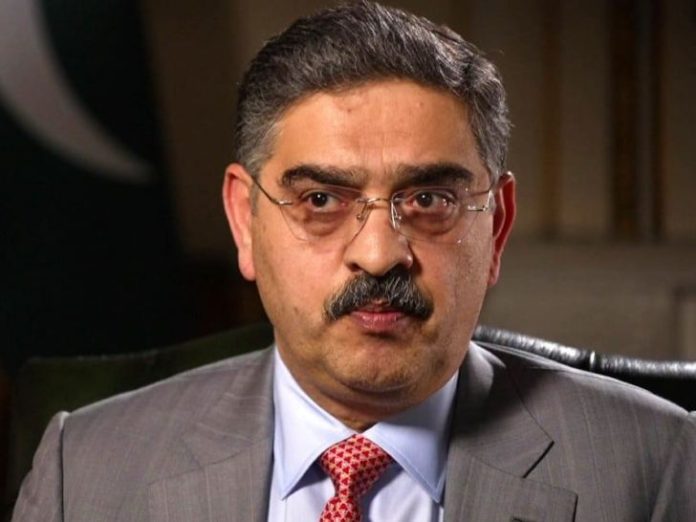
ISLAMABAD: Interim Prime Minister Anwaarul Haq Kakar has made it clear that the interim government would not possess the authority to decide on the eligibility of Pakistan Tehreek-e-Insaf (PTI) Chairman Imran Khan for the upcoming general elections if the courts legally bar him after exhausting all available legal options.

In an exclusive interview with BBC’s HARDtalk during his visit to London, PM Kakar emphasised, “The fate of Imran Khan is not final at this point. There are judicial remedies available to him, and if all the legal avenues are utilised appropriately, then there is a possibility that he may be legally barred from participating in the electoral process, which is beyond the control of the caretaker government.”

Regarding Pakistan Muslim League-Nawaz (PML-N) supreme leader Nawaz Sharif and President Shehbaz Sharif, PM Kakar reiterated that any individual being barred from participating in the elections would result from a judicial decision rather than an executive one. He clarified that as a caretaker prime minister, he lacks the authority to undo such decisions.

When asked about the possibility of Nawaz Sharif’s arrest upon his return from London, he explained that law enforcement agencies would need to consider whether the three-time prime minister had protective bail or any other legal remedies available to him.

Read more: JIT finds Imran ‘mastermind’ of May 9 riots

In another interview with BBC Urdu, the prime minister stated that, in Nawaz Sharif’s case, the law should follow its course as he had traveled abroad on a court order. He expressed his belief that PML-N leadership would prioritise participation in the elections over engaging in agitative politics and that he did not foresee any disruptive behavior if Nawaz were arrested.

PM Kakar clarified that while PTI as a political party was not barred from participating in the elections, individuals charged with offenses such as riots, vandalism, arson, and incitement to violence would be dealt with according to the laws of the land.

Regarding the treatment of PTI, he assured there would be no “harshness”, but individuals involved in violence would face legal consequences. PM Kakar estimated that the number of people engaged in such behavior would be relatively small in comparison to the country’s population.

Prime Minister Kakar reiterated his government’s commitment to steering the country through challenging times and ensuring free and fair elections. He expressed confidence that the upcoming elections would meet all indicators of transparency.

Rubbishing Imran Khan’s allegations against the military, PM Kakar said the same military worked hand in glove with PTI chief during his government and that he used to famously take credit for hybrid arrangements.

Also read: Imran nominated as prime accused in May 9 cases

Addressing the issue of terrorism, the prime minister acknowledged that Pakistan had lost over 90,000 lives in the war against terrorism and that the country had been left to deal with the aftermath once NATO and ISF left the region. He commended Pakistan’s military and paramilitary forces for their remarkable efforts in combating terrorism.

Regarding the renewed terrorist attacks, PM Kakar attributed them to the surplus equipment left behind by the US and UK after the Afghanistan drawdown. He explained that the Afghan army, equipped with modern weaponry, saw their arms and equipment enter the black market following the withdrawal.

PM Kakar acknowledged that Pakistan was confronting the TTP on its soil, but he also noted that their asylum in Afghanistan contributed to the problem.

Regarding his government’s economic priorities, he highlighted efforts to combat illegal currency trade and hoarding. Additionally, he stated that the government would proceed with plans to privatise state-owned entities such as Steel Mill, PIA, and power distribution companies.

He clarified that while the Election Commission of Pakistan (ECP) mandates holding elections within 90 days, Article 254 of the Constitution allows for actions beyond this period without being unconstitutional or illegal.

Moscow format meeting begins addressing Afghanistan’s situation

Moscow format meeting begins addressing Afghanistan’s situation

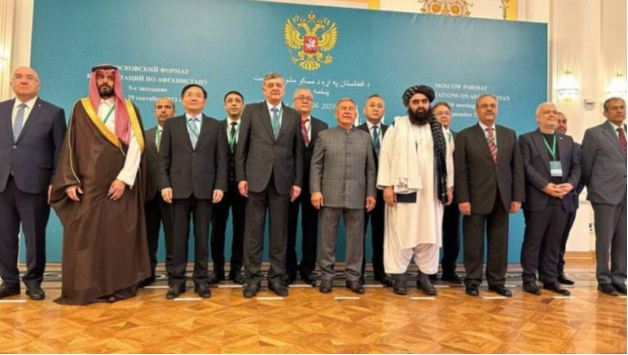
KAZAN: On Friday morning, the “Moscow Format” meeting began in Kazan, Russia, where regional authorities and envoys from various countries gathered to discuss the Afghanistan situation.

Representatives from Russia, China, Pakistan, and Iran, and Amir Khan Muttaqi, the acting foreign affairs minister of the Taliban, are participating in the meeting.

The gathering aims to address and discuss important matters related to Afghanistan and the region.

During the Moscow Format meeting in Russia, the Taliban’s acting foreign minister highlighted their critical achievements over the past two years, which include maintaining stable security, conducting an effective fight against drugs, and achieving a self-reliant budget.

During his 11-minute speech at the Moscow Format meeting, acting foreign minister Amir Khan Muttaqi urged other nations to follow China’s example and send their ambassadors to Kabul. His remarks did not address women’s rights or girls’ education in Afghanistan.

Since the Taliban assumed control of the country, they have restricted women’s and girls’ access to schools and universities, infringing upon their fundamental educational rights.

During the fifth Moscow Format meeting, Russian Foreign Minister Sergei Lavrov conveyed that recognizing the Taliban could be grounded on establishing an inclusive government.

Moscow aims to finalize the political reorganization of power in Kabul, which could potentially lead to the removal of Taliban representatives from the United Nations Security Council sanctions list, according to his statement.

Sergei Lavrov expressed Russia’s concern about the increasing involvement of extra-regional actors in Afghanistan. He emphasized the importance of regional solutions and stability in the country.

Ten countries, including China, Pakistan, Iran, India, Kazakhstan, Kyrgyzstan, Tajikistan, and Uzbekistan, participated in the Moscow Format meeting, with Saudi Arabia, the United Arab Emirates, Qatar, and Turkey was attending as an observer members.

Iranian ambassador expresses condolences following Mastung terrorist attack

Iranian ambassador expresses condolences following Mastung terrorist attack

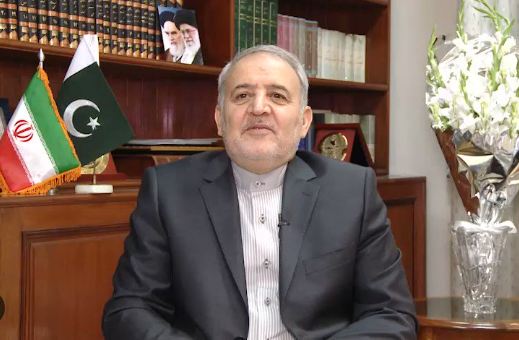
ISLAMABAD, SEPT 29 /DNA/ – Reza Amiri Moghadam, Ambassador of the Islamic Republic of Iran to Pakistan, has expressed deep sorrow and condolences in the wake of the tragic terrorist attack in Mastung, Baluchistan.

Ambassador Moghadam stated, “I am deeply dejected to hear about the martyrdom and injury of dozens of my Pakistani brothers and sisters in a brutal terrorist attack today in Mastung, Baluchistan. Pakistan’s martyrs are Iran’s martyrs. May God bless the souls of the martyrs, and I wish for the safe recovery of the injured.”

The Ambassador reaffirmed Iran’s solidarity with Pakistan during this difficult time and expressed his heartfelt sympathy to the affected families.

Justice, wealth circulation inevitable for a successful country: President

People have shouted their will!

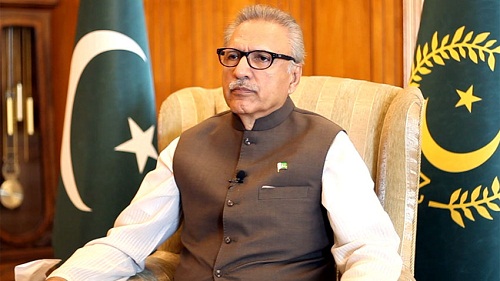
ISLAMABAD, Sep 29 (APP/DNA): President Arif Alvi on Friday, highlighting the world’s pursuit of a morality-based world order, emphasised justice, forgiveness and wealth circulation as the key components for the progress of a country.

The president, addressing the annual Seeratun Nabi (P.B.U.H) Conference here on the occasion of Eid Miladun Nabi (P.B.U.H), said as the democracies lacked a moral anchor, the world looked towards the Muslims for a moral-based system for they being the followers of the Holy Prophet (P.B.U.H) who was the role model for a successful state.

Started with the spell-binding recitation of Quranic verses by noted Qari Sadaqat Ali and Naat by Noor Ahmed Jarral, the conference featured addresses by prominent religious scholars on the subject “Strategy for Economic Stability of the Country in Light of the Teachings of Holy Prophet (P.B.U.H).

The cabinet members, diplomats, educationists, religious scholars and hundreds of students from various educational institutes were in attendance.

The president said no country or society could run without the traits of unity, justice and forgiveness. Besides, compassion for the poor and needy was also equally important for a successful society as Quran also taught the same repeatedly.

He reiterated moral principles were also unavoidable for a successful economy.

President Alvi, who earlier distributed awards among the winners of the writing contest of books on Seeratun Nabi (P.B.U.H) and Naat, said the society needed the motivation to spend their wealth for the welfare of the needy people as had been guided by the Holy Prophet Muhammad (P.B.U.H) as well as other prophets.

Even, the Holy Prophet (P.B.U.H) advised his governors and delegates to remain accessible for the poor and downgrade their living standards to par with those of the people in their respective places.

Calling the concentration of wealth a poison for society, the president urged the business community to never give up morality in their business dealings.

He said the Pakistani society was still reluctant to give women their inheritance right as Islam had strictly warned against such dishonesty.

The president also called for the women to contribute to the country’s development and asked the men to ensure a harassment-free environment for their work.

Similarly, he also emphasised the promotion of education in the country and lamented the alarming figure of over 20 million out-of-school children.

In his address, Minister for Religious Affairs and Interfaith Harmony Aneeq Ahmed, highlighting the economic challenges faced by the country, urged the people to discourage the concentration of wealth.

He said in the modern world, religion was faced with new challenges including artificial intelligence which could never be overcome without achieving excellence in education.

Advocating for an end to the interest-based economy, he urged the Ulema to unite the people and rid them of the disappointment.

Dr Noman of Jamia Binoria said an independent state, the resolution of internal and external issues and peace were prerequisites for economic stability.

Professor Dr Hammad Lakhvi called for an end to the interest-based economy and promotion of honesty in business dealings.

He also emphasised the importance of skill training to make the nation self-dependent.

Vice Chancellor of Ghazali University Dr Zeeshan Ahmed said the system of zakat and sadqaat introduced by Islam was an ideal one to bring in sustainability in the lives of the poor.

He said through his teachings, the Holy Prophet brought an end to the capitalist mentality.

Allam Razi Jafar urged the affluent class to spend their riches for welfare of the needy class and urged the government to cultivate the barren land to create earning opportunities for the have-nots.

World Cup 2023: Rizwan’s ton helps Pakistan post 346-run target for Kiwis

World Cup 2023: Rizwan's ton helps Pakistan post 346-run target for Kiwis

Pakistan, helped by Mohammad Rizwan’s impressive century, on Friday posted a 346-run target for New Zealand to win the first warm-up match of the ICC World Cup 2023 in Hyderabad, India.

Earlier, Pakistan won the toss and opted to bat first against the Kiwis.

Mohammad Rizwan top-scored for his side by scoring an astounding knock of 103 runs off 93 which included 11 boundaries.

Pakistan’s captain, Babar Azam, was the second top-scorer as he scored 80 off 84 and with 10 boundaries.

Left-handed middle-order batter Saud Shakeel impressed everyone with a solid display with the bat. The 28-year-old contributed to 75 runs with nine boundaries at an impressive strike rate of 141.51.

Like in past ICC Cricket World Cup tournaments, the warm-up matches will consist of 50 overs per side.

However, these matches won’t have ODI status because teams will have the flexibility to include all 15 members of their squad in the playing XI.

Squads
New Zealand: Kane Williamson (c), Trent Boult, Mark Chapman, Devon Conway, Lockie Ferguson, Matt Henry, Tom Latham, Daryl Mitchell, Jimmy Neesham, Glenn Phillips, Rachin Ravindra, Mitch Santner, Ish Sodhi, Tim Southee, Will Young.

Pakistan: Babar Azam (c), Abdullah Shafique, Fakhar Zaman, Imam-ul-Haq, Iftikhar Ahmed, Mohammad Rizwan (wk), Shadab Khan, Mohammad Nawaz, Usama Mir, Haris Rauf, M Wasim Jnr, Hasan Ali, Shaheen Shah Afridi, Saud Shakeel, Salman Ali Agha.

Terrorists’ blind actions in Pakistan foster Muslim division, President Raisi remarks

Terrorists' blind actions in Pakistan foster Muslim division, President Raisi Remarks

Tehran, Sept 29 – In a message condemning the cowardly act of terrorism in the Balochistan of Pakistan, the President said: This blind act has once again shown that the terrorists, with their ignorance and distance from the merciful teachings of Islam, have no other goal than to create division among Muslims.

Ayatollah Syed Ibrahim Raisi, in a message to the President of Pakistan Arif Alvi, while expressing his sympathy with the government and people of Pakistan following the terrorist attack in Balochistan’s Mastung region, which resulted in the death and injury of a number of innocent people, said: The Islamic Republic Iran is resolutely ready to cooperate with Pakistan to fight against any manifestations of terrorism and extremism and wants the international community, especially the Islamic countries, to seriously react to this criminal act and prevent the repetition of such tragic events.

Prince Badr sees off PM Kakar after concluding 3-day Saudi visit

PM Kakar leaves Jeddah for Islamabad, Farewelled by Makkah Deputy Governor

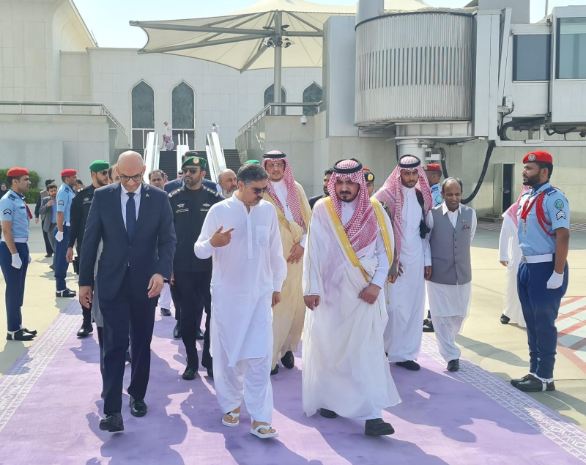
Jeddah, 29 Sept /DNA/ – Caretaker Prime Minister Anwaar-ul-Haq Kakar departs from Jeddah for Islamabad. Deputy Governor of Makkah, Prince Badr Bin Sultan bid farewell to the Prime Minister.

After concluding 3-day visit to the Kingdom of Saudi Arabia, the Caretaker Prime Minister Anwar ul Haq Kakar departed for Pakistan. 

Prince Badr bin Sultan, the Deputy Governor of Makkah, Ambassador of Pakistan and senior officials of Consulate General of Pakistan in Jeddah were at the airport to say goodbye to the Prime Minister.

Expressing Solidarity: Palestine condemns terror attacks in Mastung, KPK

Expressing Solidarity: Palestine condemns terror attacks in Mastung, KPK

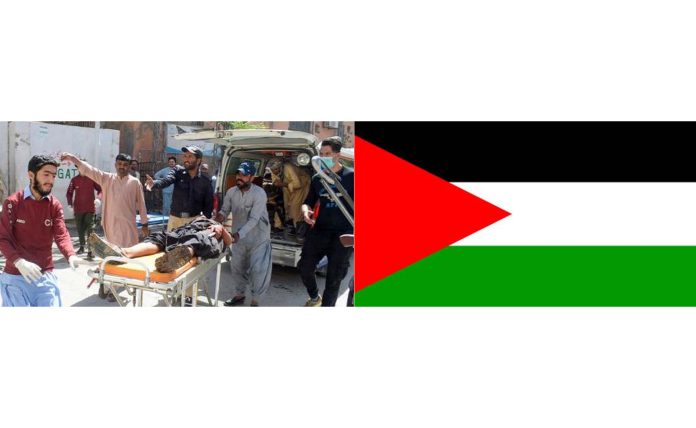
ISLAMABAD, SPT 29: /DNA/ – The Ambassador of the State of Palestine to the Islamic Republic of Pakistan, on behalf of Embassy Staff, the Palestinian people and its leadership, condemns in the strongest terms the two heinous terrorist attacks which took place during the religious celebration of the Eid Milad-ul-Nabi gatherings in the provinces of Balochistan and Khyber Pakhtunkhwa, which resulted in dozens of martyrs as well as many wounded.

We affirm that the State of Palestine stands with the Islamic Republic of Pakistan and its people in confronting terrorism, and affirms its confidence in the ability of the Islamic Republic of Pakistan, as its president, government, people, and army, to confront terrorism and defeat it.

We extend our deepest and most sincere condolences and sympathy to the Islamic Republic of Pakistan, the president, government, people and army, and to the families of the victims, praying to Allah Almighty to have mercy on the martyrs and bless a speedy recovery to the wounded ones.

Stay Connected

64FansLike
60FollowersFollow

Latest Reviews

Exchange Rates

USD - United States Dollar
EUR
1.17
GBP
1.35
AUD
0.72
CAD
0.73