Home Blog Page 1172

‘RAW’ involved in recent terror attacks in Balochistan, says interior minister

Quetta: Interim Interior Minister Sarfraz Ahmed Bugti on Saturday alleged that the Research and Analysis Wing (RAW), India’s foreign
QUETTA, SEPT 30: Caretaker Federal Minister for Interior Sarfraz Bugti addressing a press conference.=DNA PHOTO

Quetta: Interim Interior Minister Sarfraz Ahmed Bugti on Saturday alleged that the Research and Analysis Wing (RAW), India’s foreign intelligence agency, was involved in the recent terror attacks in Balochistan.

Speaking to the media in Quetta, he claimed: “Those playing the role of a facilitator, whoever is doing this — be it anyone, whatever you may call it — they all are the same for us, all have the same origins, all are being handled from one place, RAW is behind all them.”

The minister added, “All incidents that took place before this… they all were unearthed — all major incidents that occurred in Balochistan — and the RAW’s involvement has been there behind all those, and the forces that want to destabilise Pakistan.”

He did not provide any proof or evidence to back his statements.

Bugti’s remarks come a day after a grisly suicide blast targeting a 12th Rabiul Awwal procession in Balochistan’s Mastung claimed the lives of 55 people, including a police officer.

No group has claimed responsibility for the attack so far. However, the banned Tehreek-i-Taliban Pakistan (TTP), responsible for some of the bloodiest attacks in Pakistan, denied its involvement.

The caretaker government of Balochistan announced three days of mourning in the wake of the attack.

A second bomb attack took place yesterday in Khyber Pakhtunkhwa’s Hangu, which targeted a police station’s mosque in the city. Five people were killed, and 12 were injured as the mosque’s roof collapsed in the explosion’s impact.

Speaking to the media today, Bugti vowed to pursue terrorists to their “dens” and that the policy of appeasement would not “happen anymore”.

“What we know is that these appeasement policies adhered to — what we saw in the past two to three years — there is no tolerance for that.”

He added that the state knew where the terrorists were operating from and asserted, “We will go to their dens, where they are nurtured and which are their safe havens, and we will go against them.”

Noting that at times an attack would be conducted by one organisation and another would claim its responsibility, the interior minister said the recent attacks were being investigated.

“Whether it is Daesh or TTP or anyone else… anyone committing violence under any banner… violence will only be exercised by the state,” Bugti said while vowing to hunt terrorists.

Recalling an attack earlier this month that left Jamiat Ulema-i-Islam-Fazl (JUI-F) leader Hafiz Hamdullah injured, the minister stated that the mastermind of that attack was killed later.

He also lamented past occurrences of the state switching to an “appeasement policy” when dealing with terrorist elements.

He stated: “I am honestly telling you that our issue is that we reach a certain level against terrorists — whether it is terrorism under the name of nationalism or religion — we reach a certain position of strength and then all of a sudden, our state switches to an appeasement policy and we reduce our [action].”

Responding to reporters’ queries, he said the provincial Information Minister Jan Achakzai could tell in detail about the matter of “suspending DCs (district commissioners) and SPs (superintendents of police)”, and asserted that a “thorough investigation” will be conducted.

The minister highlighted that yesterday’s blast was the “first ever in Balochistan regarding [the occasion of] 12th Rabiul Awwal” and noted that in the past, the Hazara community and Muharram processions were targeted.

Speaking about the matter of footballers abducted earlier this month from the Dera Bugti district, Bugti confirmed that four of them have returned.

When asked by a reporter if they had been recovered or were released by the abductors, Bugti said, “Four have come [back] and the remaining two will also be recovered, God-willingly.”

CTD registers FIR of Mastung blast
Meanwhile, the Balochistan Counter Terrorism Department (CTD) said it has registered a first information report (FIR) of the Mastung attack that claimed the lives of 55 people, including a police officer, yesterday.

In a statement issued today, the CTD said an FIR with murder charges and terrorism offences has been filed against an unidentified attacker.

It added that the investigation into the incident was ongoing and no arrests have been made so far.

The CTD said the deadly attack resulted in the loss of at least 55 lives and left more than 60 people injured.

The national flag was lowered to half-mast on government buildings, including the Balochistan Assembly, Chief Minister House, Governor House, and the Balochistan High Court today.

Pakistan’s flag flutters at half-mast at the provincial assembly in Quetta on September 30, a day after a suicide bomber targeted a procession marking the birthday of Prophet Muhammad (PBUH) in Mastung district. — Banaras Khan/AFP
Balochistan caretaker Information Minister Jan Achakzai said the entire region of Mastung was “engulfed in sorrow”. He added that despite the heartbreak, the “courageous administration and security institutions are making efforts to restore a sense of normalcy as they and the families lay the martyrs to rest”.

He stressed that the government “remains resolute in its determination to combat terrorism and ensure the safety and security of its citizens”.

In an official statement, the provincial government said the injured people were currently undergoing treatment at several hospitals, including the Civil Hospital, Trauma Center, Combined Military Hospital (CMH), Nawab Ghaus Bakhsh Raisani Hospital, and Mastung District Headquarters (DHQ).

Furthermore, over 15 injured individuals were transported to CMH yesterday, following the directives of Quetta Corps Commander Lt Gen Asif Ghafoor.

Relatives stand next to blast victim at a hospital in Quetta on September 30, 2023, a day after suicide bomber targeted a 12th Rabiul Awwal procession in Mastung district.—Banaras Khan/AFP
Yesterday, Balochistan interim Information Minister Jan Achakzai had said that the “enemy” wanted to destroy religious tolerance and peace in Balochistan with “foreign blessings”.

In a subsequent press conference, the minister had said the death toll in the blast “is immensely unfortunate”. He had revealed that a number of families had buried their loved ones without bringing them to the hospital, adding that the government had not included these people in the official death toll.

Senate chairman visits Mastung attack victims
Also today, Senate Chairman Sadiq Sanjrani visited the Civil Hospital to inquire about the condition of those who were injured in the Mastung blast yesterday.

Senators Naseebullah Bazai, Prince Ahmed Umer Ahmedzai and Rukhsana Zuberi also accompanied him.

He urged Caretaker Prime Minister Anwaarul Haq Kakar and the Balochistan chief minister to announce packages worth Rs20 million for those martyred in yesterday’s attack, and worth Rs10m for those injured.

Hoping that they would do so, Sanjrani expressed his sympathy towards the blast victims and asserted that the government “would not allow the peace process to be sabotaged”.

International condemnations
UN Secretary-General Antonio Guterres condemned the terrorist attacks that took place a day ago, calling for bringing the perpetrators behind them to justice.

“It is abhorrent that these attacks targeted people during peaceful, religious ceremonies,’ he said in a post on social media site X (formerly Twitter).

Speaking at the regular briefing at UN Headquarters in New York, his spokesperson Stephane Dujarric also condemned the terrorist attacks, state-run Radio Pakistan reported.

Separately, UN Security Council President Ferit Hoxha also strongly condemned the terror incidents in a press statement, the report said.

It added that the UNSC members expressed their deepest sympathy and condolences to the families of the victims, and wished a speedy and full recovery to those injured.

Radio Pakistan further said the UNSC reaffirmed that terrorism in all its forms and manifestations constitutes one of the most serious threats to international peace and security.

The UNSC members underlined the need to hold perpetrators, organisers, financiers and sponsors of these reprehensible acts of terrorism accountable and bring them to justice, it stated.

The report quoted the members urging all states to cooperate actively with Pakistan as well as all other relevant authorities in this regard, in accordance with their obligations under international law and relevant UNSC resolutions.

PM Kakar received a telephone call from UK Foreign Secretary James Cleverly, the Prime Minister’s Office said in a statement today.

“The UK foreign secretary condemned the terrorist attacks in Mastung and Hangu and condoled the loss of innocent lives,” the PM Office said.

Cleverly expressed solidarity with the families of the victims and hoped for the speedy recovery of those injured.

“The prime minister thanked Secretary Cleverly and the United Kingdom for their expression of solidarity and reiterated his government’s firm resolve to bring those responsible to justice and wipe out the menace of terrorism,” it added.

Rise in terror incidents
Pakistan has witnessed an uptick in terror activities in recent months, especially in KP and Balochistan, after the TTP ended its ceasefire with the government in November last year.

Earlier this month, at least 11 people, including Jamiat Ulema-i-Islam-Fazl (JUI-F) leader Hafiz Hamdullah, were injured in a blast in the same district.

A week prior to that, a Levies official was gunned down at a bus stand by unidentified men, while two others who were passing by were injured.

In May this year, unidentified attackers targeted a polio vaccination team in the Killi Sour Karez area on the outskirts of Mastung, resulting in a policeman being martyred.

In October last year, three people were killed, and six others were injured in a bomb attack targeting two vehicles in the mountainous area of Qabu in Mastung.

In July 2018, at least 128 people, including politician Nawabzada Siraj Raisani, were killed and more than 200 were injured in a deadly suicide blast in the same district.

PTI rebuffs FIA’s challan against Khan, Qureshi in cipher case

FIA submits challan in cipher case; Asad Umar not among accused

Refreshes demand of empowered penal to bring facts before nation
Says any verdict after unlawful proceeding would neither legal nor be acceptable to nation

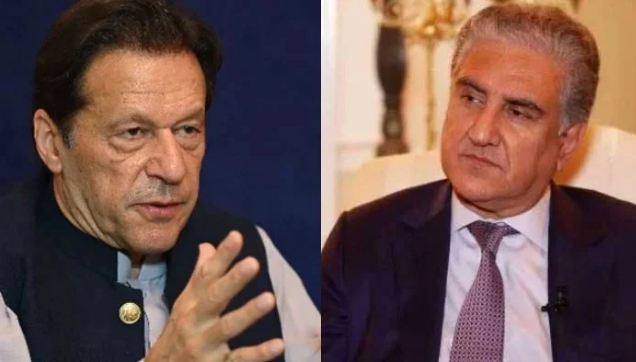
ISLAMABAD: /DNA/ – Pakistan Tehreek-e-Insaf (PTI) spokesperson vehemently rejected the FIA’s challan submitted to the court in cipher case and reiterated the party’s stance seeking formation of an empowered high level judicial commission to probe the cipher so as to bring the truth to the fore.
PTI spokesperson said that the FIA’s challan submitted against PTI Chairman Imran Khan and Vice-Chairman Shah Mahmood Qureshi was meaningless and worthless like the fake and bogus cipher case itself.
He said: “It is the fact that the cipher is still present in the Foreign Office in its original state, which is proving the allegations leveled against the former prime minister are baseless.”
PTI spokesperson stated that the federal cabinet declassified the paraphrased version of the Cipher which the foreign office provided after which the Official Secrets Act could not be applied and the case died by its own death, as the original cipher is coded and only the foreign office has access to it.
He recalled that PTI Chairman repeatedly demanded an independent and impartial investigation of the cipher, for which letters were also sent to the Chief Justice and the President of the country, but no progress had been made till date.
PTI spokesperson went on to say that new traditions of injustice have been established from the holding secret trial in the jail to the unjustified postponement of the court proceedings of cipher case, adding that any decision given as a result of the illegal proceedings of a baseless case would have neither any legal standing nor would the nation accept it.
He reiterated that in order to fulfill the demands of justice, an independent and fair judicial commission should be constituted to investigate the cipher in order to bring facts before the nation.

Mobile Apps: Navigating the Digital Landscape

Mobile App Benefits for Business

Enhancing Your Online Presence with Mobile Applications

In the fast-paced digital age, mobile apps have emerged as a powerful tool for businesses to connect with their audiences, boost their online presence, and gain a competitive edge. With the ever-increasing use of smartphones and tablets, mobile apps have become an integral part of our daily lives. In this article, we will delve into the world of mobile apps and explore how they can elevate your business to new heights.

The Mobile Revolution

The proliferation of mobile devices has reshaped the way we interact with the digital world. With smartphones in the hands of nearly everyone, mobile apps have become a driving force in the tech industry. These applications serve a multitude of purposes, from providing entertainment and convenience to facilitating business operations.

Why Your Business Needs a Mobile App

Staying Ahead of the Curve

In today’s highly competitive market, staying ahead of the curve is essential. Having a well-designed mobile app sets your business apart and signals that you are attuned to the latest technological trends. It also shows that you are committed to providing your customers with a seamless and convenient experience.

Enhancing Customer Engagement

Mobile apps offer a direct channel of communication with your customers. Push notifications, in-app messages, and personalized offers can keep your audience engaged and informed. This level of interaction fosters customer loyalty and increases retention rates.

Increasing Accessibility

A mobile app puts your business in the palm of your customers’ hands. It allows them to access your products or services anytime, anywhere. This convenience can significantly boost sales and revenue.

Data-Driven Insights

Mobile apps provide valuable data about user behavior and preferences. This data can be harnessed to refine your marketing strategies and tailor your offerings to meet customer demands effectively.

Designing Your Mobile App

Creating a successful mobile app begins with a well-thought-out design. Here are some key considerations:

User-Centric Interface

Your app’s user interface should be intuitive and user-friendly. Ensure that users can navigate your app effortlessly, find what they need, and complete actions without frustration.

Speed and Performance

Mobile users have little patience for slow-loading apps. Optimize your app’s performance to provide a seamless experience, even on slower networks.

Compatibility

Make sure your app is compatible with a range of devices and operating systems. This ensures that you reach the widest possible audience.

Security

Security is paramount in the digital landscape. Protect your users’ data and privacy by implementing robust security measures.

Developing Your Mobile App

In-House vs. Outsourcing

Deciding whether to develop your app in-house or outsource the project depends on your resources and expertise. In-house development offers more control but may require a substantial investment. Outsourcing can be cost-effective but requires careful vetting of development partners.

Choosing the Right Platform

Consider whether your app should be available on iOS, Android, or both platforms. Each has its advantages and target audience.

Testing and Feedback

Thoroughly test your app before launching it to the public. Gather feedback from beta users to identify and address any issues.

Launch and Marketing

App Store Optimization (ASO)

To rank high on app stores, you must optimize your app’s listing. Use relevant keywords, engaging visuals, and compelling descriptions to attract users.

Social Media Promotion

Leverage your social media channels to create hype around your app. Engage with your audience, run contests, and provide sneak peeks to generate interest.

Paid Advertising

Consider investing in paid advertising to reach a broader audience. Platforms like Google Ads and Facebook Ads can help you target specific demographics.

The Future of Mobile Apps

As technology continues to evolve, so will the capabilities of mobile apps. Emerging trends like augmented reality (AR), virtual reality (VR), and artificial intelligence (AI) are poised to revolutionize the mobile app landscape. By staying informed and adapting to these trends, you can ensure that your business remains at the forefront of innovation.

Conclusion

In a world driven by digital experiences, mobile apps are no longer a luxury but a necessity for businesses. They offer a direct line of communication with customers, enhance accessibility, and provide valuable insights. To succeed in the competitive digital landscape, invest in a well-designed and user-friendly mobile app. Embrace the opportunities that mobile technology offers, and watch your business soar to new heights.

Remember, the key to success lies in providing an exceptional user experience. So, embark on your mobile app journey today, and let us assist you in realizing your digital ambitions.

Harness the power of mobile apps for your business >> Click Here.


Note: This article is a comprehensive guide to mobile apps and their benefits for businesses. It is intended to provide insights into the world of mobile applications and how they can enhance your online presence. For personalized advice and app development services, Please Click Here.

SM Tanveer assures for new Industrial Estate in Chakwal

SM Tanveer assures for new Industrial Estate in Chakwal

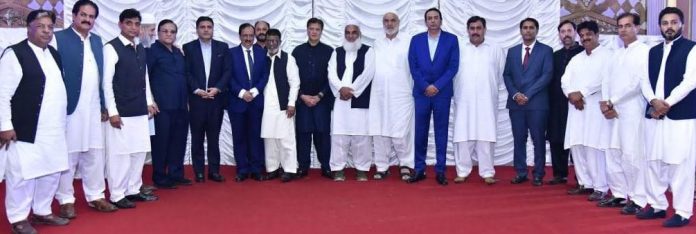
Islamabad: /DNA/ – Punjab Industry and Agriculture Minister SM Tanveer said that we have managed the sinking economy of Pakistan in the last few months and we will start a new journey of development and prosperity in the province in the next few months. He said that under the management of Chakwal, Rawalpindi and Islamabad Chambers of Commerce, a new industrial estate will be established at Neela Dulla Interchange in Chakwal, which will usher in a new era of development and prosperity in the area. He said this while addressing the annual dinner hosted by the Chakwal Chamber of Commerce and Industry.

Punjab Health Minister Dr. Jamal Nasir said that he is busy day and night to improve healthcare facilities for the people of Punjab. He said that under the leadership of Chief Minister Punjab, they are adding a new chapter of development in the province

Chakwal Chamber of Commerce President Waqar Bakhtavari demanded the establishment of a new industrial estate at Neela Dulla Interchange. He said that for the promotion of tourism, tourism infrastructure should be improved in Punjab including Chakwal, which will bring beneficial results for the economy. He further demanded that steps should be taken to make inactive dams in the Potohar region active soon.

President Islamabad Chamber of Commerce Ahsan Bakhtawari said that a new industrial estate is the urgent need of the hour to create new employment opportunities and promote investment in the region and hoped that under the leadership of Minister of Industry and Agriculture of Punjab SM Tanveer, this project will be completed soon.

Vice President FPCCI Qazi Akbar said that under the municipal committee in Chakwal’s Chapar Bazaar, the government tenant shopkeepers should be given ownership rights.

Coordinator Chakwal Chamber of Commerce Khawaja Arif demanded to further improve the medical facilities in Chakwal hospital so that the people can get quality treatment facilities.

Petroleum prices likely to fall from Oct 1

Petroleum prices likely to fall from Oct 1

ISLAMABAD: The petroleum prices are expected to go down from October 1 (tomorrow) following the stability in the Pakistani rupee against the US dollar, sources told on Saturday.

The international market prices have also decreased, said the sources.

The sources added that the Ministry of Finance will make a final decision on the petroleum prices after consultations with caretaker Prime Minister Anwaar-ul-Haq Kakar.

Earlier this week, the Oil and Gas Regulatory Authority (Ogra) advised against speculating on the price of petroleum products after federal ministers claimed the POL rates would likely be reduced in the next fortnightly review.

Caretaker Federal Commerce and Industries Minister Gohar Ejaz and Interim Federal Minister for Information and Broadcasting Murtaza Solangi said last week that POL prices would be reduced after the rupee gained ground against the dollar.

In the last two weeks, the rupee has gained around Rs19 against the greenback, prompting the claims, as Pakistan, being an importer of POL, purchases the commodity in dollars.

In the previous fortnightly review, the caretaker government had jacked up the petrol price by more than Rs26 and diesel by over Rs17 per litre to Rs331.38 and Rs329.18, respectively — the highest in history.

The authority mentioned that petroleum product prices in Pakistan are primarily dependent on international market prices and the exchange rate of the Dollar.

In recent times, it said, there has been a surge in international petroleum prices, while the dollar-to-rupee exchange rate has shown improvement.

But, the authority said, it is essential to highlight that there is still one week remaining before the announcement of new prices.

“Therefore, any speculation about price increases or decreases during this period is highly speculative and could potentially disrupt the smooth functioning of the oil supply chain.”

Story of Nawaz’s political career

Waheed Hussain

According to the PML (N) leadership, former Prime Minister and “Quaid” of the Party, Muhammad Nawaz Sharif is traveling back home on 21st October. Well, a long-awaited return of a native to his country.For any political leader; the party workers, voters and general public, are all like a family member. If an individual cannot distance himself or herself from afamily for a long time, similarly, the political leaders, especially those who have been serving the masses for years and years cannot live in isolation. People are like an oxygen for a public leader without whom his or her existing becomes impossible. Same goes to Nawaz as well.

Muhammad Nawaz Sharif looks like a Shakespearean tragic hero, who as a statesman andpolitical leader went through persistent mental agony and physical pain. There is a famous saying that when you make choices you have to pay the prices, no doubt, Nawaz Sharif has paid a big price during hislong political career.

The circumstances in which Nawaz left the country were unconducive for him at that time.When he was leaving for London on 19 October, 2019, the doctors’ team (both government and private) through a detailed medical examinationreported that the former prime minister was suffering from “immune system disorder”and his blood “platelets” counts were low to a dangerous level, considered a serious threat to his life.He was serving 10 years in prison, the punishment awarded by the National Accountability Bureau Judge Muhammad Bashirin the Avenfield Apartment Corruption reference. His daughter Maryum and son-in-law Captain (R) Muhammad Safdar were also penalized in the same reference as co-accused. However, former PM Nawaz, his daughter Maryum Nawaz and PML (N) party leaders have rejected the court decision, declaring it the worst kind of a “political victimization.”

If we see the series of political events which were unfoldedin the countryafter the Panama Papers scandal, which appeared in the local as well as the international media in April 2016, they indicate that taking advantage of the news, some important office holders of that time, targeted Nawaz Sharif only. The purpose of those individuals was to sideline Nawaz from the electoral and power politics.

Former Chief Justice of Pakistan Saqib Nisar’s judicial activism against an elected prime minister through the Panama Papers scandal was a well scripted plan to remove him from the power and pave the way for the PTI Chief Imran khan to occupy the most powerful office on the Constitutional Avenue Islamabad. And of course, the same target was achieved after a controversial election in 2018.

The decision against Muhammad Nawaz Sharif and his family was announced on July 6, just three weeks before the electoral process sending a very clear message to everyone that who would rule the country. When other parties were holding election rallies and campaign, Nawaz and his daughter were in jail. It was unfair?

That’s why during last few years we have been hearingNawaz Sharif and his daughter Maryum Nawaz complaining fornot being provided a level playing field during 2018 elections. Nawaz and his daughter want a level playing field in any future elections.By the way today PML (N) seems to be partially satisfied with the present political and electoral conditions for the upcoming elections. The interim setup was installed with the Nawaz’s approval. He has confidence in the Army leadership, newly appointed CJP and Chief Elections Commissioner. Apparently, media is also friendly so far.

On the other hand, the PPP and PTI were raising their voices for the level playing field. From power politics point of view, it was really difficult to explain the phrase “level playing field.” In Pakistani politics mostly the players (or the competing teams) believe in the match fixing.

Let us look at the Nawaz’s past career as the Chief Executive of the country. In his first tenure As Prime Minister (1990-1993) Nawaz Sharif introduced policy of privatization and economic liberalization including the “Yellow Cab Scheme” a policy to provide respectable source of income to the joblesspeople. In the second term as PM (1997-1999) he launched ‘Motorway Scheme’ to build the communication infrastructure of the country providing an opportunity to the businesses and economy to grow.

Despite western opposition and pressure, he as the prime minster responded to the India nuclear tests by conducting nuclear explosion at Chagai,Balochistan, declaring Pakistan as the first Muslim,while, 7th nuclear power of the world.

In the third term (2013-2017)as the Chief Executive of the country Nawaz Sharif signed a historic China Pakistan Economic Corridor (CPEC) a project opening various economic and social development avenues for the country.

The project broughtbillions of dollars investments in the infrastructure, communication, energy and other sectors. Due to numerous political reasons Nawaz was never allowed to complete his tenure as the prime minister of Pakistan. He and his party believe that certain elements in the establishment and judiciary hadconspired against his governments in the past, resultantly which hindered the economic progress and prosperity in the country. Nawaz had always complained that if his governments had been allowed to complete five-year term, today, the country would have not beenpassing through the worst economic and financial difficulties. There is no second opinion that political instability and bad law and order situation in any country could prevent the domestic and foreign investments.

Even the remittances by overseas Pakistanis are badly affected as well. 

Nawaz Sharif is a prominent political leader. He is basically the political party himself. Without his presence PML (N) may not be able to perform well both inthe field as well as ingovernment.The recently ended 16 months coalition government of PDM led by Shahbaz Sharif, the president of the party, was a nightmare for masses.Thehistoric inflation and uncontrolled price hike have damaged the reputation of PML (N).That’s why the aspirant candidates both for the national as well as provincial assemblies were really nervous to go into elections.

As Nawaz, family members and the party leaders confirmed, that, the former PM is set to comeback to Pakistan on 21th of this month. Nawaz must have got a clearance from the legal team that once he is in the country,he will not face any of the cases,whichdisqualified him for holding any public office and send him to jail in 2018.

He must have got a nod from the establishment without which he will never take any risk of trying to fish in the troubled waters.

If Imran khan remains out of elections process as the PML (N) was demanding and calling it as a level playing field. Meaning by that in 2018, Nawaz was disqualified, put behind jail during elections, barred to lead the party elections campaign. Similarly, PML (N) wants Imran to be disqualified, remain in prison during the next elections leaving an open ground for Nawaz League particularly in Punjab. This it calls a level playing field with reference to PTI.

On the other hand, PPP and PTI were also complaining of level playing field. Both believe that PML (N) is being given a free hand and open space even during the care taker set up.

If all goes well, as Nawaz and his party were aspiring, the biggest challenge would be that how he would convince the masses to vote for a party, which has desperately disappointed the people during Shahbaz premiership.

Narratives are key to success. Political narratives change the minds of the people. What narrative Nawaz will carry to the public?

Will Nawaz launch his campaign with the accountability of the former generals and judges, as he has recently told the media?

Or will he provide a practical solution to the economic and financial challenges the country and masses were facing?

With which narrative will he land in the battle field accountability or the relief to public?

Accountability of the former generals and judges sounds very aggressive and popular; however, some believe this will defocus Nawaz from the actual issue of economic reforms and growth agenda.Let us see where Nawaz wants to take himself and his party?

Senator Mushahid praises Baqai’s unbiased approach in new book on Foreign Affairs

Senator Mushahid praises Baqai's unbiased approach in new book on Foreign Affairs

DNA

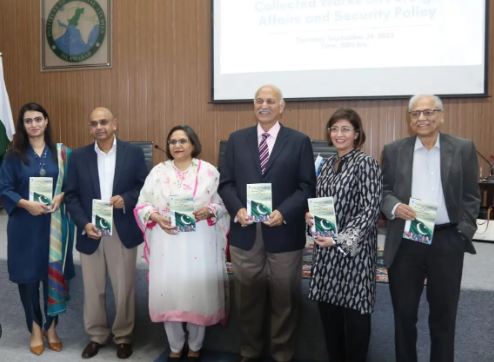
ISLAMABAD, Sept 30: The Institute of Regional Studies (IRS) Islamabad organized a Book Launch ceremony for Professor Dr Huma Baqai’s recently released book titled ‘Collected Works on Foreign Affairs and Security Policy’. During the event, the discussants complimented Dr Baqai for putting together a much needed addition to the discourse on Pakistan’s foreign relations and some of the most pertinent nuances of security policy. 

Senator Mushahid Hussain Sayed said that the essence of Prof Dr Baqai’s book was that it had been written with an open mind without any pre-conceived notions and that it sought truth from facts instead of mere opinions. He further added that the era covered in the book was extremely significant as the instances quoted therein revealed absence of institutionalized decision-making as a major underlying factor behind poor policy-making over the years.                

Mr Zahid Hussain, Senior Journalist commented that Prof Dr Baqai had produced a seminal book capturing the past six years of international relations that had witnessed some monumental developments. He added that book was a very timely addition to the contemporary discourse as it also shed ample light on the return of the Taliban to power as well as the changing dynamics of the Pak-US ties.     

Ambassador Naghmana Hashmi congratulated Dr Baqai on the publication of her book. She said that the book was an excellent resource to understand the recent developments in foreign affairs and offered a detailed analysis of the geopolitical, geo-economic and geo-strategic developments that affected Pakistan. Ambassador Nadeem Riyaz, congratulated Prof Dr Baqai and said that not only the book was a timely contribution but its most laudable aspect was its readability.

Professor Dr Huma Baqai thanked the IRS, particularly Ms Reema Shaukat for organizing the Book Launch ceremony. She detailed the various stages of data collection during the writing of the book and commented that the intellectually-starved youth of Pakistan was direly in need of a direction. 

Some notable attendees at the event included, Ambassador Sohail Mehmood, Mr Chaudhary Faisal Mushtaq, Major General Asif Yasin Malik, Dr Salma Malik, Dr Khalid Banuri and other worthy members of the academia and civil society. 

Koreas clash at Asian Games as arch-rivals Pakistan and India take centre stage

Koreas clash at Asian Games as arch-rivals Pakistan and India take centre stage

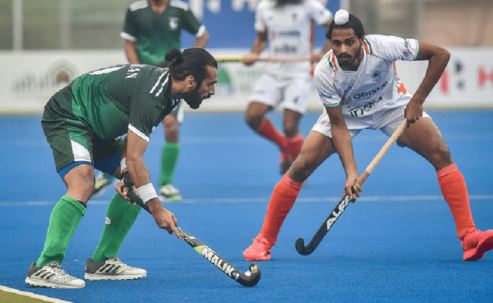
North and South Korea clash on the football pitch and India do battle with Pakistan in hockey as fierce rivalries take centre stage at the Asian Games on Saturday.

The men’s and women’s 100m sprint titles will also be contested on the athletics track in Hangzhou, where the rain fell steadily in the early afternoon.

With the Games approaching their halfway point, hosts China have raked in 107 gold medals, far ahead of the rest, with Zhang Zhizhen doing his part on Saturday by winning the men’s tennis crown.

The 60th-ranked Zhang made a slow start and fell 4-1 behind in the first set of the final against Japan’s Yosuke Watanuki.

But with the home crowd roaring him on, the 26-year-old from Shanghai battled back to win 6-4, 7-6 (9/7) and become the first Chinese men’s singles tennis champion at the Games since 1994.

“It’s been a very, very tough week, not just this match, but very tough for the whole week actually, from the first match onwards,” said Zhang.

“But I’m super-happy that from the beginning of the first match, step by step, I’ve played better and better tennis.” Earlier in the day, Taiwan’s Chan Hao-ching and Chang Yung-jan won gold in women’s doubles. The second-seeded pair beat fellow Taiwanese Lee Ya-hsuan and Liang En-shuo 6-4, 6-3.

Rising Chinese star Zheng Qinwen won the women’s singles title on Friday. Some of Saturday’s most mouthwatering match-ups come later in the day.

North Korea and South Korea face off for a place in the semi-finals of the women’s football, with local and regional bragging rights at stake between two countries that are still technically at war.

Also in the last eight, holders Japan play the Philippines, China face Thailand and Taiwan meet Uzbekistan.

Towards the end of another packed schedule, arch-rivals Pakistan and India face off in a men’s hockey group match, in what is sure to be another fierce encounter between neighbours with fraught ties.

Gold medals will be won on Saturday in other sports, including weightlifting, diving, shooting, table tennis and eSports.

Diving, which is expected to be dominated by the home nation’s world-class squad, and weightlifting get under way for the first time at these Games. The drizzle could be a factor in the outdoor sports.

As well as the 100m titles, five other golds will be snapped up on the second day of track and field.

EJ Obiena of the Philippines, the world number two, will be hot favourite to clinch a first Asian Games gold of his career in the pole vault.

FIA submits challan in cipher case; Asad Umar not among accused

FIA submits challan in cipher case; Asad Umar not among accused

ISLAMABAD: The Federal Investigation Agency (FIA) on Saturday submitted the challan in the cipher case against Pakistan Tehreek-e-Insaf (PTI) Chairman Imran Khan and Vice Chairman Shah Mahmood Qureshi.

The agency, in its challan, stated that the former prime minister and the vice-chairman were found guilty in the matter and requested the court to conduct their trial and sentence them in the case.

According to the sources, former PTI secretary-general Asad Umar’s name has not been added to the list of accused. Meanwhile, Imran Khan’s former principal secretary Azam Khan has been named as a “strong witness” in the case.

The FIA also attached Azam’s statements, recorded under Sections 161 and 164, along with the challan, said the sources, adding that the PTI chief kept the cipher to himself and misused the state secret.

The sources also said that Khan had a copy of the cipher but he did not return it. 

Moreover, the FIA also attached the transcript of Khan and Qureshi’s speech on March 27 — the day when the former premier brandished a letter claiming it was a cipher from a foreign nation, which wanted his government to be removed from power.

The agency also submitted a list of 28 witnesses to the court with the challan after recording their statements under Section 161. 

Sources further revealed that the names of former foreign secretaries Asad Majeed, Sohail Mehmood and the then additional foreign secretary Faisal Niaz Tirmizi have also been added to the list of witnesses. 

On September 26, the special court extended the judicial remand of the PTI chairman and vice-chairman till October 10 in the cipher case. 

Last month, the FIA booked the PTI chief and the party’s vice chairman under the Official Secrets Act for allegedly misplacing and misusing the classified document for their vested political interests.

“Consequent upon the conclusion of the enquiry No. 111/2023 dated 05.10.2022, registered in the CTW, FIA Islamabad, it transpired that former prime minister namely Imran Ahmad Khan Niazi, former foreign minister namely Shah Mahmood Qureshi and their other associates are involved in communications of information contained in the secret classified document (Cipher Telegram received from Parep. Washington dated 7th March, 2022 to Secretary Ministry of Foreign Affairs) to the unauthorised person (i.e. public at large) by twisting the facts to achieve their ulterior motives and personal gains in a manner prejudicial to the interests of state security,” read first information report (FIR) registered against the PTI leaders.

Subsequently, both leaders were arrested in connection with the investigation into the case and a special court was established under the Official Secrets Act to try the accused.

Ciphergate

The controversy first emerged on March 27, 2022, when Khan — less than a month before his ouster in April 2022 — while addressing a public rally waved a letter before the crowd, claiming that it was a cipher from a foreign nation that had conspired with his political rivals to have PTI government overthrown.

He did not reveal the contents of the letter nor did he mention the name of the nation it came from. But a few days later, he accused the United States of conspiring against him and alleged that Assistant Secretary of State for South and Central Asia Affairs Donald Lu had sought his removal.

The cipher was about former Pakistan ambassador to the US Majeed’s meeting with Lu.

The former prime minister, claiming that he was reading contents from the cipher, said that “all will be forgiven for Pakistan if Imran Khan is removed from power”.

Then on March 31, the National Security Committee (NSC) took up the matter and decided to issue a “strong demarche” to the US for its “blatant interference in the internal affairs of Pakistan”.

Later, after his removal, then-prime minister Shehbaz Sharif convened a meeting of the NSC, which came to the conclusion that it had found no evidence of a foreign conspiracy in the cable.

In the two audio leaks that took the internet by storm and shocked the public after these events, the former prime minister, then-federal minister Asad Umar, and then-principle secretary Azam could allegedly be heard discussing the US cipher and how to use it to their advantage.

On September 30, the federal cabinet took notice of the matter and constituted a committee to probe the contents of the audio leaks.

In October, the cabinet gave the green signal to initiate action against the former prime minister and handed over the case to the FIA.

Once FIA was given the task to probe the matter, it summoned Khan, Umar, and other leaders of the party, but the PTI chief challenged the summons and secured a stay order from the court.

The Lahore High Court (LHC(, in July this year, recalled the stay order against the call-up notice to Khan by the FIA.

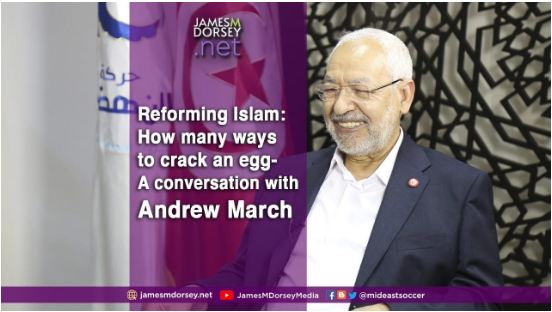
Reforming Islam-How many ways to crack an egg – A conversation with Andrew March

Reforming Islam-How many ways to crack an egg - A conversation with Andrew March

James M. Dorsey

Hi, and welcome to the Turbulent World with me, James M. Dorsey as your host, Islamic Law is at the centre of debates about what constitutes moderate Islam and what it would take to reform Islam. Essentially two schools of thought dominate the discussion. Islam’s traditional approach simply picks and chooses which elements of Sharia it opts to ignore. That is the approach adopted by autocratic rulers like Saudi Crown Prince Mohammed bin Salman and United Arab Emirates. President Mohamed bin Zayed.

Indonesia’s, Nahdlatul Ulama, the world’s largest and most moderate civil society movement challenges the traditional approach. It insists that removal of outdated, obsolete, and supremacist concepts in Sharia is the only way to fortify Islam against religious and political extremism and promote political, social, and religious pluralism, religious tolerance, and democracy. My guest today, Andrew March, a University of Massachusetts Amherst professor is an Islam scholar and author of several books published last month.

Andrew’s last book on Muslim democracy is a translation of essays by Rached Ghannouchi, a Tunisian politician, public intellectual, religious thinker, and founder of a political party that evolved from Islamism to Muslim democracy in many ways comparable to Christian democratic parties. The book is also a philosophical discussion between the two.

Mr. Ghannouchi was named one of Time’s 100 most influential people in the world in 2012 and Foreign Policy’s top 100 global thinkers. Eighty-two years old, Mr. Ghannouchi is the latest high- profile figure to have been arrested on charges of incitement against state authorities by the autocratic regime of President Kais Saied. Ghannouchi went on hunger strike this week.

Ghannouchi is a middle ground figure in the debate about what constitutes moderate Islam and how to reform the faith. Reform of Sharia may be one step too far for him. Yet, his evolution from Islamism or political Islam to Muslim democracy positions him as a democratic reformer.

It raises the question of whether Mr. Ghannouchi and his Ennahda Party are models for groups like the Muslim Brotherhood or the exception that confirms the rule that political Islam is inflexible, rigid, and opposed to moderate interpretations of Islam and a threat to secularism. Andrew March joins me to discuss all of this.

Andrew, welcome to the show and congratulations on the publication of your latest book. Thanks

Andrew March (03:15):

Thank you so much for having me. I’m very, very happy to be here.

James M. Dorsey (03:18):

It’s a pleasure and an honour to have you.

Let’s kick off with your intellectual journey, if I may. What drove you to the study of Islam? How did you come to know Rached Ghannouchi and what is your relationship with it?

Andrew March (03:33):

Well, I have been studying Arabic and Islam for almost 27 years now. I started as an undergraduate doing Arabic and Middle Eastern studies. I did my PhD in political theory, but because I was so passionate about the study of Arabic and Islamic intellectual traditions, my dissertation and my first book was on Islamic thought related to the moral and ethical position of Muslim minorities living in non-Muslim liberal democracies. So that was a study of an Islamic legal discourse called Fiqh al-Aqalliyyat or the Jurisprudence of Muslim minorities. My second book published in 2019 called ‘The Caliphate of Man: Popular Sovereignty in Modern Islamic Thought’ is a study of the development of a certain kind of commitment to popular sovereignty and a certain kind of ideal theory of an Islamic democracy in 20th and 21st century Islamic thought. The thought of Ghannouchi is very central to that, and in fact, in that book, I sort of argue that the modern project of imagining a state that is both equally faithful to divine sovereignty and yet fully democratic and supportive of the idea of the people as sovereign culminates in Ghannouchi’s sort of writings in the 1980s and 90s, particularly his book Public Freedoms in the Islamic State.

(05:12)
I came to know him and his family in around 2013 or 14 I believe. I was editing a translation series with Yale University Press, and we wanted to translate his book Public Freedoms in the Islamic State. So I came to know him and his family that way, and then through visiting Tunisia and visiting him in his home, we conceived of the idea of doing this book, which consists in a translation of ten of his essays and speeches and writings on themes related to pluralism and democracy and Muslim democracy, which is a kind of turn from Islamic democracy to a different conception of politics, combined with a lengthy sort of week-long dialogue between him and me as a kind of an Islamic political philosopher and a western political philosopher discussing issues related to law, pluralism, democracy, and his own intellectual trajectory. I came to know him and a number of members of his family quite closely over those years. Of course, now he’s a political prisoner since April, very unfortunately, and so all we can hope is that somehow through international pressure or the Tunisian legal system, he’ll be released before it’s too late.

James M. Dorsey (06:42):

Indeed. Maybe it’s a good thing to sort of describe Ronin, not so much in terms of his politics, but who is he as a person?

Andrew March (06:53):

Well, separating him from his politics is very difficult. He’s been sort of a full-time leader of the Ennahda Party for I guess almost 45 years now, including during a lengthy period of exile in England. Personally, he is a very reserved, deliberate, quiet, non-sort of flamboyant personality. He is not somebody that seeks out attention for himself. He is not somebody that is known for kind of over the top pronouncements. He’s very calm, he’s very systematic. He, of course, is very, very close to his family, very committed to his family, and a very thoughtful person who I think is usually happiest reading and writing and was sort of thrust into high politics because of the vagaries of history.

James M. Dorsey (08:06):

Ghannouchi and his Ennahada Party played a key role in what long seemed to be the Arab world’s only post-2011 popular revolts, successful transition from autocracy to democracy. Can you describe what his and the party’s contribution was and maybe some of the debates that took place?

Andrew March (08:28):

Of course, Tunisia had first a long transitional period, a long constitutive period of drafting the post authoritarian constitution between 2011 and 2014, and so we need to divide the period of Tunisian democracy up into a number of period. The first 2011, perhaps to what we call the crisis year of 2013 and 14, and then the period of 2014 to 2019 during the presidency of Beji Caid Essebsi, and then the period 2019 to 2021, which resulted in the coup by Kais Saied. At at the beginning, in the first election to the National Constituent Assembly in 2011. The Ennahada Party won 41 per cent of the vote, and so had the dominant role in the National Constituent Assembly, but not enough of a role to dictate the terms of the transition or to dictate the terms of the new constitution. So, the first thing to note, before we discuss anything related to their ideology or their own political priorities, is that their structural situation was very different from that of the Muslim brotherhood in Egypt where the combined Islamist forces of the Muslim Brotherhood and the Salafi parties had closer to 70 per cent of the seats in the constituent assembly.

(10:01)
So, from the beginning, Ennahada preferred to and had to adopt a kind of conciliatory position by entering into coalitions with other parties during the first period during the National Constituent Assembly. This was with certain more pro-democratic revolutionary forces like Moncef Marzouki’s Congress of the Republic. Marzouki, of course, was the first democratic president of Tunisia between 2011 and 2014, and so the long period of drafting a constitution was remarkable because it was a constitution that was drafted in radically democratic conditions, more democratic even than I would say Egypt, which of course had a open democratic process, but was kind of overseen and supervised by the institutions of the old regime, the Supreme Court, the judiciary, and, of course, the army. In the case of Tunisia, the situation was much more democratic and there was a strong argument that the constitution that came out in 2014 represented a constitution that reflected the actual demographic and ideological reality of the country.

(11:26)
And so the first thing to note is that while Ennahada has always been a kind of moderate party willing to enter into coalitions and compromises with a wide range of political actors. The most important thing was the electoral situation of the country, which dictated governance by consensus, by coalition by agreement. No political party was able to dictate the shape or contours of the post-authoritarian system. And then the next big event there was the crisis year of 2013 and 14 when you had the coup in Egypt, you had a number of high-profile assassinations in Tunisia, and there was a real concern that something similar could happen in Tunisia as happened in Egypt with regards to a counter revolutionary coup. And the response of Ghannouchi and Ennahda at that time was sort of out of necessity to make a kind of deal with the party of the ancien regime, particularly in the figure of Beji Caid Essebsi who became president in 2014, resulting in a kind of five-year informal period of alliance between Ennahda and Essebsi’s Nidaa Tounes party.

James M. Dorsey (13:02):

You’ve talked a bit about the comparison with Egypt in structural terms. To what degree, if at all, did personality play a role in the way that Egypt developed on the one hand and Tunisia on the other?

Andrew March (13:23):

It’s hard to know too much about that. It’s hard to know unless you’re really an insider, what the actual room for maneuvering is, how much personality or personal ties played a role? Many people do believe that because the Tunisian opposition had developed ties over decades in exile between London and Paris, that there were personal relationships and a kind of groundwork for what a post-authoritarian system might look like, and I take that very seriously. I do also believe that Ghannouchi has a kind of risk averse personality and political strategy, was very, very concerned above all to prevent essentially what did happen in 2011, which was a coup and a criminalization of Ennahda and widespread imprisonment of its activists. So, I think his strategy was manifold during this period to advance Tunisian democracy to try to create a stable constitutional democratic system, including on the base of consensus with ideological rivals, but also to avoid situations in which Ennahda overreached and allowed for a pretext of justifying authoritarian backlash. So it’s very, very hard to know how you isolate the role of personality apart from what other kinds of structural and institutional pressures that political actors have. So. I don’t really have anything particularly insightful to say about a comparison, let’s say between Ghannouchi and Mohamed Morsi or other figures in the Egyptian Muslim Brotherhood.

James M. Dorsey (15:17):

Right. You talked sort of structurally about the need for Ennahda and for Ghannouchi, to, if you wish, compromise work with forces it may not necessarily be ideologically aligned with. Perhaps you can walk us through some of the sort of concessions or moves that Ghannouchi and Ennahda had made, which resulted ultimately in them redefining themselves no longer as an Islamist party, but as a Muslim Democracy party. Walk us through some of those compromises and steps that they took.

Andrew March (16:04):

Well, at the ideological level, the best-known areas in which Ennahda had to compromise in the drafting of the Constitution was first in agreeing to no inclusion of any reference to the Islamic Sharia in the Constitution. So, as you and your listeners will surely know, many constitutions of Muslim majority states have some clause in their constitution that makes reference to something about the role of the Islamic Sharia in the legal system that could be defined positively, like traditionally in Egypt, that all legislation must be based on the Islamic Sharia or its principles or its objectives, or that no legislation may be repugnant to the Islamic Sharia. So that exists in constitutions like Pakistan, Iraq, Egypt, so on and so forth. And that historically never existed in Tunisia. Of course, under the secularist rule of Habib Bourguiba, and Zine El Abidine Ben Ali, and some activists and participants in the constituent assembly were hoping that there may be some kind of reference to this in the Tunisian constitution, and that was something that they had to compromise on.

(17:25)
Second, traditionally, Ennahda preferred a more radical parliamentary system as opposed to a mixed parliamentary and presidential system. Now, whether that is because they genuinely thought that it would be more democratic, some scholars say that this is a sign of principle because they also advocated for a lower parliamentary threshold such that would allow the inclusion of political parties that may be hostile to Ennahda. Others might claim that they thought that in free parliamentary elections based on proportional representation that Ennahda would always do well but might not be able to win an open presidential contest. Nonetheless, they also conceded on that and agreed to the mixed parliamentary presidential system that existed between 2014 and 2021. And then people often talk about this famous issue around speaking about gender relations in the Constitution and not to propose a certain kind of language in which it said that men and women have something called tekamul in Arabic, which is sometimes an English translated as complementarity, suggesting that there was a kind of lack of equality that women are complimentary to men.

(18:52)
Ghannouchi will sometimes say that that’s a kind of misunderstanding, that it’s a mutual completion to tekamul from the Arabic route kamala, to complete something. But nonetheless, many in Tunisia, there’s a strong secular and feminist tradition in Tunisia, preferred to remove that ambiguity and stress, the equality of the genders and Ennahda compromised on that. So, at the level of ideology and principle, those are the things that people talk about a lot to sort of give evidence of a Ennahda’s willingness to kind of enter into a more secular constitution than they may have ideally wished for. Another thing that Ghannouchi himself writes about is the language by which the 2014 Constitution refers to human rights. So, it not only endorses the idea of human rights, but refers to the universality of human rights norms, and of course, accepting some of these human rights principles is one thing. Endorsing them as universal could be seen as somewhat epistemically controversial because it raises the question of the independence and authority of independent Islamic norms. And Ghannouchi defends this on the grounds that Islamists can’t be opposed to human rights. There’s nothing in human rights that we don’t endorse or benefit from, and so there’s no harm in endorsing them as universal. So, there was a number of both substantive and symbolic ideological areas on which they either agreed with their secular colleagues or acquiesced in order to bring about the 2014 constitution.

James M. Dorsey (20:46):

Sticking for a moment with the human rights issue, would the conclusion of what you were just describing be that Ghannouchi and Ennahda unambiguously endorsed the Universal Declaration of Human Rights, which is something that most Islamic groups and states have actually refused to do. They’ve done it conditionally, excluding certain articles, not Nahdlatul Ulama,, the Indonesian group being the exception. So, would that be a correct description?

Andrew March (21:23):

Yeah, I think it’s a correct description. I also think that you have to keep in mind that there’s a distinction between political context in which these things are worked out as political problems versus context in which they are discussed as intellectual or religious or ideological or epistemic problems. And so ,in his writings, Ghannouchi will still say that religious foundations for human rights are still superior to secular foundations because of their origin, because of their grounding, because of their moral motivation, and because human beings as creatures need some kind of orientation to the divine. He’ll also say that the ultimately authoritative interpretation of human rights is given by religion. And so, I think we need to make a distinction between these things as political decisions versus the way they’re debated in extra political ideological debates.

James M. Dorsey (22:29):

Would that also be a distinction in terms of how you define language that is used in the universal declaration where you…

Andrew March (22:42):

Yeah, I mean, so there’s two ways in which Islamist thinkers often approach this. One, they go through human rights declarations, and they say, here are these things that we also value, freedom of conscience, social freedoms, freedom of religion, et cetera, et cetera. But Islam has its own interpretation of these things. And the other is to say, here is how these things are interpreted today. And because certain things like tyranny or authoritarianism are greater enemies, we do not prioritise a conflict with human rights norms because that’s much greater priority. It’s a much greater priority to overturn authoritarianism and despotism than to insist on our own interpretation in every particular context.

James M. Dorsey (23:43):

As one looks at the trajectory of Ghannouchi and Ennahda, what does it tell us or does it tell us anything about the potential evolution of non-violent Islamist groups more generally, like the Muslim Brotherhood?

Andrew March (24:00):

Yeah, I think it tells us a lot, and again, I think what it says is that focusing on internal ideological debates, focusing on intellectual moderation, focusing on these parties’ own internal trajectories or journeys is one thing, but focusing on the particular political conditions in which they’re operating can be a lot more important. And so again, I’ve already said this, but think about the difference in the ideological contours of the constituent assemblies in Tunisia versus Egypt. And so, you had an overwhelming Islamist majority, a super majority in the Egyptian constituent assembly. And so, the Muslim Brotherhood, which was still the largest group, is both concerned about different kinds of secular or democratic parties, but also about the Salafis who are coming at them from the right, and they’re concerned about the deep state and the security services in the army and so on and so forth.

(25:13)
And so their decisions are not only ideological, but they’re also tactical and strategic, and they’re based on judgments about the political terrain or look at the trajectory of something like Erdogan’s AKP party in Turkey over the past 20 to 25 years. The language of Muslim democracy was also mobilised there, but you have to consider the various kinds of political and institutional rivals that they have faced over the past 25 years. Nationalist parties, the Turkish state, the judiciary, the army. And so, the emphasis on democracy or the emphasis on ideological agreement comes as a result of the immediate and medium-term political contest context. So, I would say where you have an Islamist or a post-Islamist party that’s dealing in a relatively democratic transitional period that is one that’s not curated or supervised by an army or an occupying force or the security services, the question is what is the overall kind of ideological scene? If they are counterbalanced by parties that have significant electoral weight, that will be a reality. And so, I think ideology and politics sort of move hand in hand in those situations.

James M. Dorsey (26:46):

Do you have a sense of how other Islamist or Muslim brotherhood inspired groups responded to the path travelled by Nahdlatul Ulama?

Andrew March (26:58):

Well, I think on the one hand there was a sense that good for them for avoiding a coup for participating in power. On the other hand, there was this sense, look how much they gave up. They had to give up everything about their ideology. They had to declare that they were no longer Islamist. They had to compromise on everything, and they were still regarded as unacceptable by many secular political activists and were still sort of subject to a coup. I think a lot of the lesson is not so much that Ennahda provides a path for us to political inclusion or participation or power. I think Erdogan is much, much more a symbol of that. But I think the lesson that you hear a lot from Islamists is we were told that democracy and compromise will be a path towards inclusion, but look at Tunisia, they compromised on everything and then they lost everything.

(28:01)
This is something that’s stressed a lot when people talk about why Europe and why the United States should have done a lot more to prevent or to undo the coup, because there is a sense that if you want Islamist parties to believe that there is some incentive in democratic participation, you have to protect and reward those parties that go down that path. So, a lot of people, not unreasonably say the path towards inclusion and participation when you are not an overwhelming majority is a trap, and unless you’re able to get rid of the deep state, get rid of the existing judiciary or army, you’re just going to be sort of sitting there like a sitting duck waiting for them to res springing the trap.

James M. Dorsey (28:51):

It seems to me that post-2011 Ghannouchi was focused on Tunisian politics and his role and that of his party in the transition rather than on religious reform. As such, was his notion of a separation of religion and politics, a separation of mosque and state? And perhaps you can also talk to us about his acceptance of the principle of popular sovereignty alongside divine sovereignty and the significance of that.

Andrew March (29:24):

Right. Well, I think those are two separate questions. The first is that Islamist movements will sometimes speak about a political project which involves pushing for democratic elections or competing in democratic elections, or pressuring the state for certain compromises or using the courts or the judiciary for certain kinds of projects, and a preaching or dawa project in which you are trying to preach to people in your society about Islam, trying to persuade people to adopt a more pious lifestyle, who are trying to influence the public sphere in that way. So, technically what Ennahda said is that they separated their Dawa activities from their party activities. So, the party is not a comprehensive dawa and electoral apparatus. Those activities are separate. The metaphor of mosque and state doesn’t really make any sense in Islamic countries because just the way that it might not make sense in Protestant countries because the metaphor of church and state is something I think is heavily influenced by a Catholic context in which the church is a corporate entity.

(30:42)
The church has a certain kind of hierarchy. The church has authority, the church may have land, it may have property, it may have certain kinds of legal privileges, and in certain kinds of Catholic context, it may have certain claims on an affiliation with the state. Now, in the Islamic context, it’s not so much that there’s a mosque that is there to participate in the state. It’s that the state has an obligation to consult with religious scholars or to make the legal system look more like Islamic law or to create a kind of body like a Supreme Court, maybe partly composed of religious scholars to supervise the legal system. So, the metaphor of mosque and state I think is a bit of a distraction. What I would say in that regard is that Muslim democracy, in my opinion, amounts to is that everything is political, and so there’s no extra political authority like a set of religious scholars or a body of such authorities that is set up to supervise the political institution.

(31:50)
But it also does not mean that elected officials have an obligation to not be religious or not to advocate for laws on a religious basis. Everything is kind of contested and worked out through politics rather than through extra political means. As to your second question, in my reading, the question of popular sovereignty underwent a kind of radical transformation of traditional theory as expressed in public freedoms. In the Islamic state, the people is sovereign because the people is pious. And so, the way that the duality of divine and popular sovereignty is worked out is that God is sovereign ultimately but has delegated all of his authority and the obligation to interpret and implement the Sharia to the ummah, to the people. But the people is qualified to do this because we assume that the essence of the people, at least in its overwhelming majority, is believing in pious and committed to this.

(33:01)
And so there’s a kind of moral unity and moral identity to the people where it’s a Muslim people that can be sovereign. By contrast, the turn to Muslim democracy recognises that the actually existing people is diverse. It’s not only composed of pious Muslims. It’s not only composed people that want to act as God’s divinely appointed caliph on earth. It’s composed of secular people and communists and feminist and nationalists. It begins with the fact that you have to accept that the actually existing ideological diversity in whatever society you’re operating is a constraint on politics, and you accept that because you’re committed to democracy at the expense of authoritarianism more than you’re committed to the immediate triumph of your religious worldview. So, it’s a kind of a commitment to agonistic pluralism where you say, we don’t need to agree with everybody, and they don’t need to prove their ideological legitimacy on Islamic grounds. They just need to prove that they’re democrats, and then we can focus on what kinds of things we might have in common. So. it’s a genuinely transformative shift in how you understand the nature of the people.

James M. Dorsey (34:28):

And in that sense, so from Ghannouchi or Ennahda’s point of view, would a country like Indonesia, which is essentially a secular state, would that qualify as a Muslim democracy in the sense or in the definition that Ghannouchi applies?

Andrew March (34:47):

I mean, as you probably know, Ghannouchi was quite popular in Malaysia and Indonesia, and he visited there and spoke on a number of occasions, and his thought I think had a lot of resonance there where there’s an idea that certain aspects of politics ought to have an Islamic orientation or identity, but it’s not completely monopolised by a kind of juridical framework. And so, scholars often talk about Malaysia, I think more than Indonesia, but possibly both as areas, where certain kinds of parties and movements saw themselves as simultaneously committed to democracy and to kind of having a place for Islam in the public sphere without believing that this is articulated through a kind of morally unified or homogenous Islamic state.

James M. Dorsey (35:42):

I realise this is a bit of a speculative question, but if we stay with Indonesia for a moment, and you look at a group like Nahdlatul Ulama, they advocate, I mean their fundamental position is that one needs to reform Sharia. If one wanted to really truly reform Islam, do you have a sense of what Ghannouchi’s response to that would be?

Andrew March (36:13):

Ghannouchi writes about that a lot. On the one hand, he will very often say that the Sharia is timeless and it’s authoritative and it’s obligatory, but what’s timeless and authoritative and obligatory in the Sharia is its principles and its objectives, not its particular rules. And so, that’s one point. He’s very, very open to the idea that what the Sharia is, is constantly subject to renegotiation based on the interpretive position of certain communities, the worldly needs of certain communities at particular times, and an interpretation of the way that general principles are transformed into particulars. On the other hand, he will say that particularly in the turn to Muslim democracy, that politics has a certain kind of priority to the law in a traditional Islamic conception of politics, law precedes politics. We know what the Sharia is, even if there’s some room for flexibility or reinterpretation that precedes politics, it gives politics its shape, and then politics is about the application of law.

(37:36)
Ghannouchi kind of flips that and says that politics is characterised by things like the need for stability, the need for consensus, the need for worldly prosperity, the need for worldly goods, and that prior to any kind of application of the law. But it may occur within that political context by political actors. And so, he’s not necessarily giving a new jurisprudence where he says, here’s a new version of family law or criminal law or a contract law based on my ijtihad (interpretation), he’s sort of saying, we ought to see Sharia in these terms and then leave it to the democratic process in particular places to see how that might be articulated.

James M. Dorsey (38:23):

Articulated in terms of a change in Islamic jurisprudence or articulated in terms of articulating that in civil law?

Andrew March (38:38):

Well, both. So, the point is, if a particular country or context has a public deliberative process in which they debate the meaning of family law or polygamy or inheritance, and that is incorporated into the civil law, but based on let’s say, debates around the Qur’an or Islamic jurisprudential tradition, then in that context you can say that there was an interpretation of Sharia that made its way into the civil law, but that’s different from saying their reinterpretation or ijtihad is a new kind of fiqh that ought to be valid for other contexts.

James M. Dorsey (39:29):

If one takes the example of Ennahda for a second, again, in terms of their call for jurisprudential reform of Sharia, you’ve had two instances so far. One was in 2019, a fatwa by 20,000 Indonesian Muslim scholars that eradicated the concept of the kafir or the infidel in Islamic jurisprudence and replaced it with the concept of the citizen with equal rights irrespective of religion, ethnicity, gender, whatever. And you had a second pronouncement earlier this year, which was the elimination of the concept of a caliphate as such and replacing it with the notion of the nation state. What is your sense of what Ghannouchi’s response to that would’ve been? Is that something he would’ve embraced?

Andrew March (40:43):

Well, Ghannouchi takes the fact of the nation state as a kind of existing fact on the ground and a constraint, and so, they were very much a Tunisian political party committed to the idea of Tunisian nationality, and very often would use concepts like a Tunisian particularity or Tunisiyya based on the idea of a tradition of reform since the 19th century. Now, it doesn’t follow from that the idea of worldwide Islamic unity perhaps under a single institution would be declared religiously defunct or something like that. It’s simply not the level at which they operate.

James M. Dorsey (41:31):

Is there a reason for that or is that just simply the way things are?

Andrew March (41:36):

I mean, why would you bring that up? I mean, they’re a political party that’s trying to be successful in Tunisia. What do they stand to gain from entering into arcane debates about the fundamental status or validity of the nation state? It’s just not relevant to their political activism.

James M. Dorsey (41:59):

Right. Andrew, this has been a fascinating conversation. I wish that we had more time to follow through on that, but I’m sure there will be future occasions for that. Thank you for joining the show today. Congratulations on the book, and I wish you all the best.

Andrew March (42:20):

Thanks so much for having me. I really enjoyed the conversation, and best of luck with the podcast in your newsletter.

James M. Dorsey (42:26):

Thank you, and all the best. Bye-bye.

James M. Dorsey (42:30):

Thank you for joining me today. I hope you enjoyed today’s column and podcast. The Turbulent World with James M. Dorsey depends on the support of its readers. For the past 12 years, I have maintained free distribution as a way of maximising impact. I am determined to keep it that way. However, to avoid putting up a paywall, I need the support of a core of voluntary paid subscribers to cover the cost of producing the column in podcast. If you believe that the column in podcast add value to your understanding and that of the broader public, please consider becoming a paid subscriber. You can do so by clicking on Substack on the subscription button at www.jamesmdorsey.substack.com and choosing one of the subscription options.

Thank you. Take care and best wishes.

Dr. James M. Dorsey is an Honorary Fellow at Singapore’s Middle East Institute-NUS, an Adjunct Senior Fellow at Nanyang Technological University’s S. Rajaratnam School of International Studies, and the author of the syndicated column and podcast, The Turbulent World with James M. Dorsey.

Stay Connected

64FansLike
60FollowersFollow

Latest Reviews

Exchange Rates

USD - United States Dollar
EUR
1.17
GBP
1.35
AUD
0.72
CAD
0.73