Home Blog Page 1169

Nobel prize goes to mRNA Covid vaccine researchers

Stockholm, OCT 2: Katalin Kariko and Drew Weissman won the Nobel Medicine Prize on Monday for work on messenger RNA (mRNA) technology

DNA

Stockholm, OCT 2: Katalin Kariko and Drew Weissman won the Nobel Medicine Prize on Monday for work on messenger RNA (mRNA) technology that paved the way for groundbreaking COVID-19 vaccines.

The pair, who had been tipped as favourites, “contributed to the unprecedented rate of vaccine development during one of the greatest threats to human health in modern times,” the jury said.

In honouring the pair this year, the Nobel committee in Stockholm broke with its usual practice of honouring decades-old research.

    While the prize-winning science dates back to 2005, the first vaccines to use the mRNA technology were those made by Pfizer/BioNTech and Moderna against Covid-19.

Kariko of Hungary and Weissman of the United States, longstanding colleagues at the University of Pennsylvania, have won a slew of awards for their research, including the prestigious Lasker Award in 2021, often seen as a precursor to the Nobel.

   Unlike traditional vaccines which use a weakened virus or a key piece of the virus’ protein, mRNA vaccines provide the genetic molecules that tell cells what proteins to make, which simulates an infection and trains the immune system for when it encounters the real virus.

The idea was first demonstrated in 1990, but it wasn’t until the mid-2000s that Weissman and Kariko developed a technique to control a dangerous inflammatory response seen in animals exposed to these molecules, opening the way to develop safe human vaccines.

   Kariko’s and Weissman’s mRNA technology is now being used to develop other treatments for diseases and illnesses such as cancer, influenza and heart failure.

The pair will receive their Nobel prize, consisting of a diploma, a gold medal and a $1 million cheque, from King Carl XVI Gustaf at a formal ceremony in Stockholm on December 10, the anniversary of the 1896 death of scientist Alfred Nobel who created the prizes in his last will and testament.

   Last year, the Medicine Prize went to Swedish paleogeneticist Svante Paabo, who sequenced the genome of the Neanderthal and discovered the previously unknown hominin Denisova.

– Peace Prize to Iranian women? –

The Nobel season continues this week with the announcement of the winners of the Physics Prize on Tuesday and the Chemistry Prize on Wednesday.

They will be followed by the much-anticipated prizes for Literature on Thursday and Peace on Friday.

The Economics Prize winds things up on Monday, October 9.

The awards, first handed out in 1901, were created by Swedish inventor and philanthropist Alfred Nobel in his will to celebrate those who have “conferred the greatest benefit on mankind.”

Criticism over a lack of gender and geographical diversity has plagued the Nobels over the years.

 US-based men have dominated the science fields, while women account for just six per cent of overall laureates — something the various award committees insist they are addressing.

Among the names making the rounds for Thursday’s Literature Prize are Russian author and outspoken Putin critic Lyudmila Ulitskaya, Chinese avant-garde writer Can Xue, British author Salman Rushdie, Caribbean-American writer Jamaica Kincaid and Norwegian playwright Jon Fosse.

  But for the Peace Prize, experts have been scratching their heads over possible winners, as conflicts rage around the globe.

    Some have pointed to the Iranian women protesting since the death in custody a year ago of Mahsa Amini, arrested for violating Iran’s strict dress code imposed on women.

  Others suggest organisations documenting war crimes in Ukraine, or the International Criminal Court, which could one day be called upon to judge them.

“I think that climate change is a really good focus for the Peace Prize this year,” Dan Smith, the head of the Stockholm International Peace Research Institute, told AFP after a year of extreme weather around the world.

  For Tuesday’s Physics Prize, twisted graphene or the IceCube Neutrino Observatory in Antarctica have been seen as possible winners, as well as the development of high-density data storage in the field of spintronics.
President condemns terrorist attack in Turkiye’s capital

President condemns terrorist attack in Turkiye's capital

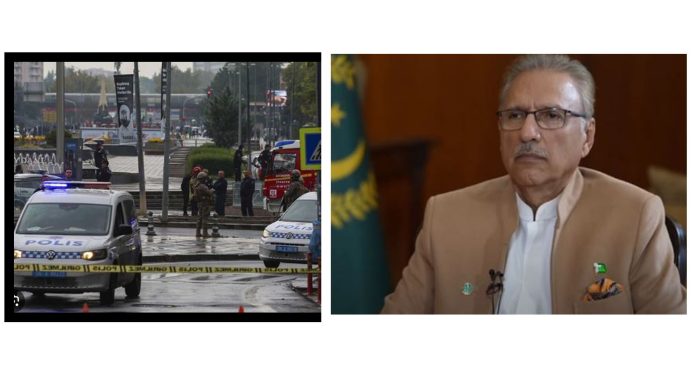
ISLAMABAD, Oct 2 (APP/DNA): President Arif Alvi on Monday strongly condemned the terrorist attack on a Turkiye’s government building in Ankara.

The president expressed hope that Turkiye would overcome terrorism under the leadership of President Recep Tayyip Erdogan.

“I am sure that Turkiye will eliminate the threat of terrorism under the dynamic leadership of President Erdogan,” the president posted on social media platform X, formerly known as Twitter.

One of the two terrorists blew himself up in front of the General Directorate of Security in Turkiye’s capital Ankara on Sunday.

FM Jilani to address opening ceremony of the Trans-Himalaya Forum in Tibet

FM Jilani to address opening ceremony of the Trans-Himalaya Forum in Tibet

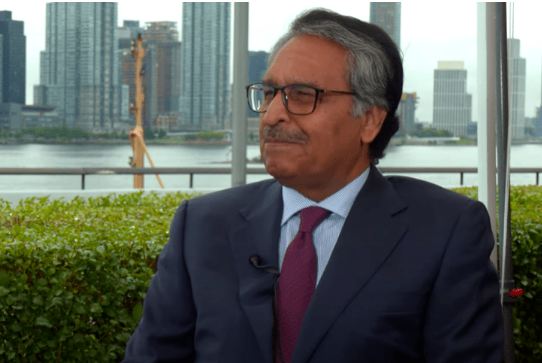
ISLAMABAD, OCT 2 /DNA/ – At the special invitation of the Foreign Minister of China, Wang Yi, Foreign Minister Jalil Abbas Jilani is visiting China to participate in the 3rd Trans-Himalaya Forum for International Cooperation, being held in Nyingchi, Tibet Autonomous Region, from 4-5 October 2023.
 
The Trans-Himalaya Forum was initiated in 2018 to deepen practical cooperation among regional countries on diverse subjects including geographical connectivity, environmental protection, ecological preservation, and enhancing cultural linkages. The last in-person meeting of the Forum was held in 2019. The theme of this year’s Forum is “Ecological Civilization and Environmental Protection.”
 
During his stay in Tibet, Foreign Minister Jilani will address the Opening Ceremony of the Trans-Himalaya Forum. He will also meet with several regional dignitaries including the Deputy Prime Minister of Mongolia, Foreign Minister of China and Interim Foreign Minister of Afghanistan.

Cipher case: Special court orders to present Imran, Qureshi on Oct 4

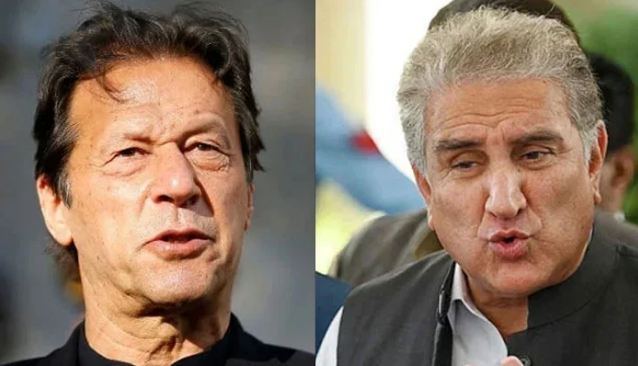
Cipher case: Special court orders to present Imran, Qureshi on Oct 4

ISLAMABAD, OCT 2: A special court established under the Official Secrets Act has summoned jailed Pakistan Tehreek-e-Insaf (PTI) Chairman Imran Khan and Vice-Chairman Shah Mahmood Qureshi on October 4 in the cipher case.

The development came two days after the Federal Investigation Agency (FIA) submitted the challan (charge sheet) in the cipher case against the PTI leaders.

Special court judge Abul Hasnat Zulqarnain issued notices to respondents saying that statements of witnesses are sufficient to summon the accused in the court.

The judge directed the superintendent of Adiala jail to present the PTI leaders before the court on October 4 (Wednesday).

The FIA, in its challan, stated that the former prime minister and the former foreign minister were found guilty in the matter and requested the court to conduct their trial and sentence them in the case.

According to sources, former PTI secretary-general Asad Umar’s name was not added to the list of accused. Meanwhile, Imran Khan’s former principal secretary Azam Khan was named as a “strong witness” in the case.

The FIA also attached Azam’s statements, recorded under Sections 161 and 164, along with the challan, said the sources, adding that the PTI chief kept the cipher to himself and misused the state secret.

The sources also said that Khan had a copy of the cipher but he did not return it.

Moreover, the FIA also attached the transcript of Khan and Qureshi’s speech on March 27 — the day when the former premier brandished a letter claiming it was a cipher from a foreign nation, which wanted his government to be removed from power.

The agency also submitted a list of 28 witnesses to the court with the challan after recording their statements under Section 161.

Sources further revealed that the names of former foreign secretaries Asad Majeed, Sohail Mehmood and the then additional foreign secretary Faisal Niaz Tirmizi have also been added to the list of witnesses.

On September 26, the special court extended the judicial remand of the PTI chairman and vice-chairman till October 10 in the cipher case.

Ciphergate

The controversy first emerged on March 27, 2022, when Khan — less than a month before his ouster in April 2022 — while addressing a public rally waved a letter before the crowd, claiming that it was a cipher from a foreign nation that had conspired with his political rivals to have PTI government overthrown.

He did not reveal the contents of the letter nor did he mention the name of the nation it came from. But a few days later, he accused the United States of conspiring against him and alleged that Assistant Secretary of State for South and Central Asia Affairs Donald Lu had sought his removal.

The cipher was about former Pakistan ambassador to the US Majeed’s meeting with Lu.

The former prime minister, claiming that he was reading contents from the cipher, said that “all will be forgiven for Pakistan if Imran Khan is removed from power”.

Then on March 31, the National Security Committee (NSC) took up the matter and decided to issue a “strong demarche” to the US for its “blatant interference in the internal affairs of Pakistan”.

Later, after his removal, then-prime minister Shehbaz Sharif convened a meeting of the NSC, which came to the conclusion that it had found no evidence of a foreign conspiracy in the cable.

In the two audio leaks that took the internet by storm and shocked the public after these events, the former prime minister, then-federal minister Asad Umar, and then-principle secretary Azam could allegedly be heard discussing the US cipher and how to use it to their advantage.

On September 30, the federal cabinet took notice of the matter and constituted a committee to probe the contents of the audio leaks.

In October, the cabinet gave the green signal to initiate action against the former prime minister and handed over the case to the FIA.

Once FIA was given the task to probe the matter, it summoned Khan, Umar, and other leaders of the party, but the PTI chief challenged the summons and secured a stay order from the court.

The Lahore High Court (LHC), in July this year, recalled the stay order against the call-up notice to Khan by the FIA.

Promoting Scientific Exchange: COMSTECH and Pasteur Institute of Iran sign MoU

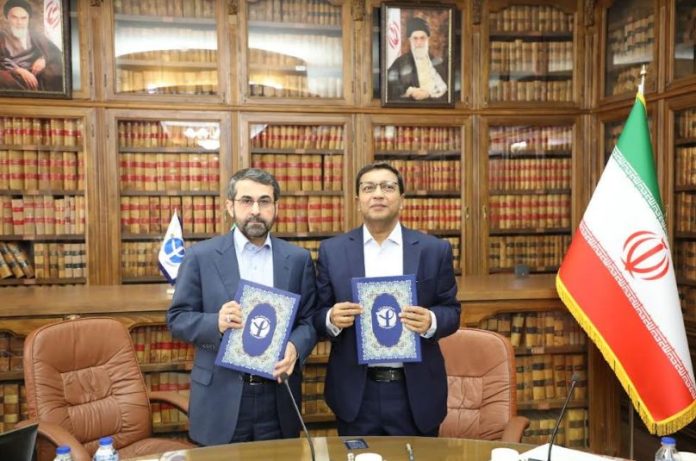
Promoting Scientific Exchange: COMSTECH and Pasteur Institute of Iran sign MoU

DNA

ISLAMABAD, OCT 2: The Pasteur Institute of Iran and the Ministerial Standing Committee on Scientific and Technological Cooperation of the Organization of Islamic Cooperation (COMSTECH) signed a Memorandum of Understanding. Prof. Dr. M. Iqbal Chaudhary, the Coordinator General of COMSTECH and Dr. Rahim Sorouri, the Director of Pasteur Institute of Iran signed the Memorandum of Understanding (MoU) at Pasteur Institute in Tehran, Iran.

The agreement entails the development and implementation of joint educational programs, research, technology, and innovation initiatives, as well as the organization of national and international events such as conferences, workshops, exhibitions, and courses. The MoU aims to facilitate the exchange of students, experts, and academic staff for professional development and enhancing scientific activities. The Pasteur Institute of Iran will also become member of COMSTECH Consortium of Excellence as per the agreement.

During the meeting, Prof. Iqbal Chaudhary acknowledged the Pasteur Institute of Iran as a valuable opportunity for expanding COMSTECH’s cooperation. He recognized the institute’s distinguished reputation in Iran and worldwide in the field of infectious diseases and vaccines. Prof. Chaudhary suggested close collaboration of COMSTECH with the Pasteur Institute.

Dr. Rahim Sorouri, the director of Pasteur Institute of Iran, presented the institute’s activities and capabilities and expressed the willingness to establish comprehensive scientific collaboration with COMSTECH.

During the meeting, several managers from different divisions of Pasteur Institute of Iran highlighted the institute’s capabilities and proposed ideas for collaborative efforts. It was agreed that regular coordination meetings would be called to solidify future agreements.

The Pasteur Institute of Iran was established in 1920 through an agreement between the Iranian government and the Pasteur Institute of Paris. The Pasteur Institute of Iran is a renowned research and public health center in Iran and the Middle East.

COMSTECH was established by the third summit of the Organization of Islamic Cooperation in 1981, with the mission of strengthening cooperation between member countries in science and technology.

Madam WADA hosts ‘How Beautiful the Moon is’ Event is Islamabad

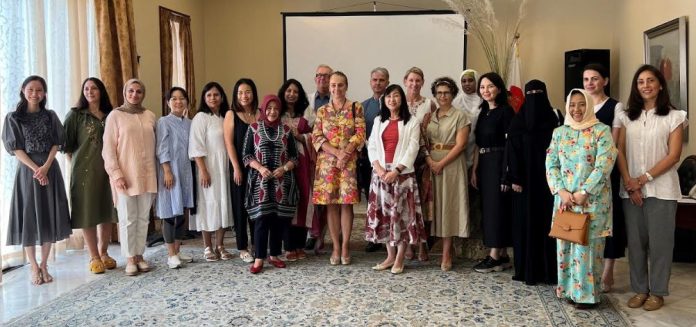
Madam WADA hosts 'How Beautiful the Moon is' Event is Islamabad

DNA

ISLAMABAD, OCT 2: The spirit of valuing each season as well as seasonal transitions are deeply rooted in Japanese culture.  During the transition from summer to winter, and from winter to summer, people in Japan especially respect the significance of nature. Fruitful autumn is just as festive as a beautiful blooming spring in Japan.

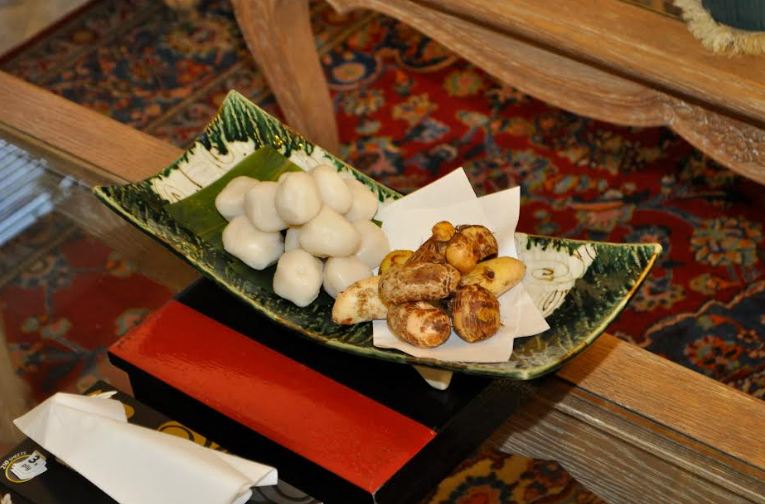
To keep this spirit alive, Madam WADA Naoko, spouse of the Ambassador of Japan hosted an event at the Ambassador’s residence titled “How Beautiful the Moon is” to welcome the autumn season together with friends from the diplomatic community in Islamabad.

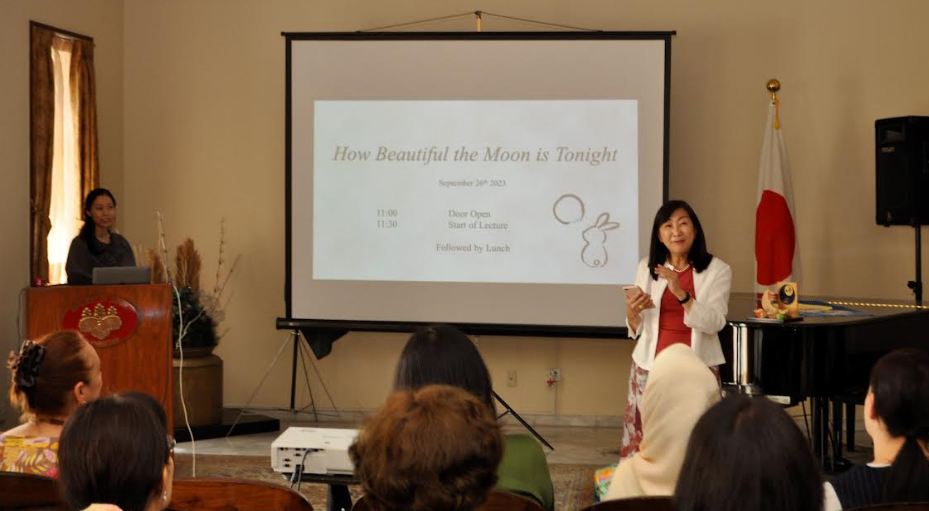
The event started with an informative lecture regarding the significance of autumn to the Japanese people.  The main theme was Tsukimi(Japan’s Moon-Viewing tradition). This autumn tradition has been uniquely expanded into various scenes such as festival, art and Japanese cuisine.

Madam WADA highlighted the spirit of celebrating change of seasons while she is in Pakistan where it is currently transiting from a very hot summer to cooler autumn.  She said that celebration of full moon is a very old tradition and is widely practiced in Japan even to this day.

After the lecture, participants experienced autumn through traditional Japanese cuisine curated by the Japanese chef. Participants also enjoyed the beautiful photos of the Moon taken in Pakistan on the screen.

Indonesia launches Southeast Asia’s 1st high-speed train

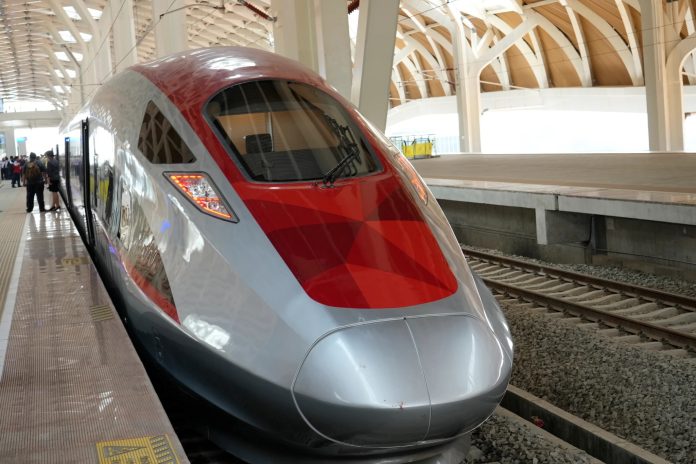
ISTANBUL,):Indonesia launched South Asia’s first high-speed train on Monday.

“I declare ‘Whoosh’ is ready to be operated,” President Joko Widodo said about the Jakarta-Bandung High-Speed Railway (HSR) train at a ceremony.

“Whoosh” signifies the sound of a fast train and stands for “time-saving, optimal operation, reliable system” in the Indonesian language. It can reach a speed limit of 320 kilometers (199 miles) per hour.

The Chinese-built bullet train connects the capital Jakarta to Bandung in West Java province, covering a distance of 142 kilometers (90 miles) in about 45 minutes. It reduces travel time between two cities by at least two hours.

Part of China’s multi-trillion-dollar Belt and Road Initiative, the train is the first of its kind in Southeast Asia and will ferry more than 600 people to and from Jakarta and Bandung.

China’s Premier Li Qiang rode the train during a trial last month when he visited Jakarta for a regional summit.

The train route has 13 tunnels and stops at four stations, including Halim, Karawang, Padalarang, and Tegalluar.

Originally to be launched in 2019, the project cost escalated to around $7 billion due to delays exacerbated by the COVID-19 pandemic. Four Indonesian state companies and China Railway International Co. jointly built the train.

Rmazi Khouri leads Palestinian delegation to Pizzaballa’s cardinal elevation

Rmazi Khouri leads Palestinian delegation to Pizzaballa's cardinal elevation

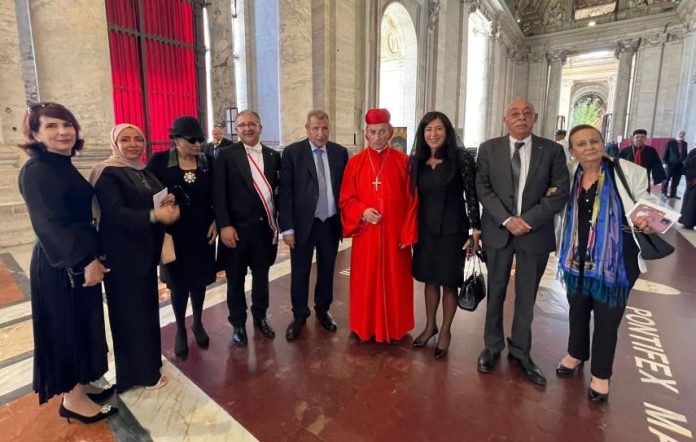
VATICAN CITY, OCT 1 /DNA/ – Member of the PLO Executive Committee and Head of the Presidential Committee for Churches Affairs in Palestine, Dr. Rmazi Khouri led the official delegation of Palestine on behalf of President Mahmoud Abbas to the elevation ceremony of the Latin Patriarch of Jerusalem, Archbishop Pierbattista Pizzaballa to the rank of cardinal, in a religious ceremony presided by Pope Francis in the Vatican.

Dr. Khoury joined by member of the PLO executive committee, Dr. Faisal Aranki, ambassador of Palestine to the Holy See, Mr. Issa Qassisseh, and Abeer Odeh, ambassador of Palestine to Italy, in addition to patriarchs and representatives of Churches in the Holy Land, alongside delegations from Palestine and the Palestinian diaspora.

Dr. Khouri extended his heartfelt congratulations to Cardinal Pizzaballa on assuming his role as the Cardinal of Jerusalem. This appointment reflects the Holy See’s unwavering commitment to peace and justice for the Palestinian people. He stressed the paramount importance of maintaining bilateral cooperation between Palestine and the Holy See and safeguarding the Palestinian Christian presence in the region.

Furthermore, Dr. Khouri raised the important matter of the Holy See’s historical ties and solidarity with the Palestinians, highlighting the principled stance of the Holy See in supporting the legitimate rights of the Palestinian people and addressing their enduring 2/6

suffering in the face of egregious Israeli crimes and violations. On the sidelines of the ceremony, Dr. Ramzi Khouri met and engaged in discussions with prominent figures, including the Eastern Orthodox Patriarch of Jerusalem Theophilos III, Maronite Patriarch, Bechara Boutros al-Rahi, Patriarch of Antioch and the East of the Syriac Orthodox Church, Ignatius Aphrem II, Patriarch of the Melkite Catholic Church, Yusef I Absi, and The Archbishop of Canterbury Justin Welby.

China’s Uyghur campaign remains a concern

China committed to building a Global South community

China’s government insists it is a “law-based country.” But in reality, China is governed by a secretive party-state that uses the law as a tool for political repression. In the case of prominent Uyghur ethnographer Rahile Dawut, the “law” has become a cover for injustice. Six years after she was first detained, we learn that Ms. Rahile was sentenced to life in prison — a shocking punishment for one of the world’s leading exponents of Uyghur culture and traditions.

Ms. Rahile was tried in 2018 for “splittism,” or separatism, which China considers a threat to state security. She was convicted and filed an appeal, which was rejected, according to the Dui Hua Foundation, a group based in San Francisco that seeks freedom for Chinese political prisoners. The foundation said in a Sept. 21 statement that, after years of inquiries, it had learned of the life sentence from a reliable Chinese government source. Little is known about the secret trial or why such a draconian penalty was imposed.

But the sentence adds to the evidence that China’s rulers are executing a cultural genocide of the Uyghurs, a Turkic Muslim ethnic minority, and others in the Xinjiang region, attempting to eradicate their language, culture and traditions and replace them with those of the Han Chinese majority. A human rights lawyer, Rayhan Asat, whose brother Ekpar Asat has been detained in Xinjiang since 2016, told Voice of America, “If you look at historical examples, when the state attempts to commit genocide, they tend to go after the brightest and the finest of the society, who would preserve their culture, who would preserve the collective dignity of the people.” The Uyghur Human Rights Project has found that a minimum of 312 Uyghur, Kazakh and Kyrgyz intellectual and cultural elites were detained or imprisoned as of late 2021, and probably many more. Also sentenced to a life term was Uyghur university professor Ilham Tohti. Uyghur journalists for Radio Free Asia have also been threatened.

Ms. Rahile, 57, is a leading scholar of Uyghur culture and folkways. She recalled in an interview with China Art News in 2011 that she had been exposed to vivid Uyghur folk stories, dances and literature when she was at Xinjiang University, which required students to immerse themselves in the rural lifestyle of southern Xinjiang region. Later she earned a doctorate in Beijing in folklore, and returned to Xinjiang University, the region’s premier school, and founded a folklore center there. She was often a guide to visiting foreign scholars and argued that folk art was not the stuff of museum displays but needed to be protected as a part of everyday life and learning. She lectured widely, according to the foundation, including at Harvard University, Cornell University and the University of British Columbia. She was a visiting scholar at the University of Pennsylvania, Washington University and Indiana University.

It was previously disclosed that plans for the Uyghur genocide began after an outdoor market attack in southern Xinjiang in May 2014 in which 31 people were killed and which China blamed on Uyghur separatists. Chinese leader Xi Jinping vowed to wipe out religious extremism. Over the following years, China built high-security reeducation camps in which more than 1 million Uyghurs were incarcerated, pushed the Uyghur population into coerced labor and launched a campaign to suppress the birthrate of Uyghurs in Xinjiang. China at first denied the camps existed and later falsely claimed they were vocational education facilities. The United Nations last year found credible evidence of torture and other human rights abuses that were likely to be “crimes against humanity.”

China continues to deny any human rights problems in Xinjiang, saying the issues there are “countering violent terrorism, radicalization and separatism.” Mr. Xi visited Xinjiang in August, again demanding that local officials “effectively control illegal religious activities.”

The United States now has two laws responding to the Uyghur cultural genocide: the Uyghur Human Rights Policy Act, passed in 2020 and signed by President Donald Trump, and the Uyghur Forced Labor Prevention Act of 2021, signed by President Biden. They provide for penalties against human rights abusers and contain provisions to block imports made by Xinjiang forced labor, including polysilicon used in solar panels. For the sake of Ms. Rahile and millions of others who have suffered, these laws should be executed robustly, including imposing sanctions on Chinese officials carrying out the genocide and closing persistent loopholes in the imports from Xinjiang, such as in retail apparel.

Illegal organ transplant gang busted

Iranian embassy

DNA

LAHORE: Caretaker Punjab Chief Minister Mohsin Naqvi has revealed the arrest of an eight-member gang including its leader — a doctor — involved in illegal organ transplants in the province.

Addressing a press conference in the CM’s House in Lahore on Sunday, Naqvi said that the doctor, who also has a history of prior arrest, was leading the gang involved in the illicit activity.

The caretaker provincial chief executive revealed that the gang used to charge between Rs2.8 million to Rs10m for a kidney transplant and the person who used to assist in the surgery was in fact a “motor mechanic”.

Most of the illegal illegal organ transplants used to be carried out in Azad Kashmir, and the group was also active in Taxila Naqvi said.

The police worked day and night to apprehend the gang, he added while lauding their performance.

Stay Connected

64FansLike
60FollowersFollow

Latest Reviews

Exchange Rates

USD - United States Dollar
EUR
1.17
GBP
1.35
AUD
0.72
CAD
0.73