Home Blog Page 1166

ECP issues Code of Conduct for international observers, media

Politically motivated economic decisions: avoiding tough choices is not possible: NBG

                ISLAMABAD, Oct 4 (DNA):The Election Commission of Pakistan has issued a concise 30-point Code of Conduct for international observers and media during elections, emphasizing impartiality, respect for local laws and culture, responsible reporting, and security and violations may lead to accreditation withdrawal by the Commission.

The code of conduct instructs international observers to rigorously adhere to local laws, and show respect for Pakistan’s sovereignty and cultural norms.

It forbids actions that might sway voters, acceptance of gifts from political entities, and making personal remarks about the election. Additionally, it provides guidelines for responsible reporting and underscores the significance of security measures.

Any individual or member of a local group or international election observation mission, who is observing and reporting on the electoral process must thoroughly read and comprehend this Code of Conduct. They are also required to sign a pledge that is attached to this Code.

International observers and media personnel visiting Pakistan are required to follow the visa application procedures outlined by the government and must not exceed the authorized visa duration. Their conduct should respect Pakistan’s sovereignty and the fundamental rights and freedoms of its people.

International observers and media representatives in Pakistan must comply with the nation’s constitution and laws, as well as respect the authority of the Election Commission and its officials. They are obligated to maintain impartial, objective, and highly accurate observations and reporting.

Observers must heed instructions from the Election Commission and state authorities, maintaining a respectful demeanor toward them. Additionally, they should adhere to government and security agency advisories aimed at ensuring their safety during their stay in Pakistan.

Observers must demonstrate professionalism and cultural respect while displaying their official identification badges or accreditation cards issued by the Election Commission of Pakistan, complying with requests from electoral officials and relevant authorities.

Observers must maintain complete political impartiality throughout the election process, refraining from any bias or preference toward political parties or candidates.

They should adhere to photography rules and restrictions, while retaining the right to ask questions and seek clarification without obstructing any pre-election, election, or post-election procedures. Observers are also expected to collaborate harmoniously with fellow observers, media personnel, and polling staff.

Observers must consult with the Election Commission of Pakistan to select areas for election observation while prioritizing their security. Nevertheless, they should aim for balanced observation and reporting in their area choices. If needed, observers may employ Pakistani interpreters, but they must furnish all necessary information about these interpreters during the accreditation card application process.

Interpreters hired by observers should remain impartial and unprejudiced. They have the freedom to observe and report all aspects of election management, including the actual polling day, without intervening in the proceedings at polling stations.

Furthermore, observers must avoid personal and professional relationships that might create conflicts of interest with their roles as observers and reporters.

Observers must refrain from accepting gifts or favors from any individuals, organizations, or political parties involved in the electoral process. They are prohibited from wearing, carrying, or displaying partisan symbols or colors. Furthermore, observers should avoid making personal comments about their observations or conclusions to the media and should not engage in activities that could give the impression of favoring or opposing any political party or candidate.

Content featured in international print and electronic media, as well as any international media personnel, newspapers, digital media channels, and other influencers on international social media platforms, should not contain elements that promote parochialism, jeopardize the nation’s peace and security, or incite hatred or violence against any specific individual or group within Pakistan.

Similarly, this content should avoid any form of personal attacks against candidates or political parties in Pakistan based on factors such as gender, religion, sect, caste, or social background.

International media, including radio, television, and print, should refrain from publishing content that could harm public opinion about a particular political party or candidate in Pakistan. They must report only officially authenticated election results from the Returning Officer or the Election Commission of Pakistan. Observer organizations should share their findings with the Election Commission, and the government and law enforcement agencies are tasked with ensuring the safety of international observers and media personnel.

The Election Commission of Pakistan (ECP) specifies that this code of conduct extends to the official social media accounts of international newspapers, channels, media individuals, and social media influencers. International print, electronic, and digital media entities and influencers on their official digital media platforms should abstain from conducting entrance and exit polls or any surveys in polling stations or constituencies that could potentially impact voters’ free choice during the election process.

The Election Commission of Pakistan retains the authority to withdraw observer accreditation from both individual observers and observer missions, as well as individual journalists and media organizations, in the event of a violation of this Code of Conduct. The Election Commission also holds the responsibility of determining such violations.

Embracing Self-Care Through Breast Self-Examination

Embracing Self-Care Through Breast Self-Examination

Written by Dr. Shazia Asim

Breast cancer is a significant health concern worldwide, and early detection is crucial for effective treatment and improved outcomes. Behind the statistics and risk factors lie countless personal stories of courage and resilience. By understanding the impact of this disease on both individuals and society, we can and should make continued efforts towards improved outcomes of this disease by prevention and early detection.

Firstly, it is essential to acknowledge the glaring statistics surrounding breast cancer. According to global estimates, breast cancer is the most common cancer among women, accounting for approximately one in four cancer diagnoses. In 2020, an estimated 684,996 women across the world died from breast cancer, out of which 56,366 were in Pakistan. These numbers areoverwhelming and they emphasize the need for vigilance and awareness. These statistics are not just numbers; they represent mothers, sisters, daughters, and friends who have been touched by this disease.

Disease like breast cancer brings a sense of uncertainty and fear for those affected. The journey of diagnosis and treatment can be physically and emotionally challenging. The toll it takes on patients and their families cannot be taken lightly. It takes a lot of strength and resilience of individuals facing breast cancer, as they endure surgeries, chemotherapy, radiation, and a myriad of side effects with unwavering determination. In the fight against breast cancer, one of the most powerful weapons we have is knowledge and early detection. Breast self-examination (BSE) is a simple yet crucial practice that empowers individuals to take control of their own health and can help identify potential breast cancer symptoms at an early stage. According to several studies conducted in different cities of Pakistan only 24% of female had heard of breast self-examination. This article is an effort to emphasize the importance of BSE and provide basic information about the signs and symptoms of breast cancer.

Understanding Breast Cancer:

Breast cancer is a malignant growth that occurs in the breast tissue, primarily in the ducts or lobules. It can affect both women and less frequently, men. While various risk factors (being female, old age, dense breast tissue, genetic predisposition, etc) contribute to the development of breast cancer, early detection remains one of the most effective ways to combat this disease.

The Role of Self Breast Examination (BSE):

BSE is a proactive, hands-on approach for individuals to monitor their breast health. It involves regularly checking one’s breasts for any changes or abnormalities. The goal of doing a breast self-exam is recognizing what’s normal for you. Knowing how your breasts typically look and feel can help you notice a change (if one were to occur). Here’s why BSE is crucial:

Early Detection Saves Lives: Breast cancer, when detected at an early stage, is often more treatable, with a higher chance of complete recovery.

Empowerment and Awareness:BSE empowers individuals by allowing them to actively participate in their own health. It fosters awareness of one’s body and helps identify potential issues promptly.

Cost-Effective:BSE doesn’t require any special equipment or medical visits, making it a cost-effective method of monitoring breast health.

Performing Self Breast Examination:

Here are the steps to perform a basic BSE:

Choose a regular time: Pick a specific time each month to perform BSE, ideally a few days after your menstrual cycle ends if you menstruate.

In front of a mirror:

Stand in front of a mirror with your hands on your hips.Look for any changes in breast size, shape, or contour.Check for any skin changes, such as dimpling or redness.Examine the nipples for any discharge or inversion.

Lying down:

Lie down with a pillow under your right shoulder.Use your left hand to examine your right breast.Use the pads of your fingers (not tips) , moving in small circles, to feel for any lumps or irregularities.Cover the entire breast, including the underarm area.Repeat the process for your left breast using your right hand.

Upward motion:

Sit or stand up.Repeat the examination for both breasts using an upward motion.Pay attention to any changes or abnormalities.

Signs and Symptoms of Breast Cancer:

It’s important to be aware of the common signs and symptoms of breast cancer, as early detection relies on recognizing these changes:

Lump or thickening: The most common symptom is a lump or thickening in the breast or underarm area.

Changes in breast Shape or Size: Any unexplained changes in breast shape or size should be examined.

Skin changes: Look for redness, dimpling, or puckering of the breast skin, which may resemble an orange peel.

Nipple abnormalities: This includes nipple discharge (other than breast milk), inversion, or a change in nipple appearance.

Breast pain: While not always a sign of breast cancer, unexplained breast pain or discomfort should be discussed with a healthcare professional.

Swelling: Swelling or inflammation in the breast, especially if it’s only on one side, should be evaluated.

Rash or itchiness: Persistent rash or itchiness around the nipple or breast area requires attention.

Nipple retraction: If your nipple becomes inverted or changes position, it should be examined.

Enlarged lymph nodes: Swollen lymph nodes under the arm or around the collarbone could indicate breast cancer.

Consult a Professional: If you notice any changes, lumps, or persistent symptoms during BSE, consult a healthcare professional for further evaluation.

Breast self-examination is a vital tool for early detection of breast cancer. By performing regular BSE and being aware of the signs and symptoms of breast cancer, individuals can take control of their health and increase the likelihood of detecting breast cancer at an early, treatable stage. Remember, if you notice any changes or abnormalities during BSE, don’t hesitate to seek professional medical advice promptly. Early detection can save lives and improve the chances of successful treatment.

Breast self-examination isn’t just a routine task; it’s an act of self-care. It’s about acknowledging the incredible value of your own life and well-being. By regularly examining your breasts, you are not just checking for lumps or changes – you are affirming your right to a healthy future. In closing, I urge you to make breast self-examination a part of your regular routine. Encourage your friends, family members, and colleagues to do the same. Let’s foster a culture of self-care and awareness, not just during Breast Cancer Awareness Month but throughout the entire year. Together, we can make a difference in the lives of those we love and in our own lives as well.

Written by Dr. Shazia Asim | Professor of pharmacology in a private medical college in Lahore.

CHAIRMAN JOINT CHIEFS OF STAFF COMMITTEE VISITS NATIONAL AEROSPACE SCIENCE AND TECHNOLOGY PARK

DNA

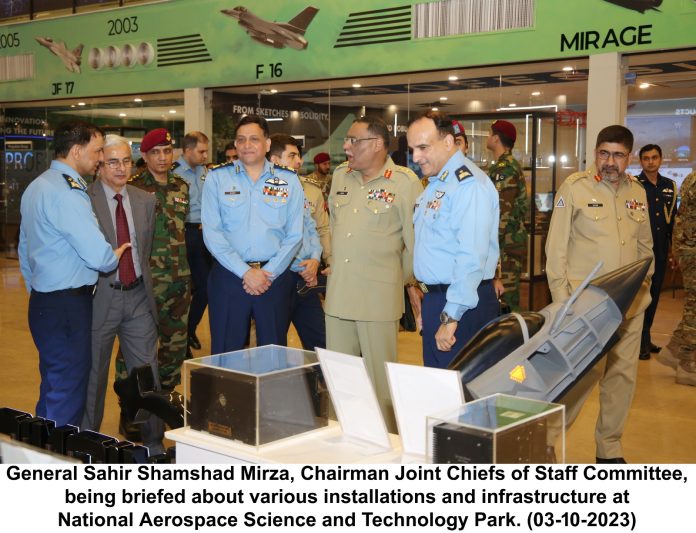
ISLAMABAD: Chairman Joint Chiefs of Staff Committee, General Sahir Shamshad Mirza, paid a momentous visit to the National Aerospace Science and Technology Park (NASTP), a strategic project led by Pakistan Air Force. The visit aimed to highlight the significance of this cutting-edge initiative and its potential to revolutionize the national landscape in the fields of aerospace, cyber and computing. On his arrival at the National Aerospace Science and Technology Park, the distinguished guest was warmly received by Air Chief Marshal Zaheer Ahmed Baber Sidhu, Chief of the Air Staff, Pakistan Air Force. Principal Staff Officers along with high level civil and military officials were also present at the occasion.

During his visit, the Chairman Joint Chiefs of Staff Committee was given a firsthand glimpse of the state-of-the-art infrastructure, research & development centers, and innovation hubs dedicated to emerging & disruptive technologies. The Air Chief elaborated on the park’s vision to become one of the world’s premier Aerospace, Cyber, and Computing clusters, fostering an environment of cutting-edge design, research and development. Speaking at the occasion, Chief of the Air Staff highlighted that National Aerospace Science and Technology Park under the patronage and support of the Government of Pakistan has evolved in a very short span of time through comprehensive planning, focused efforts and mutual collaboration. He extended his appreciation to General Sahir Shamshad Mirza, Chairman Joint Chiefs of Staff Committee, and General Syed Asim Munir, Chief of Army Staff, for their invaluable cooperation, collaboration, and personal commitment, which played a pivotal role in bringing the true essence of the NASTP concept to fruition.

Chairman Joint Chiefs of Staff Committee termed National Aerospace Science and Technology Park as a project of national and strategic significance that would reap multi-dimensional benefits for the country. He emphasized that the NASTP project is poised to catalyze technological progress and enhance our national self-reliance. General Sahir Shamshad Mirza praised the efforts of Pakistan Air Force and its skilled personnel in the achievement of this unprecedented milestone in record time. He also admired the dynamic leadership of the Air Chief, whose firm resolve and relentless efforts paved the way for the project to be completed at an unprecedented pace.

The National Aerospace Science and Technology Park is all set to serve as a hub for collaboration between academia, industry, and the armed forces in the pursuit of technological advancements. By leveraging the expertise and resources of the Pakistan Air Force, the project aims to drive innovation, nurture talent, and facilitate the development of indigenous aerospace capabilities. The visit of the Chairman Joint Chiefs of Staff Committee to the National Aerospace Science and Technology Park marks a significant milestone in Pakistan’s pursuit of excellence in the aerospace, cyber, and computing domains. It showcases the country’s commitment to harnessing cutting-edge technologies, fostering research and development, and positioning itself at the forefront of technological innovation.

Three exceptional students awarded MAECI scholarships 2023-24 for higher studies in Italy

Three exceptional students awarded MAECI scholarships 2023-24 for higher studies in Italy

DNA

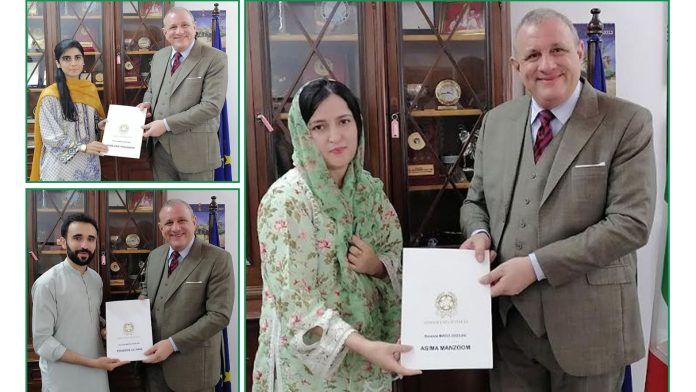
ISLAMABAD, OCT 3 – The Ministry of Foreign Affairs and International Cooperation of Italy (MAECI) is delighted to announce the recipients of the prestigious MAECI Scholarships for the academic year 2023-24. Among the distinguished winners are Asima from Gilgit, Tehseen from Dir, and Huda from Lahore.

These exceptionally talented students have been granted the opportunity to pursue their higher education at some of Italy’s finest academic institutions, further strengthening the educational and cultural ties between Pakistan and Italy.

Asima, Tehseen, and Huda have demonstrated outstanding academic prowess and exceptional potential in their respective fields of study.

Italy has a rich history of fostering academic excellence and cultural exchange, and the MAECI Scholarships program continues to be a testament to the strong bilateral relations between Italy and Pakistan. The program offers students from Pakistan the chance to experience world-class education.

The Ministry of Foreign Affairs and International Cooperation of Italy extends its warmest congratulations to Asima, Tehseen, and Huda, and wishes them great success in their academic pursuits in Italy. Their achievements stand as a testament to the power of education and the potential of international cooperation in nurturing the talents of tomorrow.

Ambassador commends global health summit and Pakistan’s Pharma Park efforts

Ambassador commends global health summit and Pakistan's Pharma Park efforts

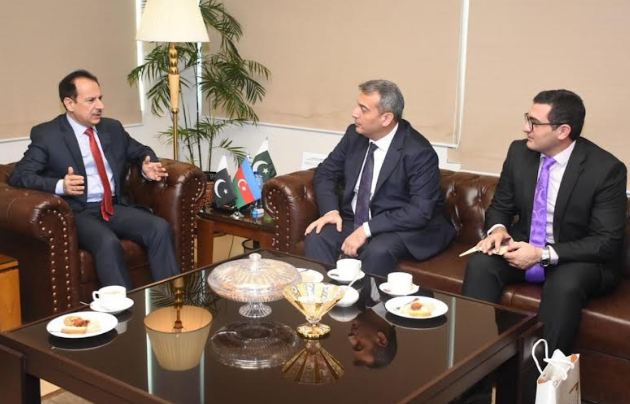
ISLAMABAD, OCT 3 /DNA/ – Khazar Farhadov Ambassador of Azerbaijan to Pakistan held a meeting with Federal Minister Health Dr Nadeem Jan today. Matters of mutual interest, including bilateral cooperation in the field of health were discussed. Federal Minister of Health briefed the Ambassador on the healthcare initiatives being undertaken in Pakistan.

We are implementing concerted measures to protect the public from diseases and epidemics, the minister said. The minister highlighted ongoing efforts to improve the availability of medicines and the establishment of pharmaceutical parks in Pakistan.

The minister emphasized to utilize technology transfer for molecular manufacturing in Pakistan. The minister informed that Pakistan is hosting first Global Health Security Summit. This summit will bring together top health leaders, officials, and technical experts from around the globe.

The Global Health Security Summit and the pharmaceutical park initiatives were praised by the Ambassador. The health leadership of Azerbaijan is expected to reach out Government of Pakistan to discuss these initiatives.

In the field of medicine, both countries will benefit from sharing experiences, and there is cooperation in allowing medical students from both nations to enroll in government-approved universities.

Australia down Pakistan by 14 runs

Australia down Pakistan by 14 runs

Hyderabad, OCT 3: Australia have defeated Pakistan by 14 runs in the ICC Men’s ODI World Cup warm-up game at the Rajiv Gandhi International Stadium in Hyderabad.

Despite brilliant knocks from skipper Babar Azam and Iftikhar, the Men in Green fell short in the chase of 352 and suffered loss in their second practice game.

Earlier, Australian batters showed no mercy to Pakistani pacers in their innings as they posted a colossal total of 351 runs in 50 overs

Glenn Maxwell played a fine knock, scoring 77 off 71 with ten boundaries that went all over the ground, he was followed by Josh Inglis who helped the Aussies accelerate their innings in the last 10 overs and scored 48 off 30 with a handsome 160 strike rate.

Australia were off to a great start and were looking to hit the 100-run mark without losing a wicket when Usama Mir picked two wickets in two consecutive overs, removing their openers, David Warner and Mitchell Marsh for 48 and 31 respectively.

For Pakistan, Mir took two while Haris Rauf, Wasim Jr., and Shadab Khan took one wicket each.

Despite a wicket to his name, Rauf had a game to forget as he conceded 97 runs in just nine overs.

It must be noted that Shadab Khan led Pakistan in the absence of Babar Azam while Mohammad Haris replaced Mohammad Rizwan as the wicketkeeper.

Nawaz Sharif to surrender to court after reception: Rana Sanaullah

Security beefed up in Islamabad, Rawalpindi ahead of verdicts against Nawaz Sharif

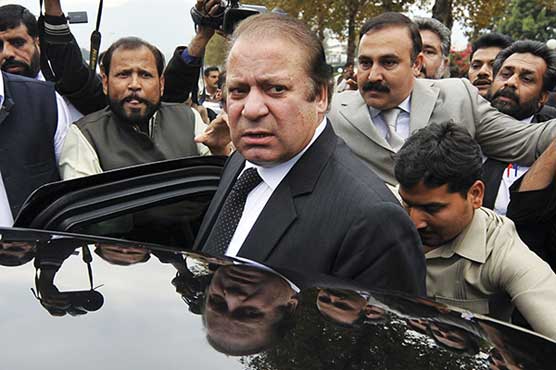
LAHORE, Oct 03 (DNA): Former interior minister and Pakistan Muslim
League-Nawaz (PML-N) Punjab President Rana Sanaullah Tuesday rubbished
the claim that the matters of the PML-N had been settled with the
establishment.

“The impression of the settlement of the PML-N’s matters with the
establishment is baseless,” Rana Sanaullah said while addressing a news
conference in Lahore.

“The whole nation is waiting for Nawaz Sharif’s return. Workers from all
over the country will reach Lahore to welcome Nawaz Sharif,” he added.

“Had the ‘Fitnah’ and ‘Fasad’ not been experienced, the China-Pakistan
Economic Corridor (CPEC) would have been completed today,” he stated.

“The vindictive mindset has pushed the country into a quagmire. We will
also start arresting everyone, the country will not progress,” he added.

Rana Sanaullah dispelled the impression of PML-N striking a deal with
the military establishment. “This impression is wrong and baseless,” he
said. “Our legal team has made all the preparations regarding Nawaz
Sharif’s protective bail. He will come back with a protective bail and
surrender to the courts after his reception.”

When asked whether he or the party had received any hint that Nawaz
would be granted protective bail, Rana Sanaullah asserted: “We don’t
believe in such hints.”

He maintained that the PML-N supremo’s case was based on facts, adding:
“We fully believe in Nawaz Sharif’s innocence and since this case holds
no weight, it’s unlikely that we won’t get relief.”

Rana Sanaullah also mentioned how many people had availed relief in the
past and that the party had complete faith in the legal process. “The
entire public is waiting to welcome their leader Nawaz Sharif. He’s
coming to Lahore and will address the public at Minar-i-Pakistan. People
from all walks of life and all over the country will come to Lahore.
They will hear Nawaz live and the media will cover it throughout.”

ISSI launches special report on “Human Security Through Development”

ISSI

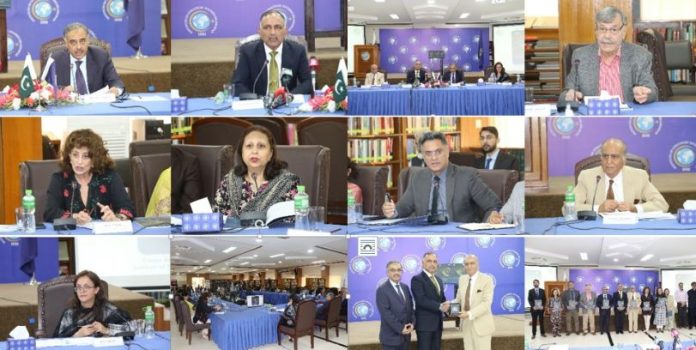
ISLAMABAD, OCT 3 /DNA/ – The Centre for Strategic Perspectives (CSP) at the Institute of Strategic Studies Islamabad (ISSI) launched a Special Report on “Human Security through Development” today.

The Chief Guest on the occasion was Chairman, National Disaster Management Authority (NDMA), Lieutenant General Inam Haider Malik. Other discussants included: Ambassador Shafqat Kakakhel, Chairperson BoG, SDPI; Ms. Aisha Khan, Executive Director, Civil Society Coalition for Climate Change; Dr. Aliya Khan, Former Dean Faculty of Social Sciences, QAU, and Mr. Faheem Sardar, Senior Policy Specialist, NSD.

In his address, Chairman NDMA Lieutenant General Malik emphasized the evolving geopolitical landscape worldwide, where human security challenges manifest uniquely in various countries. He underscored the importance of aligning human security goals with Pakistan’s national capabilities to transform them into tangible realities. The Chairman stressed the necessity of making policy adjustments to advance development goals and objectives, stressing that every element of national power must contribute to the nation’s development efforts. He emphasized the critical role of nurturing a skilled human resource base to effectively address challenges to national progress.

Furthermore, the NDMA Chairman highlighted that Pakistan is transitioning from a reactive stance to a proactive approach in the context of disaster preparedness, disaster management and post-disaster rehabilitation and reconstruction. In this context, he enumerated the wide range of policy measures and concrete actions initiated by NDMA including in collaboration with national and international partners. In conclusion, he emphasized the importance of formulating National Development Goals tailored to Pakistan’s specific needs, underlining that while the Sustainable Development Goals (SDGs) are valuable, each country should also focus on its unique developmental priorities as well.

In his welcome remarks, Director-General ISSI Ambassador Sohail Mahmood emphasized the significance of the Special Report as a valuable addition to the ongoing discourse on human security in Pakistan. He noted that while traditional security concerns are vital, they often fall short in addressing the increasingly accentuating non-traditional security threats and challenges. Ambassador Sohail Mahmood pointed out that Pakistan’s National Security Policy (NSP) has rightly prioritized human security as part of comprehensive national security framework, recognizing the numerous security challenges that have impeded the country’s progress towards sustainable development. Among other things, he stressed the importance of nurturing the young generation, describing them as a valuable asset for the nation and highlighting the need to enhance their skill development for increased human security. Furthermore, he emphasized that climate change stands as a significant human security issue for Pakistan and must be addressed with the utmost seriousness. Ambassador Sohail Mahmood concluded by thanking the contributors — noting that the Special Report underscores the necessity for a comprehensive approach to tackle the whole range of human security challenges effectively in a holistic and integrated manner and should serve as a road-map for all the relevant stakeholders.

In her remarks, Director Neelum Nigar highlighted the significance of the CSP report for policymakers, practitioners, and academics, emphasizing its focus on the critical aspects of human security and development within Pakistan. She underscored the diverse backgrounds of the contributors, which enriched the report with a wealth of insights and perspectives on the subject of human security. Dr. Nigar emphasized that the report thoroughly covers challenges and opportunities in Pakistan’s human security and development domain. Its primary objective is to encourage constructive dialogue and collaboration to address these critical issues.

In the panel discussion session, Ambassador Kakakhel who is also one of the contributors to the report, emphasized the significance of human security for Pakistan. Ambassador Kakakhel recalled the pioneering role played by Pakistan’s eminent economist Dr. Mehbubul Haq in accentuating the concept of human security in the global discourse. Ambassador Kakakhel noted that in the past decade, the global focus has been on attaining the Sustainable Development Goals (SDGs), which serve as a blueprint for sustainable human development. Ambassador Kakakhel also highlighted the crucial role of the National Security Policy (NSP) in addressing human security concerns in Pakistan, particularly given its emphasis on national cohesion, which is an integral component of national security. He also commended the prominent part accorded to ‘human security’ in the seminal national document such as the NSP.

Ms. Aisha Khan emphasized the unpredictability of today’s world, where new human security challenges emerge continuously. She commended the report for its comprehensive coverage, particularly its in-depth exploration of the climate change challenges confronting Pakistan. Ms. Khan underscored the need for a shift in focus within the country to address both internal and external factors affecting human security, necessitating a more robust institutionalized response. She emphasized that the status quo approach is insufficient, and investment is required to effectively address the evolving landscape of human security challenges.

Dr. Aliya Khan, in her remarks on the report, highlighted the diminishing emphasis on economic development in the discourse on human security in Pakistan. She stressed that in approaching this subject, it is essential to recognize the inter-sectionality of human security, human development and economic society and to prepare accordingly. The report, as noted by Dr. Khan, provokes a discussion on human security, emphasizing the need for tailored approaches to tackle these challenges effectively. Moreover, Dr. Khan pointed out that Pakistan’s burgeoning debt crisis represents a significant obstacle to human security development in the country, underscoring the urgent need for increased resource generation.

Mr. Faheem Sardar, in his comments, highlighted that Pakistan’s National Security Policy (NSP) places human security at its core. He noted that Pakistan has been severely impacted by terrorism, resulting in approximately 0.5 trillion dollars in damages since 2002, which has hindered its efforts to address human security challenges effectively. Mr. Faheem Sardar emphasized the interconnection between human security and peace, underscoring the vital role that peace plays in ensuring the well-being and security of the population.

In his vote of thanks, Chairman BoG Ambassador Khalid Mahmood commended the CSP report as a laudable endeavor in highlighting the issue of human security. He noted that the global concept of security has evolved, shifting its focus towards non-traditional security issues. Ambassador Khalid Mahmood specifically highlighted climate change as one of the most substantial threats to human security in Pakistan and emphasized the urgency of addressing it.

The launch was attended by a cross-section of people, including academics, practitioners, former and current Pakistani diplomats and officials, experts from think-tanks, students, and members of the diplomatic corps based in Islamabad.

Peshawar extends warm wishes to China on its National Day celebration

Peshawar extends warm wishes to China on its National Day celebration

PESHAWAR, OCT 3 /DNA/ – Governor of Khyber Pakhtunkhwa Haji Ghulam Ali has said that China is a time tested and true friend of Pakistan who has always helped Pakistan in difficult times. The whole world gives examples of Pakistan-China friendship and this is the reason why Pakistanis always share in the happiness of Chinese people and Celebrations held across Pakistan on the occasion of the 74th Independence Day of the People’s Republic of China is a clear proof that Pakistan-China friendship is sweeter than honey, higher than the Himalayas and deeper than the oceans.

He expressed these views while addressing a colorful event organized by China Window, a Chinese cultural center established in Peshawar, on the occasion of China’s National Day. Caretaker Provincial Minister for Information and Culture Barrister Mian Feroz Jamal Shah Kaka Khel, Provincial Minister for Sports , Youth Affairs and Science and Technology Dr.Najibullah Marwat, Iranian Consul General Ali Banafsha Kha, Secretary Information Abdul Jabbar Shah, MD Bank of Khyber Muhammad Ali Gulfaraz, Director Information Mohammad Imran, President of Sarhad Chamber of Commerce and Industry Fawad Ishaq, President of Peshawar Press Club Arshad Aziz Malik, high civil and government officials, writers, poets, intellectuals, artists, representatives of minority communities and people from different walks of life attended the function.

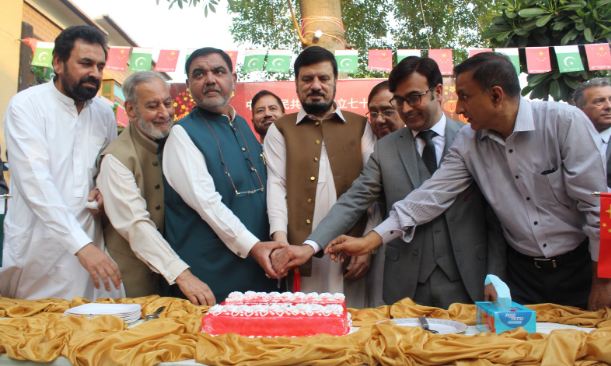
On this occasion, a cake was also cut in connection with the National Day of China. Addressing the ceremony, Governor Haji Ghulam Ali said that he is happy that the people of Peshawar are also participating in the happiness of their Chinese brothers and sisters through the mediation of the China Window established in Peshawar. Paying tribute to the Chinese President Xi Jinping and his entire team for their services, he said that undoubtedly the CPEC project has a key role in the economic development of Pakistan and it will lead to economic development throughout the country. There, a new era of happiness will begin for the people of Peshawar and Khyber Pakhtunkhwa.

He said that we are grateful to China that the CPEC project initiated by them will not only establish peace in the region but also bring peace to the region. Around 800,000 jobs will also be created during the year. The governor said that he believes that CPEC is a manifestation of Pakistan-China relations and a custodian of the long-standing relations between the two countries. On the occasion of the National Day of the People’s Republic of China, the Governor congratulated the people of China on behalf of the people of Peshawar and Khyber Pakhtunkhwa.

He said that the Chinese Cultural Center China Window has become the center of Chinese cultural activities for the past several years for which the entire team including its administrator Amjad Aziz Malik deserves praise. Earlier, caretaker Provincial Minister of Information and Culture Barrister Mian Feroz Jamal Shah Kaka Khel, Provincial Minister of Sports ,Youth Affairs and Science and Technology Najibullah Marwat, Iranian Consul General Ali Banafshakha and MD Bank of Khyber Mohammad Ali Gulfraz said in their speech that Celebrating China’s National Day is undoubtedly commendable and this initiative will send a message of friendship to Peshawar and Khyber Pakhtunkhwa to all of China.

NAP apex body decides to expel illegal foreign residents

NAP apex body decides to expel illegal foreign residents

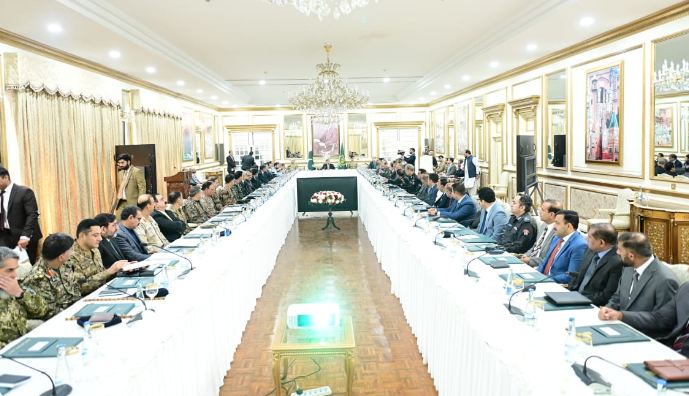
ISLAMABAD, Oct 3 (APP/DNA): The Apex Committee of the National Action Plan on Tuesday, resolving to expel illegal foreign residents from the country and take strict action against their businesses and properties, constituted a task force to scrutinize and do away with fake identity cards and business activities.

The committee, which met under Caretaker Prime Minister Anwaar-ul-Haq Kakar, also decided to widen the scope of ongoing action against illegal activities like drug smuggling, hoarding, smuggling of currency and eatables, illegal money transfer and power theft, a PM Office press release said.

Attended by Chief of Army Staff General Asim Munir, relevant federal ministers, provincial chief ministers and heads of civil and military law enforcement agencies, the Apex Committee decided that movement at the border would be subject to the passport and visa, in order to document the processes.

The task force that would work under the Interior Ministry would help scrutinize the fake identity cards, businesses and properties in order to get rid of the same.

The participants of the meeting reviewed the internal security situation in the country with a view to overcome the challenges durably.

They resolved that despite all odds, the government would ensure the implementation of the Constitution and the law as per the public aspirations.

The forum reiterated that the use of force was only the state’s mandate and no individual or group would be allowed to use the same. Besides, there was no room for armed political organisations or groups and the people involved in such activities would be dealt with strictly.

In the meeting, it was also highlighted that Islam was a religion of peace and the state would never allow anyone to interpret the religion just to serve its own political interests.

The rights and religious freedom of the minorities were the components of Islam and Constitution of Pakistan and the state would ensure their provision.

The Apex Committee stressed that those spreading propaganda and disinformation, should be dealt with strictly under cyber laws.

The participants were informed that technical procedures were being devised for the awareness and implementation of the laws, which were being promulgated keeping in view the observance of the law and the convenience of the people.

The forum reiterated its resolve that the principles of faith, unity and discipline would be followed in the true spirit and tireless efforts would continue for the development of the country.

Stay Connected

64FansLike
60FollowersFollow

Latest Reviews

Exchange Rates

USD - United States Dollar
EUR
1.17
GBP
1.35
AUD
0.72
CAD
0.73