Home Blog Page 1159

World Post Day being observed today

World Post Day being observed today

ISLAMABAD, OCT 9: World Post Day is being observed in Pakistan today enlightening the younger generation about the history and processes of letter delivery and highlighting that the post office remains a vital service, even in an increasingly digital world.

This year, the theme of the day “Together for Trust,” underscoring the importance of collaboration between governments, the private sector, and development partners to adapt to the changing landscape of postal services in the digital age.

While the traditional post office continues to serve its purpose, the advent of the digital era has undoubtedly transformed the way we communicate and reduced the need for physical mail.

Every year, on October 9th, countries worldwide observe World Post Day to commemorate the establishment of the Universal Postal Union (UPU) in 1874.

The digital age has undoubtedly reshaped the way we communicate and share information, with emails, instant messaging, and social media becoming the primary means of interaction.

Fuel Woes Perils

Fuel Woes Perils

By: Zahra Ali

The entanglement in a complex array of economic difficulties, with the most prominent issue being the relentless increase in fuel costs is a predicament which permeates every facet of daily life, casting a shadow over the routines and livelihoods of millions. The repercussions of this fuel hike are far-reaching, impacting transportation, industries, and the overall cost of living. One of the most palpable effects of this surge in fuel prices is the strain it imposes on the transportation sector. From bustling metropolises to remote villages, the costs of commuting skyrocket, prompting a ripple effect across the entire economy. Commuters face an arduous choice between bearing the escalating expenses and curtailing their journeys, which not only dampens individual mobility but also disrupts essential services such as healthcare and education.

The burgeoning cost of fuel also reverberates within the industrial landscape of Pakistan. Industries, which are the lifeblood of the economy, find themselves grappling with mounting production costs. This impedes their competitiveness in the global market, rendering them less resilient in an already volatile economic climate. The resulting reduction in productivity not only hinders economic growth but also has detrimental consequences on employment rates, exacerbating the already precarious job market. Furthermore, the omnipresent fuel hikes exacerbate the already elevated cost of living for the average Pakistani citizen. Inflationary pressures, spurred by increased transportation and production costs, permeate through the market, escalating the prices of essential commodities. This surge in prices has a domino effect, stretching the budgets of households already grappling with economic instability. The ensuing financial strain is palpable, with individuals and families forced to make sacrifices in their daily lives.

It is imperative to recognize that the fuel hike issue is not merely an isolated incident, but a symptom of deeper systemic issues that demand urgent attention. Pakistan’s over-reliance on imported petroleum, coupled with a fragile economic structure, leaves the nation susceptible to the fluctuations of the global oil market. Analyzing diversification of energy sources and investments in renewable alternatives present promising avenues to mitigate these vulnerabilities. In addition, proactive measures must be taken to enhance public transportation infrastructure and promote sustainable modes of travel. Investment in efficient and accessible public transport systems can alleviate the burden on individual commuters while reducing the overall carbon footprint.

Moreover, fostering an environment conducive to the growth of indigenous industries is paramount. Policies that incentivize local production, technological innovation, and the adoption of sustainable practices can bolster the resilience of the economy in the face of external shocks. In conclusion, the fuel hike predicament in Pakistan is a stark reminder of the intricate interplay between economic policies and daily life. Its repercussions, felt across various sectors, demand a comprehensive and sustainable approach. By addressing the root causes, diversifying energy sources, and investing in essential infrastructure, it is possible for the country to chart a course towards a more stable and prosperous future, where the specter of fuel hikes no longer casts its long shadow over the nation’s progress.

Is Kashmir project done and dusted?

Is Kashmir project done and dusted?

Imtiaz Gul

The legal status at the United Nations notwithstanding, is it time for Pakistan to wrap up the Kashmir project? Can it become a China to get for Kashmiris what Beijing got for Hong Kongers? Irrespective of the emotional attachment and Kashmiri Muslims’ inalienable right to self-determination, do we need a cost-benefit analysis of the Kashmir policy pursued so far?

Why I posit these questions? Let us consider the following:

Interim PM Anwarul Haq Kakar’s speech to a near deserted hall at the United Nations General Assembly on September 22 reminded us yet again of the rusty thinking on certain issues that sit at the core of some key problems that Pakistan faces — the country’s tainted image abroad because of its decades-old support to Kashmiri militancy which India successfully projected as abetment of terrorism; and the “commitment” to the cause of Palestinians.

Isn’t it about time to wrap up the Kashmir project? Should our leaders not stop always begging for external support and instead look inwards to identify reasons for our present pathetic existence? What was the point in reminding the world of the Indian atrocities in Kashmir, or the post-flood “commitments” made at Geneva in November 2022 (when almost entire PDM cabinet had made it to the Swiss city)?

Secondly, while climate change is a reality, many of its consequences flow from criminally reckless urbanisation and total disregard for the nature. The world — at least those familiar with Pakistan’s fledgling and dysfunctional governance — know this too well; commercialisation of forest, agricultural lands and obstruction of natural waterways (that cause the flood water to submerge residential areas).

Certain developments in (Indian) Kashmir since the abolition of the autonomy that it had enjoyed under the meanwhile deceased Article 370 until August 2019 offer some food for thought. Not a single country condemned India for abolishing Kashmir’s autonomy and annexing it into its union on August 5, 2019. None even demanded the reversal of that action that technically is still subject to resolution at the United Nations.

Realpolitik and a sense of hopelessness, it seems, has mellowed down resistance to and moderated rejection of annexation. Change, under the burden of circumstances, may also be in the air in Kashmir itself. Mirwaiz Umar Farooq’s release after over four years should be seen in this context. His first speech from the pulpit of Srinagar’s historic Jamia Masjid after walking out of detention probably provided first signs of that change.

In this emotional address to the Friday congregation on September 22, Mirwaiz called himself a “realist resolution-seeker” and rejected his branding by New Delhi as a “separatist or peace-disrupter”.

“Kashmir must find a path to resolution through dialogue, as we have consistently advocated. It is regrettable that we have been labelled as separatists and anti-national elements. Our role is to represent the sentiments of the people of Jammu and Kashmir,” he said while disproving the revocation of the special autonomous status for Kashmir.

Mirwaiz also reiterated his dream of a united Kashmir. But he is also conscious of the new bitter realities. There is little outsiders — including the United Nations — can do to help Kashmiri Muslims for realising the dream of self-determination for a united Kashmir. This — as of now — is more a pipedream overshadowed by geopolitical expediencies than an achievable goal — however legitimate. Nor will India ever relent control of the valley.

Should the staggering changes in the Middle East since the Abraham Accords three years ago serve as the guide?

“Subsequent partnerships such as the Negev Forum and I2U2 partnership of India, Israel, the UAE and the US strengthen shared capabilities and foster the collaboration necessary to meet today’s pressing challenges and opportunities,” said a State Department statement (September 15) to marking the third anniversary of the signing of the historic Abraham Accords.

The Abraham Accords were concluded on September 15, 2020 between the UAE, Bahrain and Israel, followed by similar agreements between Israel, Morocco and Sudan.

Ahead of Secretary of State Anthony Blinken’s Middle East tour, National Security Council spokesman John Kirby indicated on the last day of September while talking to reporters that “all sides have hammered out a basic framework for what we might be able to drive at.”

Qatar and Saudi Arabia are the next targets of the American diplomacy anchored in the Abraham Accords. Both are reluctant to embrace Israel.

Mohammed bin Abdulrahman Al-Thani, the Prime Minister of Qatar, told a conference in Singapore (August 27) that his country still “believes the best way forward is 2001’s Saudi-led Arab Peace Initiative, which offered normalization between Israel and the Arab world if Israel withdrew from the West Bank, Gaza and the Golan Heights and allowed the establishment of a Palestinian state with a capital in East Jerusalem.”

But Mohammad bin Salman, the de facto ruler of Saudi Arabia, it seems is looking at the Accords as an opportunity to win back the US support.

A normalisation agreement between Israel and Saudi Arabia, therefore, will not only be the crowning of the US efforts to minimise hostile relationships within the Middle East but also a boon for Saudi Arabia’s current astounding economic development.

Will our leaders take any cue from the rest of the world, including China and Turkey, embrace pragmatism or remain frozen in decades-old dogmas that are totally irrelevant to a world driven by geo-economic interests alone?

Urtasker female team wins breast cancer awareness football match

Urtasker female team wins breast cancer awareness football match

Urtasker Holds Breast Cancer Awareness Football Championship

ISLAMABAD, OCT 9 /DNA/ – Urtasker Group of Companies proudly organized a captivating Football Championship for Breast Cancer Awareness in October, fondly known as “Pink Month.” In an inspiring display of unity, 2 female and 5 male teams came together to raise awareness for a noble cause. This event was held in collaboration with the Leisure Leagues and World Group andshowcased Urtasker’s commitment to corporate social responsibility. The event was held at Zaraj Football Ground in Rawalpindi.

The two formidable female teams battled fiercely on the field, representing Urtasker and Leisure Leagues. In a heart-pounding match, the Urtasker’s female team emerged triumphant with a 1-0 victory, demonstrating their dedication to the cause.

Meanwhile, in the male category, the New Yorkers showed their sportsmanship by winning against the Pindi Badshah with a score of 1-0 in the final. However, in the true spirit of fair play and unity, the New Yorkers gave the winning title to the Pindi Badshah team.

There were 10 pool matches among 5 teams, and the qualifiers played the semifinals and final.The other teams includedJhelum Stallions, Urtasker Hawks, and Urtasker United.

Zeeshan Riaz, Co-Founder & Chief Operating Officer of Urtasker and a key player in the New Yorkers team, shared his thoughts on the event, saying, “This tournament was about more than just football; it was about coming together as a community to support a crucial cause. We’re proud to have played a part in raising awareness for breast cancer and promoting unity through sports.”

This Breast Cancer Awareness Month, Urtasker Group of Companies has celebrated the spirit of sportsmanship and contributed significantly to the ongoing fight against breast cancer. By organizing this impactful football championship, they have successfully combined passion for the game with an unwavering commitment to creating awareness and promoting unity in the community.

Urtasker Group of Companies, a globally renowned and award-winning eCommerce consulting agency, is among the few companies in Pakistan that emphasize and boost sports activities among their employees in collaboration with other stakeholders.

Confronting Pakistan’s Population Growth: Urgent Need for Reform

Confronting Pakistan’s Population Growth: Urgent Need for Reform

Faisal Sheikh

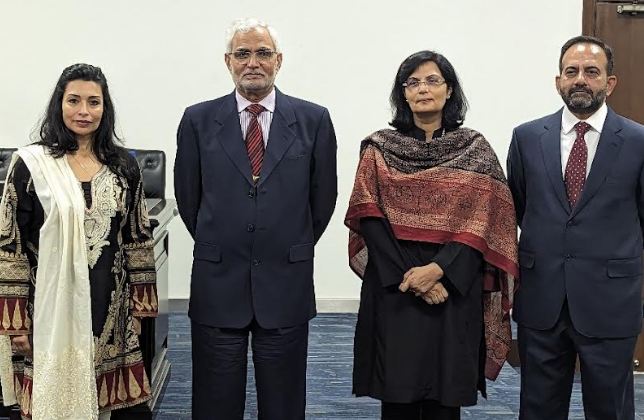
ISLAMABAD: The Centre for Aerospace & Security Studies (CASS), Islamabad, successfully concluded a seminar on ‘Mitigating Pakistan’s Population Challenges.’ Distinguished speakers included Senator Dr Sania Nishtar and Ms Samia Liaquat Ali Khan, Director Impact, Tabadlab, Islamabad, Pakistan. Air Marshal Farooq Habib (Retd), Senior Director at CASS, delivered the Concluding Remarks; while Air Vice Marshal Nasser ul Haq Wyne (Retd) moderated the proceedings. Air Marshal Farhat Hussain Khan (Retd), Advisor on Aviation to the Caretaker Prime Minister of Pakistan and President of CASS, presented mementos to the distinguished speakers.

In his Opening Remarks, Air Vice Marshal Nasser ul Haq Wyne (Retd) underscored the intertwined significance of Water, Education, Economy, and Population as fundamental pillars influencing the well-being and security of a nation. Drawing attention to the National Security Policy 2022, hailed as ‘citizen-centric’, he acknowledged its emphasis on human security. However, he expressed concerns over the existing gaps between policy creation and its subsequent implementation. Reflecting on Pakistan’s demographic journey, he highlighted the country’s exponential population growth, from 32 million at its independence in 1947 to a staggering 250 million in the present year, marking an almost eightfold increase in 76 years.

Senator Dr Sania Nishtar, in her in-depth address on Population Dynamics and Socioeconomic Impacts, underscored the pressing challenge of population growth as a pivotal factor in Pakistan’s development trajectory, affecting vital sectors such as infrastructure, economy, and security. Highlighting the exponential growth in population, she illustrated that Pakistan had witnessed a growth rate that is notably higher than many other Asian nations. A primary concern she broached was Pakistan’s Total Fertility Rate (TFR) which, alarmingly, has remained stagnant since 2005 at 3.6. This statistic becomes especially concerning when juxtaposed with countries like Saudi Arabia, traditionally conservative societies that have nonetheless managed to significantly reduce their TFR. Dr Nishtar shared factors influencing fertility rates, spotlighting elements like female education, participation in the workforce, and societal standing. She fervently emphasised the urgency to engage with and address these variables to devise effective strategies against rapid population growth.

Shifting the focus to the crucial role of family planning services, she affirmed that their accessibility can greatly mitigate the challenges posed by population growth. She further championed the importance of robust family planning programmes, stressing underlining Pakistan’s low Contraceptive Prevalence Rate (CPR), especially when compared to countries like Iran. Reflecting on the past, Senator Nishtar reminisced about a time when Pakistan was at the forefront of family planning initiatives, backed by dedicated budgets and institutions. However, she said that administrative issues and the devolution of powers to the provinces had adversely affected this infrastructure, resulting in the present-day problems.

Despite these challenges, Dr Nishtar expressed optimism about Pakistan’s future, emphasising its vast potential. She remarked on the hardworking, entrepreneurial, and resilient nature of its people and a society that’s generous and supportive. Highlighting the demographic dividend, abundant natural resources, strategic strengths like comprehensive databases and telecommunication infrastructure, and a vast market, she conveyed a hopeful vision for the nation’s progress. She underscored the urgency to institutionalise ethical conduct in the public sector, a profound respect for merit and integrity, and oversight of discretionary powers. Safeguards against conflicts of interest and fostering a culture of evidence-driven, transparent decision-making are vital.

In her presentation on Pakistan’s Population and Gender Dynamics, Ms Samia Liaquat Ali Khan shed light on pressing issues related to gender disparities, population growth, and economic development in Pakistan. She discussed multifaceted challenges women face, particularly in health, education, political empowerment, and economic opportunities. Backed by alarming statistics, Ms Khan revealed that in 2020, Pakistan was ranked third among countries with high maternal and infant mortality rates. 40% of children under five suffer from malnutrition, with a staggering 12 million girls among the 20 million out-of-school children. Over 75% of 10-year-olds in schools grapple with basic reading comprehension, and a concerning 21.8 million youth, aged 15-29, are neither engaged in education nor employment.

Ms Khan lamented that despite a significant proportion of women working in sectors like agriculture, forestry, and fisheries, financial inclusion remains elusive for many. Shockingly, only 7% of women hold bank accounts, a mere 14% partake in business, and property ownership is critically low, with just 3.3% of women owning homes either individually or jointly. On the political front, she underscored the underrepresentation of women, pointing out the stark disparity in elected female representatives and an 8% lower female voter turnout compared to men. Charting a path forward, Ms Khan passionately advocated for an overhauled education system, wider societal acceptance of women as leaders, especially among adult males, and the imperative to reframe social and religious constructs with respect, tolerance, and empathy.

Delivering the Concluding Remarks and Vote of Thanks, Air Marshal Farooq Habib (Retd) reflected on Pakistan’s longstanding challenges, noting that even in 2023, the core issues identified by the panellists persisted. Drawing attention to Francis Fukuyama’s ‘getting to Denmark’ concept, he emphasised that for nations to reach the levels of development exemplified by countries like Denmark, they must wholeheartedly embrace principles like integrity, transparency, accountability, the rule of law, and meritocracy. The Air Marshal stressed that without adopting these foundational principles, no nation can truly progress. In conclusion, he urged the younger generations to actively challenge societal malpractices and champion change, envisioning a brighter future for Pakistan.

The seminar was attended by a diverse group of individuals, including academics, retired Armed Forces officers, policymakers, researchers, and media professionals; and concluded with an interactive Q&A session.


Ijaz Khokhar hosts reception for Zubair Motiwala

Ijaz Khokhar hosts reception for Zubair Motiwala

DNA

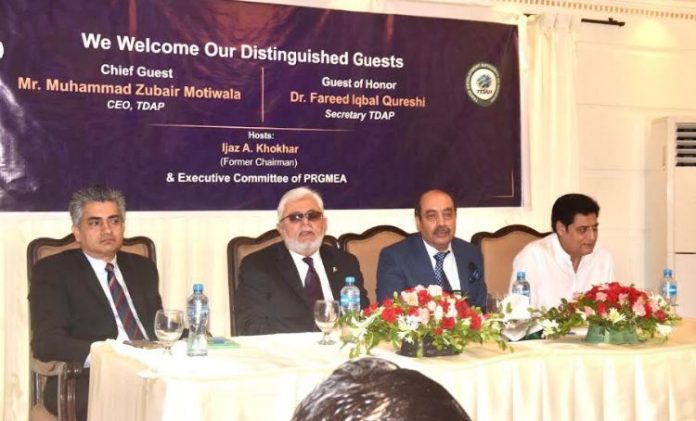
ISLAMABAD: Trade Development Authority of Pakistan CEO Zubair Motiwala has stressed the need for more value-addition and exploring new markets in textile exports, besides focusing the Research and Development (R&D) to enhance the productivity and quality of the products.

Addressing a reception hosted in his honor by the PRGMEA former chairman Ijaz A Khokhar, the TDAP Chief said that there is a need to search non-traditional markets, as there are multiple opportunities in the growing economies of African countries since China and India have already focused on these regions.

The meeting was attended and addressed by TDAP Secretary Dr. Fareed Iqbal while Customs Collector Saima Aftab was also present along with the all stakeholders of SMEs hub of Sialkot, who are doing the highest value-addition in their business, including SCCI, PRGMEA, PHMA, Surgical, Sports goods, Glove and Leather Garments Associations. The heads of Sialkot Dry port, Tannery Zone and Air Sial were among the major participants of the high-level meeting.

The TDAP CEO agreed with the views of the stakeholders and ensured them of resolving their issues, terming them one of the most crucial matters faced by the exporters of this great SMEs hub of the country.

Zubair Motiwala observed that the value-added textile exporters are front row soldiers of the economy and despite multiple challenges they are earning billions of dollars foreign exchange for the country. He appreciated the efforts of the Sialkot-based industry and said that they have made the highest value addition through R&D to improve the productivity and quality of the products.

Zubair Motiwala said that the economy is facing a very tough time and cost of doing business is increasing day by day. At the TDAP, we are ready to facilitate trade and industry to increase the country’s exports, he added. He said that with an improved supply chain, industry can reduce their cost of business.

On the occasion, IAF Chief and PRGMEA ex-chairman Ijaz A Khokhar highlighted the issues being faced by the industry particularly exporters and asked for the long-term economic policies with the consultation of all stakeholders to ensure the stability.

Inviting the attention of the Central Bank, he said that currently State Bank has allowed the travellers to carry only $5,000, which is not sufficient for two-week travel and needs to be enhanced to at least $10,000 as hoteling and transportation costs have gone up due to soaring inflation.

He asked the FBR to ensure sales tax refunds within two weeks, because no Industry can be survived on loans of extremely high interest. “Ideally speaking, the government should restart the zero-rated policy to enhance exports, which is presently declining sharply,” he added.

He said that higher interest rates have badly hurt the cash flows of the industry and it should be reduced to facilitate the industry, as the exporters especially of Sialkot businessmen are facing severe liquidity crunch.

He said that continuous fluctuation in exchange rate has made it difficult to quote to foreign buyers and this is the major issue, which make reluctant to buyers, because nobody can quote rightly for future orders. “Industry wants Dollar rate may be fixed for at least 3-months.”

Suggesting measures for enhancement in exports, the PRGMEA former chief called for aggressive marketing strategy in line with the strategies of our competitors, by appointing Honorary Council General in all Europeans countries, which will cost nothing.

He also proposed to launch a regional task force of TDAP with all stakeholders taking on board and meeting on regular basis, so that the government officials could get ground realities from all sectors all across the country, appealing TDAP CEO to hold quarterly meeting with Sialkot business community during his visit to Lahore.

Ijaz Khokhar asked the government to implement the Textile and Apparel policy of 2020-2025 on priority. He added that the TEXPO should be organized in Dubai on the patron of other competitor countries of the region with a view to escalate exports.

The PRGMEA leader suggested the TDAP CEO to sponsor a ‘Made in Sialkot’ product exhibition in Islamabad to get liaison with the foreign mission, besides establishing EXPO center in Sialkot, which is already approved by the Former Minister of commerce to facilitate to the business community of Sialkot, Gujranwala and Gujrat.

He added that the participation of exhibitors is need to be enlarged to fetch more business, because currently our exhibitors are about 10% compared to our regional competitors like Bangladesh and India, who are grabbing much more business in exhibitions due to high participation.

BISP starts disbursement of quarterly tranche of Benazir Kafaalat

BISP starts disbursement of quarterly tranche of Benazir Kafaalat

ISLAMABAD, Oct 08 (DNA): The process of disbursement of the quarterly
tranche of Benazir Kafaalat cash assistance to beneficiaries across the
country continues by the Benazir Income Support Programme to provide
relief to the beneficiaries.

The payment of 9000 rupees per household will be disbursed among around
nine million registered beneficiary families.

The beneficiaries, in case of any complaint, can approach the nearest
BISP Tehsil offices or call the toll-free helpline number 080026477 of
the Benazir Income Support Program.

The special control room has been activated in the BISP headquarters to
address the complaints of the beneficiaries promptly.

However, the beneficiaries can also contact them on WhatsApp numbers
including 0320-3263026 (Sindh), 0320-3263041 (9Punjab), 0325-5365469
(Balochistan), 0325-5365469 (Khyber Pakhtunkhwa), Azad Jammu and
Kashmir, and Gilgit Baltistan.

The messages from the Benazir Income Support Program are sent only from
8171, and messages from any other number should not be trusted.

It is also pertinent to mention here that the Secretary of BISP, Amer
Ali Ahmed, has announced that the performance of different regions and
zones will be assessed on the basis of the number of complaints
addressed by the officials in order to make the program more transparent
and effective.

BISP management is taking immediate action against the agents
responsible for deductions in a swift response to these matters.

BISP will also conduct a virtual engagement via the official Facebook
account of BISP on October 10 (Tuesday) at 11:30 a.m. to listen to the
issues being faced by the beneficiaries.
In addition, a dedicated phone line (051-9246421) has been designated to
provide a direct channel for beneficiaries to contact BISP with their
queries and concerns.

ICC World Cup 2023: Rahul, Kohli power India to crucial win against Australia

ICC World Cup 2023: Rahul, Kohli power India to crucial win against Australia

Chennai, OCT 8: India beat Australia by six wickets in the fifth match of the ICC World Cup 2023 at the M.A. Chidambaram Stadium, Chennai, on Sunday.

KL Rahul and Virat Kohli took control of the struggling Indian batting line as the home side had lost three wickets for just two runs in the first two overs.

The two batters built a match-winning 165-run partnership, making sure that the Blues don’t start their World Cup journey with an embarrassing loss in front of their home crowd.

Kohli contributed 85 runs while the wicketkeeper batter Rahul amassed 97 runs, leading their side to an important win.

Mitchell Starc and Josh Hazlewood gave early blows to the hosts and removed Ishan Kishan, Rohit Sharma and Shreyas Iyer but couldn’t break the impeccable defense of the two match winners.

However, in the eighth over, Mitchell Marsh dropped Kohli’s catch when he was on 12, giving the 34-year-old a new life after an early scare.

Batting first, Australia were restricted to 199 runs courtesy of a fantastic bowling display by Indian spinners, Ravindra Jadeja and Kuldeep Yadav.

The two spinners shared five wickets between them with Jadeja picking three while Yadav getting two to his name.

It was a complete and dominant performance by the Indian bowling as all six bowlers bagged a wicket.

Ace pacer Jasprit Bumrah got two while Mohammad Siraj, Hardik Pandya and Ravichandran Ashwin got one each.

After winning the recent Asia Cup 2023 and beating the Aussies in a three-match ODI series, the Blues continued their great form.

On the other hand, things have started to get difficult for Pat Cummins as his side have one win in the last six ODIs and not having more than one natural spinner (Adam Zampa) may cause more trouble for the Aussie in spinning Indian conditions.

India will play Afghanistan next on October 11 in Delhi while Australia will take on the in-form South African side on October 12 in Lucknow.

Over 600 soldiers killed as Hamas surprises Israel

Over 600 soldiers killed as Hamas surprises Israel

370 Palestinians martyred; many foreign nationals go missing; Israel hurls threats to demolish Gaza Strip

News Desk

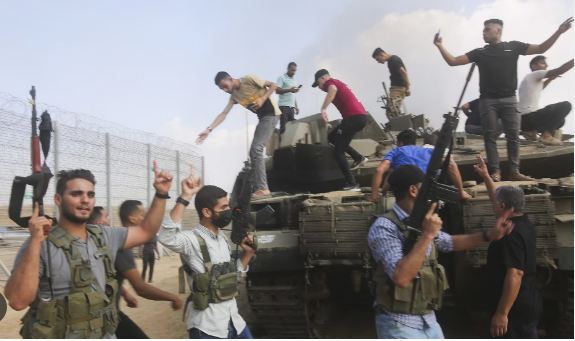
RAMALLAH: More than 600 Israelis have been killed in attacks from Gaza since Saturday, the government says It’s believed that as many as 100 soldiers and civilians were kidnapped when Palestinian fighters crossed the border and raided communities

Retaliatory Israeli air strikes have killed at least 370 people in the Gaza Strip, with 2,200 wounded, Palestinian officials say

One British citizen, Jake Marlowe, is missing in Israel – he was working at an outdoor party near the Gaza border when the attack happened

And in Egypt, two Israeli tourists and their Egyptian tour guide were shot dead in Alexandria, apparently by a policeman

The wave of attacks launched by the Hamas militant group on Saturday morning is the biggest escalation in decades between the two sides.

Israeli forces battled holdout Hamas fighters and pounded targets in the Gaza Strip with the army saying tens of thousands of soldiers were deployed in southern desert regions near the coastal enclave, to rescue Israeli hostages and then evacuate the entire region within 24 hours.

“We´ll reach each and every community till we kill every terrorist in Israel,” said military spokesperson Daniel Hagari, a day after hundreds of Hamas fighters crossed into Israel in vehicles, boats and even using paragliders.

“Our mission for the upcoming 24 hours is to evacuate all residents” from communities around the Gaza Strip, he told journalists.

In the Israeli-occupied West Bank, seven Palestinians were martyred by Israeli gunfire in the same period, the report added.

Six of them, including a 13-year-old boy, were martyred during stone throwing clashes in separate incidents while the seventh man was martyred as he tried to stab an Israeli, the health ministry statement said. 

Hamas said its unprecedented offensive by land, air and sea was in response to the desecration of the Al Aqsa Mosque as well as Israeli atrocities against Palestinians over the decades. These include the 16-year blockade of Gaza, Israeli raids inside West Bank cities over the past year, increasing attacks by settlers on Palestinians as well as the growth of illegal settlements, according to Al Jazeera.

Mohammed Deif, a Hamas military commander, said the time has come “for the enemy to understand… they cannot keep going without consequences”.

Israeli Prime Minister Benjamin Netanyahu vowed to turn the besieged Palestinian enclave into a “deserted island”.

“We will take mighty vengeance for this wicked day,” PM Netanyahu said.

“Hamas launched a cruel and wicked war. We will win this war but the price is too heavy to bear,” he said. “Hamas wants to murder us all. This is an enemy that murders mothers and children in their homes, in their beds. An enemy that abducts elderly, children, teenage girls.”

PIDE research reveals internet shutdowns cost Pakistan PKR 1.3 bln in direct loss

PIDE research reveals internet shutdowns cost Pakistan PKR 1.3 bln in direct loss

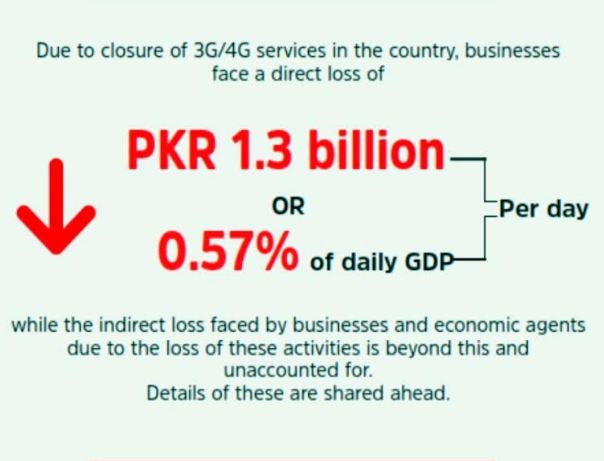
Islamabad, OCT 8 /DNA/ – In a recent study conducted by the Pakistan Institute of Development Economics (PIDE), startling revelations have emerged regarding the economic impact of internet shutdowns in Pakistan. PIDE estimates show that the closure of internet services for just 24 hours results in a direct loss of PKR 1.3 billion, which equates to a staggering 0.57% of the daily GDP average for the nation.

This eye-opening revelation is part of PIDE’s research infographic titled “The Economic Cost of Internet Closure” and highlights the severe consequences of internet shutdowns on the Pakistani economy.

According to Dr Nadeem ul Haque, Vice Chancellor of the Pakistan Institute of Development Economics (PIDE), and Mr Mohammad Shaaf Najib, Research Fellow at PIDE, the internet has become a fundamental necessity in modern times. However, Pakistan’s internet infrastructure lags behind in terms of both quality and coverage.

The recent internet closure in various parts of Pakistan has had a profound impact on multiple sectors, leading to substantial financial losses and operational challenges. Online cab services, online food delivery services, freelancers, transport companies, and postal services have all been severely affected by the prolonged disruption of internet services.

The PIDE Infographic shows that online Cab Services, a cornerstone of modern transportation, saw a staggering 97% reduction in the number of rides on days when the internet has been closed down. This significant downturn equates to a loss of PKR 29 to 32 million for the industry per day.

Similarly, Online Food Delivery Services suffered a 75% reduction in the number of orders, translating into a substantial daily loss of PKR 135 million.

Meanwhile, the freelance community, which contributes significantly to Pakistan’s economy, has also felt the brunt of internet disruptions. Denial of orders to Pakistan-based freelance workers resulted in over $1.3 million loss of revenue, equaling PKR 390 million, impacting livelihoods of many and the national economy as a whole too.

Besides, suspension of 3G/4G services for a single day causes a loss of PKR 450 million to the telecommunication sector alone.

Furthermore, PIDE had earlier estimated the economic costs of protests to be around 2.0% of the GDP. Closure of economic activity either through protests or due to closure of internet services contributes a significant loss to economic activity in the country.

Dr. Nadeem ul Haque, PIDE’s Vice Chancellor, said in the press release that access to high-quality internet not only enhances opportunities for the youth, particularly in remote areas but also plays a pivotal role in bridging the divide between the privileged and the common public. Utilizing online tools for education and professional purposes can empower youth from rural regions to compete on a national and international level.

PIDE has been a consistent advocate for “Internet for All” and believes that the government must prioritize immediate nationwide internet coverage. Additionally, regulatory measures should be introduced to encourage telecommunication companies to expand internet access across the country. Spectrum auctions should be geared towards ensuring universal internet coverage rather than solely as a means of generating revenue.

The Internet is a critical tool for facilitating economic transactions and business operations. It is disheartening to note that internet shutdowns in Pakistan, often for arbitrary reasons, disrupt essential economic activities.

PIDE is committed to fostering a digital landscape that not only empowers individuals but also contributes positively to Pakistan’s economic growth. The research findings underscore the urgency of addressing the challenges in Pakistan’s internet infrastructure to ensure a prosperous and connected future for all.

Stay Connected

64FansLike
60FollowersFollow

Latest Reviews

Exchange Rates

USD - United States Dollar
EUR
1.17
GBP
1.35
AUD
0.72
CAD
0.73