Home Blog Page 1158

FM Jilani arrives Azerbaijan to attend COM-ECO

FM Jilani arrives Azerbaijan to attend COM-ECO

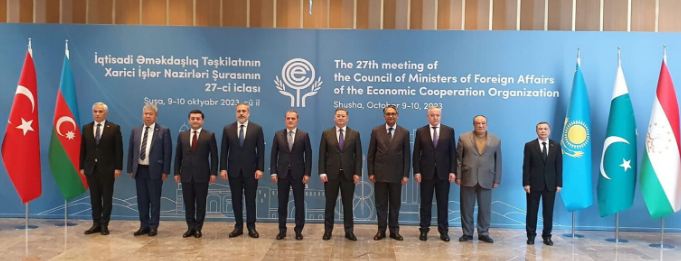
ISLAMABAD, Oct 10 (DNA): Caretaker Foreign Minister Jalil Abbas Jilani on Tuesday arrived in Shusha, Azerbaijan to attend the 27th Meeting of Council of Ministers (COM) of the Economic Cooperation Organization (ECO).

Foreign Minister Jilani will address the Council of Ministers (COM) and hold bilateral meetings with participating ministers of member states and other dignitaries on the sidelines of the event, the Foreign Office Spokesperson said in an earlier press statement.

At the 27th COM, the member states will discuss the promotion of sustainable economic development of the ECO region through trade and economic cooperation and mutual assistance in social, cultural, technical and scientific fields. The Theme of this year’s event is “Green Transition and Interconnectivity”.

As the policy-making forum of the ECO, the Council of Ministers approves the decisions and the annual work plan of the Organization, it was added.

As a founding member, Pakistan remains strongly committed to ECO’s aims and objectives and has remained at the forefront of all major ECO initiatives/agreements such as the ECO Trade Agreement (ECOTA) and the ECO Transit Transport Framework Agreement (ECOTTFA), the spokesperson said.

ECP, political parties to discuss election code of ethics on Wednesday

ECP

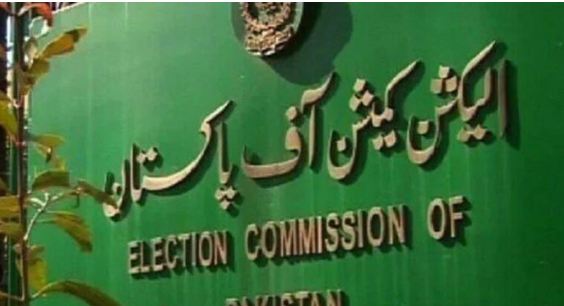
ISLAMABAD, Oct 10 (APP/DNA): The Election Commission of Pakistan (ECP) and various political parties are set to meet at the ECP secretariat on Wednesday to discuss the draft code of conduct for the upcoming general elections.

According to an ECP official, the Election Commission had previously held an initial consultative session with political parties to deliberate on various election-related issues.

In preparation for the upcoming meeting, the ECP has provided political parties with an initial code of conduct. This draft is expected to be an essential component in the final preparations for the upcoming general elections.

The ECP has already distributed a preliminary code of conduct to political parties, and this draft is anticipated to play a crucial role in the final arrangements for the upcoming general elections.

The draft code of conduct highlights the significance of political parties, candidates, and election agents in safeguarding the rights and freedoms of the people of Pakistan, as guaranteed by the Constitution and the law.

Furthermore, it cautions against engaging in actions or expressing views that might jeopardize Pakistan’s ideology, sovereignty, integrity, security, or the independence of its judiciary.

Additionally, the draft code imposes limitations on public officeholders, including the president and prime minister, preventing them from involvement in any capacity in election campaigns.

According to an ECP official, a copy of the draft Code of Conduct has been dispatched to political party leaders to allow them to offer their input during the consultation process. Additionally, the draft Code of Conduct can also be accessed on the Election Commission’s website at www.ecp.gov.pk.

How Hamas Stunted Israel?

How Hamas Stunted Israel?

By Qamar Bashir

In the early days of October 2023, an unprecedented escalation of conflict between Hamas and Israel occurred, marked by a large-scale invasion and offensive launched by Palestinian militant groups from the Gaza Strip against Israel’s Southern Borders. This significant attack, named “Operation al-Aqsa Storm,” was a historic event as it marked the first direct conflict within Israel’s boundaries since the 1948 Arab–Israeli War.

What made this offensive particularly stunning was not only its surprise factor but also the fact that it caught not only Israelis, known for their world-class, well-equipped, and highly efficient surveillance and intelligence systems, off guard but also the entire world. The Israeli-Palestinian conflict is closely monitored due to its potential to disrupt peace in the Middle East, a region crucial for global oil supply. The fear of oil supply disruption and its potential to drive up oil prices, thus impacting economies worldwide, especially vulnerable ones like Pakistan, added an extra layer of concern to this already volatile situation.

The audacious and deadly maneuver executed by Hamas has also raised questions about the effectiveness of Mossad, Israel’s renowned intelligence agency, which is traditionally considered one of the world’s most formidable agencies, specializing in counterterrorism, covert operations, and intelligence collection. Often compared to counterparts like the CIA (United States), MI6 (United Kingdom), and FSB (Russia), Mossad’s inability to anticipate and prevent the surprise attack by Hamas was a notable surprise not only for Israel but also for other global intelligence agencies with a significant presence in the conflict-prone Middle East.

This unprecedented military maneuver involved a clever transformation of civilian machinery such as bulldozers, hang gliders, and motorbikes, effectively challenging the Middle East’s most potent army. It marked a significant breach in Israel’s defenses, the most serious since the Arab-Israeli conflicts of 1973. Hamas achieved this through two years of strategic subterfuge, concealing its military plans and convincing Israel that it had no intention of engaging in a major confrontation.

While Israel believed it was pacifying a war-weary Hamas through economic incentives for Gazan workers, the group was covertly and effectively preparing its fighters. This preparation took place in plain sight but under the guise of not being ready for a conflict. Hamas employed unconventional and untraceable intelligence tactics, leading Israel to underestimate its strength and resilience. The result was a shocking and sudden assault that caught Israel off guard, resulting in 700 Israeli casualties and dozens of abductions. Major Nir Dinar, spokesperson for the Israeli Defense Forces, described this surprise move as “Israeli 9/11,” admitting that they had been caught completely unaware.

In the lead-up to this audacious maneuver, Hamas constructed a mock Israeli settlement in Gaza for training purposes. Even many Hamas leaders were kept in the dark about the exact plans, and the 1,000 fighters involved had no clear understanding of the exercises’ true purpose. The operation was divided into four parts: an initial barrage of 3,000 rockets fired from Gaza, simultaneous incursions by fighters using hang gliders and motorized paragliders, the securing of terrain by ground troops, and the breach of fortified barriers using explosives and motorbikes. Bulldozers were employed to widen gaps, and commando units attacked key Israeli military installations, disrupting communications.

 The final phase involved moving hostages to Gaza, a task largely achieved early in the attack. One such high-profile hostage-taking incident occurred during a raid on party-goers near Gaza, with social media footage capturing the chaos as people fled the scene amid gunshots.

Hamas’ remarkable ability to maintain the secrecy of its unconventional warfare capabilities until it unveiled them in a decisive manner and the biggest below to the invincibility of Israel. The speed, precision, and serenity with which Hamas militants breached the Gaza-Israel barrier, penetrated the Gaza border crossings into Israeli settlements and military installations, and launched over 5,000 rockets into Israel within just 20 minutes were indeed remarkable.

The Hamas’ “Operation Al-Aqsa Storm,” can be attributed to several factors. Firstly, it highlights Hamas’ perception of Israeli actions as desecration of the holy Islamic site, the Al-Aqsa Mosque. Additionally, the increasing trend of Arab states normalizing relations with Israel, as exemplified by the 2020 Abraham Accords involving the UAE, Bahrain, Sudan, and Morocco. This trend is a cause for concern among Palestinians, as it reduces pressure on Israel to reach a settlement with them and signals a prioritization of peace with Arab states over peace with the Palestinians.

Hamas, while not recognizing Israel, has indicated it would observe a truce if Israel withdrew to its 1967 borders, but skepticism remains about Israel’s willingness to do so, especially if Saudi Arabia were to conclude its own deal with Israel. Furthermore, the timing of the attack is significant as it coincides with the 50th anniversary of the Yom Kippur or Ramadan War in 1973, potentially symbolizing the aspiration of surprising Israel, as Egypt and Syria did back then.

The trajectory of the conflict remains uncertain. There are concerns about Hezbollah’s involvement in Lebanon, depending on Iran’s stance, and the potential for Palestinian militants in the West Bank to launch their own attacks, creating a third front against Israel. Moreover, there is the possibility of attacks on Jewish Israelis by Arab Israelis living in Israel, leading to a fourth front.

The Israeli response to this unprecedented attack on Israeli Soil is  surely going to be robust, devastating and exemplary. The Israeli Prime Minister Benjamin Netanyahu warned Israelis to brace themselves for a long and difficult war on Sunday (8th October). It responded with huge strikes on cities in the blockaded Gaza Strip, destroying dozens of buildings. The Israeli military said it had called up an unprecedented 300,000 reservists and was imposing a total blockade of the Gaza Strip, signs it could be planning a ground assault there to defeat Hamas after it launched a humiliating attack. In a further signal of Israel’s rapid shift on to a war footing, a cabinet member from Prime Minister Benjamin Netanyahu’s Likud Party said it could set up a national unity government joined by opposition leaders within hours.

The recent assault has led to a significant and devastating impact on both sides, with no clear resolution in sight. President Joe Biden has pledged support for Israel, indicating that Israel is likely to face these challenges with strong backing. However, Israeli actions in Gaza may be constrained by the fact that some Israeli citizens have been kidnapped by Hamas militants and taken to Gaza.

The conflict has the potential to impact global markets and economies in several ways. One significant concern is the potential for disruptions in oil prices and supply chains, which can have far-reaching consequences. The Middle East is a critical region for oil production, and any instability in the area can lead to increased oil prices, affecting not only energy costs but also the global economy.

Moreover, the conflict’s disruption of supply chains and movement of essential commodities can exacerbate global supply shortages and inflationary pressures. As transportation routes are affected and infrastructure damaged, the flow of goods can be impeded, leading to delays and increased costs for essential products. This, in turn, can lead to rising commodity prices, making basic necessities more expensive for consumers around the world.

Weak economies, like Pakistan and others in the region, may face additional challenges as they grapple with the impact of higher oil prices and disruptions in the supply chain. These countries may experience increased costs for imports, which can strain their already fragile economic situations and potentially lead to balance of payments issues and inflation.

This conflict once started is not going to go down any time soon. For Israel, going full scale against Hamas will be an uphill task as indiscriminate Israeli bombing would put the lives of the Palestinian mostly civilians at greater risk creating worldwide reaction against civilian killings.  Balancing a robust response with concerns about international opinion remains a challenge for Israel, though Western governments have largely expressed support for Israel in the current conflict. Ultimately, this situation underscores the need for Israel to develop a comprehensive policy to manage the possible opening of war fronts with Hamas, Alfatah, Hezbollah and its own citizens of Arab origin.

While Hamas justifies its attacks by citing the 16-year blockade of Gaza and Israeli crackdowns in the West Bank, Israel and Western countries have condemned the mass killing of civilians. The situation has jeopardized efforts to normalize relations between Israel and Saudi Arabia, which could have had implications for Palestinian aspirations and Iran’s influence in the region. As the conflict continues, there are growing questions about Israel’s intelligence failures and the fate of Israeli hostages, further complicating the path to a resolution.

By Qamar Bashir

Former Press Secretary to the President

Former MD, SRBC,

Former Minister Press, Embassy of Pakistan to  France

Electricity should be cheaper for people, industries in winter: NBG

Electricity should be cheaper for people, industries in winter: NBG

ISLAMABAD, Oct 09 (DNA): Chairman of National Business Group Pakistan,
President Pakistan Businessmen and Intellectuals Forum, and All Karachi
Industrial Alliance, and former provincial minister Mian Zahid Hussain,
said on Monday that the production capacity of electricity in the
country is 40 thousand megawatts while consumption is only 10 to 12
thousand megawatts in winter.

People and businesses are forced to pay even though some industries are
shut down in the winter and do not use electricity.

Mian Zahid Hussain said that instead of shutting down the
electricity-generating plants during the four or five months of winter,
they should be operated, and this electricity should be sold to cover
operating costs only.

Speaking to the business community, the veteran business leader said
that cheap electricity should be provided to the public, commercial
establishments, and agricultural and industrial sectors to increase
economic activity.

Providing cheap power to industries will increase production,
employment, and export earnings, improve foreign exchange reserves, and
thereby provide additional resources to the government for capacity
payments.

Mian Zahid Hussain said that supporting the industrial sector will
increase production and reduce the price of various commodities, which
will benefit the people. The government should finalize this matter as
soon as possible and get permission from the IMF so that the same can be
put into practice.

The business leader said that electricity and gas have been made very
expensive, due to which production costs and exports are affected.
Implementation of this proposal will result in people benefiting from
cheaper electricity in winter as natural gas is not available everywhere
and LPG is very expensive.

Mian Zahid Hussain further said that according to an estimate, by making
electricity cheaper, its use will increase by 25% across the country and
up to 35% in Karachi, and the demand for natural gas will decrease
accordingly.

He noted that efforts have been made to privatize electricity
distribution companies for the past several decades, but there has been
no success because, firstly, their size and losses are very high, and
secondly, the employees are against privatization.

There is a monopoly of these companies in the country, due to which
there is a lot of incompetence and corruption in them. The only solution
to these problems is to involve the private sector in this sector by
providing specific areas for electricity supply.

In this way, the private sector will enter the electricity market, and
an era of competition will begin, which will reduce inefficiency and
corruption and provide better service and affordable electricity to
consumers. DNA

World Cup: New Zealand ease past Netherlands

World Cup: New Zealand ease past Netherlands

Sports Desk

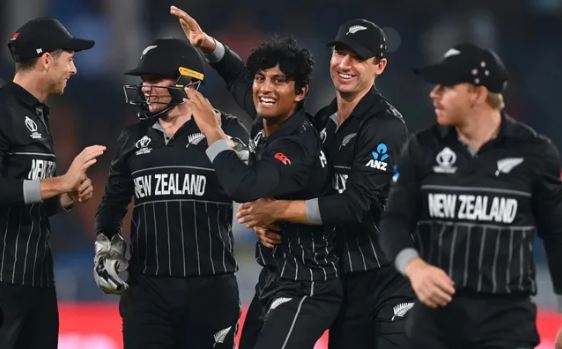
Hyderabad: New Zealand continued their astounding form and recorded a crucial 99-run win against the Netherlands in the sixth match of the ICC World Cup 2023 at the Rajiv Gandhi International Stadium, Hyderabad, India on Monday.

An all-round performance by the Black Caps strengthened their position on the top as after beating England in the World Cup opener, the Kiwis defeated the Dutch in a one-sided contest courtesy of Mitchell Santner’s masterclass with the ball and the bat.

Chasing the target of 323 runs, the Dutch were off to a bad start as their openers — Vikramjti Singh and Max O’Dowd — failed to give their side a considerable start.

However, the experienced middle-order batter Colin Ackermann provided his side a much-needed breakthrough by scoring 69 off 73 but his heroics weren’t enough as the Dutch kept on losing wickets at regular intervals and were soon all-out for 223 runs.

Skipper and wicketkeeper-batter Scott Edwards was the second top-scorer for his side contributing 30 runs.

Santner picked the first five-wicket haul of this World Cup, taking five for 59 in 10 overs, Matt Henry bagged three while Rachin Ravindra picked one.

Batting first, the top-five batters of New Zealand — Devon Conway, Will Young, Ravindra, Daryl Mitchell and skipper Tom Latham — all contributed considerable runs and got their side in a dominating position.

However, during the last 10 overs, the Kiwis lost two wickets in quick succession but Santner’s late strikes led Black Caps to 322 runs in 50 overs.

The 31-year-old scored 36 off just 17 deliveries which included five boundaries.

New Zealand will now play Bangladesh in their next encounter on October 13 on the spinning wicket of Chennai while the Netherlands will face South Africa on October 17 in Dharamshala.

Playing XIs

New Zealand: Devon Conway, Will Young, Rachin Ravindra, Daryl Mitchell, Tom Latham (c & wk), Glenn Phillips, Mark Chapman, Mitchell Santner, Matt Henry, Lockie Ferguson, Trent Boult

Netherlands: Vikramjit Singh, Max ODowd, Colin Ackermann, Bas de Leede, Teja Nidamanuru, Scott Edwards (c & wk), Sybrand Engelbrecht, Roelof van der Merwe, Ryan Klein, Aryan Dutt, Paul van Meekeren

Solangi for boosting coop with Russia in diverse fields

Solangi for boosting coop with Russia in diverse fields

Russia wanted to cooperate with Pakistan in other spheres of life besides media, said the ambassador

DNA

ISLAMABAD: Caretaker Federal Minister for Information and Broadcasting Murtaza Solangi on Monday underlined the need for boosting cooperation with Russia in various fields including media, drama, films, joint productions and training programmes. The minister, in a meeting with Russian Ambassador to Pakistan Danila Ganich, also stressed that a formal invitation would be extended to his Russian counterpart for his visit to Pakistan. During the meeting, cooperation between the two countries in diverse fields including media and the modalities regarding the Russian information minister’s visit to Pakistan were also discussed.

 Possible signing of agreements between APP and TAAS News Agency, PTV and Russian Television and Russian Radio and Radio Pakistan during the visit of the Russian Minister also came under discussion during the meeting.

 Both Solangi and the Russian Ambassador expressed the commitment of the two countries to strengthen relations in various fields including security, economy, education, culture and tourism. Pakistan valued its relations with Russia and it was desirous to expand cooperation with Moscow in the fields of media, drama, and films, the minister said.

They also discussed matters pertaining to organizing a ceremony in Islamabad on the completion of 75 years of diplomatic relations between Pakistan and Russia.

Solangi said both countries enjoyed long-standing ties and the business community and people of Pakistan were keen to strengthen the bilateral relation and find ways to achieve common goals.

“We are confident that our bilateral relations will continue to grow towards a bright future with the changing global scenario,” Murtaza Solangi remarked.

The Russian Ambassador said Pakistan and Russia were cooperating with each other in every sphere of life including the media sector. Russia wanted to cooperate with Pakistan in other spheres of life besides media, said the ambassador. He said that Pakistani television dramas were very popular in Russia.

Minister reaffirms Pak’s commitment to accelerate CPEC project implementation

Minister reaffirms Pak's commitment to accelerate CPEC project implementation

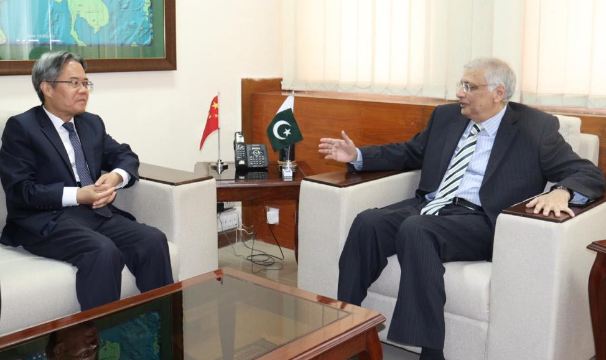
ISLAMABAD, OCT 9 /DNA/ – Caretaker Minister for Planning and Development Sami Saeed has reiterated Pakistan’s commitment to accelerate the implementation of projects under China-Pakistan Economic Corridor (CPEC). Talking to Chinese Ambassador to Pakistan Jiang Zaidong on Monday, the Planning Minister congratulated him on assuming the charge.

During the meeting, both the sides have discussed CPEC projects and reiterated resolve to further strengthen relations between the two countries. It is noted that the second Phase of CPEC has already started as both the countries have been celebrating the decade of CPEC.

Highlighting the ongoing development projects under CPEC, the Minister elaborated on their potential to transform Pakistan’s infrastructure and economy. He underlined that these projects are not merely about physical connectivity but also aim to uplift the lives of the people and boost socio-economic development across the country.

He further said that the interim government is committed to implement the CPEC projects while emphasizing the importance of the long-standing friendship between the two countries and reiterated the commitment to further strengthening the ties.

 Furthermore, the Minister highlighted the importance of the Gwadar Port, a strategic project under CPEC, which is set to become a key maritime gateway connecting Pakistan with the rest of the world. The development of Gwadar Port and its associated free zone is expected to attract foreign investment, stimulate economic activities, and create job opportunities in the region.

Chinese Ambassador, Jiang Zaidong appreciated Pakistan’s efforts to implement the CPEC particularly the second phase of CPEC. With the joint efforts of both sides, CPEC has achieved fruitful outcomes covering areas of industry, agriculture, IT, disaster prevention and mitigation, said the Ambassador, while appreciating the efforts of Planning Ministry which not only played a vital role in the implementation of the CPEC.

But made significant contributions to promoting Pakistan’s economic and social development, upgrading Pakistan’s infrastructure, improving Pakistani people’s well-being, enhancing people to people contact and deepening regional connectivity.

President for regular senates’ meetings of universities; filling of vacancies

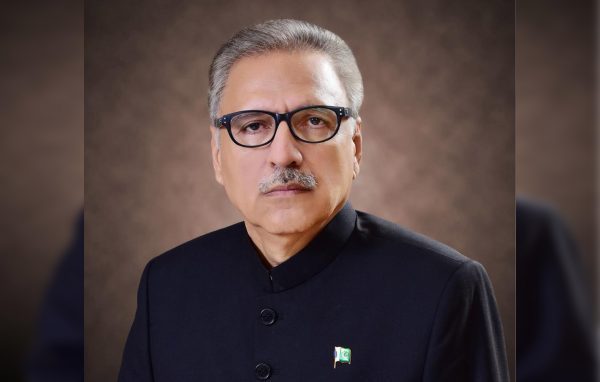
ISLAMABAD, Oct 9 (APP/DNA): President Dr Arif Alvi on Monday stressed upon the need of holding of regular meetings of senates of universities for timely decision making.

He also directed for immediate filling of vacant posts of senate members in different universities.

The president chaired 6th meeting of Senate of the COMSATS University Islamabad, at Aiwan-e-Sadr, President Secretariat Press Wing said in a press release.

The meeting was attended by executive director COMSATS, secretaries of ministries of IT and federal education and senate members.

The president further observed that universities should also commence timely process for recruitment on teaching and administrative vacancies, besides establishing new departments while keeping in view needs of the market.

Prior to starting of teaching in new departments, an inquisitive analysis of the requirements of the markets should be made, he opined, adding that universities should impart education and skills to their students in conformity with the needs of the market.

The president reiterated that while comparing with other countries of the region, the number of students seeking admissions in universities in Pakistan was very low and emphasized upon the universities to utilize online education system for increasing numbers of qualified graduates.

He also advised that universities should explore new avenues for generating their financial resources whereas for the research grants, they should seek assistance from professionals.

During the meeting, the financial, administration, educational and employees’ issues of COMSATS were discussed.

Indian Chief Minister’s remarks linked to ‘Akhand Bharat’ assertion: FO

Indian Chief Minister's remarks linked to 'Akhand Bharat' assertion: FO

ISLAMABAD, OCT 9 /DNA/ – Responding to the media questions regarding the remarks made by the Chief Minister of the Indian state of Uttar Pradesh about taking back ‘Sindhu’ (the region around the Indus River in Southern Pakistan), the Spokesperson, Ministry of Foreign Affairs, Mumtaz Zahra Baloch, said:

“We condemn the highly irresponsible remarks made by the Chief Minister of Uttar Pradesh, a key member of India’s ruling dispensation and a follower of the bigoted Hindutva ideology, at the National Sindhi Convention in Lucknow.

It is equally condemnable that the so-called reclamation of the ‘Ram Janmabhoomi’ has been cited by the Chief Minister as a template for reclaiming the region that constitutes part of Pakistan. History bears witness that a Hindu supremacist mob had brazenly demolished the historic Babri Mosque on 6 December 1992 to take back the claimed birthplace of Lord Rama in Ayodhya.

Clearly, the Chief Minister’s provocative remarks are inspired by the gratuitous assertion of ‘Akhand Bharat’ (undivided India). These remarks manifest a revisionist and expansionist mindset that seeks to subjugate the identity and culture of not only India’s neighbouring countries but also its own religious minorities. They also reflect a perverse view of history.

It is a matter of grave concern that such ideas are being increasingly peddled by individuals belonging to the BJP-RSS combine to further their divisive and parochial political agenda. Instead of nurturing hegemonic and expansionist ambitions, the Indian leaders should resolve disputes with neighbouring countries, and work with them to build a peaceful and prosperous South Asia.”=DNA

============

Pakistan values its ties with Spain: Gohar Ijaz

Pakistan values its ties with Spain: Gohar Ijaz
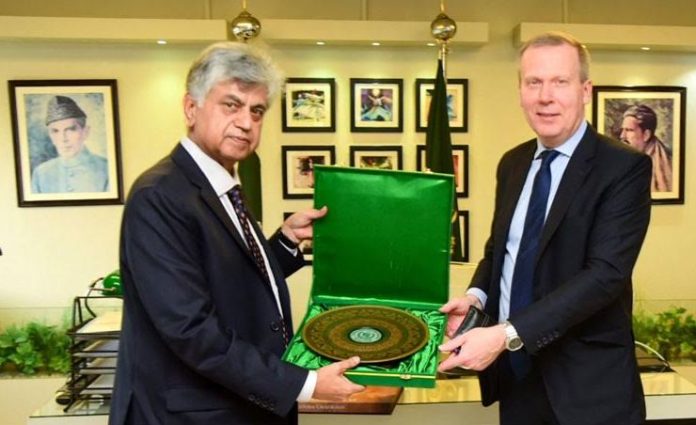
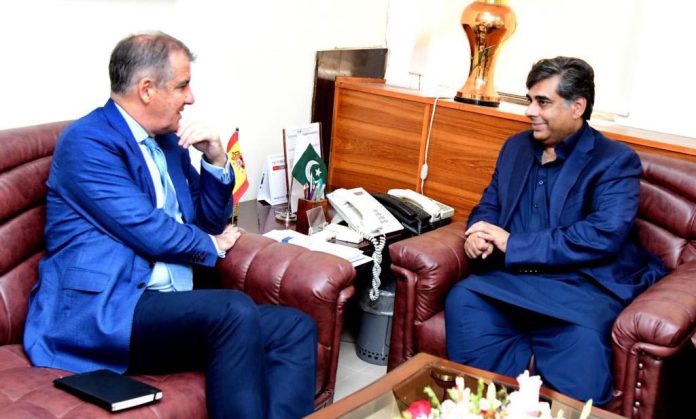
Spanish Ambassador H.E. Jose A. de Ory meeting with the Minister for Commerce and Industry, Dr. Gohar Ejaz at the Commerce Ministry to discuss bilateral trade in Islamabad on 9th of October, 2023.

DNA

ISLAMABAD, OCT 9: Spanish Ambassador, Jose A. de Ory called on the Minister for Commerce and Industry, Dr. Gohar Ejaz at the Commerce Ministry today. The meeting was convened to discuss bilateral trade and investment relations.

Minister Ejaz expressed popularity of football in Pakistan, with a particular interest in La Liga, and support for renowned clubs like Real Madrid and FC Barcelona. He emphasized Pakistan’s growing sports industry and importance of Pakistani branded sports goods exports to Spain. Minister Ejaz appreciated Spain support for EU GSP Plus. Spanish Ambassador Jose A.

de Ory stressed importance of a mindset shift to boost exports, drawing from Spain’s own successful experience. He highlighted Spain’s support for its businesses to expand abroad, particularly in South America, and emphasized that Pakistan needs to emulate this policy to assist businessmen in going global. Ambassador de Ory proposed facilitating trade by providing Pakistan with a list of essential Spanish imports, allowing Pakistani businesses to focus on meeting those demands effectively.

Minister Ejaz shared Pakistan’s interest in collaboration with Spain to establish solar manufacturing facilities in Pakistan, given Spain’s leadership in solar technology. Furthermore, the Ambassador encouraged Pakistan to explore renewable energy opportunities, citing Spain’s expertise in wind power. Spanish Ambassador invited Minister Ejaz to lead a business delegation to Spain to further strengthen bilateral trade and economic ties.

Stay Connected

64FansLike
60FollowersFollow

Latest Reviews

Exchange Rates

USD - United States Dollar
EUR
1.17
GBP
1.35
AUD
0.72
CAD
0.73