Home Blog Page 1156

People-centric governance is key to a peaceful society

People-centric governance is key to a peaceful society

DNA

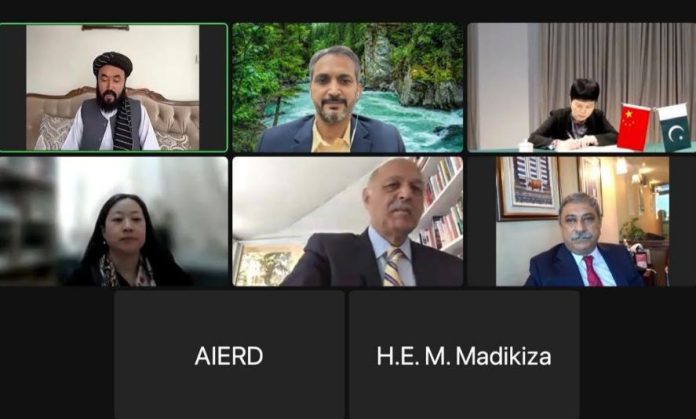
ISLAMABAD: Speakers at a webinar on Wednesday said that people-centric governance should primarily focus on serving the interests of the people with an aim to uplift their social and economic situation. The webinar titled ‘Dialogue For People Centric Governance’ was organized by Asian Institute of Eco-Civilization Research and Development (AIERD), which was attended by a number of academics, diplomats, students, and senior government officials.

Governance is the art of satisfying the needs of the people and serving the interests of the people, said Shakeel Ahmad Ramay, CEO, of AIERD, while opening the webinar. 

Speaking at the event, Senate Defence Committee Chairman Syed Mushahid Hussain Syed said the Belt and Road Initiative (BRI) was a very important element to understand people-centric governance. “China had advanced a Chinese solution to global development issues based on inclusivity, respect for diversity and equality and based on the concept of win-win cooperation and mutual benefit,” he said.

Mr Syed went on to say that the State Council of the Peoples Republic of China had recently issued a white paper on BRI, in which it had said that the initiative was one of the key pillars of the shared community for the future, adding that its living example was the China Pakistan Economic Corridor (CPEC). He said the people centric governance in China was based on the ethos of the Communist Party of China and Chinese historical context. Under the Chinese leadership, the key bottom line has been that the party springs from the people as it has 95 million members, he said, adding that Chairman Mao Zedong had stressed on serving people in different capacities.

ith people. 

Deputy Head of Mission and minister at the Chinese embassy in Islamabad Pang Chunxue said people-centric governance was important in Chinese philosophy.

China had always adhered to this philosophy which was rooted in Chinese history, she said.

Pang Chunxue said people were the foundation of a country, and that people-centered governance served as a guiding compass for China’s overall development.

She added that improvement in social security, health and education systems were vital for efficient public service. Speaking about CPEC, she said China had injected $25.4 billion in direct investment in Pakistan.

Deputy Dean, Institute of Community with Shared Future, Communication, University of China, Prof Zhang Yanqiu, in her presentation, said it was not feasible for China to copy the political systems of other countries.

She referred to China’s whole-process people’s democracy, saying that democracy was not an ornament to be used for decorations rather it was meant to solve the problems that people wanted to be solved. She said the whole-process people’s democracy served the interests of the people, and quoted Chinese President Xi Jinping as saying, “China’s people’s democracy is a type of whole-process democracy”. She said the whole-process people’s democracy, including democratic election, consultation, decision-making, management and scrutiny, operated across all of China’s governance mechanisms and that consultative democracy was a distinctive feature of China’s socialist democracy.

Prof Zhang Yanqiu said since 2016, more than one billion registered voters had elected close to 2.5 million deputies to county and township level people’s congresses.

She said China was the second largest economy in the world and had a clear view of the future by constantly thinking about the long-term.

South African High Commissioner Mthuthuzeli Madikiza said the World Bank defined good governance as the one epitomized by predictable, open and enlightened policy making. Good governance is a pivot and pillar of human prosperity but yet elusive. It swings like a pendulum, he said. He said in South Africa, the notion of good governance through representatives of the majority was new and young in practice but mature in conceptualization.

He said he could say without fear of contradiction that good governance in South Africa was routine. “It is not a matter of half empty glass but half full,” he said, adding that progress was being made in good governance. Academics and students of good governance generally agreed that good governance was discernable when it showed the following characteristics: accountability, transparency, rule of law, responsive, effective governance, consensus and orientation, the South African envoy said.

Afghan Deputy Minister of Economy Abdul Latif Nazari said Afghanistan was in an important and historic situation. He said people stood with the Islamic Emirate and did not support war mongers. The Afghan government was striving to serve its people, and therefore the ministry of economy invited all countries to play an active role in development projects in Afghanistan. He assured them that the ministry was committed to the safety of all investors and was ready to attract domestic and foreign investors.

“We expect investment in trade, agriculture and social sector as it would help reduce poverty and food insecurity in Afghanistan,” Mr Nazari said. “Sanctions have led to an increase in poverty, he said, adding that he hoped that they would be lifted and interaction between Afghanistan and the world would increase. He further added that Afghanistan had a geo-strategic, geo-politics and geo-economic position in the region.

“It has always attracted the attention of great world powers, and has been a connecting link between South and Central Asia. A stable Afghanistan can lead to economic growth and development in the region,” Mr Nazari said.

Inspector General of Police Islamabad Akbar Nasir Khan said progress in governance was a long haul.

He said history had seen many models of governance, of which democracy was one way of governing people.  He stressed on the value of service to people and counted many aspects of it. “Acceptance of the diversity of the people and their ideas was probably one of the biggest values of the democracy which we know today,” he said.

He said the purpose of democracy was to meet the needs of the people, address their concerns and improve the quality of their lives.

He, however, said public concerns kept on changing but values remained constant.

“I believe values like transparency, participation, consultation, diversity and inclusiveness should be adhered to, as they guarantee progress, human development and certified models,” he added.

In the end, AIERD Chairman Zahid Latif Khan thanked all the participants. He said there was unawareness about Chinese governance system and stressed on shedding light on it.

He said people-centric governance was the wellbeing of our entire community and revolved around the health and welfare of individuals. In our interconnected world, policies can often affect people’s lives, therefore upholding of human rights, ensuring government responsive, promoting social justice, empowering marginalized section of the society and encouraging people’s engagement in decision-making process are important factors, which we need to focus on, Mr Khan concluded.
France to hold education tour in Lahore, Karachi

Study Abroad

DNA

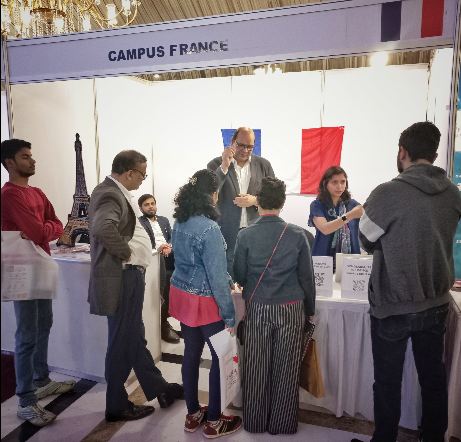
ISLAMABAD: France is to organise the 2nd edition of “Choose France Pakistan – Education Tour” in Lahore on October 17 and Karachi on October 19 Following the success of the First edition in Lahore and Islamabad, the “Choose France Pakistan – Education Tour” is back in 2023 to explore Lahore and Karachi. The programme includes wide range of fields such as management, engineering, humanities, finance, business and sciences.

Eleven top-notch French universities are part of the delegation, such as Sciences Po Paris, Centrale Nantes and EDHEC. “Choose France Pakistan – Education Tour” is a government initiative from France, organised by the French Embassy in Pakistan, Campus France Pakistan and their local partners, in order to promote studying in France.

The 2 Education fairs to be organised in Lahore (October 17) and Karachi (October 19) will give the opportunity to students to interact directly with the French universities, learn more about the 1700 programmes taught in English at the Bachelor and Master levels, and get details about the 183 scholarship programmes available for Pakistani students.

This year, 4 French business schools are part of the delegation. According to the latest Financial Times’ world rankings, French business schools are still topping the ranking.

For example, the four best Masters in Finance pre-experience 2023 are French; among the five best Masters in Management 2023, three are French, including the one ranked #1. For MBA and Executive education, a French institution is ranked in top position: INSEAD, an institution with a large alumni network in Pakistan.

During this “Choose France Pakistan – Education Tour”, French delegates will also visit Pakistani universities to discuss partnership opportunities to strengthen the academic cooperation between France and Pakistan in the area of business & management, sciences & engineering and social & political sciences.

Pakistan outclass Sri Lank in crucial World Cup match

Pak vs SL: Pakistan snatch victory from jaws of defeat

Rizwan’s 100 knock does it for Pakistan; highest ever run chase in any world cup match

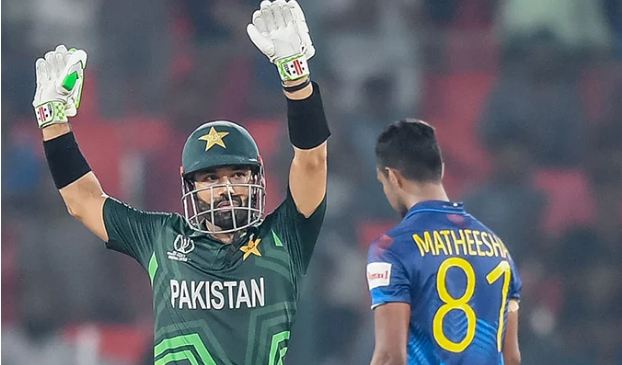
Hyderabad, OCT 10: Pakistan roared to a second successive win at the World Cup as they beat Sri Lanka by six wickets in Hyderabad on Tuesday, with Mohammad Rizwan and Abdullah Shafique starring impressing with the bat.

The Green Shirts also created history by chasing down 345 against Sri Lanka, overtaking Ireland to claim the record of the highest-ever run chase in the history of ODI World Cups.

Playing XIs

Sri Lanka: Pathum Nissanka, Kusal Perera, Kusal Mendis (wk), Sadeera Samarawickrama, Charith Asalanka, Dhananjaya de Silva, Dasun Shanaka (c), Dunith Wellalage, Maheesh Theekshana, Matheesha Pathirana, Dilshan Madushanka

Pakistan: Abdullah Shafique, Imam-ul-Haq, Babar Azam (c), Mohammad Rizwan (wk), Saud Shakeel, Iftikhar Ahmed, Mohammad Nawaz, Shadab Khan, Hasan Ali, Shaheen Shah Afridi, Haris Rauf

SC law interfered in court’s independence, observes Justice Ijaz

SC law interfered in court's independence, observes Justice Ijaz

CJP Justice Isa says we should not doubt intention of the Parliament

Special Correspondent

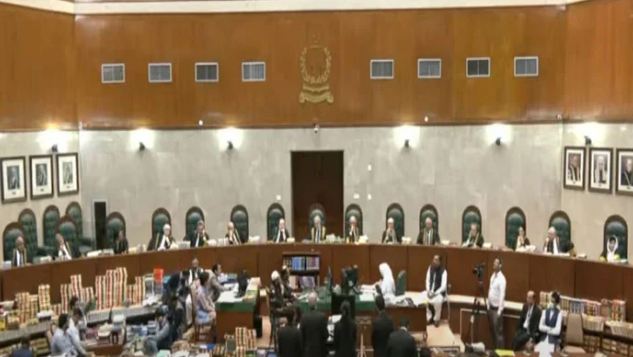
ISLAMABAD: Justice Ijaz Ul Ahsan of the Supreme Court on Tuesday remarked that an attempt was made to interfere in the independence of the apex court by enacting the Supreme Court (Practice and Procedure) Act 2023.

The observation from the top court judge came during the hearing of pleas challenging the SC law seeking to regulate the discretionary powers of the country’s chief judge.

Chief Justice of Pakistan (CJP) Qazi Faez Isa-led full-court bench consisting of all 15 judges of the Supreme Court including Justice Sardar Tariq Masood, Justice Ijaz Ul Ahsan, Justice Syed Mansoor Ali Shah, Justice Munib Akhtar, Justice Yahya Afridi, Justice Aminuddin Khan, Justice Sayyed Mazahar Ali Akbar Naqvi, Justice Jamal Khan Mandokhel, Justice Muhammad Ali Mazhar, Justice Ayesha A. Malik, Justice Athar Minallah, Justice Syed Hasan Azhar Rizvi, Justice Shahid Waheed and Justice Musarrat Hilali is hearing the case.

The hearing was broadcast live on state-run PTV.

In yesterday’s hearing, CJP Isa had observed that parliament passed the law with “good intentions”.

Today’s hearing began with Muttahida Qaumi Movement-Pakistan’s (MQM-P) lawyer Faisal Siddiqi’s arguments.

The counsel stated that he would base his arguments on two cases — the Baz Kakar case and the top court’s verdict on the Supreme Court (Review of Judgements and Orders) Act 2023.

He also shared that he would respond to Justice Malik’s query on the use of word law in Article 191.

However, when the lawyer tried responding to Justice Malik’s point he was intervened by Justice Ahsan which led to an exchange of words with CJP Isa.

Justice Ahsan had stated that he wanted to ask a question but CJP intervened and asked the lawyer to continue with his arguments which led to a smirk from Siddiqi.

“There is nothing to laugh about on this matter, we have been listening to the case for four full days and multiple cases are lined up for a hearing,” remarked CJP Isa.

“Everyone on the bench wants to ask questions but let the lawyer complete his arguments.”

The lawyer then stated that when the SC rules were being formulated the definition of law was written, adding that there was no ambiguity about what the word law meant.

“You want to say that the definition of law is written in the Supreme Court Rules,” asked Justice Akhtar.

However, this irked CJP Isa, who then asked the bench members to stop the questions and let the counsel complete the arguments first.

“Just explain what law means in Article 191,” persisted Justice Akhtar.

At this point, CJP Isa told Justice Akhtar that if he has already made up his mind then he can write it in the judgment.

However, Justice Akhtar responded that as a member of the bench, it was his “right to ask questions”.

“Obviously, you can ask questions, but first let the lawyer complete the arguments,” said CJP Isa.

“Sorry but my problem is my questions,” Justice Akhtar responded and asked the lawyer to answer his queries.

Interjecting the proceedings, CJP Isa turned to Siddiqi and told him that he was ignoring his directions and asked him to respond to questions after completing his arguments.

Moving on, Justice Ahsan asked the counsel to explain the word law, to which, the lawyer stated that it meant an act of parliament.

However, Justice Ahsan wondered why the Constitution states that the judiciary, executive and legislature are separate. He added that the law in question interfered with the independence of the Supreme Court.

“Was this act an interference in the matters of the Supreme Court yes or no?” asked Justice Ahsan.

Siddiqi stated in the negative and said that parliament cannot make laws that bar the Supreme Court from making its own rules.

“Parliament can supervise the Supreme Court,” said the lawyer.

But Justice Ahsan was of the view that supervision meant “controlling” the Supreme Court. But the lawyer responded by saying even that supervisory role is limited.

Moving on, Justice Minallah observed that the SC’s jurisdiction can be extended in line with a law and added that the only limitation related to the top court’s jurisidction was mentioned in “entry 55”.

Justice Shah asked the lawyer to explain as to how “entries” allowed to increase scope of Article 184(3) of the Constitution.

Responding to the judges’ queries, lawyer Siddiqui cited Lahore High Court (LHC) verdict saying parliament can legislate on increasing jurisdiction of the top court.

To which, the CJP inquired whether the LHC verdict on top jurisdiction was challenged in the Supreme Court.

The lawyer responded saying that the Competition Commission Act was challenged in the court and the verdict was also announced on the matter.

“This matter is currently pending before the Supreme Court,” the counsel added.

However, Justice Malik said the act in question was related to a provincial law and not a federal one.

After the hearing resumed following a brief break, MQM-P’s counsel continued his arguments.

Siddiqui said he wanted to present arguments on whether rules can be devised using an act of Parliament.

Justice Naqvi asked about the parliamentary record of the legislation on the act, which the court had sought from Attorney General Mansoor Usman Awan. Siddiqui said Awan himself could only respond regarding the record.

Addressing the MQM-P counsel, Justice Ahsan asked if it is possible to give the right to appeal under the Constitution.

“Right to appeal cannot be conferred by sub-constitutional legislation. I’m talking about the procedure because two wrongs don’t make a right,” he remarked.

Responding to the SC judge, Siddiqui said: “It has to be checked whether there is any restriction on giving the right to appeal in the Constitution or not.”

Justice Malik remarked that the word law has been used 400 times in the Constitution.

“Does Article 191 require the power to legislate and is different from the rest of the clauses?” she asked.

The apex court judge said that the Constitutional interpretation has to rely on some principle. “On which principle are you relying,” she inquired from Siddiqui.

In his response, the MQM-P lawyer suggested that the court should look into whether there can be an intra-court appeal in the Supreme Court or not, instead of delving into the details.

“[Right to] appeal has already been given in the Constitution,” Justice Madokhail said.

“Where in the Constitution is the Parliament given direct authority?” Justice Ahsan remarked.

The chief justice inquired if any political party had voted against the SC law.

Justice Minallah then questioned the principle of separation of powers pertaining to when the top court interferes with the parliament’s authority.

Justice Akhtar asked Siddiqui about the principle adopted regarding Article 191, which states that “subject to the Constitution and law, the Supreme Court may make rules regulating the practice and procedure of the court”.

Justice Shah said as long as a law does not affect fundamental rights, it can operate and added that a watchdog was present to check if any law is enacted against the Constitution.

Justice Akhtar inquired as to why parliament cannot repeal the Supreme Court’s rules.

“Parliament can completely abolish the SC rules if they are against the Constitution and the law,” Justice Shah remarked.

Justice Hilali said there are very limited Articles of the Constitution in which the word subject to law is used. “Whenever Article 184 (3) was invoked, the foundations of the entire country were shaken.”

She also questioned whether the SC rules should have changed over time.

“Is it not a constitutional mandate that the SC make its own practice and procedure?” Justice Malik asked.

She added that the apex court has created a system in which it regulates itself. “Why can’t all these issues be discussed by summoning a full court meeting?” Justice Malik raised the point.

Responding to a question posed by Justice Malik, the MQM-P counsel said: “No one is stopping the Supreme Court from making rules.”

After the MQM-P counsel concluded his arguments, Pakistan Bar Council (PBC) lawyer Haroon-ur-Rashid adopted arguments presented in favour of the law.

“Elevating Education: The Pursuit of Quality in Schools”

Sabahat Ali

Introduction

In an age characterized by rapid educational transformation, maintaining the highest standards of quality in schools becomes paramount. This article explores the critical aspects of ensuring quality education, drawing inspiration from the wisdom of great scholars and education experts.

The Holistic Approach to Quality

Scholars like Dr. Howard Gardner, renowned for his theory of multiple intelligences, have emphasized that true quality in education goes beyond mere academic achievements. Gardner asserts that schools should strive to foster a diverse range of intelligences and skills in students, such as creativity, empathy, and problem-solving abilities. This holistic approach ensures that students develop into well-rounded individuals equipped to thrive in an ever-changing world.

Teacher Well-Being and Professional Growth

Education luminaries such as Dr. Linda Darling-Hammond have long championed the cause of teacher well-being and professional development. They argue that teachers are the backbone of the education system and must be supported through continuous learning opportunities, adequate resources, and fair compensation. When educators are motivated and empowered, they can deliver the highest quality of education to their students.

Engaging Parents and Communities

Dr. James P. Comer, a prominent child psychiatrist and educator, has advocated for the involvement of parents and communities in the educational process. He believes that building strong partnerships between schools, parents, and local communities is essential for creating a nurturing and enriching learning environment. When parents and communities actively participate in education, students benefit from a network of support that extends beyond the classroom.

Real-Life Success Stories

Throughout history, countless success stories validate the importance of quality education. Individuals like Dr. Mae Jemison, the first African American woman in space, attribute their achievements to the exceptional education they received. Dr. Jemison’s journey from a small-town school to the stars exemplifies how quality education can unlock limitless potential.

Collective Responsibility for Excellence

Scholars and educators alike stress that ensuring quality education is a collective responsibility. Dr. Paulo Freire, known for his work in critical pedagogy, believed that education should be a collaborative effort between teachers, students, and society. This shared responsibility extends to policymakers, who must create an enabling environment that supports educational excellence.

Conclusion

In an ever-evolving educational landscape, the pursuit of quality in schools remains a timeless mission. Great scholars and education experts have illuminated the path forward, emphasizing the holistic nature of education, the well-being of teachers, the engagement of parents and communities, and the shared responsibility of all stakeholders. By drawing inspiration from their insights and success stories, we can continue to elevate education, nurturing generations of well-rounded, empowered, and globally-minded individuals who will shape the future.

[email protected]

Workers’ remittances to Pakistan plunges 11.3% on YoY basis

Workers’ remittances to Pakistan plunges 11.3% on YoY basis

KARACHI, Oct 10 (DNA): In a positive turn of events for Pakistan, the
country has witnessed a significant increase in workers’ remittances
during September 2023.

According to the latest data released by the State Bank of Pakistan
(SBP), remittances surged by 5.34% on a month-on-month (MoM) basis,
reaching a total of $2.21 billion, compared to $2.09 billion in the
previous month.

This boost in remittances is attributed to several key factors,
including improved transparency and the implementation of stringent
measures against dollar smuggling. These initiatives have helped create
a more secure and regulated environment for remittance transactions.

However, on a year-on-year (YoY) basis, there has been an 11.3% decline
in workers’ remittances for September, compared to $2.49 billion
received in the same month last year. This decline is indicative of the
challenges faced by the Pakistani diaspora and the evolving economic
landscape.

The majority of remittances during this period originated from various
source countries. Saudi Arabia led the way, contributing $538.16
million, followed by the UAE with $399.77 million, the U.K. with $311.06
million, EU countries with $269.25 million, and the USA with $263.42
million. These source countries continue to play a pivotal role in
supporting Pakistan’s economy through remittance inflows.

Looking at the cumulative figures for the first three months of the
fiscal year 2023-24 (3MFY24), Pakistan received a total of $6.33 billion
in remittances.

While this is a significant amount, it represents a 19.85% decrease
compared to the $7.9 billion received during the same period in the
previous fiscal year (3MFY23). The decline underscores the ongoing
challenges and fluctuations in remittance trends.

It’s worth noting that the drop in remittances during the previous month
was primarily due to a growing disparity between official and unofficial
exchange rates. Many non-resident Pakistanis opted to use unofficial
channels, which offered a higher exchange rate per dollar, contributing
to this decline.

In response to these challenges, the Pakistani authorities, led by the
army, initiated crackdowns against speculators, hoarders, and smugglers
to curb illegal dollar outflows. This has led to a strengthening of the
Pakistani Rupee (PKR) against the U.S. Dollar (USD) in the official
market.

Furthermore, the State Bank of Pakistan (SBP) introduced reforms aimed
at consolidating and transforming various types of exchange companies
into a single category with stricter regulations and higher capital
requirements. These reforms are enhancing transparency within the
remittance industry and strengthening regulatory oversight.

As part of these measures, SBP suspended the authorization of four
exchange companies in September, underscoring the central bank’s
commitment to enforcing regulatory standards and ensuring the security
of remittance transactions. DNA

France to hold education tour in Lahore, Karachi

Study Abroad

LAHORE, OCT 10 /DNA/ – Following the success of the First edition in Lahore and Islamabad, the “Choose France Pakistan – Education Tour” is back in 2023 to explore Lahore and Karachi. The programme includes wide range of fields such as management, engineering, humanities, finance, business and sciences. Eleven top-notch French universities are part of the delegation, such as Sciences Po Paris, Centrale Nantes and EDHEC.

“Choose France Pakistan – Education Tour” is a government initiative from France, organised by the French Embassy in Pakistan, Campus France Pakistan and their local partners, in order to promote studying in France.

The 2 Education fairs to be organised in Lahore (October 17) and Karachi (October 19) will give the opportunity to students to interact directly with the French universities, learn more about the 1700 programmes taught in English at the Bachelor and Master levels, and get details about the 183 scholarship programmes available for Pakistani students.

This year, 4 French business schools are part of the delegation. According to the latest Financial Times’ world rankings, French business schools are still topping the ranking. For example, the four best Masters in Finance pre-experience 2023 are French; among the five best Masters in Management 2023, three are French, including the one ranked #1. For MBA and Executive education, a French institution is ranked in top position: INSEAD, an institution with a large alumni network in Pakistan.

During this “Choose France Pakistan – Education Tour”, French delegates will also visit Pakistani universities to discuss partnership opportunities to strengthen the academic cooperation between France and Pakistan in the area of business & management, sciences & engineering and social & political sciences.

Did you know?

Campus France is a French public organisation under the umbrella of the French ministry of Higher Education and Research and the French ministry for Europe and Foreign Affairs, which provide official and free counseling and support to the international students who are looking forward to pursuing higher studies in France. In Pakistan, Campus France is officially represented in Islamabad and Lahore; the office in Karachi is to be opened in 2024. To contact Campus France Pakistan, visit the website https://www.pakistan.campusfrance.org/ or send an email to [email protected]

List of French universities:

– Sciences & Engineering: EPITA, ESTP, Centrale Nantes, IMT Atlantique, Université de Nantes/Polytech Nantes

– Business & Management: EDHEC, ESDES, IESEG, KEDGE

– Social sciences & humanities: Sciences Po Paris

Practical information:

Schedule of the Education fairs:

Lahore on 17 October at FAST-NUCES campus, from 1.00 pm to 6.00 pm

Karachi on 19 October at Avari Towers Hotel, from 1.00 pm to 6.00 pm

For more information on Choose France Pakistan #2 and to register to the fair: https://view.genial.ly/64d46de6ce4146001a453352/guide-french-universities-info.

FM Jilani arrives Azerbaijan to attend COM-ECO

FM Jilani arrives Azerbaijan to attend COM-ECO

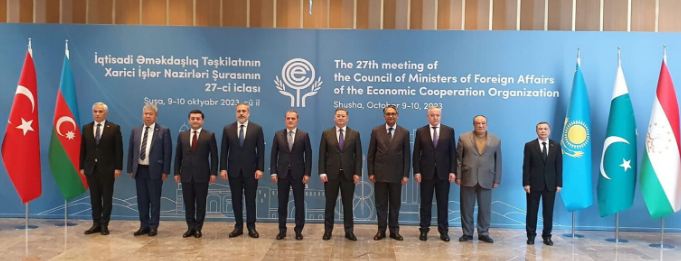
ISLAMABAD, Oct 10 (DNA): Caretaker Foreign Minister Jalil Abbas Jilani on Tuesday arrived in Shusha, Azerbaijan to attend the 27th Meeting of Council of Ministers (COM) of the Economic Cooperation Organization (ECO).

Foreign Minister Jilani will address the Council of Ministers (COM) and hold bilateral meetings with participating ministers of member states and other dignitaries on the sidelines of the event, the Foreign Office Spokesperson said in an earlier press statement.

At the 27th COM, the member states will discuss the promotion of sustainable economic development of the ECO region through trade and economic cooperation and mutual assistance in social, cultural, technical and scientific fields. The Theme of this year’s event is “Green Transition and Interconnectivity”.

As the policy-making forum of the ECO, the Council of Ministers approves the decisions and the annual work plan of the Organization, it was added.

As a founding member, Pakistan remains strongly committed to ECO’s aims and objectives and has remained at the forefront of all major ECO initiatives/agreements such as the ECO Trade Agreement (ECOTA) and the ECO Transit Transport Framework Agreement (ECOTTFA), the spokesperson said.

ECP, political parties to discuss election code of ethics on Wednesday

ECP

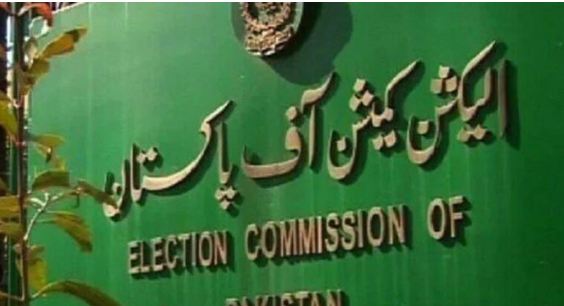
ISLAMABAD, Oct 10 (APP/DNA): The Election Commission of Pakistan (ECP) and various political parties are set to meet at the ECP secretariat on Wednesday to discuss the draft code of conduct for the upcoming general elections.

According to an ECP official, the Election Commission had previously held an initial consultative session with political parties to deliberate on various election-related issues.

In preparation for the upcoming meeting, the ECP has provided political parties with an initial code of conduct. This draft is expected to be an essential component in the final preparations for the upcoming general elections.

The ECP has already distributed a preliminary code of conduct to political parties, and this draft is anticipated to play a crucial role in the final arrangements for the upcoming general elections.

The draft code of conduct highlights the significance of political parties, candidates, and election agents in safeguarding the rights and freedoms of the people of Pakistan, as guaranteed by the Constitution and the law.

Furthermore, it cautions against engaging in actions or expressing views that might jeopardize Pakistan’s ideology, sovereignty, integrity, security, or the independence of its judiciary.

Additionally, the draft code imposes limitations on public officeholders, including the president and prime minister, preventing them from involvement in any capacity in election campaigns.

According to an ECP official, a copy of the draft Code of Conduct has been dispatched to political party leaders to allow them to offer their input during the consultation process. Additionally, the draft Code of Conduct can also be accessed on the Election Commission’s website at www.ecp.gov.pk.

How Hamas Stunted Israel?

How Hamas Stunted Israel?

By Qamar Bashir

In the early days of October 2023, an unprecedented escalation of conflict between Hamas and Israel occurred, marked by a large-scale invasion and offensive launched by Palestinian militant groups from the Gaza Strip against Israel’s Southern Borders. This significant attack, named “Operation al-Aqsa Storm,” was a historic event as it marked the first direct conflict within Israel’s boundaries since the 1948 Arab–Israeli War.

What made this offensive particularly stunning was not only its surprise factor but also the fact that it caught not only Israelis, known for their world-class, well-equipped, and highly efficient surveillance and intelligence systems, off guard but also the entire world. The Israeli-Palestinian conflict is closely monitored due to its potential to disrupt peace in the Middle East, a region crucial for global oil supply. The fear of oil supply disruption and its potential to drive up oil prices, thus impacting economies worldwide, especially vulnerable ones like Pakistan, added an extra layer of concern to this already volatile situation.

The audacious and deadly maneuver executed by Hamas has also raised questions about the effectiveness of Mossad, Israel’s renowned intelligence agency, which is traditionally considered one of the world’s most formidable agencies, specializing in counterterrorism, covert operations, and intelligence collection. Often compared to counterparts like the CIA (United States), MI6 (United Kingdom), and FSB (Russia), Mossad’s inability to anticipate and prevent the surprise attack by Hamas was a notable surprise not only for Israel but also for other global intelligence agencies with a significant presence in the conflict-prone Middle East.

This unprecedented military maneuver involved a clever transformation of civilian machinery such as bulldozers, hang gliders, and motorbikes, effectively challenging the Middle East’s most potent army. It marked a significant breach in Israel’s defenses, the most serious since the Arab-Israeli conflicts of 1973. Hamas achieved this through two years of strategic subterfuge, concealing its military plans and convincing Israel that it had no intention of engaging in a major confrontation.

While Israel believed it was pacifying a war-weary Hamas through economic incentives for Gazan workers, the group was covertly and effectively preparing its fighters. This preparation took place in plain sight but under the guise of not being ready for a conflict. Hamas employed unconventional and untraceable intelligence tactics, leading Israel to underestimate its strength and resilience. The result was a shocking and sudden assault that caught Israel off guard, resulting in 700 Israeli casualties and dozens of abductions. Major Nir Dinar, spokesperson for the Israeli Defense Forces, described this surprise move as “Israeli 9/11,” admitting that they had been caught completely unaware.

In the lead-up to this audacious maneuver, Hamas constructed a mock Israeli settlement in Gaza for training purposes. Even many Hamas leaders were kept in the dark about the exact plans, and the 1,000 fighters involved had no clear understanding of the exercises’ true purpose. The operation was divided into four parts: an initial barrage of 3,000 rockets fired from Gaza, simultaneous incursions by fighters using hang gliders and motorized paragliders, the securing of terrain by ground troops, and the breach of fortified barriers using explosives and motorbikes. Bulldozers were employed to widen gaps, and commando units attacked key Israeli military installations, disrupting communications.

 The final phase involved moving hostages to Gaza, a task largely achieved early in the attack. One such high-profile hostage-taking incident occurred during a raid on party-goers near Gaza, with social media footage capturing the chaos as people fled the scene amid gunshots.

Hamas’ remarkable ability to maintain the secrecy of its unconventional warfare capabilities until it unveiled them in a decisive manner and the biggest below to the invincibility of Israel. The speed, precision, and serenity with which Hamas militants breached the Gaza-Israel barrier, penetrated the Gaza border crossings into Israeli settlements and military installations, and launched over 5,000 rockets into Israel within just 20 minutes were indeed remarkable.

The Hamas’ “Operation Al-Aqsa Storm,” can be attributed to several factors. Firstly, it highlights Hamas’ perception of Israeli actions as desecration of the holy Islamic site, the Al-Aqsa Mosque. Additionally, the increasing trend of Arab states normalizing relations with Israel, as exemplified by the 2020 Abraham Accords involving the UAE, Bahrain, Sudan, and Morocco. This trend is a cause for concern among Palestinians, as it reduces pressure on Israel to reach a settlement with them and signals a prioritization of peace with Arab states over peace with the Palestinians.

Hamas, while not recognizing Israel, has indicated it would observe a truce if Israel withdrew to its 1967 borders, but skepticism remains about Israel’s willingness to do so, especially if Saudi Arabia were to conclude its own deal with Israel. Furthermore, the timing of the attack is significant as it coincides with the 50th anniversary of the Yom Kippur or Ramadan War in 1973, potentially symbolizing the aspiration of surprising Israel, as Egypt and Syria did back then.

The trajectory of the conflict remains uncertain. There are concerns about Hezbollah’s involvement in Lebanon, depending on Iran’s stance, and the potential for Palestinian militants in the West Bank to launch their own attacks, creating a third front against Israel. Moreover, there is the possibility of attacks on Jewish Israelis by Arab Israelis living in Israel, leading to a fourth front.

The Israeli response to this unprecedented attack on Israeli Soil is  surely going to be robust, devastating and exemplary. The Israeli Prime Minister Benjamin Netanyahu warned Israelis to brace themselves for a long and difficult war on Sunday (8th October). It responded with huge strikes on cities in the blockaded Gaza Strip, destroying dozens of buildings. The Israeli military said it had called up an unprecedented 300,000 reservists and was imposing a total blockade of the Gaza Strip, signs it could be planning a ground assault there to defeat Hamas after it launched a humiliating attack. In a further signal of Israel’s rapid shift on to a war footing, a cabinet member from Prime Minister Benjamin Netanyahu’s Likud Party said it could set up a national unity government joined by opposition leaders within hours.

The recent assault has led to a significant and devastating impact on both sides, with no clear resolution in sight. President Joe Biden has pledged support for Israel, indicating that Israel is likely to face these challenges with strong backing. However, Israeli actions in Gaza may be constrained by the fact that some Israeli citizens have been kidnapped by Hamas militants and taken to Gaza.

The conflict has the potential to impact global markets and economies in several ways. One significant concern is the potential for disruptions in oil prices and supply chains, which can have far-reaching consequences. The Middle East is a critical region for oil production, and any instability in the area can lead to increased oil prices, affecting not only energy costs but also the global economy.

Moreover, the conflict’s disruption of supply chains and movement of essential commodities can exacerbate global supply shortages and inflationary pressures. As transportation routes are affected and infrastructure damaged, the flow of goods can be impeded, leading to delays and increased costs for essential products. This, in turn, can lead to rising commodity prices, making basic necessities more expensive for consumers around the world.

Weak economies, like Pakistan and others in the region, may face additional challenges as they grapple with the impact of higher oil prices and disruptions in the supply chain. These countries may experience increased costs for imports, which can strain their already fragile economic situations and potentially lead to balance of payments issues and inflation.

This conflict once started is not going to go down any time soon. For Israel, going full scale against Hamas will be an uphill task as indiscriminate Israeli bombing would put the lives of the Palestinian mostly civilians at greater risk creating worldwide reaction against civilian killings.  Balancing a robust response with concerns about international opinion remains a challenge for Israel, though Western governments have largely expressed support for Israel in the current conflict. Ultimately, this situation underscores the need for Israel to develop a comprehensive policy to manage the possible opening of war fronts with Hamas, Alfatah, Hezbollah and its own citizens of Arab origin.

While Hamas justifies its attacks by citing the 16-year blockade of Gaza and Israeli crackdowns in the West Bank, Israel and Western countries have condemned the mass killing of civilians. The situation has jeopardized efforts to normalize relations between Israel and Saudi Arabia, which could have had implications for Palestinian aspirations and Iran’s influence in the region. As the conflict continues, there are growing questions about Israel’s intelligence failures and the fate of Israeli hostages, further complicating the path to a resolution.

By Qamar Bashir

Former Press Secretary to the President

Former MD, SRBC,

Former Minister Press, Embassy of Pakistan to  France

Stay Connected

64FansLike
60FollowersFollow

Latest Reviews

Exchange Rates

USD - United States Dollar
EUR
1.17
GBP
1.35
AUD
0.72
CAD
0.73