Home Blog Page 1155

Pakistan highlights Kashmir’s UN Resolutions at ISC Roundtable

Pakistan highlights Kashmir's UN Resolutions at ISC Roundtable

ISLAMABAD, OCT 11 /DNA/ – India Study Centre (ISC) at the Institute of Strategic Studies Islamabad (ISSI) hosted a roundtable discussion with Ambassador Yousef Aldobeay, Special Envoy of the OIC Secretary General for Jammu and Kashmir/ Assistant Secretary General for Political Affairs. Dr. Khurram Abbas, Director ISC in his introductory remarks welcomed the delegation and highlighted OIC’s consistent support to Pakistan’s stance on Jammu and Kashmir dispute. He said OIC has always raised a strong voice for the people of Jammu & Kashmir.

Other participants included Mr. Ghulam Muhammad Safi, Former Convener of All Parties Hurriyat Conference (APHC); Ms. Farzana Raqoob, former Minister Azad Jammu and Kashmir; Mr. Altaf Hussain Wani, Chairman of Kashmir Institute of International Affairs; Ambassador Syed Abrar Hussain, former Ambassador of Pakistan and Vice Chairman of Academics IPS; Advocate Nasir Qadri, Chairman of Legal Forum for Kashmir; Sheikh Abdul Mateen, Member, APHC; and academics and young university students.

DG ISSI Ambassador Sohail Mahmood warmly welcomed the delegation and emphasized how Pakistan has been playing a crucial role as a founding member of OIC. Expressing deep concern over the current Palestinian situation, Ambassador Sohail Mahmood stressed that Palestine and Kashmir were two of the oldest disputes on the agenda of the UN Security Council. Both disputes related to the inalienable right of self-determination. And both remain unresolved due to the obstinacy of the occupying powers. He added that the OIC had consistently and unequivocally supported the Kashmiri right to self-determination as per the UN Security Council resolutions. Highlighting the dire human rights situation in IIOJK, he particularly emphasized that the world was seeing the implementation of a sinister design aimed at changing  the demographic structure of the occupied territory, which was a violation of international law and the 4th Geneva Convention. He urged the delegation to implement the OIC Plan of Action on Jammu and Kashmir that was adopted during the 48th Council of Foreign Ministers in March 2022 in Islamabad and the OIC resolutions on Jammu & Kashmir dispute adopted over time.

Speical Envoy Ambassador Yousef Aldobeay underlined that there was a dire need to raise awareness regarding the Jammu and  Kashmir dispute that concerns Muslims around the world. He reafrirmed OIC’s abiding support for the Kashmir cause and added that the OIC had never supported India’s illegal actions in the occupied territory. He reiterated OIC’s demand that the steps taken by the Indian government on 5 August 2019 be reversed. Ambassador Yousef added that Pakistan was looked at as a leading country in the Muslim world and it had played a pivotal role in securing  the UN resolution on combating Islamophobia.

The participants shared their perspectcives on a wide range of aspects, including the historical, legal, human rights and humanitarian, and peace and security dimensions of the Jammu and Kashmir dispute. They enumerated details of Indian atrocities and the effect of human rights abuses and illegal detentions on families and communities. Stressing that the OIC should emphasize to the world community the need for alleviating the sufferings of the Kashmiris under occupation, the participants presented specific recommendations on advancing the Kashmir cause in the political, diplomatic and legal domains. The participants also stressed the importance of proactively pursuing the United Nations for the realization of the Kashmiris’ right to self-determination.

Chairman BoG ISSI Ambassador Khalid Mahmood concluded the session while appreciating the OIC’s historical and steadfast support for the people of Jammu and Kashmir.=DNA

============

BREAKING: Bill limiting CJP powers ‘sustained’ with 10-5 majority

BREAKING: Bill limiting CJP powers ‘sustained’ with 10-5 majority

Special Correspondent

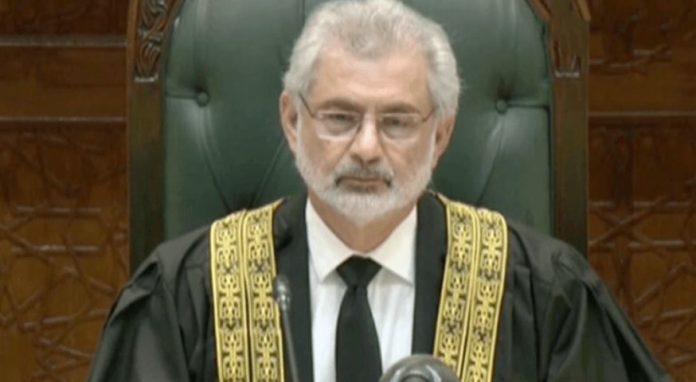
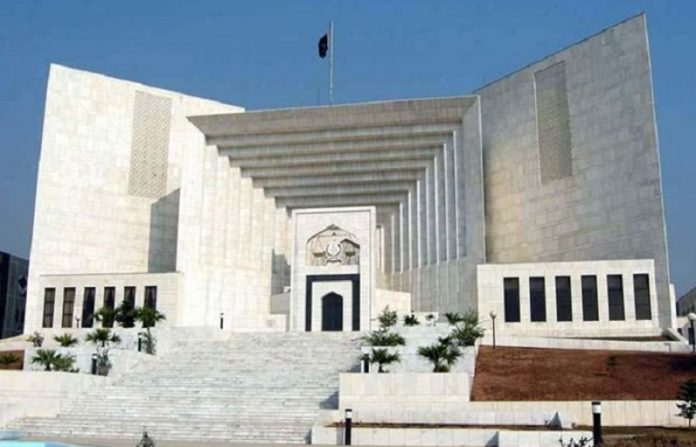
ISLAMABAD: The Supreme Court of Pakistan has struck down the Parliament Act regarding Supreme Court Practice and Procedures. The court said the Parliament overstepped its jurisdiction while making such a law. The court announced this verdict by a majority verdict. 10 judges voted against the Act of Parliament while 5 judges supported the Act.

Earlier, the Chief Justice of Pakistan (CJP) Qazi Faez Isa on Wednesday said the Parliament was not an enemy of the Supreme Court and both institutions could function simultaneously, citing the phrase “live and let live”.

“The world moves forward together, not antagonistically,” the apex judge said.

He passed these remarks while heading the full court bench, consisting of all 15 judges of the top court, hearing a set of petitions challenging the Supreme Court (Practice & Procedure) Act, 2023. The proceedings, like all the previous times, are being streamed live on television.

Headed by CJP Isa, the bench consists Justice Sardar Tariq Masood, Justice Ijazul Ahsan, Justice Syed Mansoor Ali Shah, Justice Munib Akhtar, Justice Yahya Afridi, Justice Aminuddin Khan, Justice Sayyed Mazahar Ali Akbar Naqvi, Justice Jamal Khan Mandokhel, Justice Muhammad Ali Mazhar, Justice Ayesha A. Malik, Justice Athar Minallah, Justice Syed Hasan Azhar Rizvi, Justice Shahid Waheed and Justice Musarrat Hilali.

The practice and procedure law, which was passed by parliament in April, requires a committee of three senior judges to form benches for constitutional matters and suo motu notices.

It has been seen by the petitioners as an attempt by the government to curtail the chief justice’s powers.

In April, the Supreme Court, then led by former chief justice Umar Ata Bandial, barred the government from implementing the law until the petitions challenging it were decided.

At the previous hearing, an exchange between judges and counsel hinted at the disquiet among judges over the court’s workings.

Justice Ijazul Ahsan observed that when the parliament makes a law to interfere in the internal workings of the apex court, the insulation provided to the Supreme Court by being empowered to manage its inner workings goes away, and it opens gates for interference.

Besides, no law can be struck down on the grounds of the floodgates argument, but by the exclusion of cases and in view of the very small number of Article 184(3) cases, the dangers of the floodgates argument are substantially reduced, he said.

After the proceedings adjourned, Advocate Uzair Bhandari requested the CJP to include the names of the associates in the attendance sheet. “Only on condition that the lawyer furnishes an affidavit stating his associates have been remunerated appropriately,” said CJP Isa.

The hearing At the outset of the hearing today, Attorney General for Pakistan (AGP) Mansoor Usman Awan presented his submissions. He said his arguments would be based on the government’s written response submitted in court.

“You are saying you not repeat the arguments but will highlight them,” the CJP said here, to which Awan stated that he would talk about the independence of the judiciary and Article 191 of the Constitution.

Article 191 (Rules of procedure) states: “Subject to the Constitution and law, the Supreme Court may make rules regulating the practice and procedure of the Court.”

The AGP added that three questions were raised during the proceedings on the matter in discussion and he would respond to them. He said Article 191 did not take away the Parliament’s right to legislate.

“Parliament has given the judiciary its independence but has also not limited its right to legislate,” Awan said.

Here, Justice Akhtar recalled that before 1973, changes to SC rules were conditional to the permission of the governor general or president.

For his part, the AGP said there were no restrictions on the Parliament amending rules under Article 191.

“Are you saying that there are no restrictions on the Parliament amending rules formulated by the SC?” Justice Ahsan asked. “So are there no restrictions on SC amending laws created by the Parliament?”

Awan replied that the Parliament was the institution that created laws. He further stated that if the number of pending cases in the apex court crossed 70,000 a need may arise to create another law.

Meanwhile, Justice Naqvi asked if the AGP had brought the record of the number of parliamentarians who had debated on the practice and procedure law. “It is present on the website,” Awan replied.

At one point, CJP Isa said institutions should be “pitted against each other” and there should be mutual respect among them.

“In my opinion, the Parliament respected the SC. If it wanted, the Parliament could have taken another step which it did not. I believe that step was not taken because the Parliament trusts us,” he said.

The top judge further stated that the scope of the matter should not be widened. “Parliament is not our enemy neither does it consider us enemies. Both can be run simultaneously,” he said.

“The world is moving forward while we are going backwards. There are a number of challenges that we are seeing, including climate change,” Justice Isa added and cited the phrase “live and let live”.

He then instructed the AGP to focus on the attack on the Constitution.

Resuming his submissions, Awan said the Constitution did not recognise any convention but didn’t recognise customs or usages having the force of law.

However, Justice Akhtar stressed that the Constitution has to be read on the premise that there have to be constitutional conventions.

For his part, the AGP said the Constitution never acknowledged the CJP as the “master of the roster”. Here, Justice Isa interjected and asked about the genesis of the term and whether it was even used today. Awan replied that the term came from the colonial British times.

The CJP again questioned if such a term existed in Islamic history and criticised the dependence on “colonial masters”.

At one point, Justice Akhtar said that the master of the roster committee, under the new law, would do the same work that the CJP used to do. If you don’t want to give the power to one judge, why give it to three judges, he asked.

“If any CJP has not given the power to full court in the past, then you do it,” the judge remarked.

On the other hand, Justice Ahsan said the foremost question was whether the Parliament was competent and the second was that if the Parliament was competent, some provision of the law inconsistent with the Constitution could be struck down.

“You would have to take us to each provision and justify that it is not in conflict with any provision of the Constitution,” he added, asking the AGP to proceed.

Meanwhile, the CJP said that it wasn’t acceptable that the Parliament was restricted while the SC kept taking decisions, recalling that orders have been passed in the past where judges were restrained from being a part of benches.

Justice Isa expressed displeasure that this was, however, not being discussed by anyone from the petitioners’ side.

“The time has come for the country to move forward. The way courts are used, as they say, ‘misuse of due process’. Guns are being fired from our shoulders and martial laws have been endorsed,” the top judge said.

Institutions, Justice Isa continued, were not perfect but they should be developed and respected. “But anyone who talks about betterment, they are reprimanded,” he said.

“Keep a balanced approach, you are the Attorney General for Pakistan. At the moment, you are an officer of the court, not just representing the government’s approach, because there is no government in the sense that there is a caretaker government and a neutral set-up now,” the CJP told Awan.

The judge added that there was a difference between the government and Parliament.

During the hearing, the AGP revealed the details of judgments taken under Article 184(3) and their outcomes. He said Steel Mills had record losses of Rs206 billion since June 2022.

“Are you trying to say that all this happened because of SC’s action?” CJP Isa asked while Justice Naqvi stated a chargesheet should not be made against the apex court.

“Why are we so scared of listening to the truth?” the top judge said.

On the other hand, Justice Afridi asked what the AGP wanted from the chargesheet. “Do you want us to call the practice and procedure law lawful through the doctrine of necessity?”

Here, the CJP once again questioned, “Why are we scared of criticism”.

Separately, Justice Akhtar reprimanded the AGP and said: “This is not a debate society neither are we sitting here to listen to your lectures.”

British HC Jane Marriott celebrates 40th anniversary of Chevening scholarships

British HC Jane Marriott celebrates 40th anniversary of Chevening scholarships

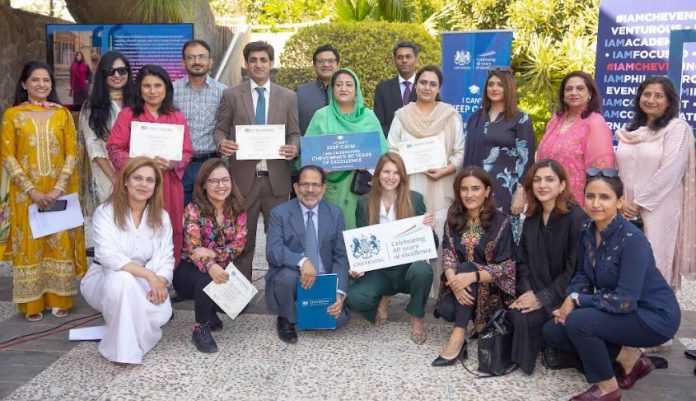
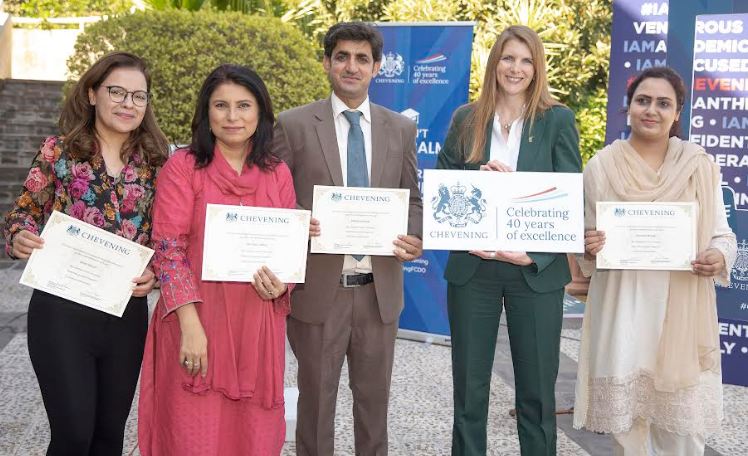
ISLAMABAD, OCT 11 /DNA/ – Some of the 2,000 Chevening alumni from across Pakistan have been brought together to commemorate the 40th anniversary of the UK’s flagship higher education scholarship.

At a special reception hosted by British High Commissioner Jane Marriott CMG OBE, scholars and fellows who have benefitted from the scheme paid tribute to the ‘life-changing’ programme.

British High Commissioner, Jane Marriott CMG OBE, said:

“It has been a privilege to host so many brilliant minds working in different sectors, united by their shared Chevening story. Days like today showcase the true value of Chevening – the journey does not stop on the completion of studies. Over 40 years, we have developed a global network of over 50,000 alumni, many of whom play key leadership roles in their countries.”

Chief data and strategy officer Jazz, Ali Naseer said:

“It’s been 25 years since my Chevening year, but it remains a pivotal moment for me. It showed me various ways to aid Pakistan’s growth. Even outside the public sector, I believe my efforts still make a significant impact.”

Health management expert, Dr Huma Qureshi said:

“Chevening helped me combine management and clinical expertise, enhancing performance in the health field. Thank you, Chevening!”

Applications for Chevening scholarships to study in the UK are open between 12 September and 7 November 2023 – applications can be made on the Chevening website www.chevening.org. The scholarships are fully funded, including fees, flights, visas, accommodation and some spending money. 

US donates 100 birthing stations to Sindh

US donates 100 birthing stations to Sindh

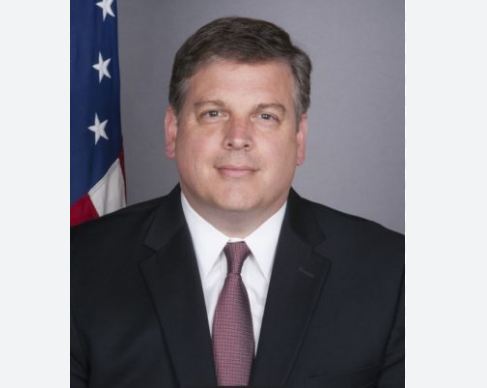
U.S. Ambassador Donald Blome at a Ceremony to Present Healthcare Equipment to Community Midwives

Sindh Rural Support Organization Office, Sukkur

KARACHI, OCT 11: /DNA/ – Thank you so much for your kind invitation to be here today.  This is my fourth trip to Sindh since last year’s floods.  Health care services were hit hard, with disproportionate effects on women and children.  Despite the progress that has been made to rebuild the affected areas, many people are still feeling the effects of those devastating floods.

My message today is this:  the United States is still here, still working.  We are committed to you and the work you do to improve the health of women and children.

And I in particular want to commend the heroic work of community midwives.  Your expertise saves lives.  You are the reason we’ve seen a reduction in maternal and infant mortality here in the province.

Many of you had your clinics, service rooms, equipment, and supplies damaged or destroyed in the floods.  We all owe it to you – and the women, families, and communities you serve — to ensure that you have the facilities and equipment you need to conduct this vital work.

Too often, the provision of maternal and child health services is concentrated in urban areas, leaving rural communities underserved. Today I’m announcing that the United States is providing 100 birthing stations and essential equipment to communities affected by last year’s devastating floods.

My hope is that these new birthing stations will improve access to skilled birthing attendants, maternal healthcare, and delivery services.

Thank you for the critical, lifesaving work that you do.  The United States supports you in your efforts to build a brighter and healthier future for the women and children of Sindh.

Faysal Bank to offer State Life Window Takaful Operations at its branches

DNA

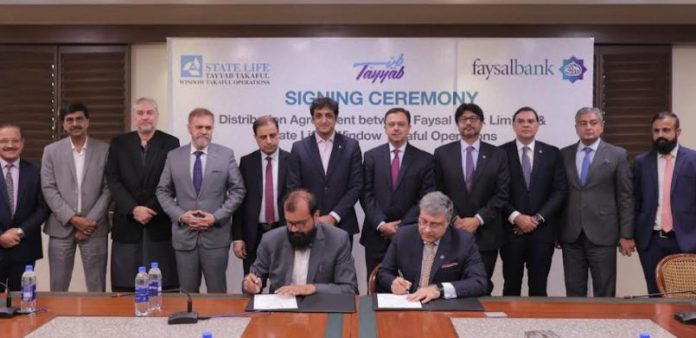
Islamabad, OCT 11: In a recent ceremony hosted at the State Life Insurance Corporation of Pakistan (SLIC) Head Office – Window Takaful Operations of SLIC formalized a Distribution Agreement with Faysal Bank Limited (FBL). The agreement signing ceremony was witnessed by Mr. Yousaf Hussain, President and CEO of FBL, and Mr. Shoaib Javed Hussain, CEO of SLIC. Mr. Ahmed Anwar Hemani, Head of Institutional Sales & Wealth Management of FBL, and Mr. Tariq Saeed Chaudhry, Chief Takaful Officer of SLIC, signed the agreement while Mr. Jaudat Hussain, Head of Retail Banking FBL, and Mr. Muhammad Izqar Khan Executive Director of SLIC and senior officials from both organizations were also present. 

This Distribution Agreement signifies that State Life’s Takaful product, particularly the State Life Tayyab Takaful Endowment Plan, will now be accessible to all FBL customers at every FBL branch across the country.

Mr. Yousuf Hussain, the CEO of FBL, stated at the ceremony, “Our partnership with State Life for their Takaful Endowment Plan is, in fact, an important addition to our long list of initiatives. Moreover, this Agreement will provide yet another benefit to our valued customers who are an integral part of our rapidly growing Bank. This Agreement will also enable our business community to know about the products, services, and opportunities we keep on tailoring for them”.

Mr. Shoaib Javed Hussain, the CEO of SLIC, stated at the ceremony, “I am pleased to announce this partnership between two prominent organizations in Pakistan. This joint effort reflects a shared commitment to enhancing inclusive financial protection across diverse segments of Pakistani society, aligning the common vision of fostering economic activities and promoting a savings culture in the country. The collaboration brings benefits of best-in-class savings and protection products to Faysal Bank’s valued customers and represents a significant step towards offering Shariah-compliant Takaful solutions to the people of Pakistan.”

‘Live and let live’: CJP Isa says SC and Parliament not enemies, can co-exist as proceedings wrap up

CJP

ISLAMABAD, OCT 11: Chief Justice of Pakistan (CJP) Qazi Faez Isa on Wednesday said the Parliament was not an enemy of the Supreme Court and both institutions could function simultaneously, citing the phrase “live and let live”.

“The world moves forward together, not antagonistically,” the apex judge said.

He passed these remarks while heading the full court bench, consisting of all 15 judges of the top court, hearing a set of petitions challenging the Supreme Court (Practice & Procedure) Act, 2023. The proceedings, like all the previous times, are being streamed live on television.

Headed by CJP Isa, the bench consists Justice Sardar Tariq Masood, Justice Ijazul Ahsan, Justice Syed Mansoor Ali Shah, Justice Munib Akhtar, Justice Yahya Afridi, Justice Aminuddin Khan, Justice Sayyed Mazahar Ali Akbar Naqvi, Justice Jamal Khan Mandokhel, Justice Muhammad Ali Mazhar, Justice Ayesha A. Malik, Justice Athar Minallah, Justice Syed Hasan Azhar Rizvi, Justice Shahid Waheed and Justice Musarrat Hilali.

The practice and procedure law, which was passed by parliament in April, requires a committee of three senior judges to form benches for constitutional matters and suo motu notices.

It has been seen by the petitioners as an attempt by the government to curtail the chief justice’s powers.

In April, the Supreme Court, then led by former chief justice Umar Ata Bandial, barred the government from implementing the law until the petitions challenging it were decided.

At the previous hearing, an exchange between judges and counsel hinted at the disquiet among judges over the court’s workings.

Justice Ijazul Ahsan observed that when the parliament makes a law to interfere in the internal workings of the apex court, the insulation provided to the Supreme Court by being empowered to manage its inner workings goes away, and it opens gates for interference.

Besides, no law can be struck down on the grounds of the floodgates argument, but by the exclusion of cases and in view of the very small number of Article 184(3) cases, the dangers of the floodgates argument are substantially reduced, he said.

After the proceedings adjourned, Advocate Uzair Bhandari requested the CJP to include the names of the associates in the attendance sheet. “Only on condition that the lawyer furnishes an affidavit stating his associates have been remunerated appropriately,” said CJP Isa.

The hearing
At the outset of the hearing today, Attorney General for Pakistan (AGP) Mansoor Usman Awan presented his submissions. He said his arguments would be based on the government’s written response submitted in court.

“You are saying you not repeat the arguments but will highlight them,” the CJP said here, to which Awan stated that he would talk about the independence of the judiciary and Article 191 of the Constitution.

Article 191 (Rules of procedure) states: “Subject to the Constitution and law, the Supreme Court may make rules regulating the practice and procedure of the Court.”

The AGP added that three questions were raised during the proceedings on the matter in discussion and he would respond to them. He said Article 191 did not take away the Parliament’s right to legislate.

“Parliament has given the judiciary its independence but has also not limited its right to legislate,” Awan said.

Here, Justice Akhtar recalled that before 1973, changes to SC rules were conditional to the permission of the governor general or president.

For his part, the AGP said there were no restrictions on the Parliament amending rules under Article 191.

“Are you saying that there are no restrictions on the Parliament amending rules formulated by the SC?” Justice Ahsan asked. “So are there no restrictions on SC amending laws created by the Parliament?”

Awan replied that the Parliament was the institution that created laws. He further stated that if the number of pending cases in the apex court crossed 70,000 a need may arise to create another law.

Meanwhile, Justice Naqvi asked if the AGP had brought the record of the number of parliamentarians who had debated on the practice and procedure law. “It is present on the website,” Awan replied.

At one point, CJP Isa said institutions should be “pitted against each other” and there should be mutual respect among them.

“In my opinion, the Parliament respected the SC. If it wanted, the Parliament could have taken another step which it did not. I believe that step was not taken because the Parliament trusts us,” he said.

The top judge further stated that the scope of the matter should not be widened. “Parliament is not our enemy neither does it consider us enemies. Both can be run simultaneously,” he said.

“The world is moving forward while we are going backwards. There are a number of challenges that we are seeing, including climate change,” Justice Isa added and cited the phrase “live and let live”.

He then instructed the AGP to focus on the attack on the Constitution.

Resuming his submissions, Awan said the Constitution did not recognise any convention but didn’t recognise customs or usages having the force of law.

However, Justice Akhtar stressed that the Constitution has to be read on the premise that there have to be constitutional conventions.

For his part, the AGP said the Constitution never acknowledged the CJP as the “master of the roster”. Here, Justice Isa interjected and asked about the genesis of the term and whether it was even used today. Awan replied that the term came from the colonial British times.

The CJP again questioned if such a term existed in Islamic history and criticised the dependence on “colonial masters”.

At one point, Justice Akhtar said that the master of the roster committee, under the new law, would do the same work that the CJP used to do. If you don’t want to give the power to one judge, why give it to three judges, he asked.

“If any CJP has not given the power to full court in the past, then you do it,” the judge remarked.

On the other hand, Justice Ahsan said the foremost question was whether the Parliament was competent and the second was that if the Parliament was competent, some provision of the law inconsistent with the Constitution could be struck down.

“You would have to take us to each provision and justify that it is not in conflict with any provision of the Constitution,” he added, asking the AGP to proceed.

Meanwhile, the CJP said that it wasn’t acceptable that the Parliament was restricted while the SC kept taking decisions, recalling that orders have been passed in the past where judges were restrained from being a part of benches.

Justice Isa expressed displeasure that this was, however, not being discussed by anyone from the petitioners’ side.

“The time has come for the country to move forward. The way courts are used, as they say, ‘misuse of due process’. Guns are being fired from our shoulders and martial laws have been endorsed,” the top judge said.

Institutions, Justice Isa continued, were not perfect but they should be developed and respected. “But anyone who talks about betterment, they are reprimanded,” he said.

“Keep a balanced approach, you are the Attorney General for Pakistan. At the moment, you are an officer of the court, not just representing the government’s approach, because there is no government in the sense that there is a caretaker government and a neutral set-up now,” the CJP told Awan.

The judge added that there was a difference between the government and Parliament.

During the hearing, the AGP revealed the details of judgments taken under Article 184(3) and their outcomes. He said Steel Mills had record losses of Rs206 billion since June 2022.

“Are you trying to say that all this happened because of SC’s action?” CJP Isa asked while Justice Naqvi stated a chargesheet should not be made against the apex court.

“Why are we so scared of listening to the truth?” the top judge said.

On the other hand, Justice Afridi asked what the AGP wanted from the chargesheet. “Do you want us to call the practice and procedure law lawful through the doctrine of necessity?”

Here, the CJP once again questioned, “Why are we scared of criticism”.

Separately, Justice Akhtar reprimanded the AGP and said: “This is not a debate society neither are we sitting here to listen to your lectures.”
Success of gems and jewelry show 2024 can boost our exports: FPCCI-TDAP

FPCCI

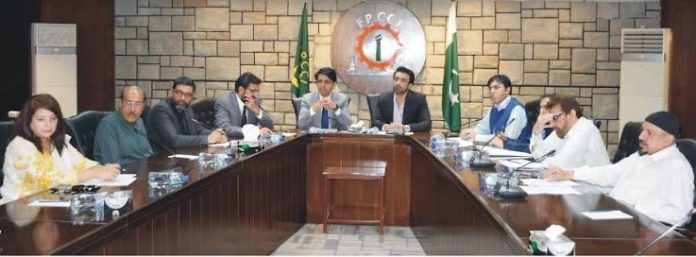
Islamabad (DNA) – The Core Committee meeting on Gems and Jewelry Show 2024 was held at FPCCI Capital Office Islamabad yesterday led by Mr. Umar Masudur Rahman Vice President FPCCI. The meeting was attended by Mr. Saqib Rafiq President Rawalpindi Chamber, Petron Chief APCEA Haji Mamoor Khan, Chairman Syed Minhaj ud Din Bacha, Chairman Mining Association, Farukh Alvi, RCCI Members Akhtar Amin, Muhammad Fayaz Qureshi, member Islamabad CCI Ayesha Asif, and Trade Development Authority Islamabad representatives Ishaq Shinwari and Moin Ahmed.

Mr. Umar Masood ur Rehman Vice President FPCCI said that he believed the Gems and Jewelry Show 2024 would go a long way to showcasing gemstones in the international market. He appreciated the role of TDAP Islamabad to bring all related trade bodies on our platform under the patronage of TDAP and FPCCI to organize a befitting show to attract foreign buyers. The Gems expo will be jointly organized by TDAP & FPCCI, ICCI, RCCI, APCEA, PAGJTEA, PGMA. He further said that this event aims to promote the mineral and mining section of Pakistan which is enriched with 80% of Pakistan’s mineral base, and this exhibition is expected to play a major role in exploring the mineral potential of this land. This event should design to facilitate gemstone and mineral businesses in Pakistan, and it will also provide an opportunity for local businesses to expand their business potential around the country and beyond.

Vice President FPCCI further said that the current economic challenges can be countered with our exports for which he appreciated the Director General TDAP on his efforts for planning various events not only in international markets but also in local rural markets of KP and Gilgit Baltistan. It’s time to give special attention to African and central Asian markets to enhance our exports through various means. The FPCCI and TDAP are working for the same goal to enhance Pakistan’s trade and exports, therefore, close liaison between both entities is essential and obligatory to achieve the goals more effectively. The success of Gems and Jewelry Show 2024 can bring economic stability. He added.

During the meeting, the participants also appreciated the role of FPCCI and Trade Development Authority while presenting various suggestions regarding the success of the show and increase exports of this sector.

Mr. Saqib Rafiq President Rawalpindi Chamber, Petron Chief APCEA Haji Mamoor Khan, Chairman syed Minhaj ud Din Bacha, Chairman Mining Association, Farukh Alvi, RCCI Members Akhtar Amin, Muhammad Fayaz Qureshi, member Islamabad CCI Ayesha Asif, and TDAP representatives Ishaq Shinwari said that Pakistan’s gemstone and jewelry sector is currently suffering due to low exports, undergoing a massive fall in the last five years. In 2016-17, the exports of the industry stood at $5.8 million, down 99% compared with $921.8 million in 2011-12. “With the help of foreign investment and machinery, we can increase our gemstone and jewelry exports to $5 billion in just 3 years, Pakistan have the finest craftsmanship and other Countries have technology. Together, we can promote exports of the industry,”

The Participation of the meeting said that we believe on working jointly with the private sector to boost our country’s export and assured that TDAP Islamabad will facilitate the business community of KP Province and Gilgit Baltistan. He shared various proposals for necessary collaboration with FPCCI to push the trade and economic activities to boost the exports. They further said that African market is our priority and TDAP was striving hard for increasing exports in ASEAN, African and Central Asian regions that can bring economic stability to the country. He further shared that TDAP is also supports the women entrepreneurs to uplift their local business activities and prepare them to export their products.

People-centric governance is key to a peaceful society

People-centric governance is key to a peaceful society

DNA

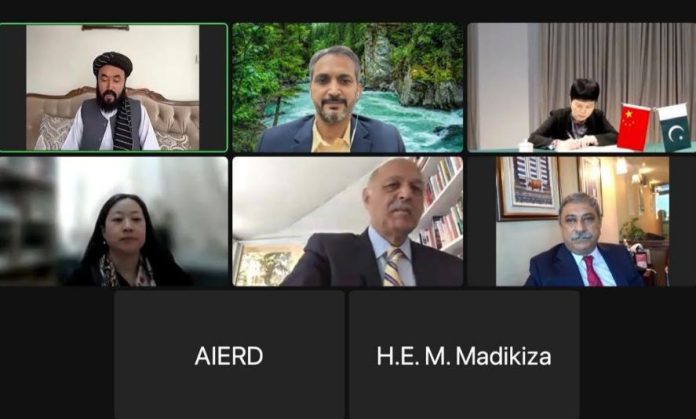
ISLAMABAD: Speakers at a webinar on Wednesday said that people-centric governance should primarily focus on serving the interests of the people with an aim to uplift their social and economic situation. The webinar titled ‘Dialogue For People Centric Governance’ was organized by Asian Institute of Eco-Civilization Research and Development (AIERD), which was attended by a number of academics, diplomats, students, and senior government officials.

Governance is the art of satisfying the needs of the people and serving the interests of the people, said Shakeel Ahmad Ramay, CEO, of AIERD, while opening the webinar. 

Speaking at the event, Senate Defence Committee Chairman Syed Mushahid Hussain Syed said the Belt and Road Initiative (BRI) was a very important element to understand people-centric governance. “China had advanced a Chinese solution to global development issues based on inclusivity, respect for diversity and equality and based on the concept of win-win cooperation and mutual benefit,” he said.

Mr Syed went on to say that the State Council of the Peoples Republic of China had recently issued a white paper on BRI, in which it had said that the initiative was one of the key pillars of the shared community for the future, adding that its living example was the China Pakistan Economic Corridor (CPEC). He said the people centric governance in China was based on the ethos of the Communist Party of China and Chinese historical context. Under the Chinese leadership, the key bottom line has been that the party springs from the people as it has 95 million members, he said, adding that Chairman Mao Zedong had stressed on serving people in different capacities.

ith people. 

Deputy Head of Mission and minister at the Chinese embassy in Islamabad Pang Chunxue said people-centric governance was important in Chinese philosophy.

China had always adhered to this philosophy which was rooted in Chinese history, she said.

Pang Chunxue said people were the foundation of a country, and that people-centered governance served as a guiding compass for China’s overall development.

She added that improvement in social security, health and education systems were vital for efficient public service. Speaking about CPEC, she said China had injected $25.4 billion in direct investment in Pakistan.

Deputy Dean, Institute of Community with Shared Future, Communication, University of China, Prof Zhang Yanqiu, in her presentation, said it was not feasible for China to copy the political systems of other countries.

She referred to China’s whole-process people’s democracy, saying that democracy was not an ornament to be used for decorations rather it was meant to solve the problems that people wanted to be solved. She said the whole-process people’s democracy served the interests of the people, and quoted Chinese President Xi Jinping as saying, “China’s people’s democracy is a type of whole-process democracy”. She said the whole-process people’s democracy, including democratic election, consultation, decision-making, management and scrutiny, operated across all of China’s governance mechanisms and that consultative democracy was a distinctive feature of China’s socialist democracy.

Prof Zhang Yanqiu said since 2016, more than one billion registered voters had elected close to 2.5 million deputies to county and township level people’s congresses.

She said China was the second largest economy in the world and had a clear view of the future by constantly thinking about the long-term.

South African High Commissioner Mthuthuzeli Madikiza said the World Bank defined good governance as the one epitomized by predictable, open and enlightened policy making. Good governance is a pivot and pillar of human prosperity but yet elusive. It swings like a pendulum, he said. He said in South Africa, the notion of good governance through representatives of the majority was new and young in practice but mature in conceptualization.

He said he could say without fear of contradiction that good governance in South Africa was routine. “It is not a matter of half empty glass but half full,” he said, adding that progress was being made in good governance. Academics and students of good governance generally agreed that good governance was discernable when it showed the following characteristics: accountability, transparency, rule of law, responsive, effective governance, consensus and orientation, the South African envoy said.

Afghan Deputy Minister of Economy Abdul Latif Nazari said Afghanistan was in an important and historic situation. He said people stood with the Islamic Emirate and did not support war mongers. The Afghan government was striving to serve its people, and therefore the ministry of economy invited all countries to play an active role in development projects in Afghanistan. He assured them that the ministry was committed to the safety of all investors and was ready to attract domestic and foreign investors.

“We expect investment in trade, agriculture and social sector as it would help reduce poverty and food insecurity in Afghanistan,” Mr Nazari said. “Sanctions have led to an increase in poverty, he said, adding that he hoped that they would be lifted and interaction between Afghanistan and the world would increase. He further added that Afghanistan had a geo-strategic, geo-politics and geo-economic position in the region.

“It has always attracted the attention of great world powers, and has been a connecting link between South and Central Asia. A stable Afghanistan can lead to economic growth and development in the region,” Mr Nazari said.

Inspector General of Police Islamabad Akbar Nasir Khan said progress in governance was a long haul.

He said history had seen many models of governance, of which democracy was one way of governing people.  He stressed on the value of service to people and counted many aspects of it. “Acceptance of the diversity of the people and their ideas was probably one of the biggest values of the democracy which we know today,” he said.

He said the purpose of democracy was to meet the needs of the people, address their concerns and improve the quality of their lives.

He, however, said public concerns kept on changing but values remained constant.

“I believe values like transparency, participation, consultation, diversity and inclusiveness should be adhered to, as they guarantee progress, human development and certified models,” he added.

In the end, AIERD Chairman Zahid Latif Khan thanked all the participants. He said there was unawareness about Chinese governance system and stressed on shedding light on it.

He said people-centric governance was the wellbeing of our entire community and revolved around the health and welfare of individuals. In our interconnected world, policies can often affect people’s lives, therefore upholding of human rights, ensuring government responsive, promoting social justice, empowering marginalized section of the society and encouraging people’s engagement in decision-making process are important factors, which we need to focus on, Mr Khan concluded.

France to hold education tour in Lahore, Karachi

Study Abroad

DNA

ISLAMABAD: France is to organise the 2nd edition of “Choose France Pakistan – Education Tour” in Lahore on October 17 and Karachi on October 19 Following the success of the First edition in Lahore and Islamabad, the “Choose France Pakistan – Education Tour” is back in 2023 to explore Lahore and Karachi. The programme includes wide range of fields such as management, engineering, humanities, finance, business and sciences.

Eleven top-notch French universities are part of the delegation, such as Sciences Po Paris, Centrale Nantes and EDHEC. “Choose France Pakistan – Education Tour” is a government initiative from France, organised by the French Embassy in Pakistan, Campus France Pakistan and their local partners, in order to promote studying in France.

The 2 Education fairs to be organised in Lahore (October 17) and Karachi (October 19) will give the opportunity to students to interact directly with the French universities, learn more about the 1700 programmes taught in English at the Bachelor and Master levels, and get details about the 183 scholarship programmes available for Pakistani students.

This year, 4 French business schools are part of the delegation. According to the latest Financial Times’ world rankings, French business schools are still topping the ranking.

For example, the four best Masters in Finance pre-experience 2023 are French; among the five best Masters in Management 2023, three are French, including the one ranked #1. For MBA and Executive education, a French institution is ranked in top position: INSEAD, an institution with a large alumni network in Pakistan.

During this “Choose France Pakistan – Education Tour”, French delegates will also visit Pakistani universities to discuss partnership opportunities to strengthen the academic cooperation between France and Pakistan in the area of business & management, sciences & engineering and social & political sciences.

Pakistan outclass Sri Lank in crucial World Cup match

Pak vs SL: Pakistan snatch victory from jaws of defeat

Rizwan’s 100 knock does it for Pakistan; highest ever run chase in any world cup match

Hyderabad, OCT 10: Pakistan roared to a second successive win at the World Cup as they beat Sri Lanka by six wickets in Hyderabad on Tuesday, with Mohammad Rizwan and Abdullah Shafique starring impressing with the bat.

The Green Shirts also created history by chasing down 345 against Sri Lanka, overtaking Ireland to claim the record of the highest-ever run chase in the history of ODI World Cups.

Playing XIs

Sri Lanka: Pathum Nissanka, Kusal Perera, Kusal Mendis (wk), Sadeera Samarawickrama, Charith Asalanka, Dhananjaya de Silva, Dasun Shanaka (c), Dunith Wellalage, Maheesh Theekshana, Matheesha Pathirana, Dilshan Madushanka

Pakistan: Abdullah Shafique, Imam-ul-Haq, Babar Azam (c), Mohammad Rizwan (wk), Saud Shakeel, Iftikhar Ahmed, Mohammad Nawaz, Shadab Khan, Hasan Ali, Shaheen Shah Afridi, Haris Rauf

Stay Connected

64FansLike
60FollowersFollow

Latest Reviews

Exchange Rates

USD - United States Dollar
EUR
1.17
GBP
1.35
AUD
0.72
CAD
0.73