Home Blog Page 1152

Israeli forces face unexpected setbacks in Gaza conflict

Israeli forces face unexpected setbacks in Gaza conflict

Jerusalem, OCT 14 /DNA/ – “Even if we disown Gaza from its very existence, we have been losing this battle from the very beginning. The only thing we have gained is a government coalition.

A group of young people in Gaza inflicts financial losses, casualties, and injuries on us by the thousands. They impose curfews, close airports, and kidnap prisoners with ease as if they were on a trip.

They infiltrate as if they are playing a video game. They know the streets better than their inhabitants. Where is the money paid to the soldiers? Why do they receive high salaries? Where are the advanced weapons and technology? It is better to leave them prisoners in Gaza.

They are  a shame for our army. From the establishment of Israel until today, we have not faced a defeat like this. The rockets increase, and the number of casualties among our forces increases every day. How did they manage to reach the Negev and Ashdod on motorcycles?

Where is the Gaza Brigade? Where are the elite soldiers? How did they land by parachute without being detected? How did they penetrate the security system and hack the codes? We should be ashamed of ourselves. Killing civilians will not bring victory.

The residents of the south will leave, and these young men, whose families were devastated in previous wars, will liberate their homeland. They have come today for revenge, and we must pay the price.

We are defeated even if all the countries in the world support us because these Palestinian fighters love death as much as we love life.”

AKU’s Brain and Mind Institute and Synapse Collaborate to Advance Neuroscience

AKU's Brain and Mind Institute and Synapse Collaborate to Advance Neuroscience

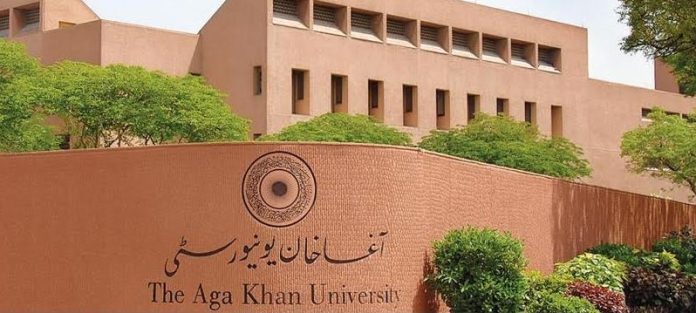
ISLAMABAD, OCT 14 /DNA/ – Synapse – Pakistan Neuroscience Institute, National Academy of Performing Arts (NAPA), British Asian Trust, and Aga Khan University’s Brain and Mind Institute (BMI)

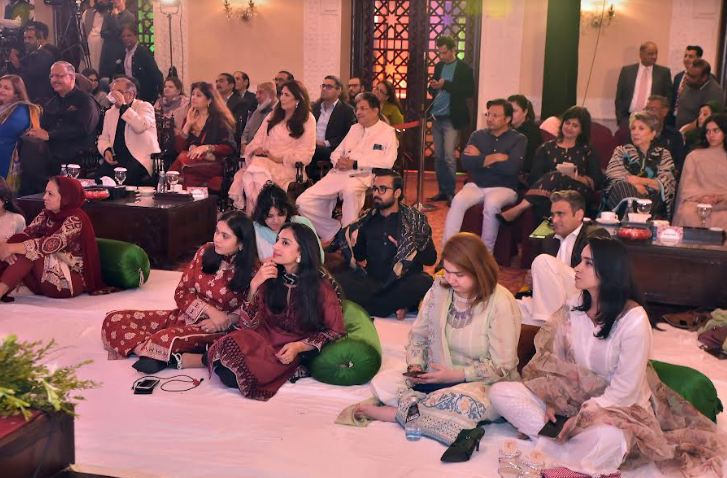
To tackle mental health challenges and empower the youth of Pakistan, Synapse Pakistan Neuroscience Institute, the National Academy of Performing Arts,the British Asian Trust,and AKU’s Brain and Mind Institute joined hands to create a positive and enriching experience for all to celebrate mental health and prioritize wellbeing through positive behaviours, self-care, understanding mental health as a basic human right, its impact on our holistic health and wellbeing through panel discussions, poem segments, policy dialogues, fireside chats with fun and recreational activities that included art therapy, meditation, informative short films, storytelling and creative expression walls.

Jashn e Nur: Celebrating the Light Within,isa one-of-its-kindevent dedicated to promoting mental wellness and advocating mental health as a universal human right for all, regardless of age, gender, socio-economic status, culture, ethnicity, and religion.

The event was organized toprovidea transformative experience for youth, to celebrate their inner light, empowering them to express themselves without the fear of social rejection and stigmas associated with mental ill-health. Resources on holistic well-being were also provided.

Approximately 20 million people in Pakistan experience some form of mental health condition. In relation to this, adolescent mental disordersis also of significant concern, and the reported prevalence ratein Pakistan is 35%, significantly higher than the global prevalence rate of 10-20%.

Additionally, this mental health festival organized by Synapse, Pakistan Neuroscience Institute with the National Academy of Performing Arts, British Asian Trust, and AKU’s Brain and Mind Institute, symbolized their vision, commitment and values of prioritizing and advocating brain and mental health for all in Pakistan, especially for its adolescents and youth.

In her opening remarks, MsFalakMadhani, Implementation Scientist at BMI, said, “If the right to mental health is universal, it is the responsibility of the scientific community in Pakistan to develop locally meaningful and acceptable models of building wellness and resilience to prevent poor mental health. We have spent too long adopting Western models that may not suit the diverse cultural nuances of Pakistan’s population.”

MsMadhanialso moderated theDesign to Impact: Climate Change, storytellingand Mental Health Panel discussion that consisted of experienced professionals, namely MsNamra Khalid, Mr Ahmed, Mian, MsNusserSayeed, and Dr SanaSiddiqui.

MrJunaidZuberi shared the vision of NAPA and its commitment to incorporate wellness in the design of society, followed by MsRabiaNizami, who was the keynote speaker who shared her insights on Youth Mental Health from a human rightsperspective,with a fireside chat thereafterbyMrAdeelAzhar. The Youth Circle of Synapse presented a Slam Poetry section, and Dr Ayesha Mian moderatedthe segment of A Story of Small Changesthat featured MsTahera Hasan, Mr OmarShahid Hamid, MsRumana Husain and MsShaiyanne Malik.

Dr Ayesha Mian said, “The idea of focusing on mental health and wellness, rather than on illness, is to take the discourse upstream towards the social determinants and involve all stakeholders in this discussion. With more than 10% of our population affected by mental health disorders, it is imperative that we focus on large-scale, policy-level solutions. Innovative and disruptive ideas and programs must be promoted that focus on scalable impact. Awareness campaigns that thoughtfully break the stigma and challenge stereotypes would shift the narrative towards prevention and primary-level interventions. A bold national mental health policy is essential, one that courageously and creatively incorporates mental health as a core element in social, government, development, education, health, economic and corporate sectors.”

The festival included fun, engaging activities and stalls in the NAPA courtyard. The audience was also introduced to various ways of practising physical and mental wellness in the form of Trauma Release Exercise (TRE) session, art therapy session, meditation and sound healing,There was a film screening by Taskeen and BMI, Art displays by Ms Ayesha Shariff, creative expression wallwhere the audience expressed themselves with comments, artwork, poetry and prose, and Food stalls.

The success of “Jashn e Nur” was not possible without the generous support of our sponsors and collaborators. We are proud to have Tapal Tea Pvt. LTD, British Asian Trust, Friends of Synapse, Alfalah Investment, and Pakistan Stock Exchange as key sponsors who share our vision and commitment to mental health advocacy. The festival was well supported by our collaborators, who are making an impact through their relentless efforts for a community where mental health is at the centre of the design. Organizations like Savaira, Center of Inclusive Care, Parindey, Karwan-e-Hayat, Go Read.pk, Taleem o agahi, Aahung, Zindagi Trust, The Garage School, Trauma Release and Wellness Center, Autism Spectrum Disorder Welfare Trust, The Learning Tree, Sabeen Mehmud Foundation, Taskeen, Orange Tree Foundation, Aunty Tashi, showcased the work they are doing and the impact they are making in the space of wellness in the community.

Jashn-e-Nurreminded us that taking care of our mental health is equally important as our physical health, where celebrating and accepting one’s persona is the foundation of positive mental health.

APBF for passing on full relief of global oil rates cut to consumers

APBF for passing on full relief of global oil rates cut to consumers

DNA

ISLAMABAD: The All Pakistan Business Forum (APBF) has called for passing on the full relief of cut in petroleum products in the international market to the local consumers for the second fortnight of October, instead of taking any kind of adjustment in taxes, as the inflation is going up due to continuous jump in oil prices.

APBF President Syed Maaz Mahmood, in a statement issued here today, asked the government to bring down price of petrol by almost Rs35 per litre in line with fluctuations in global oil prices and appreciation of the rupee against the US dollar, effective from Oct 16, 2023.

He said that instead of hiking the power tariffs, the government should focus on controlling the transmission and distribution losses and power theft besides improving the performance of power companies to save the consumers from further burden.

APBF president was of the view that the government could mobilize the required resources through increasing the number of taxpayers, reducing line losses and power theft, and ending exemptions to narrow the fiscal deficit instead of increasing the power tariff.

He said the last increase in power tariff left the industrial sector, particularly the export industry like textile, uncompetitive in comparison to regional competitors. This may lead to the loss of more export orders and render many more people jobless.

Despite the tariff surge, he said, power companies would not be able to recover the targeted revenue loss of around 28-30%. At the same time, it will force many consumers to stop paying their bills, which have become unbearable. He asked the government to undertake fundamental reforms in the power sector to make electricity affordable. Besides, the government should launch a crackdown on the habitual power bill defaulters like putting them behind bars.

At present, the government is charging Rs50 per litre as petroleum levy on HSD with room for a further increase of Rs10. However, the levy on petrol is already at the maximum level of Rs60 per litre. He said that the prices of petroleum products on the Platts index have dropped drastically and also the rupee has strengthened versus the dollar. Average gains for the rupee are calculated at Rs7.50 for the past 13 days.

He said that petrol is mainly used in motorbikes and cars and is an alternative to compressed natural gas (CNG), especially in Punjab, where locally produced gas is not available at CNG filling stations. He said that liquefied natural gas was being used in CNG retail outlets but that has also gone scarce for the past couple of years as Pakistan Petroleum Limited (PLL) could not strike import contracts.

Maaz Mahmood said that the private sector has been struggling to import LNG since 2015 but all their efforts have come to nothing because the public gas utilities want to maintain their monopoly over gas supplies.

Like petrol, the price of high-speed diesel (HSD) should also go down by Rs15.91 to Rs302.18 per litre for the next fortnight. HSD is primarily used in agriculture and transport sectors and any reduction in its price may have a positive impact on inflation.

Kerosene oil is used for cooking purpose in remote areas like northern parts of the country. Pakistan Army is a major consumer of kerosene oil.

The price of light diesel oil, which is used in industrial units, is likely to fall by Rs18.29 to Rs194.16 per litre compared to the existing price of Rs212.45.

HAPPENING NOW: Pakistan sets 192 runs target for India in high-stakes clash

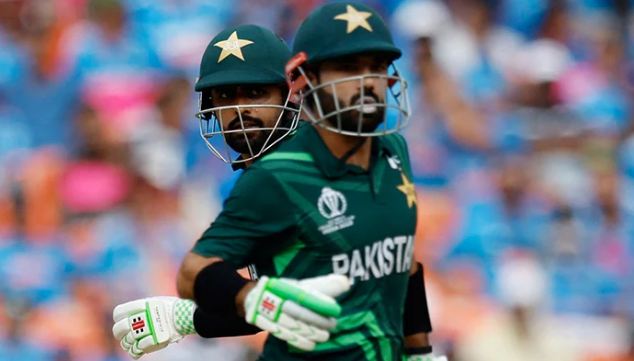
Pak vs Ind: Pakistan post 100 runs as Babar, Rizwan keep scoreboard ticking

Ahmedabad, OCT 14: Pakistan sets a 192-run target for India in high-stakes clash. as India remain in control of the match at the Narendra Modi Stadium in Ahmedabad.

Skipper Babar Azam scored his maiden ODI half-century against India, before being dismissed by Mohammed Siraj, while Abdullah Shafique and Imam-ul-Haq were dismissed for 20 and 36, respectively.

Later, Saud Shakeel was sent back to the pavilion by Kuldeep Yadav for a meager 6 runs, while Iftikhar Ahmed was also dismissed by the same spinner.

Mohammad Rizwan was dismissed for 49, one run short of a half-century.  

Mohammad Nawaz and Shadab Khan are on the ground as Green Shirts eye scoring a defendable total for their side.

“We were looking to field as well. We have had good two wins. Momentum is very high and we want to continue that,” Babar said.

“Jampacked stadium, we are enjoying our opportunity, and just want to enjoy. We have to be good in the field. We have had good practice sessions,” Babar added.

Indian skipper Rohit Sharma said: “It is a dream for us, and all of us are going to experience. It is not going to change much, dew will also be a factor so we want to chase.”

“We want to keep striving for the best, and come out and play every day.”

Azam’s Pakistan are looking for their first-ever World Cup win over India in front of a record crowd expected to number around 120,000 fans who will overwhelmingly be backing Rohit Sharma’s home side.

India and Pakistan are bitter adversaries and only play against each other in international tournaments due to longstanding political tensions.

Any meeting between them always raises fan interest with millions watching around the globe in a bonanza for broadcasters and sponsors.

Both teams remain unbeaten coming into the match at Ahmedabad’s Narendra Modi Stadium, named for the Indian prime minister.

Pakistan nationals were unable to secure India visas so only a handful of Pakistani fans, who have British and US passports, have turned up to watch the game.

This is Pakistan’s first match after their record World Cup chase of 345 against Sri Lanka, with Mohammad Rizwan scoring an unbeaten 131 and Abdullah Shafique making 113.

A Pakistan team hasn’t played in India since 2016 and only two of their 15-man squad had ever been in the country before the World Cup.

Security concerns saw Saturday’s match brought forward a day from its original date, which coincided with a major Hindu festival in the city.

Playing XIs

Pakistan: 1 Abdullah Shafique, 2 Imam-ul-Haq, 3 Babar Azam (capt), 4 Mohammad Rizwan (wk), 5 Saud Shakeel, 6 Iftikhar Ahmed, 7 Shadab Khan, 8 Mohammad Nawaz, 9 Hasan Ali, 10 Shaheen Afridi, 11 Haris Rauf

India: 1 Rohit Sharma (capt), 2 Shubman Gill, 3 Virat Kohli, 4 Shreyas Iyer, 5 KL Rahul (wk), 6 Hardik Pandya, 7 Ravindra Jadeja, 8 Shardul Thakur, 9 Kuldeep Yadav, 10 Jasprit Bumrah, 11 Mohammed Siraj

Serena Hotels host grand Mehfl-e-Mushaira at ISH

Serena Hotels host grand Mehfl-e-Mushaira at ISH

Renowned poets of Pakistan spell-bound audiences with their poetry; CEO Serena Hotels Aziz Boolani assures to continue this practice and expand its ambit to other cities as well

Mahnoor Ansar

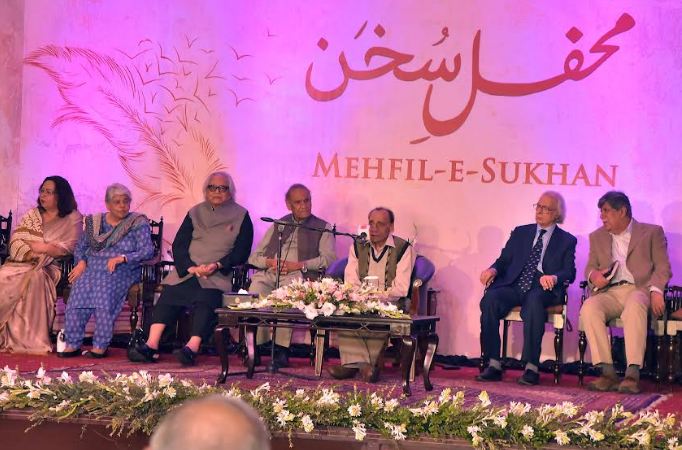
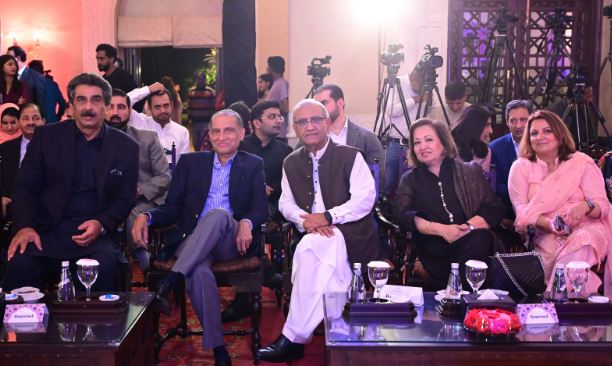
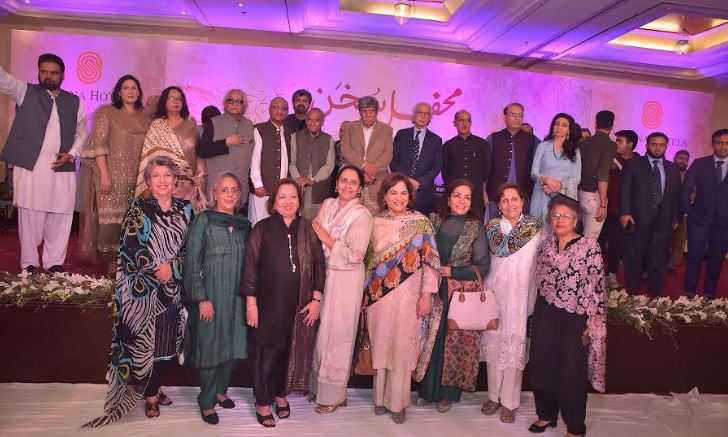
ISLAMABAD: Serena Hotels recently orchestrated a grand Mushaira entitled Mehfil e Sukhan, a distinguished poetic gathering that showcased the brilliance of some of the most esteemed poets of our era.

The evening, characterized by enchanting verses, featured the literary prowess of renowned poets including Anwar Masood, Iftikhar Arif, Kishwar Naheed, Anwar Shaoor, Dr. Pirzada Qasim, Asghar Nadeem Syed, Dr. Fatima Hassan, Akhtar Usman, Ajmal Siraj, Nasira Zuberi, Ashfaq Nasir, Umair Najmi, Rubab Tabassum, and Farjaad Mehdi.

The event was graced by the esteemed Nazamat of Shakeel Jazib, a distinguished personality celebrated for his profound understanding of poetic traditions and significant contributions to the literary realm.

This poetic extravaganza promised an evening replete with soul-stirring verses, eloquence, and profound thoughts, thereby creating an atmosphere that deeply resonated with poetry enthusiasts and literary aficionados alike. The primary objective of the event was to celebrate the rich heritage of Urdu poetry, providing an esteemed platform for poets to share their thoughts, emotions, and perspectives with a captivated audience.

The Mushaira Mehfil e Sukhan stands as a testament to Serena Hotels’ unwavering commitment to the promotion of cultural and artistic expressions.

By fostering an environment where creativity flourishes, the event underscored Serena Hotels’ dedication to connecting people through the universal language of poetry.

CEO Serena Hotels Aziz Boolani assures to continue this practice and expand its ambit to other cities as well. He said the Serena Hotels took this initiative last year and after its resounding success it decided to not only continue this practice to expand its ambit to other cities as well. 

New Game “Sepak Takraw” adds excitement to Malaysia National Sports Day

New Game

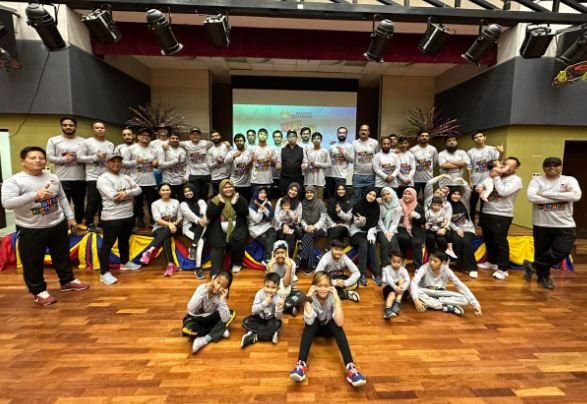
ISLAMABAD, OCT 14 /DNA/ – The Malaysian High Commission in Islamabad organized a Sports Day at the premises of the High Commission. The event was held in conjunction with the National Sports Day of Malaysia.

His Excellency Ambassador Mohammad Azhar Mazlan, Malaysian High Commissioner to Pakistan officiated the event at 0800 hours. In his remarks, the High Commissioner underscored the importance of a balance healthy lifestyle. He also iterated the role of sports diplomacy in fostering closer relations between Malaysia-Pakistan. Present were the enthusiastic Malaysian and Pakistani staff members of the High Commission and their family as well as Malaysian diaspora living in Islamabad and surrounding areas.

The National Sports Day was being organized not only throughout Malaysia but also at its embassies abroad every year on the second Saturday in October. The main objective was to promote and instill the spirit of healthy lifestyle among Malaysians young and old emphasizing on the importance of regular exercise as well as to unite Malaysians from all walks of life through sports.

A number of games were played at the compound of the High Commission such as aerobics, badminton, netball, table tennis and volleyball. A new game “Sepak Takraw” was introduced this year. To their delight, those present had the opportunity to play the popular Southeast Asian traditional game where the player kicks and balances a rattan woven ball on the air before passing it to another player. The event ended with a community luncheon at 1300 hours.

“Majulah Sukan Untuk Negara (Advancing Sports For The Nation)”

New Zealand thump Bangladesh to secure third World Cup 2023 win

New Zealand thump Bangladesh to secure third World Cup 2023 win

New Zealand bagged an eight-wicket win as they thumped Bangladesh to secure their third consecutive win in the ongoing World Cup 2023 on Friday.

Batting second in the match being played at Chennai’s M.A. Chidambaram Stadium, the Black Caps sailed through the 246-run target courtesy of skipper Kane Williamson’s unbeaten 78-run knock.

The Kiwis had their fair share of struggle at the start as they had not just lost the opener Rachin Ravindra, but were also finding it difficult to score runs as they were 37-1 in the first 10 overs.

However, Williamson and Devon Conway held forces together and accelerated the innings but the latter fell prey to Shakib Al Hasan for 45 runs as he was trying to play a reverse sweep.

Despite losing his counterpart, Kane kept going and built an astounding 108-run stand with Daryl Mitchell, who top-scored for New Zealand scoring 89 runs at an impressive 132.83 strike rate.

Williamson — who marked his return to ODI cricket after a long time following knee surgery — got retired hurt in the 39th over and went back to the pavilion after being hit in the thumb by the ball while he was crossing the wicket in the previous over.

Mitchell played the winning shot for his side as he sealed a significant win for the Black Caps with 43 balls to spare.

Batting first, Bangladesh met with early blows, losing their four batters for just 56 runs in 12.1 overs, and were on their way to an early collapse.

However, a 96-run partnership between the experienced Mushfiqur Rahim and Shakib-Al-Hasan provided the much-needed stability with the former scoring 66, while the latter contributed to 40 runs.

After the two experienced batters departed, another veteran, Mahmudullah provided some late runs to his side and took his team to a competitive 245-run total on the tricky wicket of Chennai.

Lockie Ferguson picked three wickets to his name, Matt Henry and Trent Boult got two each while Mitchell Santner and Glenn Phlipps took one each.

Bangladesh will play their next game against India on October 19 in Mumbai while the Black Caps will play Afghanistan on October 18 at the same venue.

ISSI holds webinar on “Palestine – Latest Developments and Impact on the Region”

ISSI holds webinar on “Palestine - Latest Developments and Impact on the Region”

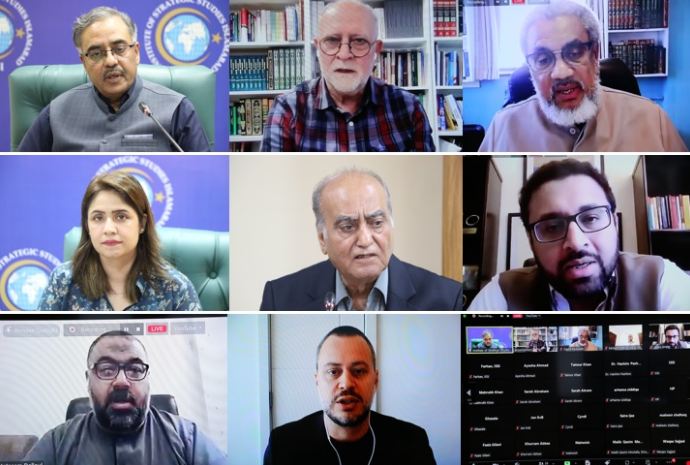
ISLAMABAD, OCT 13 /DNA/ – The Centre for Afghanistan Middle East and Africa (CAMEA) at the Institute of Strategic Studies Islamabad (ISSI), in collaboration with the Middle East Monitor (MEMO), hosted a webinar titled, “Palestine – Latest Developments and Impact on the Region.” The webinar was moderated by Ms. Amina Khan, Director CAMEA. The speakers at the webinar included Ambassador Sohail Mahmood, Director General ISSI; Ambassador Khalid Mahmood, Chairman BoG, ISSI; Dr. Daud Abdullah, Director Middle East Monitor (MEMO); Dr. Azzam Tamimi, British Palestinian Academic, Dr. Motasem Dalloul, MEMO correspondent based in Gaza; and Mr. Oves Anwar, Director of the Research Society of International Law (RSIL).

DG ISSI Ambassador Sohail Mahmood said that the Israel-Palestine dispute cannot be reduced to security concerns or counterterrorism rhetoric; at its core lies the Palestinians’ inalienable right to self-determination as enshrined in international law, the UN Charter, and relevant UN Security Council and General Assembly resolutions. A two-state solution, which has had international consensus, has suffered substantial setbacks due to recent deliberate actions that undermine it. Israel’s response to Hamas’s attack has been characterized by indiscriminate and disproportionate use of force, with serious implications for regional stability. The continuing humanitarian catastrophe in Gaza, home to 2.2 million people, many of whom are children, women, and the elderly, is unconscionable. They face relentless bombing, with vital supplies such as water, fuel, and electricity cut-off, medical facilities targeted, and UN personnel losing lives in the line of duty. Moreover, the conflict is not confined to Gaza, as demonstrated by the bombing of airports in Syria and unfounded accusations against Iran, with Lebanon at risk of being drawn in. The international community has fallen short in stopping the ongoing humanitarian nightmare, and some powerful nations’ unequivocal support for Israel’s ‘right to self-defence’ may have emboldened it to take further excessive military actions, while turning a blind eye to the immensely tragic humanitarian consequences. He said strategic interests appeared to be taking precedence over international law and humanitarian norms. He underscored how Pakistan has called for an urgent global intervention to halt further escalation and loss of life. The imperative now is immediate de-escalation, ensuring humanitarian access, implementing a ceasefire, and reviving the peace process.

Director CAMEA Amina Khan stated that the recent events in the Gaza Strip have brought a new level of brutality by the Israeli occupation forces. What sets this situation apart is the ‘declaration of war’ against the subjugated population, a move that defies international norms. The disregard for principles of international humanitarian law, particularly the concepts of necessity and proportionality, is evident, given the absence of safe areas for Gaza’s civilian population. It is crucial to emphasize that civilian casualties on both sides are deeply regrettable and cannot be condoned. These tragic losses underscore the urgency of finding a peaceful and just resolution to the Israeli-Palestinian conflict. A two-state solution remains the path towards peace, which is a matter of international concern. Achieving a just and lasting solution that respects the rights and dignity of all involved is imperative. However, it is essential to recognize that systemic oppression, tantamount to apartheid and genocide, inevitably breeds resistance, she said.

Dr. Azzam Tamimi emphasized his refusal to recognize Israel as a legitimate entity, rejecting the two-state solution and UN resolutions due to his identity as a Palestinian Muslim. His personal history, marked by displacement at the hands of Israelis when he was 17 years old, underscores the profound impact of the conflict. Dr. Tamimi shed light on the perception that Israelis view themselves as superior, a perspective exemplified by the Israeli Defence Minister’s dehumanizing remarks towards Palestinians. He urged the international community not to adopt the narrative of colonial powers and to recognize the daily suffering of Palestinians, who experience their homes being burned continuously. While the international community can advocate for a ceasefire, the imposition of a specific conflict resolution, such as a two-state solution, remains a complex challenge. He called for a reevaluation of how the world perceives this enduring conflict.

Ambassador Khalid Mahmood highlighted how since 1948, and particularly following the 1967 war, this region has been plagued by ongoing challenges. Despite various peace efforts facilitated by the UN, this long-standing issue remains unresolved. Palestinian resistance endures, even in the face of regional changes and recurring crises. Such persistence reflects a sense of desperation stemming from the international community’s apparent indifference. While the international community, including the Arab League and OIC, has expressed support for the humanitarian cause, concrete actions have been limited. Pakistan maintains its position advocating a two-state solution with secure borders. Amidst the current situation, there is an immediate need for a ceasefire and a comprehensive humanitarian response. Ultimately, the resolution of this matter should align with the parameters defined by the United Nations. We can only hope that reason and compassion prevail, he concluded.

Dr. Daud Abdullah said that recent events in Jerusalem and Gaza, spanning the last eight months, have been marked by the extrajudicial killings of Palestinians and the repeated desecration of Al-Aqsa Mosque. The current situation reflects the foreseeable consequences of these actions. Warnings were issued to the Arab world regarding the potential for Israel’s policies to incite a religious war in the region, yet these cautionary voices were disregarded. The response from the Western world has exposed a striking double standard. While considerable resources were mobilized to address the Ukrainian conflict and oust the “aggressor,” the same level of action has not been taken in the case of Palestine. Moreover, the suppression of demonstrations in several cities reveals infringements on the freedom of speech. Israel’s alleged plan to relocate the people of Gaza to the Sinai with the objective of recapturing Gaza raises concerns of a slow genocide against the Palestinians residing in Gaza, he said.

Dr. Motasem Dallou, providing insights into the dire conditions on the ground in Gaza, highlighted the severe challenges faced by the population. Essential items such as food, fuel, and water have been severely restricted or entirely cut off, resulting in a dire humanitarian crisis. Hospitals are overwhelmed, struggling to cope with a surge of injuries, while local news agencies have ceased operations due to power outages and disrupted Internet connectivity, severely limiting information dissemination. Empty supermarket shelves underscore the scarcity of crucial supplies. The relentless Israeli bombardment has inflicted extensive destruction, leaving homes in ruins. Firefighters’ response capabilities are hampered, and communication remains a significant challenge. Additionally, he expressed grave concerns about the shortage of medical facilities and the deteriorating situation in Gaza. Dr. Motasem also mentioned the heart-wrenching exodus of people from Gaza, with some feeling compelled to leave due to pressure from the Israeli occupation.

Dr. Giorgio Cafiero highlighted the risks of the ongoing Palestine conflict and said that the evolving situation is highly unpredictable, with global implications. The Abraham Accords, a hallmark of the Trump era, particularly the potential participation of Saudi Arabia, face growing uncertainty due to recent events in Israel. The ongoing Gaza conflict also threatens Saudi Arabia’s Vision 2030 plan, which relies on attracting foreign investment for economic diversification. Meanwhile, the GCC states, such as the UAE and Bahrain, tread a delicate line, aiming to benefit from the Accords while addressing anti-Israel sentiments. While the Accords’ expansion remains possible, new members may not normalize relations with Israel without significant concessions to the Palestinians in the near future, he said.

Mr. Oves Anwar gave an international law perspective on the ongoing situation in Gaza. He expressed profound concern over the distressing current situation, acknowledging the complex challenges international law faces in the modern world. He highlighted the right of Palestinians to resist in accordance with UNSC resolutions, asserting that Hamas’s use of force, driven by the pursuit of self-determination, is legally justified. Noting the prevalence of disinformation, he emphasized the impermanence of the occupation and annexation, citing violations of international and humanitarian law. He contended that Israel, as the occupier, lacks the moral ground to claim self-defence, condemning the reckless loss of civilian lives. He also drew attention to the conspicuous silence from Prosecutor of the International Criminal Court on the issue, underlining the need for broader recognition and action, and expressing dissatisfaction with the exceptionally problematic current situation and behavior.

After the Speakers’ remarks, an interactive session followed during which further complex aspects of the evolving situation and its regional and global ramifications were taken up.

Solidarity with Palestine: World leaders must act on Gaza crisis: Hafiz Ashrafi

Solidarity with Palestine: World leaders must act on Gaza crisis: Hafiz Ashrafi

DNA

Lahore, OCT 13: On the call of Pakistan Ulema Council, Palestine Solidarity Day was observed here on Friday across the country and in Friday congregations in Masajid all over the Pakistan, solidarity was expressed with the oppressed Palestinians and special prayers were made for the people of Palestine.

Chairman Pakistan Ulema Council Hafiz Muhammad Tahir Mahmood Ashrafi led Friday  prayer in (Lahore), while leading Ulemas-Mashaykh of Pakistan Ulema Council led Friday sermons in their respective districts and cities including Maulana Dr. Abu Bakr Siddique in Islamabad, Allama Abdul Haq Mujahid (Multan), Maulana Asadullah Farooq, Allama Zubair Abid (Lahore), Maulana Asad Zakaria (Karachi),  Maulana Haq Nawaz Khalid, Maulana Ubaidullah Gormani, Allama Tahirul Hasan (Faisalabad), Maulana Muhammad Shafi Qasmi, Maulana Hanif Usmani (Sahiwal), Maulana Muhammad Asghar Khosa (Dera Ghazi Khan), Maulana Nauman Hasher, Maulana Tahir Aqeel Awan (Rawalpindi), Maulana Abu Bakr Sabri, (Islamabad), Maulana Anwar-ul-Haq Mujahid, Maulana Abdul Malik Asif (Multan), Maulana Aslam Siddiqui, Maulana Abdul Hakeem Athar, Qari Muhammad Aslam Qadri (Lahore), Maulana Muhammad Khurshid Nomani (Bahawalnagar), Maulana  Abdullah Haqqani, Maulana Abdullah Rashidi (Qasor), Maulana Asim Shad, Maulana Abdul Waheed Farooqui (Narowal), Maulana Abu Bakr Hamza (Chakwal), Maulana Habibur Rahman Abid, Maulana Aminul Haq Ashrafi, Maulana Izharul Haque Khalid, Sahibzada Hamza Tahir-ul-Hasan (Faisalabad), Maulana Saadullah Ludhianvi (Toba Tek Singh), Maulana Anis-ur-Rehman Baloch (Gujra), Maulana Abdul Rasheed (Hafizabad), Mufti Muhammad Umar Farooq (Khaniwal), Maulana Abdul Ghafar Shah Hijazi (Lodhran),  Maulana Tanveer Ahmad (Bahawalpur), Maulana Muhammad Ahmad Makki, Maulana Muhammad Ashfaq Patafi (Muzaffargarh), Maulana Kaleemullah Muawiya (Nankana), Maulana Azizur Rahman Muawiya (Talagang), Maulana Aziz Akbar Qasmi (Rajanpur), Maulana Saadullah Shafiq (Rahimyar Khan), Maulana Hussain Ahmed Prasati (Karachi), Maulana Yasir Alvi (Samandari), Qari Abdul Rauf, Maulana Maksad Mahar (Bahalangar), Maulana Zubair Khatana (Gujranwala), Maulana Aqeel Zubiri (Sargodha), Qari Azizur Rahman (Layyah), Maulana Atif Iqbal (Kamalia) and others expressed their solidarity with People of Palestine in Friday sermons stating that the decisive stage has now come on the issue of Palestine.

The Ulemas-Mashaykh addressing the Friday sermons said that the entire Muslim Ummah is with the oppressed Palestinian people and the leaders of the Muslim world have to play their role immediately on the Gaza situation.

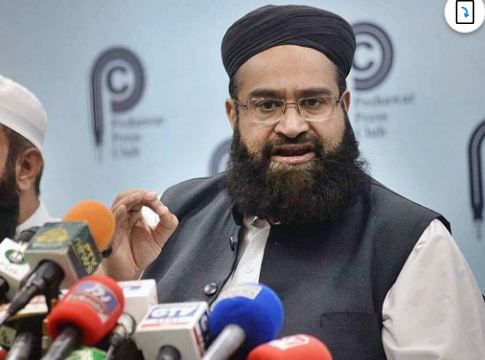
Chairman Pakistan Ulema Council Hafiz Muhammad Tahir Mahmood Ashrafi said that those who used to talk about human rights are silent on the massacre of oppressed Palestinians.

He said that the people of Palestine for the last many decades have been facing the barbaric atrocities of the Israeli  forces.

Israel has usurped the  First Qibla of the Muslims and the territories of Palestine.

The United Nations, international Forces and leading human rights organizations have turned a blind eye on the blood shed as a result of Zionist terrorism in Palestine.

Allah crushed the pride of Israel through the Palestinian freedom fighters, and since then Israel has been burning in retaliation and has launched the worst aggression of this century in Gaza.

 Israel cares neither about the laws of war nor about the worst situation of the human rights.

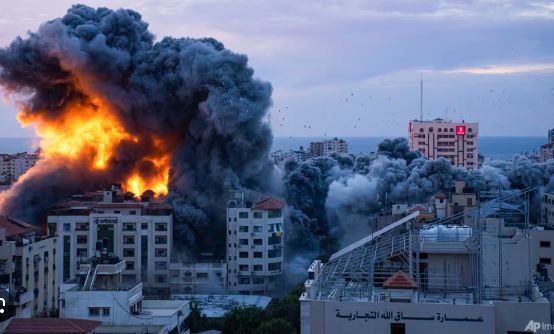
 Israeli bombardment has not spared the civilian population, innocent citizens, hospitals, schools, ambulances, aid workers, all are under the fire of its terror.

  It is also very sorrowful that America, India, Britain and other Western countries stand with  the Israel in its worst atrocities and Human rights organizations are silent over Israeli cruelties.

 Amidst the prevailing bombardment in Gaza, there is fear of a major human tragedy in Gaza, said Hafiz Muhammad Tahir Mahmood Ashrafi.

The United Nations must take immediate action on the situation and stop Israel from massacre of the Palestinians. 

Hafiz Tahir Ashrafi said that today the Muslims of the whole world are with the Palestinian brothers.

 Hafiz Muhammad Tahir Mahmood Ashrafi praised the efforts and position of the leaderships of Saudi Arabia, Qatar, Turkey, Iran, Kuwait, Egypt and Jordan stating  that Saudi Arabia as the head of the OIC should play its leadership role for the issue of Palestine and Kashmir.

 Hafiz Tahir Mahmood Ashrafi further pointed out that Saudi Arabia will not want any solution without the establishment of an independent Palestinian state adding that even today, Saudi Crown Prince Muhammad bin Salman is playing an important role to make coordination  for the relations between Muslim countries, God willing,

it has been made clear at the world  that the world leadership will have to recognize an independent Palestinian state.

 He said that the Palestine Solidarity Conference will be held in Islamabad on October 18, 2023.

HEC holds Seerat-un-Nabi (P.B.U.H) Symposium

HEC holds Seerat-un-Nabi (P.B.U.H) Symposium

DNA

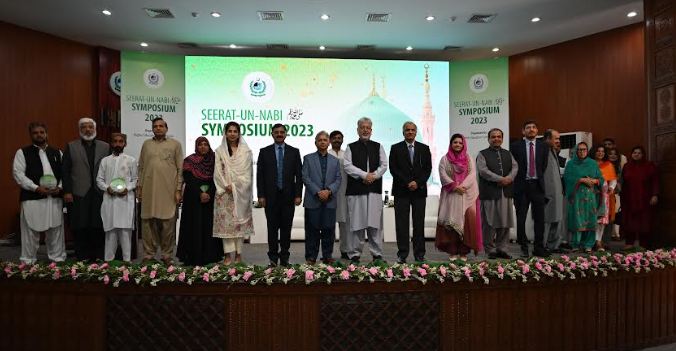
ISLAMABAD, OCT 13: The Higher Education Commission (HEC), Pakistan organised on Friday Seeratun Nabi (Peace be Upon Him) Symposium to shed light on the life and teachings of the Last Prophet Hazrat Muhammad (P.B.U.H).

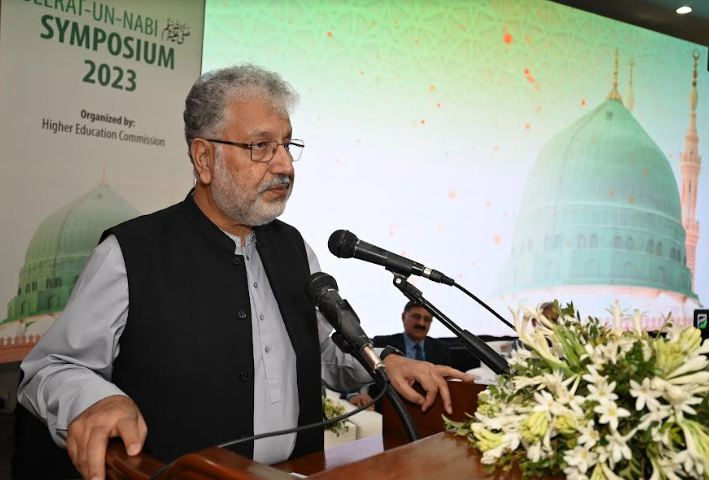
Chairman HEC Dr. Mukhtar Ahmed was the chief guest. Guest speakers included Mr. Khurshid Ahmad Nadeem, Chairman National Rehmatul-lil-Alamin Authority and Dr. Muhammad Saleem Mazhar, DG, National Language Promotion Department. The symposium was attended by Vice Chancellors, faculty members, students and HEC employees. 

Paying homage to the Holy Prophet (P.B.U.H), Dr. Mukhtar Ahmed said the Sunnah of Prophet Muhammad (PBUH) provides us with complete guidance on every aspect of life. He urged the universities and degree awarding institutions to regularly organise events to highlight teachings of the Holy Messenger of Allah.

“It is our prime obligation to tell our children and youth about the importance of Seerah in our life, as it is a must for us, being Muslims, to follow our beloved Prophet (P.B.U.H) in every sphere of life,” he said, adding that the Prophet (P.B.U.H) taught us to be in this world as if we were strangers or travelers and indulge in worldly affairs as much as required.

Mr. Khurshid Ahmad Nadeem appreciated HEC for organising the symposium on a much-needed topic. He particularly addressed the youth in the audience and advised them to study Seerah of the Prophet (P.B.U.H) and understand the purpose of their lives through Prophet’s teachings. “Unless you find out why were the Prophets sent by Allah, you will not be able to know the purpose of your life. When you start reading the life of Prophet Muhammad (P.B.U.H), objective of your own life becomes obvious and it clears all the ambiguities about this life and the hereafter.”

Dr. Muhammad Saleem Mazhar shed light on different aspects of the life of Prophet Muhammad (P.B.U.H) and emphasised the significance of studying and understanding Seerah. He explained how Muslim scholars like Maulana Rumi and Allama Iqbal have elaborated and made it easy for us to comprehend the actual message to be derived from Quran and Seerah of Prophet Muhammad (P.B.U.H).

Renowned Naat Khwan Ms. Hina Nasrullah and a few HEC employees recited Naats on the occasion.

Stay Connected

64FansLike
60FollowersFollow

Latest Reviews

Exchange Rates

USD - United States Dollar
EUR
1.17
GBP
1.35
AUD
0.72
CAD
0.73