Home Blog Page 1148

ICCI calls for focusing on export of manpower to improve economy

ICCI calls for focusing on export of manpower to improve economy

ISLAMABAD, OCT 18 /DNA/ – Faad Waheed, Acting President, Islamabad Chamber of Commerce & Industry (ICCI) said that remittances of Overseas Pakistanis are the backbone of the national economy as they account for more than total exports of goods and services annually and contribute significantly to improving the country’s foreign reserves. He stressed that to further increase the volume of foreign exchange reserves, the government should make strong efforts to explore new markets for increasing the export of manpower across the globe that would help improve the foreign exchange and the overall economy. He said this while talking to Muhammad Jawad Sohrab Malik, Special Assistant to Prime Minister on Overseas Pakistanis and Human Resource Development during a meeting with him along with Asad Hafeez Kiyani Chairman, Shakeel Ahmed Abbasi Vice Chairman and Faheem Iqbal Chaudhry former Senior Vice Chairman, Pakistan Overseas Employment Promoters Association (POEPA).

Faad Waheed said that Pakistan is the 5th largest country of the world in terms of population with a large pool of human resource and stressed that the government should equip its manpower with the latest skills and knowledge to improve their prospects of their export to potential markets. He said that Bangladesh has exported over 1100,000 workers during the year ending June 2023, but Pakistan’s export of manpower during the 11 months of the outgoing fiscal year remained just around 372000, which is not an impressive figure. He said that many countries in the Middle East, Europe, South East Asia are in high demand of skilled labor and the government should provide the demand-driven skills to its workforce that would increase their export and strengthen the economy.

Muhammad Jawad Sohrab Malik, Special Assistant to Prime Minister on Overseas Pakistanis and Human Resource Development said that the government is determined to harness the the potential of a substantial Pakistani workforce to realize the goal of fast economic revival. He said that during a recent meeting with the Saudi Ambassador, he proposed the Kingdom of Saudi Arabia to employ a substantial number of Pakistani workers to contribute to the Saudi Vision 2030. He said that Pakistan has the ability to export one million workers every year to various potential markets and all possible efforts are being made to realize this goal to strengthen the economy.

Asad Hafeez Kiyani Chairman, Shakeel Ahmed Abbasi Vice Chairman and Faheem Iqbal Chaudhry former Senior Vice Chairman, Pakistan Overseas Employment Promoters Association also spoke on the occasion and shared useful ideas to explore the possibilities for creating new employment opportunities for Pakistanis around the world. They assured of their full cooperation to the government in achieving this goal. 

The Unending Cycles of History

The Unending Cycles of History

Dr. Muhammad Akram Zaheer

The world is currently undergoing a profound transformation, a phenomenon that occurs only once in a few generations. This transformation is not orchestrated by those in power, and it cannot be easily thwarted. It commences with economic and political pressures within countries, which can escalate into military conflicts as internal systems strive to regain stability.

Some nations manage these changes as challenging yet normal occurrences, while others teeter on the brink of instability or find themselves under attack. This metamorphosis is frequently referred to as progress, but it is far from an effortless victory; rather, it’s a painful struggle with the intricacies of reality. Often, the hardships and trials of development prompt people to lay blame on other groups or nations for the disruptions and alterations, rather than examining their own actions.

The origins of this current era can be traced back to the early 1990s in Europe when the Soviet Union disintegrated, and the Maastricht Treaty was signed to unite the continent. In 2001, the United States experienced the September 11 attacks, and in 2013, Xi Jinping assumed the presidency of China. In the grand tapestry of history, a decade or two represents a relatively brief span of time. The initial objective of the Soviet Union’s dissolution was to foster a more efficient region. The unification of Europe under the European Union was intended to diminish the prospects of conflict and promote prosperity.

The U.S. response to the 9/11 attacks aimed to mitigate the threat of terrorism. Xi’s ascension in China was envisioned to propel the nation toward substantial prosperity. None of these aspirations can be deemed outright failures. The disintegration of the Soviet Union brought prosperity to many former Soviet states. European unification enjoyed a period of relative productivity. The U.S. response effectively prevented another large-scale attack akin to 9/11. Meanwhile, China continued its economic expansion. As with previous cycles, these leaders’ objectives were not utter failures, at least until the next cycle took hold.

A generation has passed since the commencement of the last major transformation, and the deficiencies of the preceding phase are now manifesting. Russia has been diligently working to reestablish its influence since the Ukrainian conflict. The European Union is grappling with deep-seated divisions, to the extent that Germany and France have proposed formalizing this schism. Recently, Islamic fundamentalism has resurfaced in the wake of attacks by Hamas on Israel. The United States, having successfully evaded another major terrorist attack, has entered the foreseeable final phase of its cycle, with social unrest manifesting along political, racial, religious, sexual, and other fault lines. These trends are likely to dominate the years ahead, and China’s economic growth has generated economic vulnerabilities and political friction.

Two fundamental points emerge from this scenario. First, nations are composed of millions of individuals, each with their own perspectives and judgments. When things go awry, there is a natural inclination to seek scapegoats, often resulting in leaders bearing the brunt of blame. Secondly, and perhaps more significantly, the predicaments of the new era often stem from the solutions implemented in the previous era. Thus, we find ourselves in a new era that originated from the last, with the recurrence of wars, economic challenges, and mutual resentments. These are universal realities that can occasionally usher in joy but are more frequently tragic in nature. The Greeks, with their deep sense of history and cyclical thinking, may well have perceived the world in a similar light.

The question arises: can humanity break free from these cycles? It would be comforting to think so, but as history has shown, such attempts have met with limited success. The cycle of change and turmoil appears to be deeply ingrained in the human experience. However, understanding the cyclical nature of history can provide valuable insights into our current challenges. To break free from these cycles, it is imperative that nations and leaders take a more proactive approach to addressing the root causes of these recurring issues. Instead of resorting to blame and finger-pointing, a more constructive and collaborative approach is needed. This entails a greater focus on diplomacy, conflict resolution, and global cooperation.

It requires a concerted effort to address the underlying economic, political, and social factors that contribute to instability and conflict. Moreover, it is essential to learn from past mistakes and successes. History is a rich source of knowledge and experience that can guide us in making more informed decisions. By studying the patterns and trends of previous eras, we can better anticipate and navigate the challenges of the present and future. Breaking free from these cycles also requires a shift in mindset.

It demands recognition that the world is interconnected and interdependent. The challenges we face, whether they be economic, political, or social, are not isolated to individual nations. They have global repercussions. Therefore, a more holistic and cooperative approach is necessary to address these challenges effectively.

The world is indeed undergoing a significant transformation, one that is deeply rooted in the cyclical nature of history. The challenges we face today are not isolated incidents but are part of a larger pattern of change and upheaval. While it may be difficult to completely break free from these cycles, it is not impossible. By taking a more proactive, collaborative, and informed approach, nations and leaders can work towards a more stable and peaceful world. Understanding the past can illuminate a path to a more harmonious future, where progress is achieved with less pain and struggle.

Cipher a hanging sword

Cipher a hanging sword

Qamar Bashir

As the Press Minister at the Embassy of Pakistan in France, I was acutely aware of the sensitivity and significance of handling confidential ciphers. Almost every day, the Ambassador and trusted staff sent ciphers to the Ministry of Foreign Affairs, addressing matters of utmost confidentiality.

On numerous occasions, ciphers related to the Press Section were shared with me in person, and I ensured they were safely returned to maintain their confidential status.

At that time, I had no inkling that these routine embassy ciphers would become so perilous, putting the lives of the former Prime Minister and former Foreign Minister at grave risk, particularly following the amendment of the Official Secrets Act in 2023, which now imposes the death penalty for violations of the official secrets.

In general,  government correspondence is often classified into different levels of sensitivity, such as “Top Secret,” “Secret,” “Confidential,” or other designations. The highest levels of classification, such as “Top Secret,” are reserved for the most sensitive information. Access to classified information is typically granted on a “need-to-know” basis. This means that only individuals who require access to specific classified information for their official duties are granted that access.

 In the context of diplomatic communication, the term “cipher” is commonly used to refer to a coded or encrypted message. Diplomatic cyphers are employed to protect sensitive or confidential information from unauthorized access or interception during transmission. These codes are usually complex and may involve various cryptographic techniques to ensure security. Diplomatic ciphers are essential for maintaining the confidentiality of diplomatic correspondence. They are employed when discussing matters of national security, sensitive negotiations, confidential information, or any communication that needs to be shielded from prying eyes.

Though, typically the heads of the state or government are authorized to declassify the cipher information but they can do so after following an elaborate procedure which may involve, seeking formal recommendations and views from the concerned ministries, the agencies, departments or institutions of national security and safety and other relevant departments before declaring any cipher subject matter as declassified. Even when the head of state and government take such decision he is required remove any sensitive parts of the cipher which can jeopardize national security or could potential harm the relationship with another friendly or important country,

If the head of state or government discloses classified or cipher information in a public meeting without following the established protocol and proper declassification procedures, it can have serious legal, political, and national security implications. It can potentially harm national security by revealing sensitive intelligence, military operations, or diplomatic negotiations. It  can lead to political backlash, undermining the leader’s credibility and reputation. Opposition parties, lawmakers, and the public may demand accountability and investigations.

In some cases, a head of state or government who engages in such behavior may face calls for resignation or impeachment, the severity of the response depends on the nature of the disclosed information and the political climate, erode trust within the government and among intelligence and security agencies, career professionals may lose confidence in the leader’s ability to protect sensitive information, can strain diplomatic relations with other countries, potentially leading to diplomatic crises.

The consequences of such actions can be significant; however, the specific outcome may depend on the legal and political systems in place in a given country and the extent of the breach. Legal processes, investigations, and, if necessary, legal action can follow such incidents to ensure accountability.

According to one legal opinion, the Prime Minister or Finance Minister of Pakistan were not authorized to disclose the cipher to the public as  the Official Secrets Act 2023 clearly states that any classified information, including diplomatic correspondence, cannot be disclosed to the public without the prior approval of the appropriate authorities. It is a serious crime, and the consequences can be punished with imprisonment for up to 14 years, or with the death sentence in certain cases.

The next important Question is,  who is the proper authority for seeking permission to disclose the cipher matter to the public?. In the case of the Prime Minister or Foreign Minister, the proper authority for seeking permission to disclose classified information, including cipher matter, to the public is the National Security Council (NSC), a high-level body that is responsible for advising the Prime Minister on matters of national security.

The NSC meets regularly to discuss matters of national security and to make recommendations to the Prime Minister. If the Prime Minister or Foreign Minister wishes to disclose classified information to the public, they must first seek the approval of the NSC. The NSC when making the decision will consider the factors such as the sensitivity of the information, the potential impact on national security and the public interest.

If the NSC approves the disclosure of the information, the Prime Minister or Foreign Minister will then need to obtain the approval of the Cabinet. The Cabinet is the highest decision-making body in the government, and it is responsible for approving all major decisions.

Once the Cabinet has approved the disclosure of the information, the Prime Minister or Foreign Minister can then make the information public. If official procedure is not followed, the provision of the amended Official Secret Act 2023 can be evoked.

The original section of the Act, Section 9, states that anyone who discloses classified information without authorization can be punished with imprisonment for up to 14 years. The amended section adds a new subsection, Subsection (3), which states that anyone who discloses classified information with the intent to injure the interests of Pakistan or to benefit a foreign power can be punished with death.

The amended section also expands the definition of classified information to include “any secret official code or password.” This means that anyone who discloses a secret official code or password without authorization can now be punished with death. This is a significant increase in the severity of the punishment for this offense.

The amended section of the Official Secrets Act has not yet been tested in court. It is possible that the courts will interpret the amended section in a way that limits its scope.

However, it is also possible that the courts will uphold the amended section in its entirety, which would mean that anyone who is found guilty of disclosing classified information with intent to injure the interests of Pakistan or to benefit a foreign power could be sentenced to death.

In many countries, the heads of the state or government are immune from prosecution during their time in office. Therefore it is exceedingly rare for heads of state or government to be punished for disclosing the content of diplomatic ciphers to the general public. 

Disclosure of diplomatic ciphers would typically be an action taken while in office and is often a matter of national security and foreign relations, subject to legal and political processes that differ from those applied to ordinary citizens therefore,  the legal actions related to disclosures of classified information are generally directed at lower-ranking officials or employees.

For example, Daniel Ellsberg, a former military analyst, leaked the “Pentagon Papers” to The New York Times in 1971. The Pentagon Papers were a classified Department of Defense study of U.S. political-military involvement in Vietnam from 1945 to 1967. Ellsberg faced charges under the Espionage Act but was not ultimately convicted. Chelsea Manning, a former U.S. Army intelligence analyst, leaked classified documents to WikiLeaks in 2010, including diplomatic cables and military information. Manning was convicted of multiple charges under the Espionage Act in 2013. Edward Snowden, a former National Security Agency (NSA) contractor, leaked classified information in 2013, revealing extensive surveillance programs. Snowden faced charges under the Espionage Act but was granted asylum in Russia.

It is relatively uncommon for former heads of state or government to be sued and punished for disclosing diplomatic ciphers after leaving office. Diplomatic secrets are typically subject to the authority and discretion of the sitting government or head of state. Once out of office, former leaders often enjoy certain legal protections or immunity from prosecution for actions taken during their time in power. However, the extent of legal protection varies by country, and the political circumstances surrounding the disclosure play a significant role. Laws and legal systems differ, so it is possible, albeit rare, for legal action to be taken against former leaders.

The former Prime Minister of Pakistan does not have immunity from charges related to the disclosure of cipher content under the Official Secrets Act 2023. This law does not provide any special protection for former government officials, including former Prime Ministers. Parliamentary privilege, which shields members of Parliament from prosecution for statements made within Parliament, does not extend to disclosures made outside of parliamentary proceedings, such as the release of cipher information.

Consequently, the former Prime Minister is subject to the same legal provisions as any other Pakistani citizen and could face prosecution for revealing classified information, carrying penalties of up to 14 years in prison or even the death penalty.

While the former Prime Minister argues that his actions were justified in the public interest and that his previous immunity protects him, these arguments await judicial determination. It’s essential to emphasize that the former Prime Minister is considered innocent until proven guilty and retains the right to a fair trial and the opportunity to mount a legal defense against the charges.

Qamar Bashir

Former Press Secretary to the President

Former Press Minister to the Embassy of Pakistan to France

Former MD, SRBC

KPK govt schools in Swabi district open early childhood education centers

KPK govt schools in Swabi district open early childhood education centers

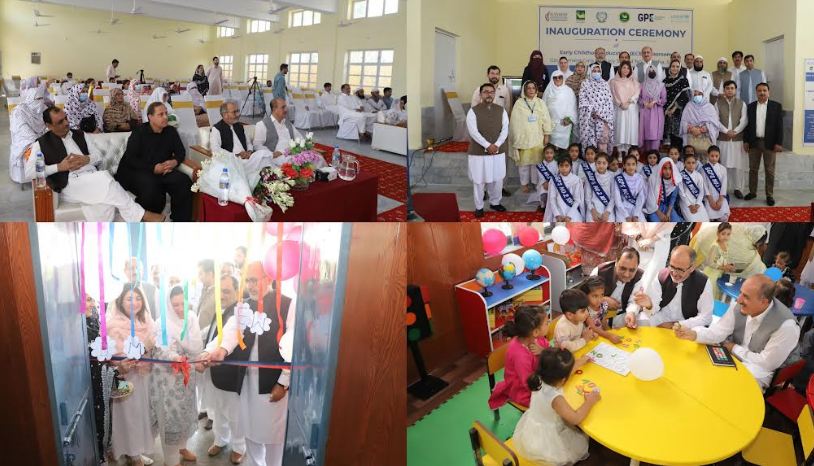
ISLAMABAD, OCT 18 /DNA/ – UNICEF and Hashoo Foundation, in collaboration with the Khyber Pakhtunkhwa Elementary and Secondary Education Department (E&SED), are proud to announce the inauguration of 500 Early Childhood Education (ECE) classrooms across twenty-three districts in Khyber Pakhtunkhwa (KP). This transformative initiative is made possible through funding from the Global Partnership for Education (GPE) and Education Cannot Wait (ECW).

Aligned with the Khyber Pakhtunkhwa Education Sector Plan 2020-2025, the E&SED underscores the critical role of ECE in a child’s development and learning, making it a top priority for the region. To actualize this commitment, the existing 13,000 Katchi classrooms in primary schools will be converted into modern ECE classrooms.

In pursuit of the goal to refurbish 13,000 classrooms into quality ECE centers, UNICEF has partnered with Hashoo Foundation in a groundbreaking project titled “Transformation of ECE Classrooms in 23 Districts of Khyber Pakhtunkhwa.” The ECE Centers being inaugurated recently are among the 500 centers to be established by Hashoo Foundation, in collaboration with the E&SED and the Implementation Support Unit of the E&SE Directorate, spanning 23 districts in KP.

The funding for these projects is provided by the Global Partnership for Education (GPE) and Education Cannot Wait (ECW), supporting 1,600 centers and 100 centers, respectively. This initiative is set to benefit over 96,000 children in Khyber Pakhtunkhwa.

UNICEF has a long-standing partnership with the E&SED, offering technical and financial assistance to enhance educational opportunities, particularly for girls, and to improve education service delivery through evidence-based planning. Their collaboration focuses on multiple areas, including access, equity, inclusion, quality, governance, and management of education.

The primary objective of this endeavor is to create a nurturing environment for early childhood education and expand educational opportunities, especially in underserved communities, with a strong emphasis on advancing female education.

Hashoo Foundation, with a rich history of promoting education, has reached 550,278 children since launching the Hashoo Schools initiative in 2002. Notably, the Child Education Support Program (CESP), benefitting 25,500 girls and 24,500 boys, and the 2022 Quality Education Program (EQuIP) exemplify the foundation’s dedication to enhancing the educational landscape.

The inauguration ceremony united key stakeholders, including representatives from UNICEF, the Elementary and Secondary Education Department (E&SED), Hashoo Foundation, the KP government, and the local community. Their significant support and contributions were greatly appreciated.

Abdul Waheed, Acting Country Director of Hashoo Foundation, expressed his heartfelt satisfaction at witnessing the inception of the ECE project, a promise of a brighter future for Khyber Pakhtunkhwa’s children. The UNICEF Education Specialist reiterated their unwavering commitment to supporting partners like Hashoo Foundation, highlighting the profound impact of establishing 500 ECE schools on children’s lives across KP.

The Secretary of the Elementary and Secondary Education Department lauded the tireless efforts of GPE, UNICEF, and Hashoo Foundation, reaffirming a strong commitment to provide full support. Recognizing that the project’s success will empower children with education while strengthening communities and contributing to the overall development of the region, he emphasized the department’s dedication to this transformative journey.

Netherlands bamboozle SA in major upset

Netherlands bamboozle SA in major upset

DHARAMSALA, OCT 17 /DNA/ – The Netherlands shocked the cricket fraternity and were responsible for the ICC World Cup 2023’s biggest upset to date as they defeated South Africa by 38 runs at the HPCA Stadium, Dharamshala, on Tuesday.

This was the Dutch side’s first win in the mega event.

The Netherlands, who had previously stunned Africa in the T20 World Cup 2022, once again proved to be a formidable opponent for South Africa, creating problems for Temba Bavuma’s men right from the beginning of their innings.

South Africa had a disastrous start, finding themselves at 44-4 in just 11.2 overs, with reliable batters such as Bavuma, Quinton de Kock, Rassie van der Dussen, and Aidan Markram all returning to the pavilion.

Scott Edwards’ team remained dominant, exerting pressure on the Proteas throughout their chase of the 246-run target.

After the destructive batter David Miller was dropped at 23 runs by Bas de Leede, there was a glimmer of hope that the left-handed batter would guide them closer to the target. However, Miller’s innings was cut short by a quicker delivery from Logan van Beek, ending hopes for his side. The Proteas were eventually all out for just 207 runs.

In their innings, the Netherlands faced a collapse similar to their opponents, being 50-4 in 15.1 overs and losing wickets at regular intervals.

At one point, it seemed that the entire team might be bowled out before reaching the 150-run mark. However, their skipper, Scott Edwards, played a determined and valiant knock, scoring 78 off 69 balls with 11 boundaries while batting at number seven. His effort helped his side post a competitive total of 245 runs in 43 overs.

Edwards received support from quick knocks by Roelof van der Merwe (29 off 19) and Aryan Dutt (23 off 9).

The significant loss significantly impacted South Africa’s net run rate (NRR). The Proteas had won their first two matches against Sri Lanka and Australia with margins of 102 and 134 runs, respectively.

In the upcoming matches, South Africa will face the struggling England side, who recently suffered a major upset against Afghanistan in the World Cup, at the Wankhede Stadium on October 21. Meanwhile, the Netherlands will take on Sri Lanka on the same date in Lucknow.

High-risk alert issued for Google Chrome users by Pakistan government

In a startling development, the federal government on Tuesday issued a high-risk alert for millions of users of the widely popular

In a startling development, the federal government on Tuesday issued a high-risk alert for millions of users of the widely popular web browser, Google Chrome.

According to an advisory released by the cabinet division, certain versions of the Google Chrome browser have been identified as vulnerable, potentially exposing users to the risks of cyberattacks.

Vulnerabilities in Chrome exposed
The advisory, which has set alarm bells ringing in cybersecurity circles, warns that these vulnerabilities could provide malicious actors with the opportunity to compromise a user’s computer or device. This news comes as a wake-up call to those relying on Google Chrome for their daily web browsing activities.

DDoS attacks and remote code execution
The potential consequences of these vulnerabilities are nothing short of concerning. If exploited, they could lead to Distributed Denial of Service (DDoS) attacks and the ominous threat of Remote Code Execution (RCE) via HTML pages.

Such threats have the potential to disrupt users’ online experiences and compromise sensitive data.

In response to this alarming discovery, Google has taken swift action to address the issue. The tech giant has released a critical security patch aimed at resolving the vulnerability with the identifier CVE-2023-4863.

This particular vulnerability pertains to a buffer overflow in the WebP code library, which has been rectified in the latest software version of Google Chrome.

Update to latest Chrome version
Users of Google Chrome are strongly urged to take immediate action to protect their online security. The newly updated versions, labeled 116.05845.187 for Mac and Linux users, as well as version 116.05845.187.188 for Windows users, are now available for download. Users are encouraged to obtain these updates only from official stores and sources to ensure their authenticity.

To further raise awareness about the risks and countermeasures, the cabinet division has dispatched the advisory to both Federal and Provincial Governments.

These entities have been tasked with disseminating the information to various ministries, organizations, and affiliated departments. The goal is to ensure that comprehensive protective measures are implemented swiftly to safeguard the interests of users.

As the digital landscape continues to evolve, this development underscores the paramount importance of staying vigilant about online security.

Google Chrome users are urged to act promptly and responsibly by updating to the latest secure versions and adhering to recommended cybersecurity best practices. The federal government’s high-risk alert serves as a stark reminder of the ongoing need for robust online defenses in an increasingly interconnected world.

UNSC rejects Russia’s Gaza ceasefire resolution

UNSC rejects Russia’s Gaza ceasefire resolution

News Desk

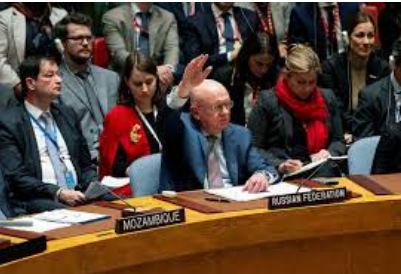
NEW YORK: A resolution proposed by Russia calling for a “humanitarian ceasefire” in Gaza and the release of “all hostages” has failed to receive enough votes to be adopted by the 15-member UN Security Council, with members who voted against it or abstained citing its failure to mention Hamas and condemn the group’s Oct. 7 attack on Israeli towns.  

On Monday, Russia, China, the UAE, Gabon and Mozambique voted in favor, while the US, UK, France and Japan voted against. Brazil, Malta, Albania, Switzerland, Ecuador and Ghana abstained.  

The resolution had been backed by the UN Arab Group of countries, whose ambassadors were all present at the council meeting.  

A vote on a rival, draft resolution from Brazil was delayed until Tuesday, Arab News has learned.  

Russia’s resolution expresses “grave concern” at the escalation of violence and the deterioration of the situation, in particular the resulting heavy civilian casualties, underscoring the need for both populations to be protected.  

It also expressed grave concern at the deepening humanitarian crisis in Gaza and called for “an immediate, durable and fully respected humanitarian ceasefire.” 

The draft also condemns “all violence and hostilities directed against civilians and all acts of terrorism,” and calls for the “secure release of all hostages.” 

Russia also called for the unimpeded provision and distribution of humanitarian assistance, including food, fuel and medical treatment as well as creating conditions for the safe evacuation of civilians in need.  

Russia’s permanent representative to the UN, Vassily Nebenzia, after the vote claimed the council had once again been held “hostage” to the “selfish intentions of the Western bloc of countries.” 

He said: “Today, the entire world waited with bated breath for the Security Council to take steps in order to put an end to the bloodletting. But the delegations of the Western countries have basically stomped on those expectations. We believe that today’s vote in the Security Council is very, very demonstrative. It clearly shows who are in favor of a truce to stop the indiscriminate bombing and provision of humanitarian assistance and who is still in favor of blocking a single common message from the Security Council for purely selfish interests and political interests.”  

Linda Thomas Greenfield, the US’ permanent representative to the UN, said that by failing to mention Hamas, Russia has dishonored the victims of the Oct. 7 attack.  

“By failing to condemn Hamas, Russia is giving cover to a terrorist group that brutalizes innocent civilians. It is outrageous, it is hypocritical, and it is indefensible,” Thomas-Greenfield said.  

She blamed Hamas as solely responsible for the humanitarian crisis in Gaza and said “we cannot allow this Council to unfairly shift the blame to Israel and excuse Hamas for its decades of cruelty. Period.” 

The US envoy said that Secretary of State Antony Blinken and the White House are engaged in “intensive discussions” with the Israeli government and countries in the region to secure the “immediate and unconditional” release of hostages and facilitate humanitarian access and relief. 

 “It is critical that civilians have access to essential food, water, medicine, and shelter. Let me repeat: It is critical,” Thomas-Greenfield said, as she called on countries in the region to allow “full, safe, and unhindered humanitarian access in Gaza — in line with the principles of humanity, impartiality, neutrality, and independence.” 

Lana Nusseibeh, the UAE’s envoy, who voted for Russia’s resolution, reiterated her country’s condemnation of the murder of innocent Israeli civilians and the taking hostage of children, and said that Hamas does not represent the people of Gaza who are “suffering tremendously today.”  

“And that is why Council unity is so desperately needed on this file,” Nusseibeh said, as she emphasized the dire humanitarian situation in Gaza. “We believe this council should be able to find unity on two things: International humanitarian law must be upheld, indiscriminate attacks must be rejected and are unjustifiable, and the cycle of violence overall must end.  

“The events of the last nine days have made it painfully clear that without a determined political horizon, the specter of bloodshed will continue to haunt both Israelis and Palestinians.”  

Evoking the late Palestinian poet Mahmoud Darwish, she said that “a life only defined by the absence of its antithesis, death, is no life at all.

“Palestinians and Israelis deserve not only to live which is the bare minimum, but to thrive, side by side in their own independent, prosperous and secure states.” 

China’s UN representative Jhang Zun, who also voted in favor of Russia’s resolution, expressed regret that council members failed to vote on the draft which had garnered support from the UN Arab Group.  

“Humanitarian issues should not be politicized,” he said.  

FM Jalil Abbas attends OIC session on Gaza crisis

FM Jalil Abbas attends OIC session on Gaza crisis

JEDDAH, OCT 17 /DNA/ – Foreign Minister Jalil Abbas Jillani is in Jeddah to attend the Extraordinary Session of the OIC Executive Committee to discuss the crisis in Gaza and the humanitarian situation of the besieged civilians there. The meeting has been co-convened by Pakistan and the Kingdom of Saudi Arabia.

The Foreign Minister has been engaged in consultations with his counterparts of OIC countries. In the leadup to this Extraordinary Session, he has held telephone conversations with the Foreign Ministers of Egypt, Iran, Türkiye and the UAE. During these consultations, the Foreign Minister expressed Pakistan’s deep concerns on the current situation in Gaza resulting from Israeli bombardment and siege of the enclave. He will continue these consultations with in-person meetings in Jeddah.

In respect of tomorrow’s session of the Executive Committee, the Foreign Minister has underlined Pakistan’s priority for a collective demand by OIC for a ceasefire; and provision of humanitarian assistance through corridors so that food, medicine, water and other necessary supplies may reach the people of Gaza without further delay.

Subsequent efforts should be directed towards a just, comprehensive and lasting solution to the Palestinian question anchored in international law and in line with relevant United Nations and OIC resolutions. A viable, sovereign and contiguous State of Palestine should be established on the basis of pre-1967 borders, with Al Quds Al-Sharif as its capital.

PTI ready to extend possible support for free, transparent polls: Shafqat

PTI ready to extend possible support for free, transparent polls: Shafqat

Says holding polls in uneven circumstances will have no credibility, acceptance 

Caretaker Information Minister calls on PTI leader

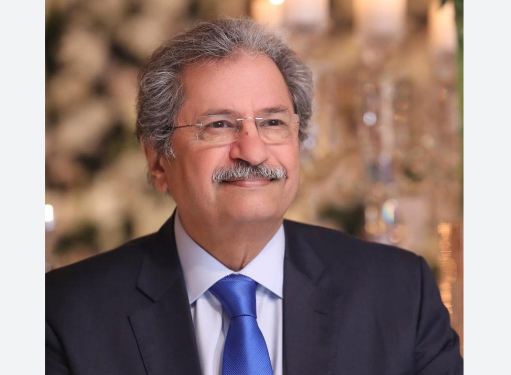
ISLAMABAD, OCT 17 /DNA/ – Pakistan Tehreek-e-Insaf (PTI) central leader and former education minister Shafqat Mehmood said that the PTI was ready for providing all possible support and cooperation to the caretaker government in the light of the constitution to ensure holding free, fair and transparent general elections in the country.

He made this remarks while talking to the Caretaker Information Minister Murtaza Solangi, who held a meeting with Shafqat Mehmood to discuss wide-range issues including ensuring holding free, fair and impartial polls, creating level playing fields for all political parties and national reconciliation and matters of mutual in detail.

The meeting took place at the residence Shafqat Mehmood on the request of the caretaker minister.

During the meeting, the PTI leader apprised the caretaker minister that PTI was not providing opportunities to carry out political activities; hence holding polls in such uneven circumstance would have no credibility and acceptance at the public level.

The PTI senior leader said that the PTI was not even allowed to conduct election campaigns in the light of the constitution and law, while other parties have all the freedom to hold rallies and processions across the country.

During the meeting, they also shed light on the interest and responsibility of the caretaker government of holding fair, transparent and undisputed elections. The meeting discussed the possibilities, importance and necessity of promoting harmony and understanding at the national level.

Shafqat Mehmood said that it was prerequisite for free, fair, impartial general elections to provide level playing field and equal opportunities to all political parties to participate in elections.

PTI leader underlined that fair trial and access to justice was of paramount importance in achieving the goal of free and fair elections. Shafqat Mehmood contended that promotion of national reconciliation was deeply dependent on the supremacy of the constitution and the survival and continuity of the democracy.

However, he made it clear that national reconciliation was not possible without the involvement of PTI.

PAF, Hungarian Air Force to expand military partnership

PAF, Hungarian Air Force to expand military partnership

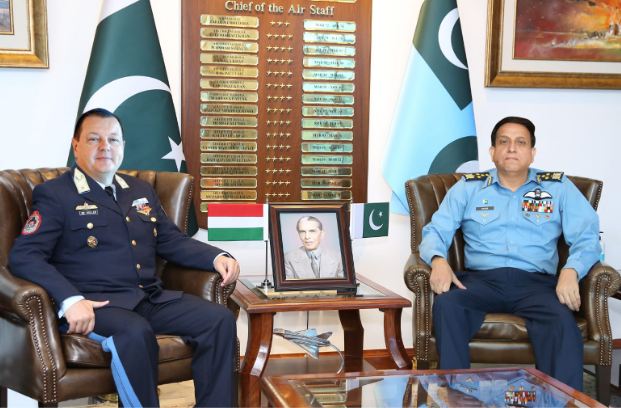
ISLAMABAD, OCT 17 /DNA/ – Brigadier General József Koller, Commander Hungarian Air Force, along with his delegation called on Air Chief Marshal Zaheer Ahmed Baber Sidhu, Chief of the Air Staff, Pakistan Air Force, during his visit to Air Headquarters Islamabad today. The first-ever visit by the Hungarian Air Chief to Pakistan marks a significant milestone in the bilateral relations between the two countries and a new opening in Air Force to Air Force relations. The historic event highlights the growing cooperation and friendship between Pakistan and Hungary, particularly in the realm of defence industry and military partnership. The meeting emphasized the exchange of insight and sharing of ideas to explore potential areas of joint collaboration particularly in the domains of military technology and training programs. Memorandum of Understanding (MoU) between Pakistan Air Force and Hungarian Air Force is expected to be finalized in the near future, outlining a framework for Pakistan Air Force to provide basic and tactical level training to Hungarian Air Force pilots.

Upon his arrival, the visiting dignitary was warmly received by Air Chief Marshal Zaheer Ahmed Baber Sidhu, Chief of the Air Staff, Pakistan Air Force. A smartly turned-out contingent of Pakistan Air Force presented Guard of Honor to Brigadier General József Koller. He was also introduced to the Principal Staff Officers of Pakistan Air Force.

During the meeting, Chief of the Air Staff provided a comprehensive insight into Pakistan Air Force’s operational construct, force goals and its endeavors for the force structure with a keen focus on future warfare. He emphasized on the significance of the robust diplomatic and defence ties between Pakistan and Hungary which are built upon shared perspectives on critical matters related to regional peace, security and stability. Appreciating the participation of Hungarian Air Force in Exercise Indus Shield at an operational air base of PAF, the Air Chief reiterated his resolve to further deepen the strong bond of friendship that unites the two nations in the face of shared challenges.

The Hungarian Air Chief expressed his admiration for the professionalism of PAF personnel and praised the remarkable progress made by Pakistan Air Force through indigenization. Brigadier General József Koller, expressed his unwavering resolve to enhance the existing bilateral ties in military-to-military cooperation and the training domain. The visiting dignitary also expressed his keen interest in the National Aerospace Science and Technology Park (NASTP), being spearheaded by PAF and vowed to enhance the existing bilateral technological sharing to consolidate the defence partnership that exists between the two countries.

Later on, the delegation visited various installations and technological infrastructure established at Air Headquarters including National ISR and Integrated Air Operations Center and PAF’s Cyber Command. The delegation also visited National Aerospace Science and Technology Park, which will serve as a beacon of innovation to promote futuristic aerospace and aviation capabilities in the country.

The visit of Hungarian Air Chief to Pakistan signifies a resolute commitment from both nations to reinforce their partnership through fostering collaboration and promoting robust relations between their respective Air Forces.

Stay Connected

64FansLike
60FollowersFollow

Latest Reviews

Exchange Rates

USD - United States Dollar
EUR
1.17
GBP
1.35
AUD
0.72
CAD
0.73